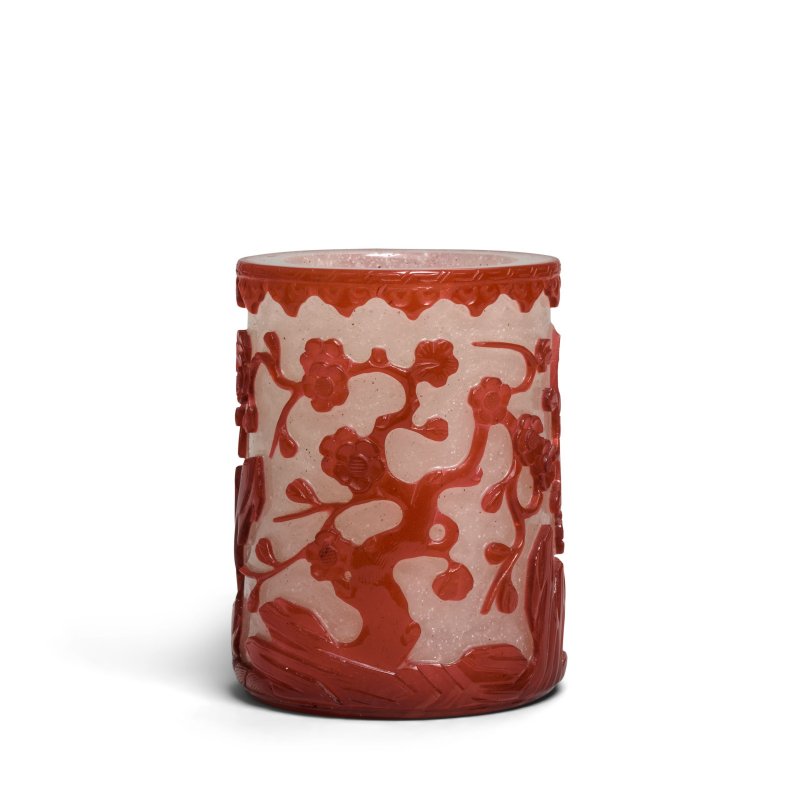

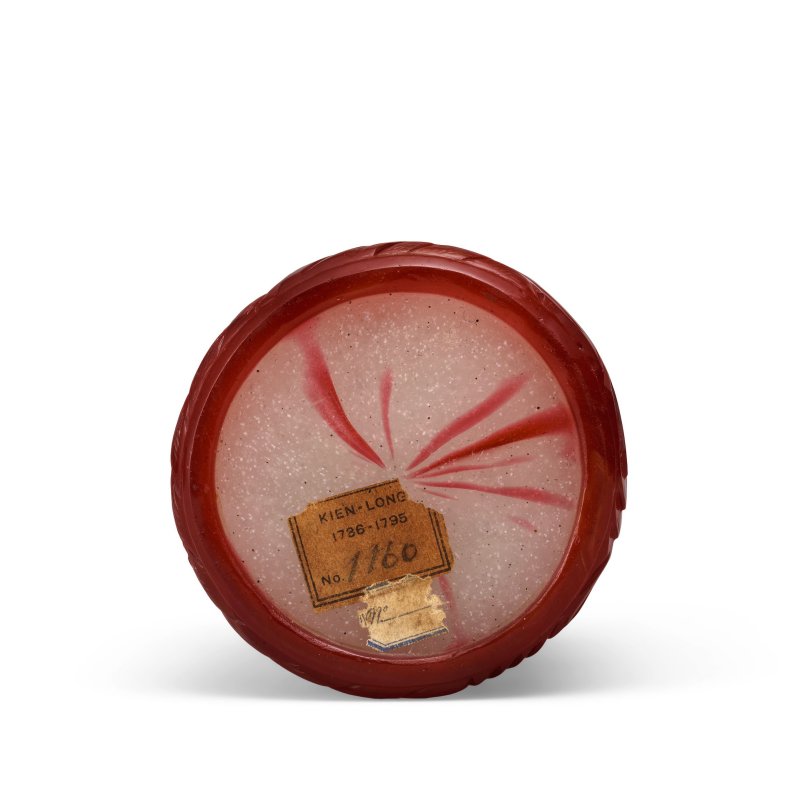
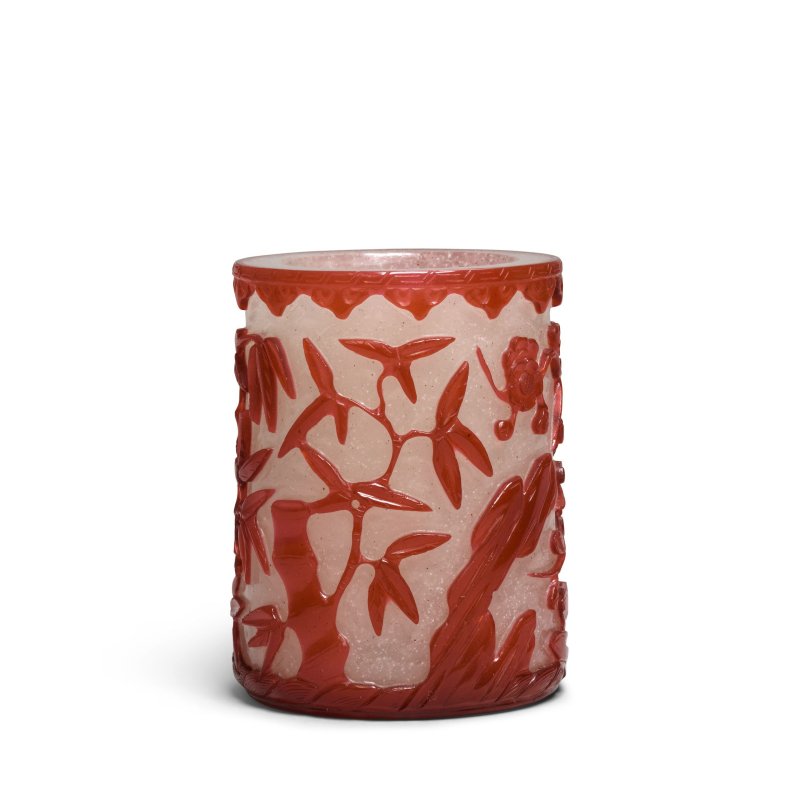
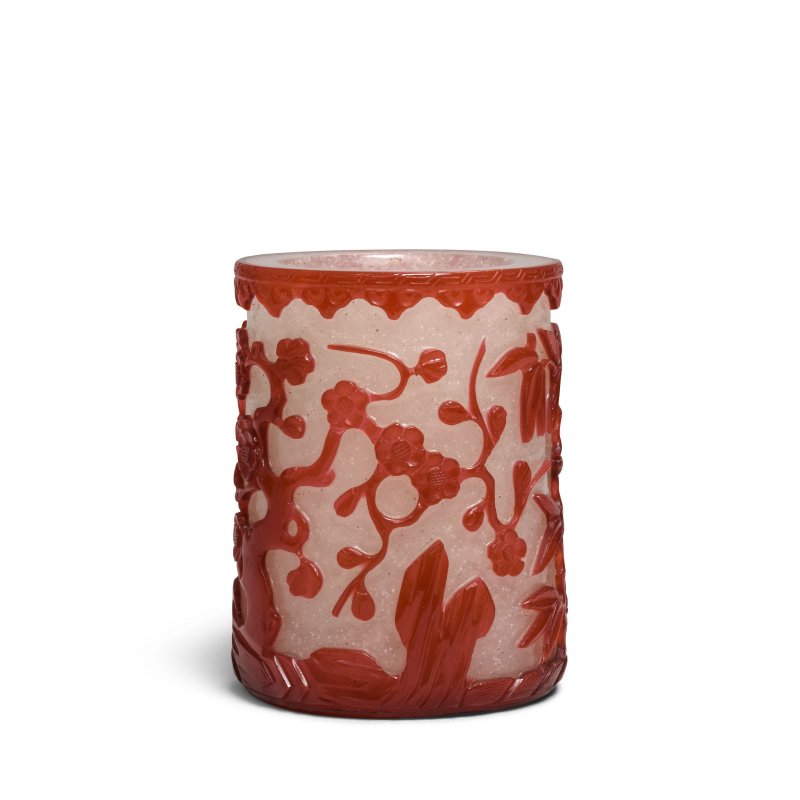
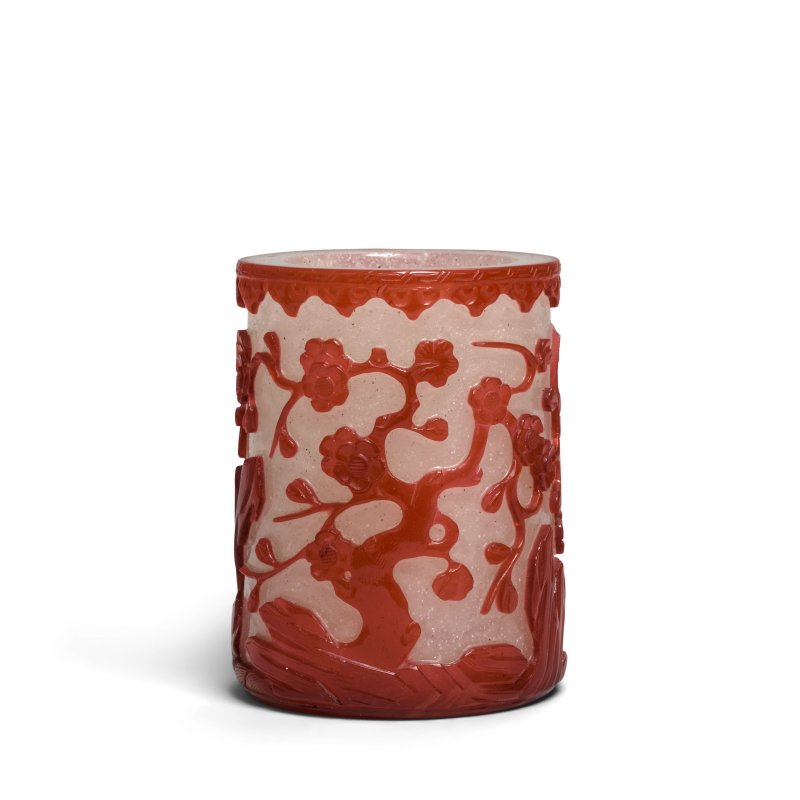
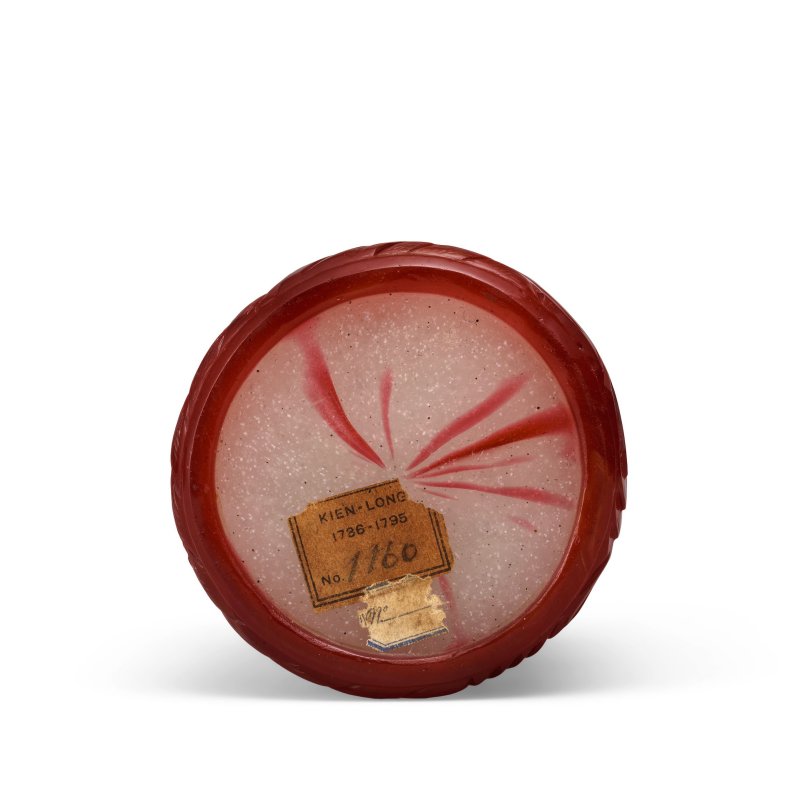
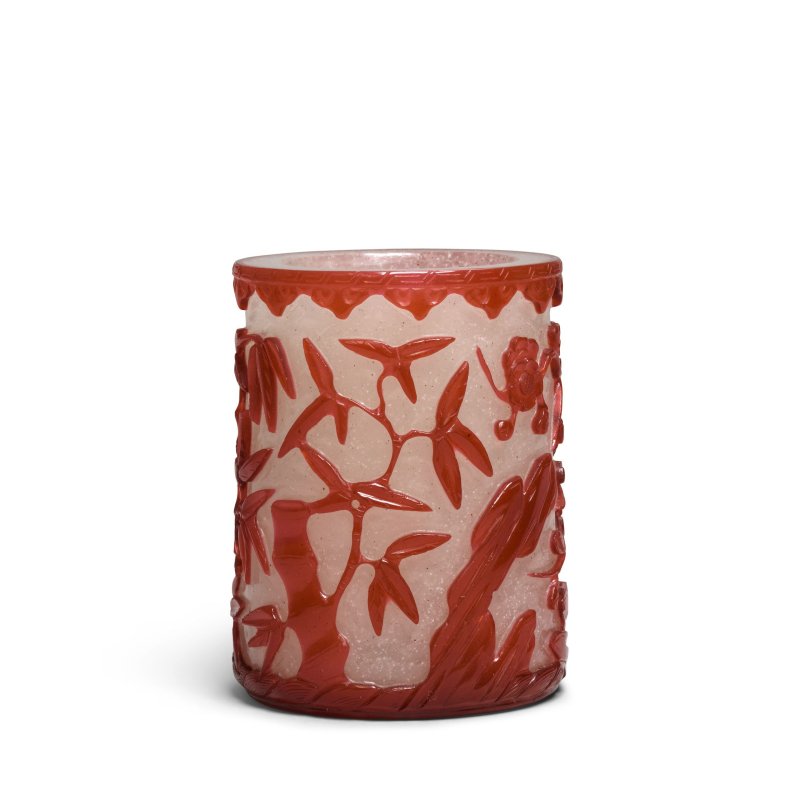
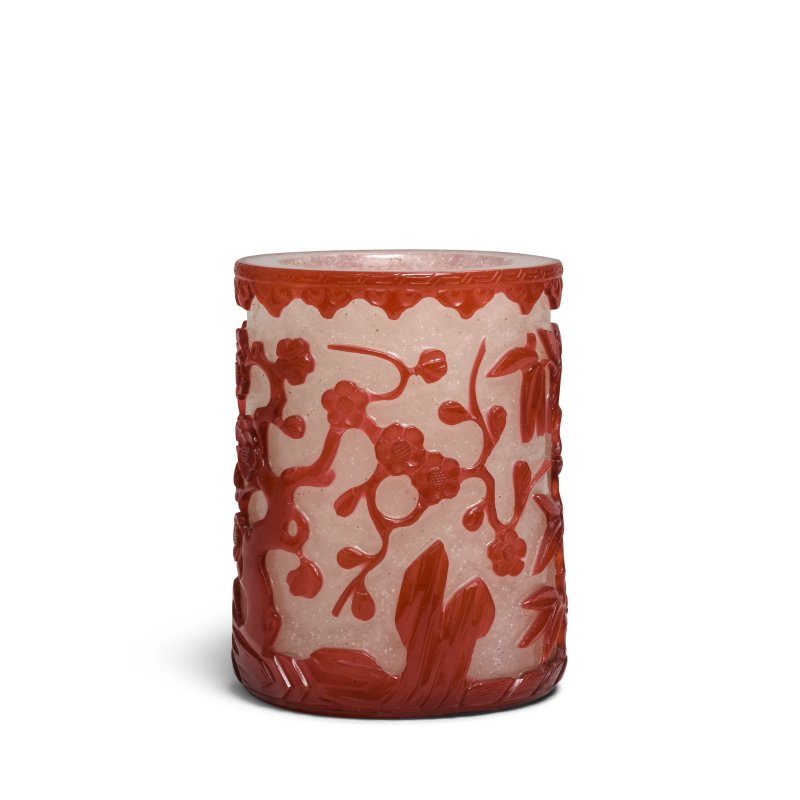
Lot 33 清乾隆/嘉慶 京作霏雪地套寶石紅料梅竹紋筆筒 | A RED OVERLAY BEIJING GLASS 'SNOWFLAKE' BRUSHPOT, BITONG
落槌价
预展中
成交价
预展中
| 拍卖公司 | 邦瀚斯 |
|---|---|
| 拍卖时间 | 2026年11月05日 |
拍品信息
拍品名称
清乾隆/嘉慶 京作霏雪地套寶石紅料梅竹紋筆筒 | A RED OVERLAY BEIJING GLASS 'SNOWFLAKE' BRUSHPOT, BITONG
年代
Qianlong/Jiaqing
起拍价
GBP 3,000
估值区间
GBP 3000 - 5000
尺寸
未知
品相
未知
更多信息
Qianlong/Jiaqing
The frosty-white cylindrical vessel overlaid in ruby-red glass with flowering prunus and bamboo emerging amongst craggy rocks, the composition surmounted by a pendant ruyi-head border. 9.5cm (3 3/4in) high.
Footnotes
清乾隆/嘉慶 京作霏雪地套寶石紅料梅竹紋筆筒
Provenance:
Ben Janssens Oriental Art, London
Acquired from the above on 10 April 2000
Published and Illustrated:
S.Marsh, Brushpots: A Collector's View, Hong Kong, 2020, pp.66-67
來源:
倫敦古董商Ben Janssens Oriental Art
從上處獲得于2000年4月10日
墨一閑,《筆筒淵鑒:收藏家的隨心所悟》,香港,2020年,第66-67頁
The establishment of the Imperial Glassworks in 1696 marked a significant development in the production of luxury objects for the Qing Court. Administered by the (Imperial Household Department Workshops), the manufactory was established following the successful treatment of the Kangxi Emperor's malaria by Jesuit missionaries and placed under the direction of the Bavarian Jesuit Kilian Stumpf (1655–1720), who introduced European glassmaking techniques to the Court. The workshop brought together European technology and the expertise of Chinese artisans. Sustained Imperial patronage and exchanges between the various Court workshops encouraged experimentation, with techniques developed in jade and hardstone carving influencing the cutting of glass. The resulting wares represent a distinctive synthesis of Chinese craftsmanship and European technology, reflecting the cosmopolitan character of the Qing Court.
See a related red overlay glass brushpot with prunus, lotus, and peony, 19th century, in Bristol Museum (acc.no.N4665). Compare with a larger Yongzheng mark and period red overlay glass 'peaches and bats' brushpot in the Museum of Fine Arts, Boston (acc.no.1986.643).
Compare also with a red overlay glass brushpot, incised Qianlong four-character mark, 18th/19th century, which was sold at Christie's London, 19 June 2001, lot 150. See also a ruby-red overlay snowstorm-ground glass bottle vase, Qianlong seal mark and of the period, which was sold at Sotheby's New York, 21 September 2022, lot 347.
The frosty-white cylindrical vessel overlaid in ruby-red glass with flowering prunus and bamboo emerging amongst craggy rocks, the composition surmounted by a pendant ruyi-head border. 9.5cm (3 3/4in) high.
Footnotes
清乾隆/嘉慶 京作霏雪地套寶石紅料梅竹紋筆筒
Provenance:
Ben Janssens Oriental Art, London
Acquired from the above on 10 April 2000
Published and Illustrated:
S.Marsh, Brushpots: A Collector's View, Hong Kong, 2020, pp.66-67
來源:
倫敦古董商Ben Janssens Oriental Art
從上處獲得于2000年4月10日
墨一閑,《筆筒淵鑒:收藏家的隨心所悟》,香港,2020年,第66-67頁
The establishment of the Imperial Glassworks in 1696 marked a significant development in the production of luxury objects for the Qing Court. Administered by the (Imperial Household Department Workshops), the manufactory was established following the successful treatment of the Kangxi Emperor's malaria by Jesuit missionaries and placed under the direction of the Bavarian Jesuit Kilian Stumpf (1655–1720), who introduced European glassmaking techniques to the Court. The workshop brought together European technology and the expertise of Chinese artisans. Sustained Imperial patronage and exchanges between the various Court workshops encouraged experimentation, with techniques developed in jade and hardstone carving influencing the cutting of glass. The resulting wares represent a distinctive synthesis of Chinese craftsmanship and European technology, reflecting the cosmopolitan character of the Qing Court.
See a related red overlay glass brushpot with prunus, lotus, and peony, 19th century, in Bristol Museum (acc.no.N4665). Compare with a larger Yongzheng mark and period red overlay glass 'peaches and bats' brushpot in the Museum of Fine Arts, Boston (acc.no.1986.643).
Compare also with a red overlay glass brushpot, incised Qianlong four-character mark, 18th/19th century, which was sold at Christie's London, 19 June 2001, lot 150. See also a ruby-red overlay snowstorm-ground glass bottle vase, Qianlong seal mark and of the period, which was sold at Sotheby's New York, 21 September 2022, lot 347.
常见问题
这件清乾隆/嘉慶 京作霏雪地套寶石紅料梅竹紋筆筒 | A RED OVERLAY BEIJING GLASS 'SNOWFLAKE' BRUSHPOT, BITONG的成交价是多少?
落槌价为 预展中。 成交价为 预展中。