
拍品信息
拍品名称
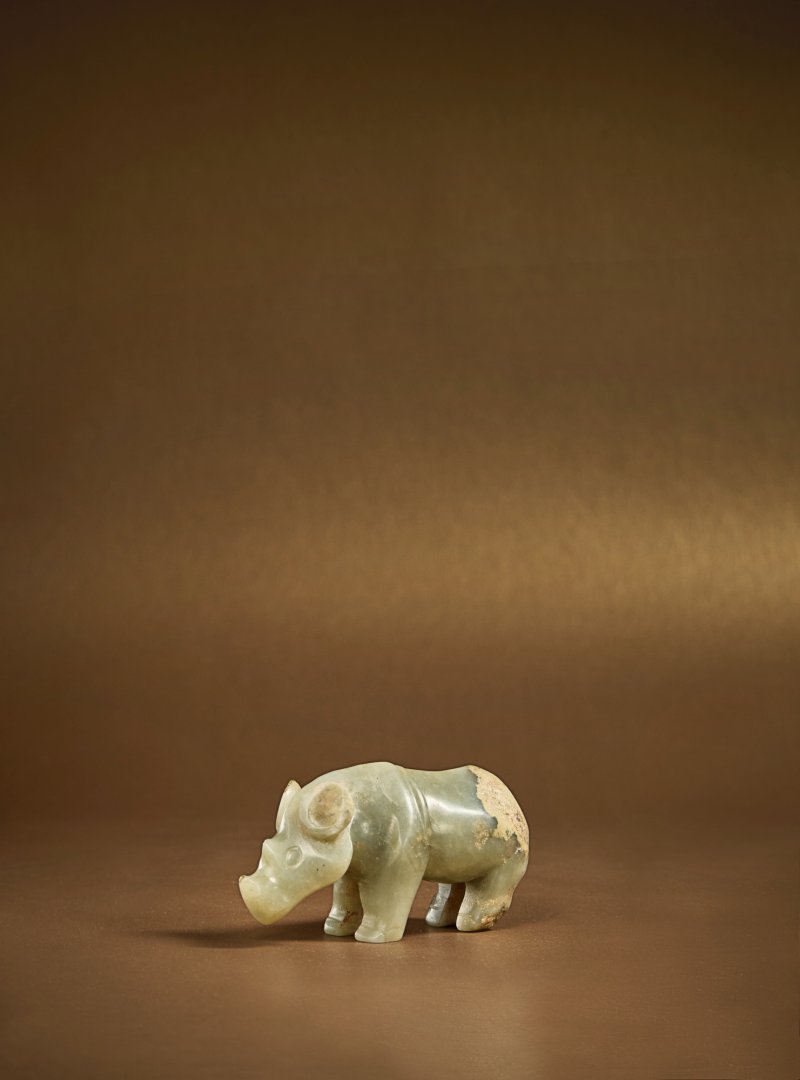
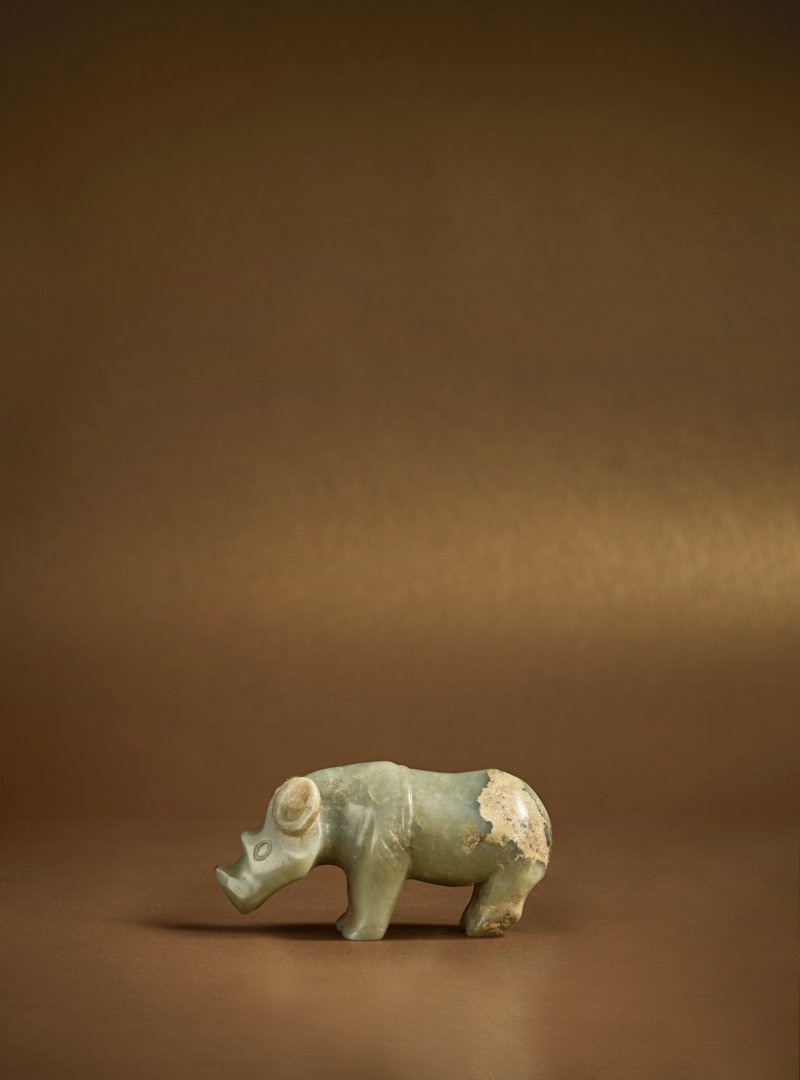
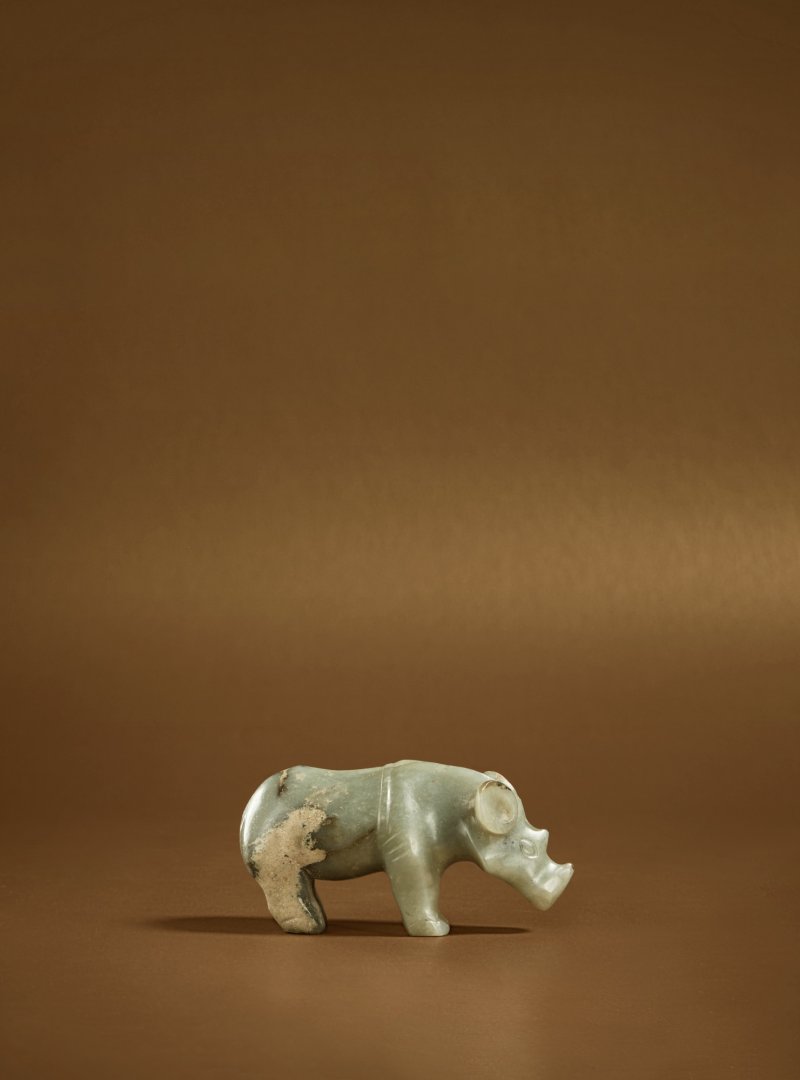
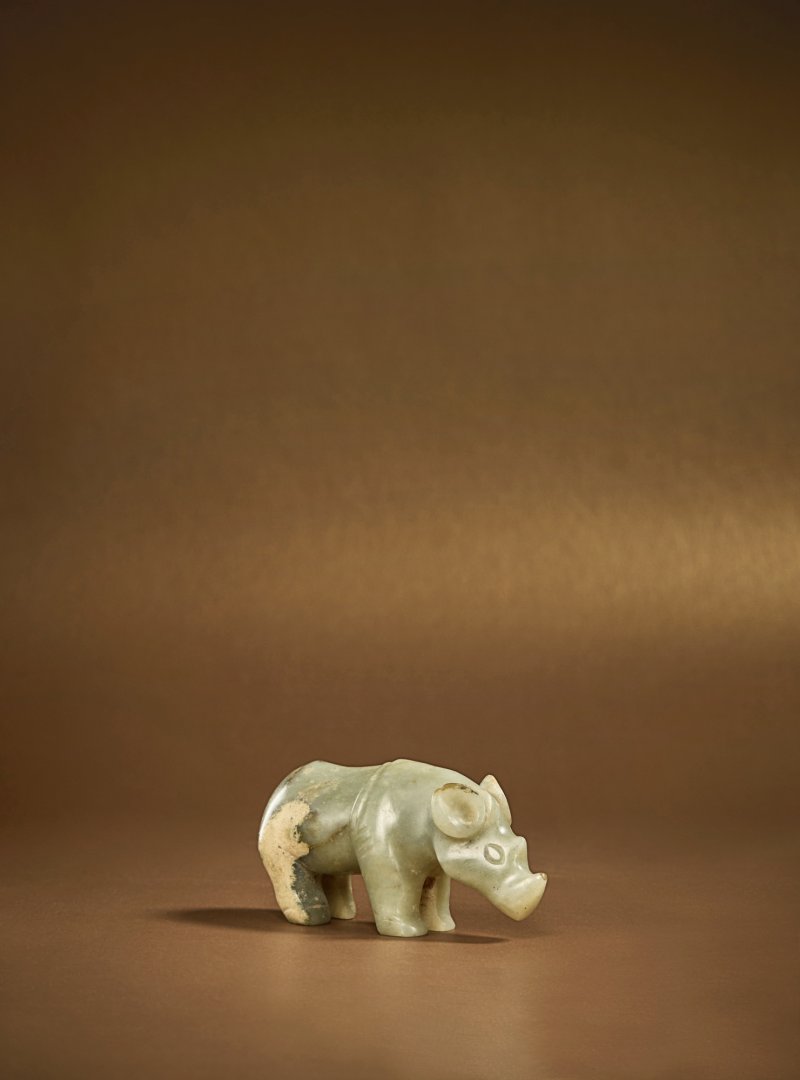
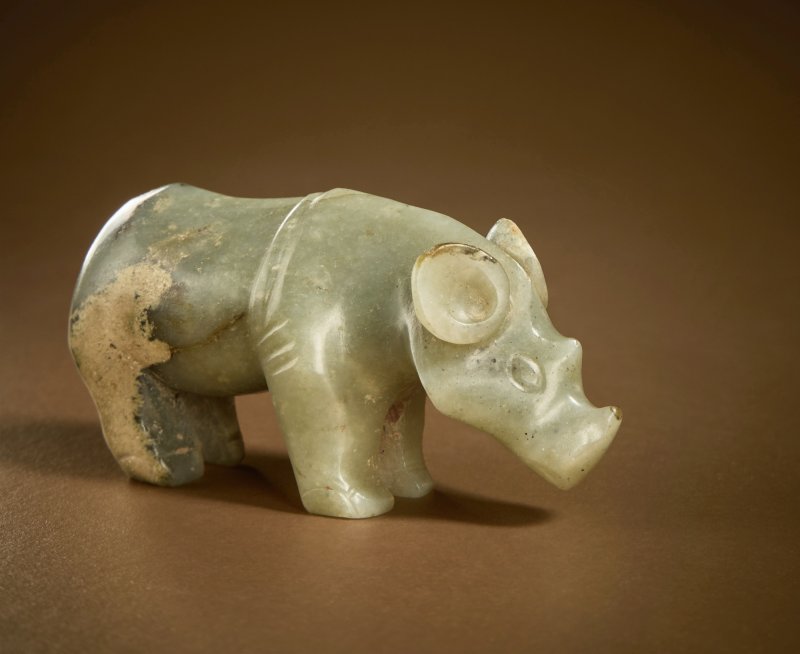
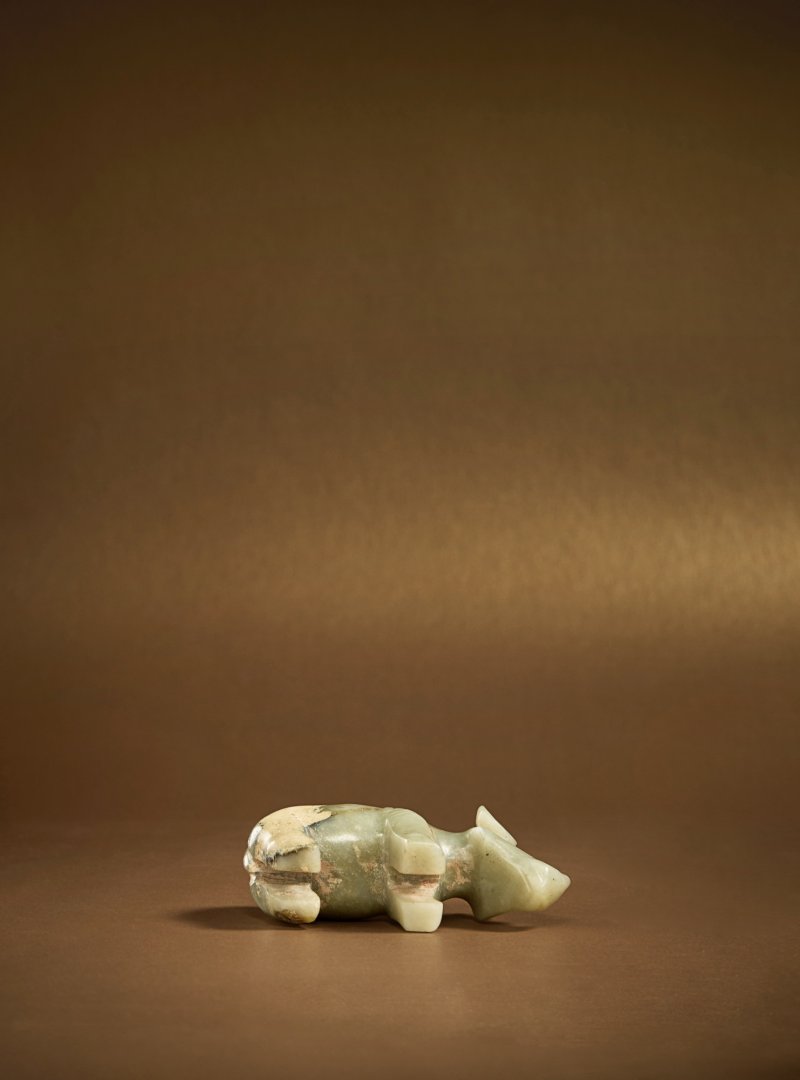
西周初 玉犀牛
起拍价
USD 50,000
估值区间
50,000 - 70,000 USD
尺寸
未知
品相
如欲了解本拍品狀況的更多資訊,請聯絡 Drew.Lerner@sothebys.com
更多信息
Length 2¾in., 7.1 cm
来源:Chung Wah Pui,香港
Anthony Carter Ltd.,倫敦
著录:姜濤及劉雲輝,《熙墀藏玉》,北京,2006年,頁67
图录
说明:Remarkable for its sculptural refinement and strikingly naturalistic portrayal of a rhinoceros, the present lot reflects the carver's close observation of the animal that was once native to ancient China. The historical presence of the rhinoceros is well attested in both early texts and archaeological discoveries. Rhinoceros bones dating to the Shang dynasty were unearthed at Anyang, Henan province, in 1949, while oracle bone inscriptions record the deliberate burning of forests to flush out rhinoceroses for the hunt. Such evidence suggests that the capture and ritual sacrifice of these formidable animals constituted important state-sponsored events during the Bronze Age. Rhinoceros hide was also highly prized for the manufacture of armor during the Spring and Autumn period, valued for its exceptional durability. Intensive hunting, however, combined with the species' naturally low reproductive rate, led to a rapid decline in the rhinoceros population, and by the late Western Han dynasty the animal had largely disappeared from China.
Jade carvings of rhinoceros from the Western Zhou dynasty are extremely rare and the present lot appears to be one of only two recorded examples known. See a closely related jade rhinoceros, carved in a more stylized manner with circular eyes and more angular contours, included in the Chinese Jade Animals exhibition at the Hong Kong Museum of Art, Hong Kong, 1996, cat. no. 29. Attributed to the late Shang / early Western Zhou period, it is now preserved in the British Museum, London (accession no. 1937,0416.49) (Fig. 1). For a related example, carved in a similar, but less elaborate style, of a standing ox, see one unearthed from the tomb of Yu Bo in Rujia zhuang, Shaanxi province, now housed in the Baoji Bronzeware Museum, Baoji, and illustrated in Yang Boda, Zhongguo yuqi quanji [The complete collection of jades unearthed in China], vol. 1 Shijiazhuang, 2005, pl. 229.
来源:Chung Wah Pui,香港
Anthony Carter Ltd.,倫敦
著录:姜濤及劉雲輝,《熙墀藏玉》,北京,2006年,頁67
图录
说明:Remarkable for its sculptural refinement and strikingly naturalistic portrayal of a rhinoceros, the present lot reflects the carver's close observation of the animal that was once native to ancient China. The historical presence of the rhinoceros is well attested in both early texts and archaeological discoveries. Rhinoceros bones dating to the Shang dynasty were unearthed at Anyang, Henan province, in 1949, while oracle bone inscriptions record the deliberate burning of forests to flush out rhinoceroses for the hunt. Such evidence suggests that the capture and ritual sacrifice of these formidable animals constituted important state-sponsored events during the Bronze Age. Rhinoceros hide was also highly prized for the manufacture of armor during the Spring and Autumn period, valued for its exceptional durability. Intensive hunting, however, combined with the species' naturally low reproductive rate, led to a rapid decline in the rhinoceros population, and by the late Western Han dynasty the animal had largely disappeared from China.
Jade carvings of rhinoceros from the Western Zhou dynasty are extremely rare and the present lot appears to be one of only two recorded examples known. See a closely related jade rhinoceros, carved in a more stylized manner with circular eyes and more angular contours, included in the Chinese Jade Animals exhibition at the Hong Kong Museum of Art, Hong Kong, 1996, cat. no. 29. Attributed to the late Shang / early Western Zhou period, it is now preserved in the British Museum, London (accession no. 1937,0416.49) (Fig. 1). For a related example, carved in a similar, but less elaborate style, of a standing ox, see one unearthed from the tomb of Yu Bo in Rujia zhuang, Shaanxi province, now housed in the Baoji Bronzeware Museum, Baoji, and illustrated in Yang Boda, Zhongguo yuqi quanji [The complete collection of jades unearthed in China], vol. 1 Shijiazhuang, 2005, pl. 229.
常见问题
这件西周初 玉犀牛的成交价是多少?
落槌价为 预展中。 成交价为 预展中。
拍品的品相状况如何?
如欲了解本拍品狀況的更多資訊,請聯絡 Drew.Lerner@sothebys.com
这件拍品的流传来源是什么?
Chung Wah Pui,香港
Anthony Carter Ltd.,倫敦
Anthony Carter Ltd.,倫敦
这件拍品被哪些著录书籍记载?
姜濤及劉雲輝,《熙墀藏玉》,北京,2006年,頁67
图录
图录