
拍品信息
拍品名称
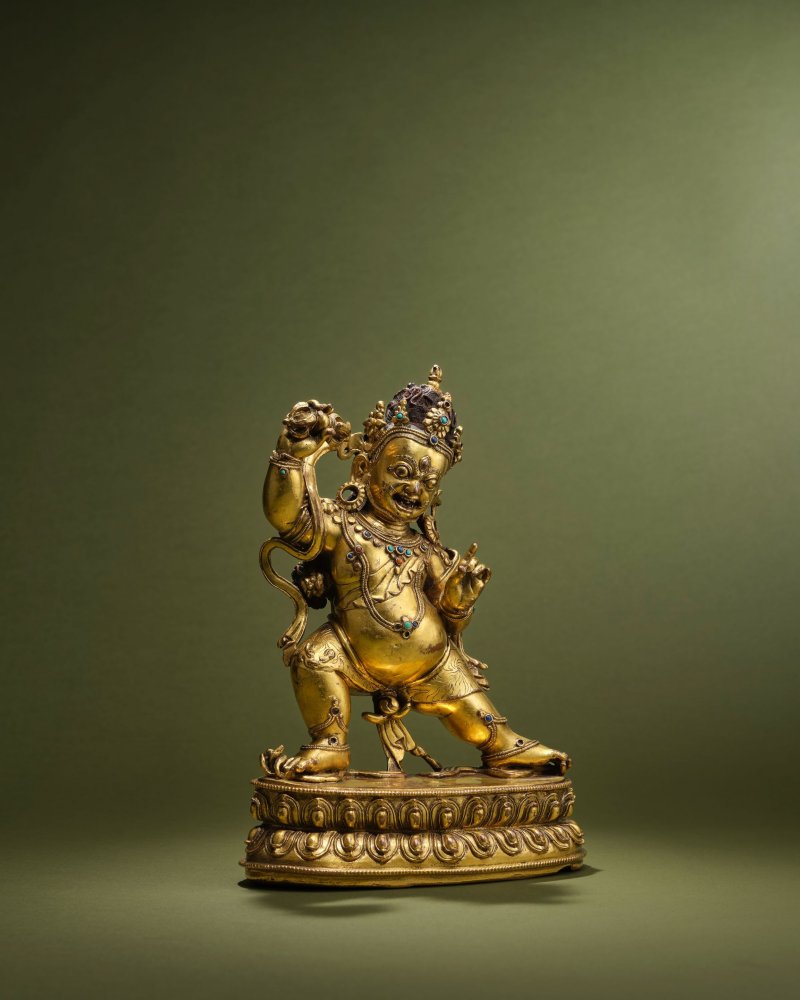
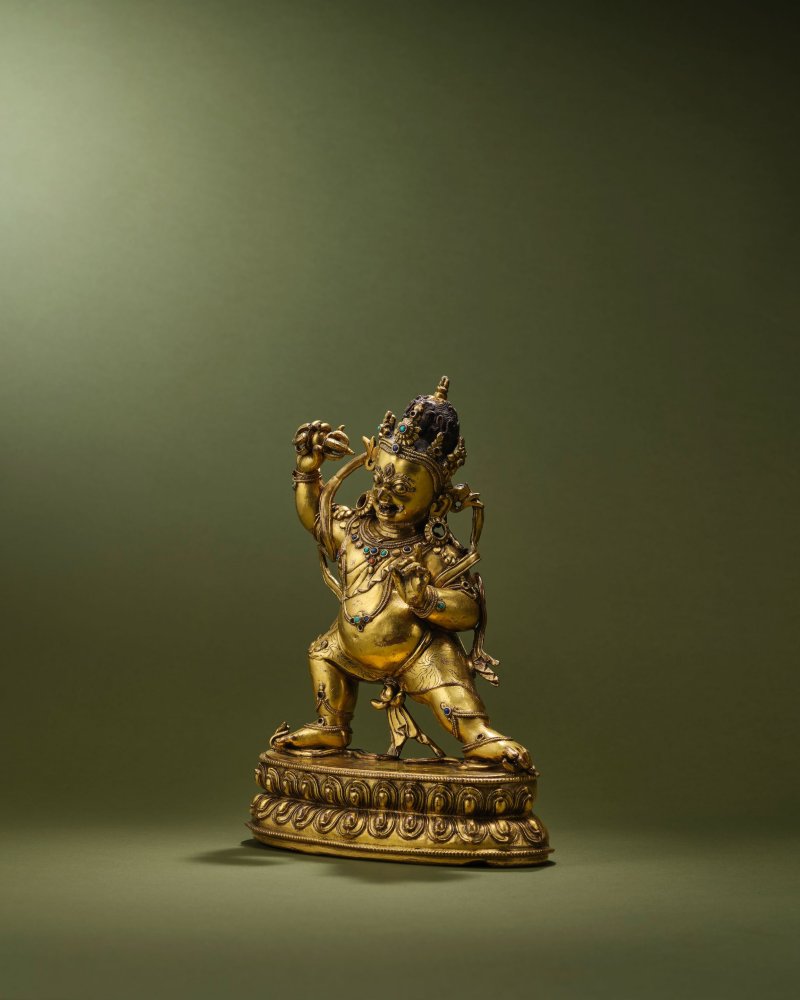
西藏 十四/十五世紀 銅合金鎏金金剛手菩薩像 | A RARE GILT COPPER-ALLOY FIGURE OF VAJRAPANI KRODHA
年代
Tibet, 14th/15th century
起拍价
HKD 1,000,000
估值区间
HKD 1000000 - 1500000
尺寸
未知
品相
未知
更多信息
Tibet, 14th/15th century
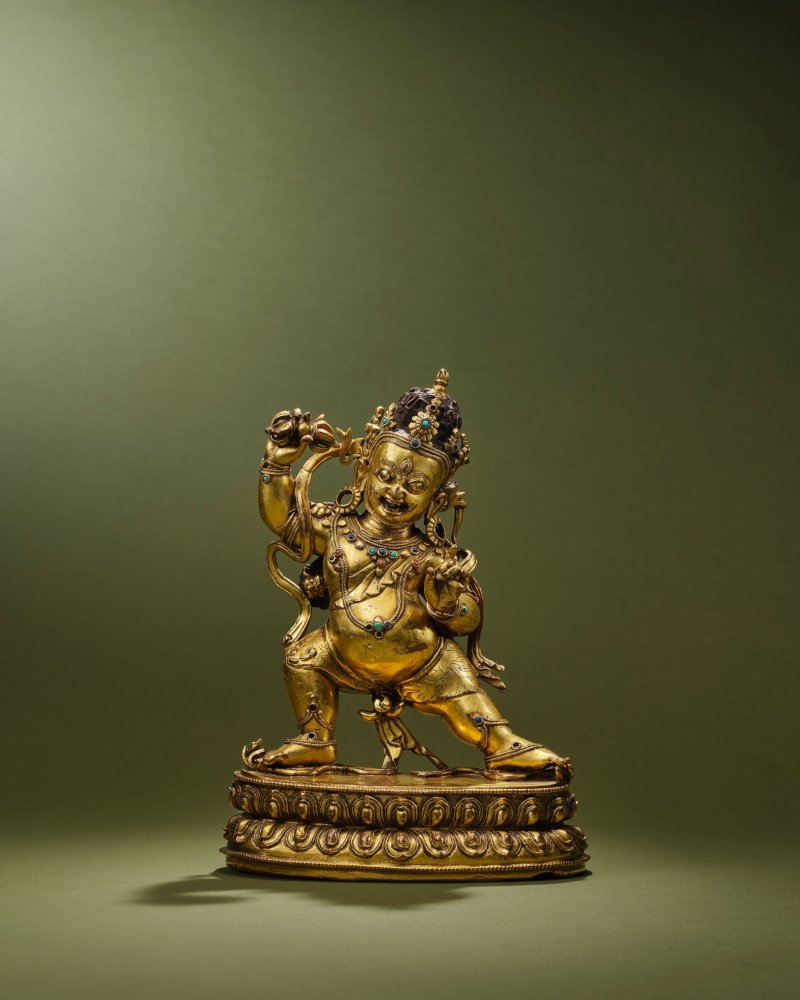
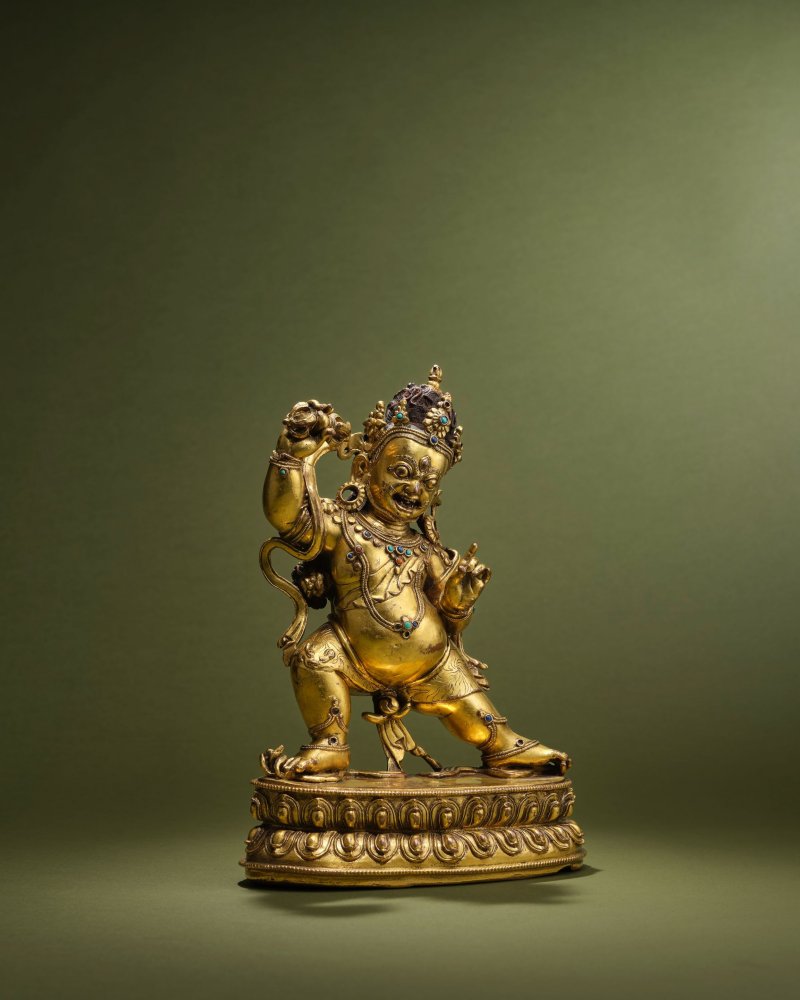
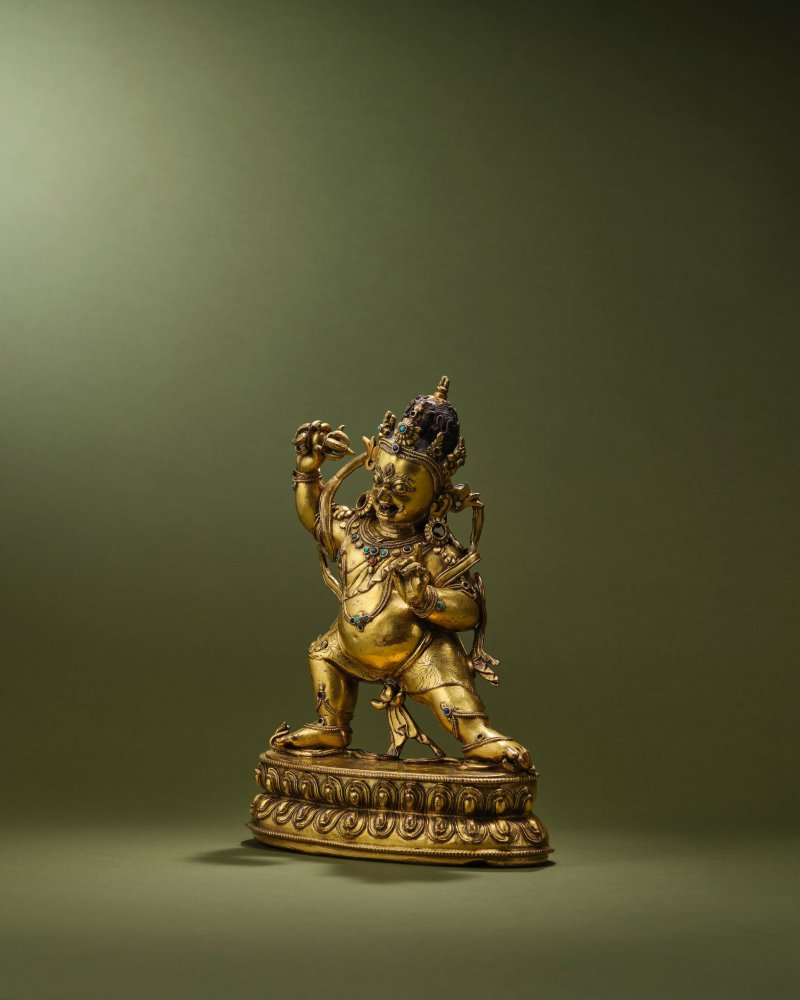
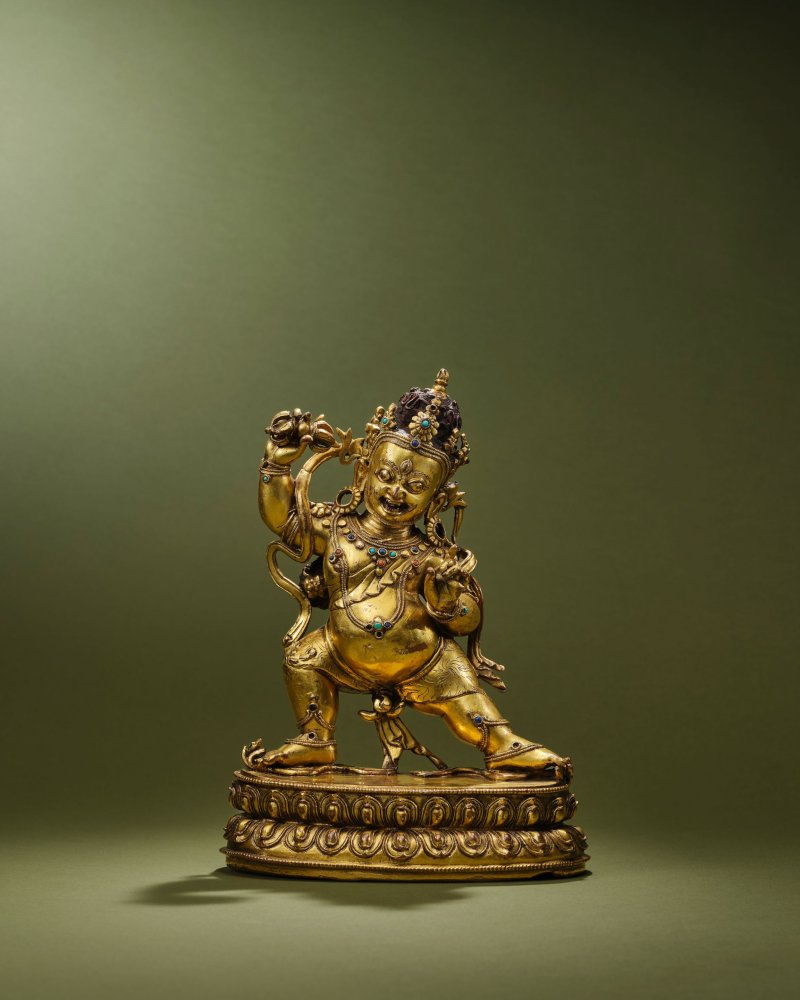
Standing in pratyalidhasana upon subdued serpents on a crisp-petalled double-lotus base, the right hand raised aloft brandishing a vajra, the left held in tarjani mudra, wearing a tiger-skin skirt secured at the waist and billowing scarves, richly adorned with jewellery inlaid with semi-precious stones, the wrathful face open-mouthed in a fierce expression, surmounted by a crown before a vajra issuing from a high chignon.
20cm (7 7/8in) high.
Footnotes
西藏 十四/十五世紀 銅合金鎏金金剛手菩薩像
Himalayan Art Resources, item no.12122
Provenance:
Arnold Lieberman, New York, prior to 1998
Published, Illustrated and Exhibited:
A & J Speelman, Buddhist Works of Art, London, 1998, p.70, no.32
Meinrad Maria Grewenig & Eberhard Rist eds., Buddha: 2000 Years of Buddhist Art, 232 Masterpieces, Völklingen, 2016, p.402, no.174
喜馬拉雅藝術資源,編號12122
Arnold Lieberman,紐約,1998年前
A & J Speelman,《Buddhist Works of Art》,倫敦,1998年,頁70,編號32
Meinrad Maria Grewenig及Eberhard Rist編,《Buddha: 2000 Years of Buddhist Art, 232 Masterpieces》,弗爾克林根,2016年,頁402,編號174
Vajrapani is among the earliest and most significant bodhisattvas in the Buddhist tradition, revered as the embodiment of the Buddha's power and the fierce protector of the Dharma. In his wrathful (krodha) manifestation, he assumes a highly charged, dynamic form intended to subdue ignorance, inner obstacles, and hostile forces that threaten the Buddhist path. He is characteristically depicted wielding a , the indestructible thunderbolt that symbolises unassailable wisdom and spiritual authority, and belongs to a broader pantheon of wrathful protective deities that emerged within esoteric Buddhism and gained particular prominence in Tibetan art from the late first millennium onwards. In the present sculpture, this forceful role is powerfully conveyed through the forward-lunging stance, the trampling of serpents, and the emphatic gestures of protection and expulsion, all of which are heightened by the figure's tense musculature and fiercely animated expression.
The present lot is notable for its refined modelling of the body, dense yet meticulously ordered jewellery and ornamentation, and above all for the distinctive treatment of the lotus pedestal and crisply articulated petals. The style of the present lot is closely related to an example dated to the 14th century, Tibet (see Himalayan Art Resources no.10090). Compare a gilt copper alloy figure of Krodha Vajrapani, Tibet, 14th century, from the collection of Claude de Marteau, later sold at Bonhams Paris, 12 June 2023, lot 18.
金剛手菩薩,為常隨如來的八大菩薩之一,是佛法之顯化與護法者。作忿怒相時,頭部微傾,姿態勇猛,降魔除障。手執金剛杵,象徵無堅不摧之智慧與佛法。自一千紀後期以降,其所屬密教護法神系尤對藏傳佛教藝術有重要影響。此像身軀壯健,肌肉厚實,圓睜怒視,闊嘴大張,呈前傾弓箭步,踐踏蛇身,雙手健碩,護佑與驅魔手勢俐落有力,緊繃肌肉與威猛怒目更強化其氣勢,面呈忿怒相,刻劃細緻入微,立體生動。
本造像以細緻塑造的身姿、繁密有序之瓔珞裝飾,及獨特的蓮座工藝著稱,尤以蓮瓣之銳利刻劃最為突出。其風格與一件西藏十四世紀之例相似(見喜馬拉雅藝術資源編號10090)。另比對一件西藏十四世紀銅鎏金金剛手菩薩像,為德馬圖舊藏,後售於巴黎邦瀚斯,2023年6月12日,拍品編號18。
Standing in pratyalidhasana upon subdued serpents on a crisp-petalled double-lotus base, the right hand raised aloft brandishing a vajra, the left held in tarjani mudra, wearing a tiger-skin skirt secured at the waist and billowing scarves, richly adorned with jewellery inlaid with semi-precious stones, the wrathful face open-mouthed in a fierce expression, surmounted by a crown before a vajra issuing from a high chignon.
20cm (7 7/8in) high.
Footnotes
西藏 十四/十五世紀 銅合金鎏金金剛手菩薩像
Himalayan Art Resources, item no.12122
Provenance:
Arnold Lieberman, New York, prior to 1998
Published, Illustrated and Exhibited:
A & J Speelman, Buddhist Works of Art, London, 1998, p.70, no.32
Meinrad Maria Grewenig & Eberhard Rist eds., Buddha: 2000 Years of Buddhist Art, 232 Masterpieces, Völklingen, 2016, p.402, no.174
喜馬拉雅藝術資源,編號12122
Arnold Lieberman,紐約,1998年前
A & J Speelman,《Buddhist Works of Art》,倫敦,1998年,頁70,編號32
Meinrad Maria Grewenig及Eberhard Rist編,《Buddha: 2000 Years of Buddhist Art, 232 Masterpieces》,弗爾克林根,2016年,頁402,編號174
Vajrapani is among the earliest and most significant bodhisattvas in the Buddhist tradition, revered as the embodiment of the Buddha's power and the fierce protector of the Dharma. In his wrathful (krodha) manifestation, he assumes a highly charged, dynamic form intended to subdue ignorance, inner obstacles, and hostile forces that threaten the Buddhist path. He is characteristically depicted wielding a , the indestructible thunderbolt that symbolises unassailable wisdom and spiritual authority, and belongs to a broader pantheon of wrathful protective deities that emerged within esoteric Buddhism and gained particular prominence in Tibetan art from the late first millennium onwards. In the present sculpture, this forceful role is powerfully conveyed through the forward-lunging stance, the trampling of serpents, and the emphatic gestures of protection and expulsion, all of which are heightened by the figure's tense musculature and fiercely animated expression.
The present lot is notable for its refined modelling of the body, dense yet meticulously ordered jewellery and ornamentation, and above all for the distinctive treatment of the lotus pedestal and crisply articulated petals. The style of the present lot is closely related to an example dated to the 14th century, Tibet (see Himalayan Art Resources no.10090). Compare a gilt copper alloy figure of Krodha Vajrapani, Tibet, 14th century, from the collection of Claude de Marteau, later sold at Bonhams Paris, 12 June 2023, lot 18.
金剛手菩薩,為常隨如來的八大菩薩之一,是佛法之顯化與護法者。作忿怒相時,頭部微傾,姿態勇猛,降魔除障。手執金剛杵,象徵無堅不摧之智慧與佛法。自一千紀後期以降,其所屬密教護法神系尤對藏傳佛教藝術有重要影響。此像身軀壯健,肌肉厚實,圓睜怒視,闊嘴大張,呈前傾弓箭步,踐踏蛇身,雙手健碩,護佑與驅魔手勢俐落有力,緊繃肌肉與威猛怒目更強化其氣勢,面呈忿怒相,刻劃細緻入微,立體生動。
本造像以細緻塑造的身姿、繁密有序之瓔珞裝飾,及獨特的蓮座工藝著稱,尤以蓮瓣之銳利刻劃最為突出。其風格與一件西藏十四世紀之例相似(見喜馬拉雅藝術資源編號10090)。另比對一件西藏十四世紀銅鎏金金剛手菩薩像,為德馬圖舊藏,後售於巴黎邦瀚斯,2023年6月12日,拍品編號18。
常见问题
这件西藏 十四/十五世紀 銅合金鎏金金剛手菩薩像 | A RARE GILT COPPER-ALLOY FIGURE OF VAJRAPANI KRODHA的成交价是多少?
落槌价为 预展中。 成交价为 预展中。