
拍品信息
拍品名称
東魏 石灰岩雕佛身像
起拍价
GBP 8,000
估值区间
8,000 - 12,000 GBP
尺寸
未知
品相
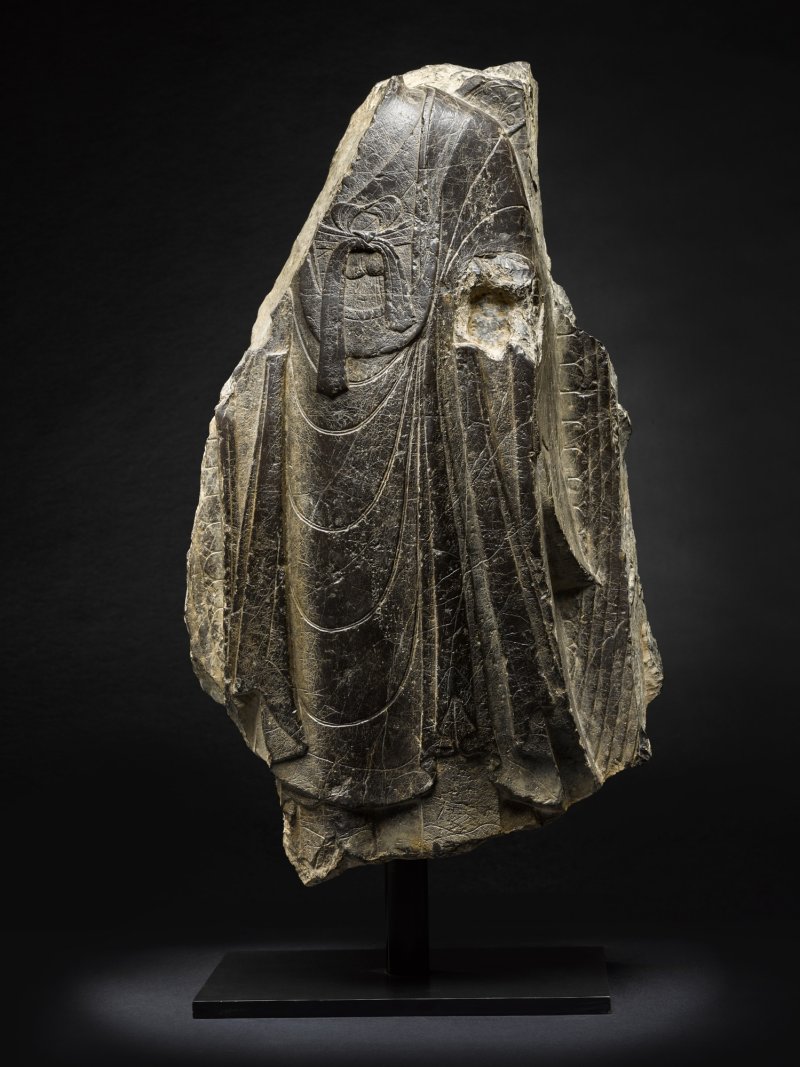
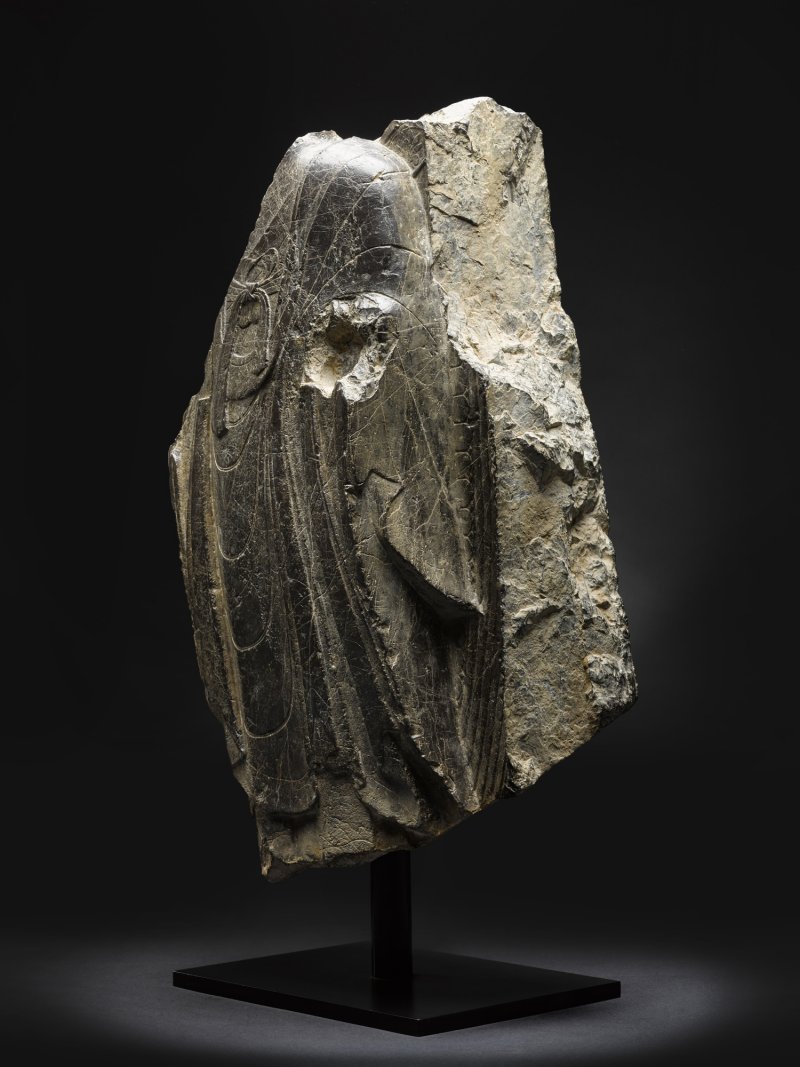
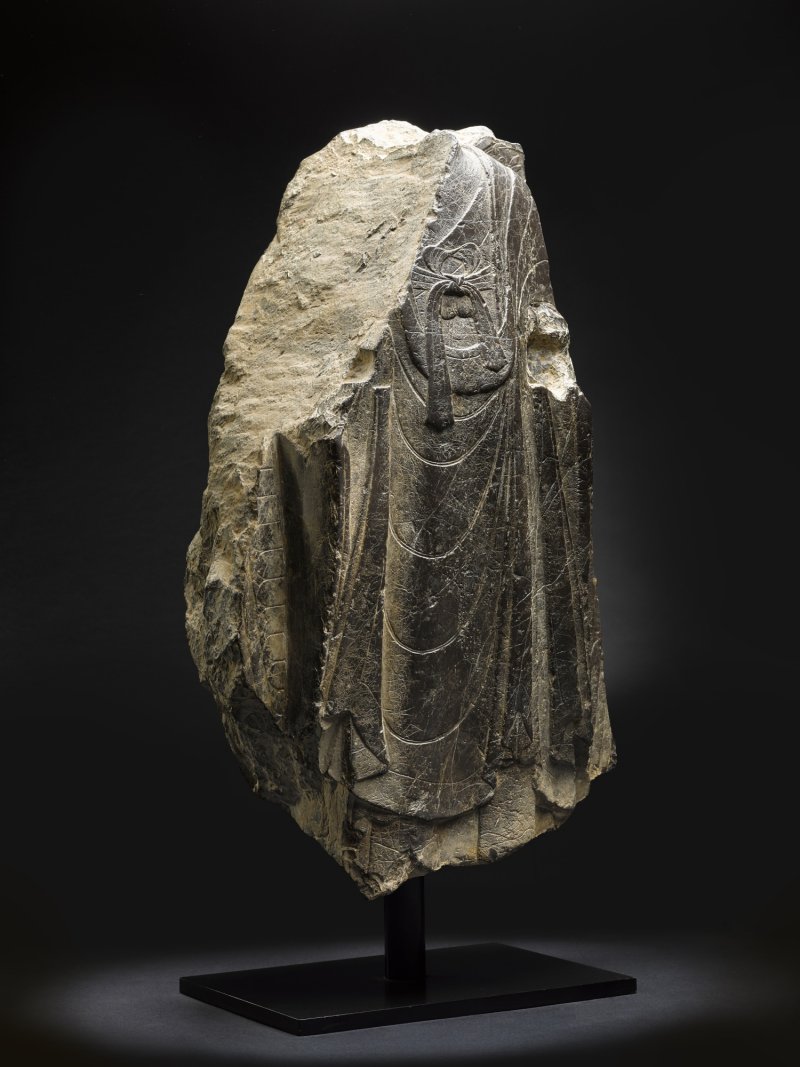
The torso is fragmentary as visible in the photos.
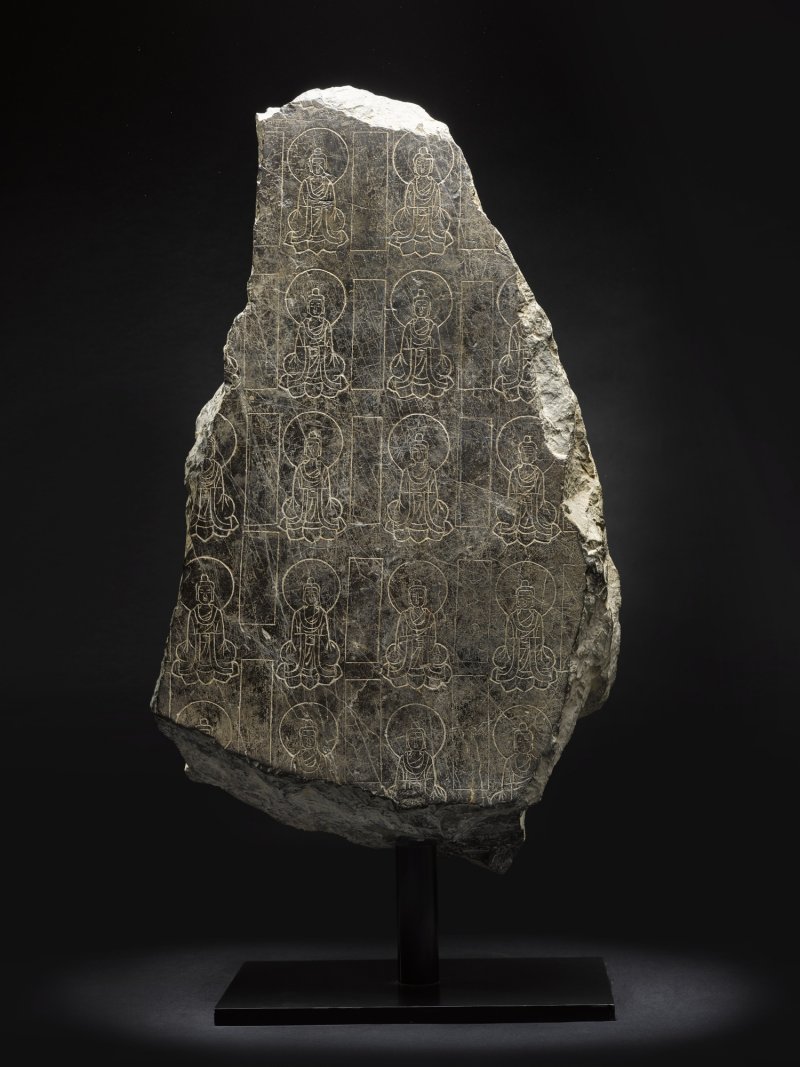
The incised decoration is well preserved, especially the myriad Buddas on the reverse.
If a condition report is provided to assist you with assessing the condition of the lot, it is for guidance purposes only. Such condition report may not refer to all faults, restoration, alterations, or adaptations because Sotheby's is not a professional conservator or restorer but rather a condition report is a statement of subjective, qualified opinion genuinely held by Sotheby's. For these reasons, any such condition report is not an alternative to taking your own professional advice regarding the condition of the lot. Prospective buyers should also refer to the Guide for Buyers at Auction which includes important notices concerning the type of property in this sale.
更多信息
stand (2)
Height 70 cm, 27½ in.
来源:Beurdeley et Compagnie,巴黎,1996年6月12日
展览:《June 1998》,Nicholas Grindley,倫敦,1998年,編號4
图录
说明:Rippling with life, draped in soft fabrics that gather at a knot across the chest and fold gently along the legs, the present fragment represents a serene yet striking example of the figural arts produced during the first half of sixth century.
While the identity of the present figure might be thought obscured by its fragmentary nature, the soft folds of its robes, its grand posture and the myriad Budhhas to its reverse confirm the figure's identity as the Buddha himself. Two dated steles similarly representing the historical Buddha help to confirm the present attribution, exhibiting the softer more curved treatment of the robes distinctive of Eastern Wei in contrast to the sharper, rigid style of Northern Wei: one in the Museum Reitberg, Zurich, illustrated in Osvald Sirén, Chinese Sculptures in the von der Heydt Collection, Zurich, 1959, cat. no. 22, dated in accordance with 536; and the other in the Cleveland Museum of Art, illustrated in Hai-Wai Yi-Chen. Chinese Art in Overseas Collections, Buddhist Sculpture II, Taipei, 1990, pl. 34, dated in accordance with 537. These figures, sharing the same characteristic dark limestone typical of Eastern Wei centres in Henan, also show the distinct knotting of the garment across the chest falling to the waist.
Another fragment of closely related stone, sculptural quality and Myriad Buddha reverse is attested and likely derived from the same stele as the present, exhibited from the Ching-ya T’ang Collection in The Art of Contemplation - Religious Sculpture from Private Collections, National Palace Museum, Taipei, 1997, p. 80, cat. no. 13.
常见问题
这件東魏 石灰岩雕佛身像的成交价是多少?
落槌价为 预展中。 成交价为 预展中。
拍品的品相状况如何?
The torso is fragmentary as visible in the photos.
The incised decoration is well preserved, especially the myriad Buddas on the reverse.
If a condition report is provided to assist you with assessing the condition of the lot, it is for guidance purposes only. Such condition report may not refer to all faults, restoration, alterations, or adaptations because Sotheby's is not a professional conservator or restorer but rather a condition report is a statement of subjective, qualified opinion genuinely held by Sotheby's. For these reasons, any such condition report is not an alternative to taking your own professional advice regarding the condition of the lot. Prospective buyers should also refer to the Guide for Buyers at Auction which includes important notices concerning the type of property in this sale.
The incised decoration is well preserved, especially the myriad Buddas on the reverse.
If a condition report is provided to assist you with assessing the condition of the lot, it is for guidance purposes only. Such condition report may not refer to all faults, restoration, alterations, or adaptations because Sotheby's is not a professional conservator or restorer but rather a condition report is a statement of subjective, qualified opinion genuinely held by Sotheby's. For these reasons, any such condition report is not an alternative to taking your own professional advice regarding the condition of the lot. Prospective buyers should also refer to the Guide for Buyers at Auction which includes important notices concerning the type of property in this sale.
这件拍品的流传来源是什么?
Beurdeley et Compagnie,巴黎,1996年6月12日
这件拍品曾在哪些展览中展出过?
《June 1998》,Nicholas Grindley,倫敦,1998年,編號4
图录
图录