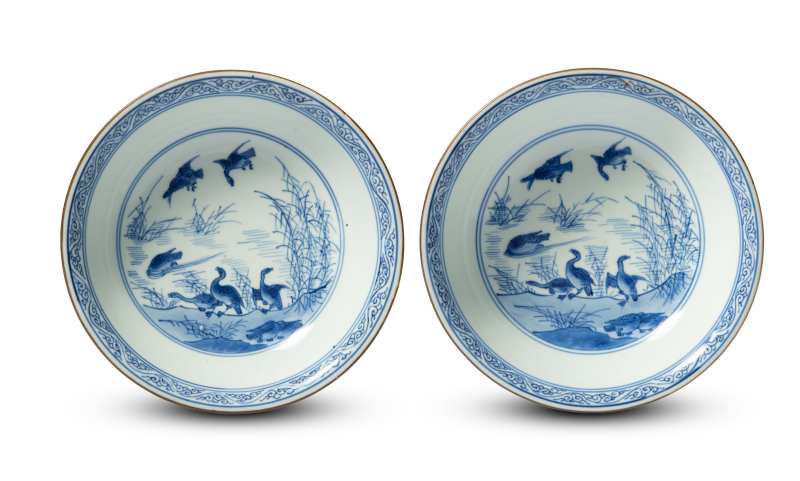

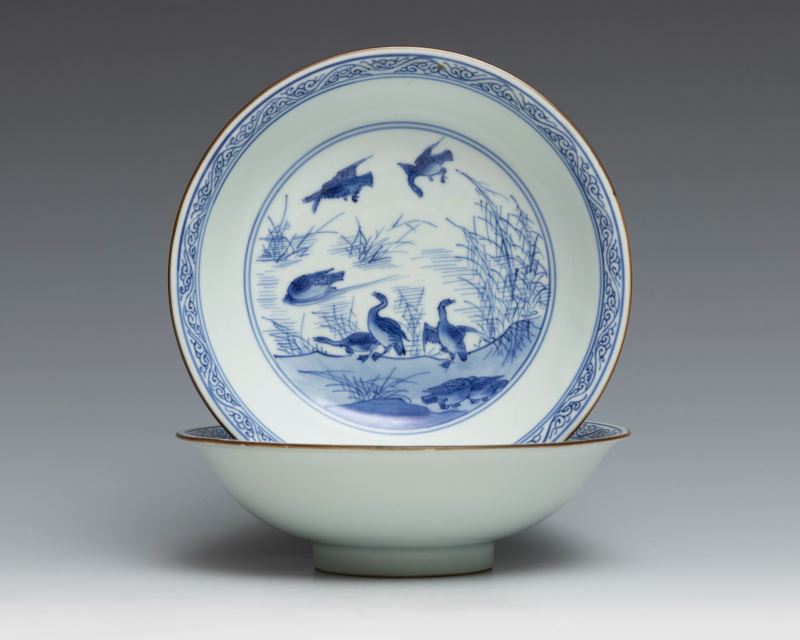
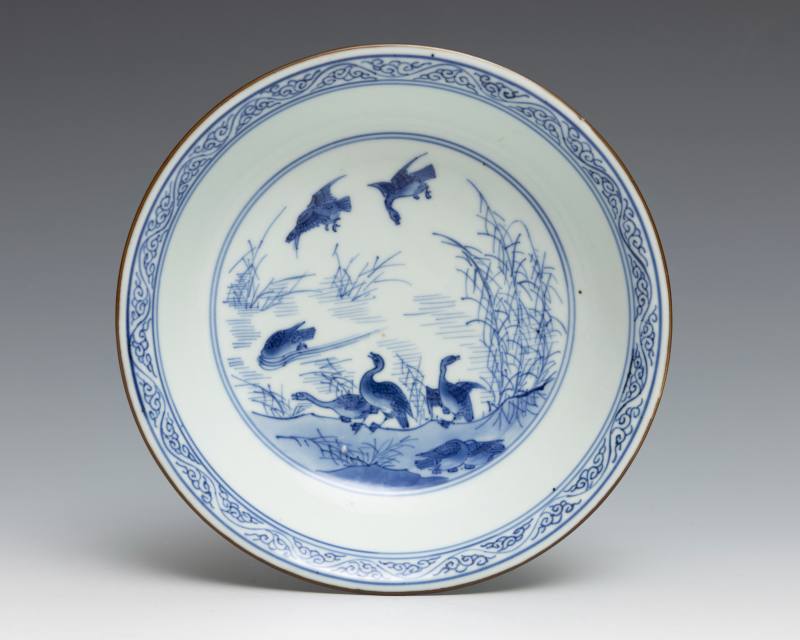
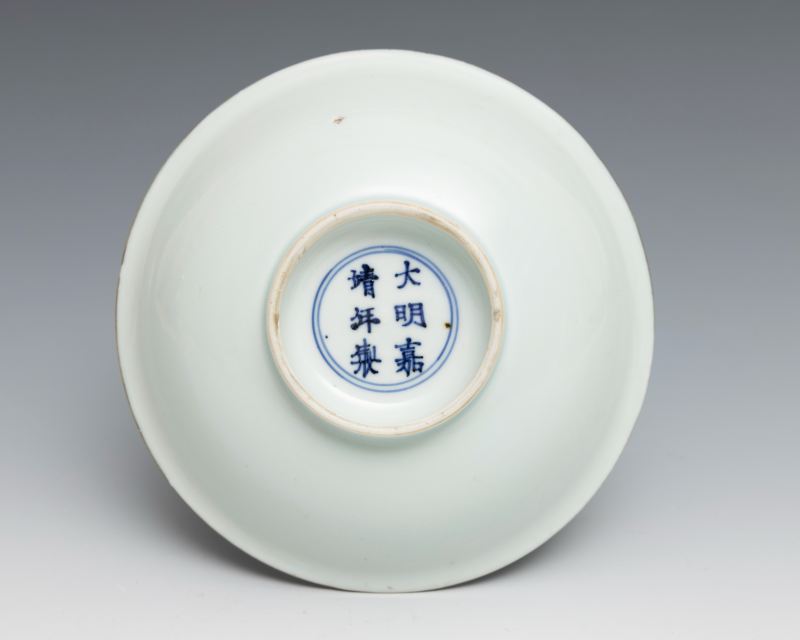
Lot 1013 A pair of blue and white 'geese' deep dishes, Jiajing mark and of Shunzhi period (1644-1661)
落槌价
****
成交价
****
拍品信息
拍品名称
A pair of blue and white 'geese' deep dishes, Jiajing mark and of Shunzhi period (1644-1661)
年代
Transitional period, mid-17th century
起拍价
EUR 2,400
估值区间
€3,000 - €5,000
尺寸
H 5 cm, D 16.5 cm
品相
Both with miniscule flea bites to the rims and a few small firing flaws. One with a flea bite to the standing rim. No damages such as hairlines or chips and no restoration.
更多信息
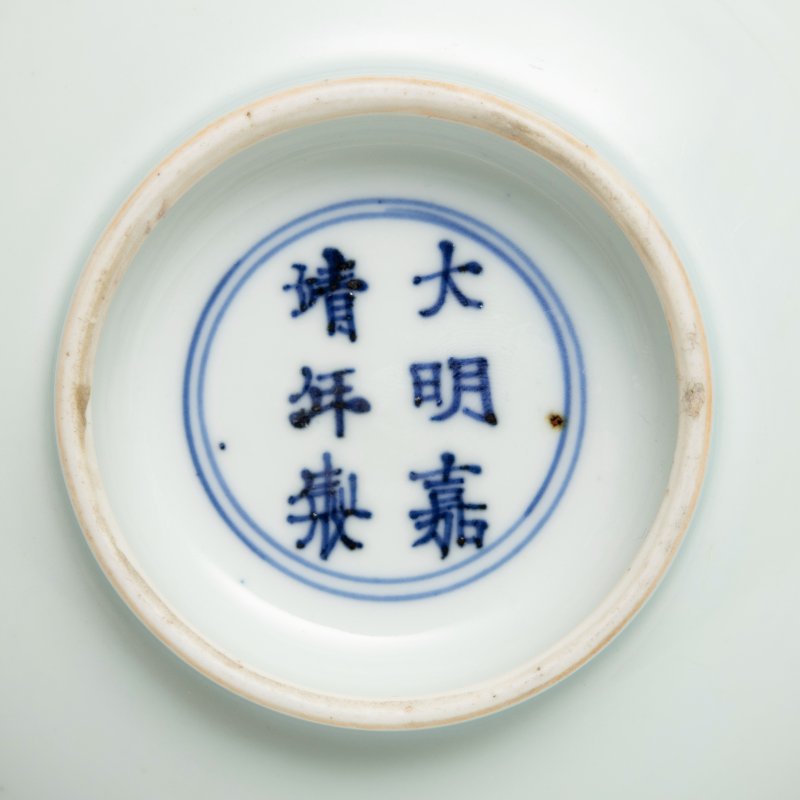
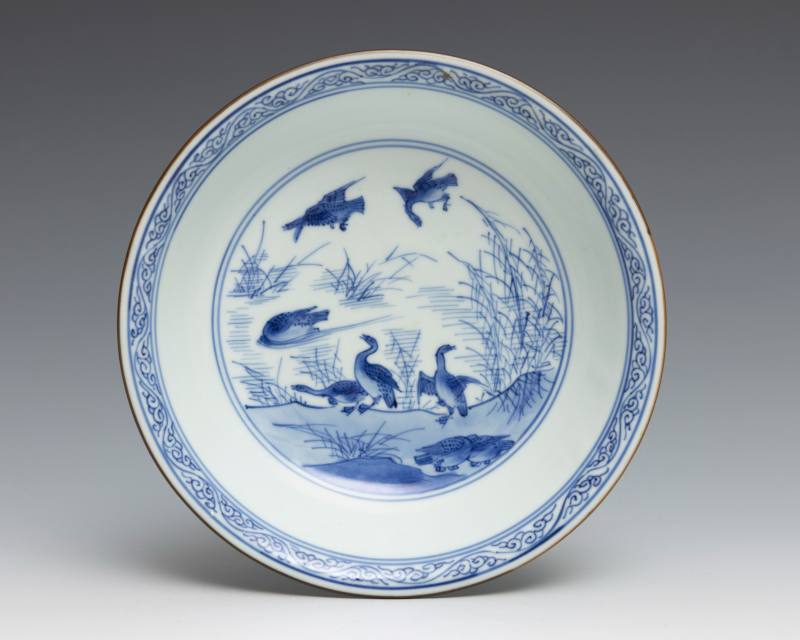
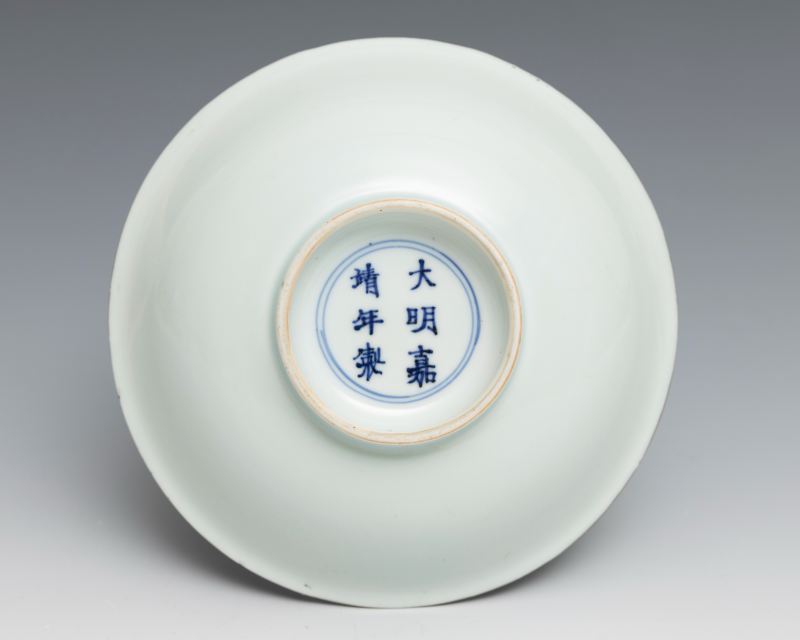
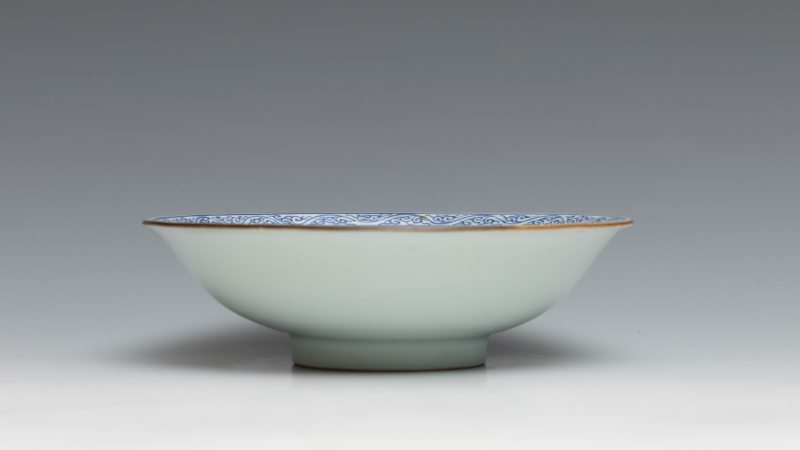
Both of rounded deep form, painted with three ducks beside a pond with various plants and rocks, with two further ducks in flight overhead, all within a scrolling lingzhi fungus border. Marked with a six-character Jiajing reign mark within a double circle.
In traditional Chinese culture, geese were regarded as auspicious birds by ancient scholars, as they were believed to embody the five constant virtues: benevolence, righteousness, propriety, wisdom, and trustworthiness. In addition, the goose’s call carries symbolic significance, as the word for “call” is a homophone of “name.” Newly sprouted reeds, known as “jia,” share the same pronunciation as the term for a “top-ranking scholar.” Consequently, the motif of reeds and geese symbolizes achieving the highest rank in the imperial examinations, representing an auspicious wish for academic success and honor. The relatively thick body and duck-egg blue glaze of this piece suggest that it was likely produced during the early Qing dynasty.
以下内容由AI翻译:
【名称】
明嘉靖款顺治青花鹅纹深盘(一对)
【年代】
明清之际,十七世纪中期
【描述】
均为圆形深腹,绘有三只鸭子在池塘边与各种植物和岩石相伴,上方还有两只飞翔的鸭子,所有图案均在卷曲灵芝边缘内。底部有双圈内的六字嘉靖年款。
在中国传统文化中,古代学者认为鹅是吉祥之鸟,因为它们被认为体现了五常:仁、义、礼、智、信。此外,鹅的叫声具有象征意义,因为“叫”字与“名”同音。新发芽的芦苇被称为“葭”,与“甲”(状元)同音。因此,芦苇和鹅的图案象征着在科举考试中取得最高名次,代表了对学术成功和荣誉的美好祝愿。此件器物相对较厚的胎体和鸭蛋青釉表明它可能是在清早期生产的。
【品相】
两者口沿均有极小的磕碰痕和一些小的烧制瑕疵。其中一件口沿有一处磕碰。无裂纹或缺损,未经修复。
In traditional Chinese culture, geese were regarded as auspicious birds by ancient scholars, as they were believed to embody the five constant virtues: benevolence, righteousness, propriety, wisdom, and trustworthiness. In addition, the goose’s call carries symbolic significance, as the word for “call” is a homophone of “name.” Newly sprouted reeds, known as “jia,” share the same pronunciation as the term for a “top-ranking scholar.” Consequently, the motif of reeds and geese symbolizes achieving the highest rank in the imperial examinations, representing an auspicious wish for academic success and honor. The relatively thick body and duck-egg blue glaze of this piece suggest that it was likely produced during the early Qing dynasty.
以下内容由AI翻译:
【名称】
明嘉靖款顺治青花鹅纹深盘(一对)
【年代】
明清之际,十七世纪中期
【描述】
均为圆形深腹,绘有三只鸭子在池塘边与各种植物和岩石相伴,上方还有两只飞翔的鸭子,所有图案均在卷曲灵芝边缘内。底部有双圈内的六字嘉靖年款。
在中国传统文化中,古代学者认为鹅是吉祥之鸟,因为它们被认为体现了五常:仁、义、礼、智、信。此外,鹅的叫声具有象征意义,因为“叫”字与“名”同音。新发芽的芦苇被称为“葭”,与“甲”(状元)同音。因此,芦苇和鹅的图案象征着在科举考试中取得最高名次,代表了对学术成功和荣誉的美好祝愿。此件器物相对较厚的胎体和鸭蛋青釉表明它可能是在清早期生产的。
【品相】
两者口沿均有极小的磕碰痕和一些小的烧制瑕疵。其中一件口沿有一处磕碰。无裂纹或缺损,未经修复。
常见问题
拍品的品相状况如何?
Both with miniscule flea bites to the rims and a few small firing flaws. One with a flea bite to the standing rim. No damages such as hairlines or chips and no restoration.
拍品的尺寸是多少?
H 5 cm, D 16.5 cm