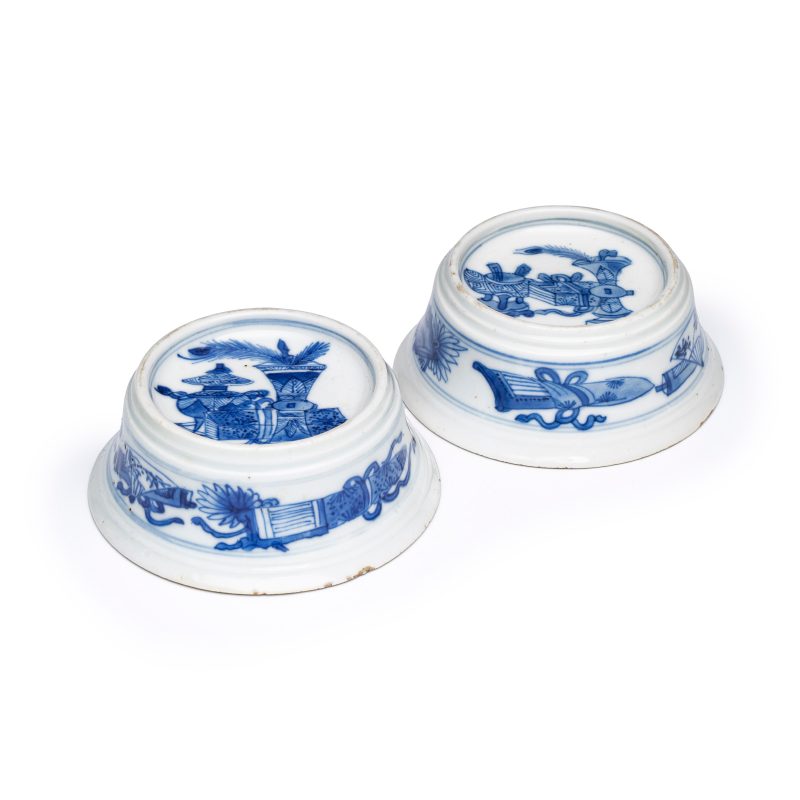

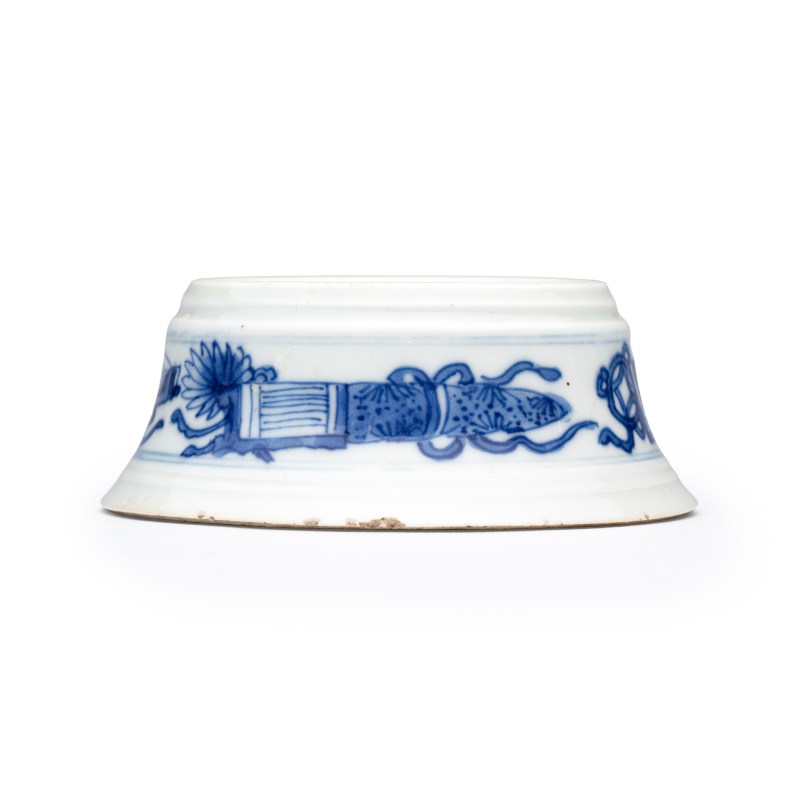
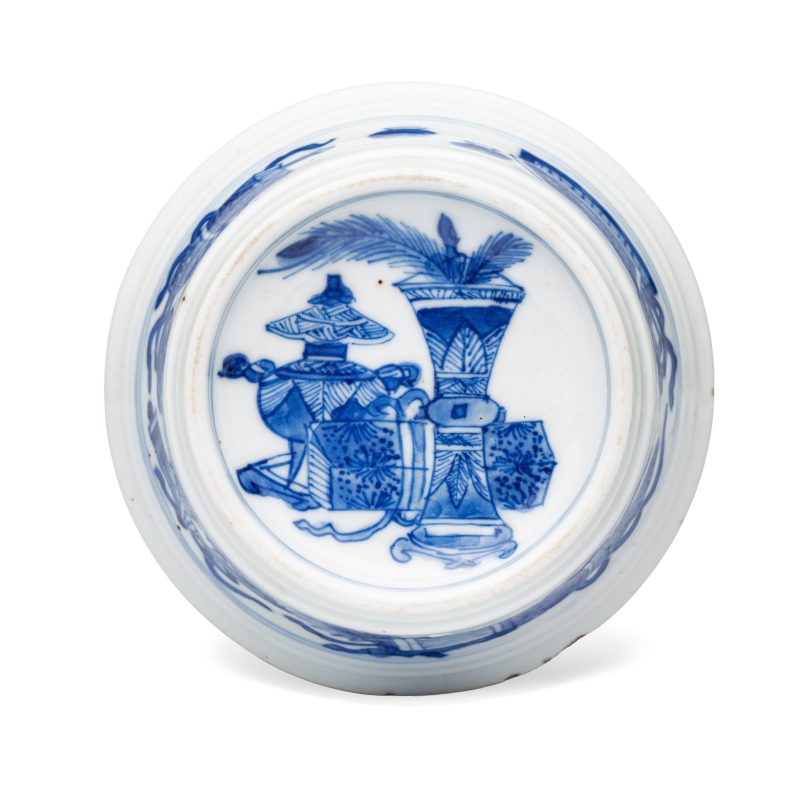
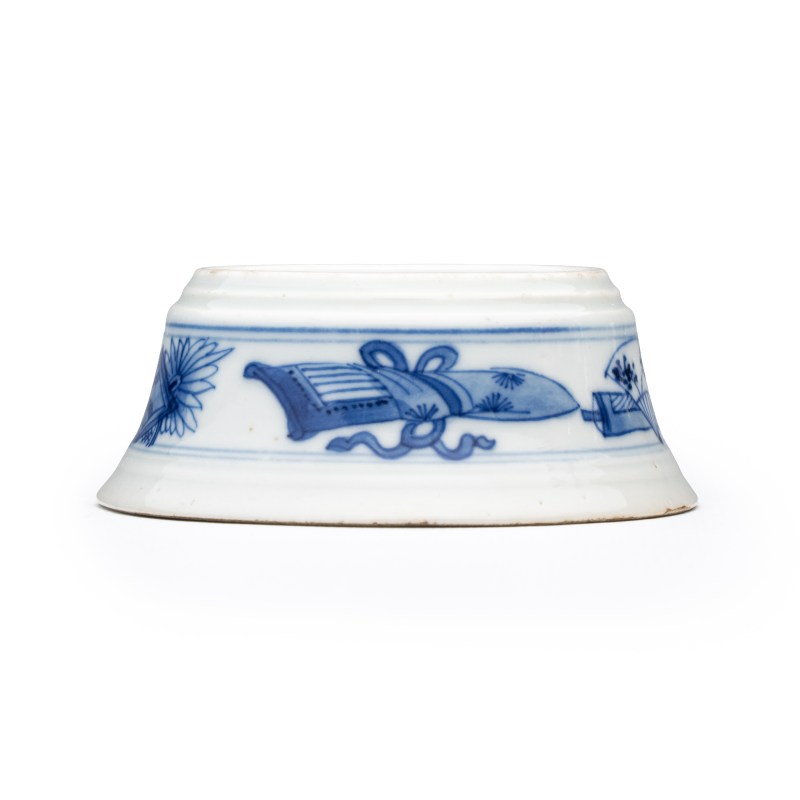
Lot 197 A pair of Chinese blue and white salt trenchers with antiquities design
落槌价
****
成交价
****
拍品信息
拍品名称
A pair of Chinese blue and white salt trenchers with antiquities design
年代
Kangxi
起拍价
未知
估值区间
€ 800 – € 1.200
尺寸
OH: H. 3,2 cm, Diam. 8,6 cm
品相
未知
更多信息
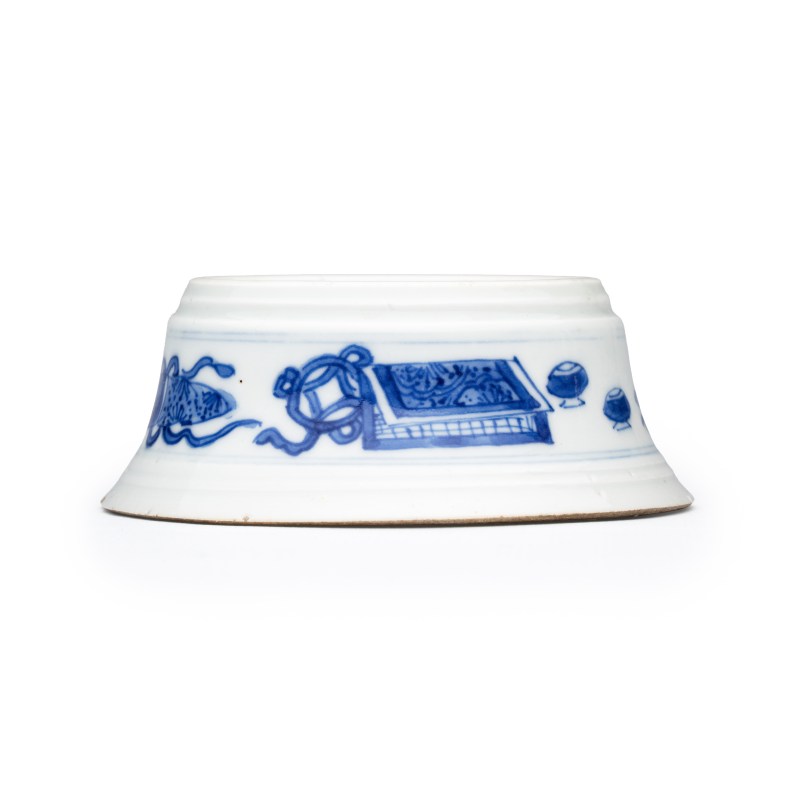
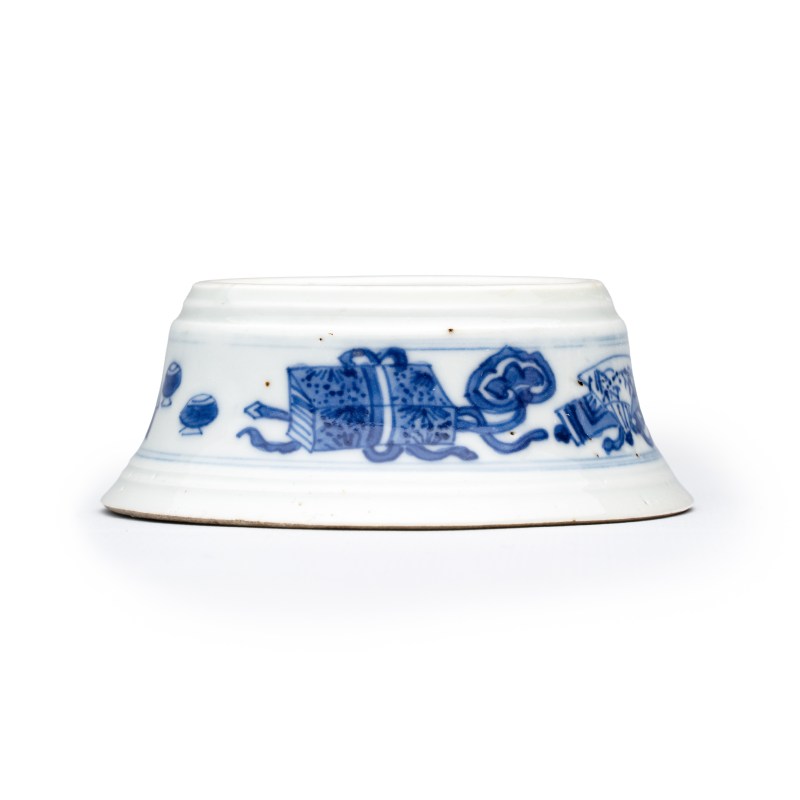
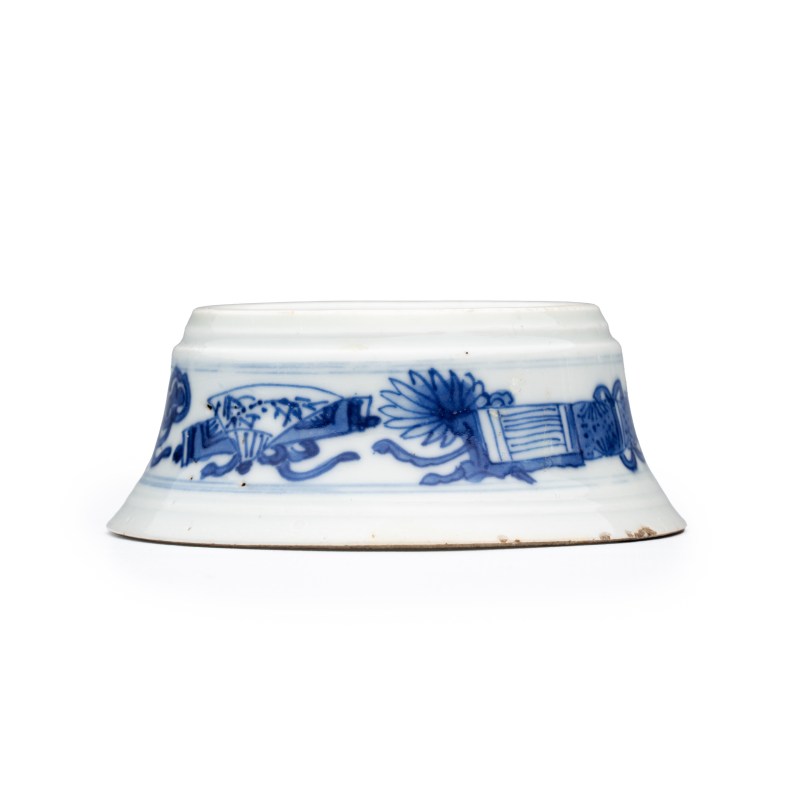
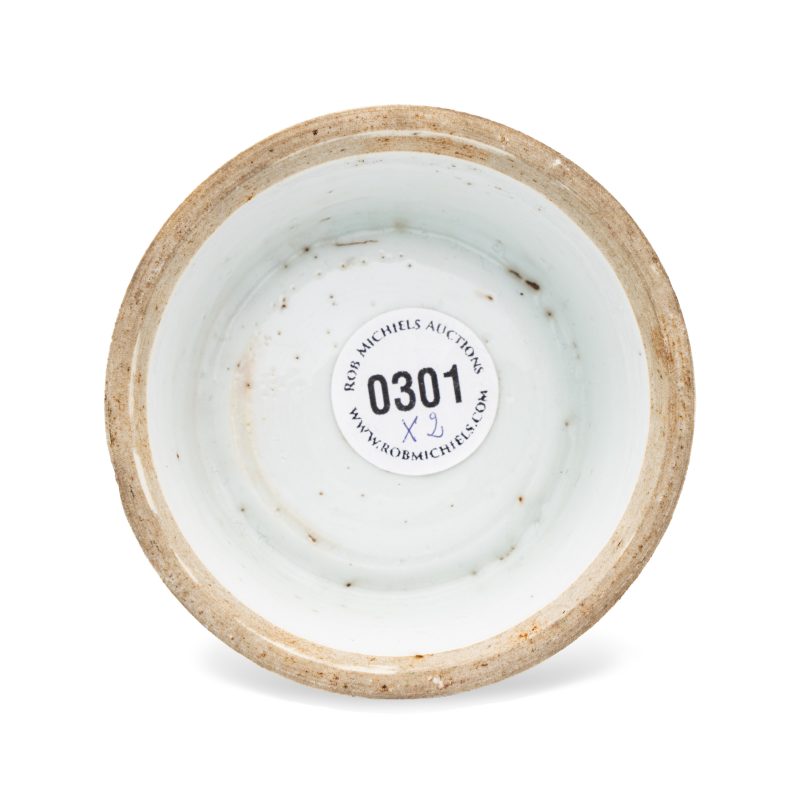
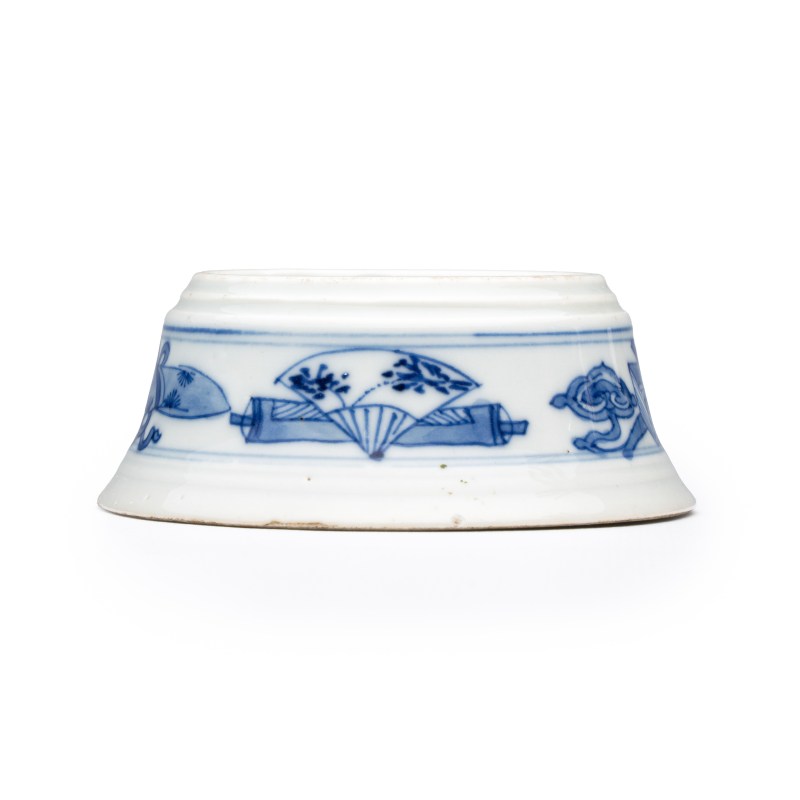
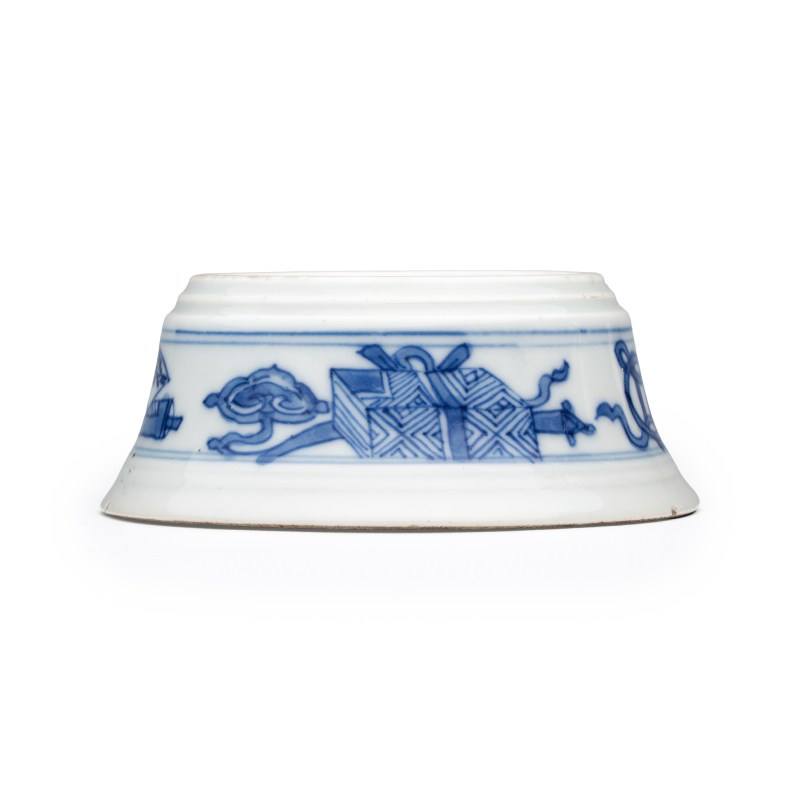
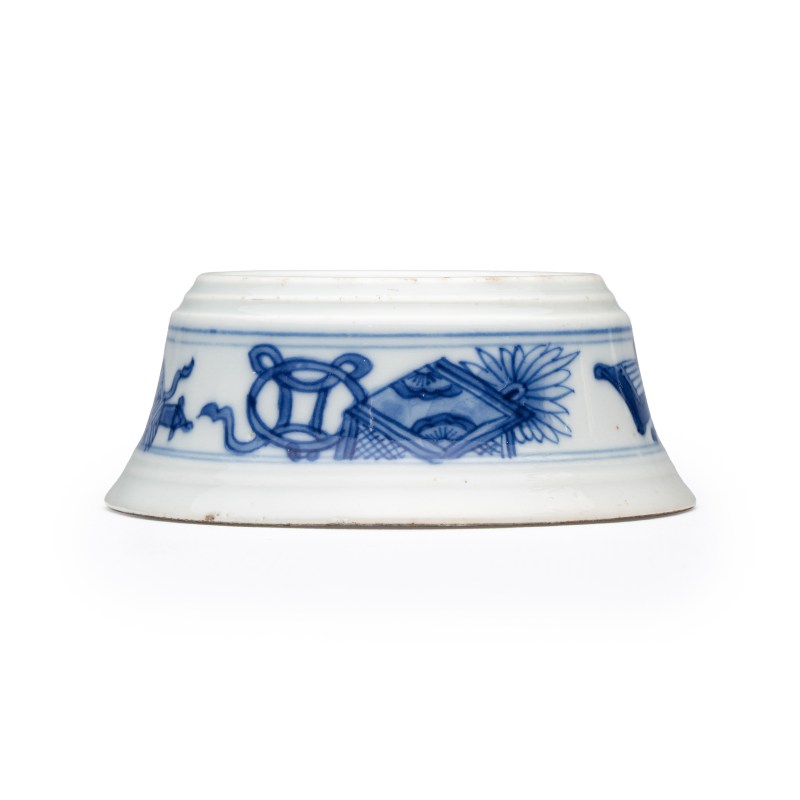
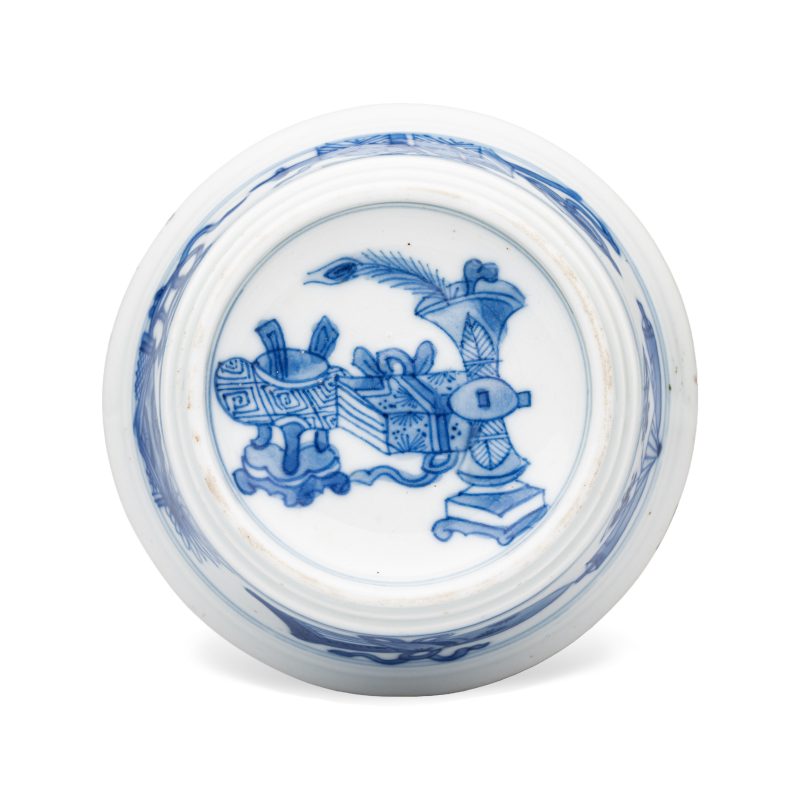
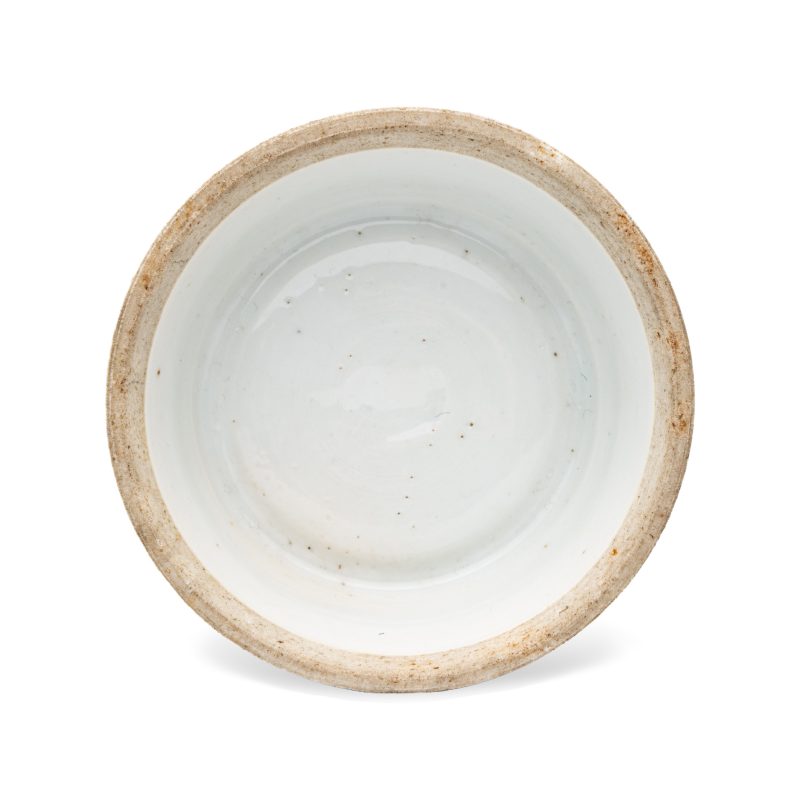
Each of compressed circular form, finely painted in underglaze cobalt blue. The wells are decorated with elegant arrangements of auspicious antiquities (bogu), including precious vessels, scrolls, books, and scholarly implements, while the exteriors are encircled by a continuous frieze of further treasured objects alternating with ribbons and floral sprays. The salts have recessed glazed interiors and unglazed foot rims.
During the medieval period, salt was a valuable commodity in the West. Dining tables were typically furnished with a single large standing salt or master salt, the position of which reflected the social status of those seated at the table. This gave rise to the expressions “above the salt”, referring to honoured guests, and “below the salt”, referring to those of lower rank or servants.
As salt became more affordable around 1700, these large communal salt cellars gradually disappeared. Wealthy households instead adopted individual trencher salts, allowing each guest to season their food from their own salt cellar. By the 1730s, these were largely replaced by oval or cauldron-shaped silver salt cellars raised on three or four feet, often fitted with removable blue glass liners to protect the silver from the corrosive effects of salt. These fashionable European forms were subsequently adapted by Chinese potters for the export market.
兩件鹽碟均作扁圓形,以青花精繪紋飾。碟內繪博古圖,包括各式珍貴器皿、書卷、典籍及文房用具,外壁環繪連續博古紋,與綬帶及折枝花卉相間排列。碟內凹處施釉,足圈露胎。
中世紀時期,鹽在西方是一種珍貴商品。宴席上通常只設一件大型高足鹽器,稱為「主鹽器」(master salt),賓客座位與鹽器的相對位置反映其社會地位。由此產生了「above the salt」與「below the salt」兩種說法,前者指坐在鹽器上席的尊貴賓客,後者則指位居下席、身份較低者或僕役。
約至1700年前後,隨着鹽價下降,大型共用鹽器逐漸退出餐桌,富裕家庭開始使用供每位賓客單獨取鹽的小型鹽碟。至十八世紀30年代,此類器物又大多被橢圓形或釜形銀製鹽碟取代,通常下承三足或四足,並配可拆卸的藍色玻璃內膽,以免鹽分腐蝕銀器。這些在歐洲流行的器形,後來亦被中國窯工仿製成瓷,專供外銷市場。
Provenance:
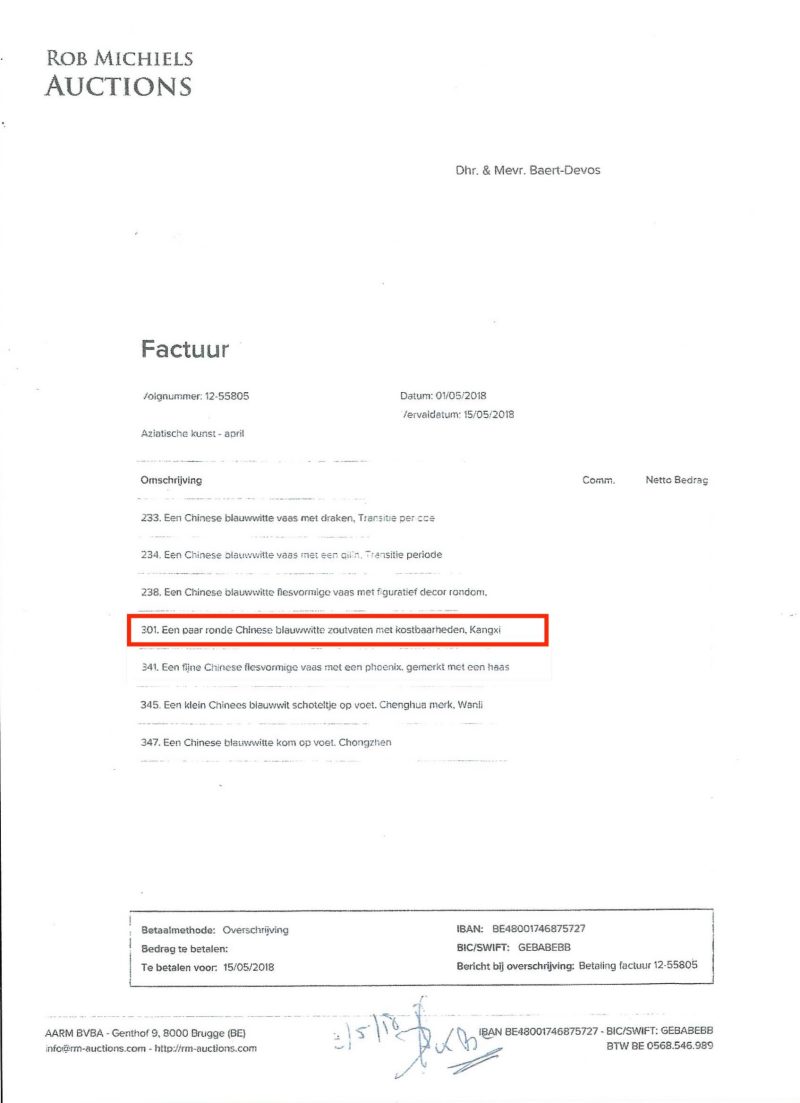
Rob Michiels Auctions, 28 April 2018, lot 301. (sold EUR 1.300,00) (link)
The Mr. and Mrs. Baert-Devos Collection, Belgium, acquired from the above. (see added scan)
During the medieval period, salt was a valuable commodity in the West. Dining tables were typically furnished with a single large standing salt or master salt, the position of which reflected the social status of those seated at the table. This gave rise to the expressions “above the salt”, referring to honoured guests, and “below the salt”, referring to those of lower rank or servants.
As salt became more affordable around 1700, these large communal salt cellars gradually disappeared. Wealthy households instead adopted individual trencher salts, allowing each guest to season their food from their own salt cellar. By the 1730s, these were largely replaced by oval or cauldron-shaped silver salt cellars raised on three or four feet, often fitted with removable blue glass liners to protect the silver from the corrosive effects of salt. These fashionable European forms were subsequently adapted by Chinese potters for the export market.
兩件鹽碟均作扁圓形,以青花精繪紋飾。碟內繪博古圖,包括各式珍貴器皿、書卷、典籍及文房用具,外壁環繪連續博古紋,與綬帶及折枝花卉相間排列。碟內凹處施釉,足圈露胎。
中世紀時期,鹽在西方是一種珍貴商品。宴席上通常只設一件大型高足鹽器,稱為「主鹽器」(master salt),賓客座位與鹽器的相對位置反映其社會地位。由此產生了「above the salt」與「below the salt」兩種說法,前者指坐在鹽器上席的尊貴賓客,後者則指位居下席、身份較低者或僕役。
約至1700年前後,隨着鹽價下降,大型共用鹽器逐漸退出餐桌,富裕家庭開始使用供每位賓客單獨取鹽的小型鹽碟。至十八世紀30年代,此類器物又大多被橢圓形或釜形銀製鹽碟取代,通常下承三足或四足,並配可拆卸的藍色玻璃內膽,以免鹽分腐蝕銀器。這些在歐洲流行的器形,後來亦被中國窯工仿製成瓷,專供外銷市場。
Provenance:
Rob Michiels Auctions, 28 April 2018, lot 301. (sold EUR 1.300,00) (link)
The Mr. and Mrs. Baert-Devos Collection, Belgium, acquired from the above. (see added scan)
常见问题
拍品的尺寸是多少?
OH: H. 3,2 cm, Diam. 8,6 cm