
拍品信息
拍品名称
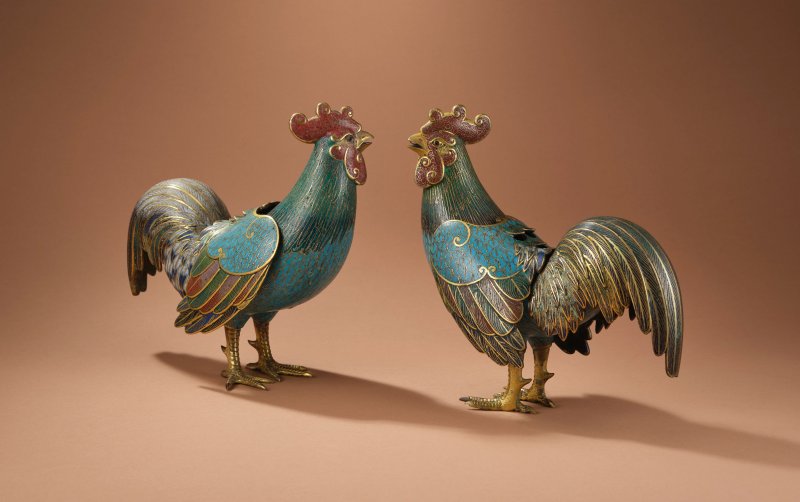
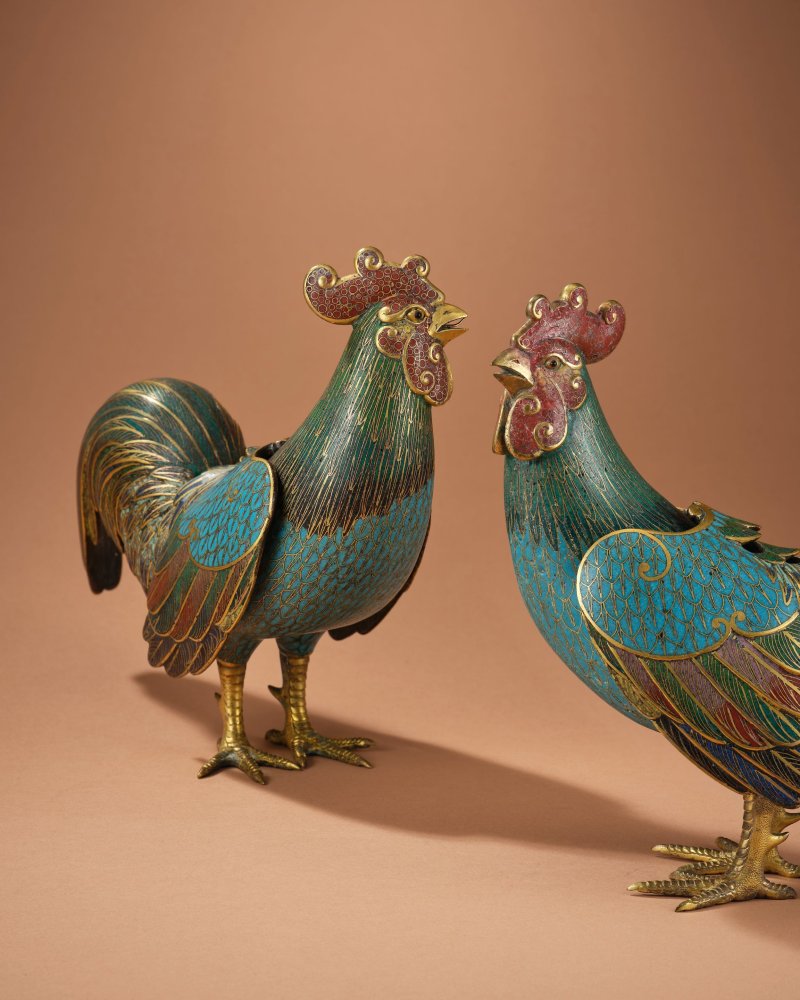
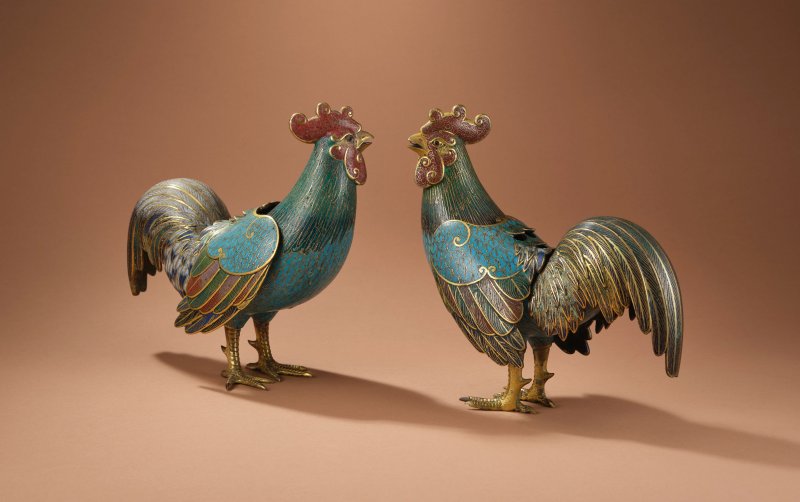
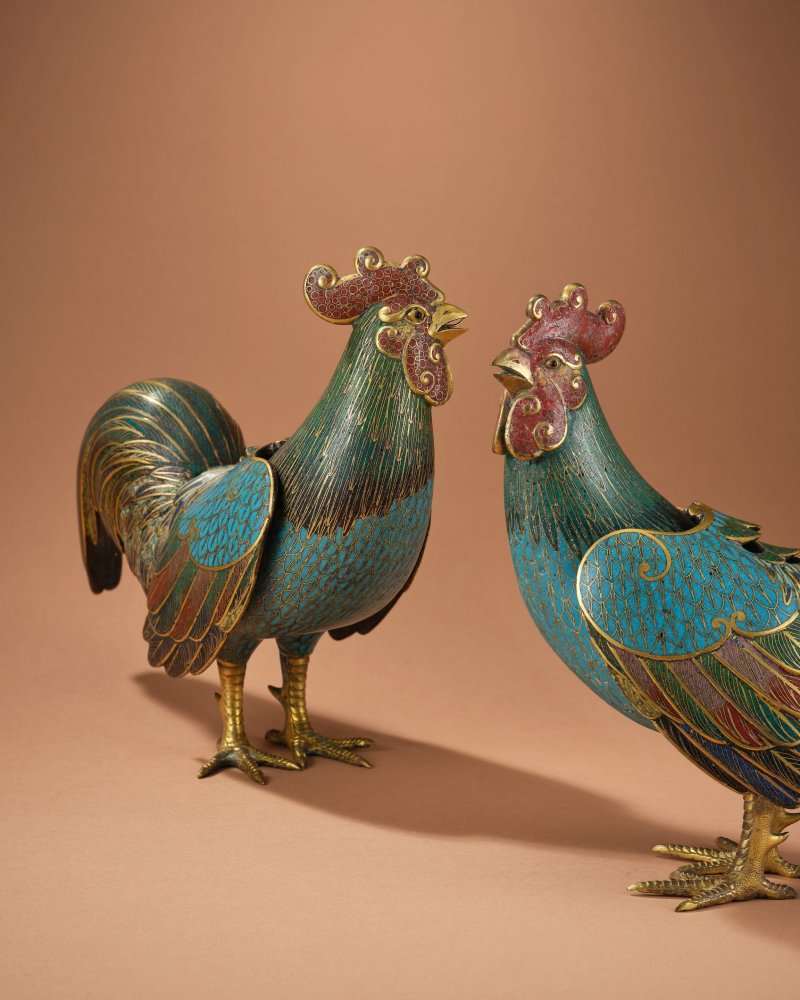
清乾隆 掐絲琺瑯天雞式爐一對 | A SUPERB PAIR OF CLOISONNÉ ENAMEL COCKEREL INCENSE BURNERS AND COVERS
年代
Qianlong
起拍价
HKD 700,000
估值区间
HKD 700000 - 900000
尺寸
未知
品相
未知
更多信息
Qianlong
Each naturalistically modelled, poised on meticulously cast and gilt-bronze feet, their plumage finely delineated with sinuous cloisonné wires and enriched with vivid blue, red, green, pink and white enamels, turning slightly to the left, each cockerel lifts its head with the beak gently parted beneath beady eyes and a bold red comb, the covers similarly decorated with fine plumage, the exuberant tails rising and falling in a large, sweeping curve.
Each 19.6cm (7 3/4in) long. (4).
Footnotes
清乾隆 掐絲琺瑯天雞式爐一對
Provenance:
The property of a Lady of Title
Christie's Paris, 9 June 2021, lot 161
來源:
勳爵夫人藏品
巴黎佳士得,2021年6月9日,拍品編號161
Figures of animals, including various birds, were made in cloisonné enamel during the 18th to 19th centuries. They resulted in a menagerie, made for the decoration of residences of the elite and for Imperial palaces.
The cockerel is regarded as an auspicious motif, in part because the character for cockerel or rooster, 雞 (), is a homophone of 吉 (), 'good fortune'. Furthermore, the association of the rooster with moral qualities derives from the (韓詩外傳), which describes it as a 'bird of five virtues' (五德之禽). The text states:
頭戴冠者,文也;足搏距者,武也;敵在前敢鬥者,勇也;見食相呼者,仁也;守夜不失時者,信也。
Which may be translated as:
These attributes contributed to the rooster's long-standing popularity as a symbol of good luck, vigilance, and upright conduct in Chinese art.
Compare with a very similar single cloisonné enamel 'cockerel' incense burner and cover, Qianlong, in the collection of the Musée des Arts Décoratifs, Paris (acc.no.23.613), illustrated by B.Quette, , New York, Paris, New Haven and London, 2011, p.280, no.111. See also a similar cloisonné enamel 'cockerel' incense burner and cover, second half of the 18th century, in the Metropolitan Museum of Art, New York (acc.no.29.110.41).
See a very similar single cloisonné enamel 'cockerel' incense burner and cover, Qianlong, which was sold at Christie's London, 6 November 2007, lot 103, and again at Sotheby's Hong Kong, 5 May 2026, lot 9856, from the Sze Tak Tong collection.
十八至十九世紀間,掐絲琺瑯工藝流行製作各類動物造像,包括各式禽鳥,或陳於豪門宅邸,或置於宮廷園苑,蔚為珍禽百獸之觀。此類選材一如中國工藝傳統,常取特定瑞獸以象徵祥瑞,並以琺瑯等多種材質反覆呈現。
公雞乃中國傳統吉祥圖案,因其音諧「吉」,寓吉祥之意。又《韓詩外傳》載雞具五德,謂:「頭戴冠者,文也;足搏距者,武也;敵在前敢鬥者,勇也;見食相呼者,仁也;守夜不失時者,信也。」此五德之說,更賦予公雞警醒端正之品格。
比較法國裝飾藝術博物館藏一件乾隆時期掐絲琺瑯天雞式爐(館藏編號:23.613),見B.Quette,《Cloisonné: Chinese Enamels from the Yuan, Ming, and Qing Dynasties》,紐約、巴黎、紐哈芬及倫敦,2011年,頁280,編號111。紐約大都會藝術博物館也有相似例子(館藏編號:29.110.41),館方斷代十八世紀下半葉,可作比對。
另見一類例,先售於倫敦佳士得,2007年11月6日,拍品編號103,入世德堂收藏,並在香港蘇富比易手,2026年5月5日,拍品編號9856。
Each naturalistically modelled, poised on meticulously cast and gilt-bronze feet, their plumage finely delineated with sinuous cloisonné wires and enriched with vivid blue, red, green, pink and white enamels, turning slightly to the left, each cockerel lifts its head with the beak gently parted beneath beady eyes and a bold red comb, the covers similarly decorated with fine plumage, the exuberant tails rising and falling in a large, sweeping curve.
Each 19.6cm (7 3/4in) long. (4).
Footnotes
清乾隆 掐絲琺瑯天雞式爐一對
Provenance:
The property of a Lady of Title
Christie's Paris, 9 June 2021, lot 161
來源:
勳爵夫人藏品
巴黎佳士得,2021年6月9日,拍品編號161
Figures of animals, including various birds, were made in cloisonné enamel during the 18th to 19th centuries. They resulted in a menagerie, made for the decoration of residences of the elite and for Imperial palaces.
The cockerel is regarded as an auspicious motif, in part because the character for cockerel or rooster, 雞 (), is a homophone of 吉 (), 'good fortune'. Furthermore, the association of the rooster with moral qualities derives from the (韓詩外傳), which describes it as a 'bird of five virtues' (五德之禽). The text states:
頭戴冠者,文也;足搏距者,武也;敵在前敢鬥者,勇也;見食相呼者,仁也;守夜不失時者,信也。
Which may be translated as:
These attributes contributed to the rooster's long-standing popularity as a symbol of good luck, vigilance, and upright conduct in Chinese art.
Compare with a very similar single cloisonné enamel 'cockerel' incense burner and cover, Qianlong, in the collection of the Musée des Arts Décoratifs, Paris (acc.no.23.613), illustrated by B.Quette, , New York, Paris, New Haven and London, 2011, p.280, no.111. See also a similar cloisonné enamel 'cockerel' incense burner and cover, second half of the 18th century, in the Metropolitan Museum of Art, New York (acc.no.29.110.41).
See a very similar single cloisonné enamel 'cockerel' incense burner and cover, Qianlong, which was sold at Christie's London, 6 November 2007, lot 103, and again at Sotheby's Hong Kong, 5 May 2026, lot 9856, from the Sze Tak Tong collection.
十八至十九世紀間,掐絲琺瑯工藝流行製作各類動物造像,包括各式禽鳥,或陳於豪門宅邸,或置於宮廷園苑,蔚為珍禽百獸之觀。此類選材一如中國工藝傳統,常取特定瑞獸以象徵祥瑞,並以琺瑯等多種材質反覆呈現。
公雞乃中國傳統吉祥圖案,因其音諧「吉」,寓吉祥之意。又《韓詩外傳》載雞具五德,謂:「頭戴冠者,文也;足搏距者,武也;敵在前敢鬥者,勇也;見食相呼者,仁也;守夜不失時者,信也。」此五德之說,更賦予公雞警醒端正之品格。
比較法國裝飾藝術博物館藏一件乾隆時期掐絲琺瑯天雞式爐(館藏編號:23.613),見B.Quette,《Cloisonné: Chinese Enamels from the Yuan, Ming, and Qing Dynasties》,紐約、巴黎、紐哈芬及倫敦,2011年,頁280,編號111。紐約大都會藝術博物館也有相似例子(館藏編號:29.110.41),館方斷代十八世紀下半葉,可作比對。
另見一類例,先售於倫敦佳士得,2007年11月6日,拍品編號103,入世德堂收藏,並在香港蘇富比易手,2026年5月5日,拍品編號9856。
常见问题
这件清乾隆 掐絲琺瑯天雞式爐一對 | A SUPERB PAIR OF CLOISONNÉ ENAMEL COCKEREL INCENSE BURNERS AND COVERS的成交价是多少?
落槌价为 预展中。 成交价为 预展中。