
Lot 2157 An heirloom Longquan celadon 'peony' tripod incense burner, Southern Song – Yuan dynasty | 南宋至元 龍泉青釉貼纏枝牡丹紋奩式爐
落槌价
****
成交价
****
拍品信息
拍品名称
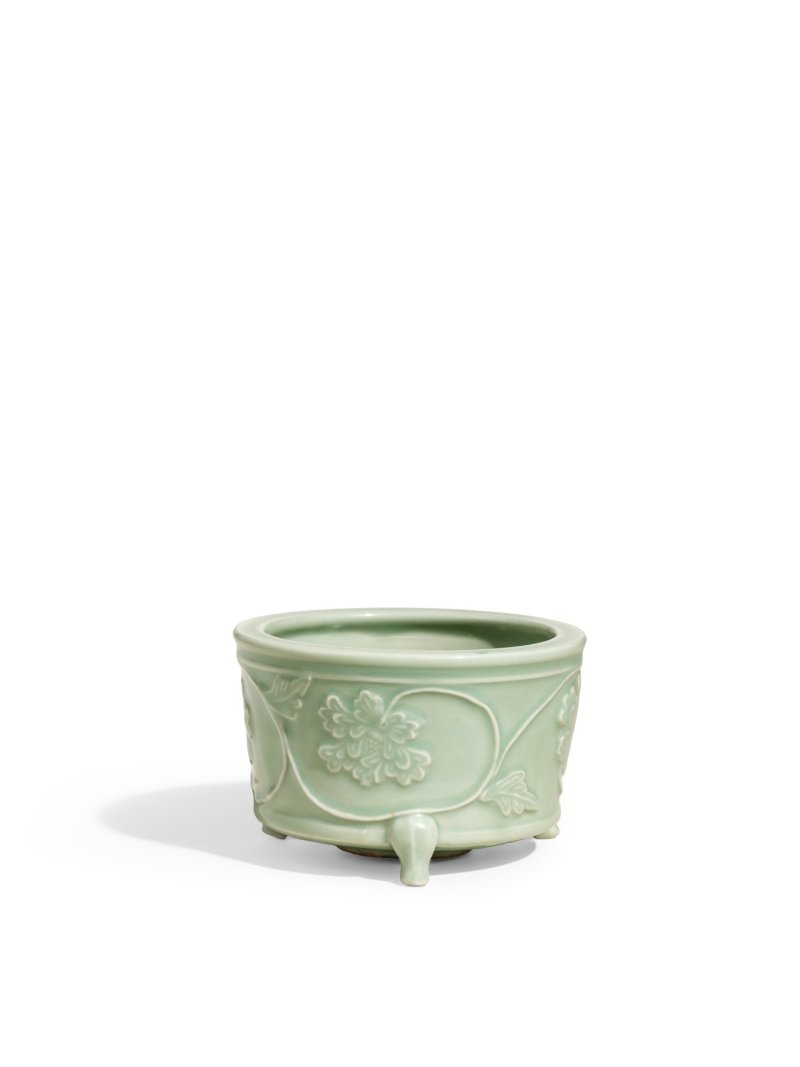
An heirloom Longquan celadon 'peony' tripod incense burner, Southern Song – Yuan dynasty | 南宋至元 龍泉青釉貼纏枝牡丹紋奩式爐
起拍价
HKD 300,000
估值区间
300,000 - 600,000 HKD
尺寸
未知
品相
Good overall condition, with just minor typical firing imperfections, mostly firing lines on the base, and a couple of insignificant kiln flakes on the footring. Light surface wear.
整體品相良好。見正常窰燒微瑕,主要爲爐底窰線,及圈足少許窰剝。輕微器面磨痕。
If a condition report is provided to assist you with assessing the condition of the lot, it is for guidance purposes only. Such condition report may not refer to all faults, restoration, alterations, or adaptations because Sotheby's is not a professional conservator or restorer but rather a condition report is a statement of subjective, qualified opinion genuinely held by Sotheby's. For these reasons, any such condition report is not an alternative to taking your own professional advice regarding the condition of the lot. Prospective buyers should also refer to the Guide for Buyers at Auction which includes important notices concerning the type of property in this sale.
整體品相良好。見正常窰燒微瑕,主要爲爐底窰線,及圈足少許窰剝。輕微器面磨痕。
If a condition report is provided to assist you with assessing the condition of the lot, it is for guidance purposes only. Such condition report may not refer to all faults, restoration, alterations, or adaptations because Sotheby's is not a professional conservator or restorer but rather a condition report is a statement of subjective, qualified opinion genuinely held by Sotheby's. For these reasons, any such condition report is not an alternative to taking your own professional advice regarding the condition of the lot. Prospective buyers should also refer to the Guide for Buyers at Auction which includes important notices concerning the type of property in this sale.
更多信息
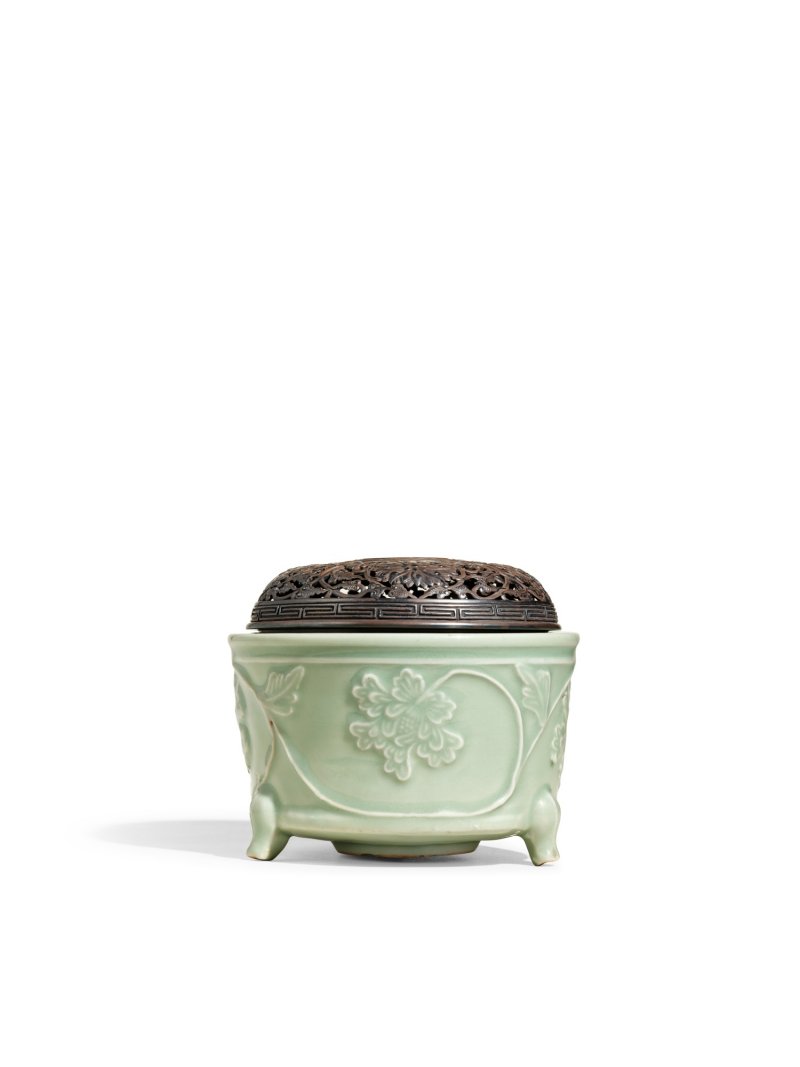
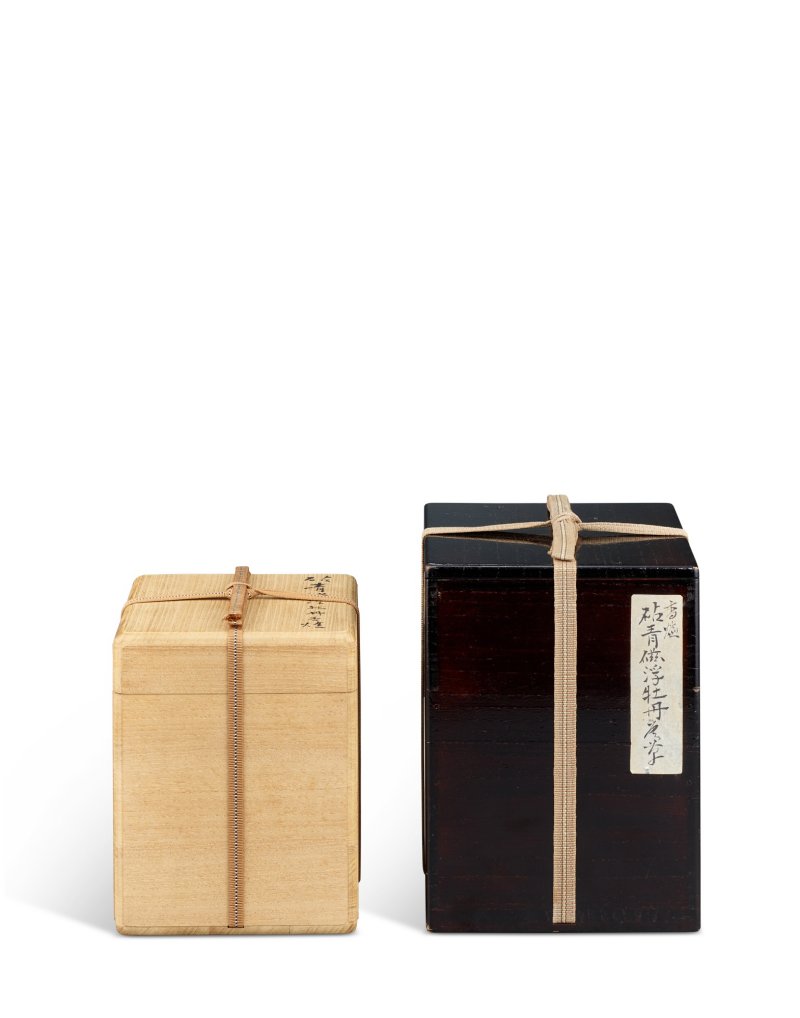
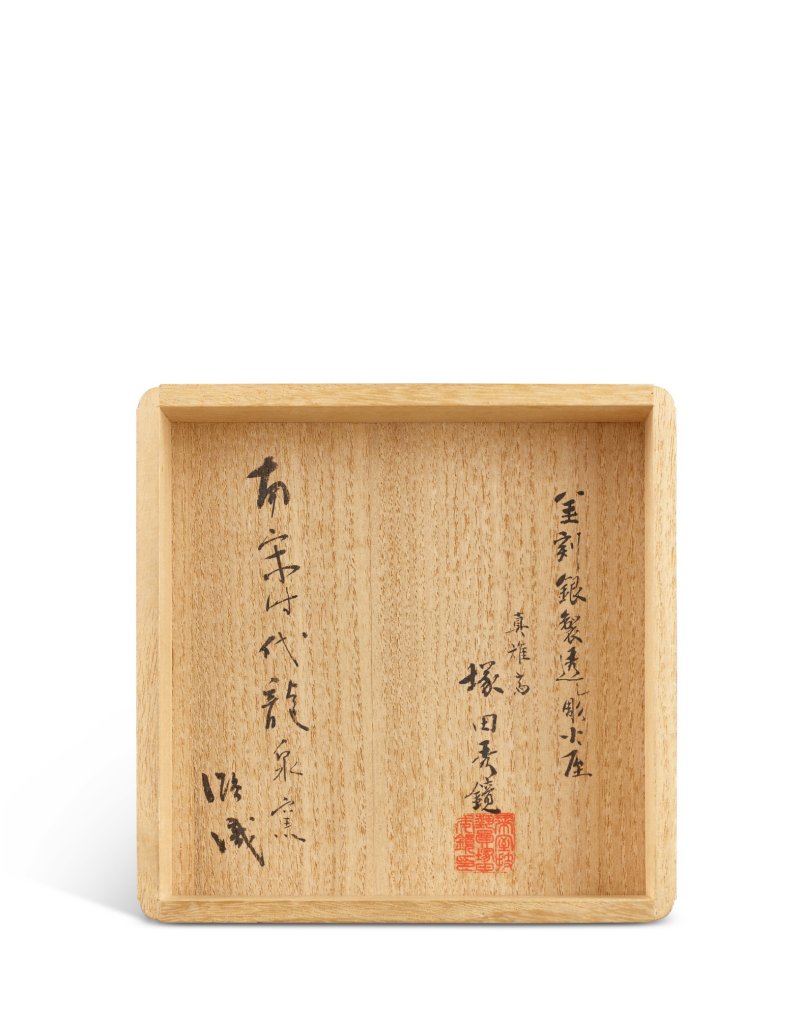
Japanese metal cover made by Tsukada Shukyo (塚田秀鏡, 1848–1918), and double wood box with inscription by Koyama Fujio (小山富士夫, 1900–1975)
w. 13.8 cm
图录
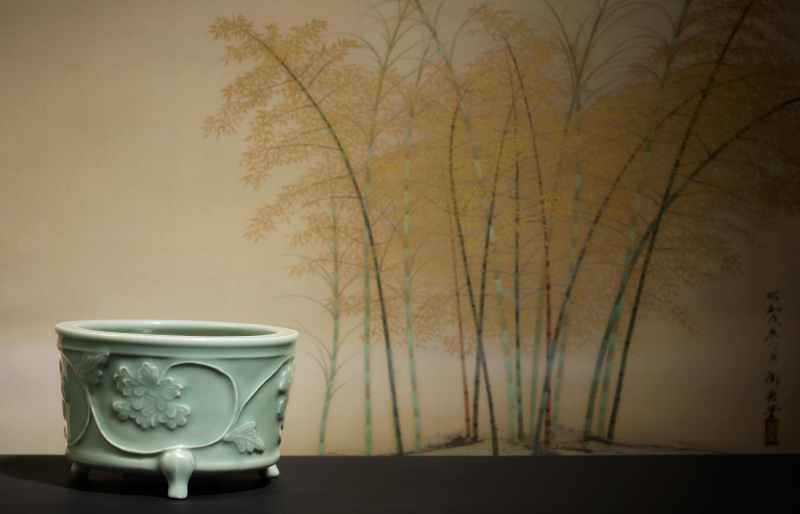
说明:Robed in an unctuous sea-blue celadon glaze with a luminous surface, the present incense burner is a fine example of a much-loved Longquan design. Made at the height of celadon production in the 13th century, it possesses all the features most desirable for a piece of this type: sturdily potted yet gracefully poised atop three small bulbous feet, enlivened by crisp moulded ornament under a generously applied glaze. The body is decorated with raised ribs and a peony scroll design, with four sprig-moulded blossoms joined by stems of trailed slip.
Incense burners of this type were made in both the Song and Yuan dynasties. Similar examples have been excavated from Song layers at Quanzhou, Fujian, the main overseas trade port of the time; see Quanzhou Waixiao Ci Chenlieguan, Museum of Overseas Communication History, Quanzhou, p. 8, bottom left; and from a Yuan tomb at Quanzhou, illustrated in Longquan Qingci, Beijing, 1966, pl. 23, bottom. An heirloom example from the collection of Mr Hirota Matsushige is preserved at the Tokyo National Museum (acc. no. TG‑2481).
Longquan wares were especially prized in Japan. Their glazes were admired for a jade-like, blue-green colour that Japanese connoisseurs described with terms such as kinuta (“mallet”) for the most admired Song blue-green tones. These wares arrived through trade and were incorporated into elite tea culture, where they were treasured as prestigious tea-ceremony vessels and displayed in collections.
w. 13.8 cm
图录
说明:Robed in an unctuous sea-blue celadon glaze with a luminous surface, the present incense burner is a fine example of a much-loved Longquan design. Made at the height of celadon production in the 13th century, it possesses all the features most desirable for a piece of this type: sturdily potted yet gracefully poised atop three small bulbous feet, enlivened by crisp moulded ornament under a generously applied glaze. The body is decorated with raised ribs and a peony scroll design, with four sprig-moulded blossoms joined by stems of trailed slip.
Incense burners of this type were made in both the Song and Yuan dynasties. Similar examples have been excavated from Song layers at Quanzhou, Fujian, the main overseas trade port of the time; see Quanzhou Waixiao Ci Chenlieguan, Museum of Overseas Communication History, Quanzhou, p. 8, bottom left; and from a Yuan tomb at Quanzhou, illustrated in Longquan Qingci, Beijing, 1966, pl. 23, bottom. An heirloom example from the collection of Mr Hirota Matsushige is preserved at the Tokyo National Museum (acc. no. TG‑2481).
Longquan wares were especially prized in Japan. Their glazes were admired for a jade-like, blue-green colour that Japanese connoisseurs described with terms such as kinuta (“mallet”) for the most admired Song blue-green tones. These wares arrived through trade and were incorporated into elite tea culture, where they were treasured as prestigious tea-ceremony vessels and displayed in collections.
常见问题
拍品的品相状况如何?
Good overall condition, with just minor typical firing imperfections, mostly firing lines on the base, and a couple of insignificant kiln flakes on the footring. Light surface wear.
整體品相良好。見正常窰燒微瑕,主要爲爐底窰線,及圈足少許窰剝。輕微器面磨痕。
If a condition report is provided to assist you with assessing the condition of the lot, it is for guidance purposes only. Such condition report may not refer to all faults, restoration, alterations, or adaptations because Sotheby's is not a professional conservator or restorer but rather a condition report is a statement of subjective, qualified opinion genuinely held by Sotheby's. For these reasons, any such condition report is not an alternative to taking your own professional advice regarding the condition of the lot. Prospective buyers should also refer to the Guide for Buyers at Auction which includes important notices concerning the type of property in this sale.
整體品相良好。見正常窰燒微瑕,主要爲爐底窰線,及圈足少許窰剝。輕微器面磨痕。
If a condition report is provided to assist you with assessing the condition of the lot, it is for guidance purposes only. Such condition report may not refer to all faults, restoration, alterations, or adaptations because Sotheby's is not a professional conservator or restorer but rather a condition report is a statement of subjective, qualified opinion genuinely held by Sotheby's. For these reasons, any such condition report is not an alternative to taking your own professional advice regarding the condition of the lot. Prospective buyers should also refer to the Guide for Buyers at Auction which includes important notices concerning the type of property in this sale.