
拍品信息
拍品名称
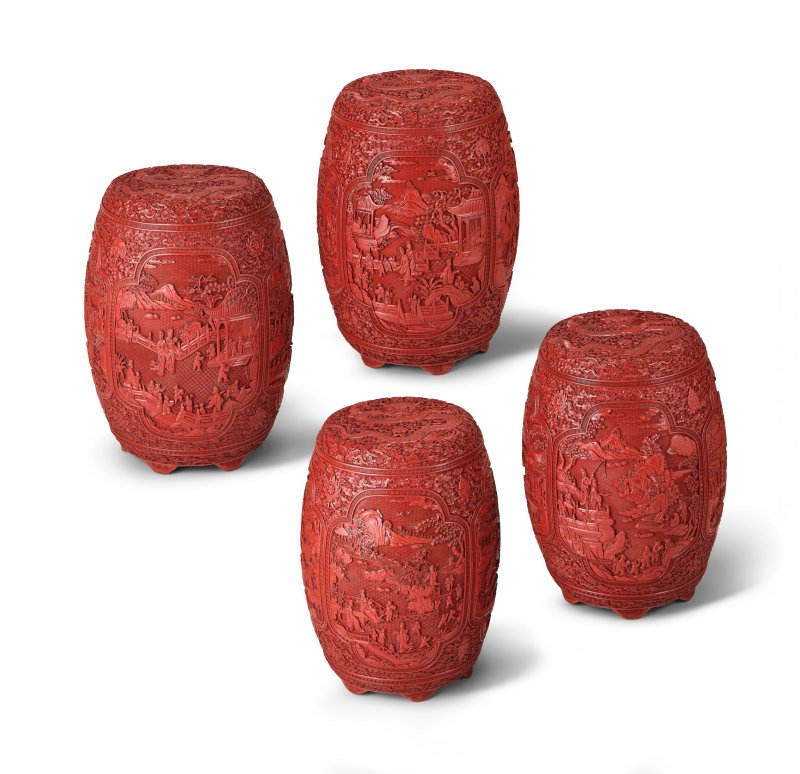
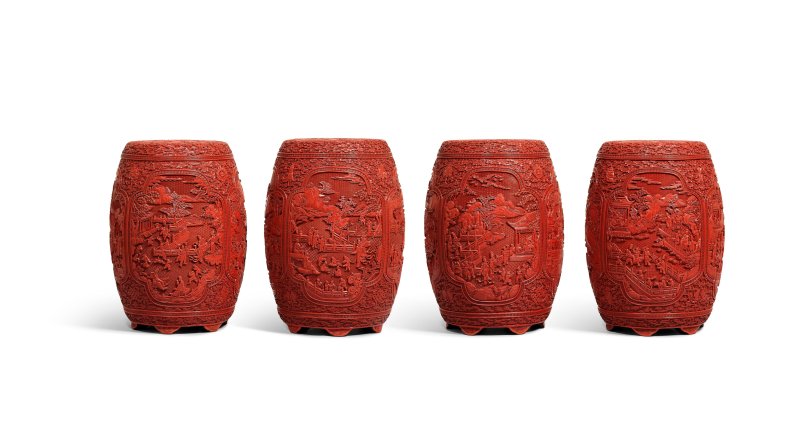
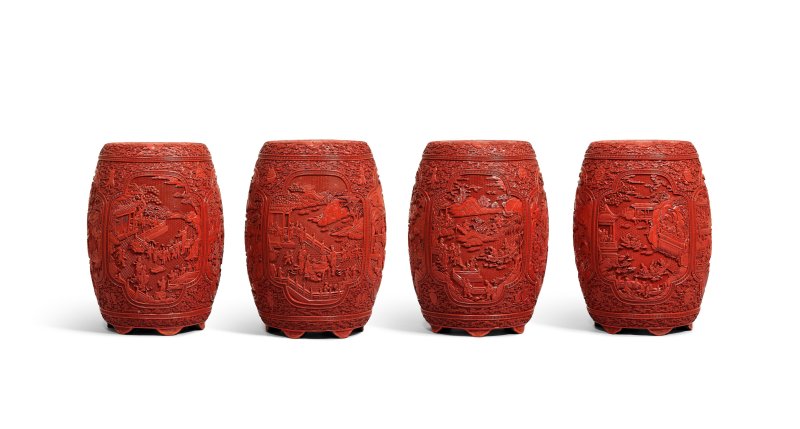
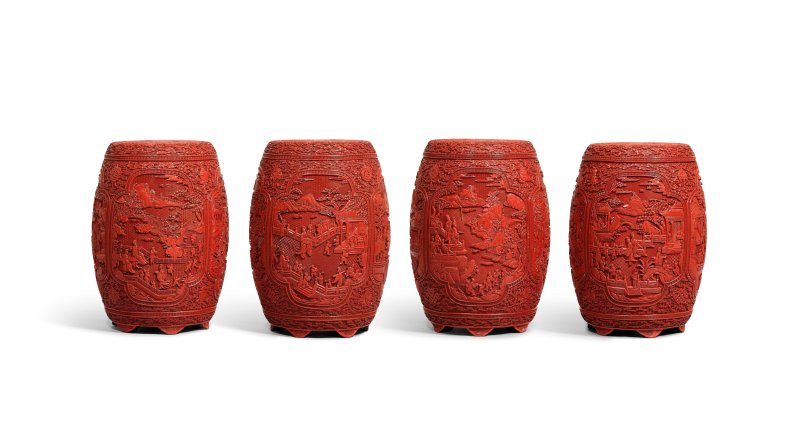
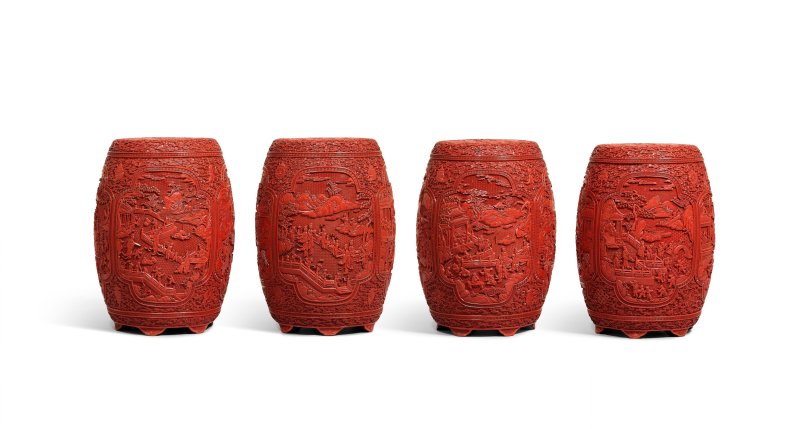
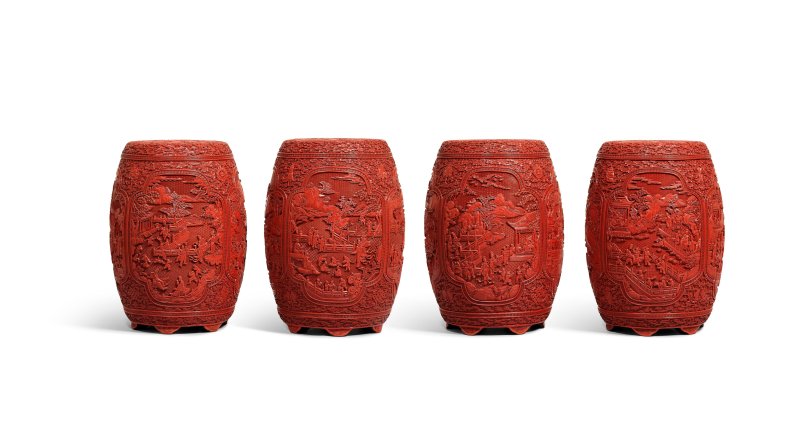
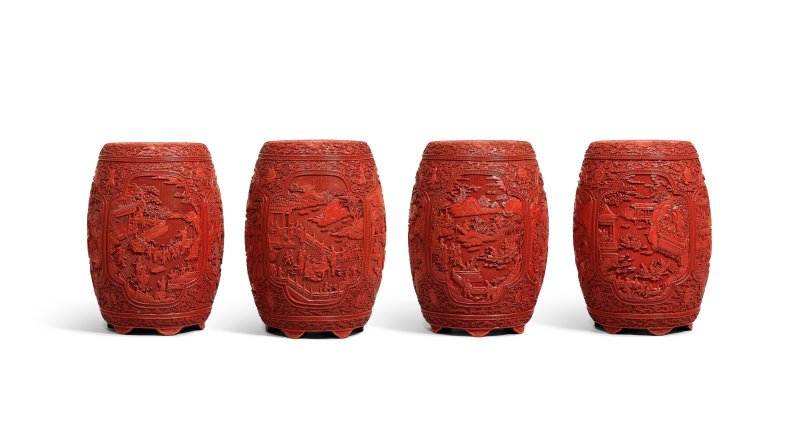
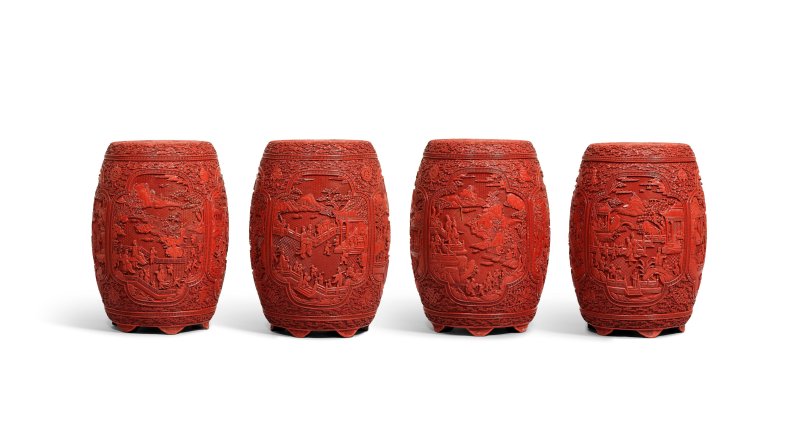
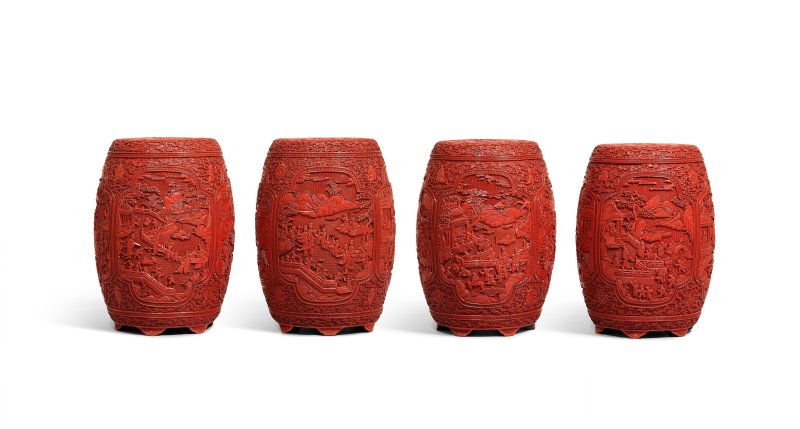
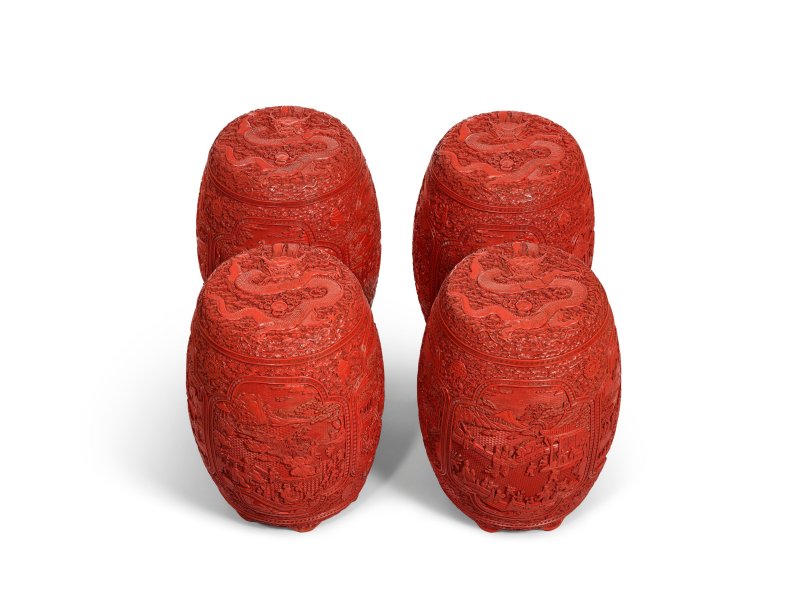
十八世紀 剔紅雲龍紋開光嬰戲圖坐墩一堂四具 | AN EXCEPTIONALLY RARE SET OF FOUR IMPERIAL CARVED CINNABAR LACQUER 'CHILDREN AT PLAY' GARDEN SEATS
年代
18th century
起拍价
HKD 2,000,000
估值区间
HKD 2000000 - 3000000
尺寸
未知
品相
未知
更多信息
18th century
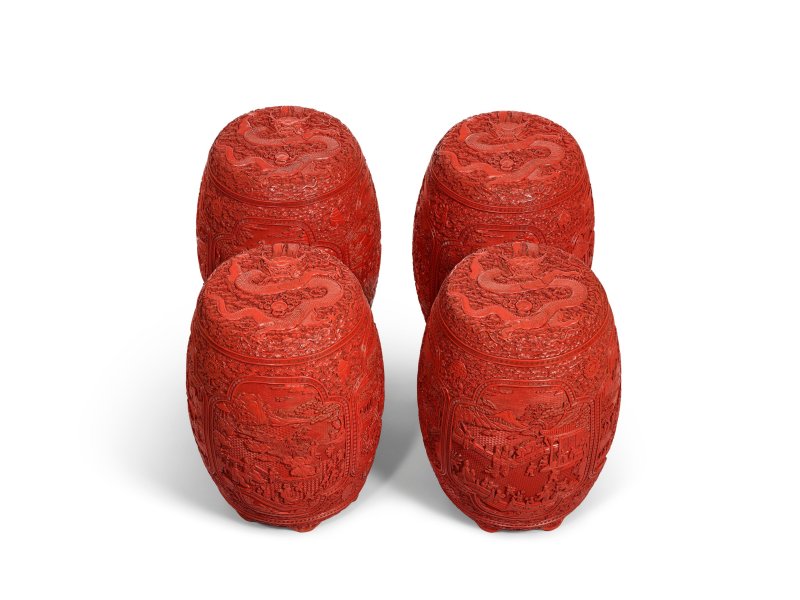
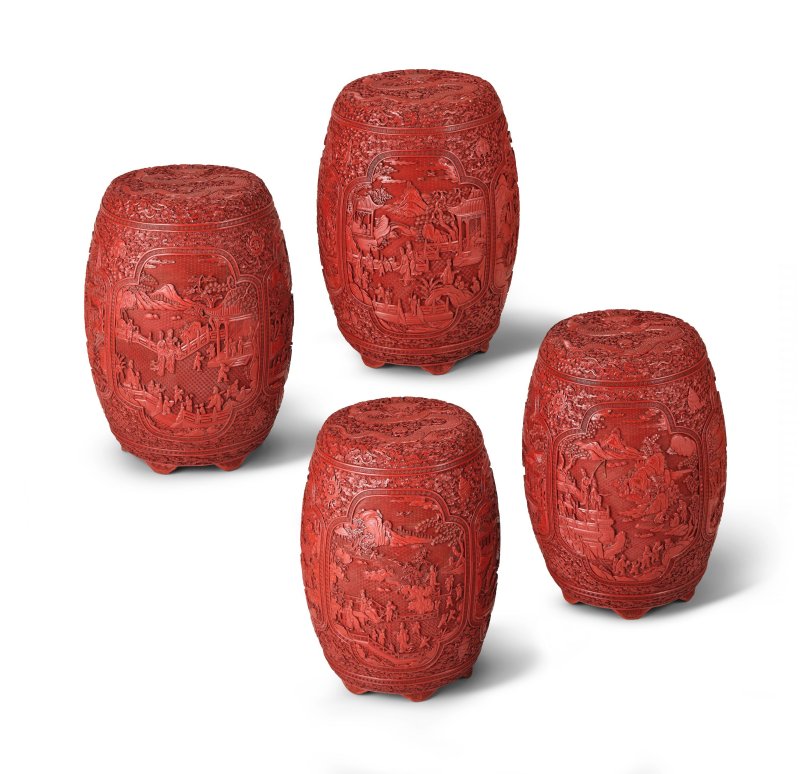
Each of barrel form with curving sides deeply carved through rich layers of cinnabar with quatrefoil panels enclosing palatial terraced garden scenes with elegant ladies and children at play, all reserved against a dense ruyi-cloud scroll with the bajixiang, the tops carved with a large, forward-facing, five-clawed dragon in pursuit of the flaming pearl of wisdom, all supported on ruyi-shaped feet.
Each 48.6cm (19 1/8in) high. (4).
Footnotes
十八世紀 剔紅雲龍紋開光嬰戲圖坐墩一堂四具
Provenance:
An American private collection, Texas
Sotheby's New York, 23 September 2021, lot 233
來源:
美國德克薩斯州私人收藏
紐約蘇富比,2021年9月23日,拍品編號233
Particularly noteworthy are the five-clawed dragons carved on the tops of the seats. During the Qing dynasty, the five-clawed dragon was closely associated with the Emperor and the Imperial Household, its appearance on works of art serving as a potent emblem of Imperial authority and heavenly mandate. The inclusion of such dragons strongly suggests that the present garden seats were produced for use within an Imperial setting. Compare the closely related cloud scrolls on the present lot with those on a three-colour carved 'nine-dragon' lacquer throne, Qianlong, which was sold at Christie's London, 14 May 2019, lot 60.
The present seats are particularly lavishly conceived, with each of their sixteen panels densely populated by numerous boys engaged in a variety of games and activities. The repetition of the youthful figures across so extensive a decorative programme serves to amplify the auspicious wish for numerous descendants, while the lively variety of their poses and pursuits creates an animated and seemingly continuous garden scene around the seats. The children at play motif was among the most popular auspicious subjects in the decorative arts of the Ming and Qing dynasties. Known as ('pictures of children at play'), such scenes conveyed wishes for numerous descendants, family prosperity and the continuation of the ancestral line. The presence of elegantly attired ladies supervising the children further evokes the harmonious domestic sphere and the ideal of a flourishing household blessed with generations of offspring. These themes held particular significance in elite society, where the production of male heirs was closely linked to family continuity and social success. See a carved cinnabar lacquer circular box and cover, Qianlong four-character mark and of the period, carved with a hundred boys at play, in the Qing Court Collection, illustrated in , Shenzhen, 2006, p.18, no.10.
Adding a further auspicious dimension to the decoration are the Eight Buddhist Emblems ( 八吉祥), which are carved on the seats. Comprising the dharma wheel, conch shell, victory banner, parasol, lotus, treasure vase, pair of fish and endless knot, these were among the most important Buddhist auspicious motifs in Qing decorative art. Their inclusion alongside the numerous boys at play further enriches the symbolic programme of the present seats, combining wishes for abundant descendants and family continuity with Buddhist blessings and auspicious associations.
The exceptionally deep and precise carving of the present garden seats is characteristic of the finest cinnabar lacquer produced during the Qianlong period, when the Imperial workshops achieved remarkable technical sophistication in the carving of thick layers of lacquer. Compare also with a related cinnabar lacquer garden seat of rounded square section in the Qing Court Collection, illustrated in , Hong Kong, 2002, p.95, no.84. See also a carved cinnabar lacquer eight-sided stool, 18th/19th century, with dragons, in the Qing Court Collection, illustrated in , Taipei, 2006, p.158, no.170.
雕漆繡墩,通體雕紅,腹微碩,下承如意足。腹上下有回紋各一道,腹壁滿雕如意雲紋與八吉祥紋,四面中心各有開光雕仕女童子嬉遊於庭園臺閣之間。墩面雕正面五爪雲龍紋,逐火珠而行,氣勢雄渾。
墩面所雕五爪雲龍尤為出彩。清代定制,五爪龍紋唯皇帝及皇室專用,凡器物飾此,即為皇權與天命之具體象徵。此套坐墩既見龍紋,當屬宮廷御用之物。可比對本品之雲紋與一件御製御用剔彩雲龍福慶有餘紋寶座之裝飾,售於倫敦佳士得,2019年5月14日,拍品編號60。
開光部分則飾庭院嬰戲圖,此乃明清工藝最受歡迎之吉祥題材之一,有子孫繁盛、家族興旺之願。畫中仕女端麗,從旁照看孩童,寄寓閨閣和樂、世代昌隆。此類主題於當時上層社會尤具深意,蓋傳統社會中育有男嗣乃家族延續與社會地位之所繫,故不獨為裝飾,亦承載著對家業長久、後繼有人的深切期許。參考清宮舊藏一件乾隆款剔紅百子寳盒,其嬰戲紋飾與本品風格相近,見《故宮博物院藏文物珍品全集:清代漆器》,香港,2006年,頁18,編號10。
坐墩之上更雕八吉祥紋,即法輪、法螺、寶傘、法幢、蓮花、寶瓶、雙魚及盤長,此乃清代工藝中最重要之佛教吉祥母題。其與眾嬰戲圖相結合,進一步豐富吉祥寓意,既寄寓子孫繁盛、家族綿延,復蘊佛法護佑、福澤圓滿之願。
此套坐墩漆層厚實,雕工精細,線條流暢俐落,堪稱乾隆朝宮廷剔紅工藝之典範。當時清宮作坊之漆雕技術已臻爐火純青,能於層層髹漆中呈現繁複而生動之紋飾。比較清宮舊藏一件清代剔紅龍紋方坐墩,見《故宮博物院藏文物珍品全集:明清家具(下)》,香港,2002年,頁95,編號84。另見清宮舊藏一件十八/十九世紀剔紅龍紋八方坐墩,載於《和光剔彩:故宮藏漆》,台北,2006年,頁158,編號170。
Each of barrel form with curving sides deeply carved through rich layers of cinnabar with quatrefoil panels enclosing palatial terraced garden scenes with elegant ladies and children at play, all reserved against a dense ruyi-cloud scroll with the bajixiang, the tops carved with a large, forward-facing, five-clawed dragon in pursuit of the flaming pearl of wisdom, all supported on ruyi-shaped feet.
Each 48.6cm (19 1/8in) high. (4).
Footnotes
十八世紀 剔紅雲龍紋開光嬰戲圖坐墩一堂四具
Provenance:
An American private collection, Texas
Sotheby's New York, 23 September 2021, lot 233
來源:
美國德克薩斯州私人收藏
紐約蘇富比,2021年9月23日,拍品編號233
Particularly noteworthy are the five-clawed dragons carved on the tops of the seats. During the Qing dynasty, the five-clawed dragon was closely associated with the Emperor and the Imperial Household, its appearance on works of art serving as a potent emblem of Imperial authority and heavenly mandate. The inclusion of such dragons strongly suggests that the present garden seats were produced for use within an Imperial setting. Compare the closely related cloud scrolls on the present lot with those on a three-colour carved 'nine-dragon' lacquer throne, Qianlong, which was sold at Christie's London, 14 May 2019, lot 60.
The present seats are particularly lavishly conceived, with each of their sixteen panels densely populated by numerous boys engaged in a variety of games and activities. The repetition of the youthful figures across so extensive a decorative programme serves to amplify the auspicious wish for numerous descendants, while the lively variety of their poses and pursuits creates an animated and seemingly continuous garden scene around the seats. The children at play motif was among the most popular auspicious subjects in the decorative arts of the Ming and Qing dynasties. Known as ('pictures of children at play'), such scenes conveyed wishes for numerous descendants, family prosperity and the continuation of the ancestral line. The presence of elegantly attired ladies supervising the children further evokes the harmonious domestic sphere and the ideal of a flourishing household blessed with generations of offspring. These themes held particular significance in elite society, where the production of male heirs was closely linked to family continuity and social success. See a carved cinnabar lacquer circular box and cover, Qianlong four-character mark and of the period, carved with a hundred boys at play, in the Qing Court Collection, illustrated in , Shenzhen, 2006, p.18, no.10.
Adding a further auspicious dimension to the decoration are the Eight Buddhist Emblems ( 八吉祥), which are carved on the seats. Comprising the dharma wheel, conch shell, victory banner, parasol, lotus, treasure vase, pair of fish and endless knot, these were among the most important Buddhist auspicious motifs in Qing decorative art. Their inclusion alongside the numerous boys at play further enriches the symbolic programme of the present seats, combining wishes for abundant descendants and family continuity with Buddhist blessings and auspicious associations.
The exceptionally deep and precise carving of the present garden seats is characteristic of the finest cinnabar lacquer produced during the Qianlong period, when the Imperial workshops achieved remarkable technical sophistication in the carving of thick layers of lacquer. Compare also with a related cinnabar lacquer garden seat of rounded square section in the Qing Court Collection, illustrated in , Hong Kong, 2002, p.95, no.84. See also a carved cinnabar lacquer eight-sided stool, 18th/19th century, with dragons, in the Qing Court Collection, illustrated in , Taipei, 2006, p.158, no.170.
雕漆繡墩,通體雕紅,腹微碩,下承如意足。腹上下有回紋各一道,腹壁滿雕如意雲紋與八吉祥紋,四面中心各有開光雕仕女童子嬉遊於庭園臺閣之間。墩面雕正面五爪雲龍紋,逐火珠而行,氣勢雄渾。
墩面所雕五爪雲龍尤為出彩。清代定制,五爪龍紋唯皇帝及皇室專用,凡器物飾此,即為皇權與天命之具體象徵。此套坐墩既見龍紋,當屬宮廷御用之物。可比對本品之雲紋與一件御製御用剔彩雲龍福慶有餘紋寶座之裝飾,售於倫敦佳士得,2019年5月14日,拍品編號60。
開光部分則飾庭院嬰戲圖,此乃明清工藝最受歡迎之吉祥題材之一,有子孫繁盛、家族興旺之願。畫中仕女端麗,從旁照看孩童,寄寓閨閣和樂、世代昌隆。此類主題於當時上層社會尤具深意,蓋傳統社會中育有男嗣乃家族延續與社會地位之所繫,故不獨為裝飾,亦承載著對家業長久、後繼有人的深切期許。參考清宮舊藏一件乾隆款剔紅百子寳盒,其嬰戲紋飾與本品風格相近,見《故宮博物院藏文物珍品全集:清代漆器》,香港,2006年,頁18,編號10。
坐墩之上更雕八吉祥紋,即法輪、法螺、寶傘、法幢、蓮花、寶瓶、雙魚及盤長,此乃清代工藝中最重要之佛教吉祥母題。其與眾嬰戲圖相結合,進一步豐富吉祥寓意,既寄寓子孫繁盛、家族綿延,復蘊佛法護佑、福澤圓滿之願。
此套坐墩漆層厚實,雕工精細,線條流暢俐落,堪稱乾隆朝宮廷剔紅工藝之典範。當時清宮作坊之漆雕技術已臻爐火純青,能於層層髹漆中呈現繁複而生動之紋飾。比較清宮舊藏一件清代剔紅龍紋方坐墩,見《故宮博物院藏文物珍品全集:明清家具(下)》,香港,2002年,頁95,編號84。另見清宮舊藏一件十八/十九世紀剔紅龍紋八方坐墩,載於《和光剔彩:故宮藏漆》,台北,2006年,頁158,編號170。
常见问题
这件十八世紀 剔紅雲龍紋開光嬰戲圖坐墩一堂四具 | AN EXCEPTIONALLY RARE SET OF FOUR IMPERIAL CARVED CINNABAR LACQUER 'CHILDREN AT PLAY' GARDEN SEATS的成交价是多少?
落槌价为 预展中。 成交价为 预展中。