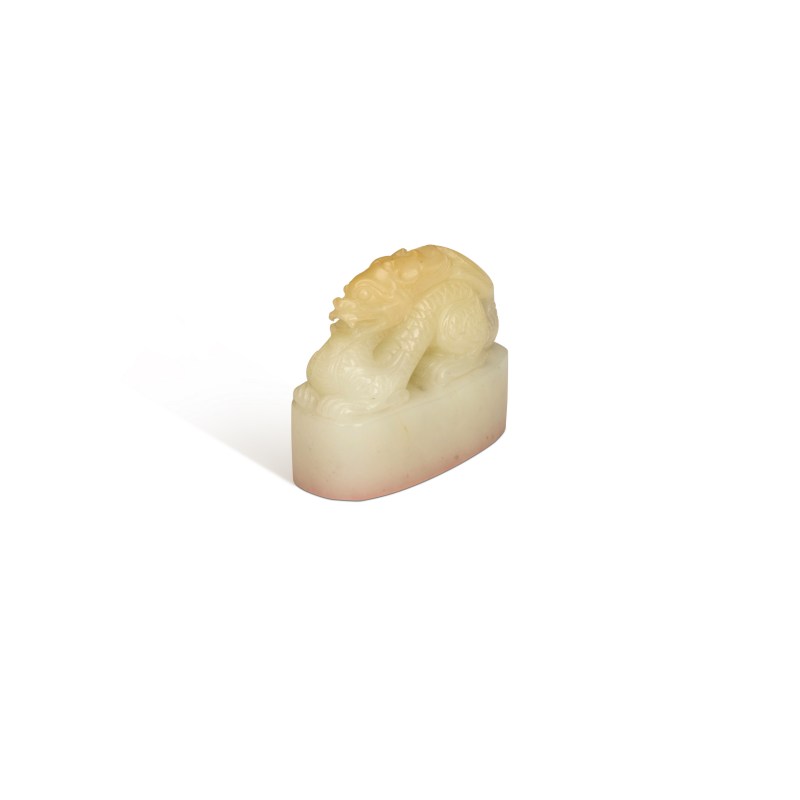

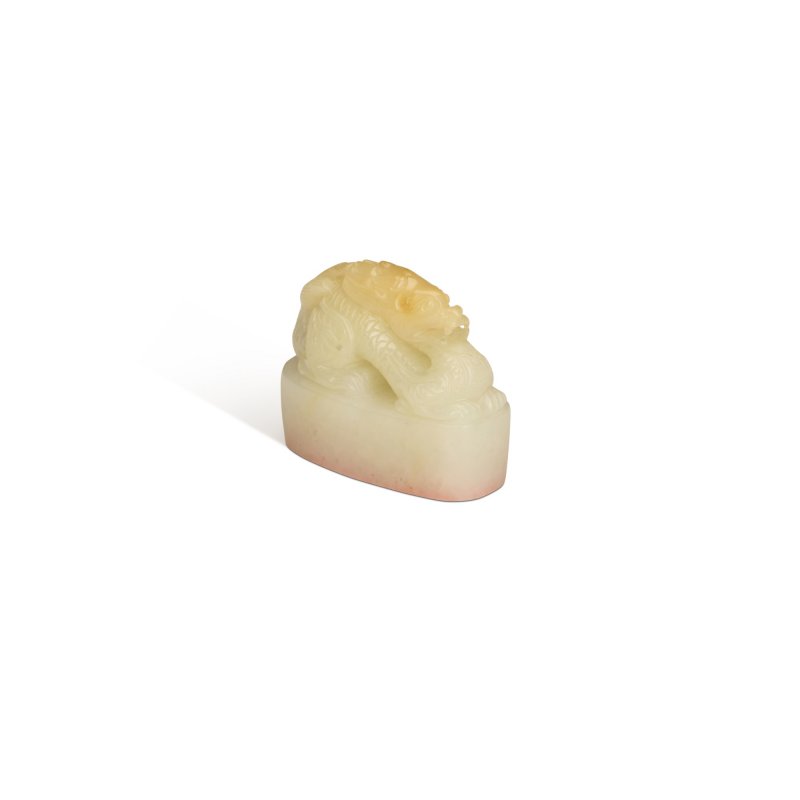
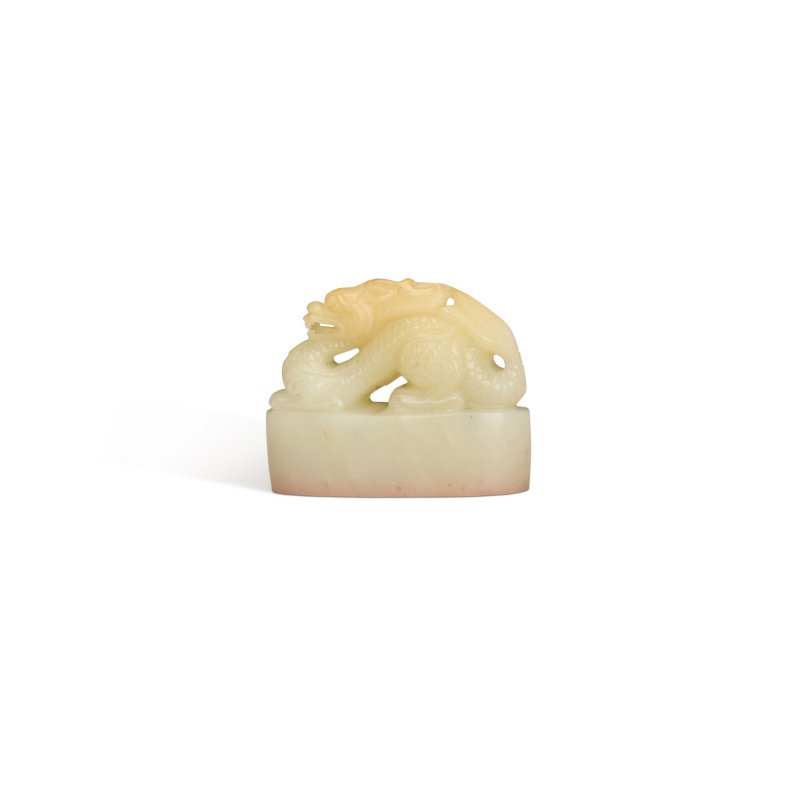
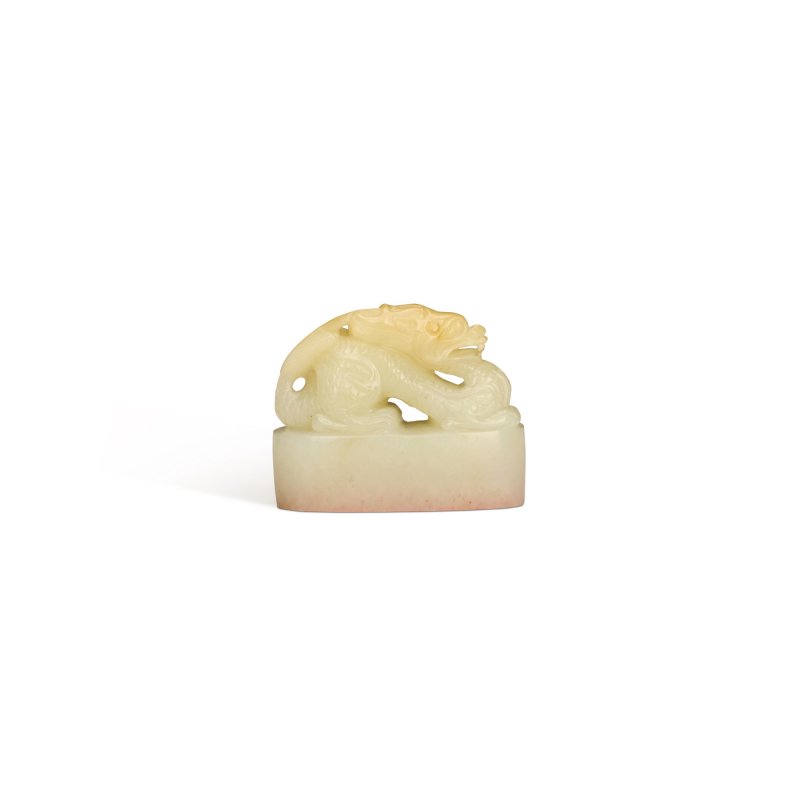
Lot 634 清 青玉龍紐璽
落槌价
预展中
成交价
预展中
| 拍卖公司 | 苏富比 |
|---|---|
| 拍卖时间 | 2026年11月06日 |
拍品信息
拍品名称
清 青玉龍紐璽
起拍价
GBP 2,000
估值区间
2,000 - 3,000 GBP
尺寸
未知
品相
如欲了解本拍品狀況的更多資訊,請聯絡 Chinese.London@sothebys.com
更多信息
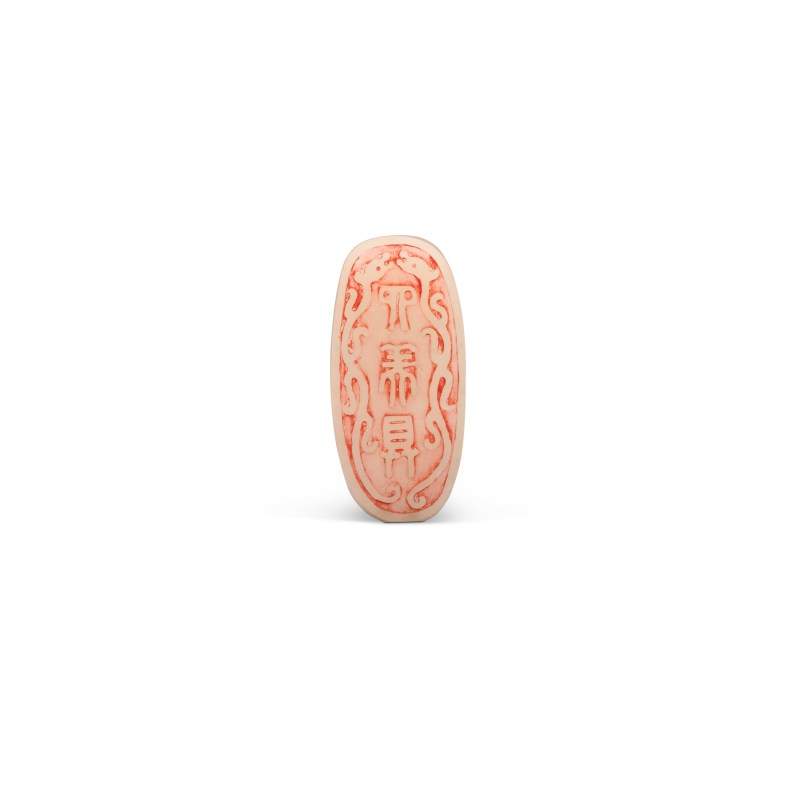
the seal face inscribed si mei ju ('Four Beauties Complete'), flanked by two confronting chilong
Length 4.9 cm, 1⅞ in.
图录
说明:The term Simeiju derives from the seventh-century Preface to the Prince of Teng's Pavilion by Wang Bo. Apparently itself derived from the 'Four Beauties' of fifth-century poet Xie Lingyun, the phrase is taken to describe the features of the perfect gathering (an auspicious day, beautiful scenery, a joyful mood, and pleasant activities) and adopted a millenium later by the Qianlong Emperor (r. 1736-1795) to describe four of his favourite paintings, formerly in the collection of the late Ming collector Gu Congyi. These four works (Dream Journey on the Xiao-Xiang River; The Shu River; Nine Songs; and the Admonsitions of the Instructress) were enshrined in the Jingyixuan and impressed with Simeiju seals.
Compare a closely related imperial Simeiju seal mark from the Qianlong reign recorded in Guo Fuxiang, Ming Qing di hou xiyin [Imperial seals of the Ming and Qing dynasties], Beijing, 2003, vol. 5, p. 22; and a Jiaqing rendition, ibid., vol. 8, p. 38.
常见问题
这件清 青玉龍紐璽的成交价是多少?
落槌价为 预展中。 成交价为 预展中。
拍品的品相状况如何?
如欲了解本拍品狀況的更多資訊,請聯絡 Chinese.London@sothebys.com