
拍品信息
拍品名称
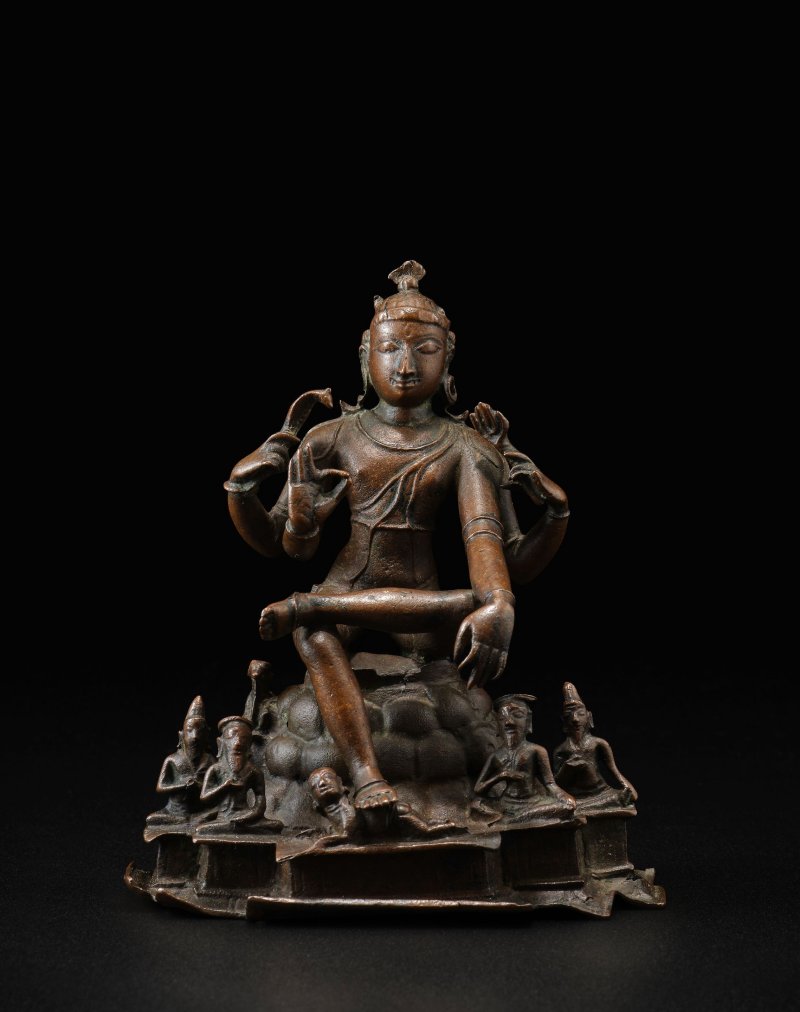
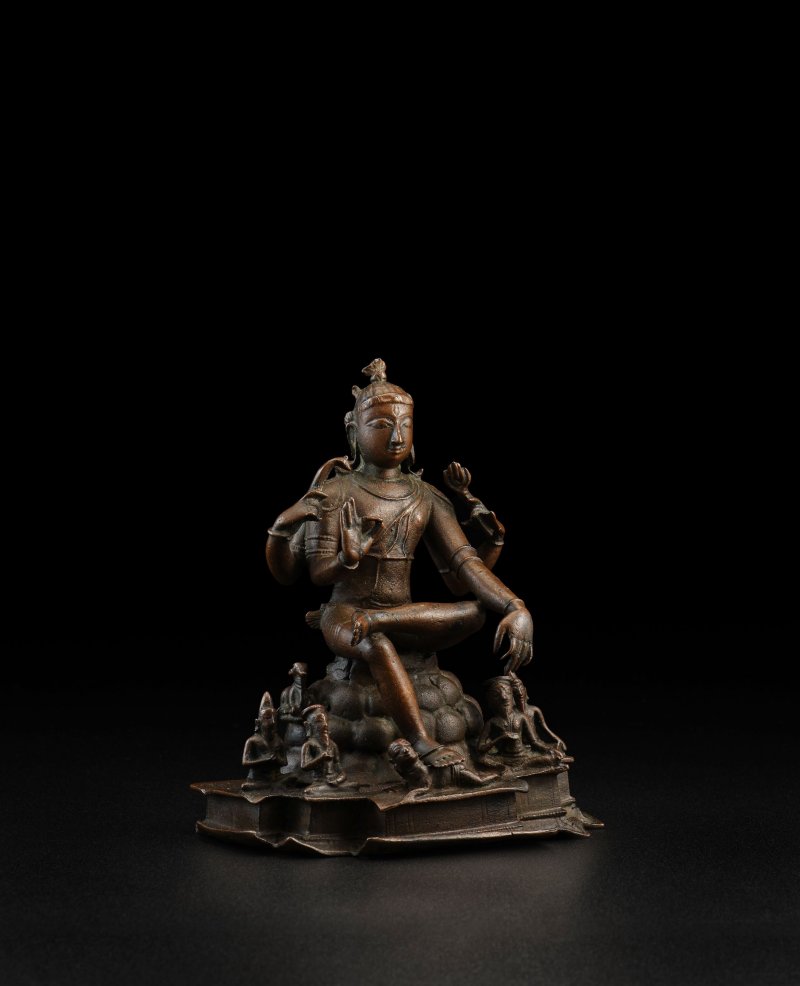
印度南部 毗奢耶那伽羅 十六世紀 濕婆南面尊銅像 | A COPPER ALLOY FIGURE OF SHIVA DAKSHINAMURTI
年代
SOUTH INDIA, VIJAYANAGARA PERIOD, 16TH CENTURY
起拍价
HKD 80,000
估值区间
HKD 80000 - 120000
尺寸
未知
品相
未知
更多信息
SOUTH INDIA, VIJAYANAGARA PERIOD, 16TH CENTURY
13 cm (5 1/8 in.) high
Footnotes
印度南部 毗奢耶那伽羅 十六世紀 濕婆南面尊銅像
Provenance
Collection Dr. J. R. Belmont (1896-1981), Basel, before 1967
Sotheby's, London, 27 February 1967, lot 77
Collection John F. Keane, 1967-1973
Collection Günter Heil, 1973-1989
Private Collection, Germany, 1989-2016
Marcel Nies Oriental Art, Antwerp, 2016
John and Karina Stewart Collection
In Hindu philosophy, true knowledge is the means of overcoming ignorance, which is regarded as the root cause of suffering and rebirth. As Dakshinamurti, Shiva embodies this principle, imparting divine wisdom to his followers while seated in a mountain forest, traditionally considered the ideal environment for spiritual instruction.
Dakshinamurti was a popular form of Shiva in South Indian art and became especially prominent under the Chola dynasty (c. 850–1279 CE). A comparable 13th-century Chola bronze from the renowned Pan-Asian Collection was sold at Christie's, New York, 21 September 2007, lot 104. The type continued to be produced during the Vijayanagara period (1336–1646), to which the present sculpture belongs.
13 cm (5 1/8 in.) high
Footnotes
印度南部 毗奢耶那伽羅 十六世紀 濕婆南面尊銅像
Provenance
Collection Dr. J. R. Belmont (1896-1981), Basel, before 1967
Sotheby's, London, 27 February 1967, lot 77
Collection John F. Keane, 1967-1973
Collection Günter Heil, 1973-1989
Private Collection, Germany, 1989-2016
Marcel Nies Oriental Art, Antwerp, 2016
John and Karina Stewart Collection
In Hindu philosophy, true knowledge is the means of overcoming ignorance, which is regarded as the root cause of suffering and rebirth. As Dakshinamurti, Shiva embodies this principle, imparting divine wisdom to his followers while seated in a mountain forest, traditionally considered the ideal environment for spiritual instruction.
Dakshinamurti was a popular form of Shiva in South Indian art and became especially prominent under the Chola dynasty (c. 850–1279 CE). A comparable 13th-century Chola bronze from the renowned Pan-Asian Collection was sold at Christie's, New York, 21 September 2007, lot 104. The type continued to be produced during the Vijayanagara period (1336–1646), to which the present sculpture belongs.
常见问题
这件印度南部 毗奢耶那伽羅 十六世紀 濕婆南面尊銅像 | A COPPER ALLOY FIGURE OF SHIVA DAKSHINAMURTI的成交价是多少?
落槌价为 预展中。 成交价为 预展中。