
拍品信息
拍品名称
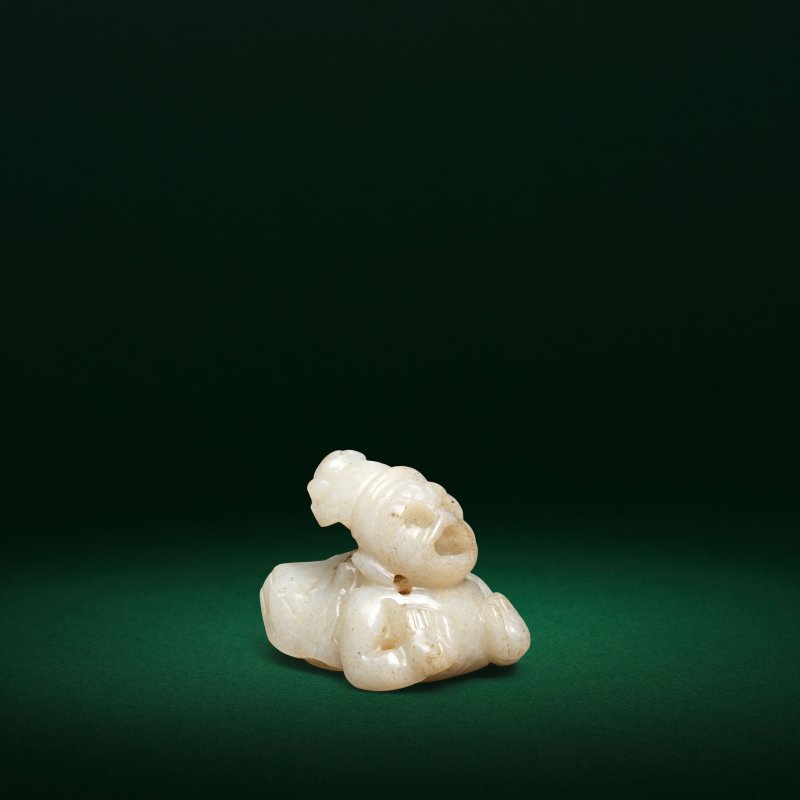
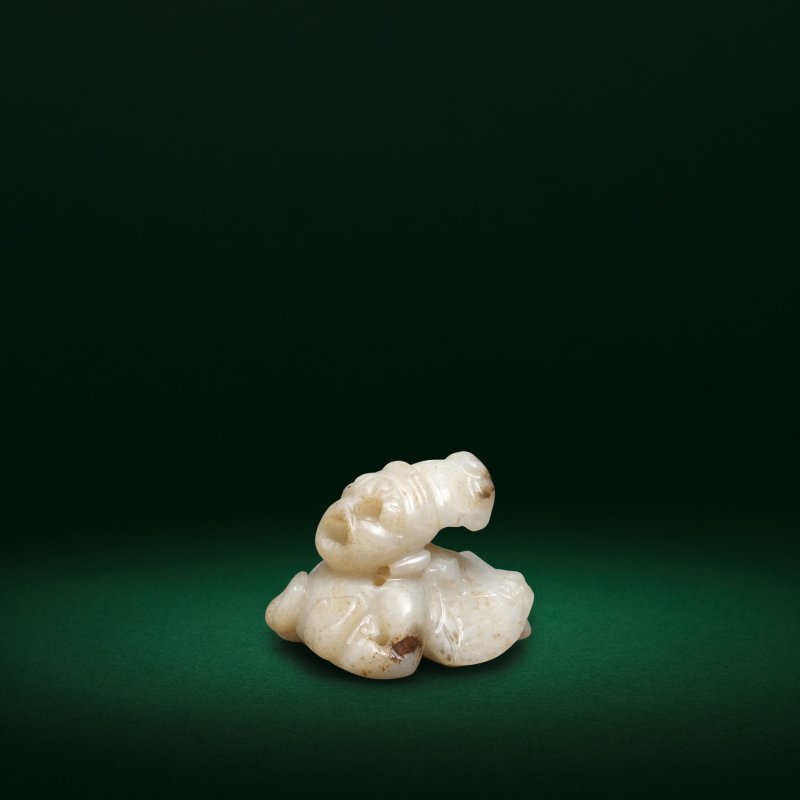
十二至十四世紀 玉雕迦樓羅 | A RARE GREYISH AND RUSSET JADE CARVING OF GARUDA
年代
12th-14th century
起拍价
GBP 2,000
估值区间
GBP 2000 - 3000
尺寸
未知
品相
未知
更多信息
12th-14th century
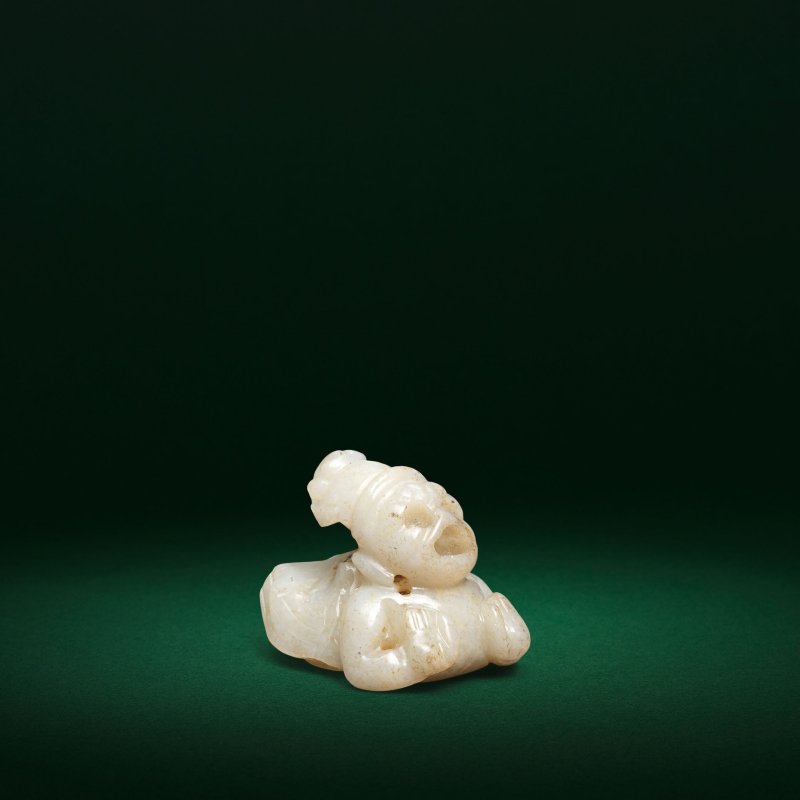
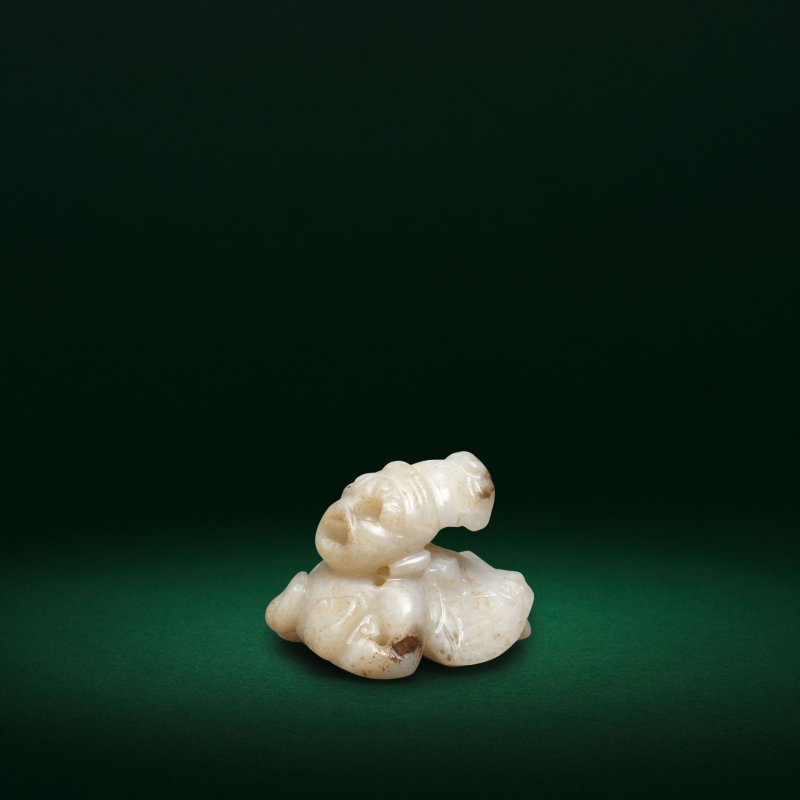
The deity carved with hollow eyes and mouth beneath a tall headdress, the hands raised before the chest, the back with incised wings, the stone of pale greyish tone with dark brown patches. 3.1cm (1 1/4in) long.
Footnotes
十二至十四世紀 玉雕迦樓羅
Garuda (Jialouluo 迦楼罗) is a powerful mythical bird that entered Chinese visual culture through Buddhism, where it appears among the Eight Classes of Supernatural Beings as a fierce protector and enemy of the nagas (serpent beings). In Buddhist cosmology it embodies swiftness, strength, and the triumph of enlightened forces over poisonous or chaotic energies, often shown with outstretched wings and a predatory, eagle-like form. Originating in Indian mythology as the mount of Vishnu, Garuda was gradually absorbed into Chinese Buddhist iconography, where he appears in sculpture and esoteric imagery, particularly from the Tang period onward. In jade carvings of the Liao/Jin dynasty, the subject is rare and significant, reflecting the transmission of Himalayan and Central Asian Buddhist motifs into Chinese material culture, where such hybrid divine beings were associated with protection, spiritual power, and the subjugation of malevolent forces. See three related jade Garudas, Liao/Jin dynasty, in the collection of the Tianjin Museum, illustrated in (天津博物館藏玉), Tianjin, 2012, pp.164-167.
See a celadon and russet jade carving of a winged mythical figure, possibly Garuda, Yuan dynasty or earlier, which was sold at Sotheby's Hong Kong, 1 December 2016, lot 761.
The deity carved with hollow eyes and mouth beneath a tall headdress, the hands raised before the chest, the back with incised wings, the stone of pale greyish tone with dark brown patches. 3.1cm (1 1/4in) long.
Footnotes
十二至十四世紀 玉雕迦樓羅
Garuda (Jialouluo 迦楼罗) is a powerful mythical bird that entered Chinese visual culture through Buddhism, where it appears among the Eight Classes of Supernatural Beings as a fierce protector and enemy of the nagas (serpent beings). In Buddhist cosmology it embodies swiftness, strength, and the triumph of enlightened forces over poisonous or chaotic energies, often shown with outstretched wings and a predatory, eagle-like form. Originating in Indian mythology as the mount of Vishnu, Garuda was gradually absorbed into Chinese Buddhist iconography, where he appears in sculpture and esoteric imagery, particularly from the Tang period onward. In jade carvings of the Liao/Jin dynasty, the subject is rare and significant, reflecting the transmission of Himalayan and Central Asian Buddhist motifs into Chinese material culture, where such hybrid divine beings were associated with protection, spiritual power, and the subjugation of malevolent forces. See three related jade Garudas, Liao/Jin dynasty, in the collection of the Tianjin Museum, illustrated in (天津博物館藏玉), Tianjin, 2012, pp.164-167.
See a celadon and russet jade carving of a winged mythical figure, possibly Garuda, Yuan dynasty or earlier, which was sold at Sotheby's Hong Kong, 1 December 2016, lot 761.
常见问题
这件十二至十四世紀 玉雕迦樓羅 | A RARE GREYISH AND RUSSET JADE CARVING OF GARUDA的成交价是多少?
落槌价为 预展中。 成交价为 预展中。


