
Lot 106 A Chinese blue and white pomegranate-shaped ewer
落槌价
****
成交价
****
拍品信息
拍品名称
A Chinese blue and white pomegranate-shaped ewer
年代
Wanli
起拍价
未知
估值区间
€ 4.000 – € 8.000
尺寸
WH: H. 15,9 cm, W. 11,5 cm
品相
未知
更多信息
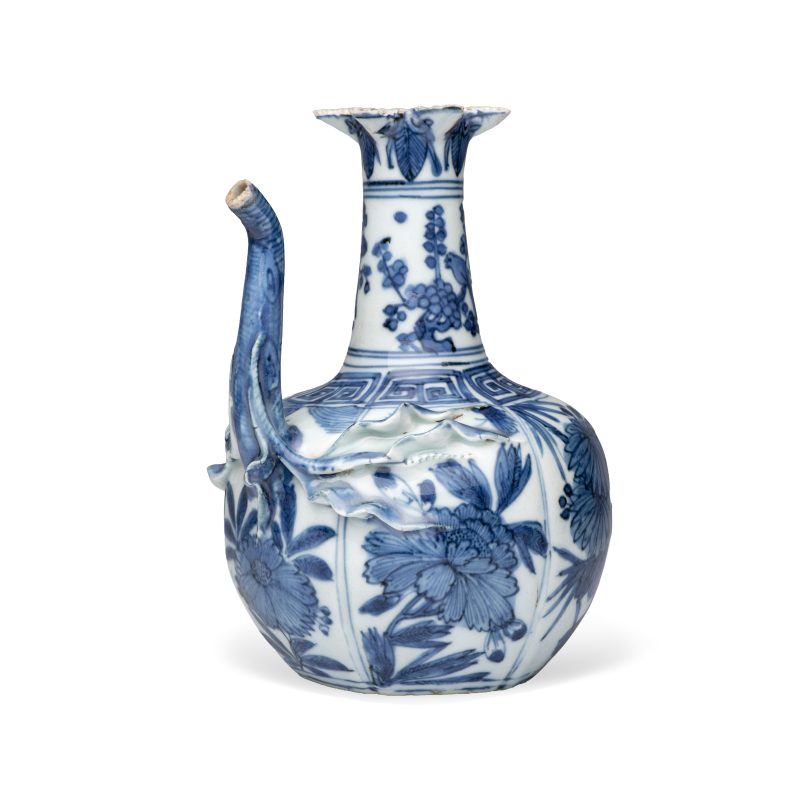
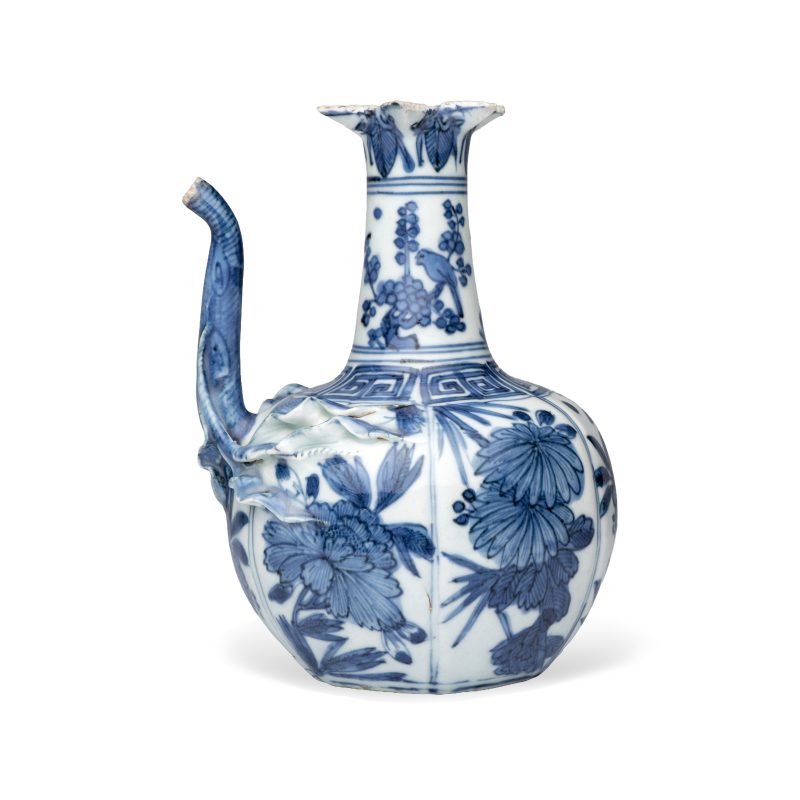
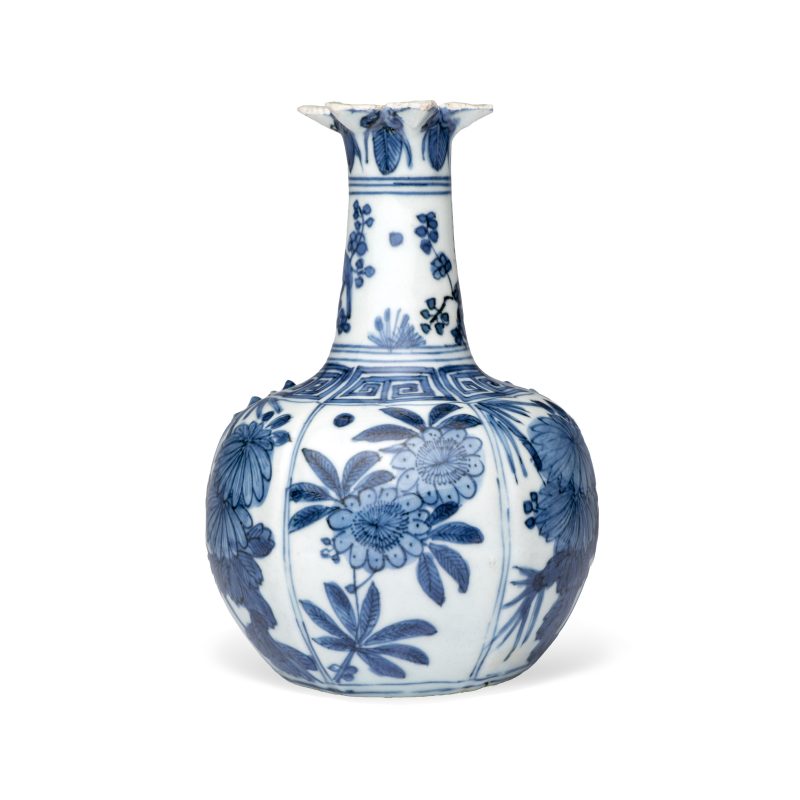
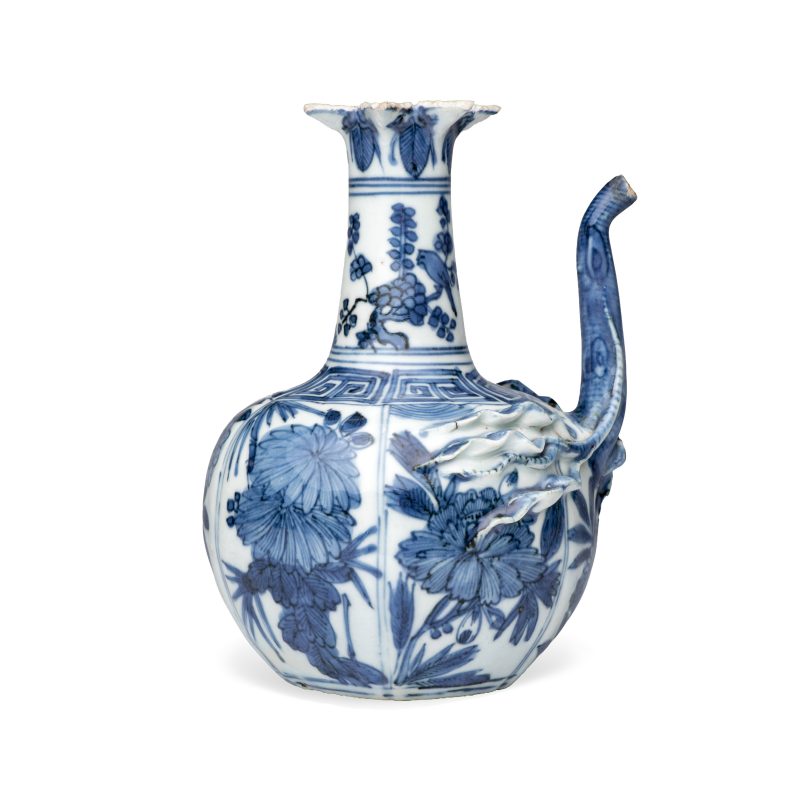
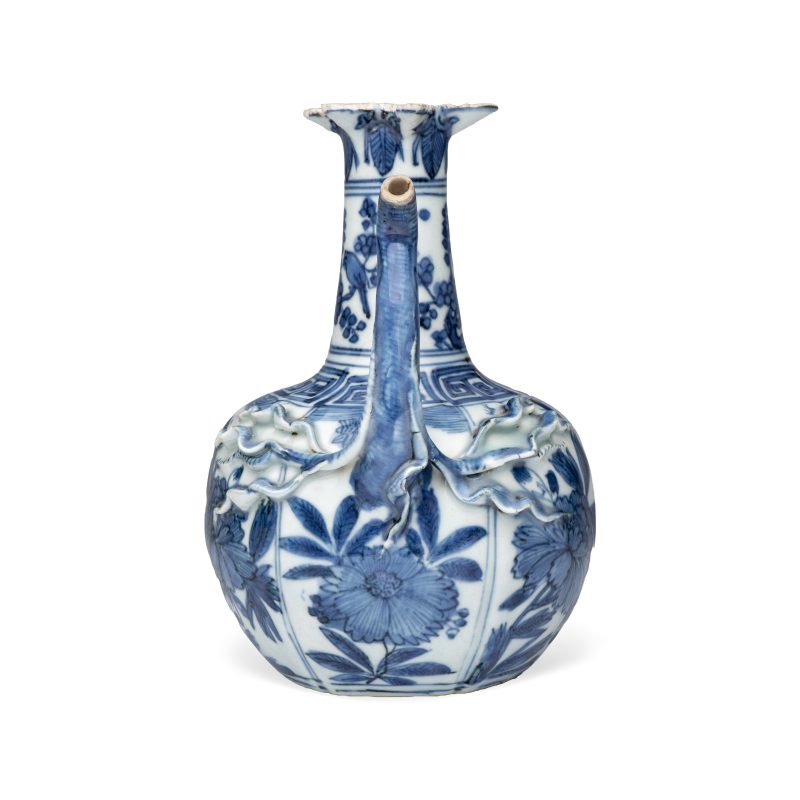
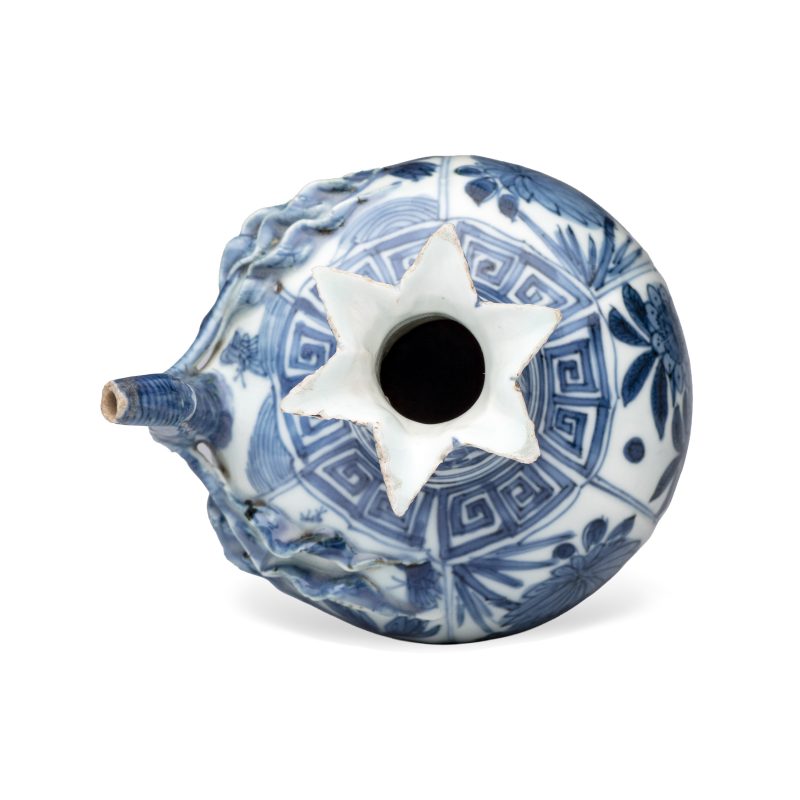
Finely and thinly potted, the ewer is modelled with a globular body moulded as a pomegranate, divided into six lobed vertical panels. It rises to a tall, slightly tapering neck terminating in a six-pointed star-shaped mouth rim. The long, slender spout curves gently upwards at the tip and is applied with seven naturalistically modelled leafy branches in relief, their curling stems extending onto the body.
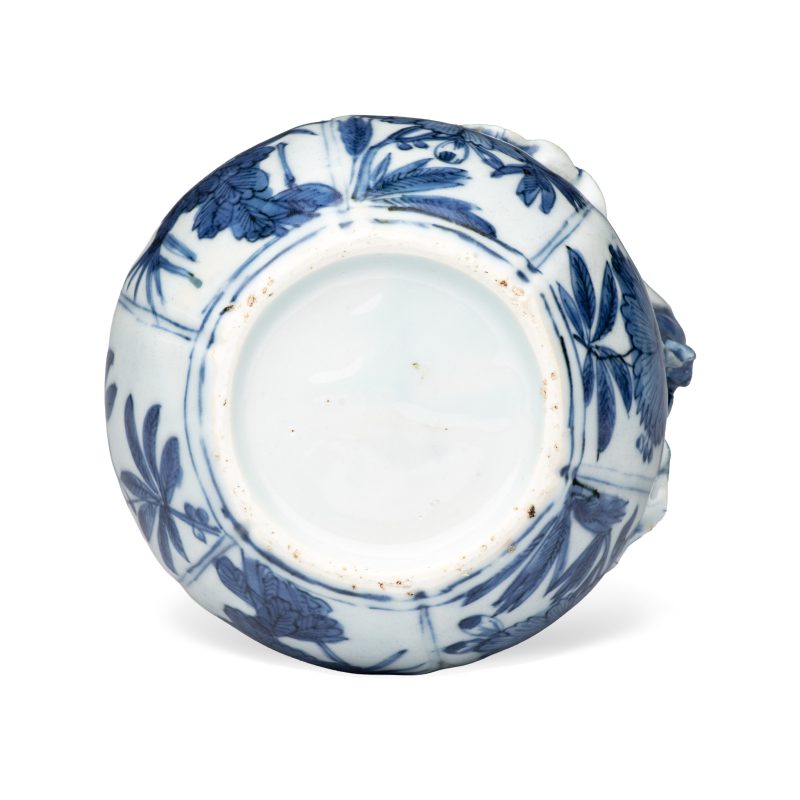
The moulded panels are variously decorated with large blossoming flowers and leafy sprays, while a ribbon-tied ruyi-head motif appears beneath the spout. The shoulder is encircled by a narrow key-fret band framed by thin blue lines. The neck is painted with a bird perched on a rock beside flowering plants and grasses, similarly enclosed by double blue-line borders. The underside of the star-shaped mouth rim is decorated with pendent leaf motifs and edged in blue. The spout and applied relief branches are highlighted with finely pencilled blue lines. The slightly recessed base is fully glazed, with the rounded foot ring left unglazed.
This elegant and fragile pouring vessel belongs to a rare group of Kraak porcelain ewers produced during the Wanli period. Commonly referred to as ‘pomegranate ewers’, these vessels derive their modern name from the globular, lobed body and distinctive star-shaped mouth rim. In Chinese culture, the pomegranate (shiliu)—with its abundance of seeds—symbolises fertility, prosperity, and numerous descendants.
The form is exceptional within the Kraak repertoire. Unlike the more robust kendis, pear-shaped bottles, and double-gourd vessels of the period, these ewers are remarkably thinly potted and refined in execution. Their elongated spouts ultimately derive from earlier Ming dynasty ewers influenced by Middle Eastern metalwork prototypes, while the relief-moulded leafy branches and star-shaped mouth rim appear unique to this particular group.
此壺胎體輕薄,製作精巧。器腹渾圓,模印作石榴形,分為六瓣瓜棱,上承細長頸,略向上收,口沿作六角星形。壺流細長,末端微微上揚,流身貼塑七組枝葉,莖蔓蜿蜒捲曲,自然延伸至器腹。
六瓣器腹分別繪盛開花卉及折枝花葉,流下飾綬帶束結的如意雲頭紋。肩部環飾一道窄幅回紋,上下以青花細線為界。頸部繪花鳥圖,一隻禽鳥棲於山石之上,周圍花草掩映,畫面亦以青花雙弦紋分隔。星形口沿下方飾垂葉紋,邊緣以青花勾勒。壺流及貼塑枝葉均以纖細青花線條描繪細節。底部微凹,滿施釉,圓形足圈露胎。
此壺造型秀雅,胎薄,屬萬曆時期克拉克瓷中一類罕見的倒流器。因其渾圓瓜棱的器腹形似石榴,並具有獨特的星形口沿,故今多稱為「石榴形壺」。石榴多籽,在中國傳統文化中象徵多子多福、富足興旺。
此類器形在克拉克瓷中尤為少見。與同期造型較為厚重的軍持、梨形瓶及葫蘆瓶相比,這類壺胎體格外輕薄,製作也更為精緻。其修長壺流承襲自明代早期受中東金屬器影響的執壺造型,而貼塑枝葉及六角星形口沿,則似為此類器物所獨有。
Reference:
Christie's New York, 24 September 2021, lot 850 for a near-identical example. (sold USD 10.625) (link)
The Groninger Museum, The Netherlands, object no. 1960.0057.A for a near-identical example. (link)
Literature:
Jorge Welsh Books, 'Kraak Porcelain: The Rise of Global Trade in the Late 16th and Early 17th Centuries', pp. 176-179, no. 25 for a near-identical example and a further discussion
Maura Rinaldi, 'Kraak Porcelain: A Moment in the History of Trade', pp. 177-179 for a discussion and pl. 225 for a near-identical example.
Provenance:
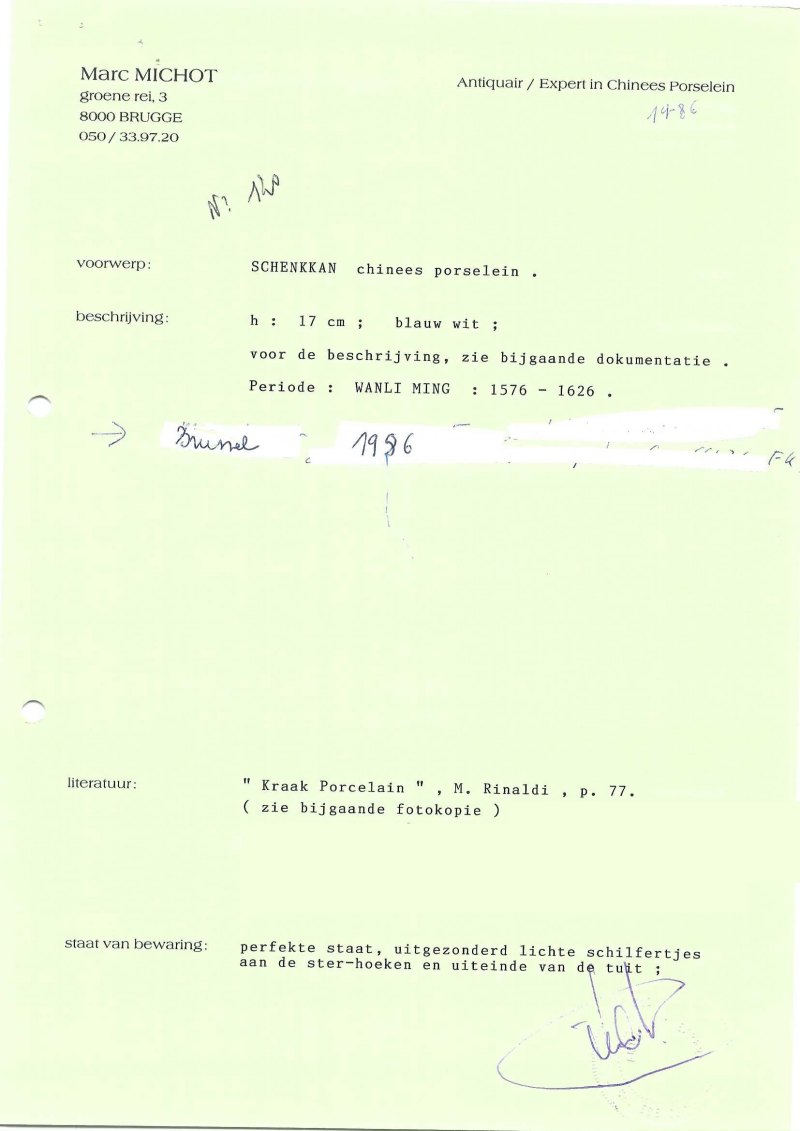
Marc Michot, Bruges.
The Mr. and Mrs. Baert-Devos Collection, Belgium. Acquired from the above in 1986 accompanied by a copy of their certificate of authenticity. (see added scan)
The moulded panels are variously decorated with large blossoming flowers and leafy sprays, while a ribbon-tied ruyi-head motif appears beneath the spout. The shoulder is encircled by a narrow key-fret band framed by thin blue lines. The neck is painted with a bird perched on a rock beside flowering plants and grasses, similarly enclosed by double blue-line borders. The underside of the star-shaped mouth rim is decorated with pendent leaf motifs and edged in blue. The spout and applied relief branches are highlighted with finely pencilled blue lines. The slightly recessed base is fully glazed, with the rounded foot ring left unglazed.
This elegant and fragile pouring vessel belongs to a rare group of Kraak porcelain ewers produced during the Wanli period. Commonly referred to as ‘pomegranate ewers’, these vessels derive their modern name from the globular, lobed body and distinctive star-shaped mouth rim. In Chinese culture, the pomegranate (shiliu)—with its abundance of seeds—symbolises fertility, prosperity, and numerous descendants.
The form is exceptional within the Kraak repertoire. Unlike the more robust kendis, pear-shaped bottles, and double-gourd vessels of the period, these ewers are remarkably thinly potted and refined in execution. Their elongated spouts ultimately derive from earlier Ming dynasty ewers influenced by Middle Eastern metalwork prototypes, while the relief-moulded leafy branches and star-shaped mouth rim appear unique to this particular group.
此壺胎體輕薄,製作精巧。器腹渾圓,模印作石榴形,分為六瓣瓜棱,上承細長頸,略向上收,口沿作六角星形。壺流細長,末端微微上揚,流身貼塑七組枝葉,莖蔓蜿蜒捲曲,自然延伸至器腹。
六瓣器腹分別繪盛開花卉及折枝花葉,流下飾綬帶束結的如意雲頭紋。肩部環飾一道窄幅回紋,上下以青花細線為界。頸部繪花鳥圖,一隻禽鳥棲於山石之上,周圍花草掩映,畫面亦以青花雙弦紋分隔。星形口沿下方飾垂葉紋,邊緣以青花勾勒。壺流及貼塑枝葉均以纖細青花線條描繪細節。底部微凹,滿施釉,圓形足圈露胎。
此壺造型秀雅,胎薄,屬萬曆時期克拉克瓷中一類罕見的倒流器。因其渾圓瓜棱的器腹形似石榴,並具有獨特的星形口沿,故今多稱為「石榴形壺」。石榴多籽,在中國傳統文化中象徵多子多福、富足興旺。
此類器形在克拉克瓷中尤為少見。與同期造型較為厚重的軍持、梨形瓶及葫蘆瓶相比,這類壺胎體格外輕薄,製作也更為精緻。其修長壺流承襲自明代早期受中東金屬器影響的執壺造型,而貼塑枝葉及六角星形口沿,則似為此類器物所獨有。
Reference:
Christie's New York, 24 September 2021, lot 850 for a near-identical example. (sold USD 10.625) (link)
The Groninger Museum, The Netherlands, object no. 1960.0057.A for a near-identical example. (link)
Literature:
Jorge Welsh Books, 'Kraak Porcelain: The Rise of Global Trade in the Late 16th and Early 17th Centuries', pp. 176-179, no. 25 for a near-identical example and a further discussion
Maura Rinaldi, 'Kraak Porcelain: A Moment in the History of Trade', pp. 177-179 for a discussion and pl. 225 for a near-identical example.
Provenance:
Marc Michot, Bruges.
The Mr. and Mrs. Baert-Devos Collection, Belgium. Acquired from the above in 1986 accompanied by a copy of their certificate of authenticity. (see added scan)
常见问题
拍品的尺寸是多少?
WH: H. 15,9 cm, W. 11,5 cm