
拍品信息
拍品名称
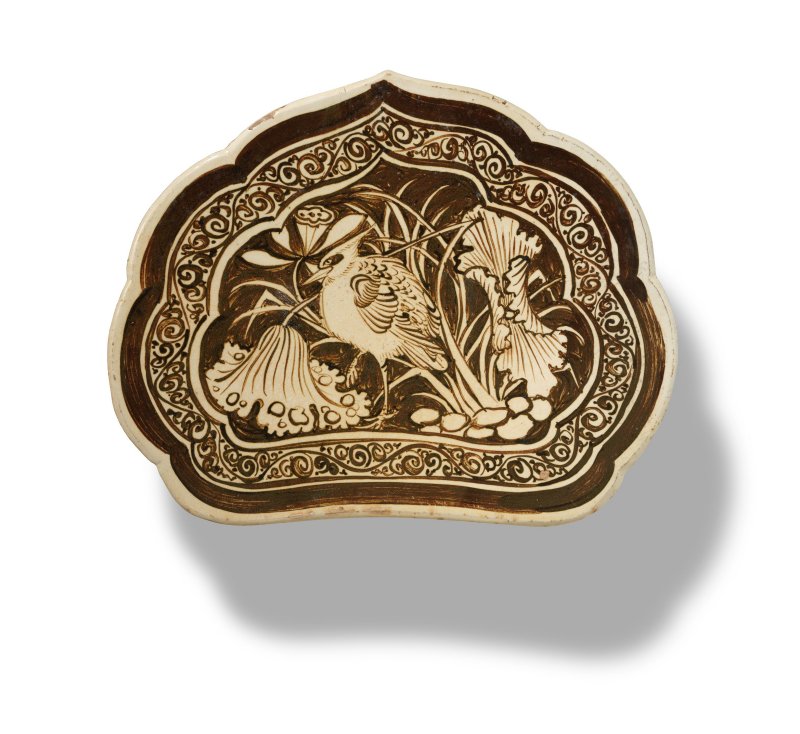
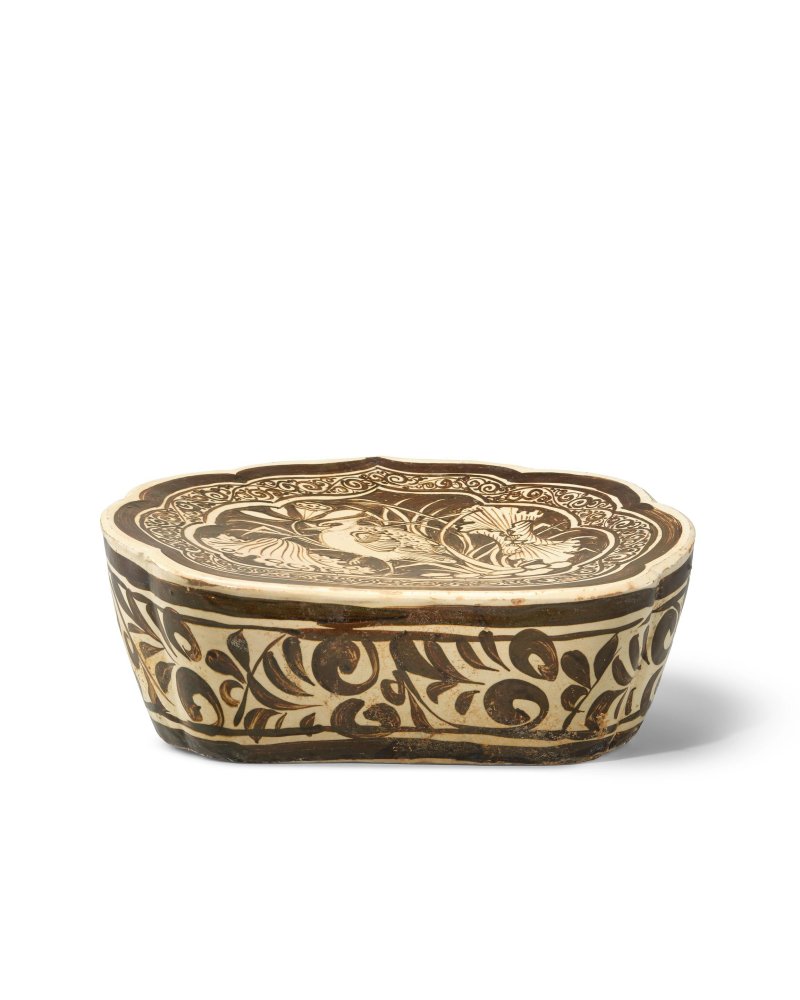
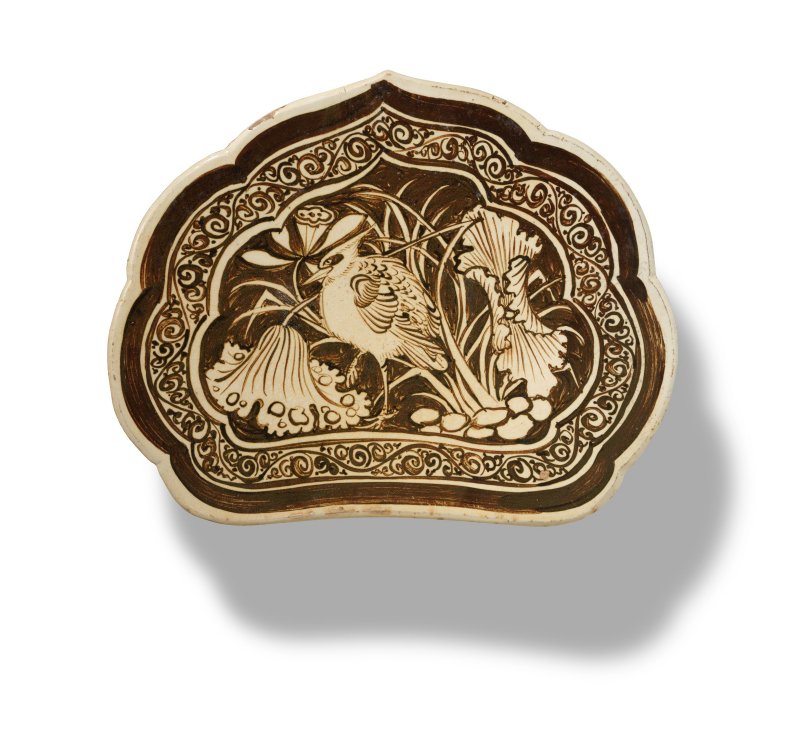
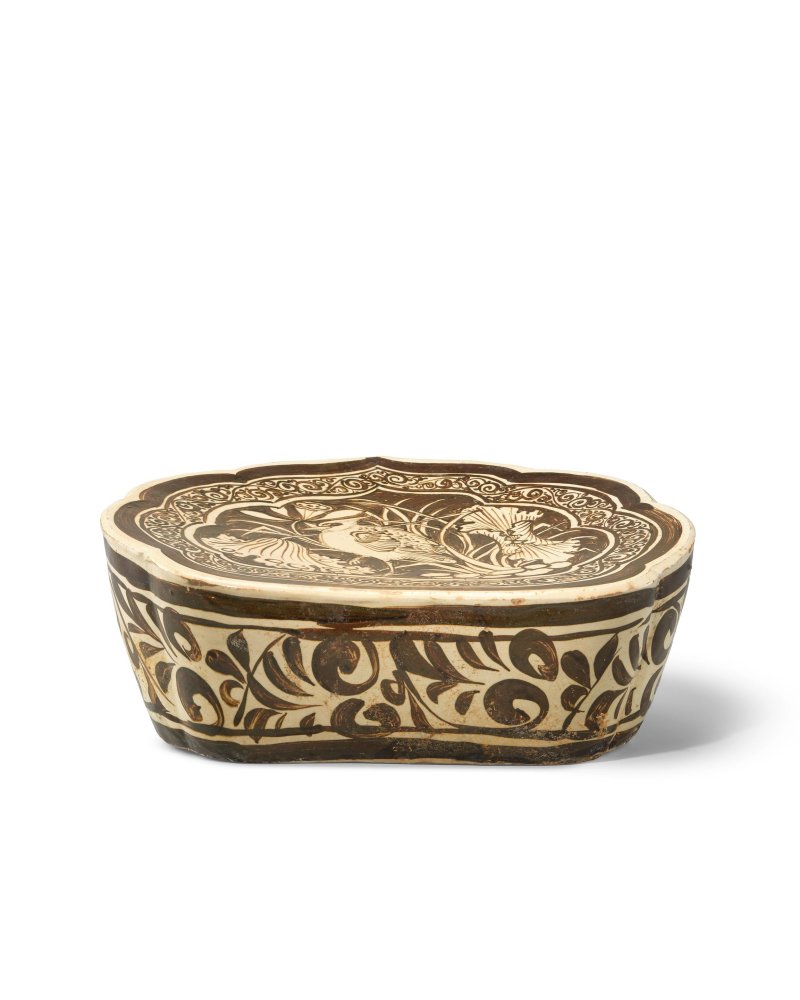
金 磁州窯白地黑花一路連科圖如意枕 | A VERY RARE CIZHOU PAINTED 'EGRET AND LOTUS' RUYI-SHAPED PILLOW
年代
Jin Dynasty
起拍价
HKD 600,000
估值区间
HKD 600000 - 800000
尺寸
未知
品相
未知
更多信息
Jin Dynasty
Of lobed ruyi shape, painted in brown slip on the broad, slightly concave surface with a crested bird perched amongst a lush lotus pond, enclosed by a classic scroll border of conforming shape, the tall sides boldly painted with foliate motifs between two thick lines, all reserved against a white slip, fitted box.
37cm (14 5/8in) long. (2).
Footnotes
金 磁州窯白地黑花一路連科圖如意枕
Provenance:
J.J. Lally & Co. , New York
Lam & Co. Antiquities, Hong Kong
Liyin Oriental Art, Taipei
來源:
藍理捷,紐約
松豐堂,香港
禮瀛東方藝術,台北
The representation of egret amongst lotus plants combines two motifs rich in symbolic meaning within the Chinese decorative tradition. The lotus, emerging unstained from muddy waters, has long been admired as an emblem of purity, integrity, and spiritual refinement. Its name also forms a rebus with , meaning 'continuous' or 'successive', making it a popular symbol of continuity and abundance.
The egret () carries its own auspicious associations. Through a visual pun, means 'road' or 'path', and appears frequently in decorative arts as a symbol of advancement and success. When combined with the lotus, the motif may allude to the phrase , 'may you pass successive examinations all along your path', expressing wishes for continuous scholarly achievement and official promotion.
The tradition of stoneware pillows in China dates back to the Sui dynasty and reached its peak during the Song and Jin periods, when the Cizhou kilns produced a wide variety of moulded and painted examples. Compare a related Cizhou -shaped pillow, Jin dynasty, painted with a scene of a falcon attacking a wan, in the Metropolitan Museum of Art, New York, acc.no.1985.214.132. See also Cizhou -shaped pillow, Jin dynasty, painted to the top with a bird perched on top of a pine tree, excavated at Yezi village, Cixian, in the Hebei Institute of Cultural Relics, illustrated in , Beijing, 2008, pl.185. Compare also a Cizhou octagonal pillow, Song dynasty, painted to the top with two foliate sprays, from the collection of James E. Breece III, which was sold at Christie's New York, 19 September 2014, lot 766.
蓮塘紋飾與鷺鷥紋樣相結合,融合了中國傳統裝飾藝術中兩種極具吉祥寓意之經典題材。蓮花出淤泥而不染,自古即被視為高潔、正直與精神修養之象徵。此外,「蓮」與「連」同音,故亦常用於寄託連綿不絕、福澤綿長之吉祥意願。
鷺鷥亦帶有獨特之祥瑞寓意。經由諧音雙關,「鷺」與「路」同音,於裝飾藝術中常象徵仕途順遂與平步青雲。當鷺鷥與蓮花相配,即構成「一路連科」之經典圖樣,意指「祝願科舉考試接連登科、仕途一路順風」,寄託了對功名成就與官運亨通之美好祝願。
中國陶瓷枕之燒造傳統可追溯至隋代,至宋金時期達到鼎盛,其中磁州窯燒造之印花與繪彩瓷枕品種尤為豐富。參見紐約大都會藝術博物館藏一件金代磁州窯如意形枕,頂面繪雁圖,編號:1985.214.132。另可比較河北省磁縣冶子村出土一件金代磁州窯如意形枕,頂面繪松鳥圖,現藏於河北省文物研究所,著錄於《中國出土陶瓷全集·卷3:河北》,北京,2008年,圖版185。亦可比較美國James E. Breece III舊藏一件宋代磁州窯八角形枕,頂面繪折枝花卉紋,售於紐約佳士得,2014年9月19日,拍品編號766。
Of lobed ruyi shape, painted in brown slip on the broad, slightly concave surface with a crested bird perched amongst a lush lotus pond, enclosed by a classic scroll border of conforming shape, the tall sides boldly painted with foliate motifs between two thick lines, all reserved against a white slip, fitted box.
37cm (14 5/8in) long. (2).
Footnotes
金 磁州窯白地黑花一路連科圖如意枕
Provenance:
J.J. Lally & Co. , New York
Lam & Co. Antiquities, Hong Kong
Liyin Oriental Art, Taipei
來源:
藍理捷,紐約
松豐堂,香港
禮瀛東方藝術,台北
The representation of egret amongst lotus plants combines two motifs rich in symbolic meaning within the Chinese decorative tradition. The lotus, emerging unstained from muddy waters, has long been admired as an emblem of purity, integrity, and spiritual refinement. Its name also forms a rebus with , meaning 'continuous' or 'successive', making it a popular symbol of continuity and abundance.
The egret () carries its own auspicious associations. Through a visual pun, means 'road' or 'path', and appears frequently in decorative arts as a symbol of advancement and success. When combined with the lotus, the motif may allude to the phrase , 'may you pass successive examinations all along your path', expressing wishes for continuous scholarly achievement and official promotion.
The tradition of stoneware pillows in China dates back to the Sui dynasty and reached its peak during the Song and Jin periods, when the Cizhou kilns produced a wide variety of moulded and painted examples. Compare a related Cizhou -shaped pillow, Jin dynasty, painted with a scene of a falcon attacking a wan, in the Metropolitan Museum of Art, New York, acc.no.1985.214.132. See also Cizhou -shaped pillow, Jin dynasty, painted to the top with a bird perched on top of a pine tree, excavated at Yezi village, Cixian, in the Hebei Institute of Cultural Relics, illustrated in , Beijing, 2008, pl.185. Compare also a Cizhou octagonal pillow, Song dynasty, painted to the top with two foliate sprays, from the collection of James E. Breece III, which was sold at Christie's New York, 19 September 2014, lot 766.
蓮塘紋飾與鷺鷥紋樣相結合,融合了中國傳統裝飾藝術中兩種極具吉祥寓意之經典題材。蓮花出淤泥而不染,自古即被視為高潔、正直與精神修養之象徵。此外,「蓮」與「連」同音,故亦常用於寄託連綿不絕、福澤綿長之吉祥意願。
鷺鷥亦帶有獨特之祥瑞寓意。經由諧音雙關,「鷺」與「路」同音,於裝飾藝術中常象徵仕途順遂與平步青雲。當鷺鷥與蓮花相配,即構成「一路連科」之經典圖樣,意指「祝願科舉考試接連登科、仕途一路順風」,寄託了對功名成就與官運亨通之美好祝願。
中國陶瓷枕之燒造傳統可追溯至隋代,至宋金時期達到鼎盛,其中磁州窯燒造之印花與繪彩瓷枕品種尤為豐富。參見紐約大都會藝術博物館藏一件金代磁州窯如意形枕,頂面繪雁圖,編號:1985.214.132。另可比較河北省磁縣冶子村出土一件金代磁州窯如意形枕,頂面繪松鳥圖,現藏於河北省文物研究所,著錄於《中國出土陶瓷全集·卷3:河北》,北京,2008年,圖版185。亦可比較美國James E. Breece III舊藏一件宋代磁州窯八角形枕,頂面繪折枝花卉紋,售於紐約佳士得,2014年9月19日,拍品編號766。
常见问题
这件金 磁州窯白地黑花一路連科圖如意枕 | A VERY RARE CIZHOU PAINTED 'EGRET AND LOTUS' RUYI-SHAPED PILLOW的成交价是多少?
落槌价为 预展中。 成交价为 预展中。