
Lot 57 A Qingbai stem cup
落槌价
****
成交价
****
拍品信息
拍品名称
A Qingbai stem cup
年代
Yuan Dynasty (1271-1368)
起拍价
EUR 3,000
估值区间
€3,000 - €5,000
尺寸
H 8.9 cm, D 7.5 cm
品相
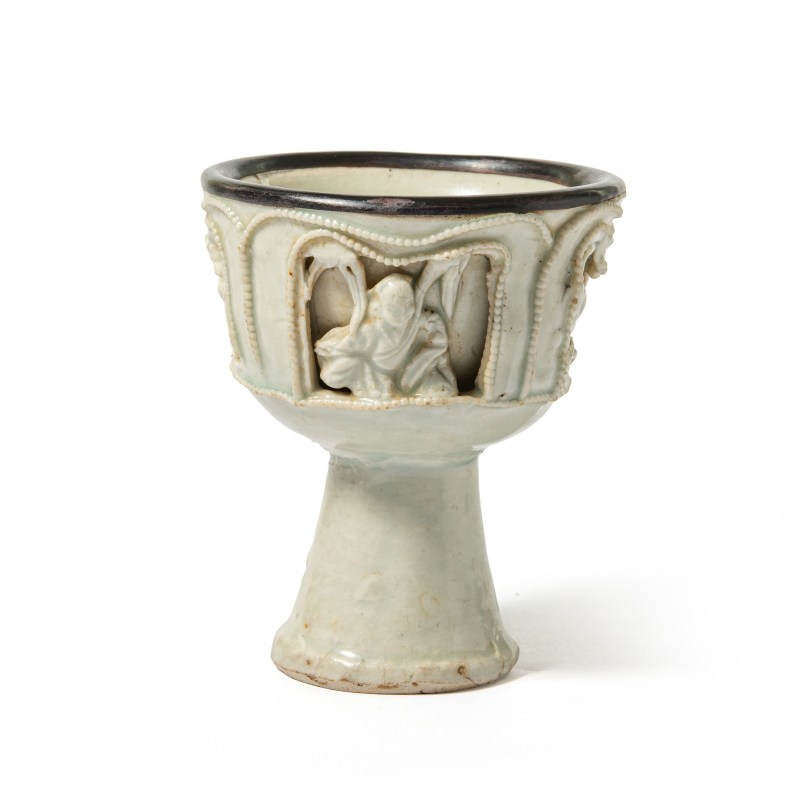
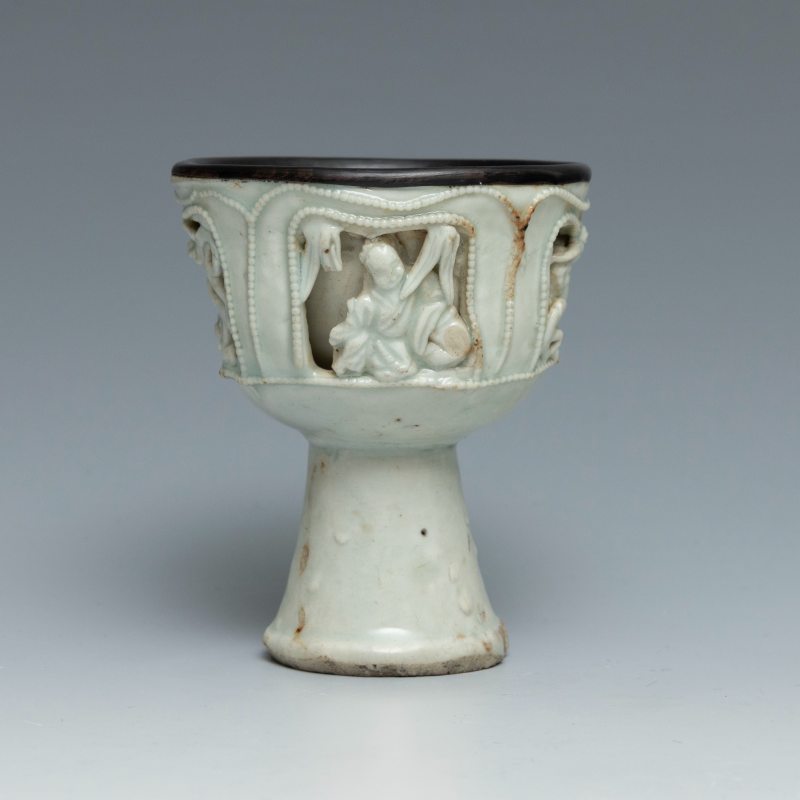
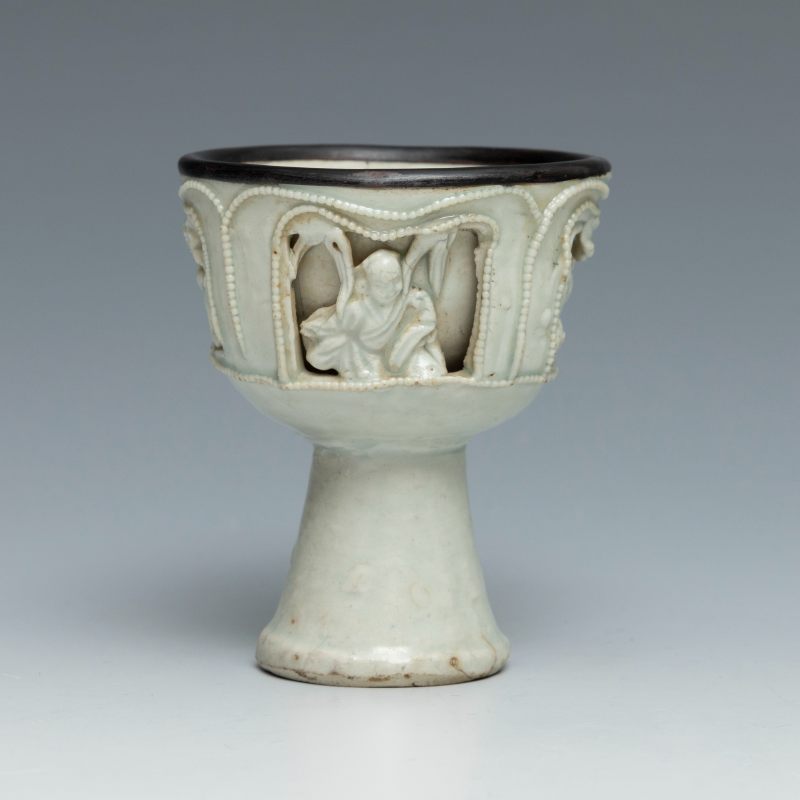
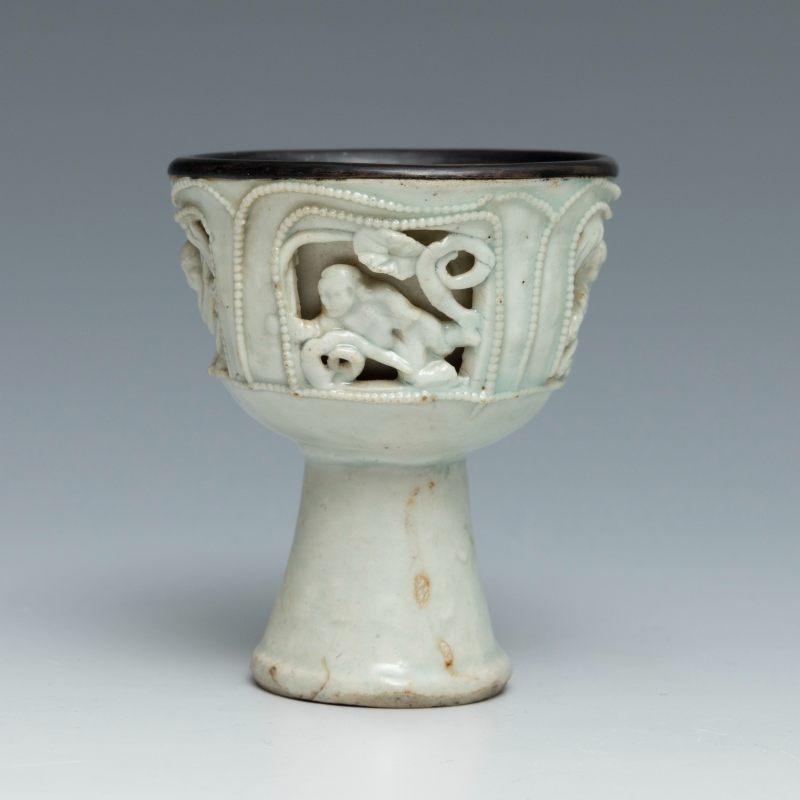
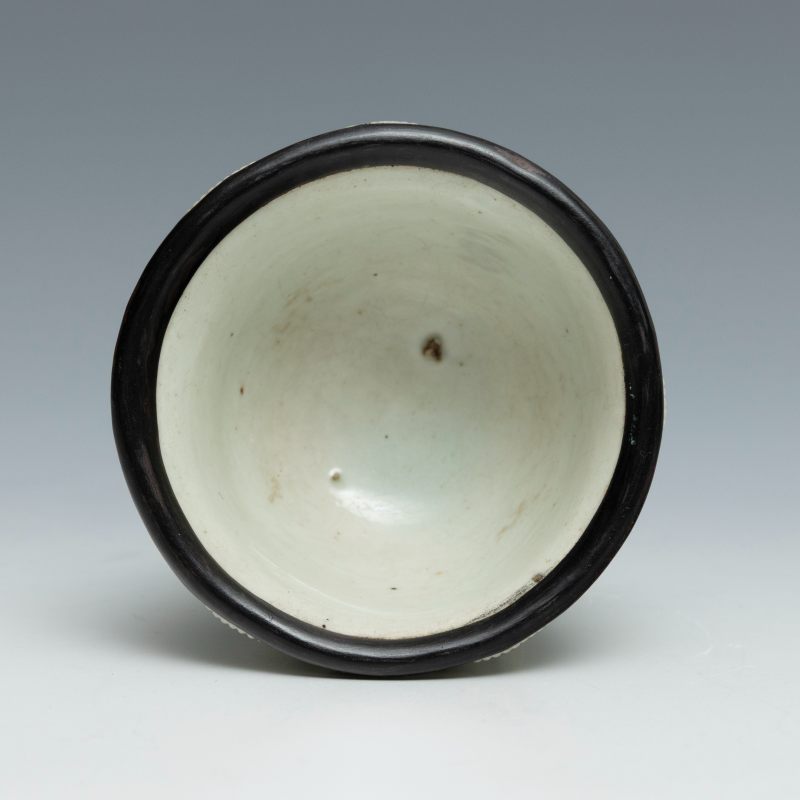
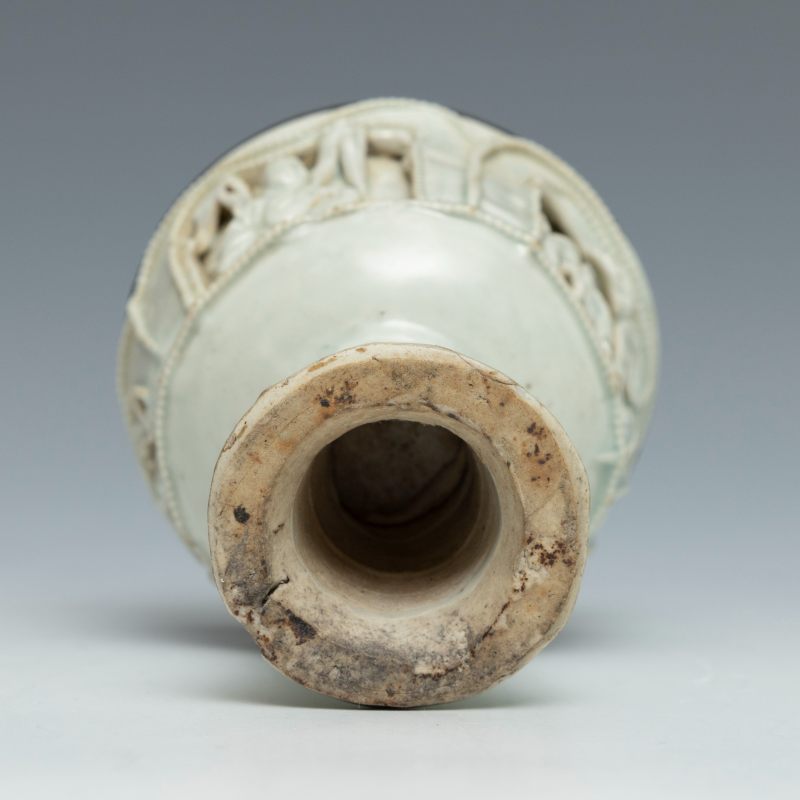
Irregularities to the foot rim, minor small damages, most noticeably to the knee of one seated boy, darkened areas of the beaded borders and two dents at the stem. Small firing flaw spots from time of manufacturing, most noticeably a sandgrain inside of the bowl. The mouth rim covered with a metal liner.
更多信息
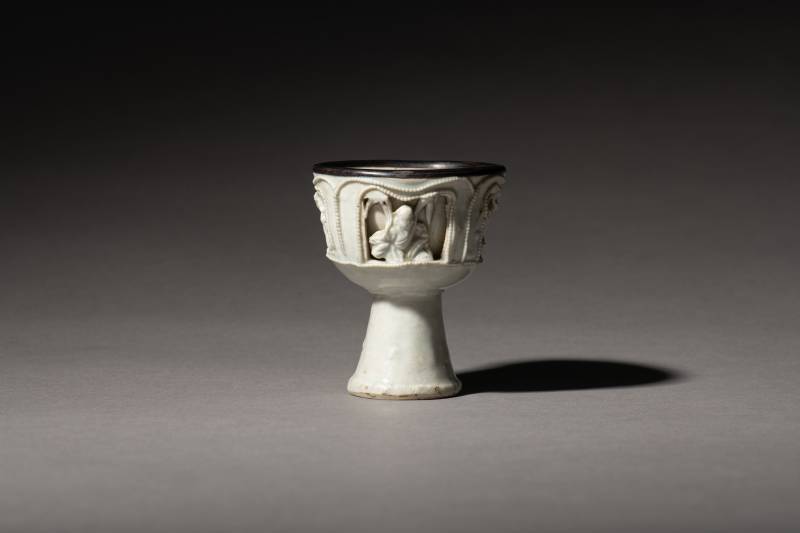
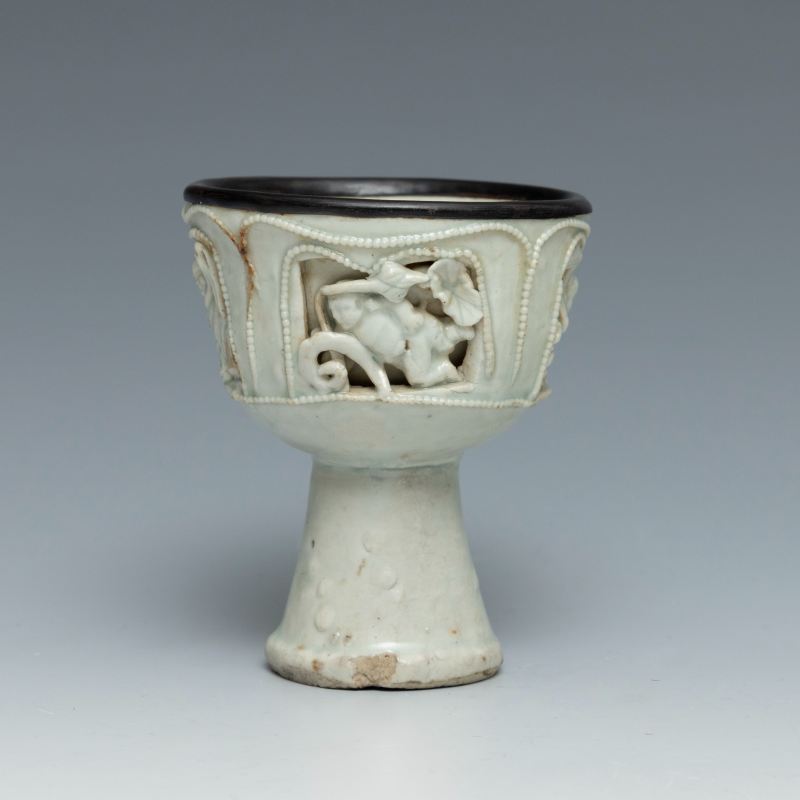
Rising from a splayed foot and hollow stem, this finely potted stem cup supports a deep, outward-flaring bowl terminating in a gently everted rim. The vessel is distinguished by four shaped panels meticulously carved into the exterior wall, each enclosed by applied beaded borders: two depicting a boy amid lotus blossoms and two portraying a seated boy. The stem cup is covered overall, except for the foot rim, in a thick, light greyish Qingbai glaze. The mouth rim is mounted with a metal liner.
The elevated form of stem cups such as the present example made them especially suitable for serving wine and other ceremonial beverages, and they were employed at courtly banquets as well as in ritual contexts. Finely potted qingbai examples, such as the present vessel, also demonstrate the remarkable technical achievements of Yuan potters, combining practical function with refined craftsmanship.
Beaded decoration, such as that seen on the present stem cup, had from early times adorned Buddhist sculpture and was adopted on ceramics during and after the Song dynasty, often to depict jewellery or to frame religious motifs. Earlier examples can also be found in Tang Dynasty metalwork, where cups with shaped, beaded panels and figural decoration are known (see Carol Michaelson, Gilded Dragons, pl. 90).
Applied beaded decoration most frequently appears on qingbai cups, figures (see Stacey Pierson, Qingbai Ware: Chinese Porcelain of the Song and Yuan Dynasties, pp. 212–219), and vases, including the celebrated Fonthill Vase, the earliest documented piece of Chinese porcelain to have reached Europe, and the famous guan jar with underglaze blue and red decoration in the Percival David Foundation collection (British Museum no. PDF.492). The applied ornament on the bodies of both the Fonthill Vase and the guan jar, framed by bands of applied beading, closely parallels the decorative treatment of the present stem cup.
A closely comparable stem cup is preserved in The British Museum, donated by the Sir Percival David Foundation of Chinese Art (museum no. PDF.492), and is illustrated in Qingbai Ware: Chinese Porcelain of the Song and Yuan Dynasties by Stacey Pierson, no. 47, p. 100. Other comparable examples are in the Museu Calouste Gulbenkian, Lisbon (inv. no. 2372) and in the Yangzhou Museum collection, excavated in Yangzhou in 1984 and published in Zhongguo Taoci Quanji, vol. 11: Yuan, p. 115.
Other examples of Yuan dynasty qingbai beaded stem cups are known, such as those illustrated in Ceramic Finds from Jingdezhen Kilns (Fung Ping Shan Museum, pl. 121), another one sold at Christie’s London (12 Nov 2025, lot 136), and an example illustrated in Yüan Porcelain & Stoneware by Margaret Medley, no. 8A. However, these last three examples generally do not match the technical sophistication or artistic refinement of the present piece. In particular, the panels cut into the outer wall of the cup are exceptionally rare on a vessel of this form, distinguishing it from other known examples.
Qingbai wares, distinguished by their luminous bluish-white glaze, emerged during the early Song dynasty, with the finest examples produced at the Jingdezhen kilns in Jiangxi province. Developing from earlier white wares, they represent one of the earliest fully realised porcelains in China. Production expanded significantly during the Northern and Southern Song dynasties, as Jingdezhen became a major centre of ceramic manufacture, supplying both the domestic market and extensive overseas trade networks. During the succeeding Yuan dynasty, qingbai production continued to flourish, with potters producing increasingly elaborate forms and more complex decorative schemes in keeping with the aesthetic preferences of the period. From the 14th century onwards, however, the same Jingdezhen kilns increasingly turned to the production of blue-and-white porcelain, using the same porcelain body but decorating it with underglaze cobalt blue. As fashions in Chinese ceramics changed, this technological and aesthetic development gradually supplanted the production of Song-style monochrome porcelains, and by the Ming Dynasty qingbai ware had largely disappeared.
以下内容由AI翻译:
【名称】
元青白釉高足杯
【年代】
元代(1271-1368)
【描述】
此件精制的高足杯从一个外撇的圈足和中空的高足升起,支撑着一个深而外展的碗,边缘微微外翻。器物的外部壁面上精心雕刻了四个形状面板,每个面板都由贴塑的珠边包围:两个描绘了一个男孩在莲花丛中,另外两个描绘了一个坐着的男孩。除了圈足边缘外,整个器物覆盖着一层厚实的浅灰色青白釉。口沿装有金属衬里。
像这种高足杯的提升形式使其特别适合盛酒和其他仪式饮料,并在宫廷宴会和宗教仪式中使用。如本件这样的精细制作的青白釉高足杯也展示了元代陶工卓越的技术成就,结合了实用功能与精致工艺。
如本件高足杯上所见的珠饰装饰,自早期以来就用于佛教雕塑,并在宋朝及其后被陶瓷采用,常用来描绘珠宝或框定宗教图案。更早的例子可以在唐代金属器中找到,其中已知有带形状珠饰面板和人物装饰的杯子(参见Carol Michaelson, Gilded Dragons, pl. 90)。
贴塑珠饰最常见于青白釉杯、人物(参见Stacey Pierson, Qingbai Ware: Chinese Porcelain of the Song and Yuan Dynasties, pp. 212–219)和花瓶,包括著名的Fonthill Vase,这是最早记录到达欧洲的中国瓷器之一,以及Percival David Foundation收藏中的著名官窑罐(大英博物馆编号PDF.492)。Fonthill Vase和官窑罐上的贴塑装饰,由贴塑珠边框定,与本件高足杯的装饰处理非常相似。
一件非常类似的高足杯保存在大英博物馆,由Percival David基金会捐赠(博物馆编号PDF.492),并在Stacey Pierson的《Qingbai Ware: Chinese Porcelain of the Song and Yuan Dynasties》一书中图47,第100页中插图。其他类似例子可见于里斯本的Calouste Gulbenkian博物馆(馆藏编号2372)和扬州博物馆,后者于1984年在扬州出土,并发表在《中国陶瓷全集》卷11:元,第115页。
其他元代青白釉珠饰高足杯的例子也有记载,如《景德镇窑址出土陶瓷》(冯平山博物馆,图121)中的一件,另一件在佳士得伦敦拍卖(2025年11月12日,拍品136号),还有一件在Margaret Medley的《Yüan Porcelain & Stoneware》中图8A。然而,这些最后三件例子通常在技术精湛度和艺术精美度上不如本件。特别是,杯壁上切割的面板在这种形式的器物上极为罕见,使其区别于其他已知的例子。
青白釉瓷器以其明亮的蓝白色釉而著称,出现在北宋早期,最好的例子产自江西景德镇窑。它们从早期的白瓷发展而来,代表了中国最早的完全成熟的瓷器之一。在南北宋时期,随着景德镇成为主要的陶瓷制造中心,供应国内市场和广泛的海外贸易网络,生产显著扩大。到了元代,青白釉瓷器继续繁荣,陶工们制作出越来越复杂的形式和装饰方案,以符合当时的审美偏好。然而,从14世纪开始,同一景德镇窑越来越多地转向生产青花瓷,使用相同的瓷胎但用釉下钴蓝进行装饰。随着中国陶瓷时尚的变化,这一技术和美学的发展逐渐取代了宋代风格的单色瓷器的生产,到明代青白釉瓷器已基本消失。
【品相】
圈足边缘不规则,轻微损坏,最明显的是一个坐着的男孩膝盖处,珠边部分变暗,茎部有两个凹痕。烧制时产生的小瑕疵点,最明显的是碗内有一个沙粒。口沿装有金属衬里。
The elevated form of stem cups such as the present example made them especially suitable for serving wine and other ceremonial beverages, and they were employed at courtly banquets as well as in ritual contexts. Finely potted qingbai examples, such as the present vessel, also demonstrate the remarkable technical achievements of Yuan potters, combining practical function with refined craftsmanship.
Beaded decoration, such as that seen on the present stem cup, had from early times adorned Buddhist sculpture and was adopted on ceramics during and after the Song dynasty, often to depict jewellery or to frame religious motifs. Earlier examples can also be found in Tang Dynasty metalwork, where cups with shaped, beaded panels and figural decoration are known (see Carol Michaelson, Gilded Dragons, pl. 90).
Applied beaded decoration most frequently appears on qingbai cups, figures (see Stacey Pierson, Qingbai Ware: Chinese Porcelain of the Song and Yuan Dynasties, pp. 212–219), and vases, including the celebrated Fonthill Vase, the earliest documented piece of Chinese porcelain to have reached Europe, and the famous guan jar with underglaze blue and red decoration in the Percival David Foundation collection (British Museum no. PDF.492). The applied ornament on the bodies of both the Fonthill Vase and the guan jar, framed by bands of applied beading, closely parallels the decorative treatment of the present stem cup.
A closely comparable stem cup is preserved in The British Museum, donated by the Sir Percival David Foundation of Chinese Art (museum no. PDF.492), and is illustrated in Qingbai Ware: Chinese Porcelain of the Song and Yuan Dynasties by Stacey Pierson, no. 47, p. 100. Other comparable examples are in the Museu Calouste Gulbenkian, Lisbon (inv. no. 2372) and in the Yangzhou Museum collection, excavated in Yangzhou in 1984 and published in Zhongguo Taoci Quanji, vol. 11: Yuan, p. 115.
Other examples of Yuan dynasty qingbai beaded stem cups are known, such as those illustrated in Ceramic Finds from Jingdezhen Kilns (Fung Ping Shan Museum, pl. 121), another one sold at Christie’s London (12 Nov 2025, lot 136), and an example illustrated in Yüan Porcelain & Stoneware by Margaret Medley, no. 8A. However, these last three examples generally do not match the technical sophistication or artistic refinement of the present piece. In particular, the panels cut into the outer wall of the cup are exceptionally rare on a vessel of this form, distinguishing it from other known examples.
Qingbai wares, distinguished by their luminous bluish-white glaze, emerged during the early Song dynasty, with the finest examples produced at the Jingdezhen kilns in Jiangxi province. Developing from earlier white wares, they represent one of the earliest fully realised porcelains in China. Production expanded significantly during the Northern and Southern Song dynasties, as Jingdezhen became a major centre of ceramic manufacture, supplying both the domestic market and extensive overseas trade networks. During the succeeding Yuan dynasty, qingbai production continued to flourish, with potters producing increasingly elaborate forms and more complex decorative schemes in keeping with the aesthetic preferences of the period. From the 14th century onwards, however, the same Jingdezhen kilns increasingly turned to the production of blue-and-white porcelain, using the same porcelain body but decorating it with underglaze cobalt blue. As fashions in Chinese ceramics changed, this technological and aesthetic development gradually supplanted the production of Song-style monochrome porcelains, and by the Ming Dynasty qingbai ware had largely disappeared.
以下内容由AI翻译:
【名称】
元青白釉高足杯
【年代】
元代(1271-1368)
【描述】
此件精制的高足杯从一个外撇的圈足和中空的高足升起,支撑着一个深而外展的碗,边缘微微外翻。器物的外部壁面上精心雕刻了四个形状面板,每个面板都由贴塑的珠边包围:两个描绘了一个男孩在莲花丛中,另外两个描绘了一个坐着的男孩。除了圈足边缘外,整个器物覆盖着一层厚实的浅灰色青白釉。口沿装有金属衬里。
像这种高足杯的提升形式使其特别适合盛酒和其他仪式饮料,并在宫廷宴会和宗教仪式中使用。如本件这样的精细制作的青白釉高足杯也展示了元代陶工卓越的技术成就,结合了实用功能与精致工艺。
如本件高足杯上所见的珠饰装饰,自早期以来就用于佛教雕塑,并在宋朝及其后被陶瓷采用,常用来描绘珠宝或框定宗教图案。更早的例子可以在唐代金属器中找到,其中已知有带形状珠饰面板和人物装饰的杯子(参见Carol Michaelson, Gilded Dragons, pl. 90)。
贴塑珠饰最常见于青白釉杯、人物(参见Stacey Pierson, Qingbai Ware: Chinese Porcelain of the Song and Yuan Dynasties, pp. 212–219)和花瓶,包括著名的Fonthill Vase,这是最早记录到达欧洲的中国瓷器之一,以及Percival David Foundation收藏中的著名官窑罐(大英博物馆编号PDF.492)。Fonthill Vase和官窑罐上的贴塑装饰,由贴塑珠边框定,与本件高足杯的装饰处理非常相似。
一件非常类似的高足杯保存在大英博物馆,由Percival David基金会捐赠(博物馆编号PDF.492),并在Stacey Pierson的《Qingbai Ware: Chinese Porcelain of the Song and Yuan Dynasties》一书中图47,第100页中插图。其他类似例子可见于里斯本的Calouste Gulbenkian博物馆(馆藏编号2372)和扬州博物馆,后者于1984年在扬州出土,并发表在《中国陶瓷全集》卷11:元,第115页。
其他元代青白釉珠饰高足杯的例子也有记载,如《景德镇窑址出土陶瓷》(冯平山博物馆,图121)中的一件,另一件在佳士得伦敦拍卖(2025年11月12日,拍品136号),还有一件在Margaret Medley的《Yüan Porcelain & Stoneware》中图8A。然而,这些最后三件例子通常在技术精湛度和艺术精美度上不如本件。特别是,杯壁上切割的面板在这种形式的器物上极为罕见,使其区别于其他已知的例子。
青白釉瓷器以其明亮的蓝白色釉而著称,出现在北宋早期,最好的例子产自江西景德镇窑。它们从早期的白瓷发展而来,代表了中国最早的完全成熟的瓷器之一。在南北宋时期,随着景德镇成为主要的陶瓷制造中心,供应国内市场和广泛的海外贸易网络,生产显著扩大。到了元代,青白釉瓷器继续繁荣,陶工们制作出越来越复杂的形式和装饰方案,以符合当时的审美偏好。然而,从14世纪开始,同一景德镇窑越来越多地转向生产青花瓷,使用相同的瓷胎但用釉下钴蓝进行装饰。随着中国陶瓷时尚的变化,这一技术和美学的发展逐渐取代了宋代风格的单色瓷器的生产,到明代青白釉瓷器已基本消失。
【品相】
圈足边缘不规则,轻微损坏,最明显的是一个坐着的男孩膝盖处,珠边部分变暗,茎部有两个凹痕。烧制时产生的小瑕疵点,最明显的是碗内有一个沙粒。口沿装有金属衬里。
常见问题
拍品的品相状况如何?
Irregularities to the foot rim, minor small damages, most noticeably to the knee of one seated boy, darkened areas of the beaded borders and two dents at the stem. Small firing flaw spots from time of manufacturing, most noticeably a sandgrain inside of the bowl. The mouth rim covered with a metal liner.
拍品的尺寸是多少?
H 8.9 cm, D 7.5 cm