
拍品信息
拍品名称
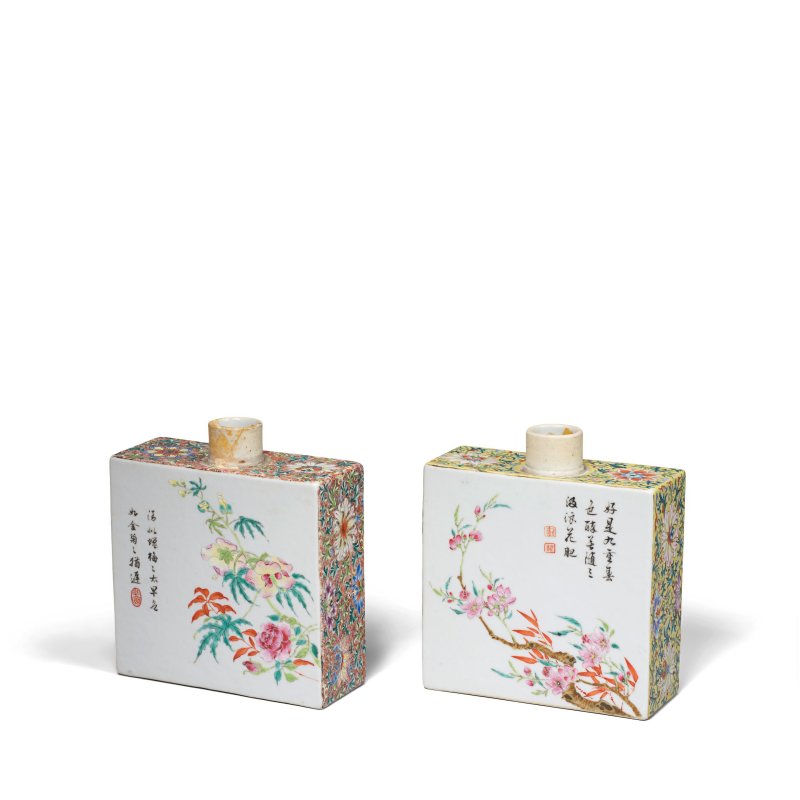
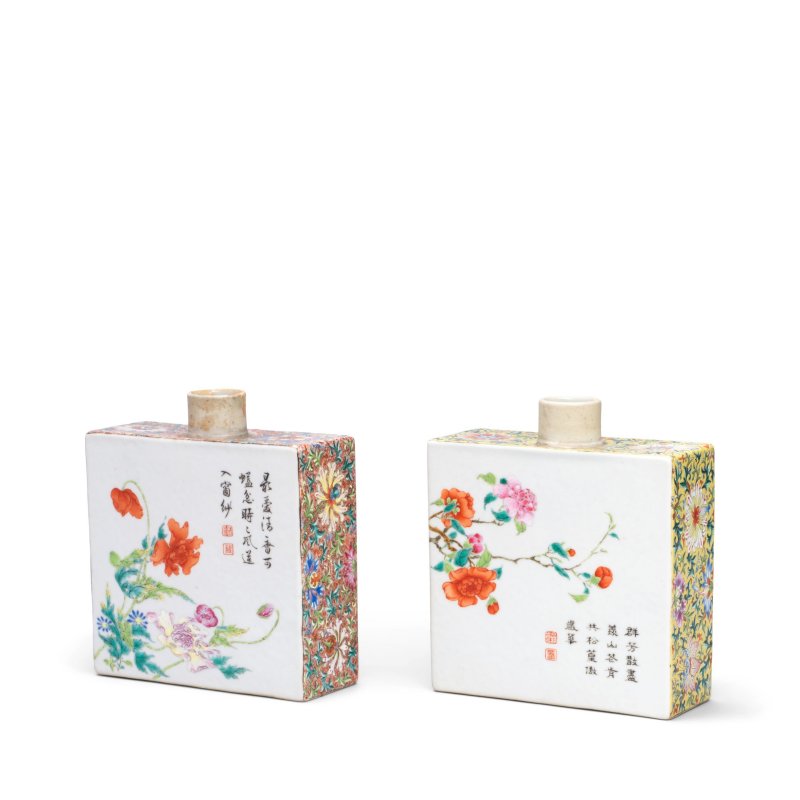
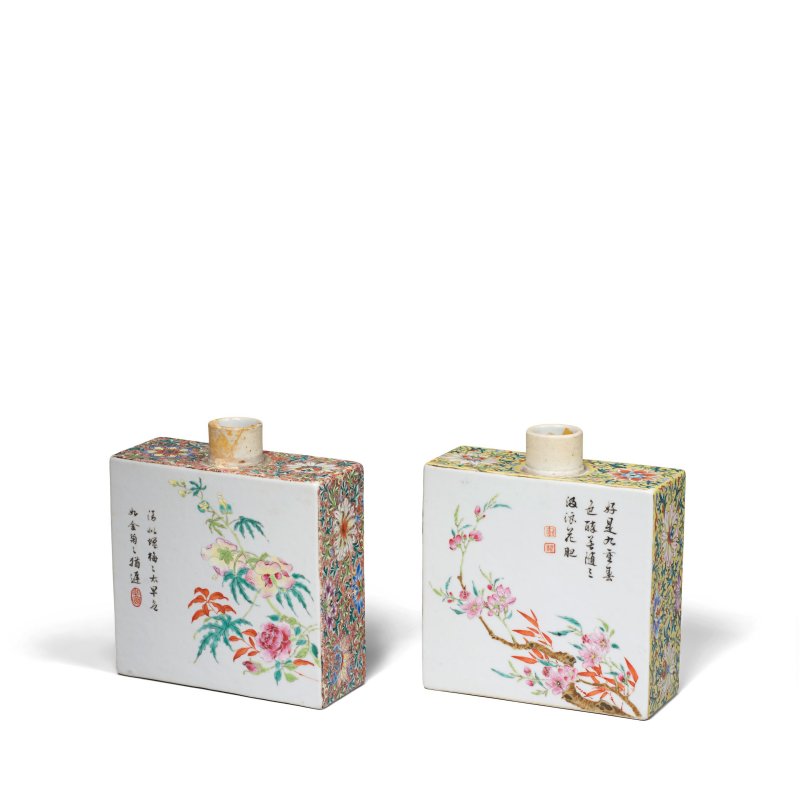
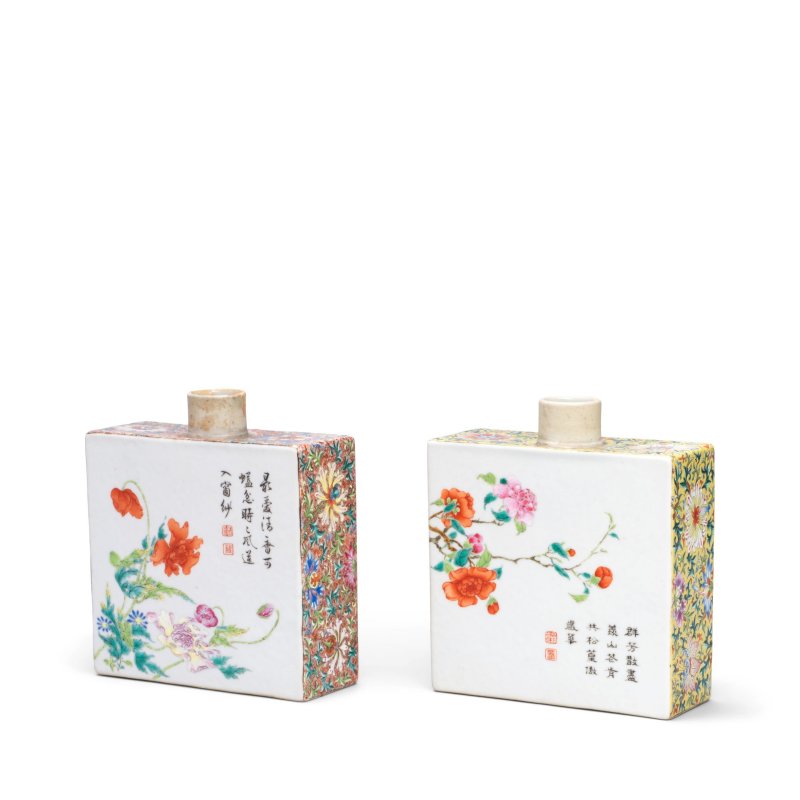
清乾隆 粉彩詩文花卉四方茶葉罐一對 | A PAIR OF EXCEPTIONALLY RARE 'TANG YING' FAMILLE ROSE TEA CADDIES
年代
Qianlong
起拍价
GBP 60,000
估值区间
GBP 60000 - 80000
尺寸
未知
品相
未知
更多信息
Qianlong
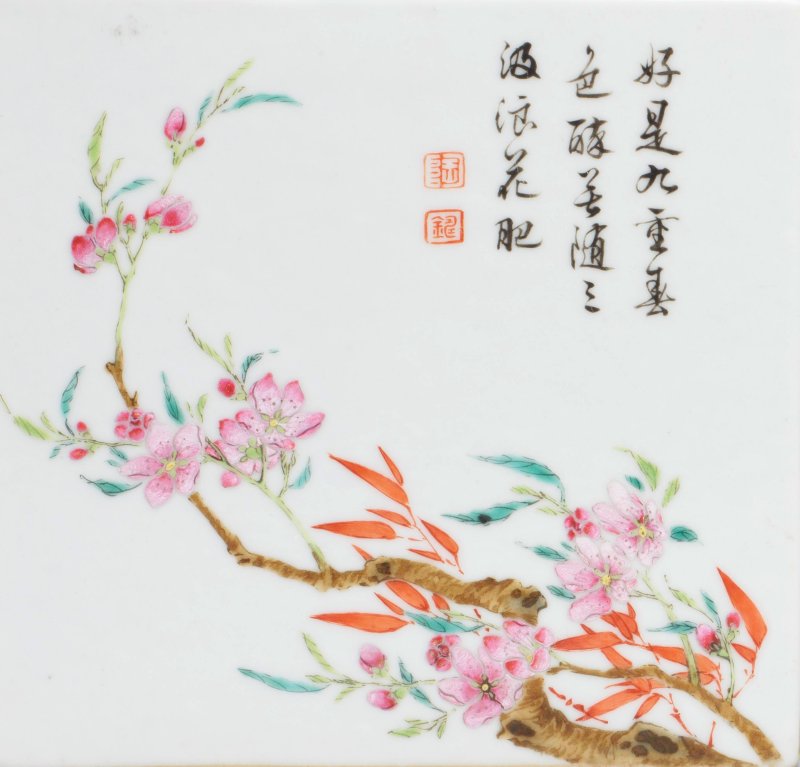
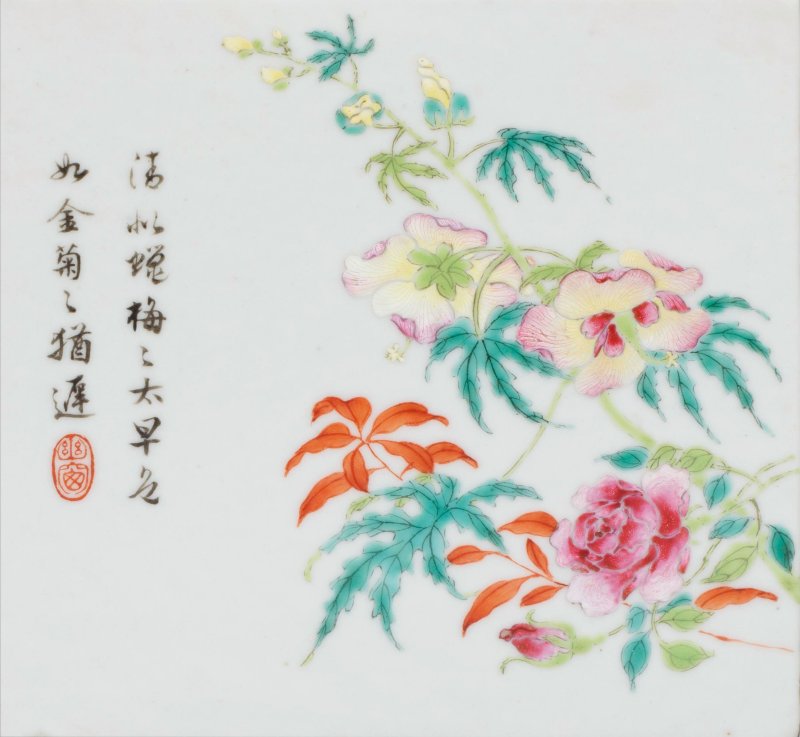
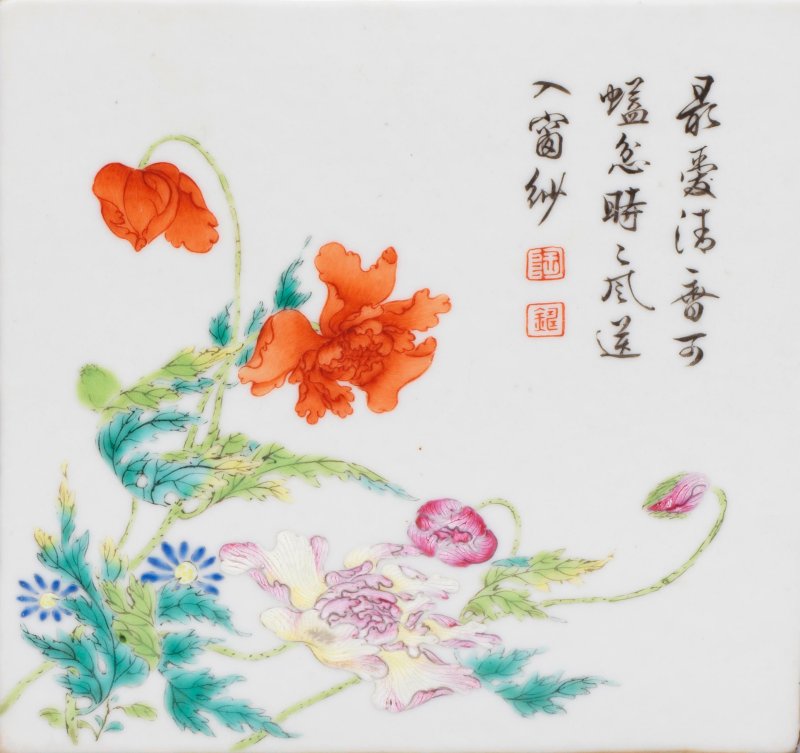
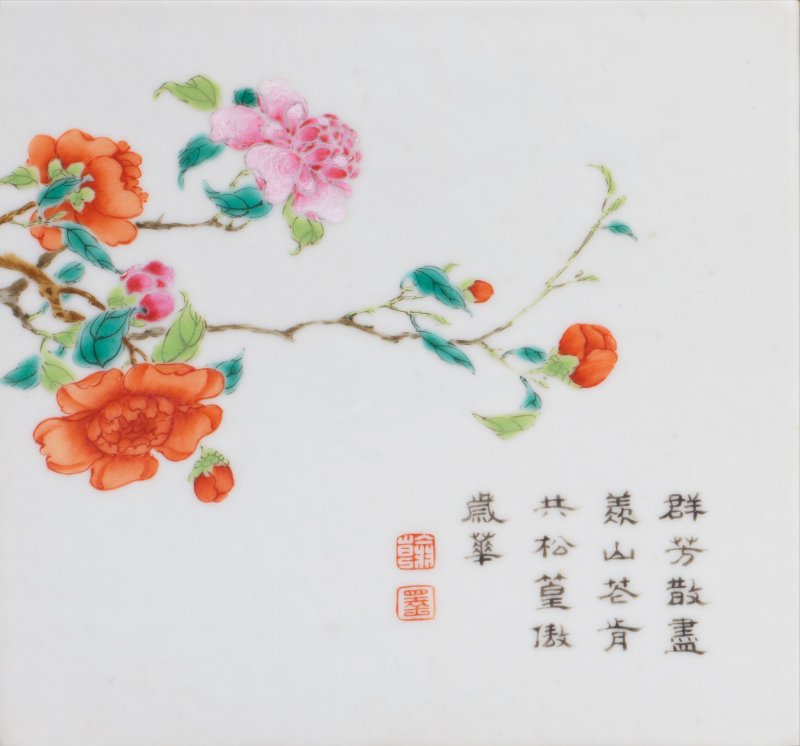
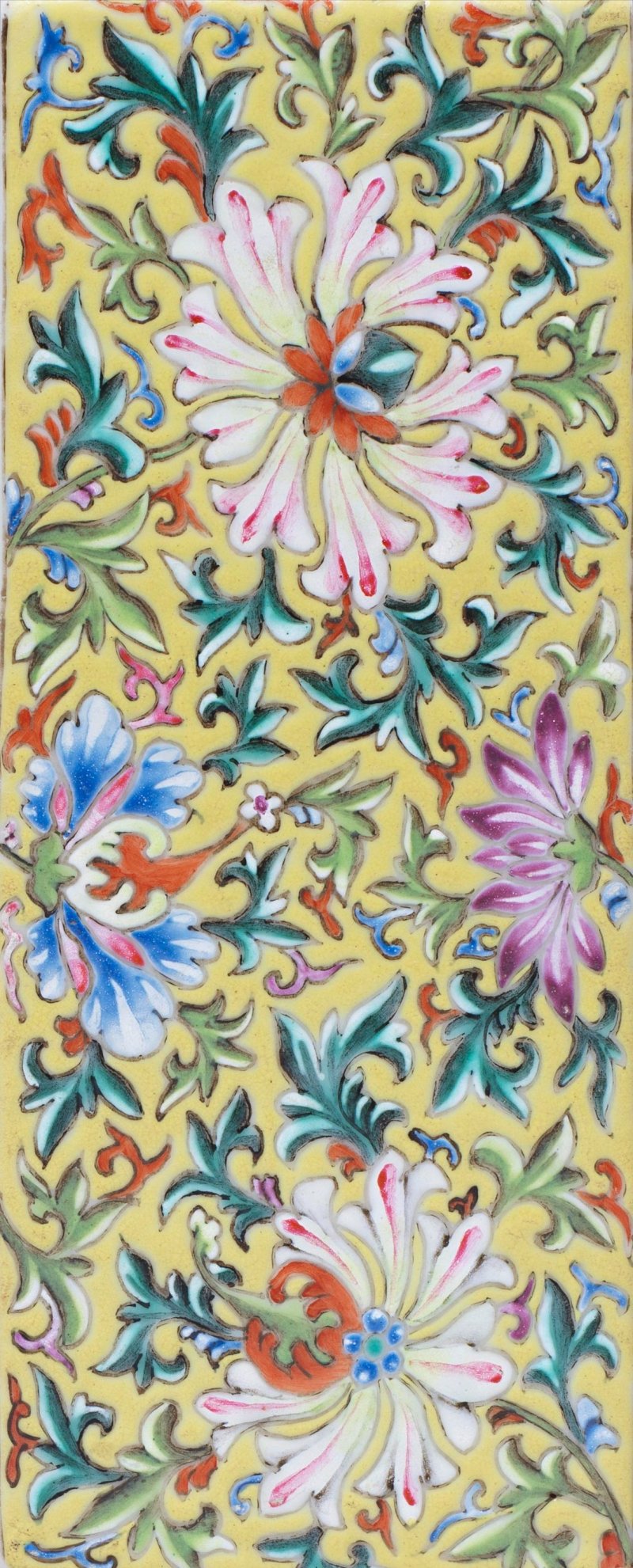
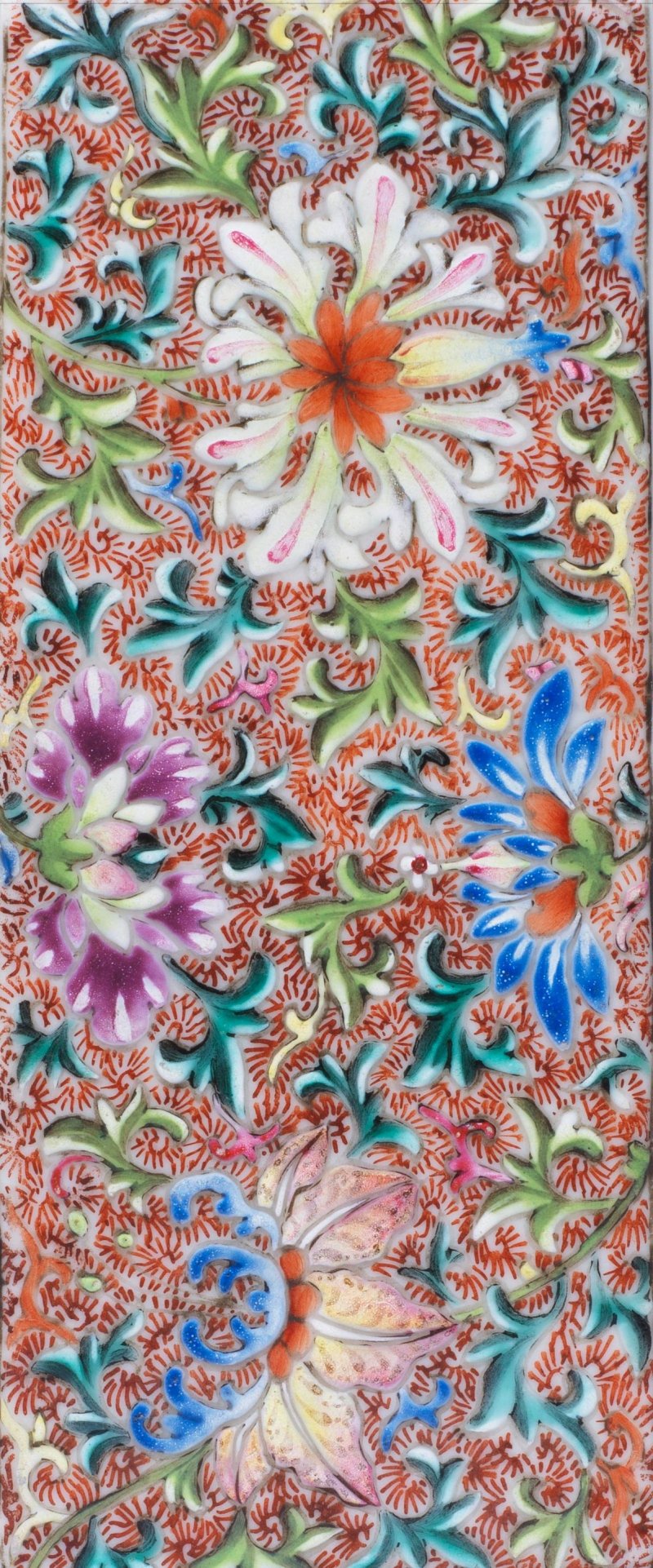
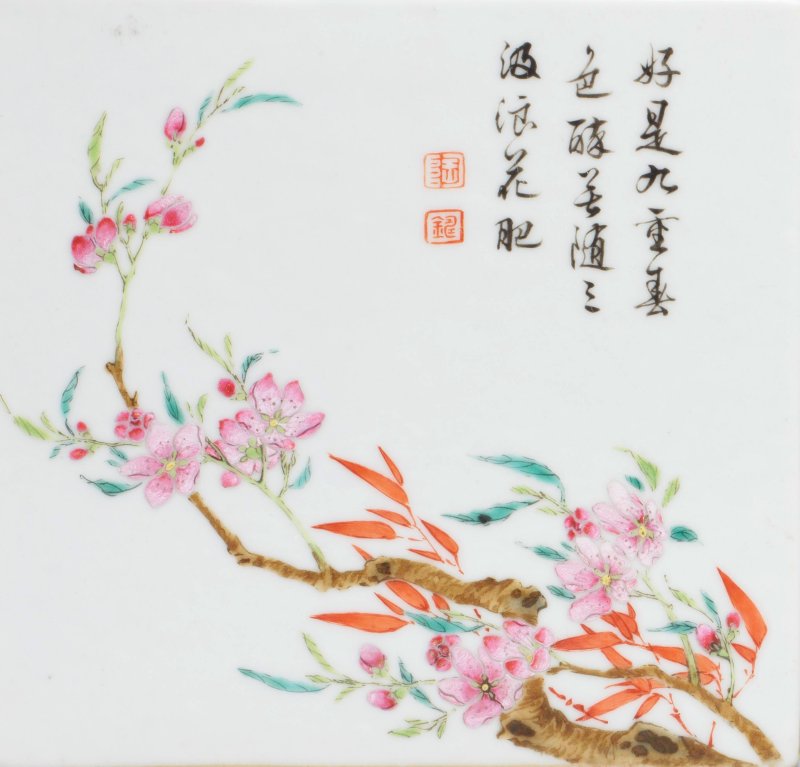
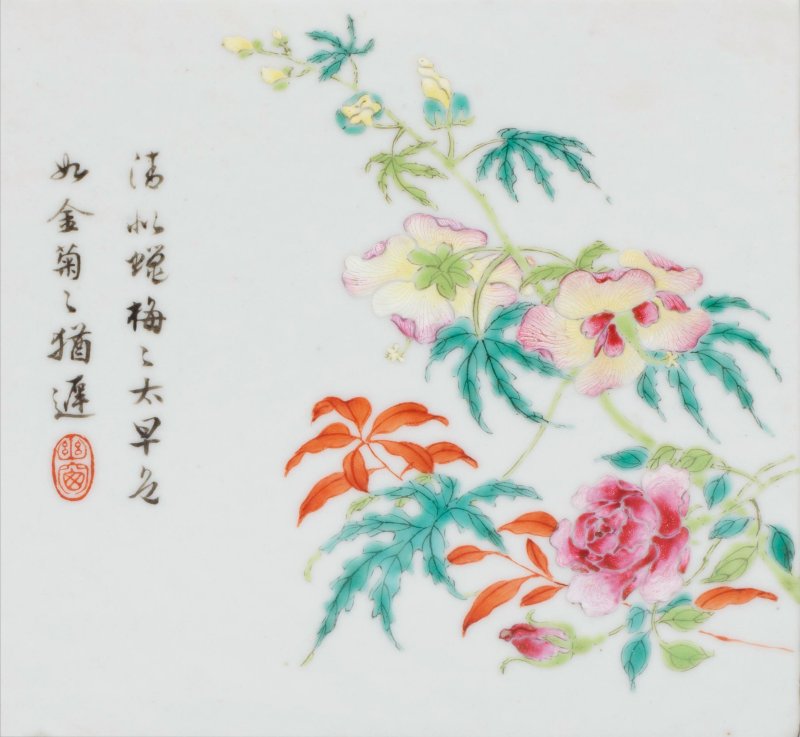
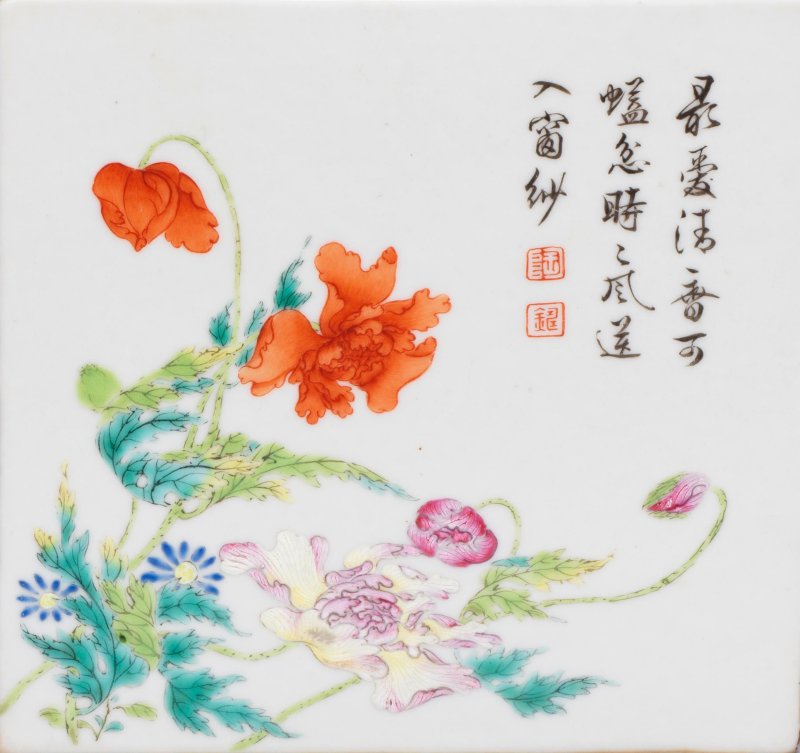
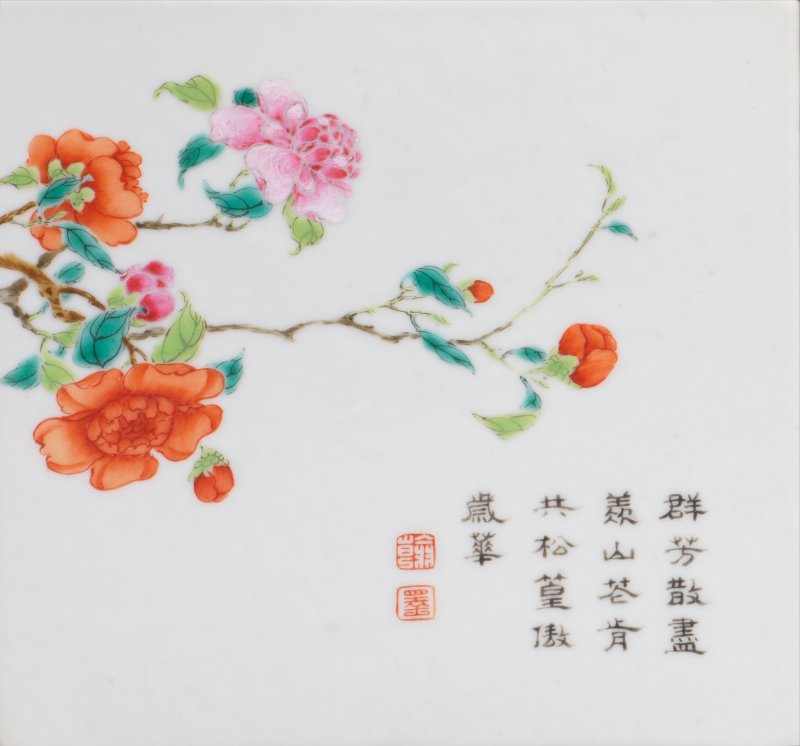
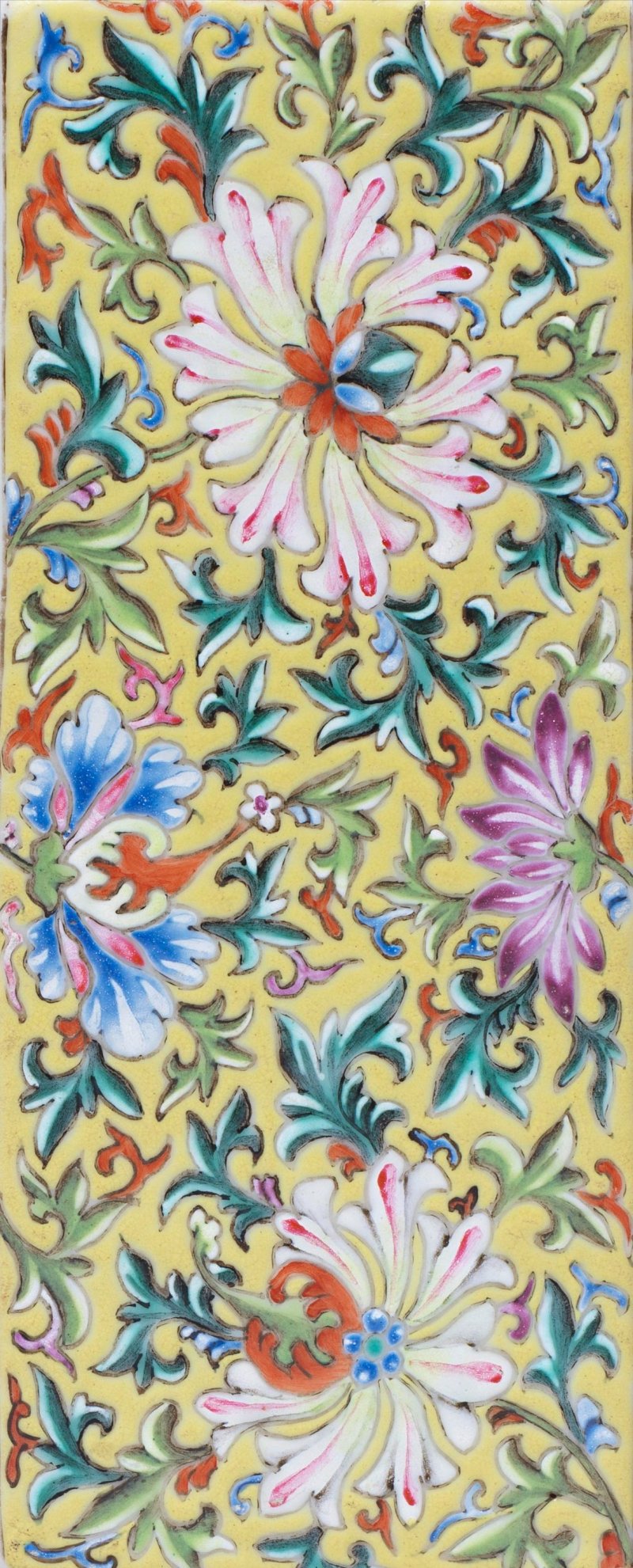
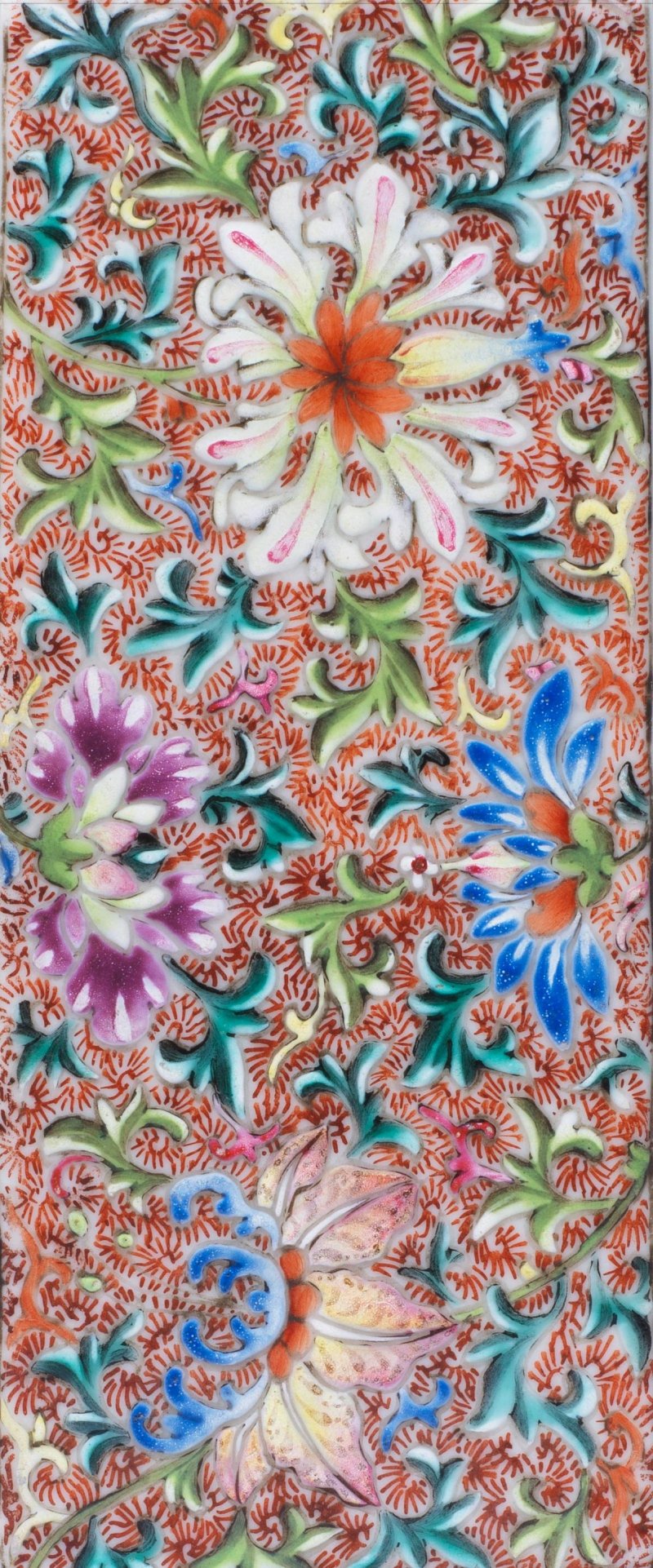
Each of square shape, the front and reverse faces variously painted with leafy floral branches, including peach blossom, poppy, musk mallow, and camellia, each accompanied by seals and poetic inscriptions, the sides finely enamelled with foliate and floral scrolls reserved on yellow and red diaper grounds respectively, the necks and bases unglazed, two later fitted wood covers. Each 16.8cm (6 5/8in) high. (4).
Footnotes
清乾隆 粉彩詩文花卉四方茶葉罐一對
款識及鈐印:好是九重春色醉,莫隨三汲浪花肥。「陶」「鑄」
最愛清香可蠲忿,時時風送入窗紗。「陶」「鑄」
清似臘梅梅太早,色如金菊菊猶遲。「幽窗」
群芳散盡羨山花,肯共松篁傲歲華。「翰」「墨」
Provenance: a British private collection
Toovey's, Pulborough, 23 February 2017, lot 1130
來源: 英國私人收藏
Toovey's拍賣行,英國普爾伯勒,2017年2月23日,拍品編號1130
The present lot represents an exceptional fusion of the refined aesthetic sensibilities of the Qing Court and literati tradition with the exquisite craftsmanship of the Imperial Kiln in Jingdezhen. It reflects the artistic vision of Tang Ying (1682-1756), the Superintendent of the Imperial Kilns, as well as the collaborative nature of production at the Imperial kilns.
It constitutes a harmonious fourfold integration of poetry, calligraphy, painting and seal (詩書畫印), which is a defining characteristic of traditional Chinese literati painting. The tea caddies bear the seals (陶鑄 making pottery and casting metal), (幽窗 the secluded window) and (翰墨 brushes and ink). According to Huang Qinghua's research, the and seals are leisure seals associated with the works of Lü Ji (呂績). It is possible that the painting and calligraphy on the tea caddies may be attributed to Lü Ji. He was a highly valued Imperial kiln painter working under the celebrated superintendent of the Imperial porcelain kilns, Tang Ying (1683-1756). He specialised in overglaze painting of flowers, birds, and landscapes, and was highly accomplished in all four major styles of Chinese calligraphy, with running script being his particular strength. He began working at the Imperial kiln factory after the seventh year of the Qianlong reign (1742), entering Tang Ying's circle of artisans and serving the Imperial kilns for more than twenty years. At the time, the finest Imperial porcelains commissioned by Tang Ying and decorated with poetry, inscriptions, and other literary compositions were mostly produced by Lü Ji's hand.
The inscriptions are elegantly executed in running script and clerical scripts, and may be translated as:
The front and reverse faces of the tea caddies are exquisitely painted in famille rose with flowering branches of peach blossom, poppy, musk mallow, and camellia, representing the four seasons. In depicting flowers of diverse forms and colours, the artist makes masterful use of an extensive range of pastel tones, carefully modulating variations in shade and the density of the brushwork with remarkable precision. The floral compositions reflect the characteristic style of Qing Court flower-and-bird painting as well as the exceptional technical accomplishments of the craftsmen at Jingdezhen.
It was common practice for decorative motifs produced at the Qing Imperial kilns to be designed initially by Court painters. Following Imperial approval, the designs were transmitted to Jingdezhen, where skilled craftsmen reproduced them on porcelain according to the original models. As seen in the present lot, the Qing Court bird-and-flower tradition drew inspiration from earlier masters, notably Yun Shouping 惲壽平 (1633-1690), who invented the 'boneless' style. See ten album leaves entitled by Yun Shouping, in the Qing Court Collection, the Palace Museum, Beijing, illustrated in , London, 2005, p.330-331. This work could also reflect the influence of Jiang Tingxi 蔣廷錫 and Zou Yigui 鄒一桂 who are likewise regarded as important practitioners who brought Yun Shouping's style into the Imperial Court. See by Zou Yigui, dated 1734, in the Qing Court Collection, the Palace Museum, Taipei, illustrated in (雍正:清世宗文物大展), Taipei, 2000, pp.300-302. See also a pair of famille rose 'poppy' bowls, decorated with flowers closely comparable to the poppies depicted on the present lot, Yongzheng six-character marks and of the period, which was sold at Christie's Hong Kong, 29 November 2017, lot 2806.
The decoration on the sides of the tea caddies notably echoes the style described in the Qing Imperial archives as (洋彩, literally meaning 'Western colours'). wares ranked among the most prestigious products of the Imperial Kiln Factory at Jingdezhen and were principally made for display and use within a small number of important palaces at the Qing Court. According to Liao Baoxiu's research, employed the same enamel pigments as porcelain. However, because it adopted Western decorative motifs, techniques and painting methods that differed from traditional Chinese painting, it came to be known as .
The floral motifs depicted on the sides of the present lot should be 'western lotus' ( 西番蓮), a general term for flowers introduced from foreign regions and so named because their petals resemble those of the lotus. In addition, the arrangement of floral motifs on a red diaper ground on one of the tea caddies corresponds with the decorative technique of 'adding flowers to brocade' ( 錦上添花). Invented by Tang Ying, this technique became a main feature of wares of the Qianlong reign. See a landscape vase with comparable floral motifs on red diaper ground, Qianlong mark and of the period, in the Qing Court Collection, the Palace Museum, Beijing, illustrated in (故宮博物館藏文物珍品大系:琺琅彩·粉彩), Hong Kong, 1999, pl.114.
wares, like wares, were principally displayed in the Palace of Heavenly Purity (乾清宮 ) and the Hall of Mental Cultivation (養心殿 ), and the Old Summer Palace (圓明園 ). Apart from those, they were rarely displayed in other palace buildings. Given their rarity and prestige at the time of production, such objects were not commonly encountered even within the Qing Imperial palace, let alone beyond its walls. For further discussion, see Liao Baoxiu, 'Adding Flowers to Brocade: a Discussion of Yangcai' (錦上添花話洋彩), in (故宮文物月刊), 2006, vol.280, pp.4-23.
As the superintendent of the Imperial Kilns, Tang Ying played a significant role in the development of technique at the Imperial Kilns. According to the (乾隆記事檔), in the tenth month of the second year of the Qianlong reign (1737), the Emperor was highly pleased with the yellow-ground palace bowls decorated with western-style flowers and instructed Tang Ying to adopt their decoration for porcelain boxes and vases. Compare the yellow ground sides of one of the tea caddies with a square vase with comparable western floral decoration on a yellow ground in painted enamels, Qianlong, in the Qing Court Collection, the Palace Museum, Taipei (acc.no.故瓷005104N000000000).
The Qianlong Emperor was an avid tea drinker and also cultivated the refined literati tradition of tea appreciation. Following his first Southern Tour in the sixteenth year of the Qianlong reign (1751), he was deeply influenced by the cultural and scenic environment of Jiangnan. Thereafter, he established dedicated tea pavilions within his various Imperial residences for the practice of tea appreciation, and composed many poems on the subject of tea. His appreciation of tea naturally extended to a discerning regard for the vessels used in its preparation and enjoyment.
During the Qing dynasty, the presentation of gifts by local officials to the Emperor was a formalised practice. It served not only as a means for officials to demonstrate their loyalty to the sovereign and cultivate personal relationships, but also as an integral part of Qing Court administration and official culture. Against this background, the present lot, a unique example, was probably made upon a specific order by Tang Ying at the Imperial Kilns and presented to the Qianlong Emperor as a gift. See a rectangular tea caddy of the same shape as the present lot, depicted in (院本漢宮春曉圖), by the Court painters Sun Hu, Zhou Kun and Ding Guanpeng, dated to the sixth year of the Qianlong period (1741), illustrated in (也可以清心:茶器·茶事·茶畫), Taipei, 2002, p.145, no.123.
See an imitation marble glaze tea caddy of the same shape and similarly characterised by an unglazed base and neck, with two seals reading and , dated as probably Yongzheng reign, in the collection of the Museums Scotland, Edinburgh (acc.no.A.1929.81).
Each of square shape, the front and reverse faces variously painted with leafy floral branches, including peach blossom, poppy, musk mallow, and camellia, each accompanied by seals and poetic inscriptions, the sides finely enamelled with foliate and floral scrolls reserved on yellow and red diaper grounds respectively, the necks and bases unglazed, two later fitted wood covers. Each 16.8cm (6 5/8in) high. (4).
Footnotes
清乾隆 粉彩詩文花卉四方茶葉罐一對
款識及鈐印:好是九重春色醉,莫隨三汲浪花肥。「陶」「鑄」
最愛清香可蠲忿,時時風送入窗紗。「陶」「鑄」
清似臘梅梅太早,色如金菊菊猶遲。「幽窗」
群芳散盡羨山花,肯共松篁傲歲華。「翰」「墨」
Provenance: a British private collection
Toovey's, Pulborough, 23 February 2017, lot 1130
來源: 英國私人收藏
Toovey's拍賣行,英國普爾伯勒,2017年2月23日,拍品編號1130
The present lot represents an exceptional fusion of the refined aesthetic sensibilities of the Qing Court and literati tradition with the exquisite craftsmanship of the Imperial Kiln in Jingdezhen. It reflects the artistic vision of Tang Ying (1682-1756), the Superintendent of the Imperial Kilns, as well as the collaborative nature of production at the Imperial kilns.
It constitutes a harmonious fourfold integration of poetry, calligraphy, painting and seal (詩書畫印), which is a defining characteristic of traditional Chinese literati painting. The tea caddies bear the seals (陶鑄 making pottery and casting metal), (幽窗 the secluded window) and (翰墨 brushes and ink). According to Huang Qinghua's research, the and seals are leisure seals associated with the works of Lü Ji (呂績). It is possible that the painting and calligraphy on the tea caddies may be attributed to Lü Ji. He was a highly valued Imperial kiln painter working under the celebrated superintendent of the Imperial porcelain kilns, Tang Ying (1683-1756). He specialised in overglaze painting of flowers, birds, and landscapes, and was highly accomplished in all four major styles of Chinese calligraphy, with running script being his particular strength. He began working at the Imperial kiln factory after the seventh year of the Qianlong reign (1742), entering Tang Ying's circle of artisans and serving the Imperial kilns for more than twenty years. At the time, the finest Imperial porcelains commissioned by Tang Ying and decorated with poetry, inscriptions, and other literary compositions were mostly produced by Lü Ji's hand.
The inscriptions are elegantly executed in running script and clerical scripts, and may be translated as:
The front and reverse faces of the tea caddies are exquisitely painted in famille rose with flowering branches of peach blossom, poppy, musk mallow, and camellia, representing the four seasons. In depicting flowers of diverse forms and colours, the artist makes masterful use of an extensive range of pastel tones, carefully modulating variations in shade and the density of the brushwork with remarkable precision. The floral compositions reflect the characteristic style of Qing Court flower-and-bird painting as well as the exceptional technical accomplishments of the craftsmen at Jingdezhen.
It was common practice for decorative motifs produced at the Qing Imperial kilns to be designed initially by Court painters. Following Imperial approval, the designs were transmitted to Jingdezhen, where skilled craftsmen reproduced them on porcelain according to the original models. As seen in the present lot, the Qing Court bird-and-flower tradition drew inspiration from earlier masters, notably Yun Shouping 惲壽平 (1633-1690), who invented the 'boneless' style. See ten album leaves entitled by Yun Shouping, in the Qing Court Collection, the Palace Museum, Beijing, illustrated in , London, 2005, p.330-331. This work could also reflect the influence of Jiang Tingxi 蔣廷錫 and Zou Yigui 鄒一桂 who are likewise regarded as important practitioners who brought Yun Shouping's style into the Imperial Court. See by Zou Yigui, dated 1734, in the Qing Court Collection, the Palace Museum, Taipei, illustrated in (雍正:清世宗文物大展), Taipei, 2000, pp.300-302. See also a pair of famille rose 'poppy' bowls, decorated with flowers closely comparable to the poppies depicted on the present lot, Yongzheng six-character marks and of the period, which was sold at Christie's Hong Kong, 29 November 2017, lot 2806.
The decoration on the sides of the tea caddies notably echoes the style described in the Qing Imperial archives as (洋彩, literally meaning 'Western colours'). wares ranked among the most prestigious products of the Imperial Kiln Factory at Jingdezhen and were principally made for display and use within a small number of important palaces at the Qing Court. According to Liao Baoxiu's research, employed the same enamel pigments as porcelain. However, because it adopted Western decorative motifs, techniques and painting methods that differed from traditional Chinese painting, it came to be known as .
The floral motifs depicted on the sides of the present lot should be 'western lotus' ( 西番蓮), a general term for flowers introduced from foreign regions and so named because their petals resemble those of the lotus. In addition, the arrangement of floral motifs on a red diaper ground on one of the tea caddies corresponds with the decorative technique of 'adding flowers to brocade' ( 錦上添花). Invented by Tang Ying, this technique became a main feature of wares of the Qianlong reign. See a landscape vase with comparable floral motifs on red diaper ground, Qianlong mark and of the period, in the Qing Court Collection, the Palace Museum, Beijing, illustrated in (故宮博物館藏文物珍品大系:琺琅彩·粉彩), Hong Kong, 1999, pl.114.
wares, like wares, were principally displayed in the Palace of Heavenly Purity (乾清宮 ) and the Hall of Mental Cultivation (養心殿 ), and the Old Summer Palace (圓明園 ). Apart from those, they were rarely displayed in other palace buildings. Given their rarity and prestige at the time of production, such objects were not commonly encountered even within the Qing Imperial palace, let alone beyond its walls. For further discussion, see Liao Baoxiu, 'Adding Flowers to Brocade: a Discussion of Yangcai' (錦上添花話洋彩), in (故宮文物月刊), 2006, vol.280, pp.4-23.
As the superintendent of the Imperial Kilns, Tang Ying played a significant role in the development of technique at the Imperial Kilns. According to the (乾隆記事檔), in the tenth month of the second year of the Qianlong reign (1737), the Emperor was highly pleased with the yellow-ground palace bowls decorated with western-style flowers and instructed Tang Ying to adopt their decoration for porcelain boxes and vases. Compare the yellow ground sides of one of the tea caddies with a square vase with comparable western floral decoration on a yellow ground in painted enamels, Qianlong, in the Qing Court Collection, the Palace Museum, Taipei (acc.no.故瓷005104N000000000).
The Qianlong Emperor was an avid tea drinker and also cultivated the refined literati tradition of tea appreciation. Following his first Southern Tour in the sixteenth year of the Qianlong reign (1751), he was deeply influenced by the cultural and scenic environment of Jiangnan. Thereafter, he established dedicated tea pavilions within his various Imperial residences for the practice of tea appreciation, and composed many poems on the subject of tea. His appreciation of tea naturally extended to a discerning regard for the vessels used in its preparation and enjoyment.
During the Qing dynasty, the presentation of gifts by local officials to the Emperor was a formalised practice. It served not only as a means for officials to demonstrate their loyalty to the sovereign and cultivate personal relationships, but also as an integral part of Qing Court administration and official culture. Against this background, the present lot, a unique example, was probably made upon a specific order by Tang Ying at the Imperial Kilns and presented to the Qianlong Emperor as a gift. See a rectangular tea caddy of the same shape as the present lot, depicted in (院本漢宮春曉圖), by the Court painters Sun Hu, Zhou Kun and Ding Guanpeng, dated to the sixth year of the Qianlong period (1741), illustrated in (也可以清心:茶器·茶事·茶畫), Taipei, 2002, p.145, no.123.
See an imitation marble glaze tea caddy of the same shape and similarly characterised by an unglazed base and neck, with two seals reading and , dated as probably Yongzheng reign, in the collection of the Museums Scotland, Edinburgh (acc.no.A.1929.81).
常见问题
这件清乾隆 粉彩詩文花卉四方茶葉罐一對 | A PAIR OF EXCEPTIONALLY RARE 'TANG YING' FAMILLE ROSE TEA CADDIES的成交价是多少?
落槌价为 预展中。 成交价为 预展中。


