
拍品信息
拍品名称
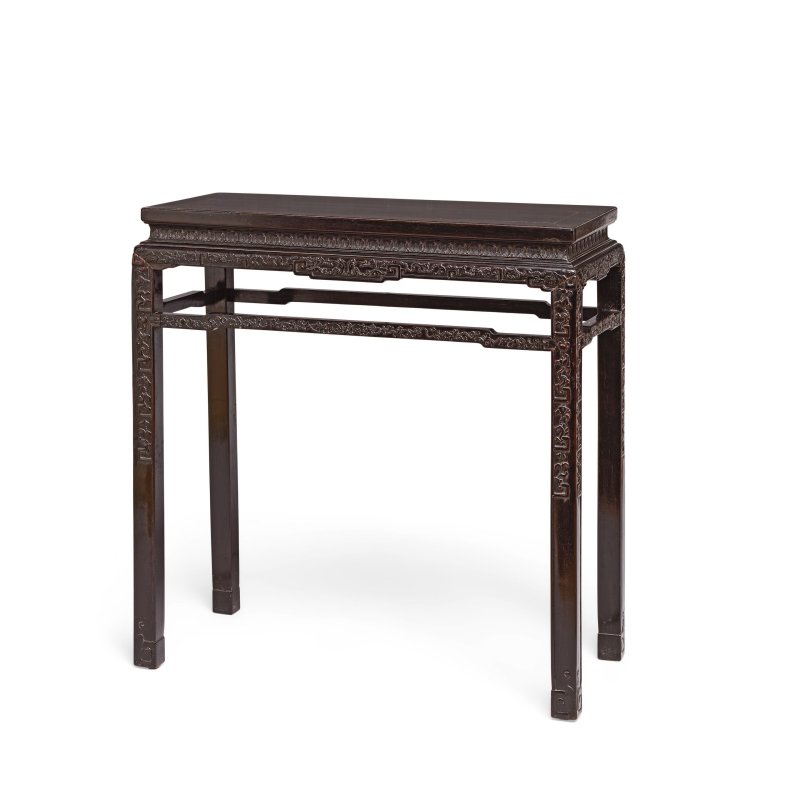
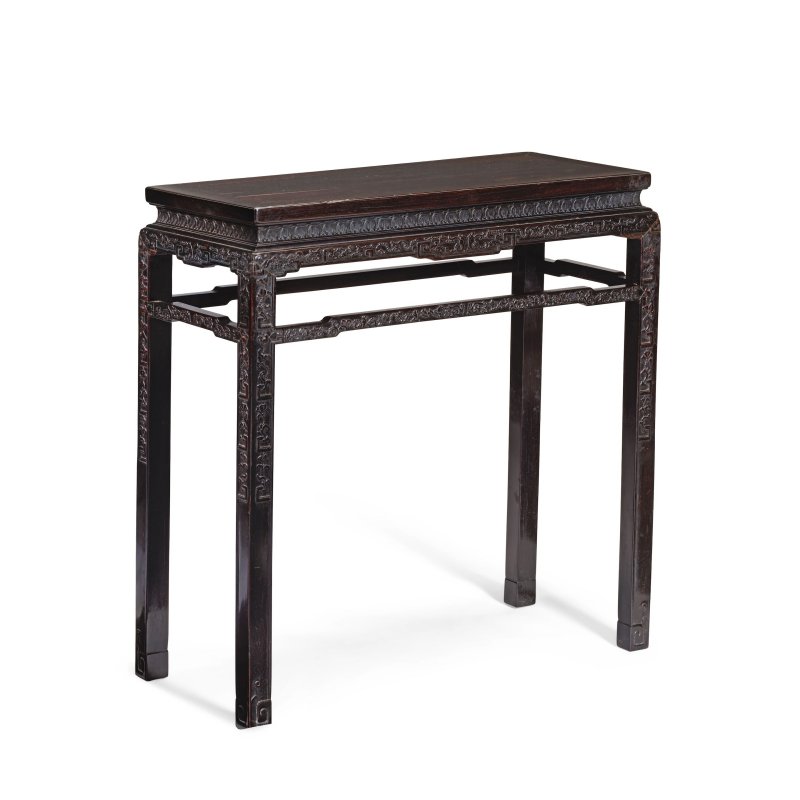
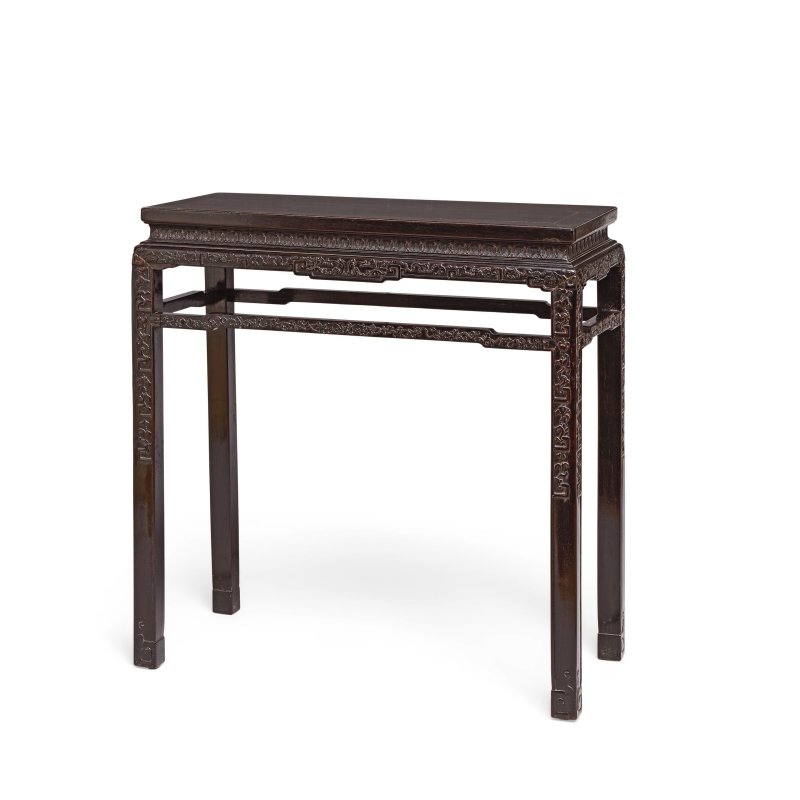
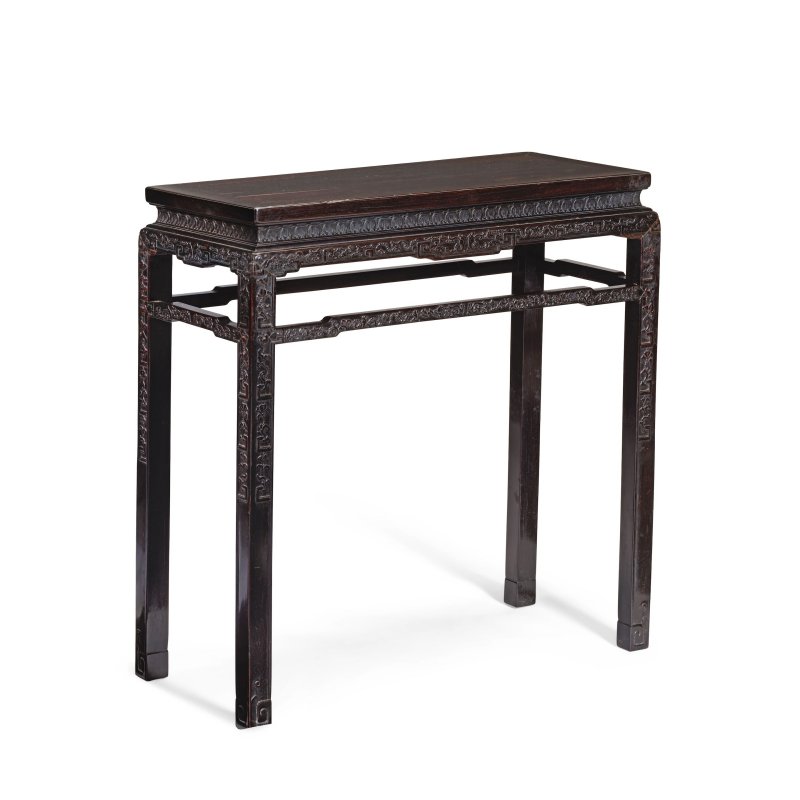
清乾隆/嘉慶 紫檀雕花卉紋有束腰羅鍋棖條桌 | A MAGNIFICENT ZITAN SIDE TABLE
年代
Qianlong/Jiaqing
起拍价
GBP 30,000
估值区间
GBP 30000 - 50000
尺寸
未知
品相
未知
更多信息
Qianlong/Jiaqing
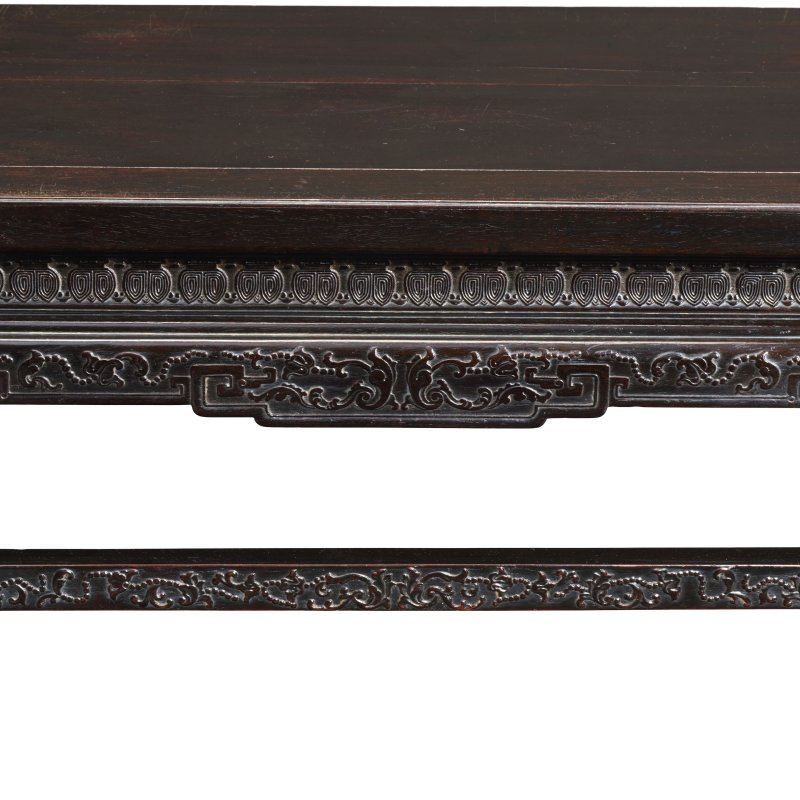
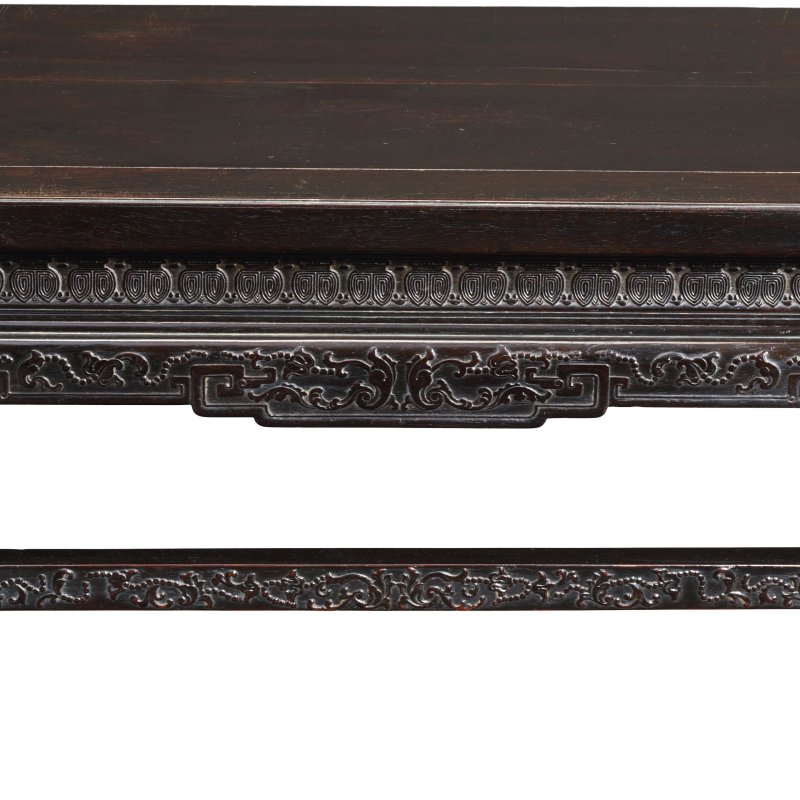
Elegantly proportioned, the rectangular top panel set within a frame, above the waist, exquisitely carved with a continuous design of cicada blades, the aprons finely detailed with a pattern of lotus scrolls connected by strings of beads amidst archaistic scrolls further carved on the aprons, the details extending down the legs and along the stretchers, the whole raised on four slender legs terminating in ruyi-shaped feet with incised details, the wood of a sumptuous dark chocolate hue. 85cm (33 1/2in) high x 82.5cm (32 1/2in) wide x 35.5cm (14in) deep.
Footnotes
清乾隆/嘉慶 紫檀雕花卉紋有束腰羅鍋棖條桌
Provenance: Evaristo Caretti (1879-1955), China and Italy, and thence by descent
Noted in a valuation conducted by Robert Kleiner in 1988, stating it was acquired in Beijing in 1911
來源: Evaristo Caretti (1879-1955),中國及意大利,並由後人保存迄今
Robert Kleiner于1988年所作的評估中曾提及,此件拍品于1911年獲得于北京
The cicada-blade pattern carved above the waist reflects the Qianlong Court's pronounced taste for archaism, inspired by the geometric ornament of ancient bronze vessels and its adaptation to contemporary Court furniture. See, for example, an archaic bronze ritual vessel, with cicada blades around the mouth, Shang dynasty, in the British Museum, London (acc.no.1935,0115.21). Compare with a table with stretchers and carved plantain-leaf pattern on the waist, Qianlong, in the Qing Court Collection, illustrated in , Hong Kong, 2002, p.121, no.106. See also a table, the waist carved with pendant plantain-leaf lappets, Qing dynasty, in the Qing Court Collection, illustrated in ., p.114, no.101. A incense stand, Qianlong, also carved with cicada lappets, is in the Qing Court Collection, and illustrated in ., no.151.
By the Qianlong reign, had become one of the most highly prized materials of the Qing Court. Its scarcity, slow growth and limited availability meant that existing stocks were carefully controlled by the Imperial Household Department, with much of the timber used at Court imported from Southeast Asia. The Qianlong Emperor showed particular favour for , which was extensively employed in the Palace Workshops for furniture and decorative objects. Its exceptionally dense, fine-grained structure was particularly suited to elaborate carving, allowing the intricate archaistic decoration of the present table to be rendered with remarkable precision.
Compare with an Imperial corner-leg table, Qianlong/Jiaqing, which was sold at Bonhams Hong Kong, 28 May 2019, lot 123. See also a rare narrow side table, 17th/18th century, which was sold at Christie's New York, 16 March 2017, lot 642.
Elegantly proportioned, the rectangular top panel set within a frame, above the waist, exquisitely carved with a continuous design of cicada blades, the aprons finely detailed with a pattern of lotus scrolls connected by strings of beads amidst archaistic scrolls further carved on the aprons, the details extending down the legs and along the stretchers, the whole raised on four slender legs terminating in ruyi-shaped feet with incised details, the wood of a sumptuous dark chocolate hue. 85cm (33 1/2in) high x 82.5cm (32 1/2in) wide x 35.5cm (14in) deep.
Footnotes
清乾隆/嘉慶 紫檀雕花卉紋有束腰羅鍋棖條桌
Provenance: Evaristo Caretti (1879-1955), China and Italy, and thence by descent
Noted in a valuation conducted by Robert Kleiner in 1988, stating it was acquired in Beijing in 1911
來源: Evaristo Caretti (1879-1955),中國及意大利,並由後人保存迄今
Robert Kleiner于1988年所作的評估中曾提及,此件拍品于1911年獲得于北京
The cicada-blade pattern carved above the waist reflects the Qianlong Court's pronounced taste for archaism, inspired by the geometric ornament of ancient bronze vessels and its adaptation to contemporary Court furniture. See, for example, an archaic bronze ritual vessel, with cicada blades around the mouth, Shang dynasty, in the British Museum, London (acc.no.1935,0115.21). Compare with a table with stretchers and carved plantain-leaf pattern on the waist, Qianlong, in the Qing Court Collection, illustrated in , Hong Kong, 2002, p.121, no.106. See also a table, the waist carved with pendant plantain-leaf lappets, Qing dynasty, in the Qing Court Collection, illustrated in ., p.114, no.101. A incense stand, Qianlong, also carved with cicada lappets, is in the Qing Court Collection, and illustrated in ., no.151.
By the Qianlong reign, had become one of the most highly prized materials of the Qing Court. Its scarcity, slow growth and limited availability meant that existing stocks were carefully controlled by the Imperial Household Department, with much of the timber used at Court imported from Southeast Asia. The Qianlong Emperor showed particular favour for , which was extensively employed in the Palace Workshops for furniture and decorative objects. Its exceptionally dense, fine-grained structure was particularly suited to elaborate carving, allowing the intricate archaistic decoration of the present table to be rendered with remarkable precision.
Compare with an Imperial corner-leg table, Qianlong/Jiaqing, which was sold at Bonhams Hong Kong, 28 May 2019, lot 123. See also a rare narrow side table, 17th/18th century, which was sold at Christie's New York, 16 March 2017, lot 642.
常见问题
这件清乾隆/嘉慶 紫檀雕花卉紋有束腰羅鍋棖條桌 | A MAGNIFICENT ZITAN SIDE TABLE的成交价是多少?
落槌价为 预展中。 成交价为 预展中。


