
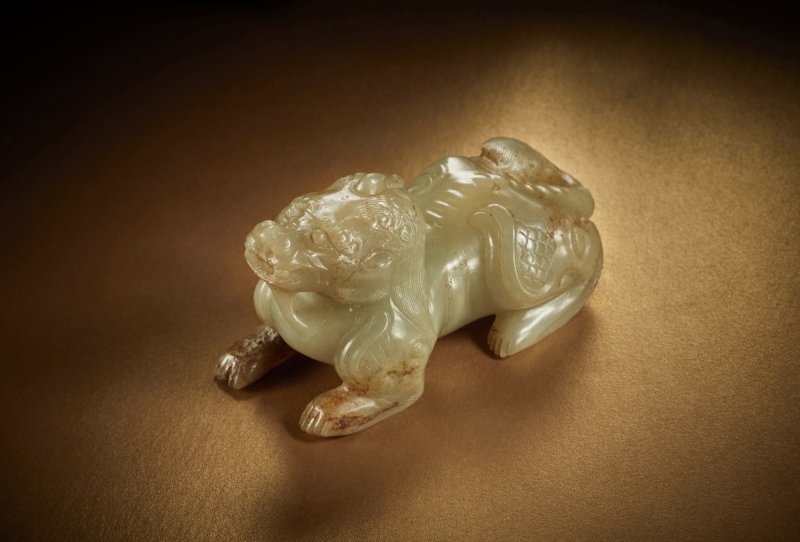
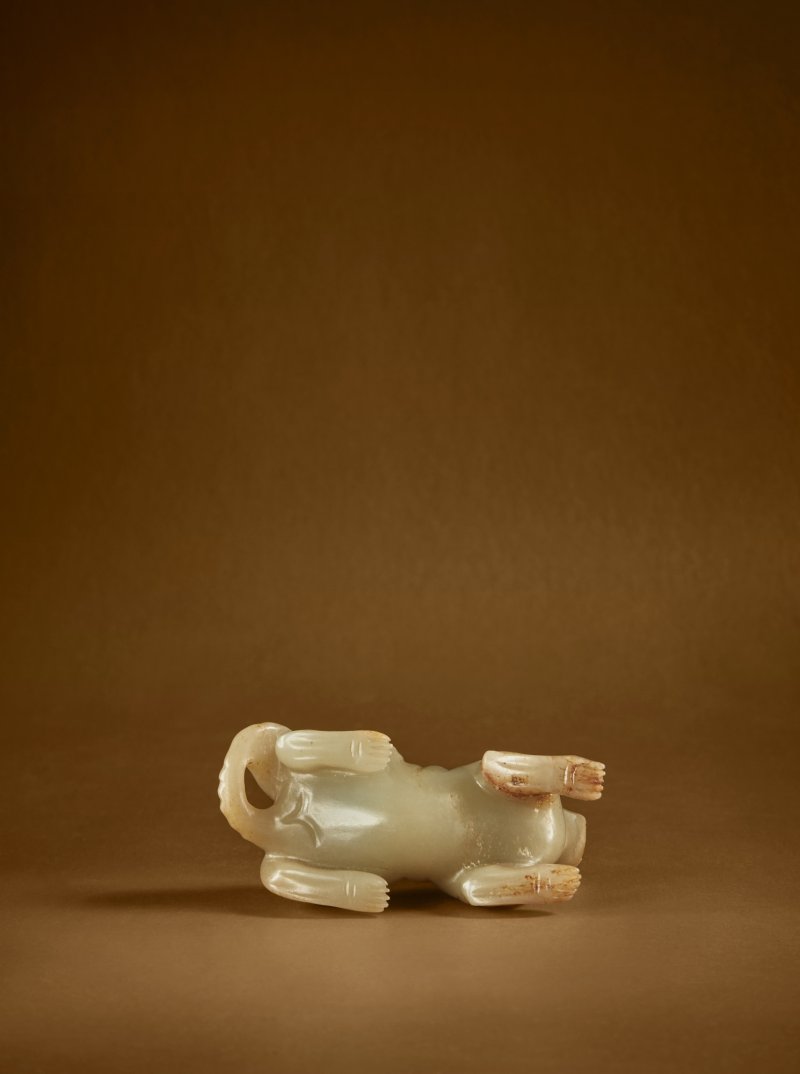
拍品信息
拍品名称
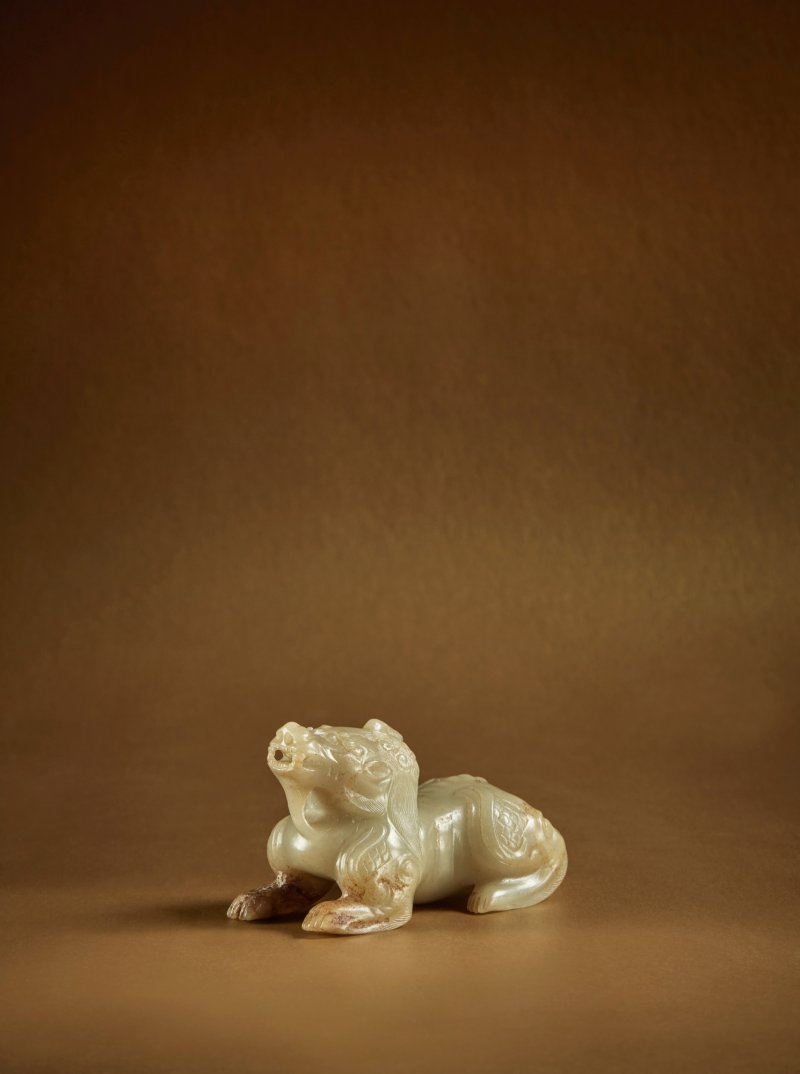
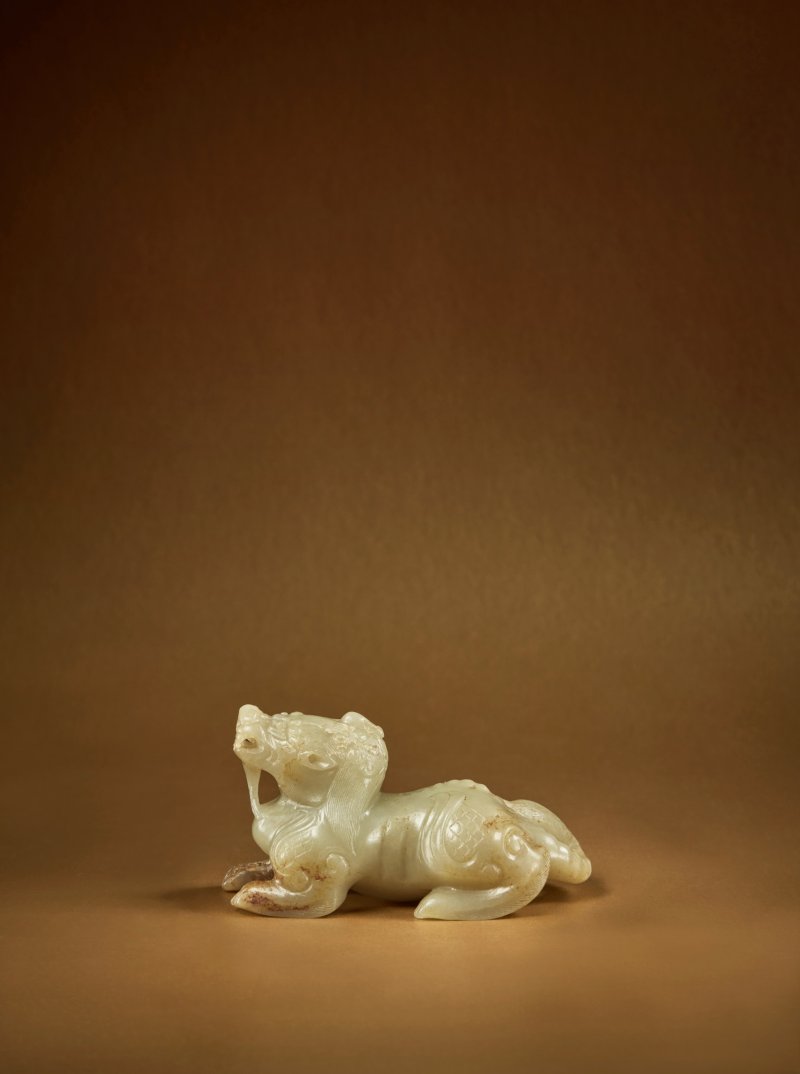
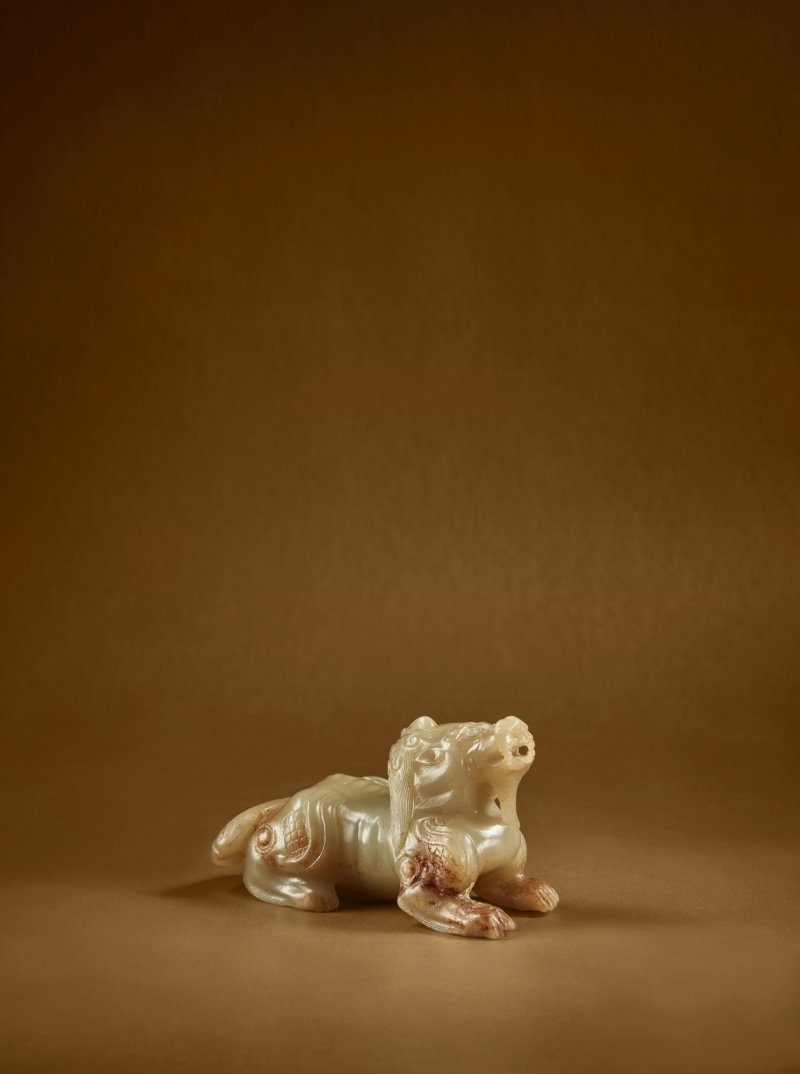
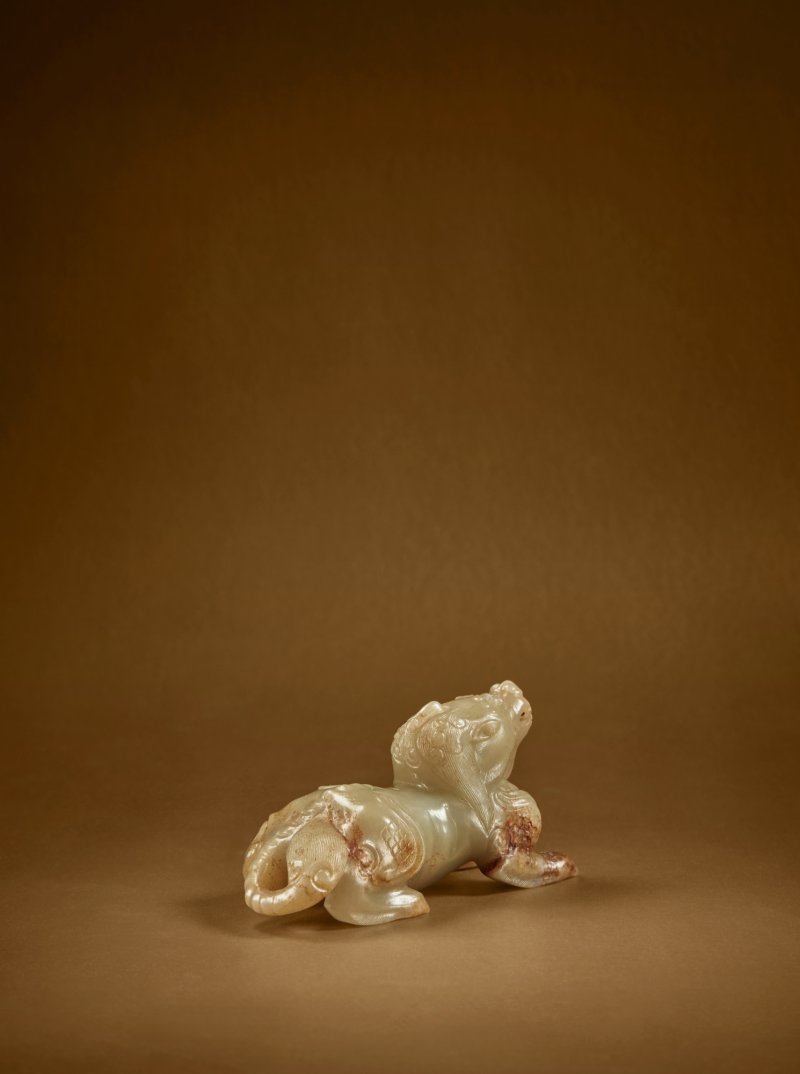
六朝 青白玉雕辟邪
起拍价
USD 100,000
估值区间
100,000 - 150,000 USD
尺寸
未知
品相
如欲了解本拍品狀況的更多資訊,請聯絡 Drew.Lerner@sothebys.com
更多信息
Length 3¼ in., 8.3 cm
来源:鄭德坤 (1908-2001) 收藏,1973年之前
Bluett & Sons Ltd.,倫敦
展览:《Chinese Jade Throughout the Ages》,維多利亞與艾爾伯特博物館,倫敦,1975年,編號179
《Chinese Jades from Han to Ch'ing》,亞洲協會,紐約,1980年,編號13
《Chinese Jades from the Mu-Fei Collection》,Bluett & Sons Ltd.,倫敦,1990年,編號30
著录:Jessica Rawson及John Ayers,<Chinese Jades through the Ages>,《Transactions of the Oriental Ceramic Society》,40卷,倫敦,1973年,圖版180
图录
说明:Surviving examples of jade bixie crouched with their heads raised proudly appear to be even rarer than their striding counterparts and exude a unique sense of regal and imperial might, apparently beloved by later imperial courts. Compare a closely related bixie, or perhaps an archaistic carving in the present style, preserved in the imperial collection of the Yongzheng Emperor (r. 1723-1735) and illustrated among his prized possessions in the Guwan tu (Pictures of Ancient Playthings) scroll preserved in the Victoria and Albert Museum, London (accession no. E.59-1911) (Fig. 1), and another bixie from the Qing Court Collection preserved in the National Palace Museum, Taipei in Masterworks of Chinese Jade in the National Palace Museum, Taipei, 1970, pl. 20, closely resembling the present in its raised head and crouched form.
Other bixie of related design include a winged example of closely related coloration in the National Museum of Asian Art, Washington (accession no. S1987.798), included in Magic, Myths, and Minerals: Chinese Jades from the Arthur M. Sackler Gallery, National Museum of Asian Art, Washington, 2003; and another from the Desmond Gure Collection inscribed with the auspicious characters jixiang in Alfred Salmony, Chinese Jade Through the Wei Dynasty, New York, 1963, pl. XLII-2.
Two further bixie, uncovered from the Western Han Weiling mausoleum in Xianyang, Shaanxi province and illustrated in Gu Fang, The Complete Collection of Jades Unearthed in China, vol. 14: Shaanxi, Beijing, 2005, pp 163 and 164, are particularly notable in this instance for their varied stances: one closely resembling the present lot in its upright posture, arched back and drooping beard; and the other more closely following the following lot’s design in its crouching posture and russet splashes across its back. While little is known recorded as to the origins of the two present carvings before their acquisition by Professor Cheng Te-k'un (1908-2001) in the mid-20th century, their closely related carving style, coloration and surface finish may indicate that these too were once produced as a pair to the orders of an ancient patron.
来源:鄭德坤 (1908-2001) 收藏,1973年之前
Bluett & Sons Ltd.,倫敦
展览:《Chinese Jade Throughout the Ages》,維多利亞與艾爾伯特博物館,倫敦,1975年,編號179
《Chinese Jades from Han to Ch'ing》,亞洲協會,紐約,1980年,編號13
《Chinese Jades from the Mu-Fei Collection》,Bluett & Sons Ltd.,倫敦,1990年,編號30
著录:Jessica Rawson及John Ayers,<Chinese Jades through the Ages>,《Transactions of the Oriental Ceramic Society》,40卷,倫敦,1973年,圖版180
图录
说明:Surviving examples of jade bixie crouched with their heads raised proudly appear to be even rarer than their striding counterparts and exude a unique sense of regal and imperial might, apparently beloved by later imperial courts. Compare a closely related bixie, or perhaps an archaistic carving in the present style, preserved in the imperial collection of the Yongzheng Emperor (r. 1723-1735) and illustrated among his prized possessions in the Guwan tu (Pictures of Ancient Playthings) scroll preserved in the Victoria and Albert Museum, London (accession no. E.59-1911) (Fig. 1), and another bixie from the Qing Court Collection preserved in the National Palace Museum, Taipei in Masterworks of Chinese Jade in the National Palace Museum, Taipei, 1970, pl. 20, closely resembling the present in its raised head and crouched form.
Other bixie of related design include a winged example of closely related coloration in the National Museum of Asian Art, Washington (accession no. S1987.798), included in Magic, Myths, and Minerals: Chinese Jades from the Arthur M. Sackler Gallery, National Museum of Asian Art, Washington, 2003; and another from the Desmond Gure Collection inscribed with the auspicious characters jixiang in Alfred Salmony, Chinese Jade Through the Wei Dynasty, New York, 1963, pl. XLII-2.
Two further bixie, uncovered from the Western Han Weiling mausoleum in Xianyang, Shaanxi province and illustrated in Gu Fang, The Complete Collection of Jades Unearthed in China, vol. 14: Shaanxi, Beijing, 2005, pp 163 and 164, are particularly notable in this instance for their varied stances: one closely resembling the present lot in its upright posture, arched back and drooping beard; and the other more closely following the following lot’s design in its crouching posture and russet splashes across its back. While little is known recorded as to the origins of the two present carvings before their acquisition by Professor Cheng Te-k'un (1908-2001) in the mid-20th century, their closely related carving style, coloration and surface finish may indicate that these too were once produced as a pair to the orders of an ancient patron.
常见问题
拍品的品相状况如何?
如欲了解本拍品狀況的更多資訊,請聯絡 Drew.Lerner@sothebys.com
这件拍品的流传来源是什么?
鄭德坤 (1908-2001) 收藏,1973年之前
Bluett & Sons Ltd.,倫敦
Bluett & Sons Ltd.,倫敦
这件拍品曾在哪些展览中展出过?
《Chinese Jade Throughout the Ages》,維多利亞與艾爾伯特博物館,倫敦,1975年,編號179
《Chinese Jades from Han to Ch'ing》,亞洲協會,紐約,1980年,編號13
《Chinese Jades from the Mu-Fei Collection》,Bluett & Sons Ltd.,倫敦,1990年,編號30
《Chinese Jades from Han to Ch'ing》,亞洲協會,紐約,1980年,編號13
《Chinese Jades from the Mu-Fei Collection》,Bluett & Sons Ltd.,倫敦,1990年,編號30
这件拍品被哪些著录书籍记载?
Jessica Rawson及John Ayers,<Chinese Jades through the Ages>,《Transactions of the Oriental Ceramic Society》,40卷,倫敦,1973年,圖版180
图录
图录