
拍品信息
拍品名称
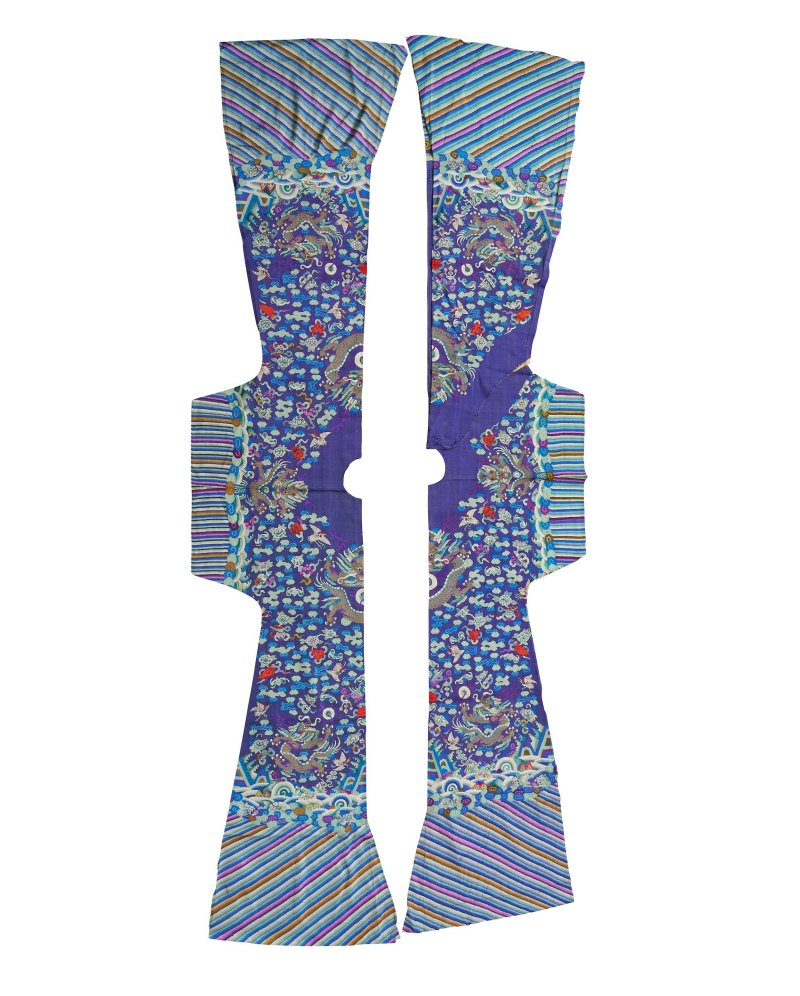
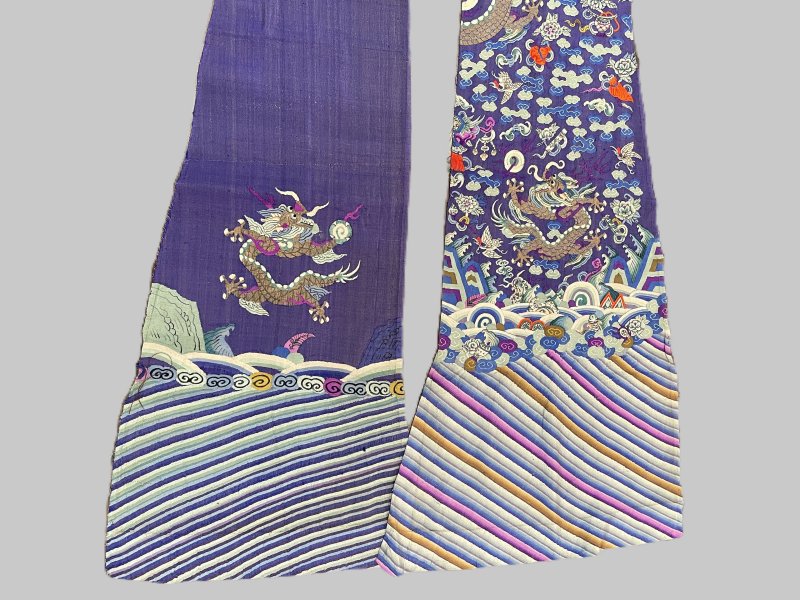
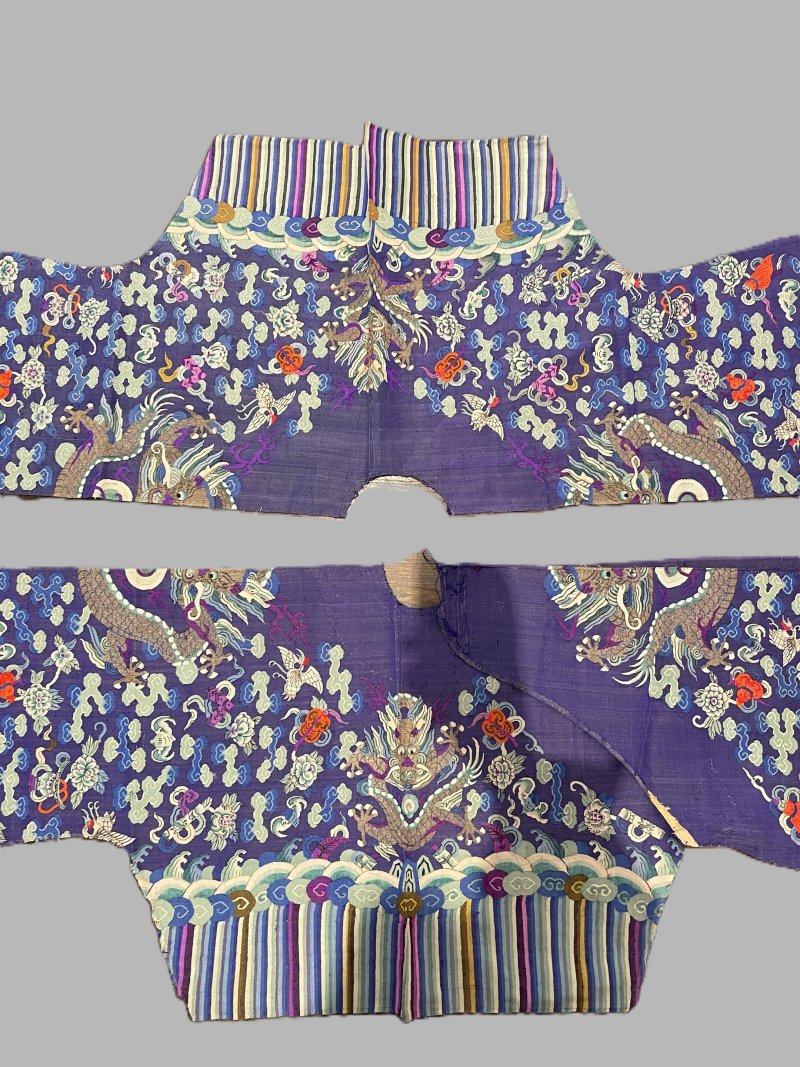
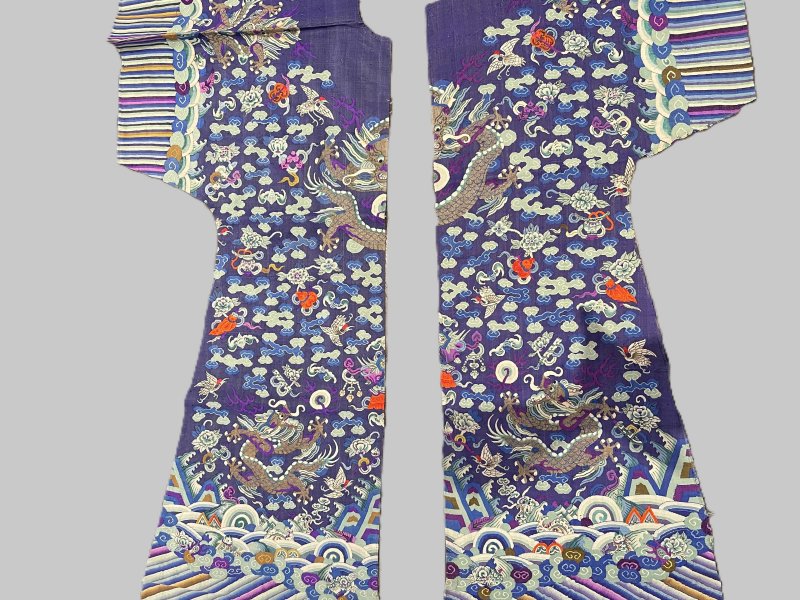
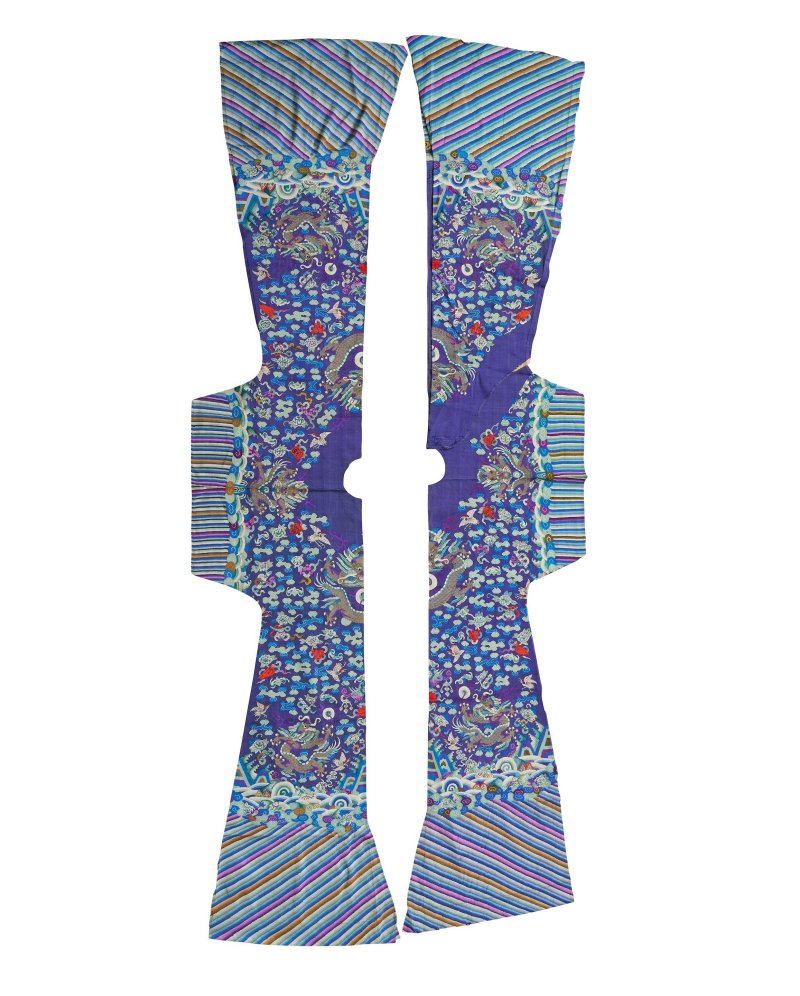
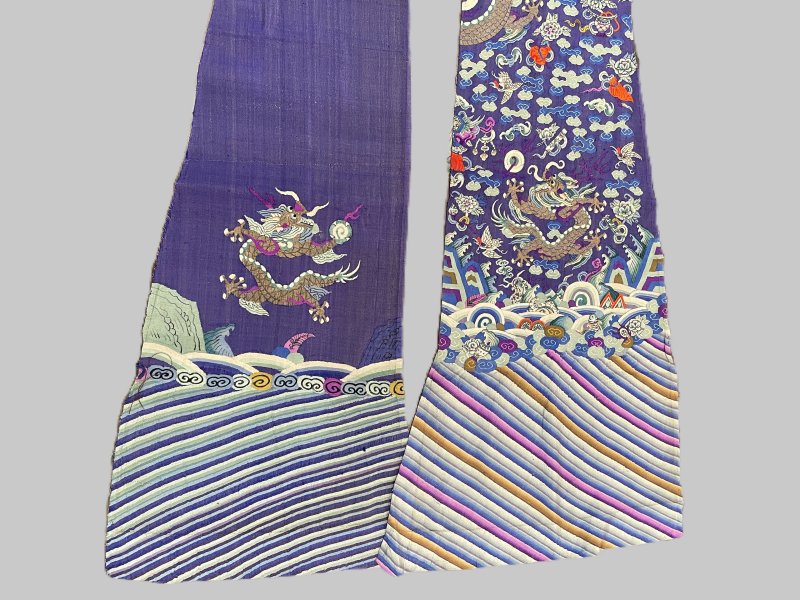
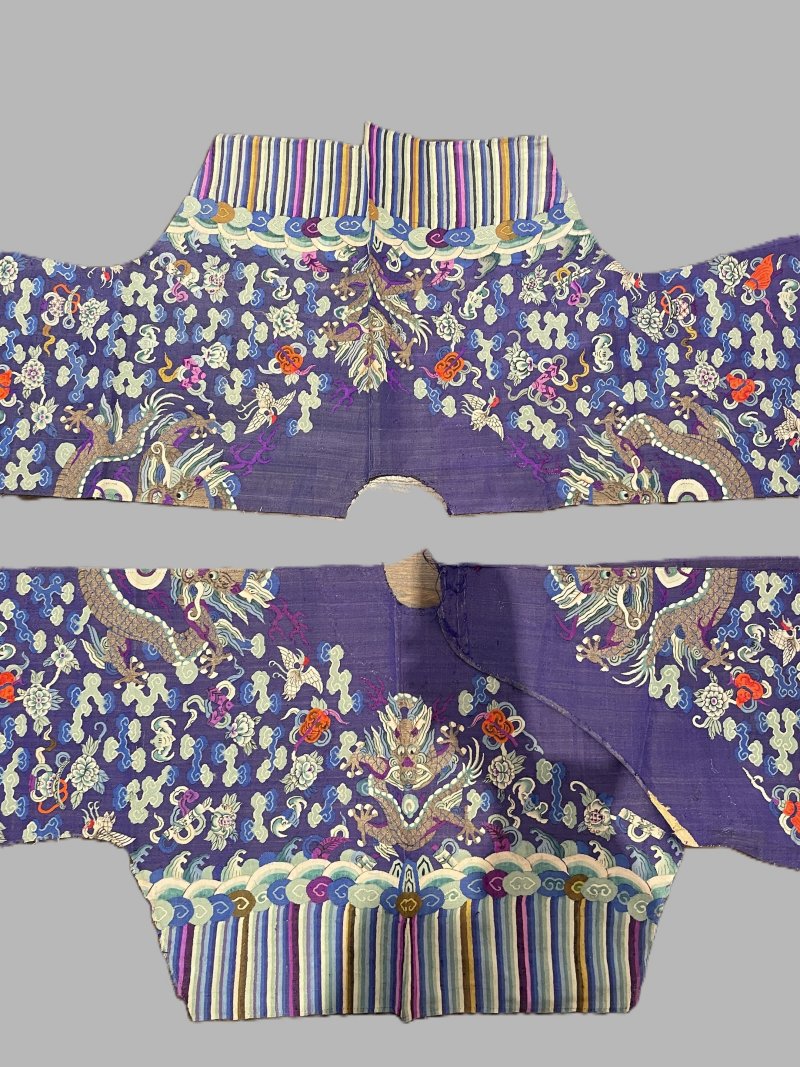
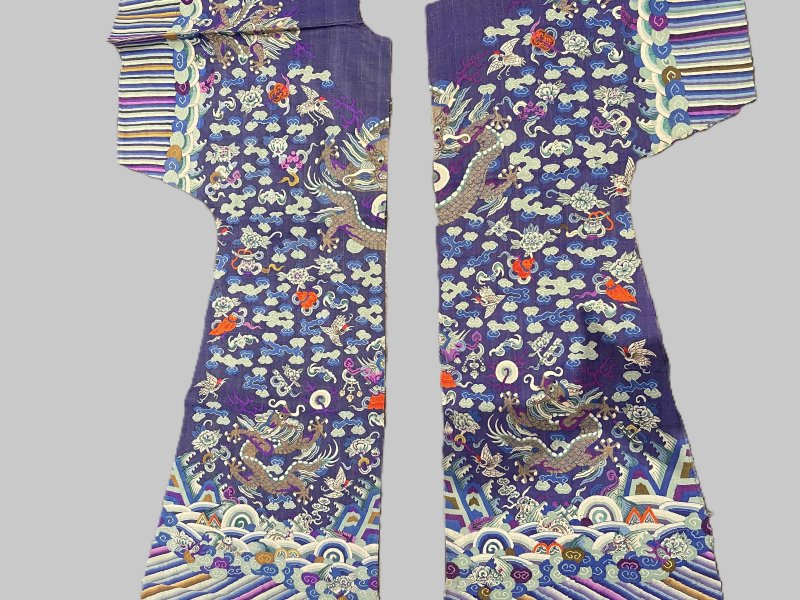
清光緒 藍地緙絲龍袍衣身、右衽殘片一組三件 | THREE FRAGMENTS OF A KESI 'DRAGON' ROBE
年代
Guangxu Period
起拍价
AUD 2,000
估值区间
未知
尺寸
未知
品相
未知
更多信息
Guangxu Period
comprising the front and back body panels, and the right overlap panel, measured folded without the two kesi robe fragments fully extended, 134.0 cm long, the roundel section when fully opened, 104.8 cm wide (3).
Footnotes
清光緒 藍地緙絲龍袍衣身、右衽殘片一組三件
The brilliant purple in this gown accentuates the details of the dragons, the outlines of the bats, the clouds and the vertical waves, highlighting these decorations against the ground of swastika and calyx symbols. This purple had never been seen in any previous Chinese textiles before the Guangxu period. According to Ming Wilson in Imperial Chinese Robes from the Forbidden City, the brilliant mauve colouring is likely to have been produced from an aniline dye. "The first synthetic dye, known as 'Perkin's purple' after the chemist who discovered it. The 1862 International Exhibition in London made these new bright colours an instant success and soon the dyes ere being exported abroad. We know from customs' reports that the dyes were being sent to China from at least 1871.", see ibid., p.43.
這件龍袍中的瑰紫色,點綴著龍紋的鱗片、鬚,雲紋勾邊、蝠紋、雲、立水,使個中紋飾躍然錦地之上,十分搶眼。這種瑰紫色,在光緒朝之前不曾見於中國織染之上,是十九世紀下半葉化工史上首創的合成染料。據 Ming Wilson 在Imperial Chinese Robes from the Forbidden City 中記載,該色以發明它的化學家 Perkin 命名。1862年倫敦國際博覽會使其一舉成名,並很快遠銷海外。我們從海關報告中得知,至少自1871年起,這些染料就已出口中國。參見同書,第43頁。
Compare with an uncut example of a dragon robe, see Judith Rutherford and Jackie Menzies , Art Gallery of New South Wales, Sydney:2004, p.106.
可比較一件完整未裁拆龍袍,見 Judith Rutherford 與 Jackie Menzies所著《Celestial Silks: Chinese Religious & Court Textiles》,新南威爾士藝術館,悉尼,2004年,106頁。
comprising the front and back body panels, and the right overlap panel, measured folded without the two kesi robe fragments fully extended, 134.0 cm long, the roundel section when fully opened, 104.8 cm wide (3).
Footnotes
清光緒 藍地緙絲龍袍衣身、右衽殘片一組三件
The brilliant purple in this gown accentuates the details of the dragons, the outlines of the bats, the clouds and the vertical waves, highlighting these decorations against the ground of swastika and calyx symbols. This purple had never been seen in any previous Chinese textiles before the Guangxu period. According to Ming Wilson in Imperial Chinese Robes from the Forbidden City, the brilliant mauve colouring is likely to have been produced from an aniline dye. "The first synthetic dye, known as 'Perkin's purple' after the chemist who discovered it. The 1862 International Exhibition in London made these new bright colours an instant success and soon the dyes ere being exported abroad. We know from customs' reports that the dyes were being sent to China from at least 1871.", see ibid., p.43.
這件龍袍中的瑰紫色,點綴著龍紋的鱗片、鬚,雲紋勾邊、蝠紋、雲、立水,使個中紋飾躍然錦地之上,十分搶眼。這種瑰紫色,在光緒朝之前不曾見於中國織染之上,是十九世紀下半葉化工史上首創的合成染料。據 Ming Wilson 在Imperial Chinese Robes from the Forbidden City 中記載,該色以發明它的化學家 Perkin 命名。1862年倫敦國際博覽會使其一舉成名,並很快遠銷海外。我們從海關報告中得知,至少自1871年起,這些染料就已出口中國。參見同書,第43頁。
Compare with an uncut example of a dragon robe, see Judith Rutherford and Jackie Menzies , Art Gallery of New South Wales, Sydney:2004, p.106.
可比較一件完整未裁拆龍袍,見 Judith Rutherford 與 Jackie Menzies所著《Celestial Silks: Chinese Religious & Court Textiles》,新南威爾士藝術館,悉尼,2004年,106頁。