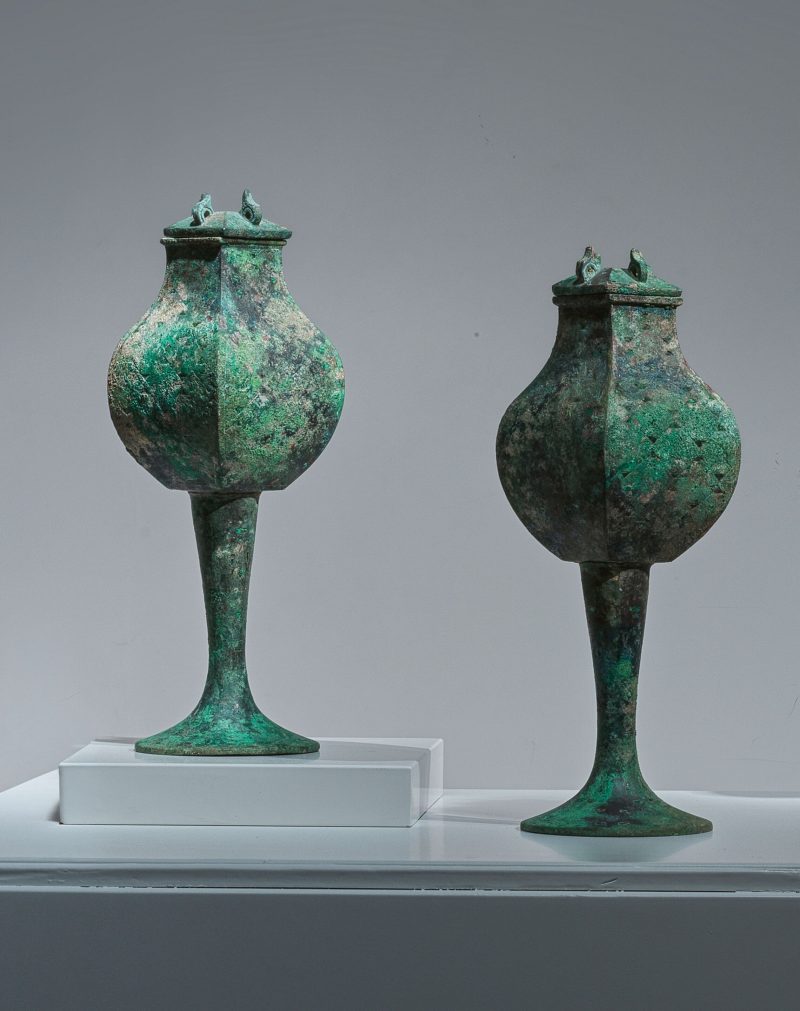
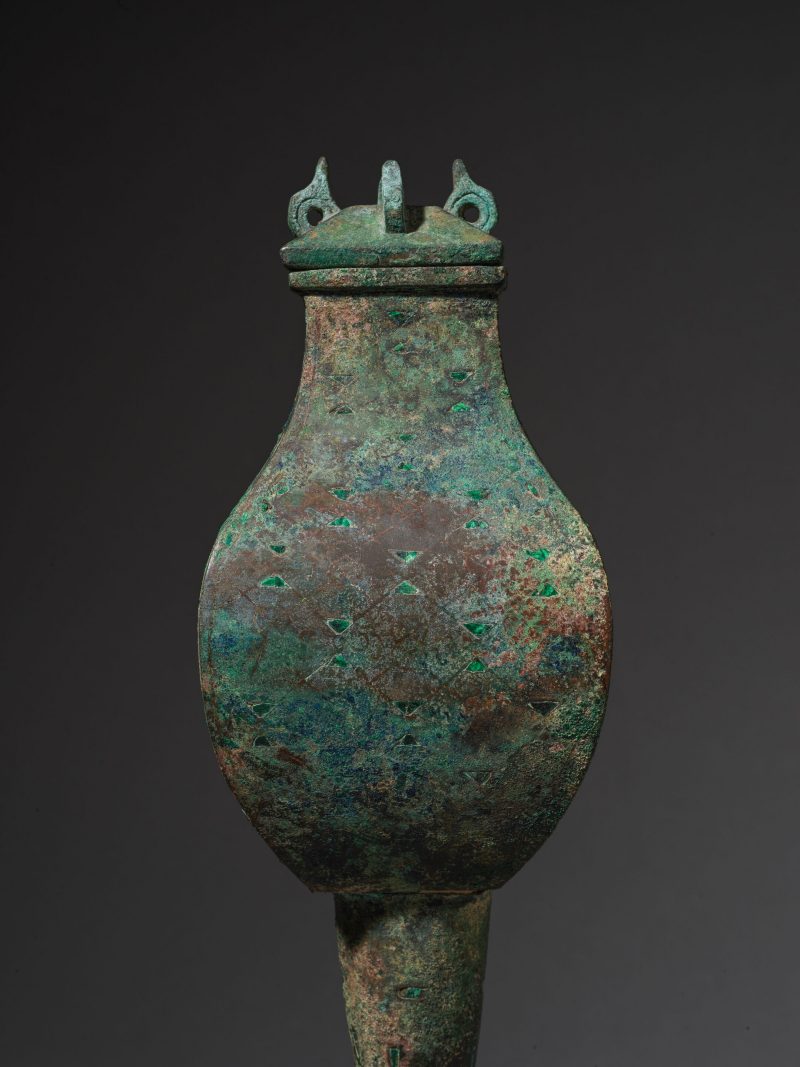
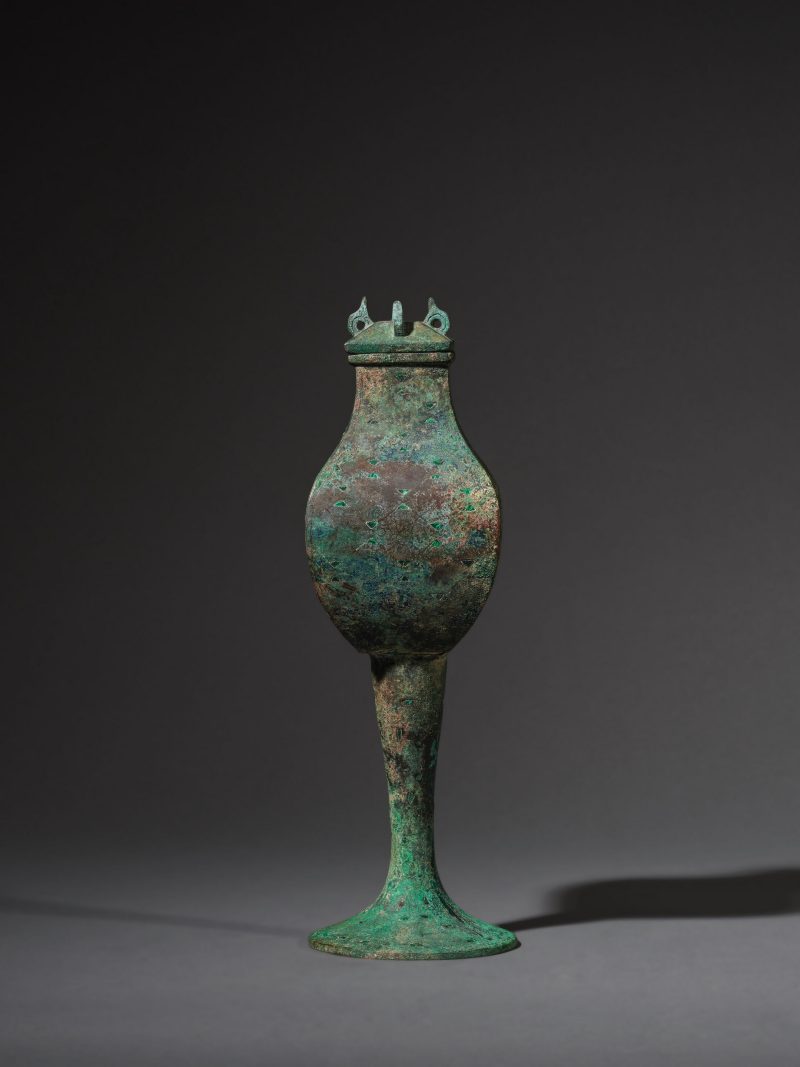
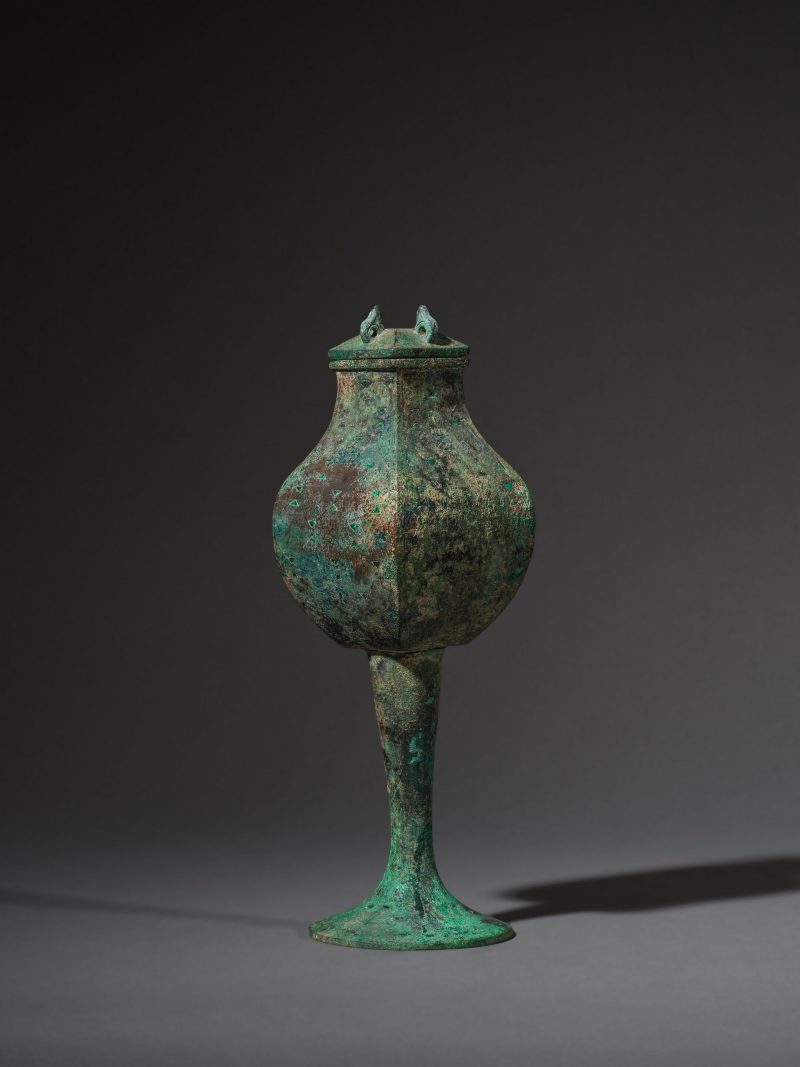
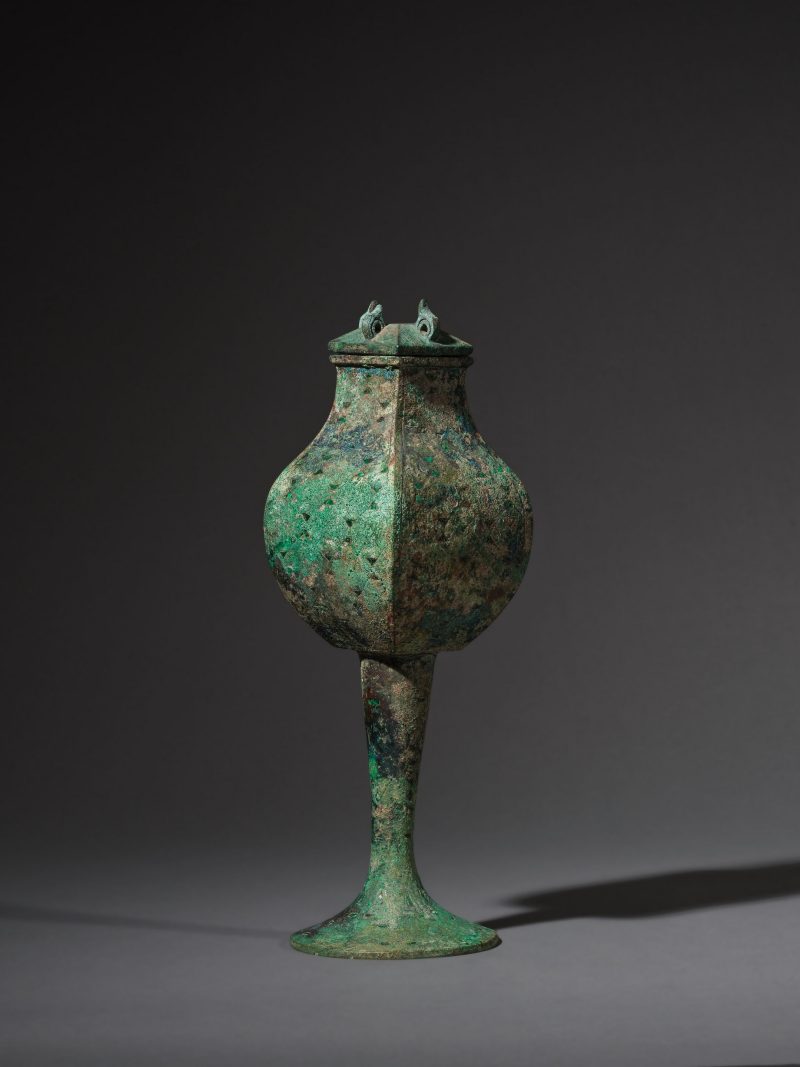
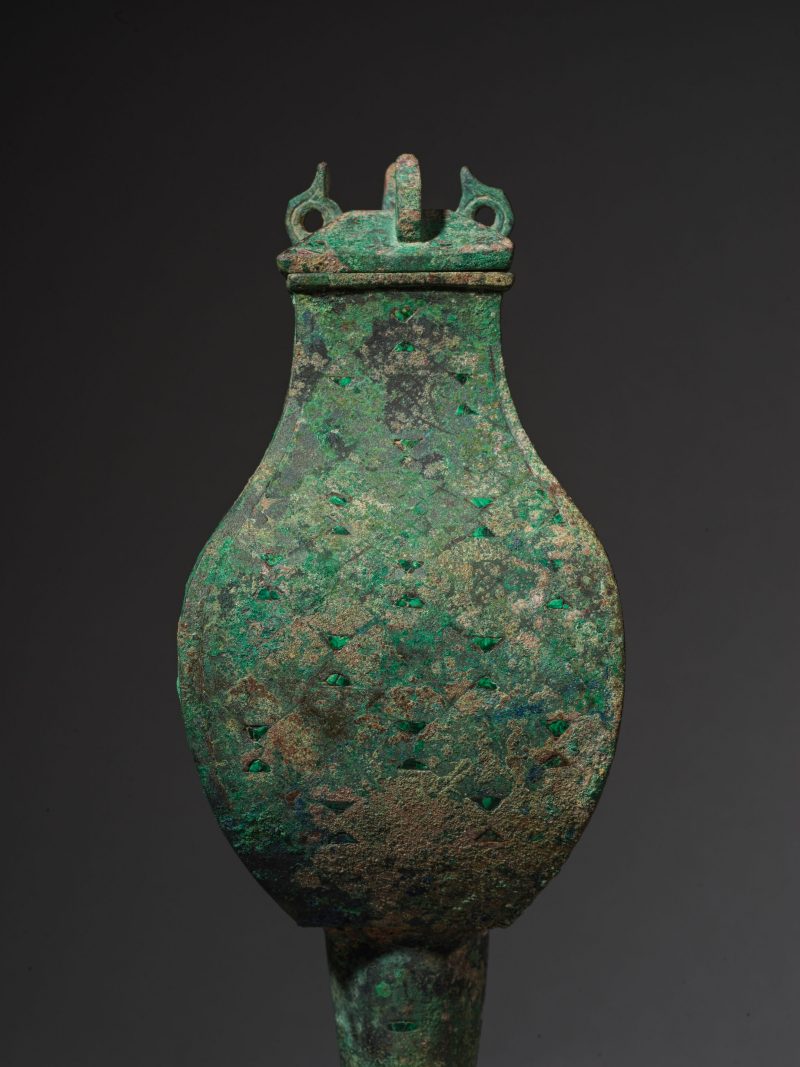
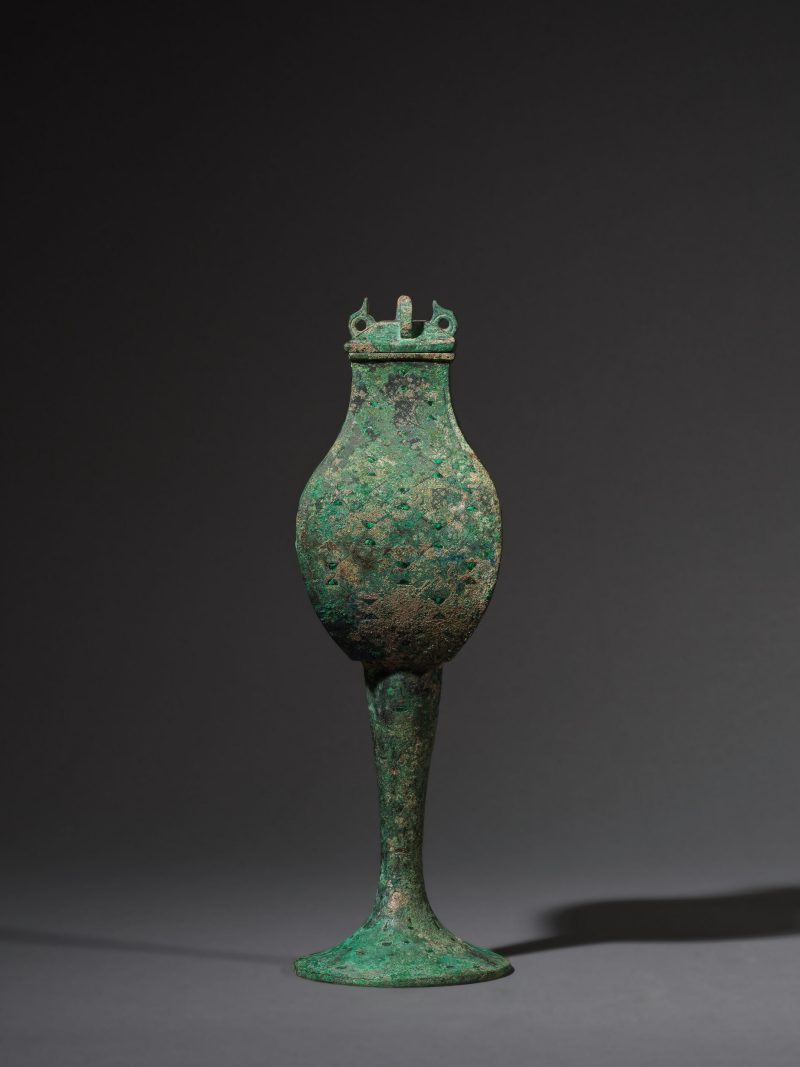
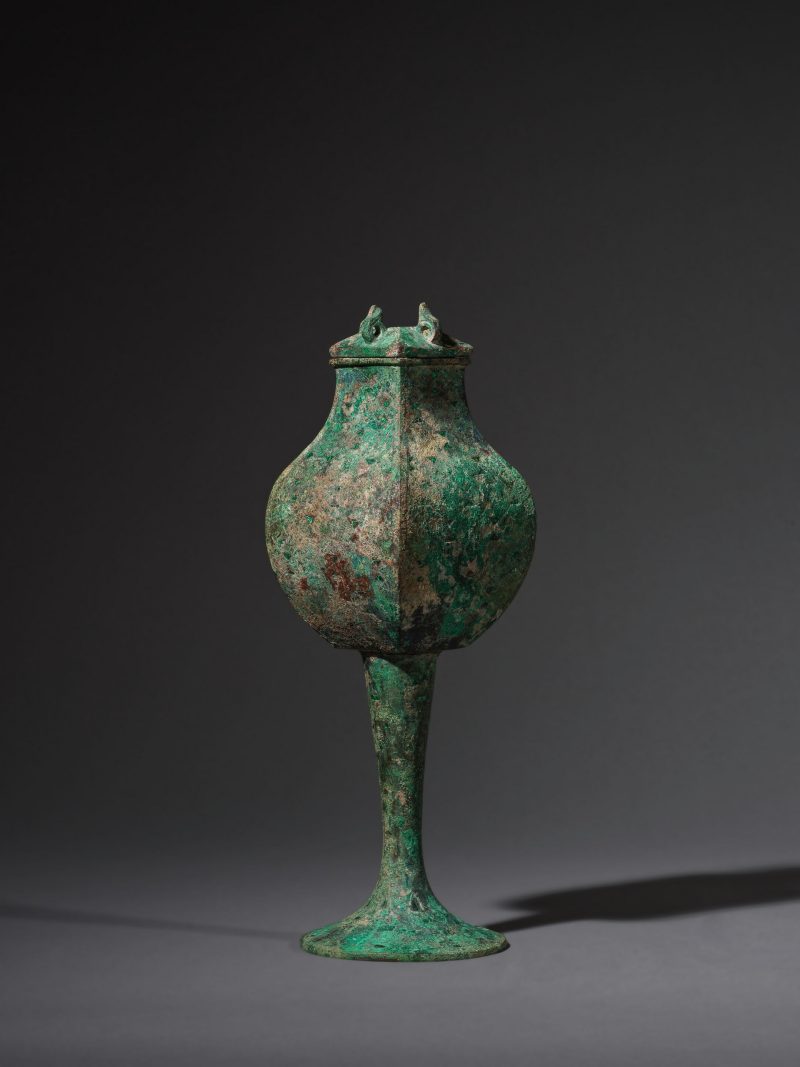
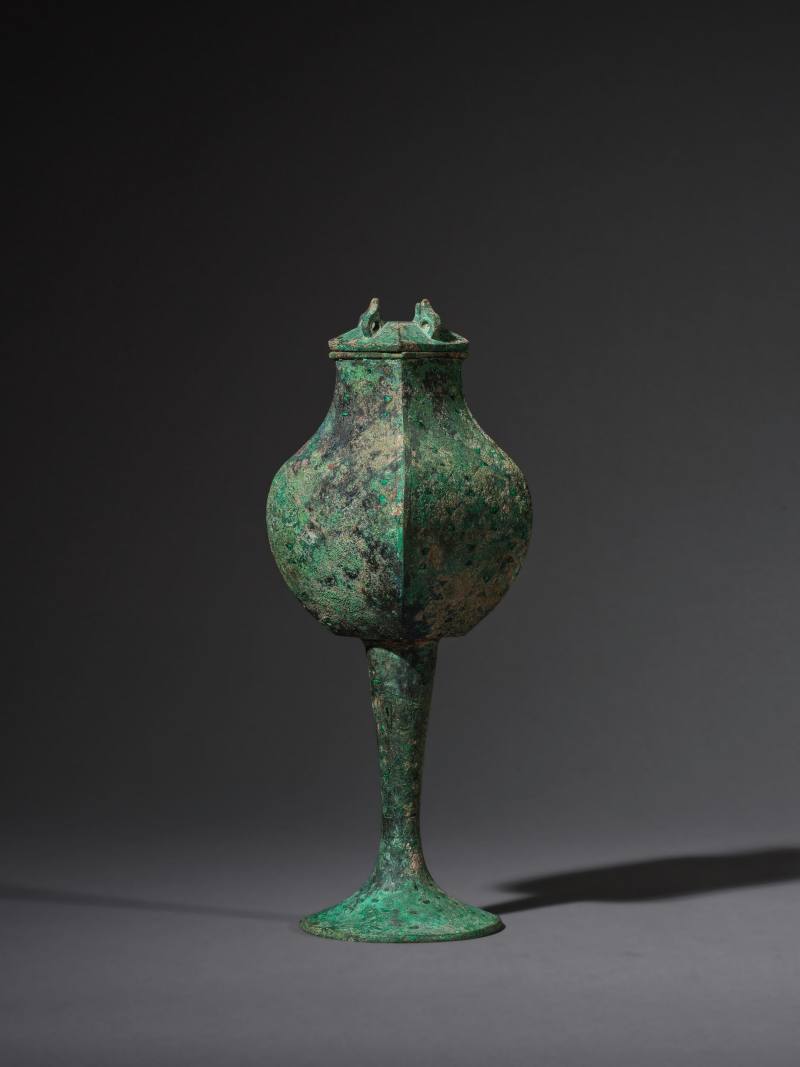
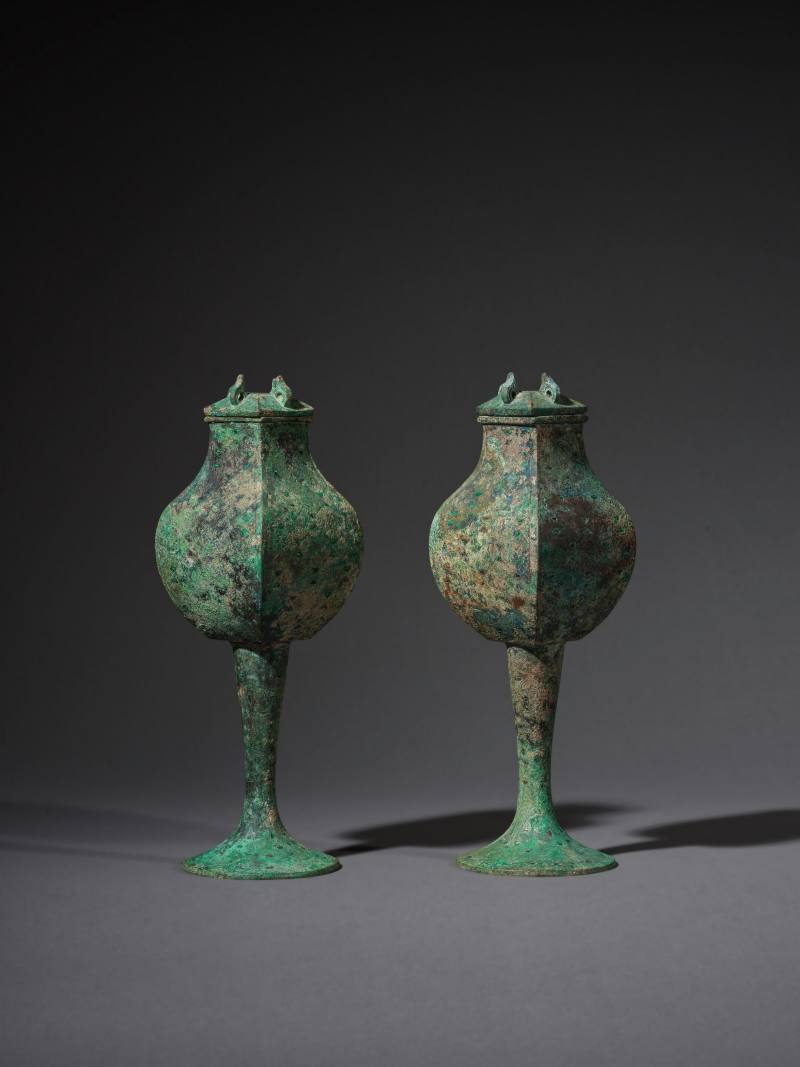
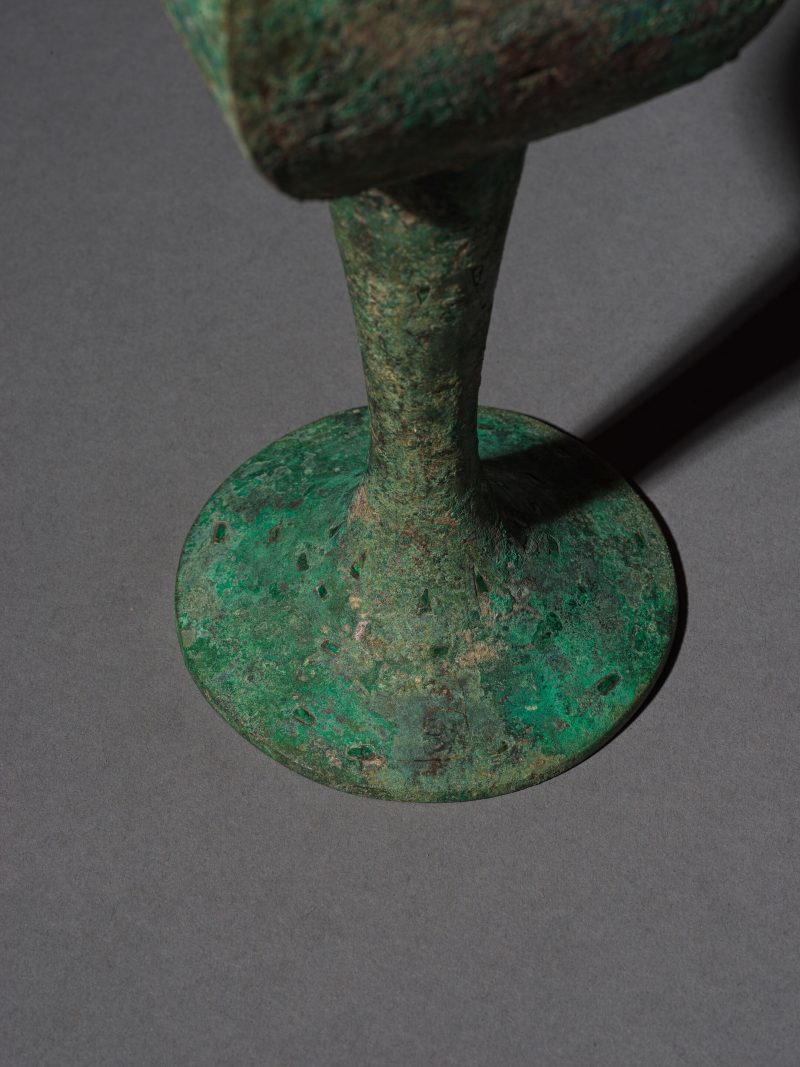
Lot 4 春秋晚期/戰國早期 公元前五世紀早期 青銅嵌松石方壺一對 | TRÈS RARE PAIRE DE RÉCIPIENTS RITUELS COUVERTS SUR PIEDOUCHE EN BRONZE INCRUSTÉ DE CUIVRE ET DE MALACHITE, FANGHU
落槌价
预展中
成交价
预展中
| 拍卖公司 | 邦瀚斯 |
|---|---|
| 拍卖时间 | 2026年12月10日 |
拍品信息
拍品名称
春秋晚期/戰國早期 公元前五世紀早期 青銅嵌松石方壺一對 | TRÈS RARE PAIRE DE RÉCIPIENTS RITUELS COUVERTS SUR PIEDOUCHE EN BRONZE INCRUSTÉ DE CUIVRE ET DE MALACHITE, FANGHU
年代
春秋晚期/戰國早期 公元前五世紀早期
起拍价
未知
估值区间
EUR 12,000–15,000
尺寸
Each 29 cm (11 3/8 in.) high x 8.8 cm (3 1/4 in.) wide
品相
未知
更多信息
TRÈS RARE PAIRE DE RÉCIPIENTS RITUELS COUVERTS SUR PIEDOUCHE EN BRONZE INCRUSTÉ DE CUIVRE ET DE MALACHITE, FANGHU
Fin de la période des Printemps et Automnes / début de la période des Royaumes Combattants, début Ve siècle av. J.-C.
A RARE PAIR OF ARCHAIC MALACHITE AND COPPER-INLAID BRONZE RITUAL PEDESTALLED WINE VESSELS AND COVERS, FANGHU
Late Spring and Autumn period / early Warring States period, early 5th century BC
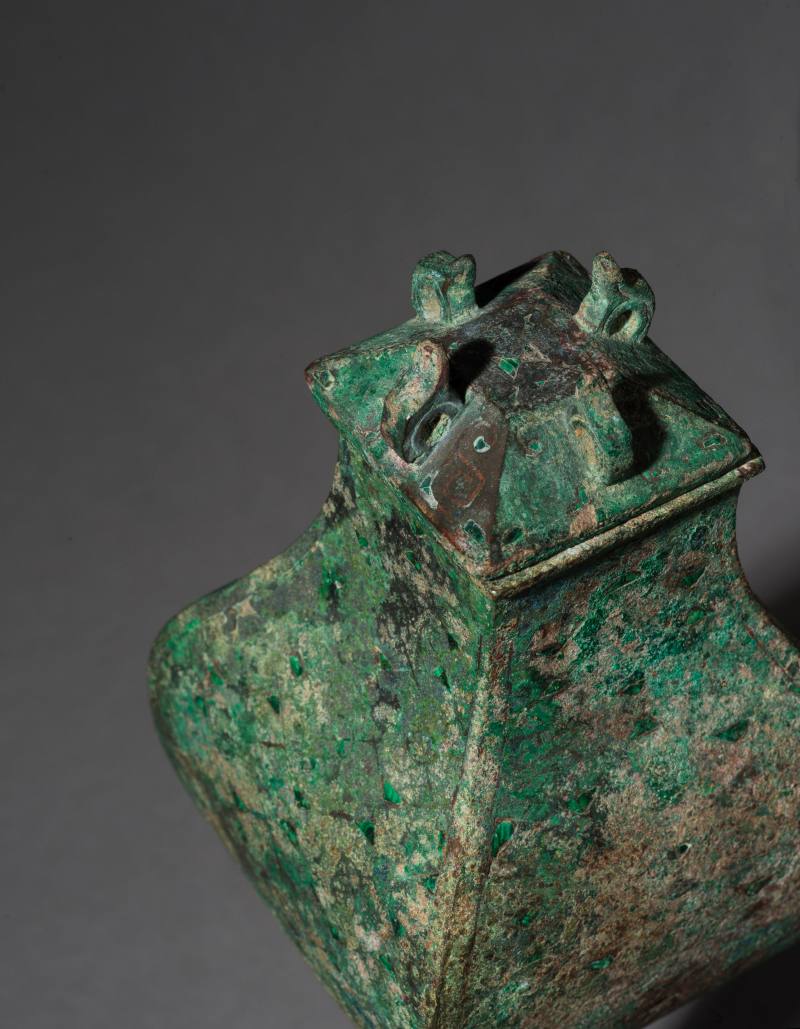
Each vessel raised on a tall foot tapering to a circular, flared base, the vessels of square section, with gently rounded sides rising to a square neck, the sides decorated with a dense overall geometric mesh or criss-cross design finely inlaid with copper and accentuated by circles and triangles inlaid with malachite, the covers of corresponding square form, similarly decorated and inlaid, and set at the corners with four small hooked loops, the surface with extensive light green encrustation.
Each 29 cm (11 3/8 in.) high x 8.8 cm (3 1/4 in.) wide (4).
春秋晚期/戰國早期 公元前五世紀早期 青銅嵌松石方壺一對
Provenance:
Gisèle Croës Arts d'Extrême Orient, Brussels, 2005
Published, Illustrated and Exhibited:
Gisèle Croës Arts d'Extrême Orient at Nohra Haime Gallery, New York, Treasures of Ancient Chinese Culture, New York, 18 - 22 March 2008, pp. 24-25
來源:
Gisèle Croës Arts d'Extrême Orient,布魯塞爾,2005年
展覽著錄:
Gisèle Croës Arts d'Extrême Orient在Nohra Haime畫廊,紐約,《Treasures of Ancient Chinese Culture》,紐約,2008年3月18日-22日,第24-25頁
The present pair of ritual vessels are exceptionally rare in the choice of their shape and decoration. The intricate yet repetitive geometric cast intaglio design is highlighted and brought to life by colourful inlays. As Jenny So has argued, the use of metal inlay in complex designs such as on the present pair of vessels was an innovation first seen in bronzes made in the Houma workshops and foundries in Shanxi province under the patronage of the ruling Zhi family of the Jin state in the sixth and early fifth century BC; see Jenny F. So, Eastern Zhou Ritual Bronzes from the Arthur M. Sackler Collections, New York, 1995, pp. 43-47.
Here, the use of section-mould casting to facilitate productivity and inlays with a variety of materials reflected not only the extraordinary skills of the workmen but also the decorative ingenuity stimulated by exposure to techniques and styles of peoples across the borders of the Jin state to the north and south.
A group of bronzes decorated in a variety of styles and techniques discovered in tomb M251 in Jinchengcun, Taiyuan, Shanxi province, and attributed to the Houma workshops, illustrates the extraordinary artistic repertory of the Houma foundry. The tomb occupant, a high-ranking minister of the Jin state, was buried with vessels of different sizes and shapes, all decorated in a variety of techniques. While some vessels were cast with designs in multi-layered, raised relief, others were decorated with designs with smooth, flush patterns inlaid with fine gold and silver sheet or wire, lacquer, turquoise and even malachite, as on the present pair of vessels. Most importantly, the finds include a pair of pedestalled vessels of the same shape and size, similarly inlaid with an overall inlaid criss-cross design, illustrated in Wenwu, 1989.9, col.pl. 1:2 and drawing p. 70, fig. 17. Compare also with an inlaid stemmed hu vessel of circular form in the collection of the British Museum, London (accession no. 1958.2-101). A rare third example of this type of stemmed square vessel decorated with abstract and figural motifs, is in the collection of the Los Angeles County Museum of Art, Los Angeles (accession no. M.78.123-4a-b). The scarcity of known vessels comparable in shape and design to the present pair of vessels suggests, as Jenny So indicated, that they appear to be an 'ephemeral and rare type' made only during the late Spring and Autumn or early Warring States period in the Houma workshops.
以下内容由AI翻译:
【描述】
每件器物立于高足之上,足部逐渐收窄至圆形喇叭状底座。器身为方形截面,侧面略呈圆弧形,向上延伸至方形颈部。器身饰有密集的几何网格或交叉图案,精细镶嵌铜片,并以镶嵌孔雀石的圆形和三角形加以点缀。盖子为相应的方形,装饰和镶嵌方式相同,并在四角设有四个小钩环。表面覆盖着广泛的浅绿色锈蚀。
这对祭器在其形状和装饰的选择上极为罕见。复杂的几何铸刻设计通过多彩的镶嵌得以突出并生动起来。正如Jenny So所指出的,这种复杂设计中的金属镶嵌工艺首次出现在公元前六世纪和五世纪初,在晋国执政的智氏家族赞助下,在山西省侯马作坊和铸造厂制作的青铜器中;参见Jenny F. So,《Arthur M. Sackler收藏的东周礼器》,纽约,1995年,第43-47页。
在这里,使用分段模具铸造以提高生产效率以及多种材料的镶嵌,不仅反映了工匠们的非凡技艺,也反映了由于接触到晋国北部和南部边界的民族的技术和风格而激发的装饰创新。
山西太原金城村M251墓出土的一组青铜器采用多样的装饰风格和技法,归于侯马作坊,展示了侯马作坊丰富的艺术手法。墓主人是晋国的一位高级官员,随葬了不同大小和形状的器物,所有这些器物都采用了多种技术进行装饰。虽然有些器物采用多层次凸起浮雕铸造,但其他器物则用平滑的图案镶嵌金银箔或金银丝、漆、绿松石,甚至孔雀石,如这对器物。最重要的是,发现包括一对形状和尺寸相同的带底座器物,同样镶嵌有整体交叉图案,见《文物》,1989年第9期,彩版1:2及第70页图17。另可比较伦敦大英博物馆收藏的一件圆形带底座壶(馆藏编号1958.2-101)。洛杉矶县艺术博物馆收藏的一件稀有的第三例此类带底座方形器物,装饰有抽象和人物图案(馆藏编号M.78.123-4a-b)。已知与这对器物形状和设计相似的器物非常稀少,正如Jenny So所指出的,它们似乎是仅在春秋晚期或战国早期在侯马作坊制作的一种‘短暂且罕见的类型’。
常见问题
这件春秋晚期/戰國早期 公元前五世紀早期 青銅嵌松石方壺一對 | TRÈS RARE PAIRE DE RÉCIPIENTS RITUELS COUVERTS SUR PIEDOUCHE EN BRONZE INCRUSTÉ DE CUIVRE ET DE MALACHITE, FANGHU的成交价是多少?
落槌价为 预展中。 成交价为 预展中。
拍品的尺寸是多少?
Each 29 cm (11 3/8 in.) high x 8.8 cm (3 1/4 in.) wide