
Lot 27 商代晚期 約公元前十一世紀 青銅鐃 | MAGNIFIQUE ET IMPORTANTE CLOCHE RITUELLE EN BRONZE NAO
落槌价
预展中
成交价
预展中
| 拍卖公司 | 邦瀚斯 |
|---|---|
| 拍卖时间 | 2026年12月10日 |
拍品信息
拍品名称
商代晚期 約公元前十一世紀 青銅鐃 | MAGNIFIQUE ET IMPORTANTE CLOCHE RITUELLE EN BRONZE NAO
年代
商代晚期 約公元前十一世紀
起拍价
未知
估值区间
EUR 400,000–600,000
尺寸
57.4 cm (22 1/2 in.) high x 37 cm (14 1/2 in.) wide
品相
未知
更多信息
MAGNIFIQUE ET IMPORTANTE CLOCHE RITUELLE EN BRONZE NAO
Fin de la dynastie Shang, vers XIe siècle av. J.-C.
A MAGNIFICENT AND VERY RARE LARGE BRONZE RITUAL BELL, NAO
Late Shang Dynasty, ca. 11th century BC
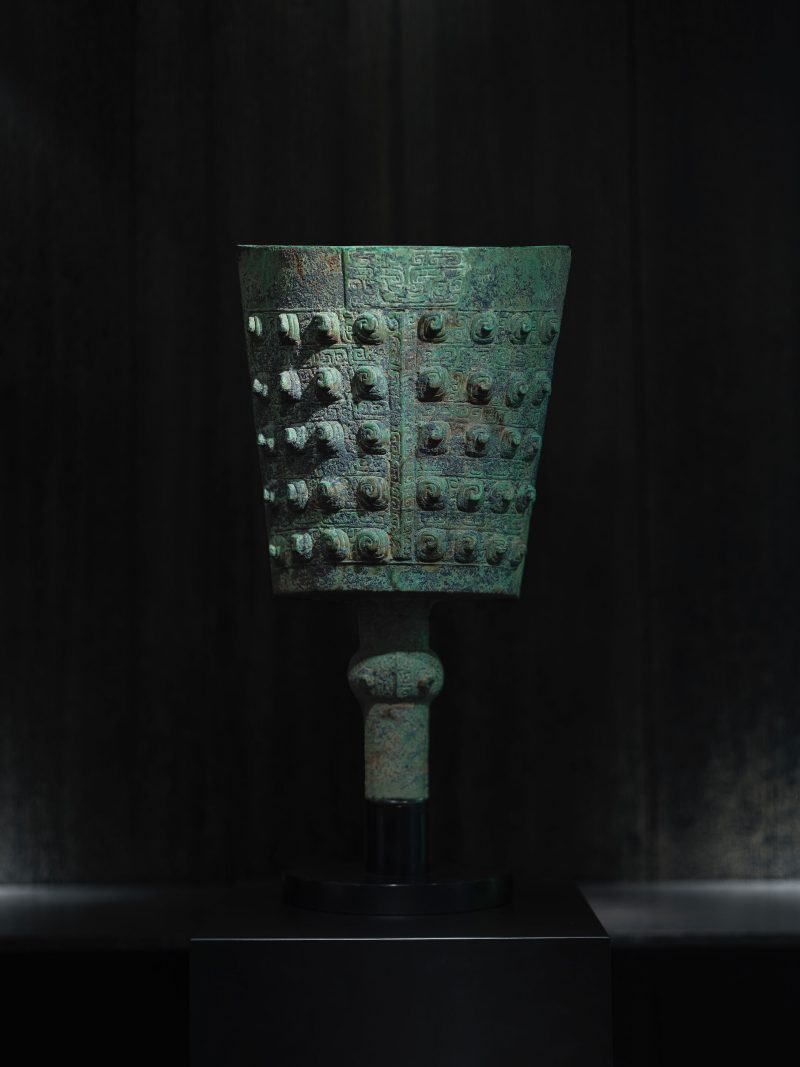
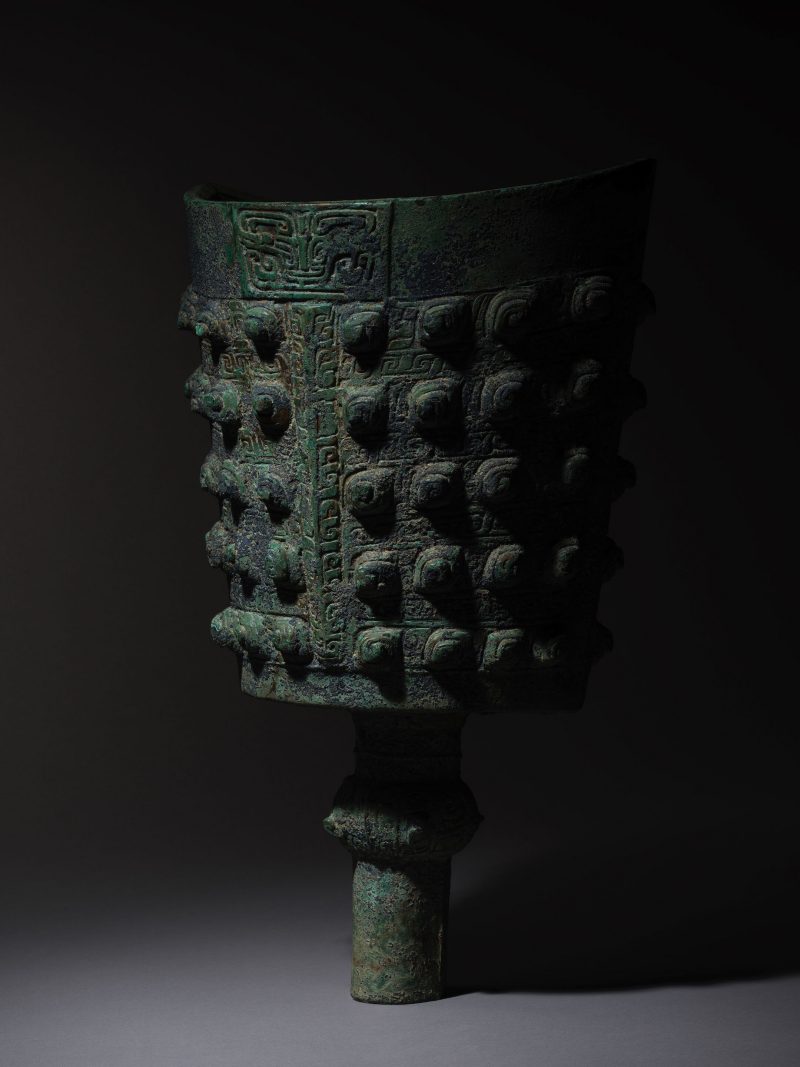
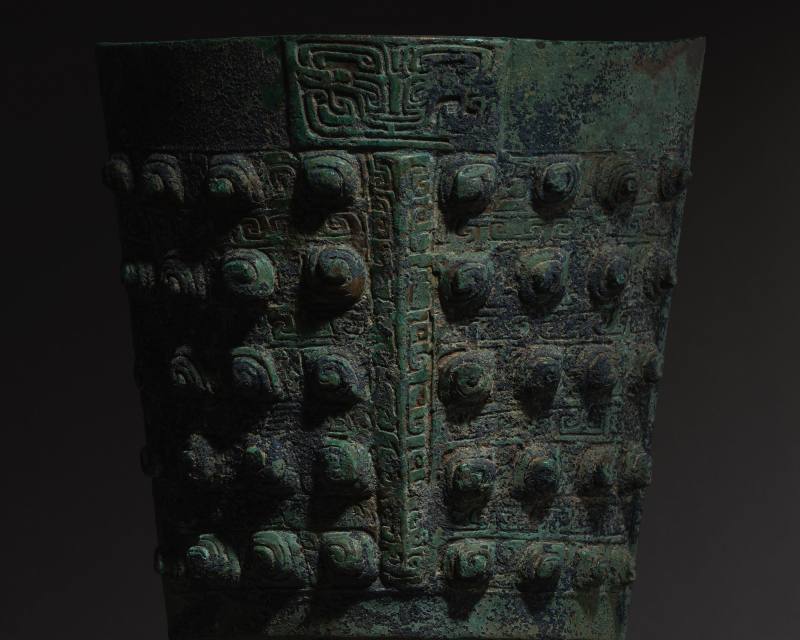
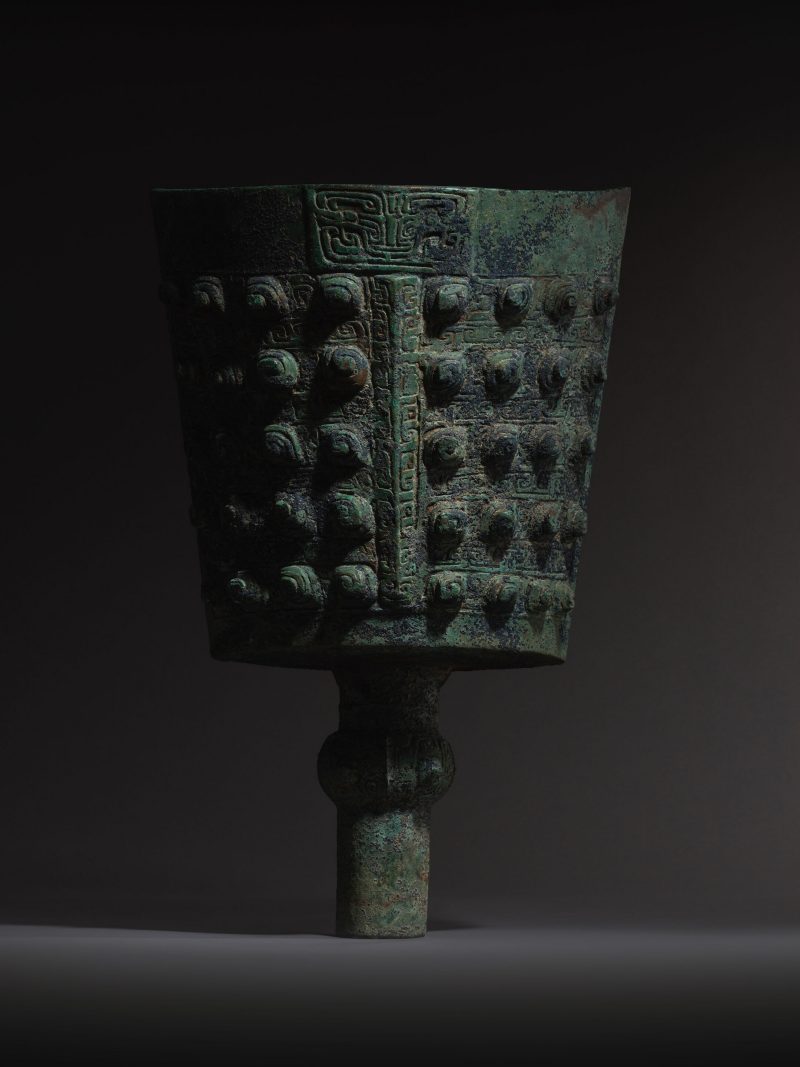
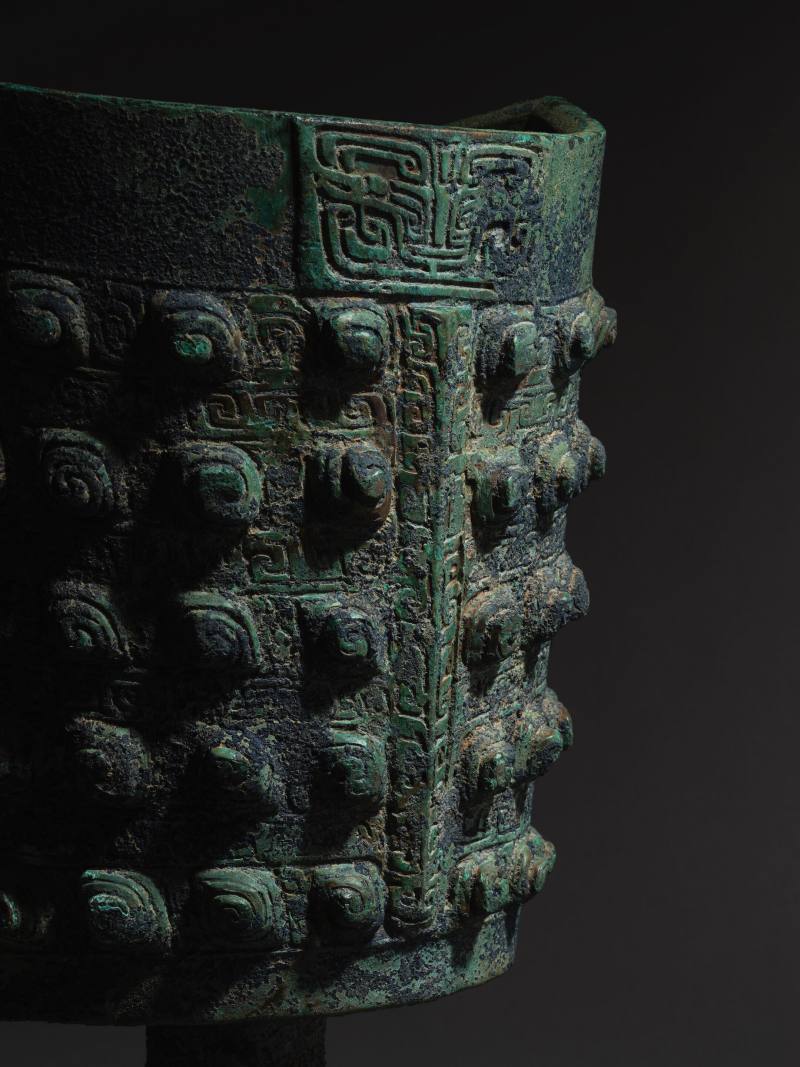
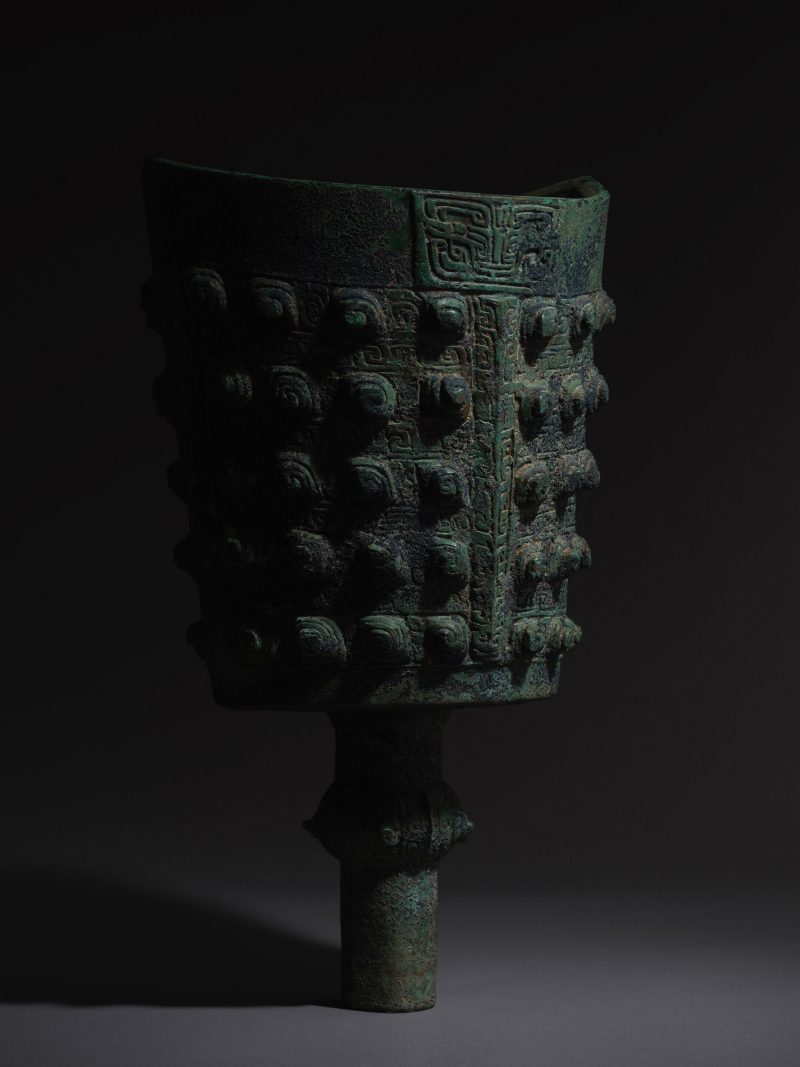
Of elliptical cross section with pointed ends, the convex sides tapering to a flat base raised on a hollow, tubular shank, each side cast with forty raised spiralling bosses arranged in five horizontal registers, each row separated by bands of squared leiwen, all below a central, highly stylised taotie mask below the rim, the flat underside of the bell cast with a band of scrolls, the tubular shank cast with a raised rounded collar decorated with two taotie masks with prominent eyes and short flanges, the bronze patinated to a greenish tone with areas of bright green and vivid blue cuprite and malachite encrustation, later stand.
57.4 cm (22 1/2 in.) high x 37 cm (14 1/2 in.) wide (2).
商代晚期 約公元前十一世紀 青銅鐃
Provenance:
Wui Po Kok Antique Co., Ltd., Hong Kong, 1999
Gisèle Croës Arts d'Extrême Orient, Brussels, 2002
A Swiss private collection, 2010
Gisèle Croës Arts d'Extrême Orient, Brussels, 2015
Published, Illustrated and Exhibited:
Gisèle Croës Arts d'Extrême Orient, Treasures of Ancient China, Part 2, XXIe Biennale des Antiquaires, Paris, 20 - 29 September 2002, pp. 22-25
Gisèle Croës Arts d'Extrême Orient, Ancient Chinese Treasures, Brussels, The European Fine Art Fair, Maastricht, 12 - 21 March 2010, pp. 36-37
來源:
匯寶閣古美術,香港,1999年
Gisèle Croës Arts d'Extrême Orient,布魯塞爾,2002年
瑞士私人收藏,2010年
Gisèle Croës Arts d'Extrême Orient,布魯塞爾,2015年
展覽著錄:
Gisèle Croës Arts d'Extrême Orient,《Treasures of Ancient China, Part 2》,第二十一屆古董雙年展,巴黎,2002年9月20-29日,第22-25頁
Gisèle Croës Arts d'Extrême Orient,《Ancient Chinese Treasures》,布魯塞爾,歐洲藝術與古董博覽會,荷蘭馬斯特裏赫特, 2010年3月12-21日,第36-37頁
This extraordinarily large, magnificently cast bronze bell with its boldly cast design of multiple rows of raised bosses is an important testimony to the skills, creativity and traditions of bronze-working foundries made in the South of China during the late Shang and early Zhou dynasties.
Discoveries of bronze bells of large and very large size in tombs of the feudal elite of this period demonstrate that their use was restricted to the very upper levels of society. Clearly exuding power, such impressive ceremonial bells must be considered instruments of statecraft, whose tones marked the rhythms of power during important ceremonies and rituals venerating the ancestors. Bells were part of a wider music system known as yayue, a codified, systemic institution of classical Court and ritual music implemented and standardised during the Western Zhou dynasty, see Lothar von Falkenhausen's study and discussion of the role of bells in China, Suspended Music: Chime Bells in the Culture of Bronze Age China, Berkeley, 1993. With their deep ringing tones, their sound was believed to have the power to communicate with ancestors and deities, conveying messages to the spirit world.
In Shang and Zhou dynasty China, ceremonial bells comprised two principal categories, both cast in sizes ranging from small to very large. Bo bells such as Lot 61 were designed to be suspended from a large frame, their elliptical opening facing down. Nao bells such as the present example, on the other hand, were intended to stand facing upwards. Of elliptical cross-section and with pointed ends, nao bells were mounted on a hollow, tubular shank, the curved mouth facing up. Like the suspended bo bell, there is no indication that nao had a clapper. They were sounded by striking the surface from the outside with a mallet, the player obtaining at least two different notes from the bell depending on where it was struck. The greater the size of the bell, the greater the volume of sound. The distinctive shape of the nao bell allowed for more than a single note. An analysis of a closely related large nao in the collection of the MIHO Museum, Shigaraki, Shiga Prefecture, Japan, has demonstrated that two tones could be produced when the bell was struck at different points near the rim, one, at the centre of a long side (the sui tone), the second, two-thirds of the way to the edge (gu tone), the results published in Catalogue of the Miho Museum, South Wing, Japan, 1997, pp. 170-171, footnote 4. It is possible that these large bells were played in ensembles with other musical instruments. While bo bells may have served to accent the tempo or underlying rhythm, it was the musical, two-toned nao bells that produced the music.
In his discussion of ceremonial bells, Robert Bagley notes that nao bells were products of southern provinces. Bagley argues that larger bronze bells with tubular handles designed to stand with the rim facing upwards were found in Shang sites at Anyang but disappeared from the repertory of ritual bronzes after the Anyang period. At the same time larger bells of nao type continued to flourish in the south. Large bronze bells such as this example, have been excavated from different sites in southern China, primarily in northern Hunan province, but also further east along the Yangzi river basin, in Hubei, Jiangxi, Anhui, Jiangsu and Zhejiang, see Robert W. Bagley, Shang Ritual Bronzes in the Arthur M. Sackler Collections, Washington, D.C., 1987, pp. 727-731.
During the Shang and Western Zhou, a distinctive bronze using and bronze casting culture developed in this large region often producing bells known for their very large size. Southern bronze-casters were familiar with northern casting methods and designs and applied them in their work. The nao from this group made in bronze casting workshops in the south were generally made in extremely large size and with slight variations in their form and decoration. Unlike ceremonial bells made north of the Yangzi river, these nao bells were found singly and not in sets, in isolated hoards with no or few clues to dating through stratigraphic relationships or association with other artifacts. All of these nao bells share the large size, and designs that incorporate massive protruding mask-derived motifs or rows of conical bosses, as well as raised collars or bulges around the shank of the bell.
Stylistically, the present nao bell belongs to a small and distinct group of large nao cast with angular keyfret scrolls arranged in narrow bands between rows of conical bosses symmetrically arranged around a central vertical rib. Other nao bells in this group include a closely related example in the collection of the MIHO Museum, Shigaraki, Shiga Prefecture, Japan, illustrated in Catalogue of the Miho Museum, South Wing, Japan, 1997, pp. 170-171. Two other examples of this type include a large nao in the collection of the Art Institute, Chicago (accession no. 1924.243), and a nao in the collection of the Kimbell Art Museum, Dallas (accession no. AP 1995.03).
以下内容由AI翻译:
【描述】
截面呈椭圆形,两端尖锐,凸起的两侧逐渐收窄至平底,底部由一个中空的管状柄支撑。每侧铸有四十个螺旋形凸起的乳钉,排列成五个水平行,每行之间以方雷纹带分隔。所有这些图案都在靠近边缘的一个高度风格化的饕餮面具下方。铃铛的平坦底面铸有一圈卷曲纹饰,管状柄上铸有一个凸起的圆领,饰有两组双目突出并带短扉棱的饕餮纹。青铜表面泛绿,局部可见鲜绿与鲜蓝色结壳,含赤铜矿与孔雀石,配有后配底座。
这件异常巨大、铸造精美的青铜铃,其大胆铸造的设计包含多排凸起的乳钉,是晚商至西周早期中国南方铸造作坊技艺、创造力和传统的有力见证。
在这一时期的封建贵族墓葬中发现的大尺寸青铜铃表明,它们的使用仅限于社会的最上层。显然,这种令人印象深刻的仪式用铃必须被视为国家权力的工具,其音调在重要的仪式和祭祀祖先时标志着权力的节奏。铃铛是更广泛的音乐系统的一部分,称为雅乐,这是一种在西周时期实施并标准化的古典宫廷和仪式音乐的编码系统。参见 Lothar von Falkenhausen 对中国铃铛作用的研究和讨论,《悬挂的音乐:青铜时代中国的编钟文化》,伯克利,1993年。人们相信,它们深沉的响声具有与祖先和神灵沟通的能力,将信息传递到精神世界。
在中国的商代和周代,仪式用铃主要分为两大类,从小型到非常大型都有铸造。如拍品61号的镈钟设计为悬挂在大框架上,其椭圆形开口朝下。而像本件这样的铙,则设计为向上放置。截面呈椭圆形,两端尖锐,安装在一个中空的管状柄上,弯曲的口部朝上。与悬挂的镈钟一样,没有迹象表明铙有舌。它们通过从外部用槌敲击表面发声,演奏者根据敲击的位置可以获得至少两个不同的音符。铃铛的尺寸越大,声音的音量就越大。铙的独特形状允许产生不止一个音符。对日本滋贺县信乐町美秀博物馆收藏的一件类似的大型铙进行的分析表明,在靠近口缘的不同位置敲击可产生两个音调,一处在长边中央(隧音),另一处在由中央向边缘约三分之二处(鼓音),结果发表在《美秀博物馆目录》南翼,日本,1997年,第170-171页,脚注4。这些大型铃铛可能与其他乐器一起合奏。虽然镈钟可能用于强调节奏或基本节拍,但产生音乐的是双音调的铙。
在讨论仪式用铃时,Robert Bagley 指出,铙是南方省份的产品。Bagley 认为,安阳的商代遗址发现了带管状柄、设计为口缘向上竖置的大型青铜铃,但在安阳时期之后,这类铃铛从礼器青铜器的种类中消失了。与此同时,南方继续繁荣发展大型的铙。像这样的大型青铜铃已在南方多个地点出土,主要在湖南北部,但也沿长江流域向东延伸至湖北、江西、安徽、江苏和浙江,参见 Robert W. Bagley,《Arthur M. Sackler 收藏的商代礼器青铜器》,华盛顿特区,1987年,第727-731页。
在商代和西周时期,这个广大地区发展了一种独特的青铜使用和铸造文化,经常生产以其巨大尺寸著称的铃铛。南方的青铜铸造者熟悉北方的铸造方法和设计,并将其应用于他们的工作中。南方铸造作坊制作的这类铙通常尺寸极大,形式和装饰略有变化。与长江以北制造的仪式用铃不同,这些铙通常是单独发现的,而不是成套出现的,在孤立的窖藏中发现,几乎没有通过地层关系或其他文物关联来确定年代的线索。所有这些铙都具有巨大的尺寸,并且设计中包含大量突出的饕餮面具衍生图案或锥形乳钉行,以及围绕铃铛柄部的凸起圆领或突起。
从风格上看,这件铙属于一小群大型铙,中央纵脊两侧的锥形乳钉对称成排,乳钉列之间的窄带内铸有折角回纹。其他属于这一组的铙包括日本滋贺县信乐町美秀博物馆收藏的一件类似例子,见《美秀博物馆目录》南翼,日本,1997年,第170-171页。另外两件同类的例子包括芝加哥艺术学院收藏的一件大型铙(馆藏编号1924.243)和达拉斯金贝尔艺术博物馆收藏的一件铙(馆藏编号AP 1995.03)。
常见问题
这件商代晚期 約公元前十一世紀 青銅鐃 | MAGNIFIQUE ET IMPORTANTE CLOCHE RITUELLE EN BRONZE NAO的成交价是多少?
落槌价为 预展中。 成交价为 预展中。
拍品的尺寸是多少?
57.4 cm (22 1/2 in.) high x 37 cm (14 1/2 in.) wide