
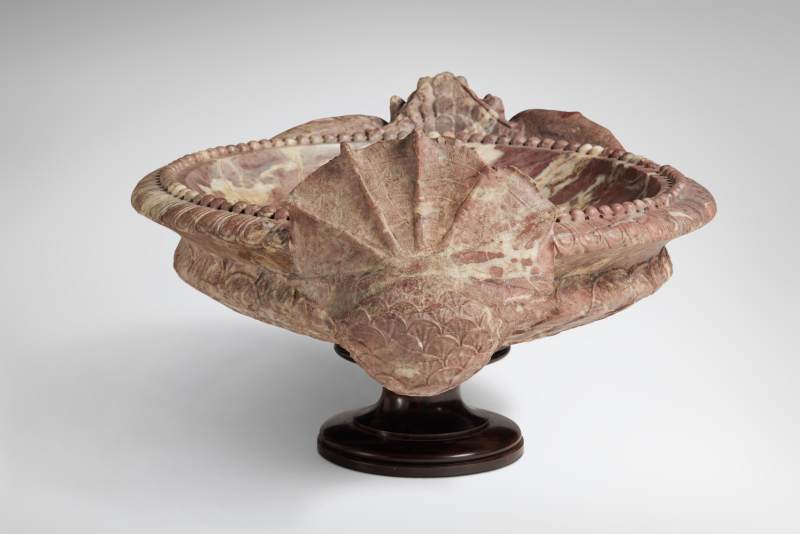
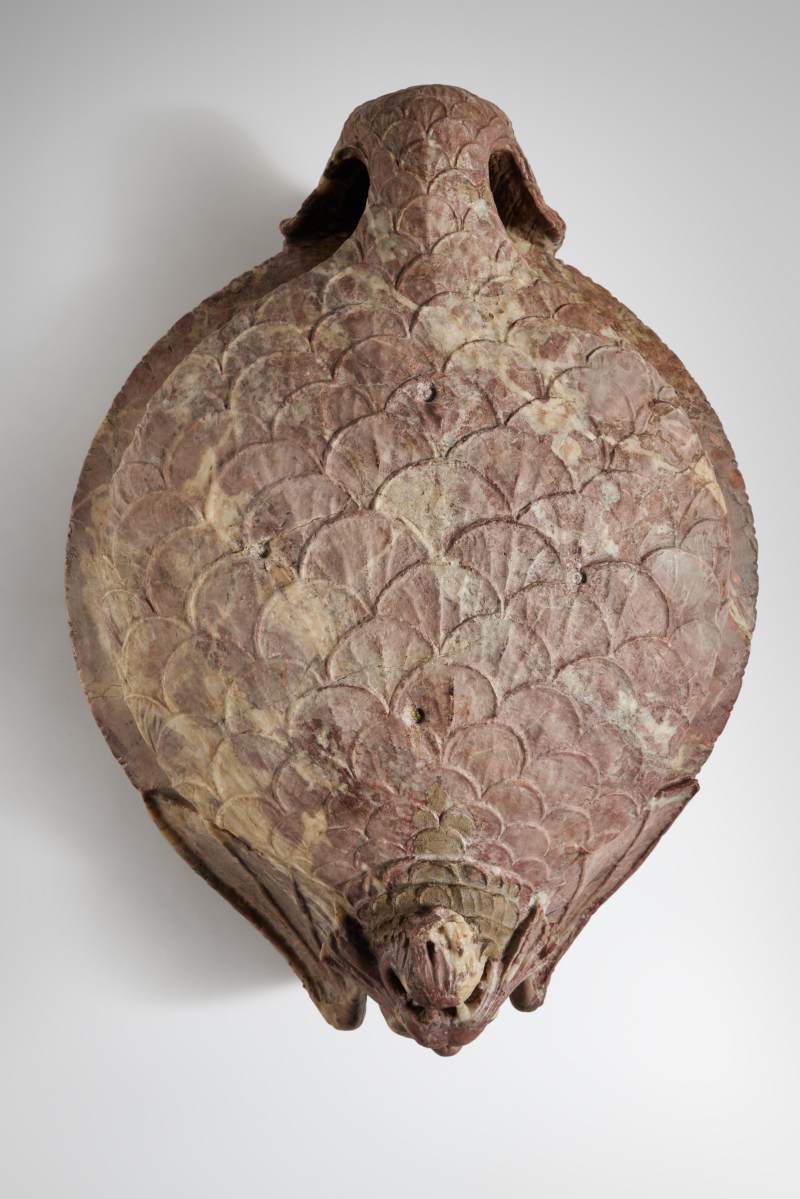
Lot 171 Basin Italian, second 16th century
落槌价
预展中
成交价
预展中
| 拍卖公司 | 苏富比 |
|---|---|
| 拍卖时间 | 2026年10月22日 |
拍品信息
拍品名称
Basin Italian, second 16th century
起拍价
USD 50,000
估值区间
50,000 - 70,000 USD
尺寸
未知
品相
如欲了解本拍品狀況的更多資訊,請聯絡 MagnumOpus@sothebys.com
更多信息
Italian, second half 16th century
Basin
marble, on a later wood socle
31 in. by 9 ⅝ in.
78.74 by 24.45 cm
来源:With Daniel Katz Ltd., London;
From whom acquired by the present collector.
图录
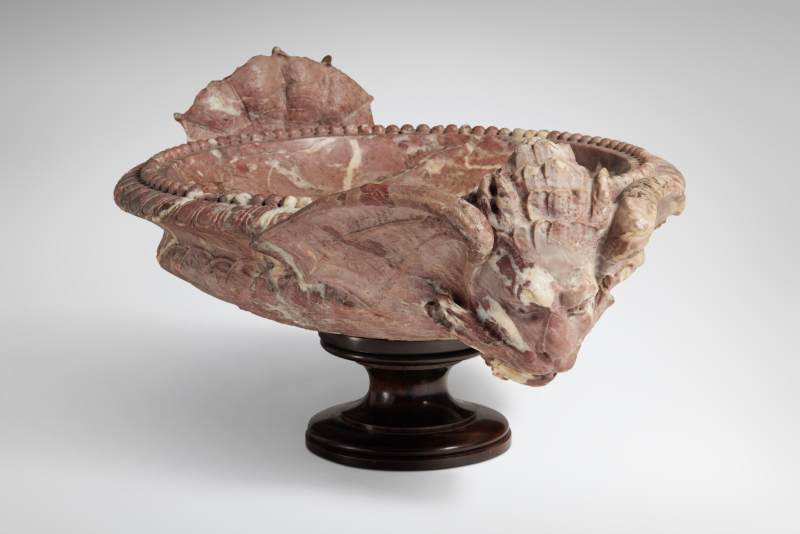
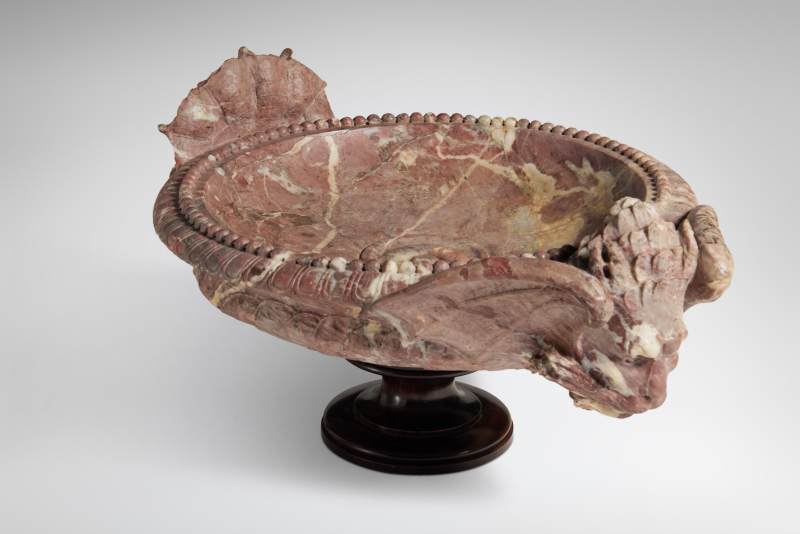
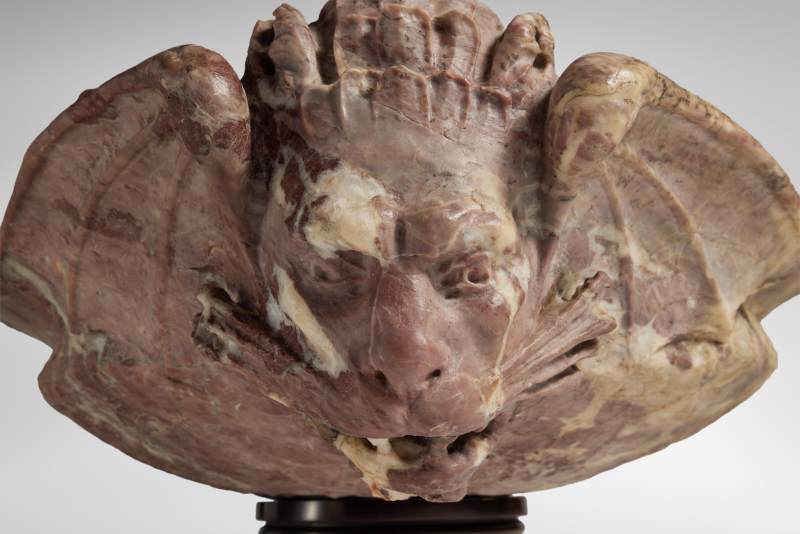
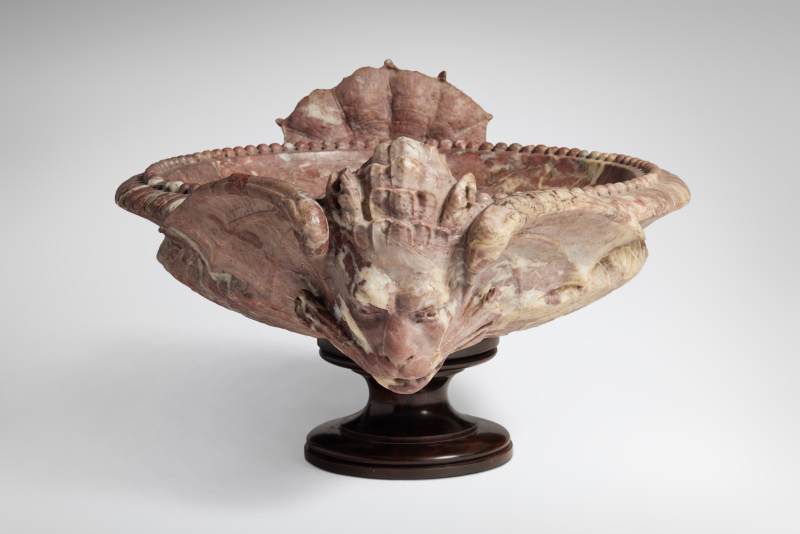
说明:The present marble vessel is conceived in the form of a fantastical hybrid creature, with a leonine mask, framed by outstretched bat wings, forming the water spout. The exterior and underside are richly embellished with scales and bordered by a beaded molding and a stylized egg-and-dart motif. Extending from the reverse of the head is a webbed tail, further enhancing the object's imaginative and otherworldly character.
The inventive design reflects the aesthetic principles of Mannerism, a style that embraced the unusual, the whimsical, and the deliberately artificial. Departing from the balanced naturalism and idealized forms of the High Renaissance, Mannerist artists favored expressive distortions, unexpected juxtapositions, and strange interpretations of the natural world. Within this context, zoomorphic and hybrid creatures often substituted more conventional decorative motifs, creating works that delighted in ambiguity and visual invention.1
The combination of bat and lion imagery is particularly characteristic of the grotesque ornamental vocabulary developed in sixteenth century Florence. Artists and architects associated with the Medici court, most notably Bernardo Buontalenti and Michelangelo, frequently incorporated these imagined creatures into grottos, fountains, and decorative waterworks. Such settings were conceived as evocations of the mysterious powers of nature and the subterranean world.
At the same time, the leonine mask draws upon the revival of the classical language of antiquity that permeated Renaissance art and architecture. Derived from ancient Roman and Greek prototypes, lion-head mascarons were enduring symbols of strength, majesty, and authority. Their widespread use in fountains and architectural ornament was further encouraged by their practical suitability as water spouts.
1https://www.britannica.com/art/Mannerism
Basin
marble, on a later wood socle
31 in. by 9 ⅝ in.
78.74 by 24.45 cm
来源:With Daniel Katz Ltd., London;
From whom acquired by the present collector.
图录
说明:The present marble vessel is conceived in the form of a fantastical hybrid creature, with a leonine mask, framed by outstretched bat wings, forming the water spout. The exterior and underside are richly embellished with scales and bordered by a beaded molding and a stylized egg-and-dart motif. Extending from the reverse of the head is a webbed tail, further enhancing the object's imaginative and otherworldly character.
The inventive design reflects the aesthetic principles of Mannerism, a style that embraced the unusual, the whimsical, and the deliberately artificial. Departing from the balanced naturalism and idealized forms of the High Renaissance, Mannerist artists favored expressive distortions, unexpected juxtapositions, and strange interpretations of the natural world. Within this context, zoomorphic and hybrid creatures often substituted more conventional decorative motifs, creating works that delighted in ambiguity and visual invention.1
The combination of bat and lion imagery is particularly characteristic of the grotesque ornamental vocabulary developed in sixteenth century Florence. Artists and architects associated with the Medici court, most notably Bernardo Buontalenti and Michelangelo, frequently incorporated these imagined creatures into grottos, fountains, and decorative waterworks. Such settings were conceived as evocations of the mysterious powers of nature and the subterranean world.
At the same time, the leonine mask draws upon the revival of the classical language of antiquity that permeated Renaissance art and architecture. Derived from ancient Roman and Greek prototypes, lion-head mascarons were enduring symbols of strength, majesty, and authority. Their widespread use in fountains and architectural ornament was further encouraged by their practical suitability as water spouts.
1https://www.britannica.com/art/Mannerism
常见问题
这件Basin Italian, second 16th century的成交价是多少?
落槌价为 预展中。 成交价为 预展中。
拍品的品相状况如何?
如欲了解本拍品狀況的更多資訊,請聯絡 MagnumOpus@sothebys.com
这件拍品的流传来源是什么?
With Daniel Katz Ltd., London;
From whom acquired by the present collector.
图录
From whom acquired by the present collector.
图录