
拍品信息
拍品名称
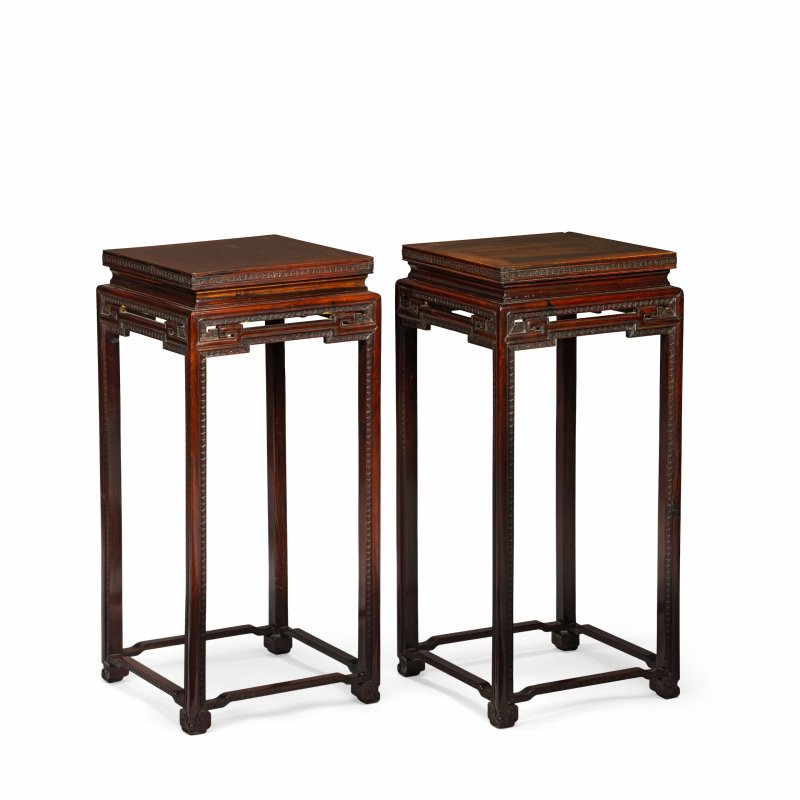
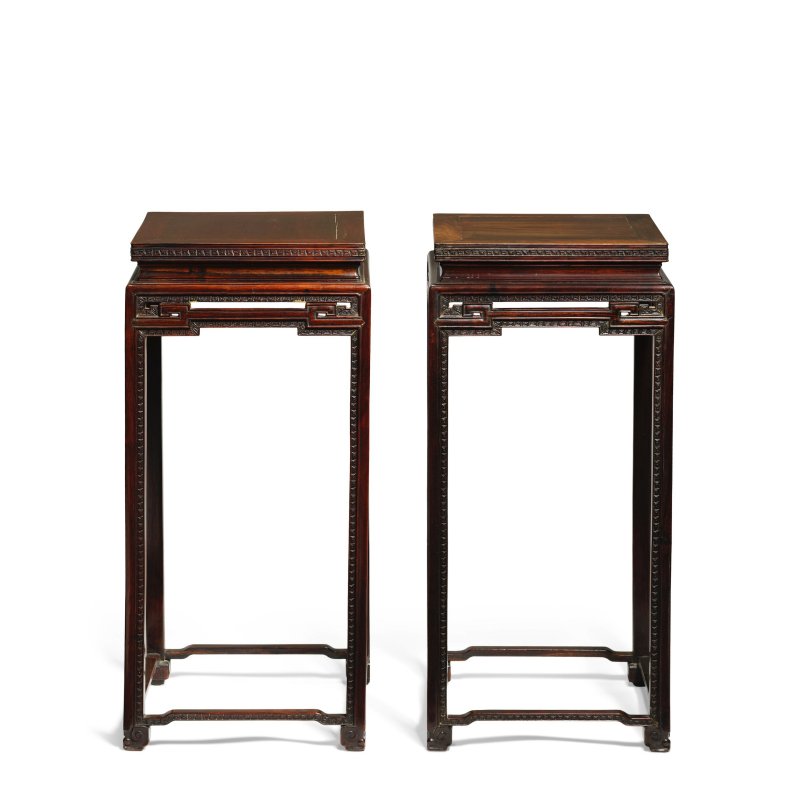
清 紫檀貼面有束腰香幾 | A RARE PAIR OF ZITAN-VENEERED INCENSE STANDS, XIANGJI
年代
Qing Dynasty
起拍价
GBP 8,000
估值区间
GBP 8000 - 12000
尺寸
未知
品相
未知
更多信息
Qing Dynasty
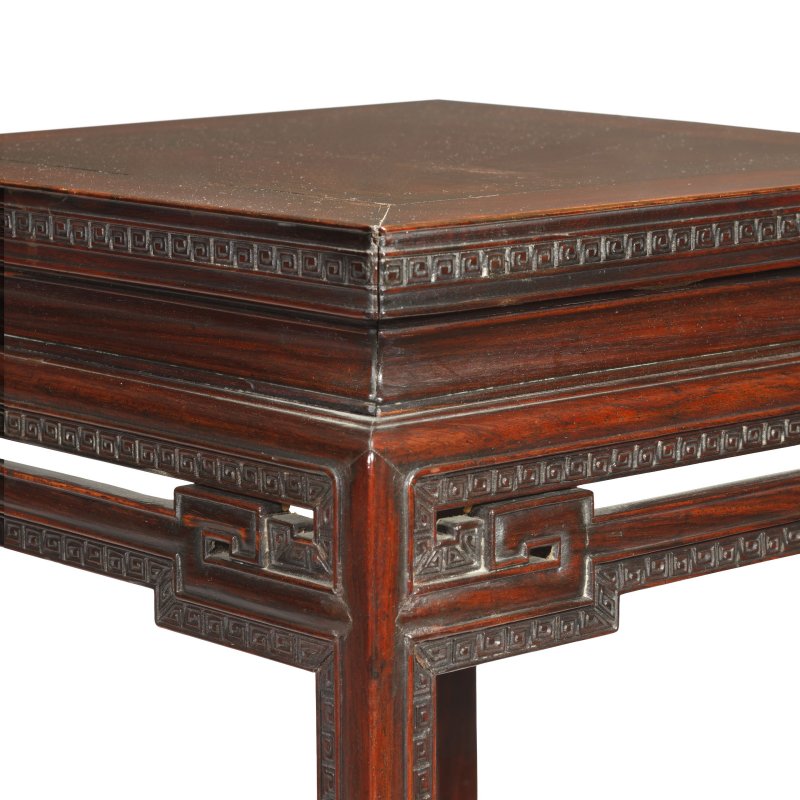
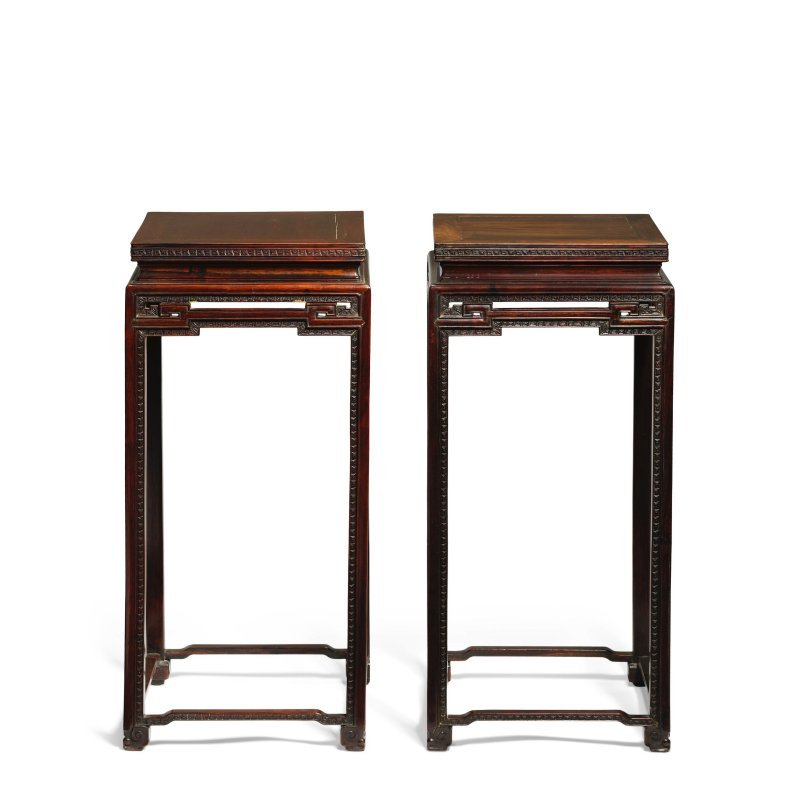
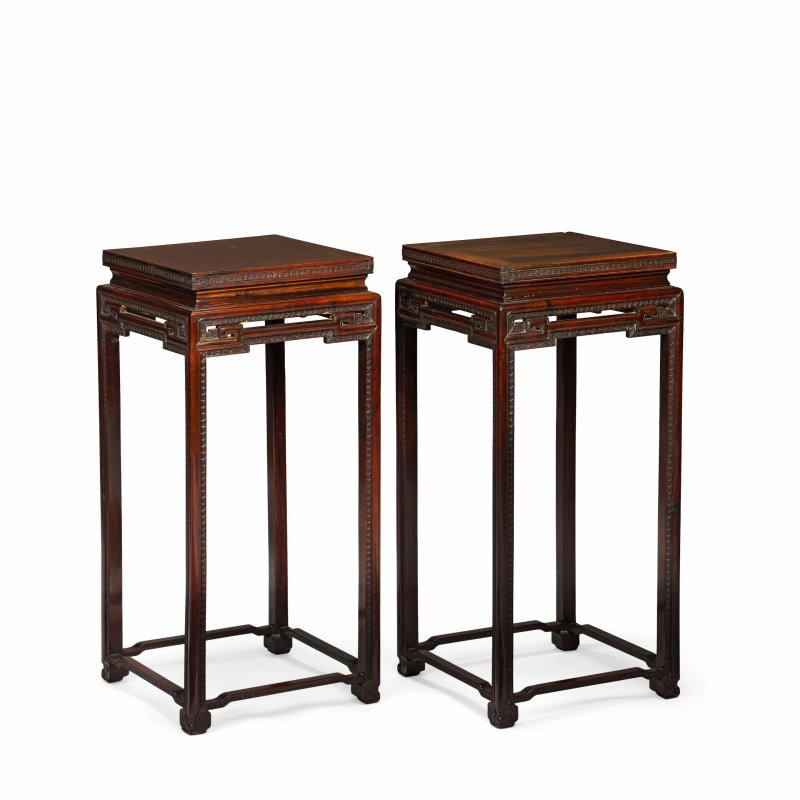
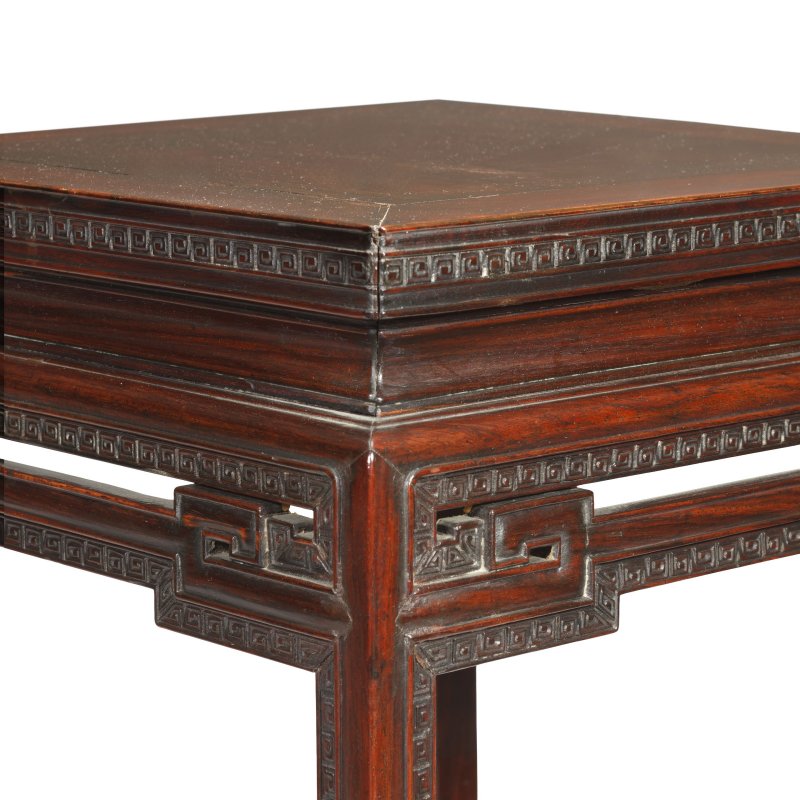
Each single-panel top set within a wider frame above a narrow recessed waist, raised on four slender legs and ruyi-shaped feet joined by humpbacked stretchers, the openwork aprons, legs and stretchers elegantly carved with a continuous key-fret scroll, the wood of an attractive dark brown tone. Each 81.5cm (32 1/8in) high x 37.5cm (14 3/4in) square. (2).
Footnotes
清 紫檀貼面有束腰香幾
Provenance: Evaristo Caretti (1879-1955), China and Italy, and thence by descent
Noted in a valuation conducted by Robert Kleiner in 1988, stating the pair was acquired in Beijing in 1922
來源: Evaristo Caretti (1879-1955),中國及意大利,並由後人保存迄今
Robert Kleiner于1988年所作的評估中曾提及,此對方幾于1922年獲得于北京
Compare with a related zitan incense stand, Qing dynasty, decorated with key-fret, in the Qing Court Collection, illustrated in The Complete Collection of Treasures of the Palace Museum: Furniture of the Ming and Qing Dynasties (II), Hong Kong, 2002, p.180, no.162.
The present stands are of the type known as (香几), or incense tables, traditionally used to support incense burners and other ritual or devotional accoutrements. Their relatively tall and slender proportions raised the incense burner to a prominent position within the interior, while their elaborate carving and precious timber also made them important decorative furnishings. Incense was used not only in religious and ritual contexts, but also within the scholar's studio and domestic interior, where its fragrance formed an integral part of cultivated life.
See a related pair of incense stands, 19th century, which was sold at Christie's Paris, 20 June 2017, lot 49. Another related pair of incense stands, late 18th/early 19th century, was sold at Christie's New York, 18 September 2015, lot 2038.
Each single-panel top set within a wider frame above a narrow recessed waist, raised on four slender legs and ruyi-shaped feet joined by humpbacked stretchers, the openwork aprons, legs and stretchers elegantly carved with a continuous key-fret scroll, the wood of an attractive dark brown tone. Each 81.5cm (32 1/8in) high x 37.5cm (14 3/4in) square. (2).
Footnotes
清 紫檀貼面有束腰香幾
Provenance: Evaristo Caretti (1879-1955), China and Italy, and thence by descent
Noted in a valuation conducted by Robert Kleiner in 1988, stating the pair was acquired in Beijing in 1922
來源: Evaristo Caretti (1879-1955),中國及意大利,並由後人保存迄今
Robert Kleiner于1988年所作的評估中曾提及,此對方幾于1922年獲得于北京
Compare with a related zitan incense stand, Qing dynasty, decorated with key-fret, in the Qing Court Collection, illustrated in The Complete Collection of Treasures of the Palace Museum: Furniture of the Ming and Qing Dynasties (II), Hong Kong, 2002, p.180, no.162.
The present stands are of the type known as (香几), or incense tables, traditionally used to support incense burners and other ritual or devotional accoutrements. Their relatively tall and slender proportions raised the incense burner to a prominent position within the interior, while their elaborate carving and precious timber also made them important decorative furnishings. Incense was used not only in religious and ritual contexts, but also within the scholar's studio and domestic interior, where its fragrance formed an integral part of cultivated life.
See a related pair of incense stands, 19th century, which was sold at Christie's Paris, 20 June 2017, lot 49. Another related pair of incense stands, late 18th/early 19th century, was sold at Christie's New York, 18 September 2015, lot 2038.
常见问题
这件清 紫檀貼面有束腰香幾 | A RARE PAIR OF ZITAN-VENEERED INCENSE STANDS, XIANGJI的成交价是多少?
落槌价为 预展中。 成交价为 预展中。


