
拍品信息
拍品名称
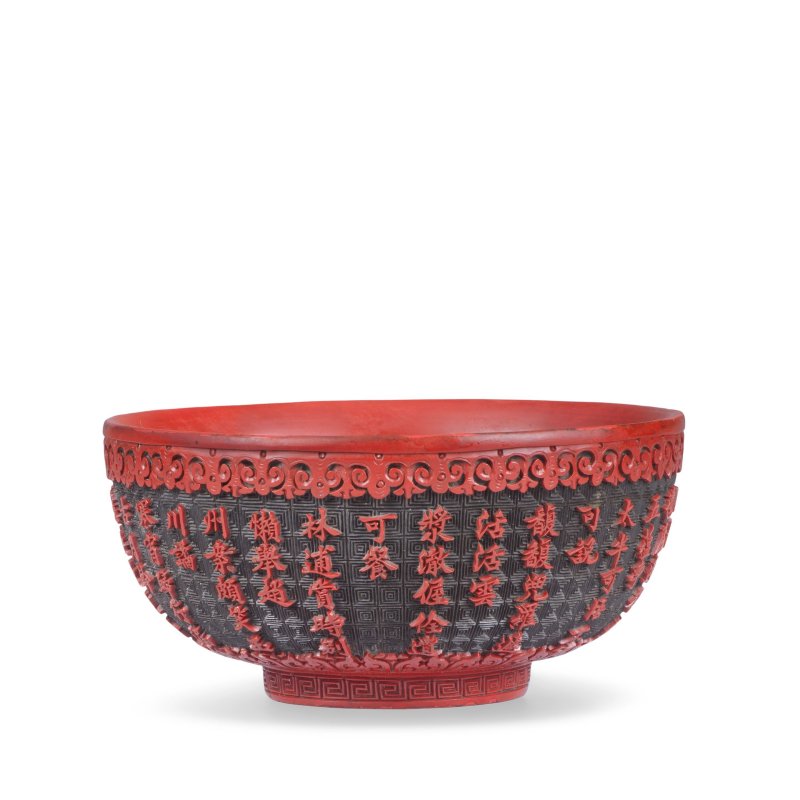
清乾隆丙寅年(1746) 御製剔紅御題詩三清茶盌 | A RARE IMPERIALLY-INSCRIBED RED AND BLACK LACQUER CARVED TEA BOWL
年代
Qianlong seal marks and of the period, the inscription dated Bingyin year, corresponding to 1746 and of the period
起拍价
GBP 3,000
估值区间
GBP 3000 - 5000
尺寸
未知
品相
未知
更多信息
Qianlong seal marks and of the period, the inscription dated Bingyin year, corresponding to 1746 and of the period
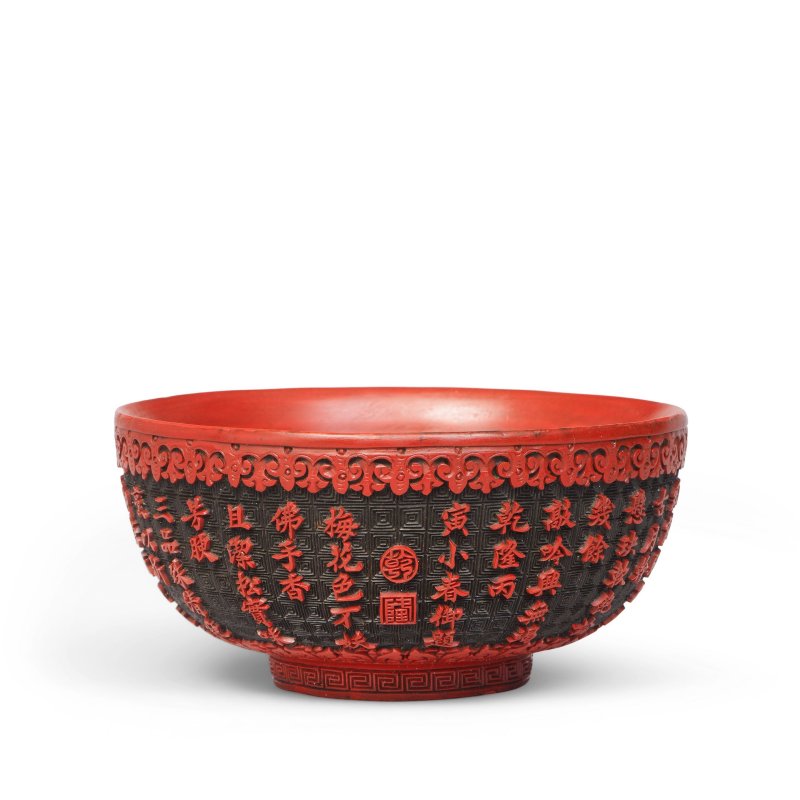
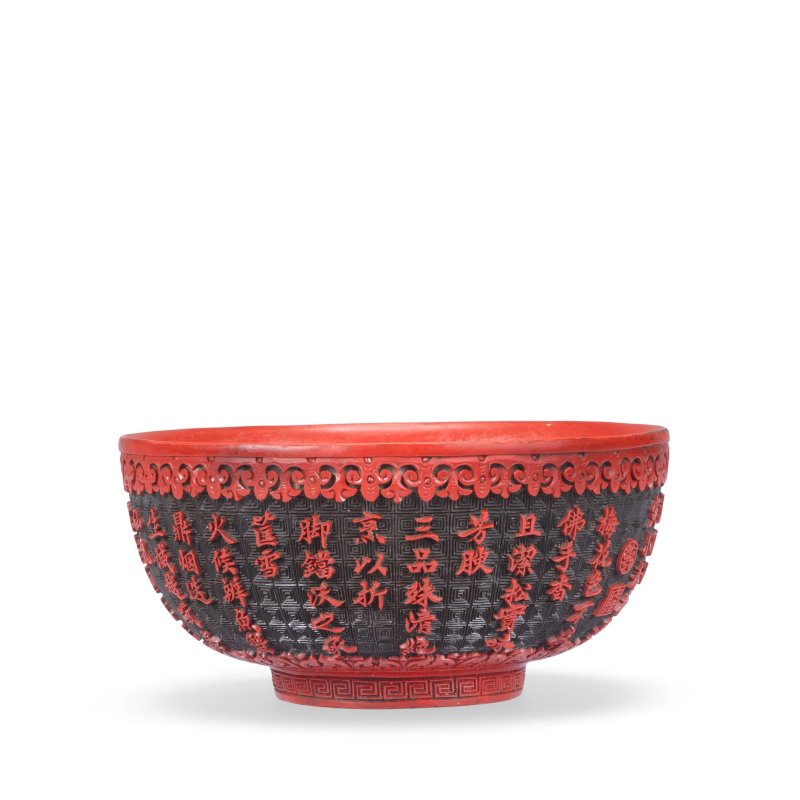
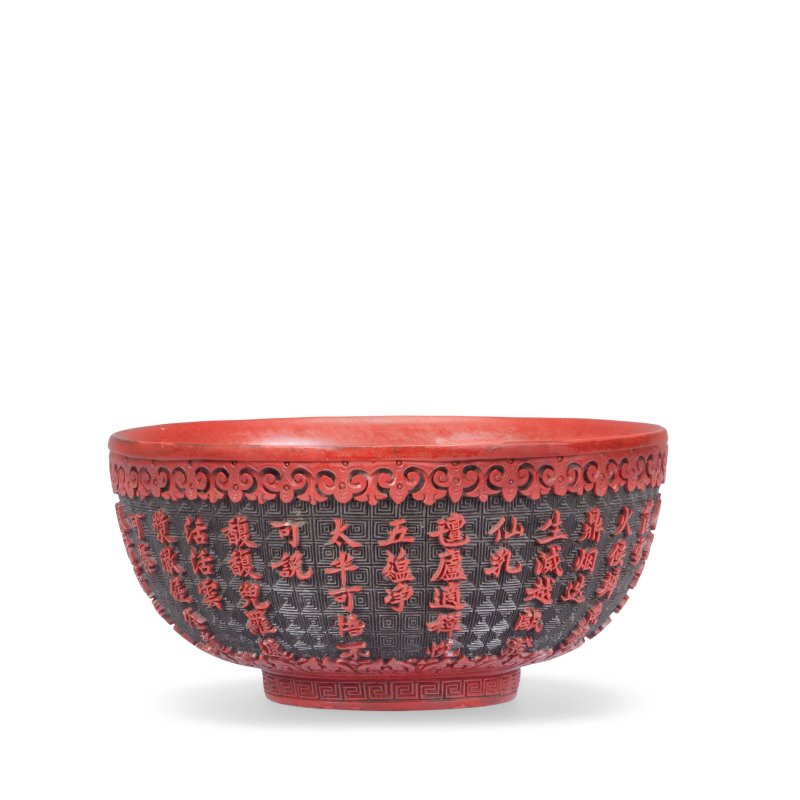
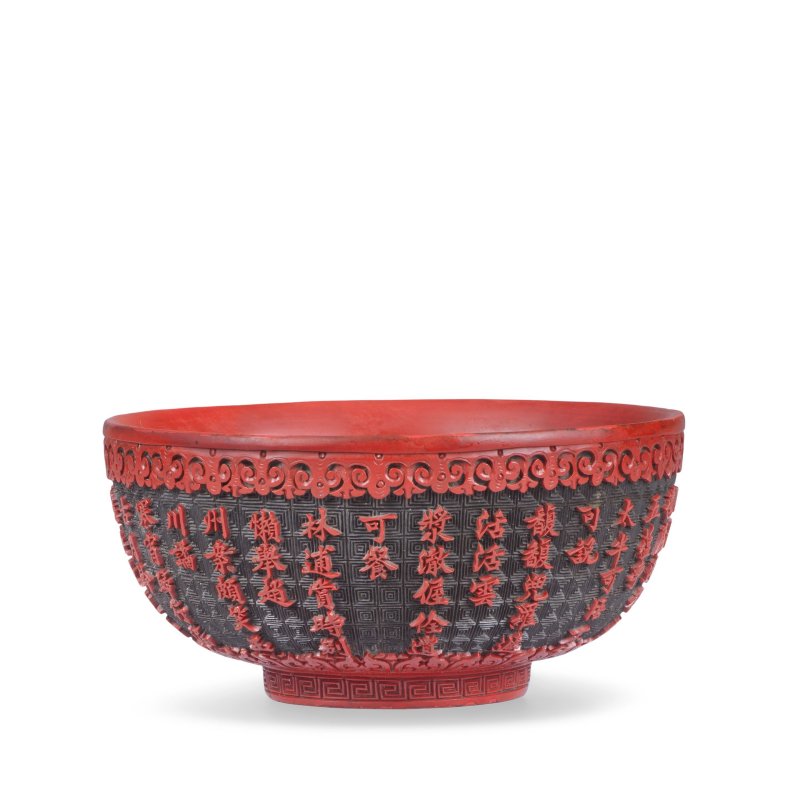
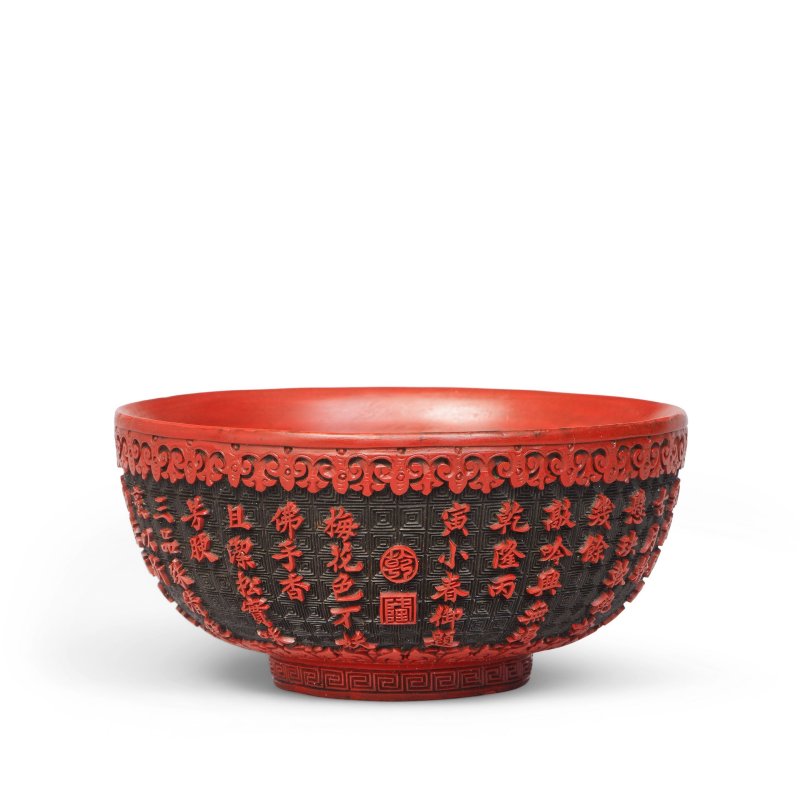
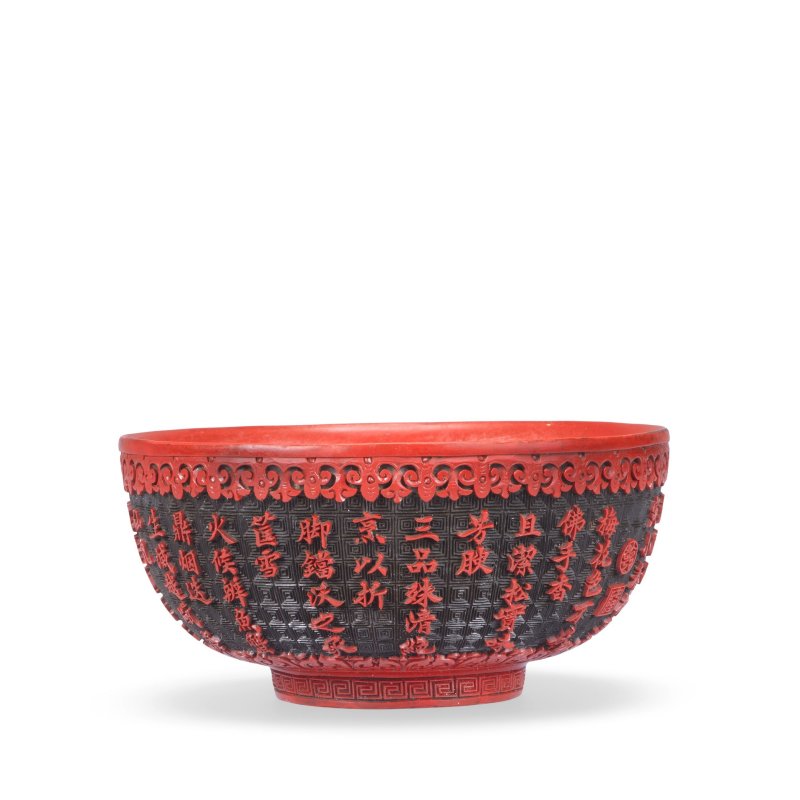
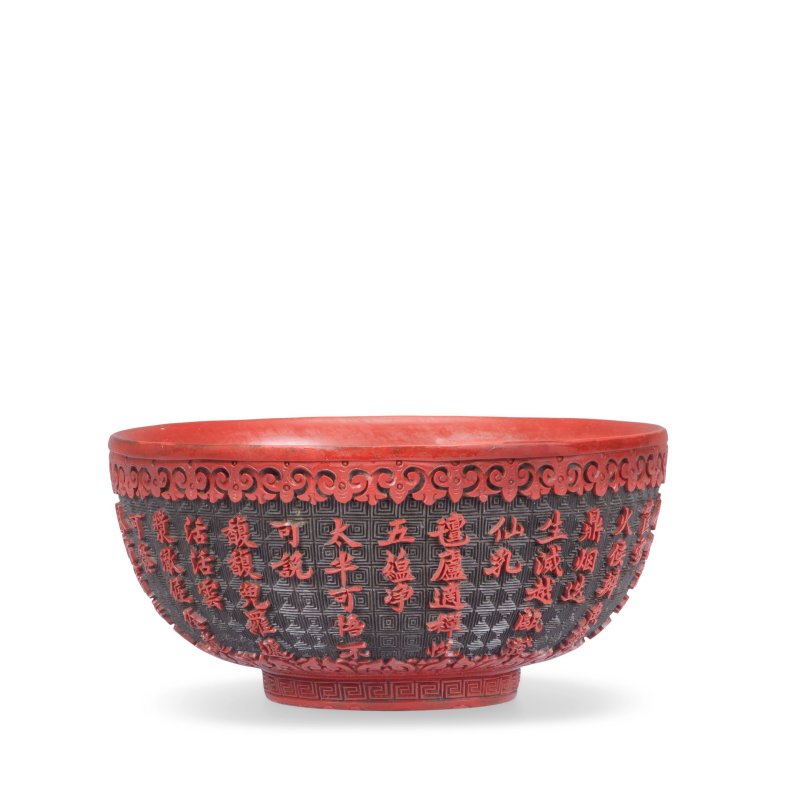
The vessel with deep rounded sides rising from a straight foot, carved around the exterior through layers of cinnabar red lacquer to a black diaper-pattern ground with an Imperial poem, 'Three-Purity Tea,' Sanqing Cha, dated to the Bingyin year (corresponding to 1746) followed by the seals Qian and Long, all between two borders of ruyi and lotus petal designs encircling the rim and foot, with leiwen band around the foot, the interior lacquered brownish-red. 11.2cm (4 7/8in) diam.
Footnotes
清乾隆丙寅年(1746) 御製剔紅御題詩三清茶盌
印:「乾」、「隆」
Provenance: Sir George Mowlem Burt KBE (1884–1964), Surrey, and thence by descent
來源:大英帝國爵級司令勛章獲得者George Mowlem Burt爵士(1884-1964),英國薩裏,并由後人保存迄今
Born in Westminster on 10 January 1884, Sir George Mowlem Burt KBE joined the family firm, John Mowlem & Co., in 1902, following in the footsteps of his father and uncle. He subsequently became supervising director of the company and was involved in a number of major engineering and building projects. He was a prominent figure in the development of the civil engineering industry, serving as a founding member of the Federation of Civil Engineering Contractors and on various Government committees and missions. He was also Master of the Worshipful Company of Paviors. Outside his professional life, Burt was a distinguished fencer, winning the British épée championship in 1922 and representing Great Britain in épée at the 1920 Olympic Games. He was knighted in 1942 and died at Blindley Heath, Surrey, on 1 September 1964. An enthusiastic collector of art, his collection included paintings, ivory, netsuke and jade.
The present bowl was almost certainly intended for use as part of an Imperial tea service associated with the Qianlong Emperor's New Year tea gatherings. It is carved with the Emperor's celebrated poem ('Three Purities Tea'), composed in the year (1746), when he marked his thirty-sixth birthday by drinking tea in his Studio during the depths of winter.
The inscription reads:
梅花色不妖,佛手香且潔。松實味芳腴,三品殊清絕。烹以折腳鐺,沃之承筐雪。火候辨魚蟹,鼎煙迭生滅。越甌潑仙乳,氈廬適禪悅。五蘊淨大半,可悟不可說。馥馥兜羅遞,活活雲漿澈。偓佺遺可餐,林逋賞時別。懶舉趙州案,頗笑玉川譎。寒宵聽行漏,古月看懸玦。軟飽趁幾餘,敲吟興無竭。乾隆丙寅小春御題
Which may be translated as:
The poem celebrates a distinctive infusion prepared from plum blossom, finger citron and pine kernels, ingredients presented to the Emperor during a visit to the sacred Buddhist mountain of Wutai. Brewed with freshly collected snow water, these three components were believed to produce a tea of exceptional fragrance and purity. Beyond describing its preparation, the poem reflects on the moral and spiritual qualities associated with tea, drawing parallels with Buddhist ideals of purity, restraint and simplicity.
A discerning patron of both the arts and tea culture, the Qianlong Emperor frequently combined the appreciation of works of art with refined tea drinking in intimate palace gatherings. Tea was prepared and served in carefully selected vessels drawn from the Imperial collection, which included celebrated ceramics and utensils spanning many centuries. Conversation is said to have ranged from the antiquity and glaze of individual tea wares to the qualities of particular tea leaves, while guests judged each infusion by its colour, fragrance and flavour.
During the New Year celebrations, the Emperor customarily hosted a tea banquet in the Palace of Cherished Glory () within the Forbidden City. Invited officials were encouraged to compose poetry, and those whose verses most impressed the Emperor were rewarded with a tea bowl such as the present example, making these vessels tangible expressions of Imperial literary culture as well as objects of refined craftsmanship.
The poem is preserved in the (Complete Collection of the Qianlong Emperor's Imperial Poems and Prose), , vol.1, 36, p.17. It contains numerous literary and Buddhist allusions, reflecting the Emperor's wide-ranging intellectual interests. Although the Qing Court was closely associated with Tibetan Buddhism, many of the poem's references derive from the vocabulary and traditions of Chan Buddhism, in keeping with established Chinese literary conventions.
Among the figures invoked is the legendary mountain recluse Wo Quan, famed for subsisting on pine nuts and reputedly offering them to the sage Emperor Yao. According to tradition, Yao declined the gift and thereby forfeited their life-extending properties; the Qianlong Emperor humorously suggests that he himself would have accepted them without hesitation.
The poem also alludes to the celebrated Chan master Zhaozhou Congshen (778–897). One of the best-known koans associated with the monk recounts how every visitor, regardless of circumstance, was simply invited to 'drink tea', illustrating the Chan emphasis on direct experience rather than abstract explanation. By referencing this episode, the Emperor subtly likens his own tea gatherings to occasions of cultivated fellowship and enlightened discourse.
Comparable examples include a similar carved lacquer bowl with the same poem, Qianlong seal mark and of the period, in the Palace Museum, Beijing, illustrated in , New Haven, 2011, no.57. Another example from the Beijing Antique Company Collection is illustrated in , Beijing, 2006, pl. 25. A pair of related bowls is in the Tianjin Municipal Art Museum, published in (), vol.6, Fuzhou, 1993, pl.211, while a further example is in the Victoria and Albert Museum, London, illustrated by H.Garner, , London, 1979, pl.93.
See also a pair of related carved lacquer tea bowls, with Qianlong seal marks and of the period, which was sold at Bonhams London, 2 November 2021, lot 46. Another related bowl, Qianlong seal marks and of the period, was sold at Bonhams Hong Kong, 29 May 2022, lot 131.
The vessel with deep rounded sides rising from a straight foot, carved around the exterior through layers of cinnabar red lacquer to a black diaper-pattern ground with an Imperial poem, 'Three-Purity Tea,' Sanqing Cha, dated to the Bingyin year (corresponding to 1746) followed by the seals Qian and Long, all between two borders of ruyi and lotus petal designs encircling the rim and foot, with leiwen band around the foot, the interior lacquered brownish-red. 11.2cm (4 7/8in) diam.
Footnotes
清乾隆丙寅年(1746) 御製剔紅御題詩三清茶盌
印:「乾」、「隆」
Provenance: Sir George Mowlem Burt KBE (1884–1964), Surrey, and thence by descent
來源:大英帝國爵級司令勛章獲得者George Mowlem Burt爵士(1884-1964),英國薩裏,并由後人保存迄今
Born in Westminster on 10 January 1884, Sir George Mowlem Burt KBE joined the family firm, John Mowlem & Co., in 1902, following in the footsteps of his father and uncle. He subsequently became supervising director of the company and was involved in a number of major engineering and building projects. He was a prominent figure in the development of the civil engineering industry, serving as a founding member of the Federation of Civil Engineering Contractors and on various Government committees and missions. He was also Master of the Worshipful Company of Paviors. Outside his professional life, Burt was a distinguished fencer, winning the British épée championship in 1922 and representing Great Britain in épée at the 1920 Olympic Games. He was knighted in 1942 and died at Blindley Heath, Surrey, on 1 September 1964. An enthusiastic collector of art, his collection included paintings, ivory, netsuke and jade.
The present bowl was almost certainly intended for use as part of an Imperial tea service associated with the Qianlong Emperor's New Year tea gatherings. It is carved with the Emperor's celebrated poem ('Three Purities Tea'), composed in the year (1746), when he marked his thirty-sixth birthday by drinking tea in his Studio during the depths of winter.
The inscription reads:
梅花色不妖,佛手香且潔。松實味芳腴,三品殊清絕。烹以折腳鐺,沃之承筐雪。火候辨魚蟹,鼎煙迭生滅。越甌潑仙乳,氈廬適禪悅。五蘊淨大半,可悟不可說。馥馥兜羅遞,活活雲漿澈。偓佺遺可餐,林逋賞時別。懶舉趙州案,頗笑玉川譎。寒宵聽行漏,古月看懸玦。軟飽趁幾餘,敲吟興無竭。乾隆丙寅小春御題
Which may be translated as:
The poem celebrates a distinctive infusion prepared from plum blossom, finger citron and pine kernels, ingredients presented to the Emperor during a visit to the sacred Buddhist mountain of Wutai. Brewed with freshly collected snow water, these three components were believed to produce a tea of exceptional fragrance and purity. Beyond describing its preparation, the poem reflects on the moral and spiritual qualities associated with tea, drawing parallels with Buddhist ideals of purity, restraint and simplicity.
A discerning patron of both the arts and tea culture, the Qianlong Emperor frequently combined the appreciation of works of art with refined tea drinking in intimate palace gatherings. Tea was prepared and served in carefully selected vessels drawn from the Imperial collection, which included celebrated ceramics and utensils spanning many centuries. Conversation is said to have ranged from the antiquity and glaze of individual tea wares to the qualities of particular tea leaves, while guests judged each infusion by its colour, fragrance and flavour.
During the New Year celebrations, the Emperor customarily hosted a tea banquet in the Palace of Cherished Glory () within the Forbidden City. Invited officials were encouraged to compose poetry, and those whose verses most impressed the Emperor were rewarded with a tea bowl such as the present example, making these vessels tangible expressions of Imperial literary culture as well as objects of refined craftsmanship.
The poem is preserved in the (Complete Collection of the Qianlong Emperor's Imperial Poems and Prose), , vol.1, 36, p.17. It contains numerous literary and Buddhist allusions, reflecting the Emperor's wide-ranging intellectual interests. Although the Qing Court was closely associated with Tibetan Buddhism, many of the poem's references derive from the vocabulary and traditions of Chan Buddhism, in keeping with established Chinese literary conventions.
Among the figures invoked is the legendary mountain recluse Wo Quan, famed for subsisting on pine nuts and reputedly offering them to the sage Emperor Yao. According to tradition, Yao declined the gift and thereby forfeited their life-extending properties; the Qianlong Emperor humorously suggests that he himself would have accepted them without hesitation.
The poem also alludes to the celebrated Chan master Zhaozhou Congshen (778–897). One of the best-known koans associated with the monk recounts how every visitor, regardless of circumstance, was simply invited to 'drink tea', illustrating the Chan emphasis on direct experience rather than abstract explanation. By referencing this episode, the Emperor subtly likens his own tea gatherings to occasions of cultivated fellowship and enlightened discourse.
Comparable examples include a similar carved lacquer bowl with the same poem, Qianlong seal mark and of the period, in the Palace Museum, Beijing, illustrated in , New Haven, 2011, no.57. Another example from the Beijing Antique Company Collection is illustrated in , Beijing, 2006, pl. 25. A pair of related bowls is in the Tianjin Municipal Art Museum, published in (), vol.6, Fuzhou, 1993, pl.211, while a further example is in the Victoria and Albert Museum, London, illustrated by H.Garner, , London, 1979, pl.93.
See also a pair of related carved lacquer tea bowls, with Qianlong seal marks and of the period, which was sold at Bonhams London, 2 November 2021, lot 46. Another related bowl, Qianlong seal marks and of the period, was sold at Bonhams Hong Kong, 29 May 2022, lot 131.
常见问题
这件清乾隆丙寅年(1746) 御製剔紅御題詩三清茶盌 | A RARE IMPERIALLY-INSCRIBED RED AND BLACK LACQUER CARVED TEA BOWL的成交价是多少?
落槌价为 预展中。 成交价为 预展中。


