
拍品信息
拍品名称
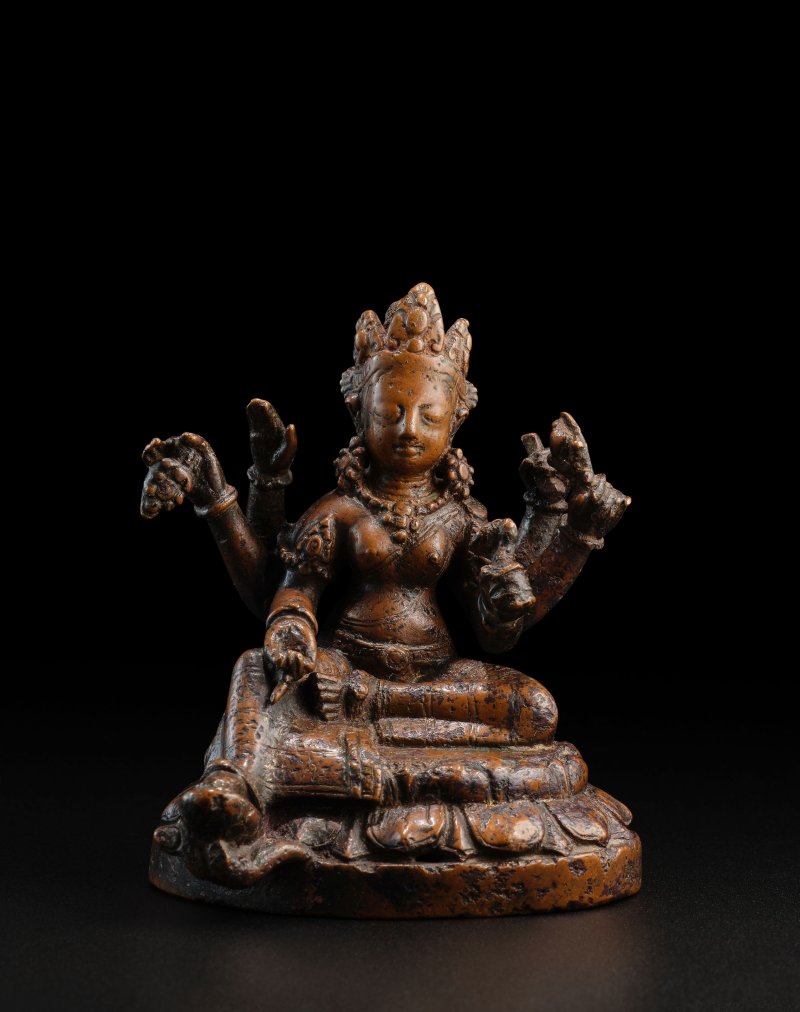
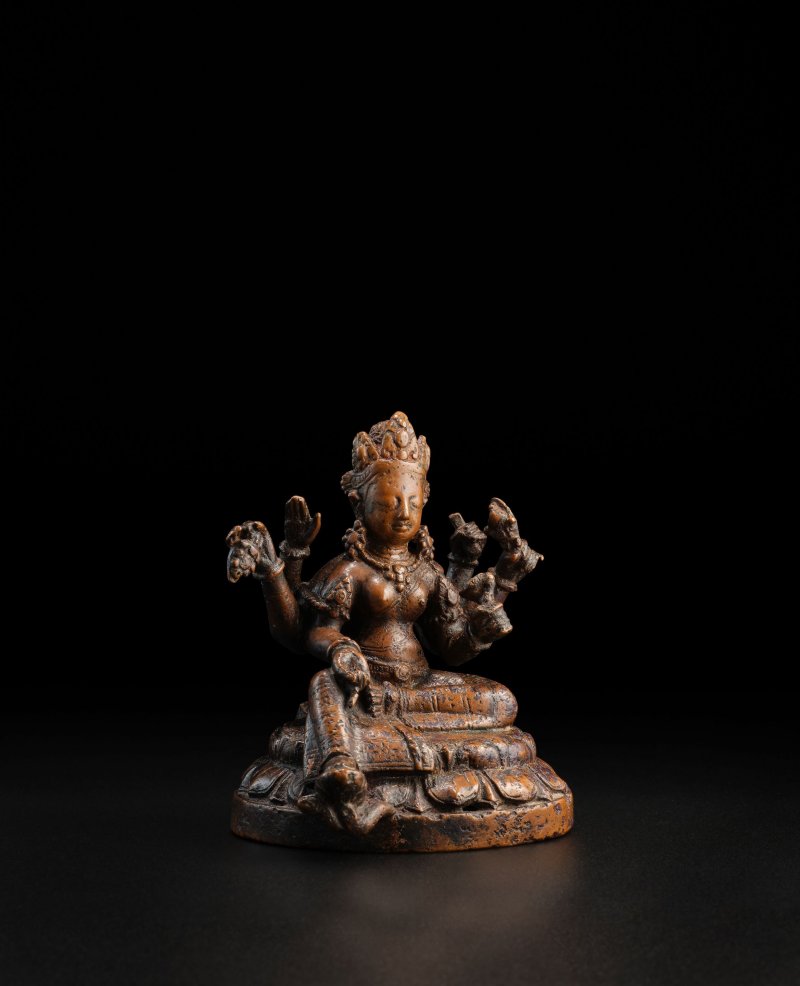
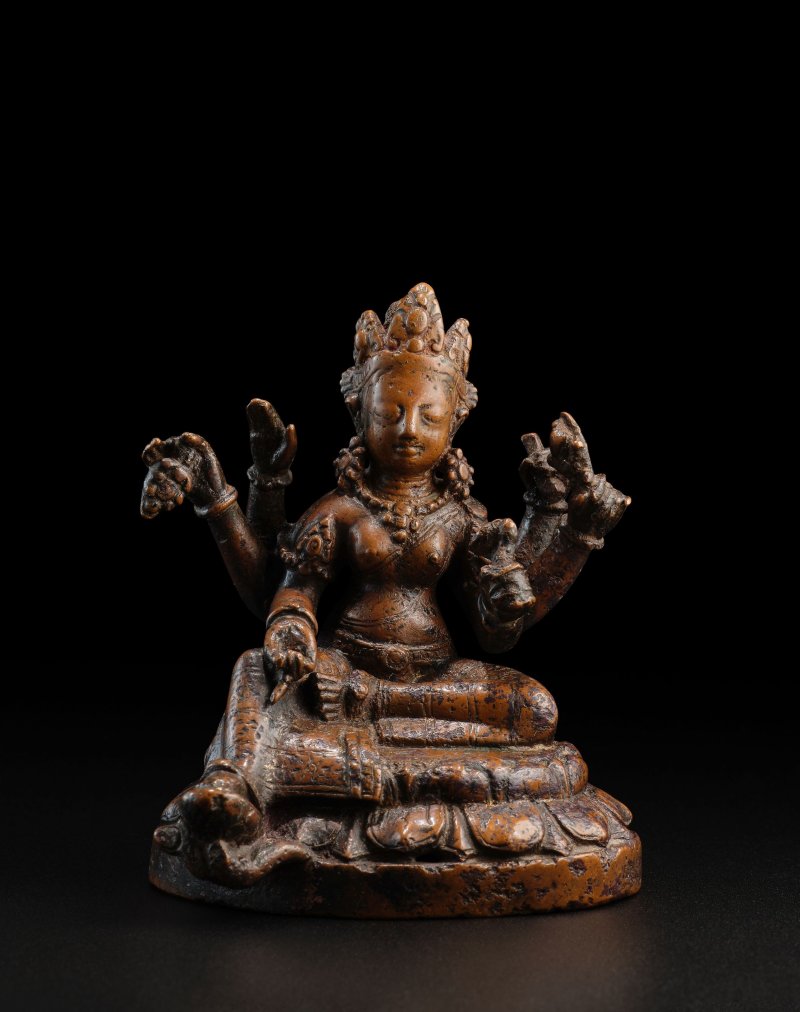
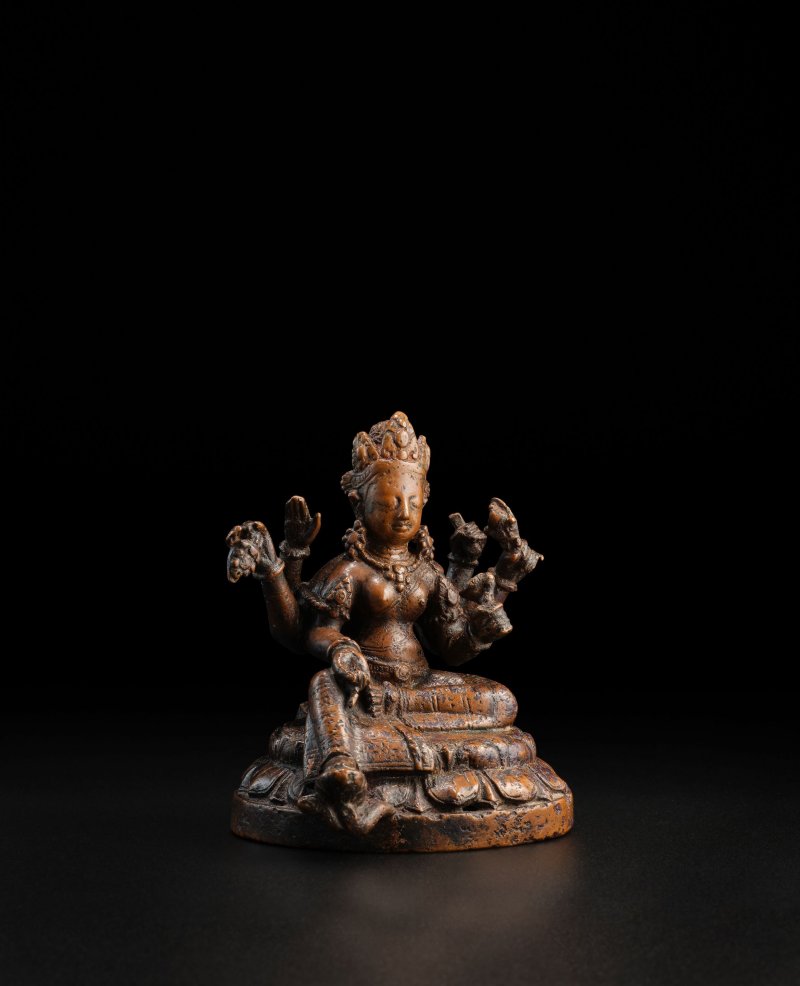
尼泊爾 十世紀 財源天母銅像 | A COPPER ALLOY FIGURE OF VASUDHARA
年代
NEPAL, 10TH CENTURY
起拍价
HKD 150,000
估值区间
HKD 150000 - 200000
尺寸
未知
品相
未知
更多信息
NEPAL, 10TH CENTURY
Himalayan Art Resources item no. 8884
12.3 cm (4 7/8 in.) high
Footnotes
尼泊爾 十世紀 財源天母銅像
Provenance
Collection de Madame S., acquired between 1970-1980
Cornette de Saint Cyr, Paris, 9 June 2015, lot 56
Vajra Alsop, 2017
John and Karina Stewart Collection
Vasudhara, the bodhisattva of abundance and prosperity, is seated in the graceful lalitasana posture, her torso subtly curved in a relaxed, fluid manner that imparts a sense of serene composure. Her six arms are arranged in varied gestures, each bearing distinct attributes, all symbolic of her bestowal of both spiritual wisdom and material prosperity.
Her coiffure is crowned with a foliated tiara, while her face radiates a gentle, tranquil expression. Floral ornamentation adorns her ears, and her body is further embellished with delicate necklaces and armlets, bracelets and belt. The soft modeling of her features, combined with a high bosom, tapered waist, and broad hips, reflects the enduring influence of the idealized feminine form developed in Nepal's Licchavi-period sculpture (5th-8th centuries).
Several stylistic traits point to a c. 10th century attribution: her physique, the elegant drape of the upper garment over her left shoulder, and the comparatively thin casting technique. Close comparisons may be drawn with a 9th-century goddess published in Pal, , 1985, pp. 92-93, fig. S10 and a 10th-century Vasudhara from the Zimmerman Collection (Pal, , 1991, pp. 43-44, no. 8). Similar features persisted into the following century and may also be observed in the later 11th-century Uma-Maheshvara in the Metropolitan Museum of Art, New York (1982.456.2).
Himalayan Art Resources item no. 8884
12.3 cm (4 7/8 in.) high
Footnotes
尼泊爾 十世紀 財源天母銅像
Provenance
Collection de Madame S., acquired between 1970-1980
Cornette de Saint Cyr, Paris, 9 June 2015, lot 56
Vajra Alsop, 2017
John and Karina Stewart Collection
Vasudhara, the bodhisattva of abundance and prosperity, is seated in the graceful lalitasana posture, her torso subtly curved in a relaxed, fluid manner that imparts a sense of serene composure. Her six arms are arranged in varied gestures, each bearing distinct attributes, all symbolic of her bestowal of both spiritual wisdom and material prosperity.
Her coiffure is crowned with a foliated tiara, while her face radiates a gentle, tranquil expression. Floral ornamentation adorns her ears, and her body is further embellished with delicate necklaces and armlets, bracelets and belt. The soft modeling of her features, combined with a high bosom, tapered waist, and broad hips, reflects the enduring influence of the idealized feminine form developed in Nepal's Licchavi-period sculpture (5th-8th centuries).
Several stylistic traits point to a c. 10th century attribution: her physique, the elegant drape of the upper garment over her left shoulder, and the comparatively thin casting technique. Close comparisons may be drawn with a 9th-century goddess published in Pal, , 1985, pp. 92-93, fig. S10 and a 10th-century Vasudhara from the Zimmerman Collection (Pal, , 1991, pp. 43-44, no. 8). Similar features persisted into the following century and may also be observed in the later 11th-century Uma-Maheshvara in the Metropolitan Museum of Art, New York (1982.456.2).
常见问题
这件尼泊爾 十世紀 財源天母銅像 | A COPPER ALLOY FIGURE OF VASUDHARA的成交价是多少?
落槌价为 预展中。 成交价为 预展中。