
拍品信息
拍品名称
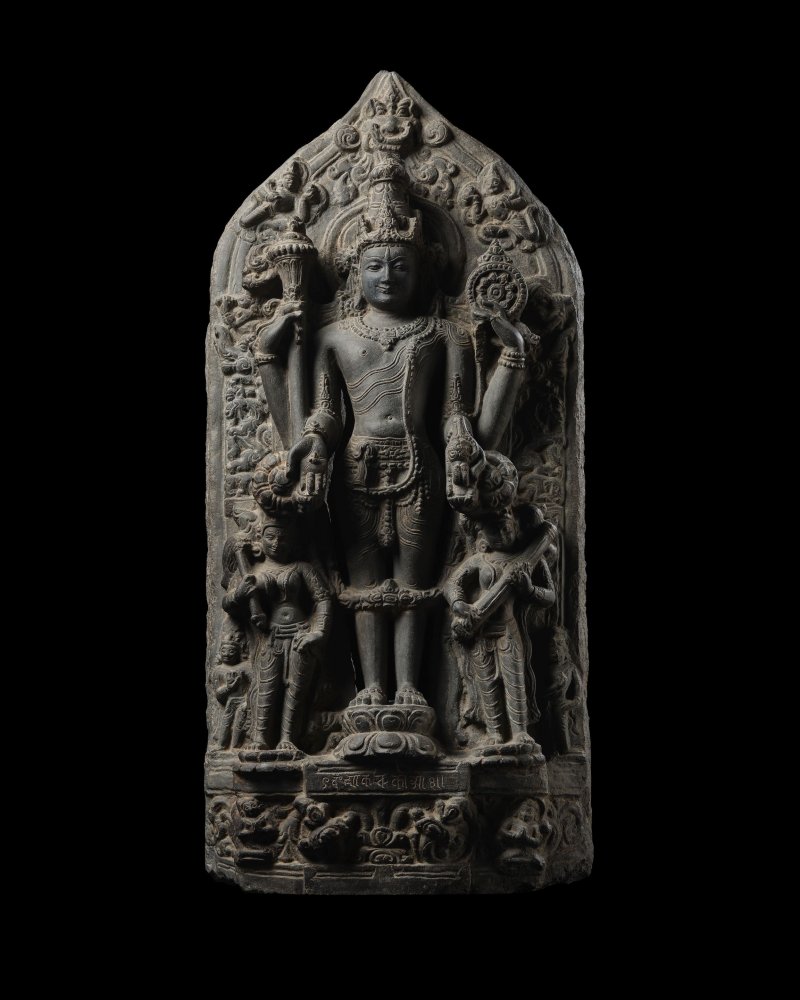
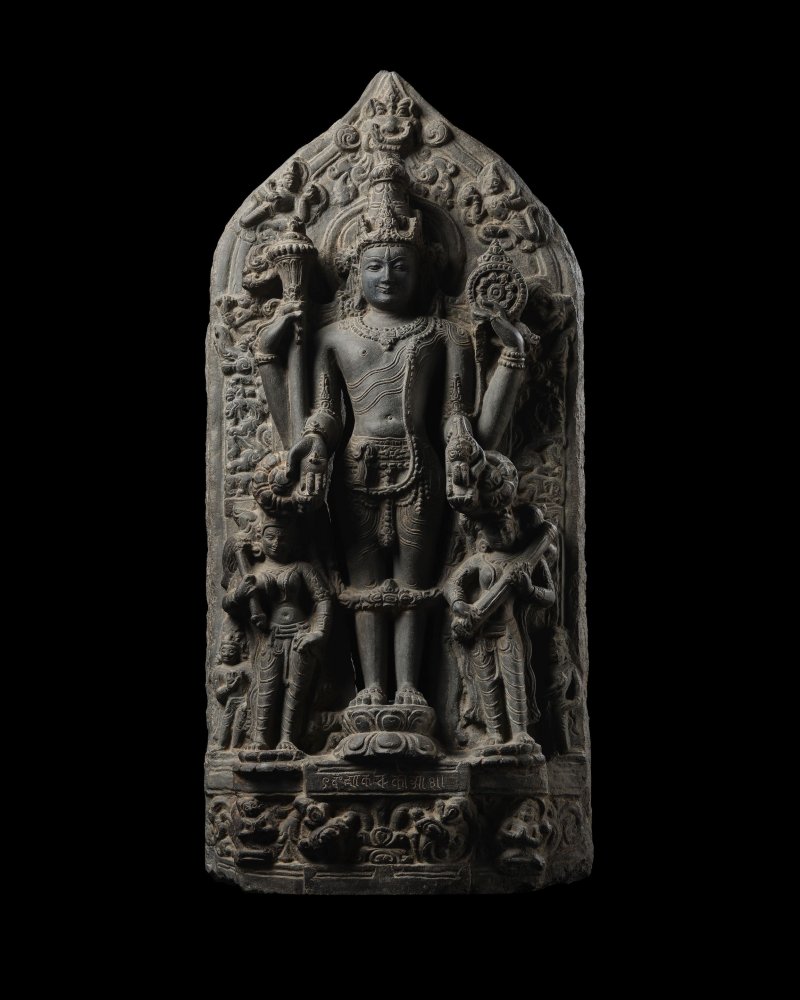
印度東北部 帕拉時期 十二世紀 黑石毗濕奴像 | A BLACKSTONE STELE OF VISHNU
年代
NORTHEASTERN INDIA, PALA PERIOD, 12TH CENTURY
起拍价
HKD 400,000
估值区间
HKD 400000 - 600000
尺寸
未知
品相
未知
更多信息
NORTHEASTERN INDIA, PALA PERIOD, 12TH CENTURY
Himalayan Art Resources item no. 207021
55 cm (21 5/8 in.) high
Footnotes
印度東北部 帕拉時期 十二世紀 黑石毗濕奴像
Provenance
Private California Collection, acquired in the 1970s
Sotheby's, New York, 19 March 2014, lot 48
Private American Collection
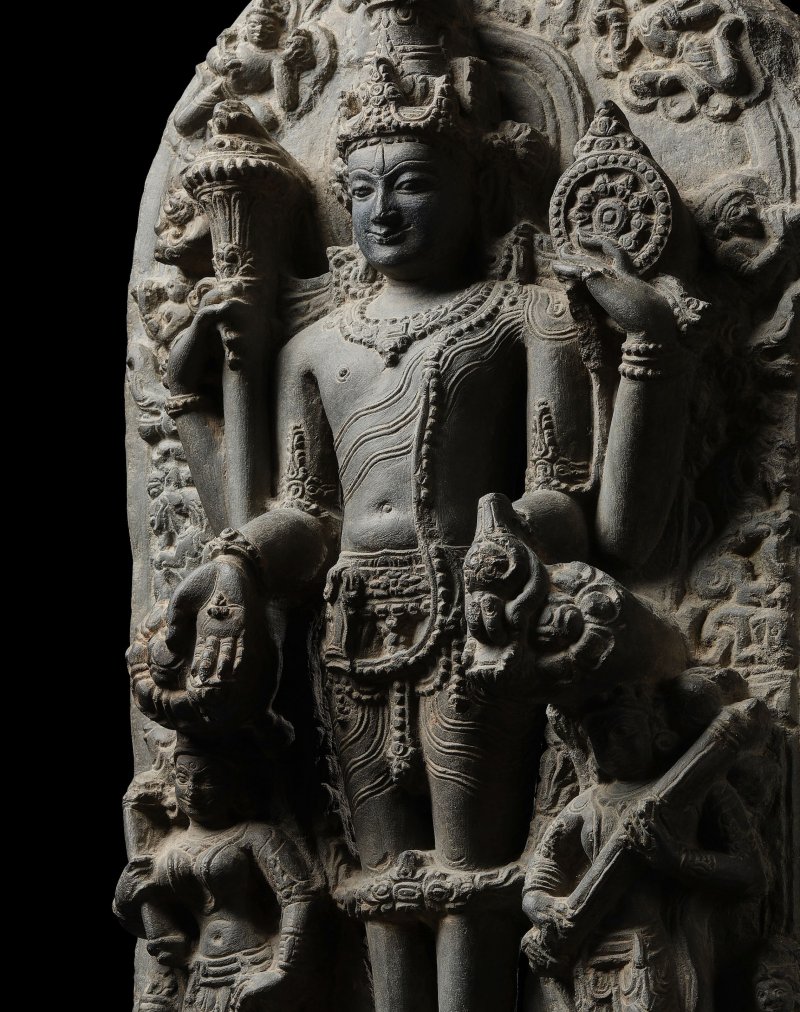
Vishnu is one of the principal deities of Hinduism, identifiable by his formal frontal stance, tall, mitered crown, and distinctive attributes. As the Preserver within the Hindu trinity alongside Brahma and Shiva, he is responsible for maintaining cosmic order and balance. When this order is threatened, Vishnu descends to earth in one of his many forms (avatars) to restore harmony and protect the world. Here, he is represented in his transcendent divine form rather than in one of his earthly incarnations.
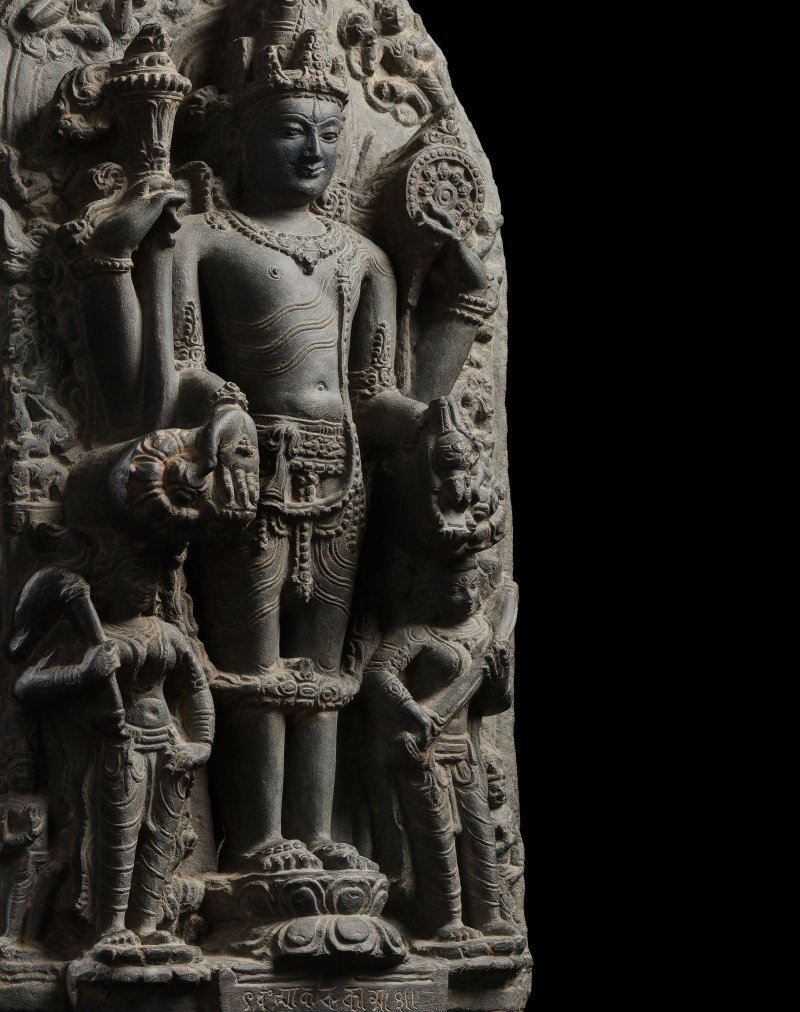
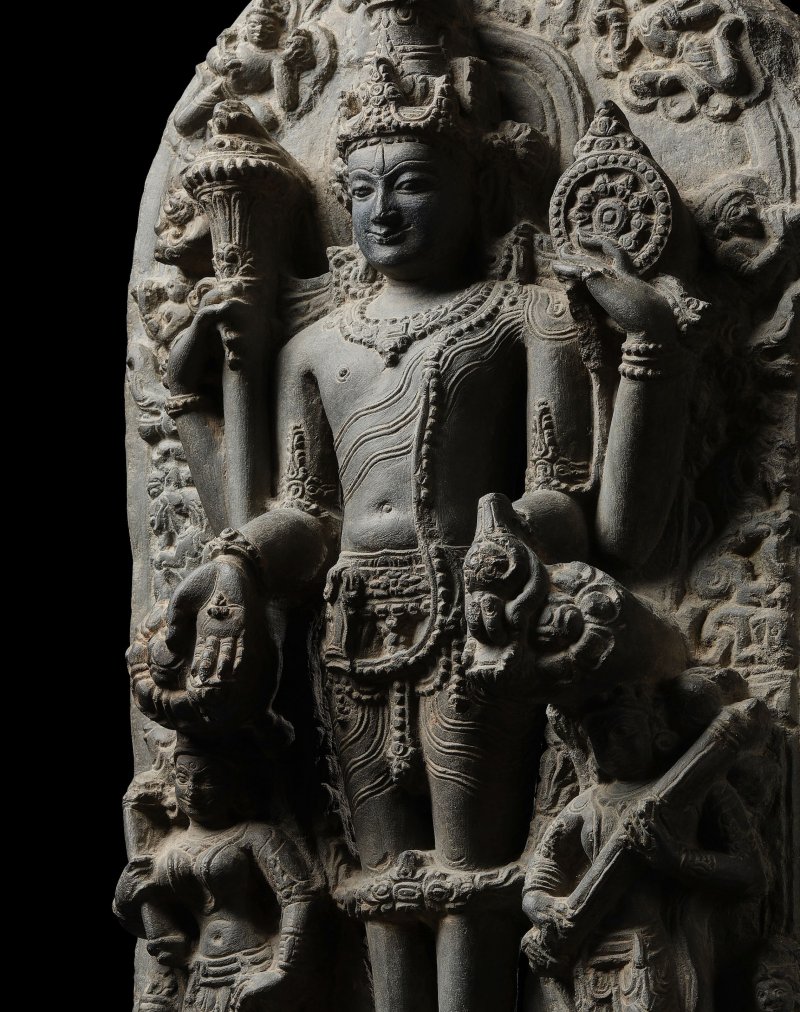
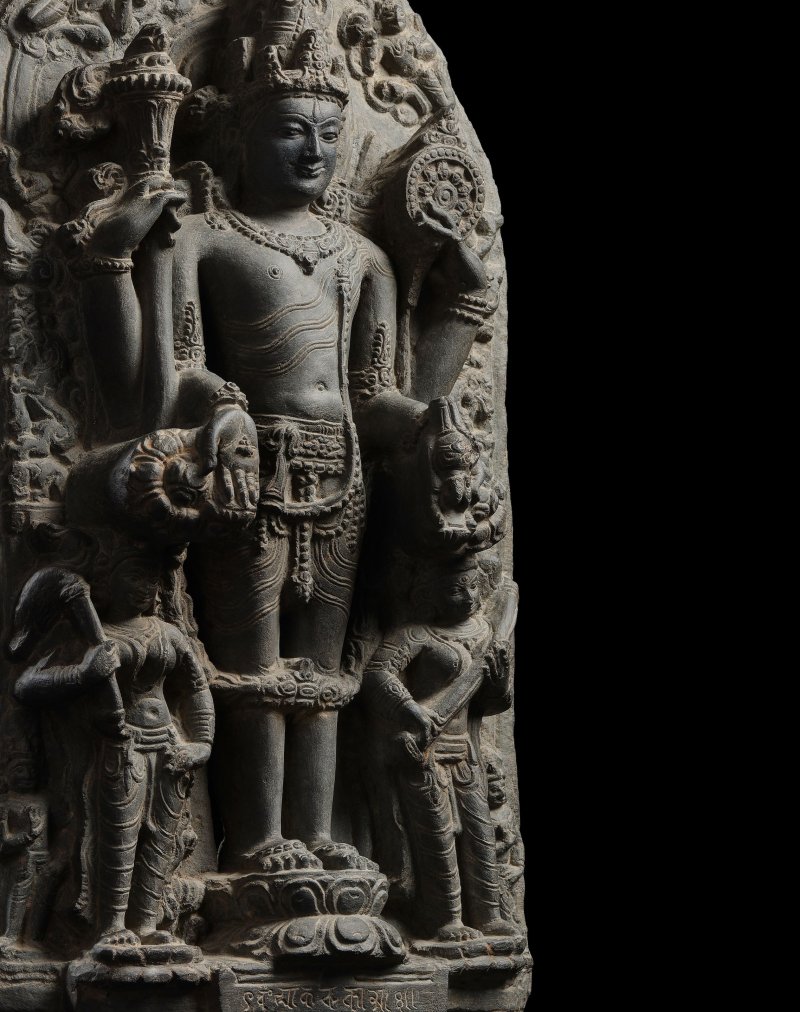
He holds a mace, chakra, and conch, while his lower right hand is shown in , the gesture of charity or boon-giving, with a lotus carved into the palm. His consorts, Lakshmi and Sarasvati, stand on either side, further flanked by donor figures. The throne back, with its makara heads, leogryphs, and protective mask at the apex, derives from earlier Indian sculptural traditions and is a format widely employed in Pala-period sculpture. Celestial garland bearers hover above, while kneeling devotees below raise their hands in prayer.
The composition is comparable to a larger Vishnu with Consorts stele in the National Museum of Asian Art, Smithsonian Institution (F1927.7).
Himalayan Art Resources item no. 207021
55 cm (21 5/8 in.) high
Footnotes
印度東北部 帕拉時期 十二世紀 黑石毗濕奴像
Provenance
Private California Collection, acquired in the 1970s
Sotheby's, New York, 19 March 2014, lot 48
Private American Collection
Vishnu is one of the principal deities of Hinduism, identifiable by his formal frontal stance, tall, mitered crown, and distinctive attributes. As the Preserver within the Hindu trinity alongside Brahma and Shiva, he is responsible for maintaining cosmic order and balance. When this order is threatened, Vishnu descends to earth in one of his many forms (avatars) to restore harmony and protect the world. Here, he is represented in his transcendent divine form rather than in one of his earthly incarnations.
He holds a mace, chakra, and conch, while his lower right hand is shown in , the gesture of charity or boon-giving, with a lotus carved into the palm. His consorts, Lakshmi and Sarasvati, stand on either side, further flanked by donor figures. The throne back, with its makara heads, leogryphs, and protective mask at the apex, derives from earlier Indian sculptural traditions and is a format widely employed in Pala-period sculpture. Celestial garland bearers hover above, while kneeling devotees below raise their hands in prayer.
The composition is comparable to a larger Vishnu with Consorts stele in the National Museum of Asian Art, Smithsonian Institution (F1927.7).
常见问题
这件印度東北部 帕拉時期 十二世紀 黑石毗濕奴像 | A BLACKSTONE STELE OF VISHNU的成交价是多少?
落槌价为 预展中。 成交价为 预展中。