
拍品信息
拍品名称
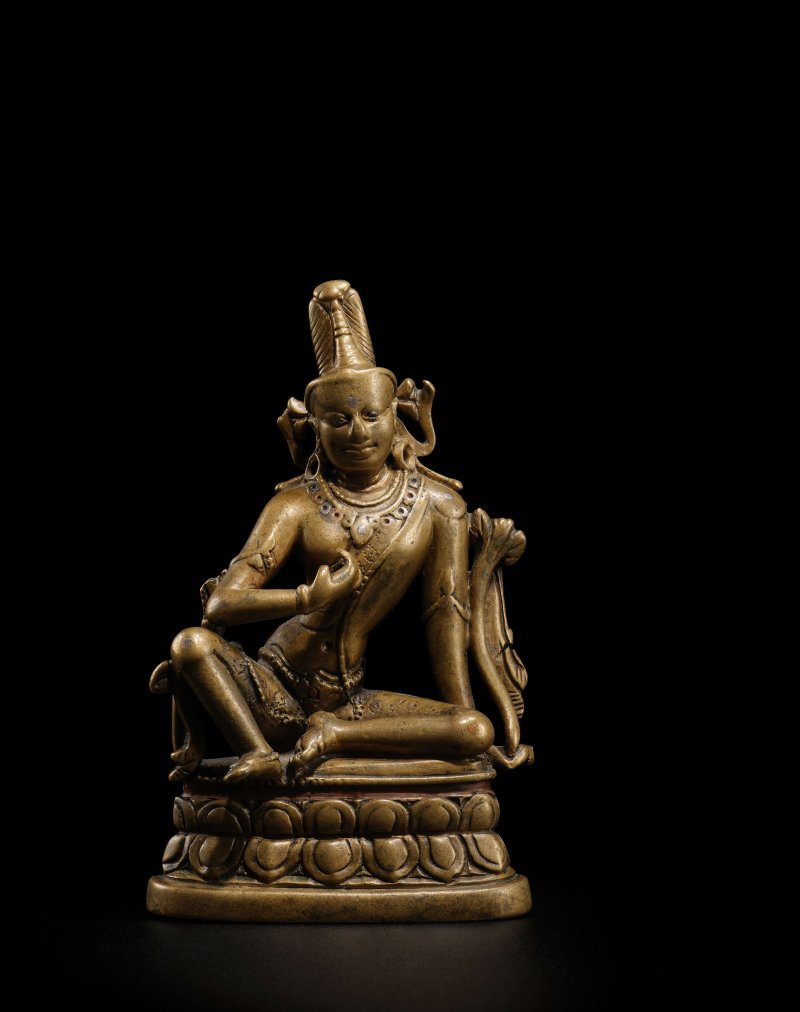
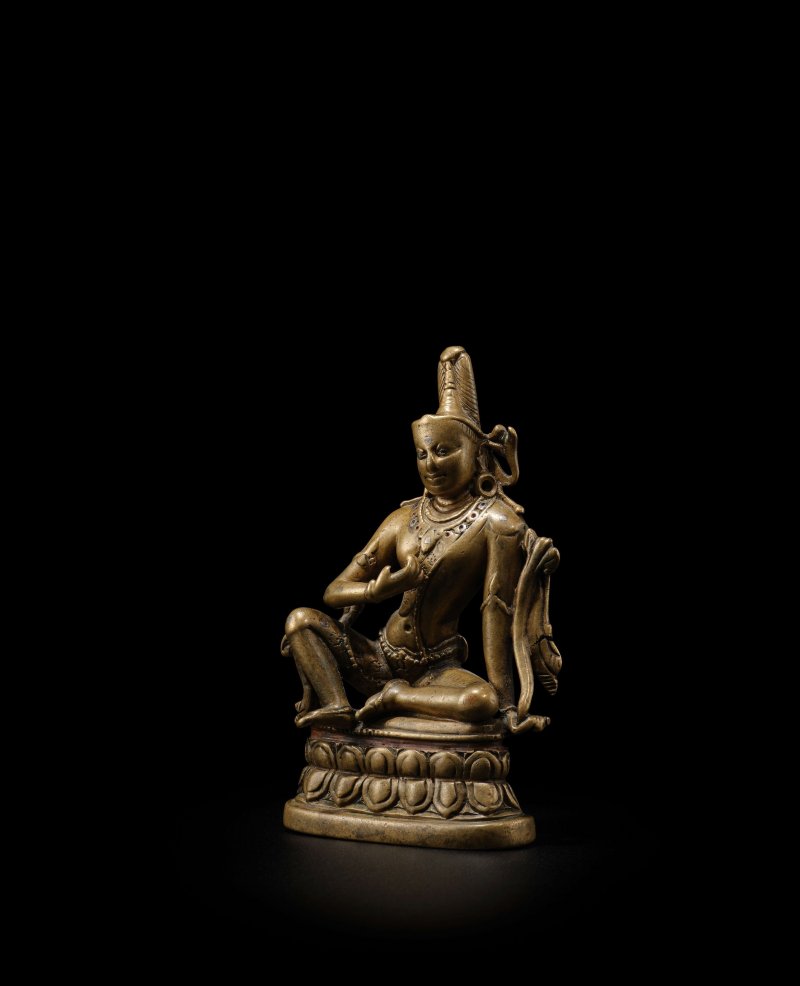
印度東北部 帕拉時期 十一/十二世紀 錯銀錯紅銅彌勒銅像 | A SILVER AND COPPER INLAID COPPER ALLOY FIGURE OF MAITREYA
年代
NORTHEASTERN INDIA, PALA PERIOD, 11TH/12TH CENTURY
起拍价
HKD 150,000
估值区间
HKD 150000 - 200000
尺寸
未知
品相
未知
更多信息
NORTHEASTERN INDIA, PALA PERIOD, 11TH/12TH CENTURY
Himalayan Art Resources item no. 8032
9.8 cm (3 7/8 in.) high
Footnotes
印度東北部 帕拉時期 十一/十二世紀 錯銀錯紅銅彌勒銅像
Published
Kapoor Galleries, Arcane Masters, 2019, cat. 21.
Provenance
Private European Collection, acquired in the 1980s–1990S
Kapoor Galleries, New York
The stupa nestled within his piled chignon marks this bodhisattva as Maitreya, the buddha of the age to come, who here inclines toward the viewer with a smile of quiet benevolence. His regalia is worked in inlaid silver and copper, the metals catching and leading the eye down the length of the necklace, across the modelled chest and into the incised folds of the dhoti. The naturalism of the body—its softness, its sensuous ease—belongs unmistakably to the late Pala idiom of eastern India in the 11th and 12th centuries, when the human form was rendered with a suppleness rarely equalled. The gesture is the entry's quiet surprise: rather than holding both hands in the turning of the wheel of the law, or letting the right fall open across the knee, Maitreya lifts his right hand before his chest while the left descends to rest upon the lotus base—an unusual and arresting variation on the familiar type.
For comparison, see a Pala bronze Maitreya formerly in the John and Berthe Ford Collection (Pal, , 2001, pp. 106–107, no. 43), and another formerly in the Lahiri Collection (Christie's, New York, 15 March 2016, lot 59). Compare also a Maitreya formerly in the Nyingjei Lam Collection (Bonhams, New York, 23 September 2020, lot 604), whose base is set with the same short, plump lotus petals seen here.
Himalayan Art Resources item no. 8032
9.8 cm (3 7/8 in.) high
Footnotes
印度東北部 帕拉時期 十一/十二世紀 錯銀錯紅銅彌勒銅像
Published
Kapoor Galleries, Arcane Masters, 2019, cat. 21.
Provenance
Private European Collection, acquired in the 1980s–1990S
Kapoor Galleries, New York
The stupa nestled within his piled chignon marks this bodhisattva as Maitreya, the buddha of the age to come, who here inclines toward the viewer with a smile of quiet benevolence. His regalia is worked in inlaid silver and copper, the metals catching and leading the eye down the length of the necklace, across the modelled chest and into the incised folds of the dhoti. The naturalism of the body—its softness, its sensuous ease—belongs unmistakably to the late Pala idiom of eastern India in the 11th and 12th centuries, when the human form was rendered with a suppleness rarely equalled. The gesture is the entry's quiet surprise: rather than holding both hands in the turning of the wheel of the law, or letting the right fall open across the knee, Maitreya lifts his right hand before his chest while the left descends to rest upon the lotus base—an unusual and arresting variation on the familiar type.
For comparison, see a Pala bronze Maitreya formerly in the John and Berthe Ford Collection (Pal, , 2001, pp. 106–107, no. 43), and another formerly in the Lahiri Collection (Christie's, New York, 15 March 2016, lot 59). Compare also a Maitreya formerly in the Nyingjei Lam Collection (Bonhams, New York, 23 September 2020, lot 604), whose base is set with the same short, plump lotus petals seen here.
常见问题
这件印度東北部 帕拉時期 十一/十二世紀 錯銀錯紅銅彌勒銅像 | A SILVER AND COPPER INLAID COPPER ALLOY FIGURE OF MAITREYA的成交价是多少?
落槌价为 预展中。 成交价为 预展中。