Lot 18 北周/隋 彩繪石雕菩薩立像 | TRÈS RARE STATUE DE BODHISATTVA EN PIERRE SCULPTÉE POLYCHROME
落槌价
预展中
成交价
预展中
| 拍卖公司 | 邦瀚斯 |
|---|---|
| 拍卖时间 | 2026年12月10日 |
拍品信息
拍品名称
北周/隋 彩繪石雕菩薩立像 | TRÈS RARE STATUE DE BODHISATTVA EN PIERRE SCULPTÉE POLYCHROME
年代
北周/隋
起拍价
未知
估值区间
EUR 150,000–250,000
尺寸
54.3 cm (21 1/2 in) high
品相
未知
更多信息
TRÈS RARE STATUE DE BODHISATTVA EN PIERRE SCULPTÉE POLYCHROME
Dynastie des Zhou du Nord (557-581) / dynastie Sui (589-618)
A MAGNIFICENT AND VERY RARE POLYCHROMED STONE FIGURE OF A BODHISATTVA
Northern Zhou Dynasty / Sui Dynasty
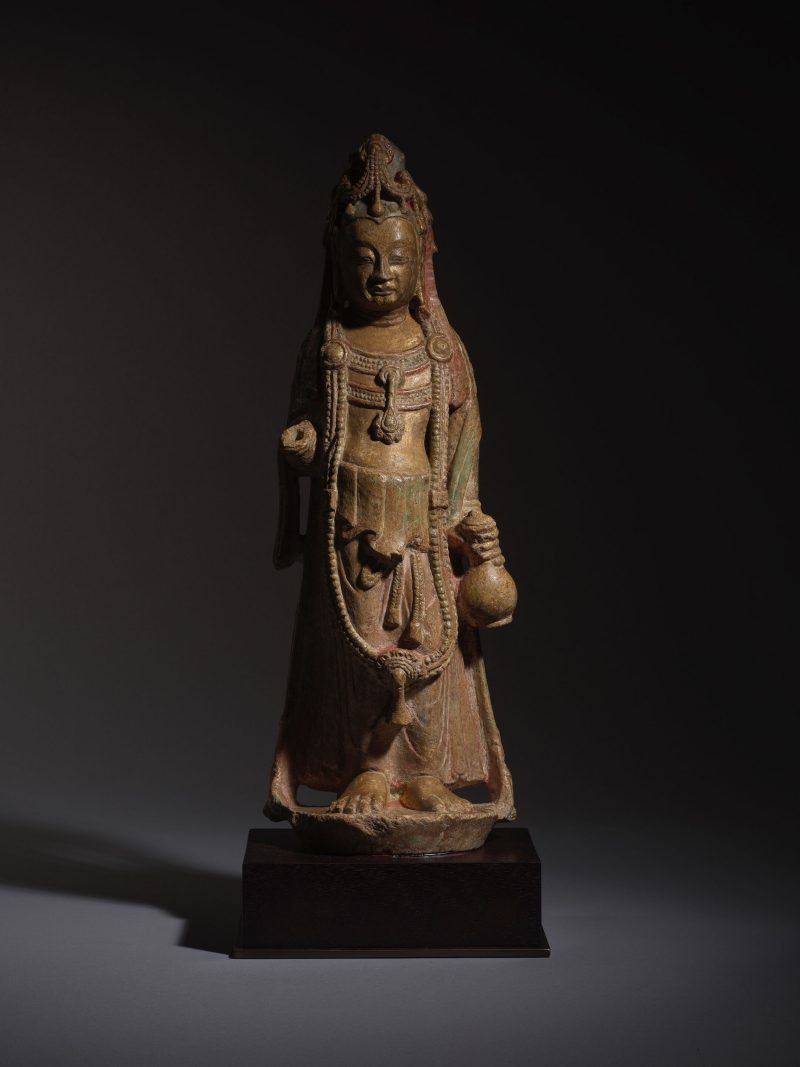
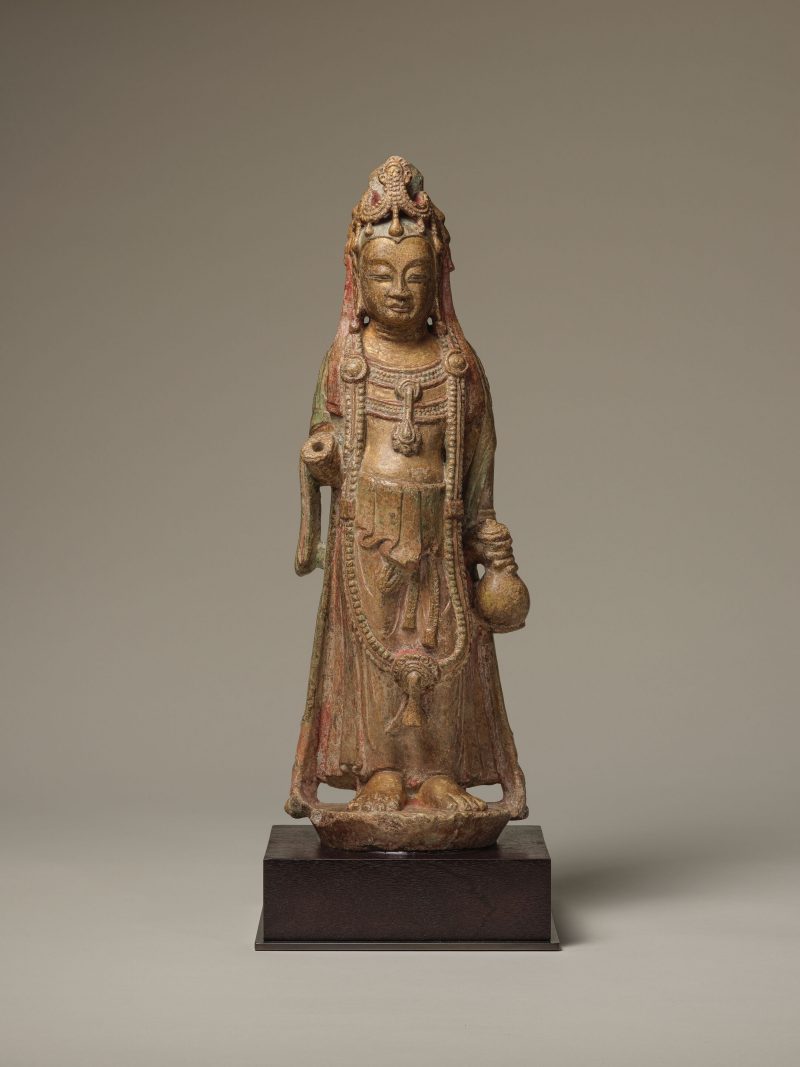
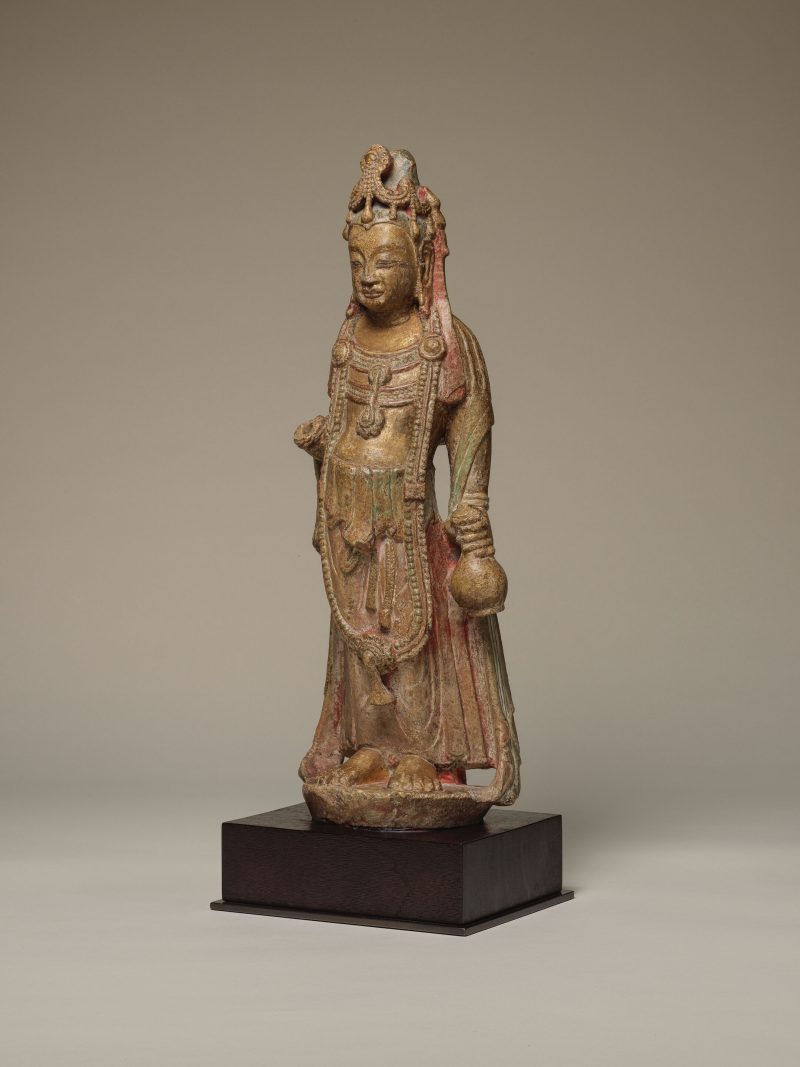
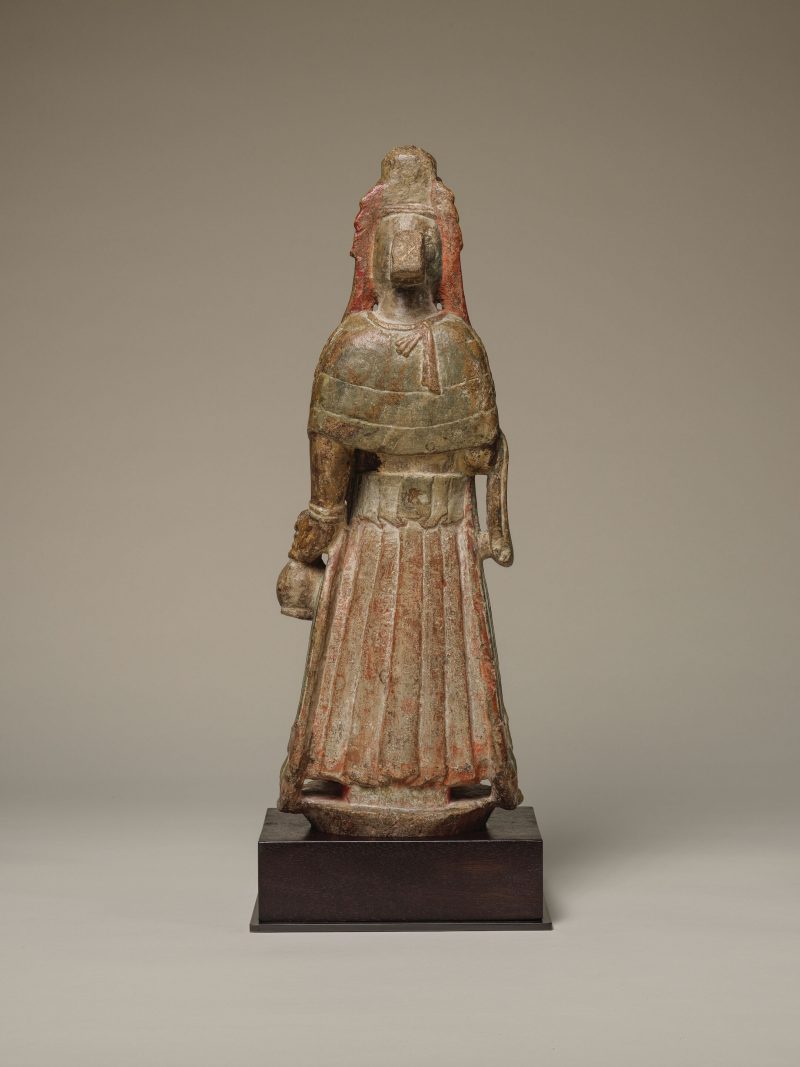
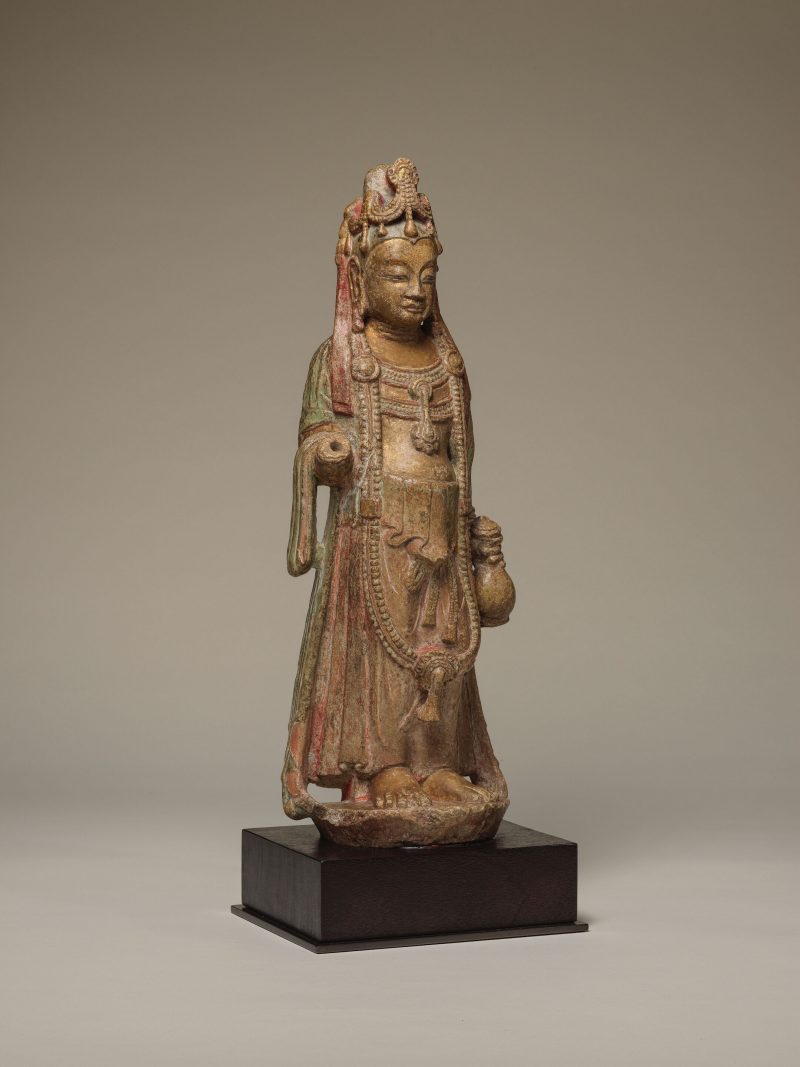
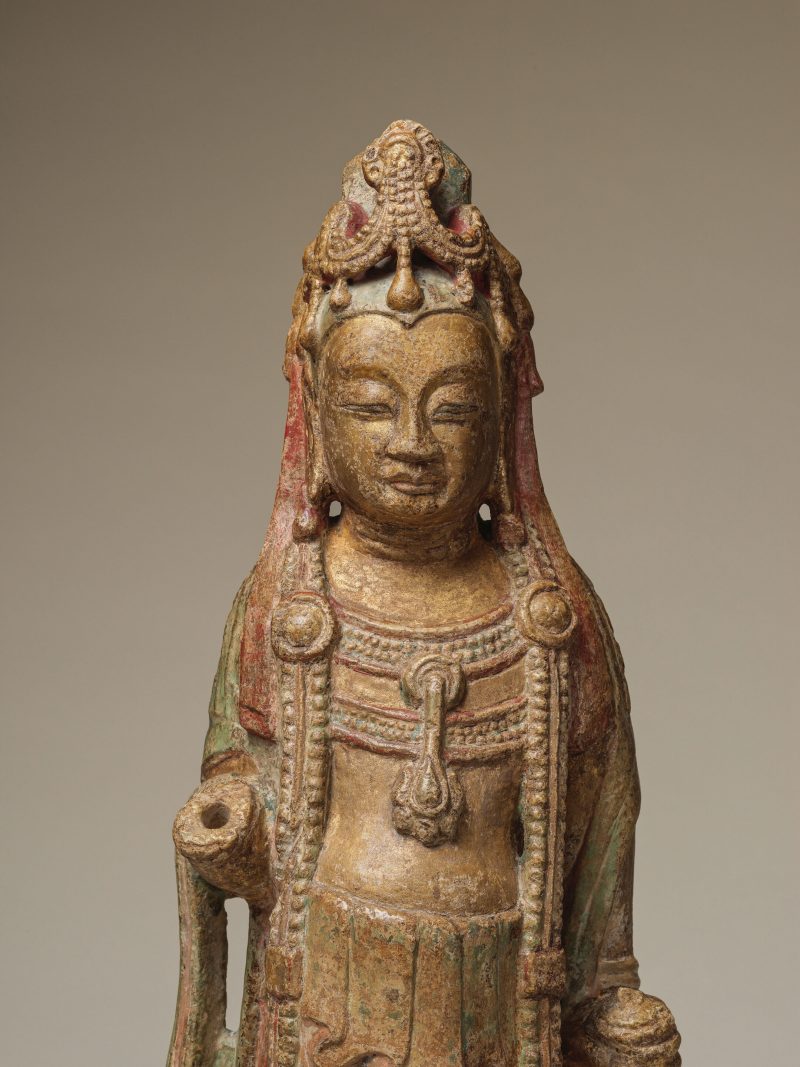
Standing upright, the body slightly turned and swaying to the right, dressed in fine, flowing robes draped around the shoulders and arms, folded over his waist and tied below, gathering in loose folds above and beside his bare feet, his left arm holding a vase and his right arm raised, the face serene, gazing ahead with eyes half-closed in meditation, flanked by pendulous ears adorned with heavy earrings, a sumptuous bejewelled crown over a high chignon and long tasselled and bejewelled necklaces adorning his chest, the back of the head with a bracket section for attachment, with red, green and black pigment and gilding, later base.
54.3 cm (21 1/2 in) high (2).
北周/隋 彩繪石雕菩薩立像
Provenance:
Collection of Robert Rousset (1901-1981), Paris, according to a family note, acquired from Tchou Teh Hoo, Beijing, 10 January 1925
Jean-Pierre Rousset, Paris (1936-2021)
Bonhams Paris, 25 October 2022, lot 238
Gisèle Croës Arts d'Extrême Orient, Brussels
來源:
巴黎Robert Rousset(1901-1981)舊藏,据家族筆記,于1925年1月10日在北京從Tchou Teh Hoo處獲得
巴黎Jean-Pierre Rousset (1936-2021)
巴黎邦瀚斯,2022年10月25日,拍品編號238
Gisèle Croës Arts d'Extrême Orient,布魯塞爾
This charming figure of a bodhisattva represents Avalokiteshvara depicted with a vase or bottle held in its left hand filled with 'pure water', representing one of the eight symbols of good fortune. We may assume that the now missing right arm and hand held a willow branch used to disperse and sprinkle the divine water.
Stylistically, this figure dates to the late 6th century, combining elements of the Northern Zhou sculptural style with that of the following Sui dynasty. The face is imbued with a subtle plumpness and warmth characterising sculpture of the Northern Zhou period while the sumptuous crown and extravagant bejewelled necklaces indicate the influence of Central Asian fashion popular among the Sui aristocracy.
The Sui rulers unified China in 589 AD after centuries of division into Northern and Southern dynasties. The continued Imperial patronage of Buddhism under the Sui dynasty illustrates the unified decorative style that emerged when craftsmen from the north and south combined their artistic and stylistic repertoire as seen in this figure of a bodhisattva. Similar examples in museum collections include two limestone figures of bodhisattvas in the Asian Art Museum, San Francisco (accession nos. B60S37 and B60S423), and two dated limestone figures of bodhisattva Avalokiteshvara in the collection of the Freer Gallery of Art, Washington, D.C. (accession no. FSC-S-52 and S2012.9.4531).
以下内容由AI翻译:
【描述】
直立站立,身体微微向右倾斜,穿着精致的飘逸长袍,披在肩膀和手臂上,袍服在腰间折叠束系,宽松衣褶垂于裸足上方及两侧,左臂持一花瓶,右臂举起,面容宁静,半闭着眼睛冥想,两侧垂耳佩戴重耳环,高髻上戴着华丽的珠宝冠饰,胸前装饰着长长的流苏和珠宝项链,头部后方有用于固定的支架部分,带有红色、绿色和黑色颜料及鎏金,底座为后期添加。
这尊迷人的菩萨像代表了手持花瓶或瓶子的观音菩萨,左手所持的花瓶或瓶子装有“纯净水”,象征八吉祥之一。可推测现已缺失的右臂和右手原或执柳枝,用于洒布神水。
从风格上看,这尊造像可以追溯到6世纪晚期,结合了北周雕塑风格与随后的隋朝元素。面部呈现出北周时期雕塑特有的微妙丰满和温暖,而华丽的冠饰和奢华的珠宝项链则显示出中亚时尚对隋朝贵族的影响。
隋朝统治者在公元589年统一中国,结束了南北朝长期分裂的局面。隋朝继续皇室对佛教的支持,体现了当北方和南方工匠结合他们的艺术和风格时出现的统一装饰风格,如这尊菩萨像所示。类似的例子包括旧金山亚洲艺术博物馆收藏的两尊石灰石菩萨像(馆藏编号B60S37和B60S423),以及华盛顿特区弗利尔美术馆收藏的两尊有纪年的石灰石观音菩萨像(馆藏编号FSC-S-52和S2012.9.4531)。
常见问题
这件北周/隋 彩繪石雕菩薩立像 | TRÈS RARE STATUE DE BODHISATTVA EN PIERRE SCULPTÉE POLYCHROME的成交价是多少?
落槌价为 预展中。 成交价为 预展中。
拍品的尺寸是多少?
54.3 cm (21 1/2 in) high