
拍品信息
拍品名称
藏中 十一/十二世紀 上師傳承、四臂觀音及不動明王唐卡 | A THANGKA OF LINEAGE LAMAS, SHADAKSHARI LOKESHVARA, AND ACHALA
年代
CENTRAL TIBET, 11TH/12TH CENTURY
起拍价
HKD 100,000
估值区间
HKD 100000 - 150000
尺寸
未知
品相
未知
更多信息
CENTRAL TIBET, 11TH/12TH CENTURY
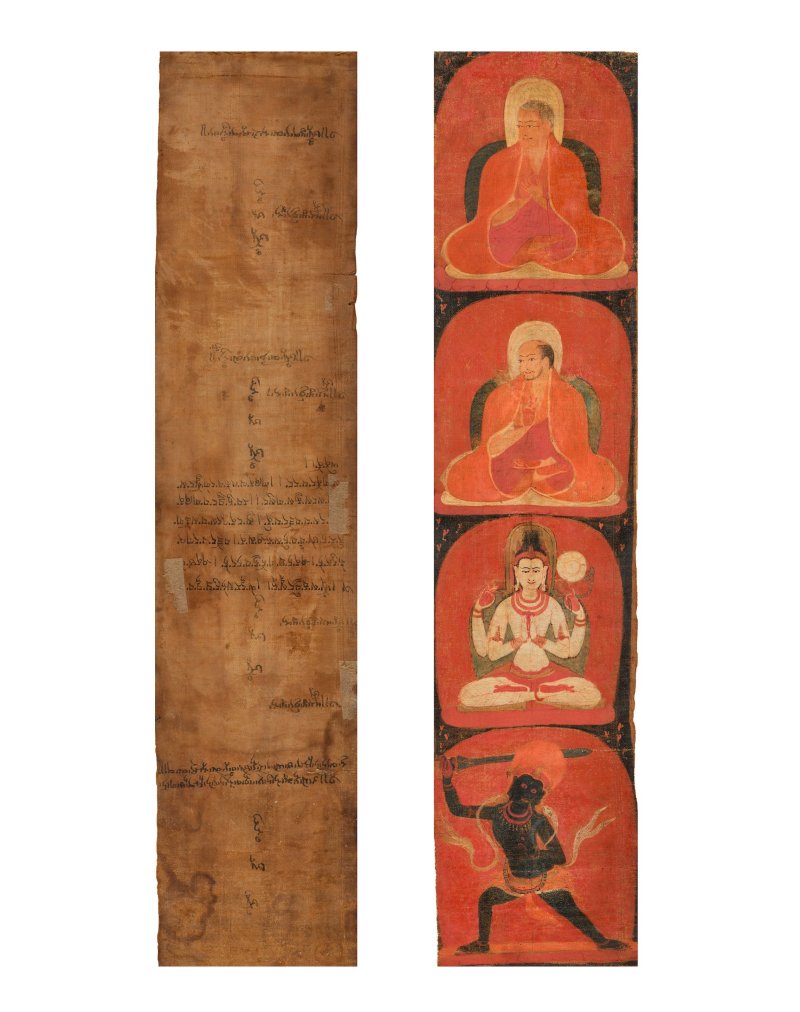
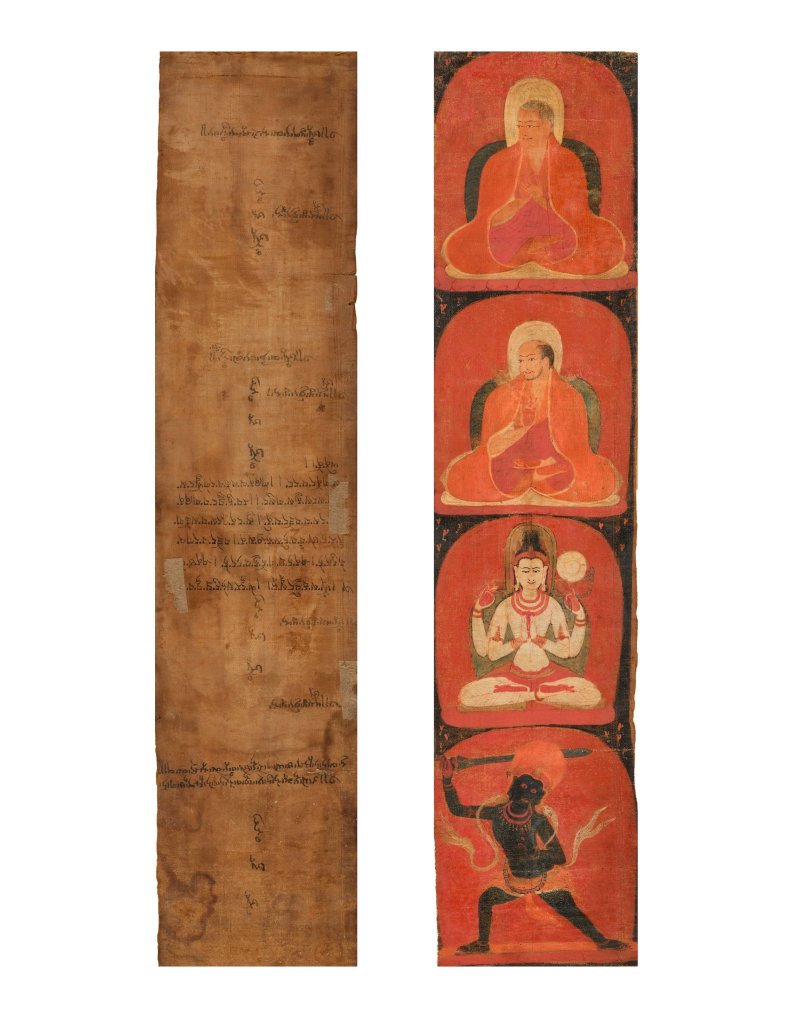
Distemper on cloth; verso inscribed in Tibetan with an 'om, ah, hum' invocation, the ye dharma hetu Buddhist creed, and further consecration mantras.
Himalayan Art Resources item no. 12287
48.7 x 10.7 cm (19 1/8 x 4 1/4 in.)
Footnotes
藏中 十一/十二世紀 上師傳承、四臂觀音及不動明王唐卡
Provenance
Arnold Lieberman, New York, by 1993
John and Karina Stewart Collection, acquired from the above in 2012
The Kadam tradition emerged in Central Tibet during the 11th century following the arrival of the Indian master Atisha (982-1054). Closely associated with the transmission of Atisha's teachings and the activities of his principal disciple, Dromton Gyalwe Jungne (1004/05-1064), early Kadam painting preserves a pictorial language closely indebted to the late Pala tradition of northeastern India and is characterized by hieratic compositions, restrained ornamentation, and an emphasis on lineage transmission.
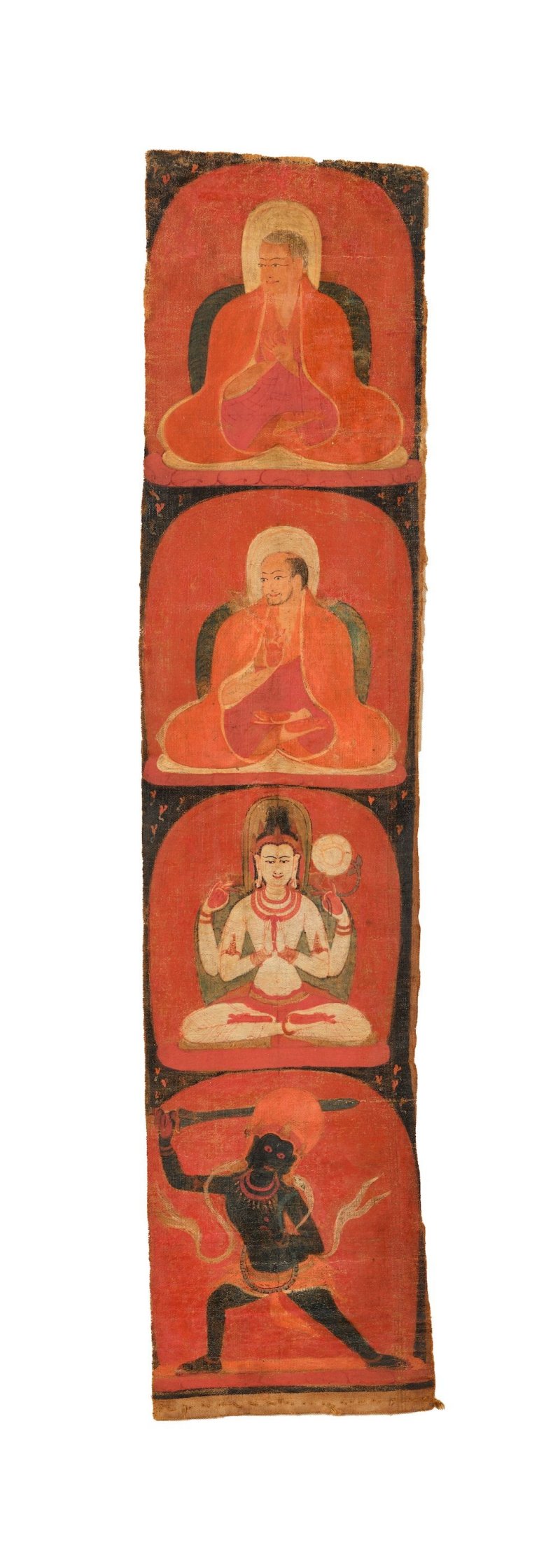
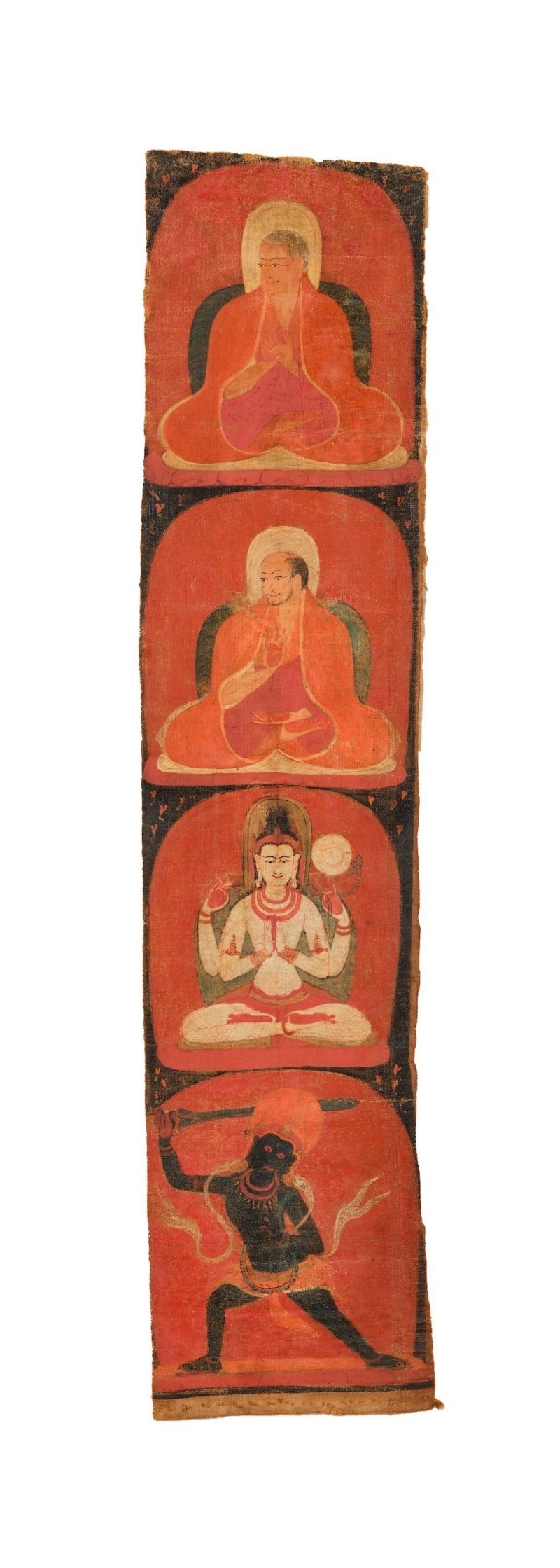
Executed in vermilion, orange, black, white, ochre, and muted green pigments, the composition comprises four vertically aligned rounded niches set against a continuous black ground enriched with small stylized floral motifs. The upper two niches depict seated lineage masters wearing monastic robes and seated upon lotus cushions beneath plain circular halos. Their placement above the principal deity emphasizes the importance of lineage transmission within the Kadam tradition. Beneath them appears Shadakshari Lokeshvara, the four-armed Bodhisattva of Compassion, seated in . His principal hands are joined in , while the secondary right hand holds an and the secondary left supports the stem of a lotus. The lowest niche depicts Achala, standing in and raising the flaming sword of wisdom in his right hand while the left hand is held before the chest.
Particularly close stylistic parallels can be found in two 11th-century Kadam paintings of Achala (HAR 529 & 30529) and a 12th-century Kadam painting depicting Shakyamuni, Shadakshari Lokeshvara, Achala, and Green Tara (HAR 12289), all of which exhibit the same restrained aesthetic, organized composition, and Pala-derived stylistic vocabulary. This, therefore, situates the present thangka among some of the earliest known paintings surviving from Tibet.
Distemper on cloth; verso inscribed in Tibetan with an 'om, ah, hum' invocation, the ye dharma hetu Buddhist creed, and further consecration mantras.
Himalayan Art Resources item no. 12287
48.7 x 10.7 cm (19 1/8 x 4 1/4 in.)
Footnotes
藏中 十一/十二世紀 上師傳承、四臂觀音及不動明王唐卡
Provenance
Arnold Lieberman, New York, by 1993
John and Karina Stewart Collection, acquired from the above in 2012
The Kadam tradition emerged in Central Tibet during the 11th century following the arrival of the Indian master Atisha (982-1054). Closely associated with the transmission of Atisha's teachings and the activities of his principal disciple, Dromton Gyalwe Jungne (1004/05-1064), early Kadam painting preserves a pictorial language closely indebted to the late Pala tradition of northeastern India and is characterized by hieratic compositions, restrained ornamentation, and an emphasis on lineage transmission.
Executed in vermilion, orange, black, white, ochre, and muted green pigments, the composition comprises four vertically aligned rounded niches set against a continuous black ground enriched with small stylized floral motifs. The upper two niches depict seated lineage masters wearing monastic robes and seated upon lotus cushions beneath plain circular halos. Their placement above the principal deity emphasizes the importance of lineage transmission within the Kadam tradition. Beneath them appears Shadakshari Lokeshvara, the four-armed Bodhisattva of Compassion, seated in . His principal hands are joined in , while the secondary right hand holds an and the secondary left supports the stem of a lotus. The lowest niche depicts Achala, standing in and raising the flaming sword of wisdom in his right hand while the left hand is held before the chest.
Particularly close stylistic parallels can be found in two 11th-century Kadam paintings of Achala (HAR 529 & 30529) and a 12th-century Kadam painting depicting Shakyamuni, Shadakshari Lokeshvara, Achala, and Green Tara (HAR 12289), all of which exhibit the same restrained aesthetic, organized composition, and Pala-derived stylistic vocabulary. This, therefore, situates the present thangka among some of the earliest known paintings surviving from Tibet.
常见问题
这件藏中 十一/十二世紀 上師傳承、四臂觀音及不動明王唐卡 | A THANGKA OF LINEAGE LAMAS, SHADAKSHARI LOKESHVARA, AND ACHALA的成交价是多少?
落槌价为 预展中。 成交价为 预展中。