
拍品信息
拍品名称
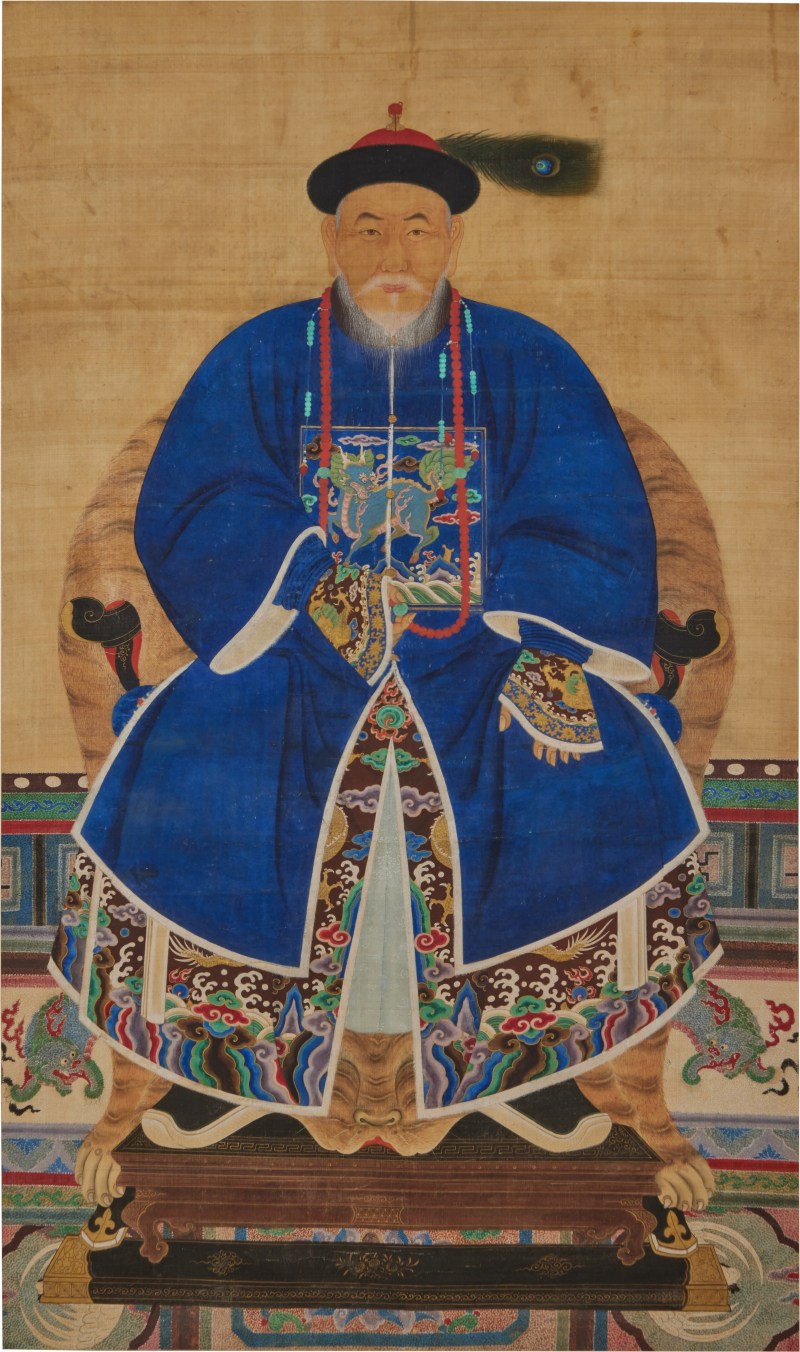
清十九世紀 關天培畫像 設色絹本 鏡框
起拍价
USD 80,000
估值区间
80,000 - 120,000 USD
尺寸
未知
品相
如欲了解本拍品狀況的更多資訊,請聯絡 Drew.Lerner@sothebys.com
更多信息
ink and color on silk, framed
Height 59⅝ in., 151.5 cm; Width 35⅛ in., 89.3 cm
来源:約1970年代得於密歇根州
展览:《The Story of Red: Celebrating Chinese New Year in 2000》,華美協進社,紐約,2000年
图录
说明:Guan Tianpei (1781–1841), known by the courtesy name Zhongyin or style name Zipu, was among the most important Chinese military heroes of the nineteenth century. Born in rural Jiangsu in 1781, Guan soon rose through the imperial examination system, and established himself as a worthy military commander. By 1834, Guan had risen to serve as Commander-in-Chief of the entire Guangdong Naval Forces. Tasked by commissioner Lin Zexu with the prohibition of the opium trade, Guan led his troops to capture British contraband and, as the First Opium War broke out in 1839, mobilized the fleet for full-scale combat.
Falling in the Battle of the Bogue (1841) whilst leading a counter-attack and refusing to retreat, Guan is celebrated today by British and Chinese sources alike for his bravery and sacrifice. Personally mourned by the Daoguang Emperor, who wrote a eulogy in his honor and promoted him posthumously with the titles of Qiduwei and Yunqiwei, Guan is immortalized today in the Loyal and Exemplary Duke Guan Ancestral Hall in Huai'an, Jiangsu province.
At least two other ancestral portraits of Guan Tianpei survive, depicting him in the more conventional nineteenth century style with an almost photorealistic likeness featuring a dark wispy beard and wrinkled features: one preserved in the aforementioned Ancestral Hall and the other, of almost identical design and eulogy, preserved in the Nanjing Museum of Art. In contrast, the present portrait evokes a more abstracted view of the commander as a figure beyond history. Rendered in the softer palette of earlier imperial portraiture with a fine grey beard and an expressive peacock feather symbolising his high rank, the present Guan Tianpei appears as he may have done if had lived to retirement; his gaze soft yet steely, his battle-worn posture tough yet serene.
Height 59⅝ in., 151.5 cm; Width 35⅛ in., 89.3 cm
来源:約1970年代得於密歇根州
展览:《The Story of Red: Celebrating Chinese New Year in 2000》,華美協進社,紐約,2000年
图录
说明:Guan Tianpei (1781–1841), known by the courtesy name Zhongyin or style name Zipu, was among the most important Chinese military heroes of the nineteenth century. Born in rural Jiangsu in 1781, Guan soon rose through the imperial examination system, and established himself as a worthy military commander. By 1834, Guan had risen to serve as Commander-in-Chief of the entire Guangdong Naval Forces. Tasked by commissioner Lin Zexu with the prohibition of the opium trade, Guan led his troops to capture British contraband and, as the First Opium War broke out in 1839, mobilized the fleet for full-scale combat.
Falling in the Battle of the Bogue (1841) whilst leading a counter-attack and refusing to retreat, Guan is celebrated today by British and Chinese sources alike for his bravery and sacrifice. Personally mourned by the Daoguang Emperor, who wrote a eulogy in his honor and promoted him posthumously with the titles of Qiduwei and Yunqiwei, Guan is immortalized today in the Loyal and Exemplary Duke Guan Ancestral Hall in Huai'an, Jiangsu province.
At least two other ancestral portraits of Guan Tianpei survive, depicting him in the more conventional nineteenth century style with an almost photorealistic likeness featuring a dark wispy beard and wrinkled features: one preserved in the aforementioned Ancestral Hall and the other, of almost identical design and eulogy, preserved in the Nanjing Museum of Art. In contrast, the present portrait evokes a more abstracted view of the commander as a figure beyond history. Rendered in the softer palette of earlier imperial portraiture with a fine grey beard and an expressive peacock feather symbolising his high rank, the present Guan Tianpei appears as he may have done if had lived to retirement; his gaze soft yet steely, his battle-worn posture tough yet serene.
常见问题
拍品的品相状况如何?
如欲了解本拍品狀況的更多資訊,請聯絡 Drew.Lerner@sothebys.com
这件拍品的流传来源是什么?
約1970年代得於密歇根州
这件拍品曾在哪些展览中展出过?
《The Story of Red: Celebrating Chinese New Year in 2000》,華美協進社,紐約,2000年
图录
图录