
拍品信息
拍品名称
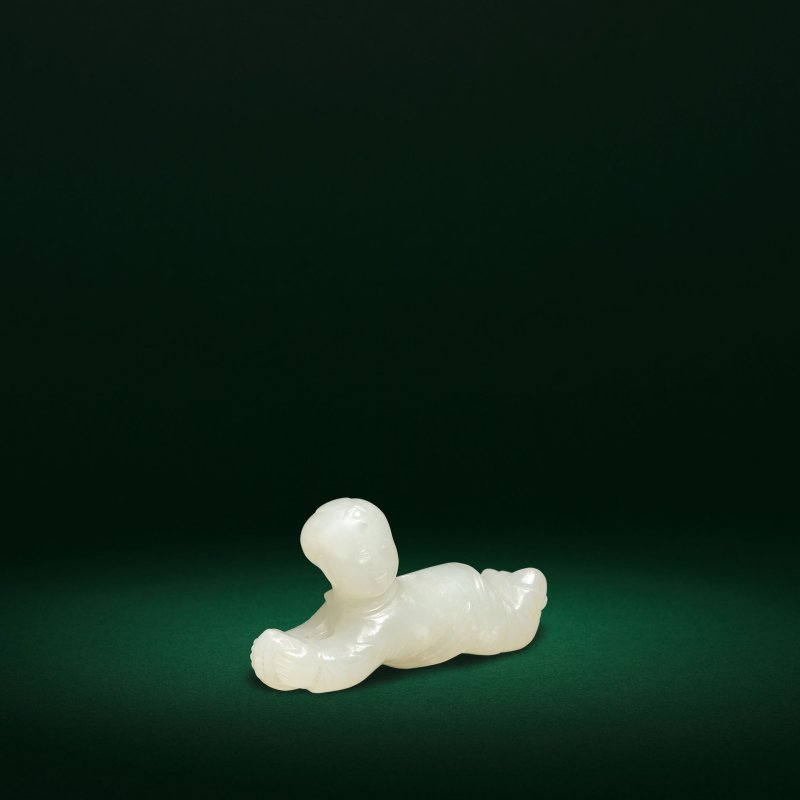
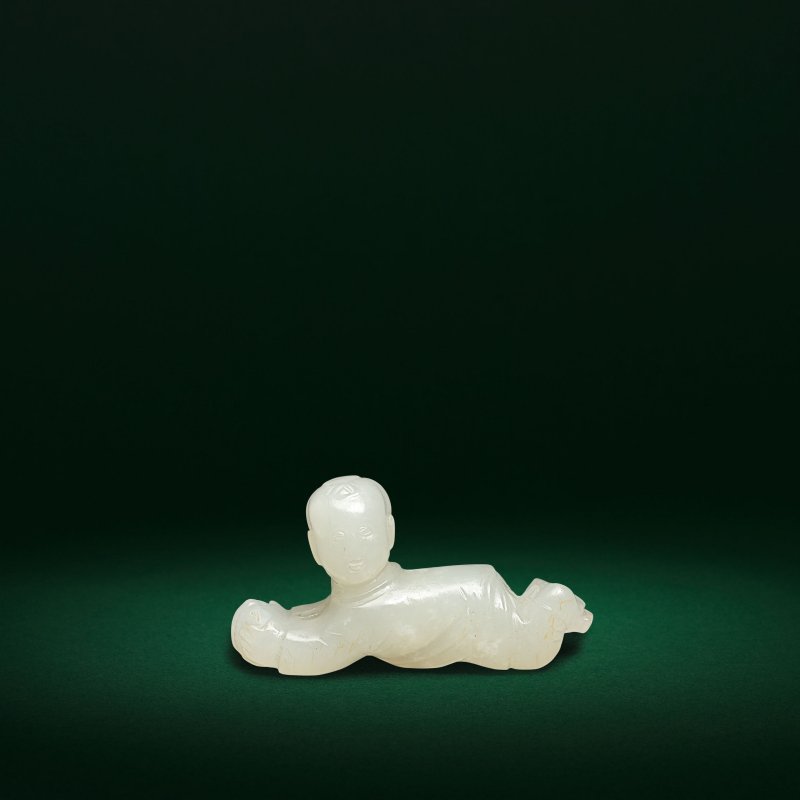
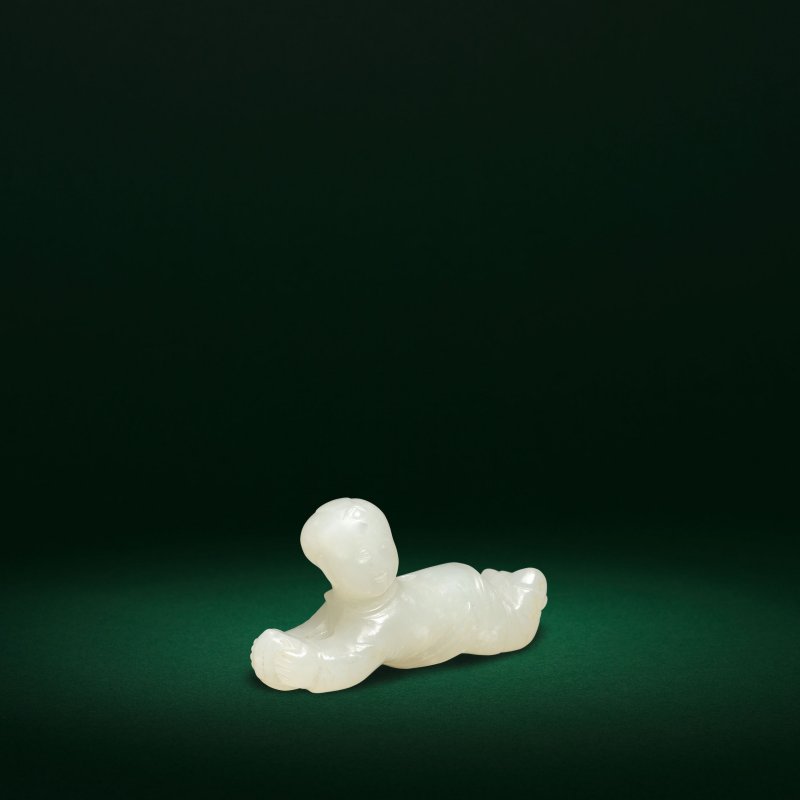
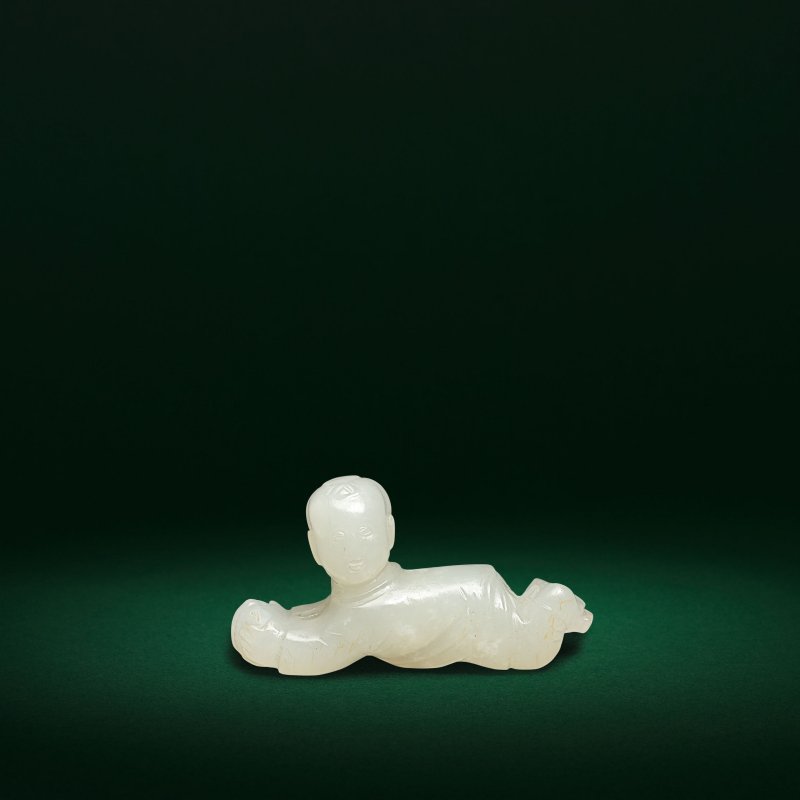
宋/明 白玉戲球童子 | A RARE WHITE JADE CARVING OF A RECUMBENT BOY
年代
Song/Ming Dynasty
起拍价
GBP 3,000
估值区间
GBP 3000 - 5000
尺寸
未知
品相
未知
更多信息
Song/Ming Dynasty
Carved as a crawling boy, the head turned to the left with a joyful facial expression, the arms tucked beneath his chest and grasping a small ball in the hands, the legs playfully bent up, with an aperture to the back for suspension, the stone of a white tone with cloudy inclusions. 4.5cm (1 3/4in) long.
Footnotes
宋/明 白玉戲球童子
The popularity of 'boy-at-play' motifs across a wide range of media, such as in the present lot, was rooted in the traditional Chinese belief that 'the more sons, the more blessings.' In addition, prevailing social customs created a strong demand for objects in the form of boy figures. A notable example is the celebration of the Qiqiao Festival (乞巧節), held on the seventh day of the seventh lunar month. On this occasion, households set out incense altars and performed rituals in which figures of children, known as mohouluo (摩睺羅), were often displayed. The term mohouluo derives from Buddhism, where it refers to the son of Siddhartha Gautama before his enlightenment as the Buddha. Mohouluo is renowned for his innate intelligence and pre-eminence in esoteric practice. Originally, such child figures served as ritual objects associated with prayers for male offspring and familial prosperity. Over time, they evolved into popular seasonal festival toys and customary gifts.
See a related jade carving of a recumbent boy grasping a ball, Jin dynasty, in the Qing Court Collection, illustrated in (故宮博物院藏品大系:玉器編5), Beijing, 2011, p.212, no.250. Compare with a related white jade 'boy and drum' group, Song/Yuan dynasty, which was sold at Bonhams London, 16 May 2019, lot 202.
Carved as a crawling boy, the head turned to the left with a joyful facial expression, the arms tucked beneath his chest and grasping a small ball in the hands, the legs playfully bent up, with an aperture to the back for suspension, the stone of a white tone with cloudy inclusions. 4.5cm (1 3/4in) long.
Footnotes
宋/明 白玉戲球童子
The popularity of 'boy-at-play' motifs across a wide range of media, such as in the present lot, was rooted in the traditional Chinese belief that 'the more sons, the more blessings.' In addition, prevailing social customs created a strong demand for objects in the form of boy figures. A notable example is the celebration of the Qiqiao Festival (乞巧節), held on the seventh day of the seventh lunar month. On this occasion, households set out incense altars and performed rituals in which figures of children, known as mohouluo (摩睺羅), were often displayed. The term mohouluo derives from Buddhism, where it refers to the son of Siddhartha Gautama before his enlightenment as the Buddha. Mohouluo is renowned for his innate intelligence and pre-eminence in esoteric practice. Originally, such child figures served as ritual objects associated with prayers for male offspring and familial prosperity. Over time, they evolved into popular seasonal festival toys and customary gifts.
See a related jade carving of a recumbent boy grasping a ball, Jin dynasty, in the Qing Court Collection, illustrated in (故宮博物院藏品大系:玉器編5), Beijing, 2011, p.212, no.250. Compare with a related white jade 'boy and drum' group, Song/Yuan dynasty, which was sold at Bonhams London, 16 May 2019, lot 202.
常见问题
这件宋/明 白玉戲球童子 | A RARE WHITE JADE CARVING OF A RECUMBENT BOY的成交价是多少?
落槌价为 预展中。 成交价为 预展中。


