
Lot 8010 A ‘ziyun changzhu’ lingzhi plaything, inscribed by Ju Jie (1524–1585), Ming dynasty | 明 居節款「紫雲常駐」靈芝清供
落槌价
预展中
成交价
预展中
| 拍卖公司 | 苏富比 |
|---|---|
| 拍卖时间 | 2026年10月30日 |
拍品信息
拍品名称
A ‘ziyun changzhu’ lingzhi plaything, inscribed by Ju Jie (1524–1585), Ming dynasty | 明 居節款「紫雲常駐」靈芝清供
起拍价
HKD 400,000
估值区间
400,000 - 800,000 HKD
尺寸
未知
品相
Good overall condition, with minor age cracks, and a few small chips/flakes mainly to a few spots on the base, as typical of this type and age.
整體品相良好。見少許舊裂,以及小剝痕(主要見於器底),均屬正常。
If a condition report is provided to assist you with assessing the condition of the lot, it is for guidance purposes only. Such condition report may not refer to all faults, restoration, alterations, or adaptations because Sotheby's is not a professional conservator or restorer but rather a condition report is a statement of subjective, qualified opinion genuinely held by Sotheby's. For these reasons, any such condition report is not an alternative to taking your own professional advice regarding the condition of the lot. Prospective buyers should also refer to the Guide for Buyers at Auction which includes important notices concerning the type of property in this sale.
更多信息
wood stand
15 cm
著录:Nicolas Chow, The Literati Aesthetic, Hong Kong, 2018, no. 70.
图录
说明:出版
仇國仕,《無盡意》,香港,2018年,編號70
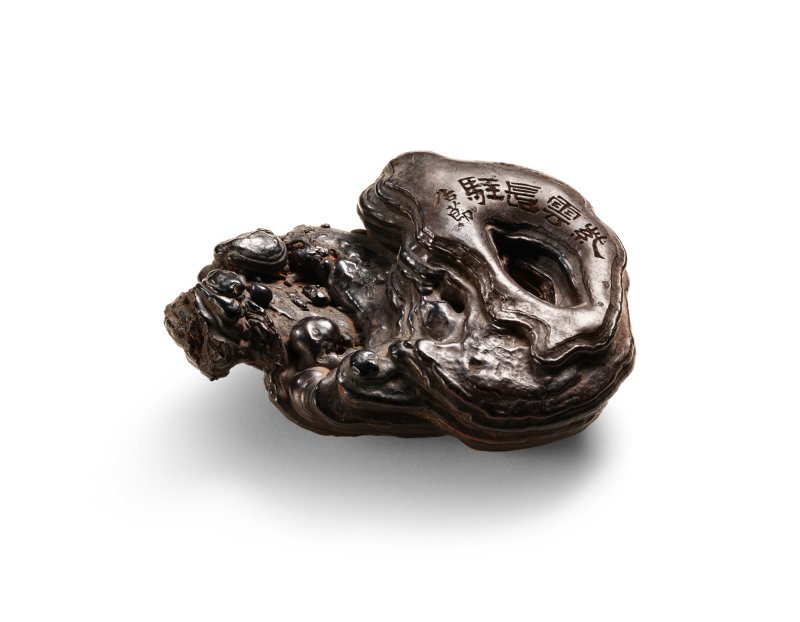
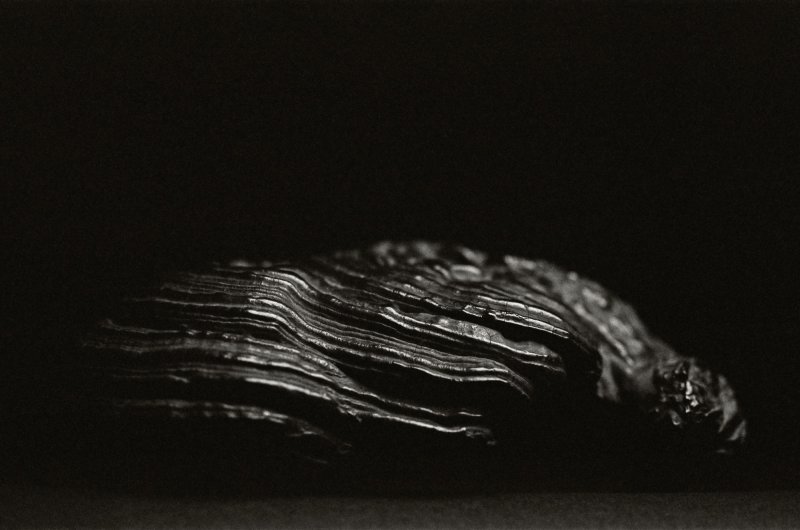
This extraordinary scholar’s object represents a rare three-dimensional extension of the Wu School aesthetic from the mid-to-late Ming dynasty. Crafted from a natural lingzhi fungus, the object has survived for over four centuries due to sophisticated preservation techniques. As recorded in Gao Lian’s Zunsheng bajian (Eight Discourses on the Art of Living), such fungi were steamed, repeatedly sun-dried, and often finished with a thin layer of natural lacquer or wax. This process solidified the organic material, resulting in the deep, lustrous patina seen on the present piece.
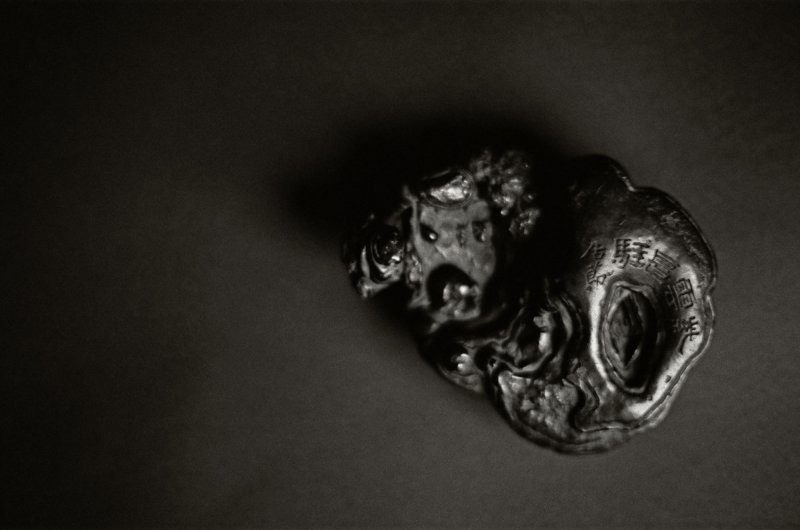
The core artistic value of this object lies in its incised calligraphy, which perfectly encapsulates the style of the Wu School. The four-character inscription ziyun changzhu ('ever-lasting purple clouds') is executed in a broad, archaic clerical lishu script that echoes Han dynasty steles, a style Ju Jie inherited from his master, Wen Zhengming (1470–1559). In contrast, the signature 'Ju Jie' is carved in a sharp, elegant running-standard xingkai script. The carver masterfully used a double-outline technique for the clerical script and a single-knife technique for the signature, brilliantly translating the dynamic brushwork of a painting into a sculptural medium.
Ju Jie (1524–1585), a native of Suzhou, was initially a student of Wen Jia before his exceptional talent caught the eye of Wen Zhengming, who took him on as a direct disciple. Historical texts such as the Wujun danqing zhi (Record of Painters of Wu Prefecture) praise Ju Jie as the foremost among Wen’s followers. Despite his artistic brilliance, Ju Jie lived as a commoner and died in poverty after being implicated in a tax dispute. His unyielding, aloof character finds a poignant metaphor in this lingzhi fungus, which is a symbol of longevity, purity, and detachment from the mundane world.
The present object shares a profound iconographic and aesthetic connection with Ju Jie’s surviving paintings, most notably his Bin zhi tu (Painting of Guest Lingzhi) from a twelve-leaf album by Ming masters. The openwork hardwood stand of the present lot, carved with the 'slender, open, pierced, and wrinkled' qualities of Taihu rocks, mirrors the painted rockery in his album leaf. Furthermore, the calligraphy on the fungus perfectly matches his signature on the painting. This seamless integration of the “tianren heyi” ideology, which combines natural wonder and human artistry, later profoundly influenced the Qing court. The Qianlong Emperor, a fervent admirer of the Wu School, not only collected Ju Jie’s works in the Shiqu baoji but also institutionalised the practice of inscribing imperial poems on natural lingzhi fungi, elevating this literati tradition into a symbol of imperial grandeur.
此件明代天然靈芝清供,是明代中晚期吳門書畫美學向立體文房器物延伸的稀世珍品。該器以一株天然木質化紫芝為主體,歷經四百餘年仍保存完好,實證了明代高超的文玩炮製技術。據明代高濂《遵生八箋》記載,天然靈芝需經高溫蒸煮、反覆曝曬與陰乾,最後表面髹以生漆或燙蠟。此器字口與菌褶深處呈現出瀅潤的「黑漆古」包漿,正是歲月沉澱的歷史痕跡。
此器的核心藝術價值在於其正面的陰刻銘文,完美承襲了文徵明一脈的吳門書風。「紫雲常駐」四字採用古拙寬博的隸書,深得漢碑沉穩之風骨;而落款「居節」二字則轉為瘦勁俊逸的行楷。在刀法上,四字隸書採雙鉤陰刻,名款則以單刀直刻,精準捕捉了毛筆疾書時的尖銳鋒芒,體現了「以刀代筆」的極高水準。其原配明式硬木隨形透雕底座,依靈芝天然輪廓剜刻,並融入太湖石「瘦、透、漏、皺」的審美,將大自然的「天成之趣」與文人的「人工之妙」完美融合。
居節(約1524–1585年),江蘇吳縣人,初從文嘉學畫,後因天資卓越被文徵明收為入室弟子。王穉登《吳郡丹青志》評其「成就可稱第一」。然而居節一生未仕,晚年更因牽連織造局賦稅官司而家產盡失,至死不肯趨諂權貴。這件象徵遺世獨立、與世無爭的天然靈芝,無疑是他「傲骨布衣」精神世界的物質寄託。
此清供與傳世明嘉靖年間《賓芝圖及題詠冊》中居節的親筆墨寶形成了高度的「跨媒介互證」。其鏤空底座與畫中太湖石的意境相通;行楷落款與畫冊簽名在結體、運筆上完全一致;「紫雲」之意象亦呼應了畫中題詩的「霞氣」。這種從平面繪畫向三維物質文化的跨界延伸,對清代宮廷產生了深遠影響。乾隆帝極度迷戀吳門體系,不僅將居節作品收入《石渠寶笈》,更命造辦處將「天然靈芝刻字」工藝發展為皇家規格。此件居節款靈芝清供,不僅是頂級的文房雅玩,更是研究明代文人跨界工藝與清宮傳承史的無價之寶。
常见问题
这件A ‘ziyun changzhu’ lingzhi plaything, inscribed by Ju Jie (1524–1585), Ming dynasty | 明 居節款「紫雲常駐」靈芝清供的成交价是多少?
落槌价为 预展中。 成交价为 预展中。
拍品的品相状况如何?
Good overall condition, with minor age cracks, and a few small chips/flakes mainly to a few spots on the base, as typical of this type and age.
整體品相良好。見少許舊裂,以及小剝痕(主要見於器底),均屬正常。
If a condition report is provided to assist you with assessing the condition of the lot, it is for guidance purposes only. Such condition report may not refer to all faults, restoration, alterations, or adaptations because Sotheby's is not a professional conservator or restorer but rather a condition report is a statement of subjective, qualified opinion genuinely held by Sotheby's. For these reasons, any such condition report is not an alternative to taking your own professional advice regarding the condition of the lot. Prospective buyers should also refer to the Guide for Buyers at Auction which includes important notices concerning the type of property in this sale.
整體品相良好。見少許舊裂,以及小剝痕(主要見於器底),均屬正常。
If a condition report is provided to assist you with assessing the condition of the lot, it is for guidance purposes only. Such condition report may not refer to all faults, restoration, alterations, or adaptations because Sotheby's is not a professional conservator or restorer but rather a condition report is a statement of subjective, qualified opinion genuinely held by Sotheby's. For these reasons, any such condition report is not an alternative to taking your own professional advice regarding the condition of the lot. Prospective buyers should also refer to the Guide for Buyers at Auction which includes important notices concerning the type of property in this sale.
这件拍品被哪些著录书籍记载?
Nicolas Chow, The Literati Aesthetic, Hong Kong, 2018, no. 70.
图录
图录