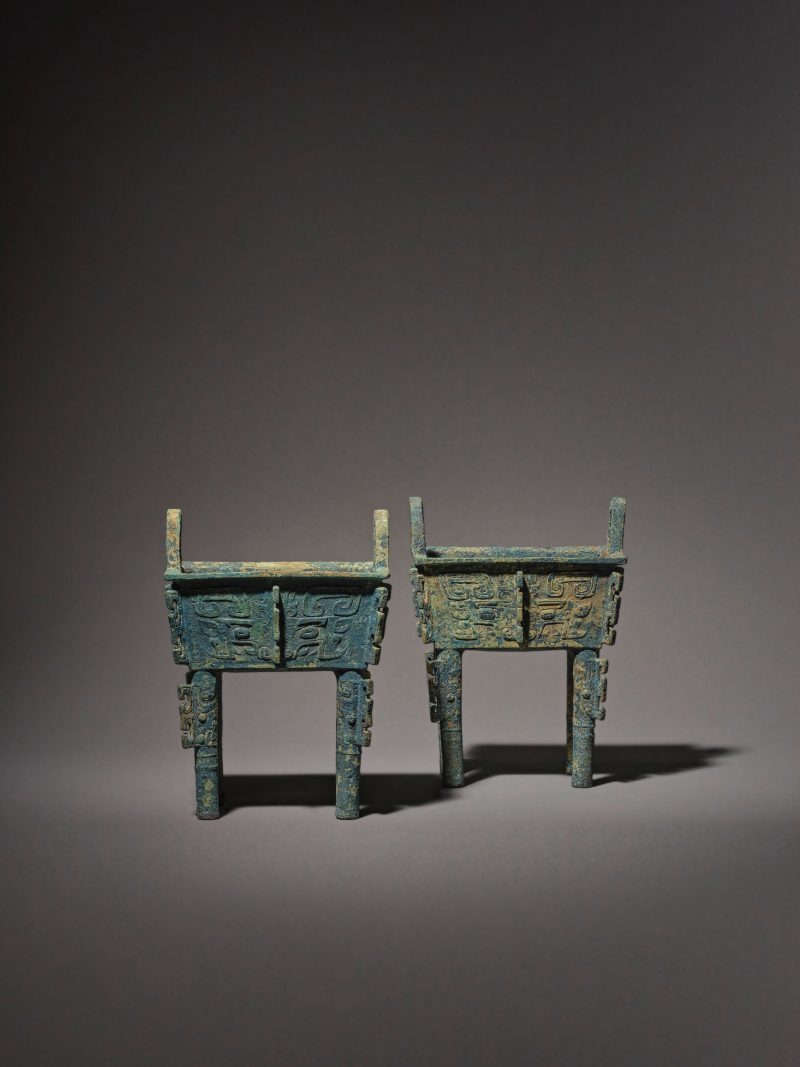
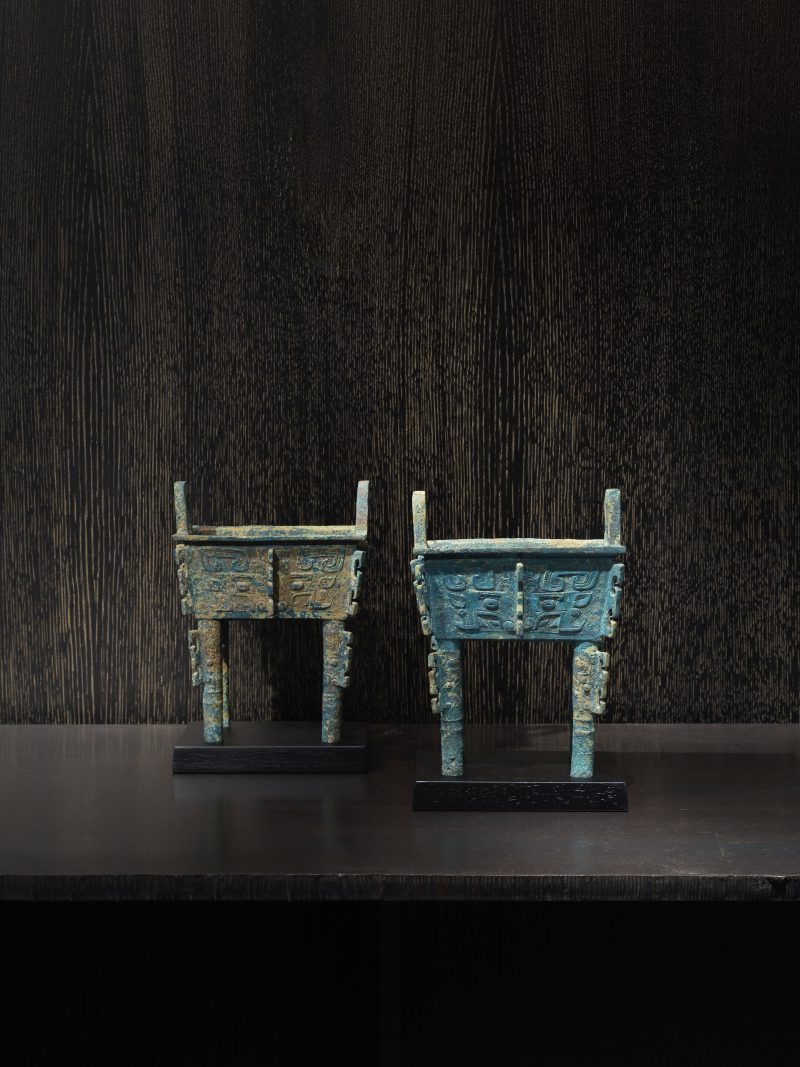
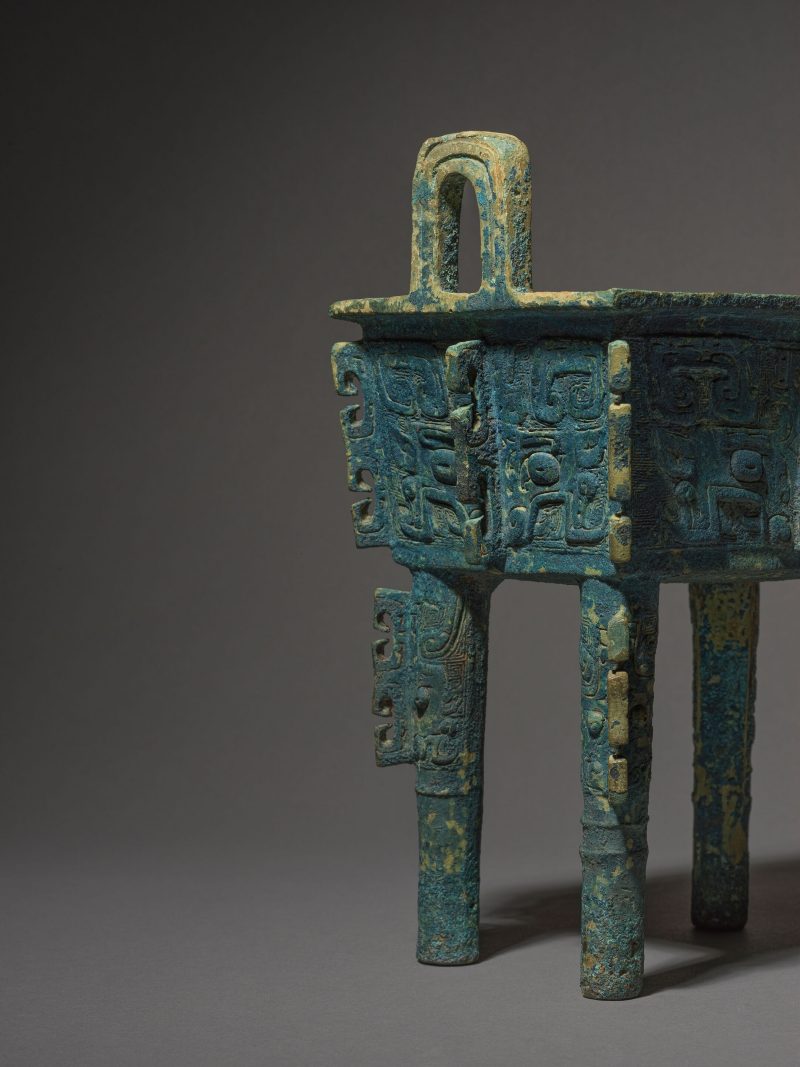
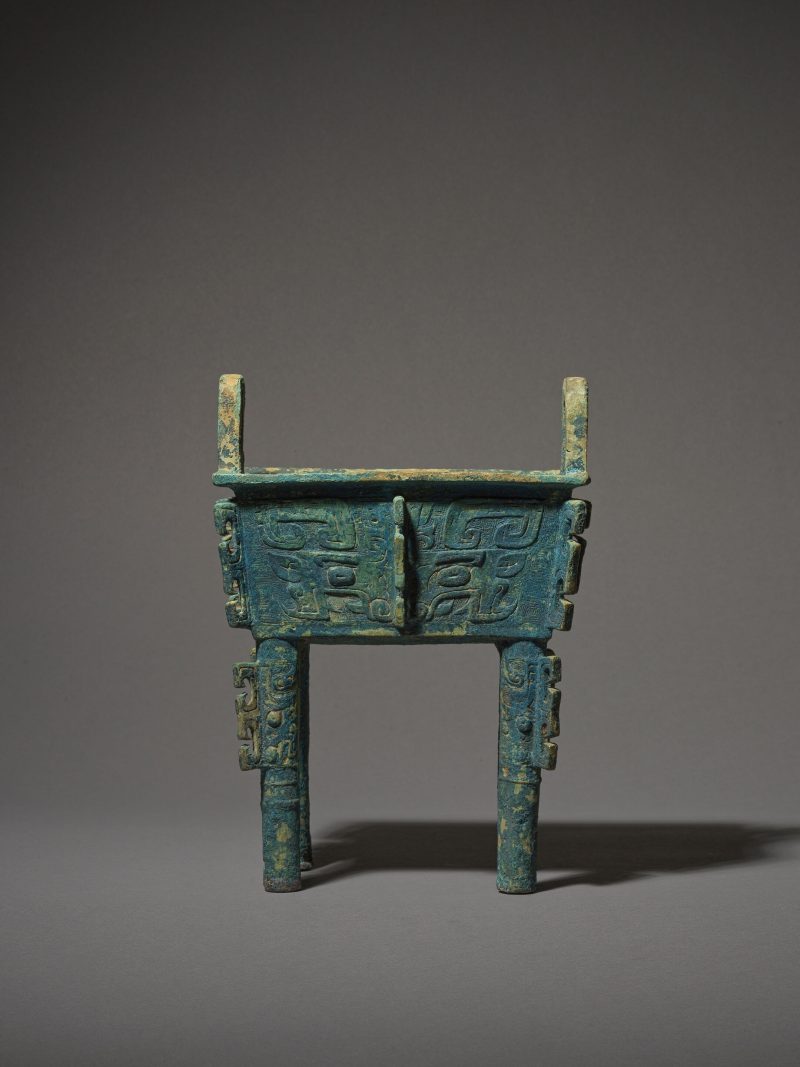
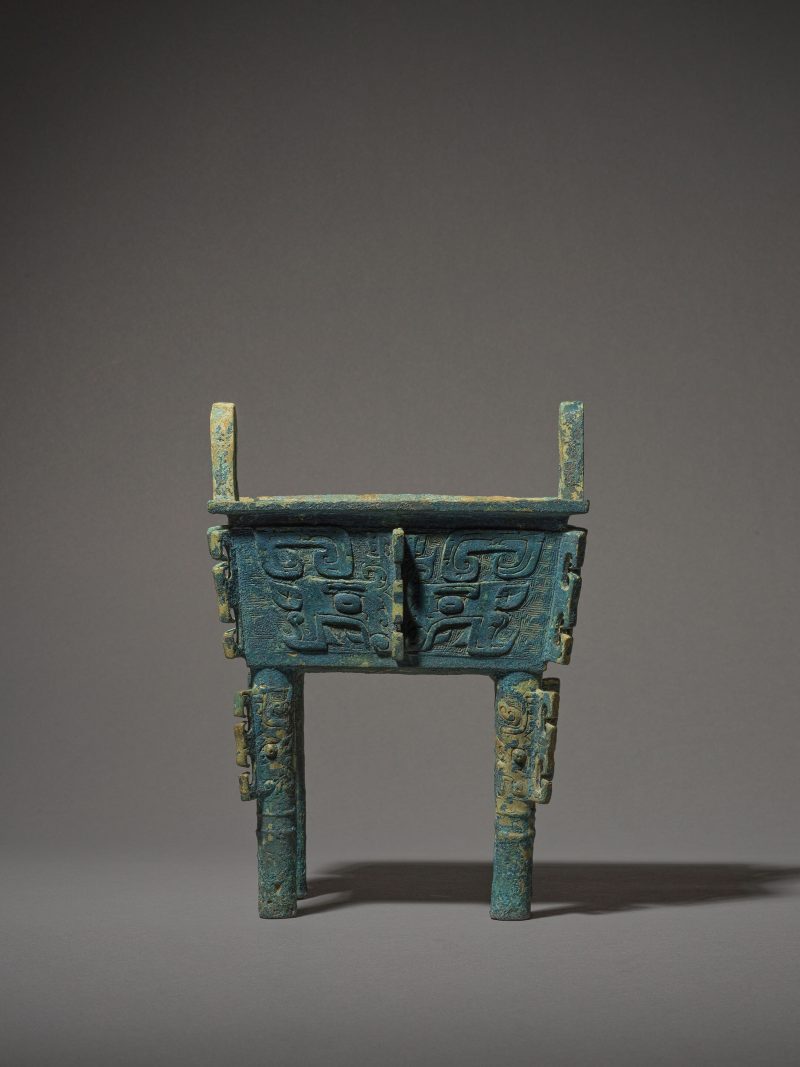
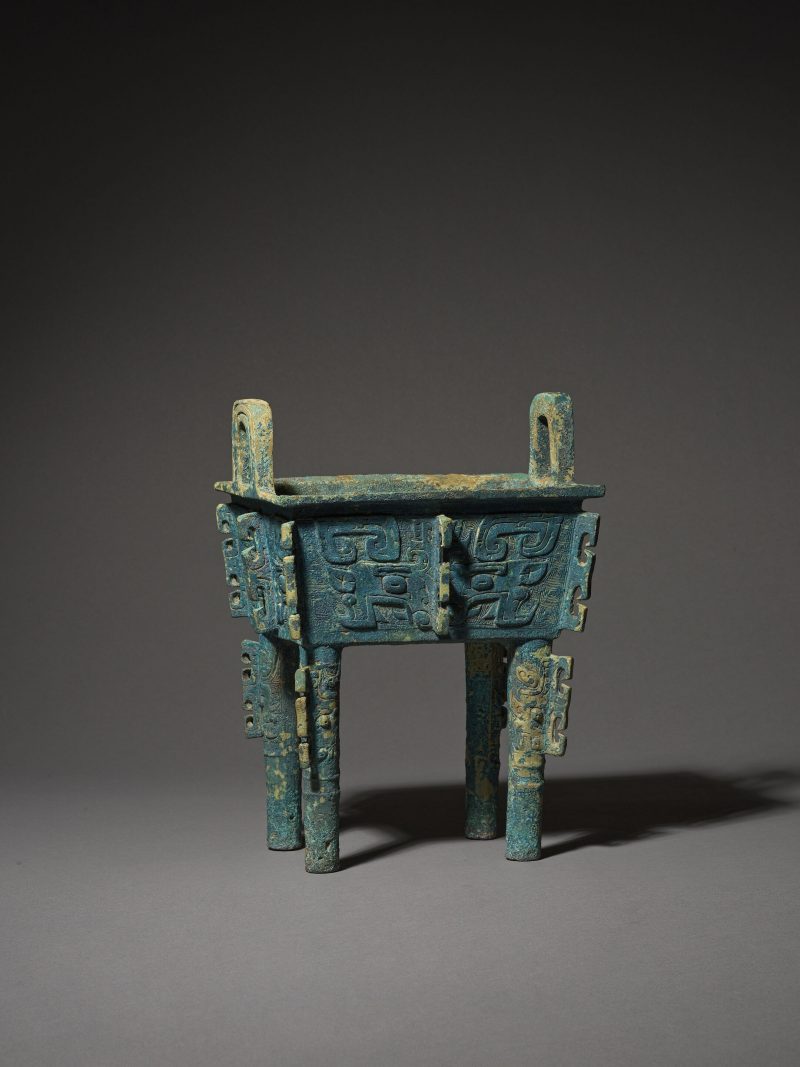
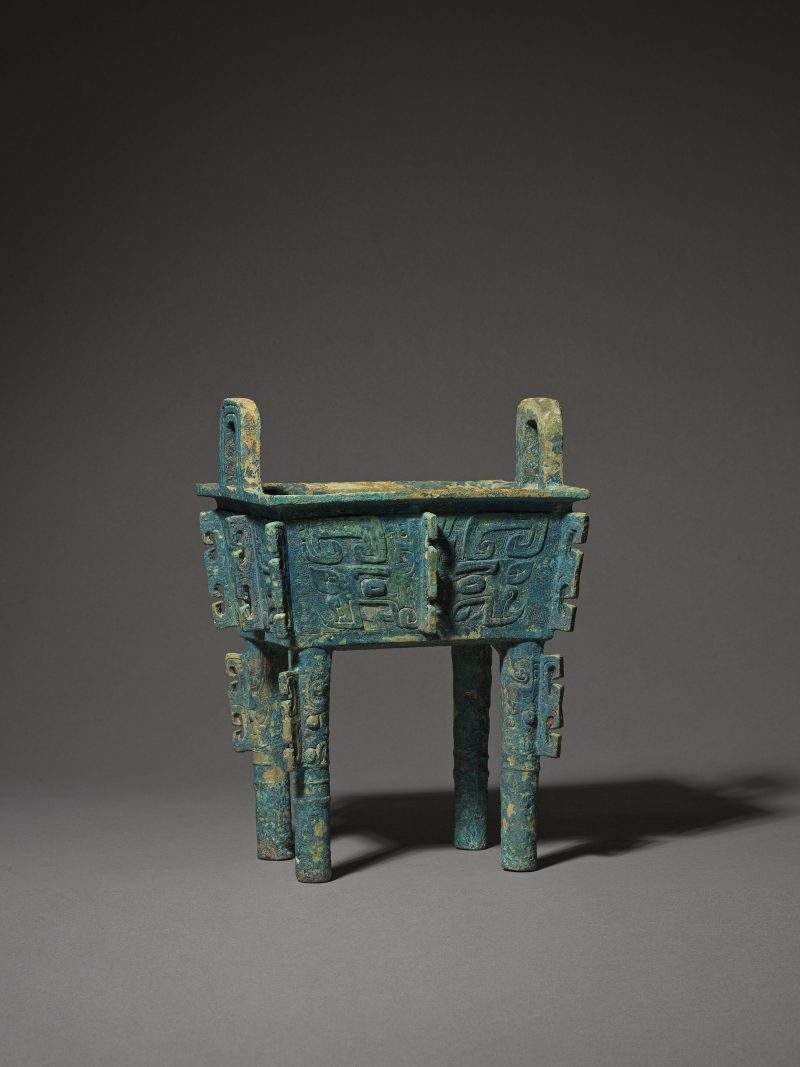
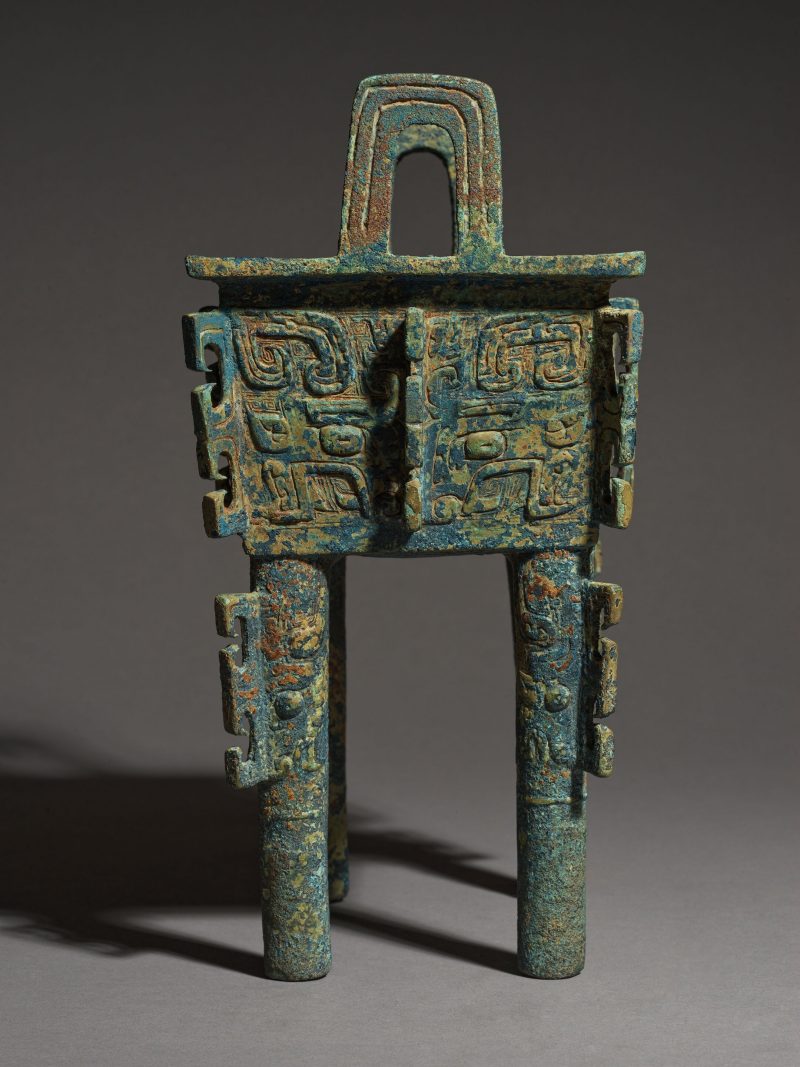
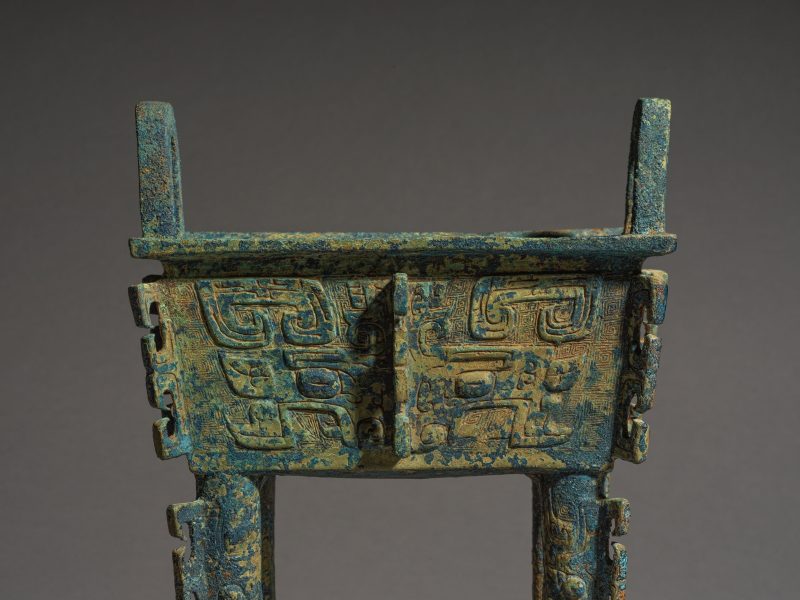
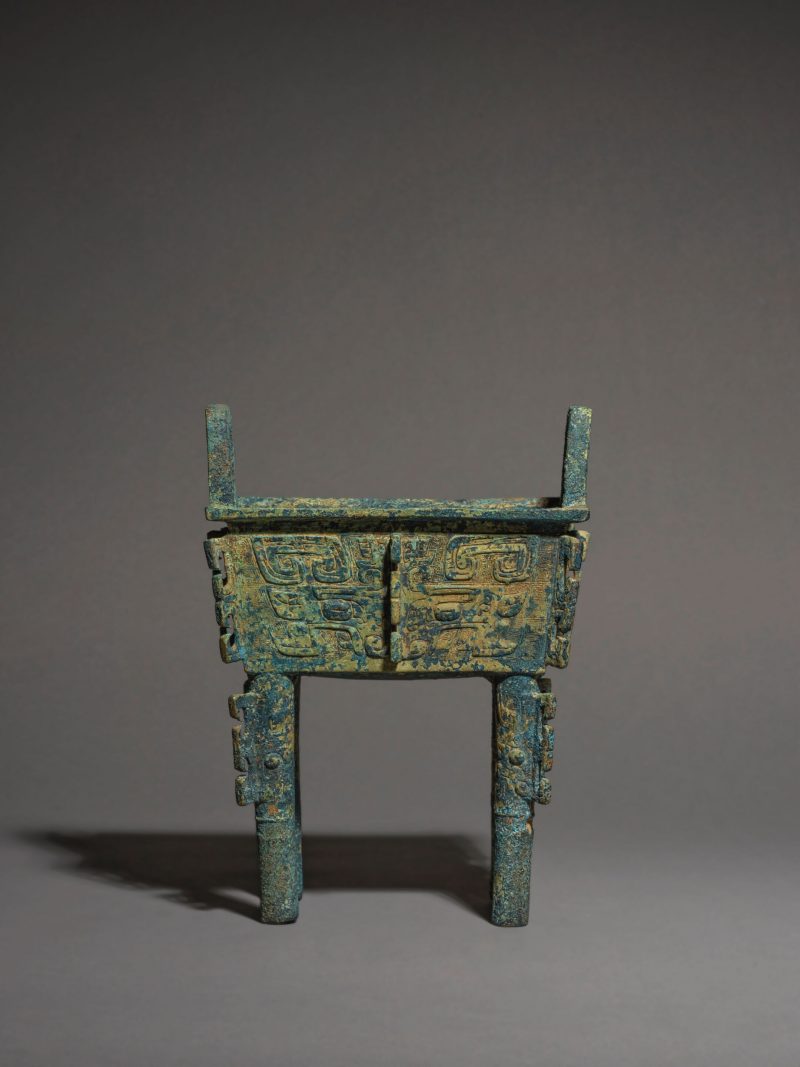
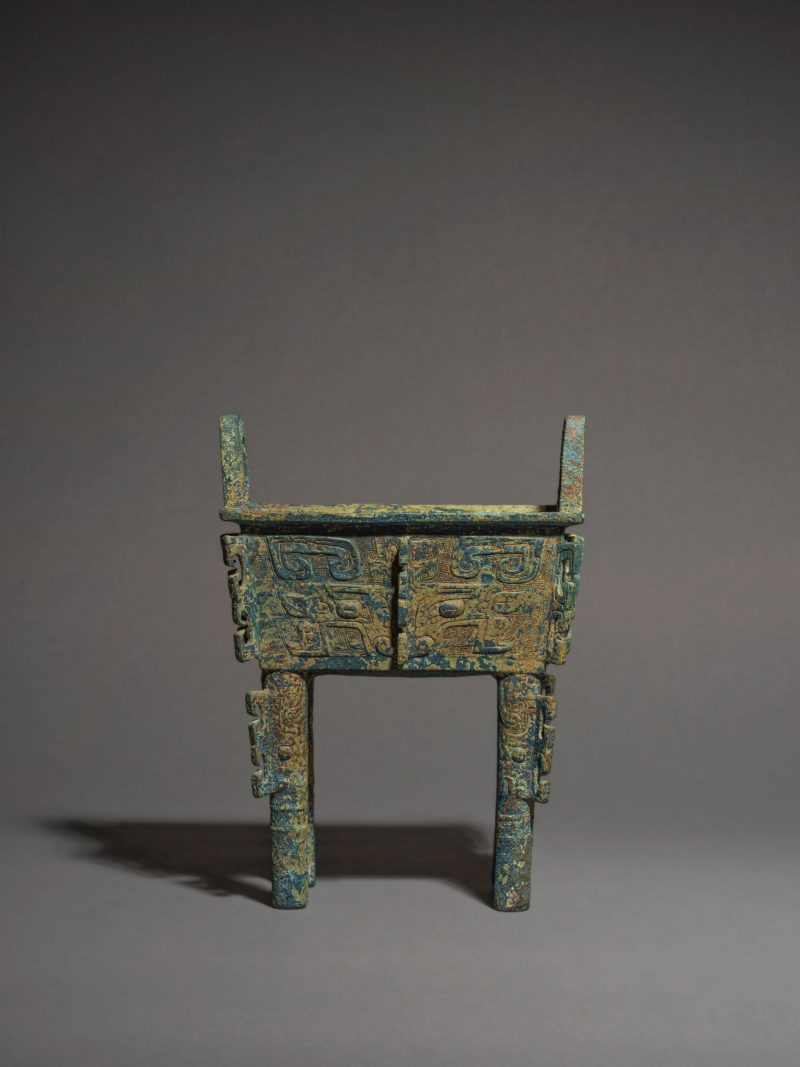
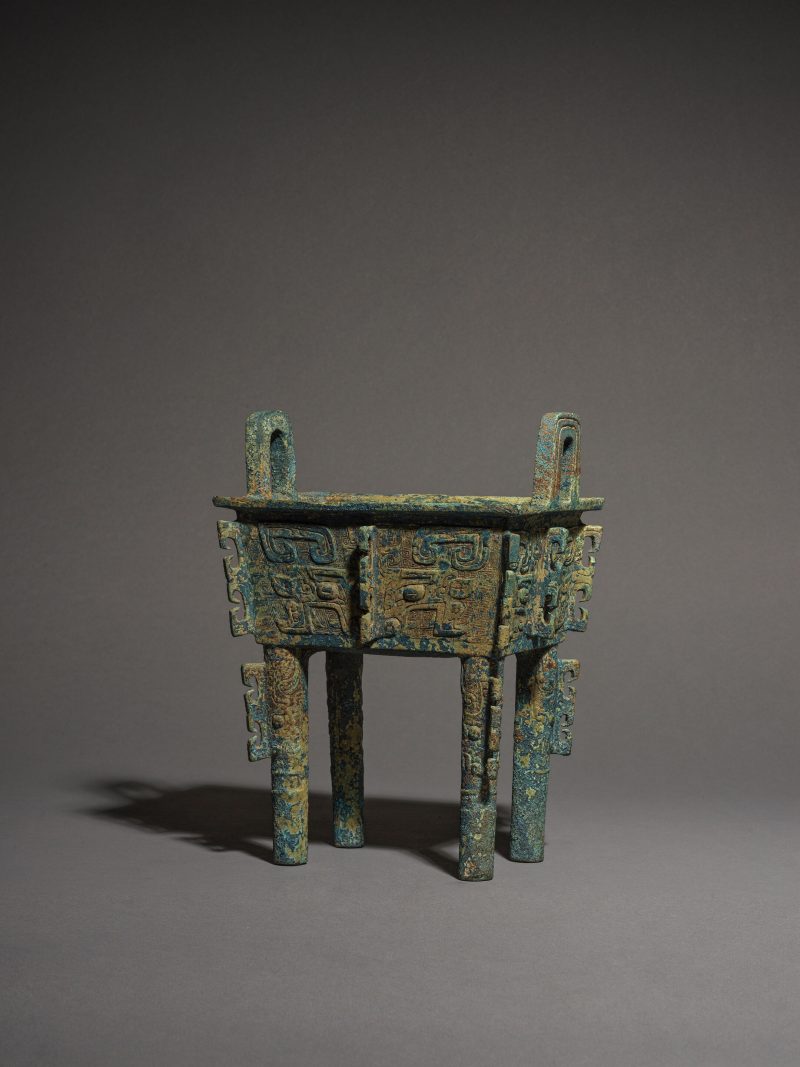
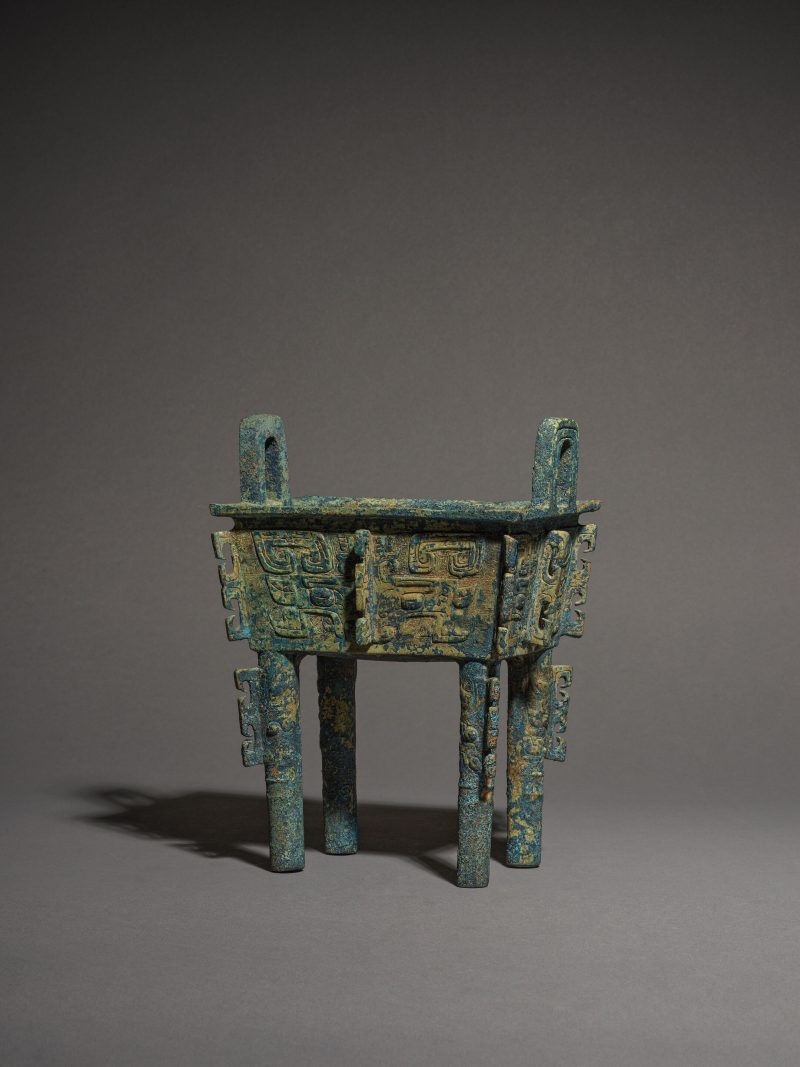
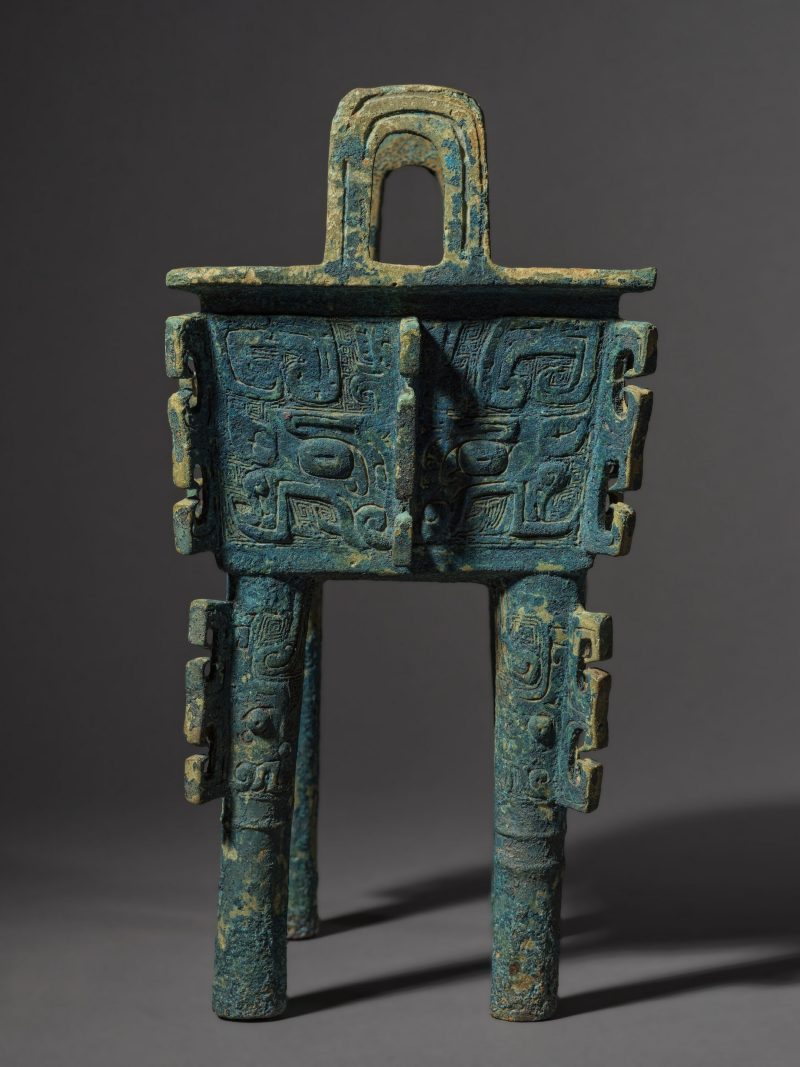
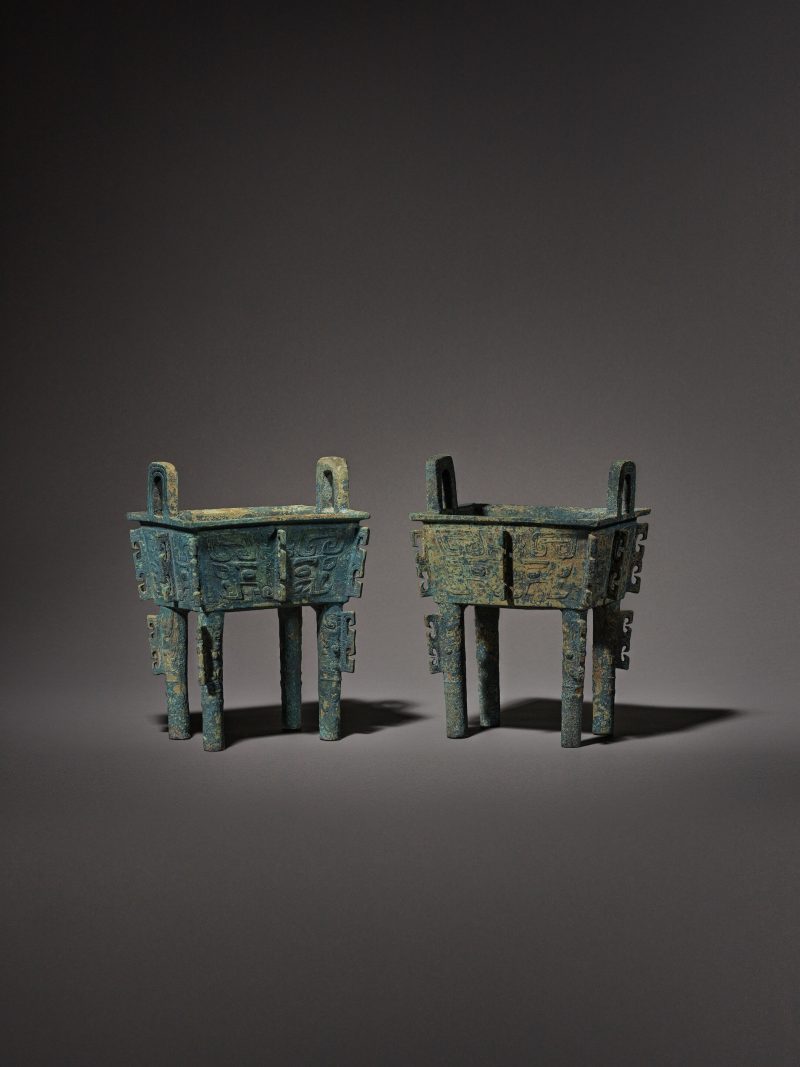
Lot 45 西周早期 約公元前十一世紀 青銅饕餮紋方鼎一對 | RARE PAIRE DE RÉCIPIENTS RITUELS EN BRONZE, FANGDING
落槌价
预展中
成交价
预展中
| 拍卖公司 | 邦瀚斯 |
|---|---|
| 拍卖时间 | 2026年12月10日 |
拍品信息
拍品名称
西周早期 約公元前十一世紀 青銅饕餮紋方鼎一對 | RARE PAIRE DE RÉCIPIENTS RITUELS EN BRONZE, FANGDING
年代
西周早期 約公元前十一世紀
起拍价
未知
估值区间
EUR 120,000–150,000
尺寸
Each 25 cm (9 3/4 in.) high and 18 cm (7 in.) wide
品相
未知
更多信息
RARE PAIRE DE RÉCIPIENTS RITUELS EN BRONZE, FANGDING
Début de la Dynastie des Zhou Occidentaux, vers XIe siècle av. J.-C.
A RARE PAIR OF ARCHAIC BRONZE RITUAL FOOD VESSELS, FANGDING
Early Western Zhou Dynasty, ca. 11th century BC
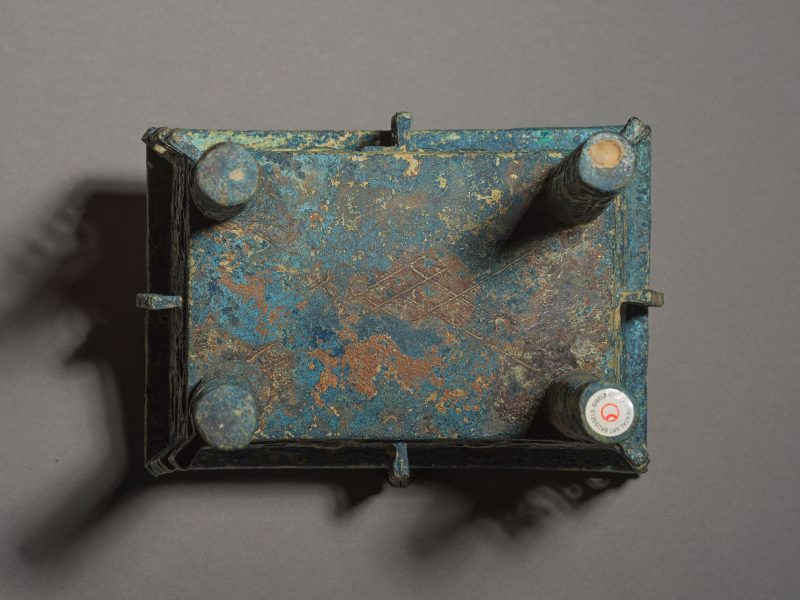
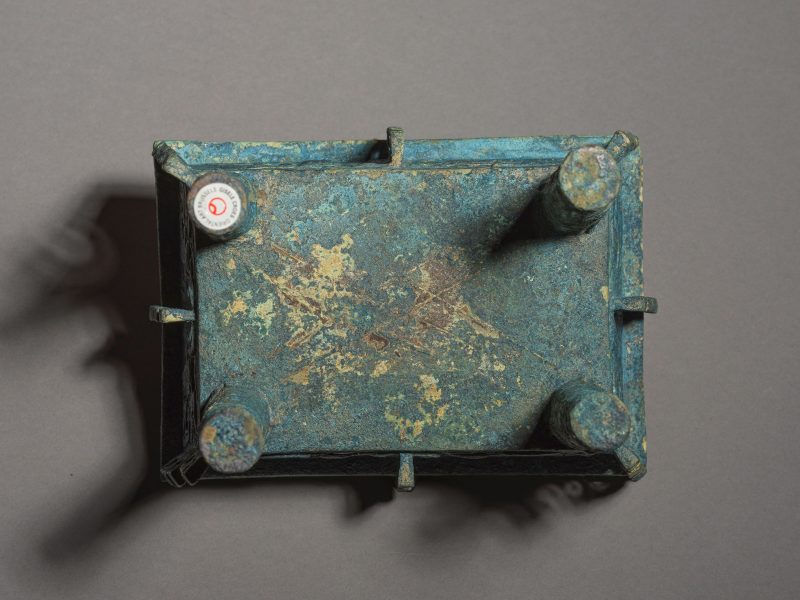
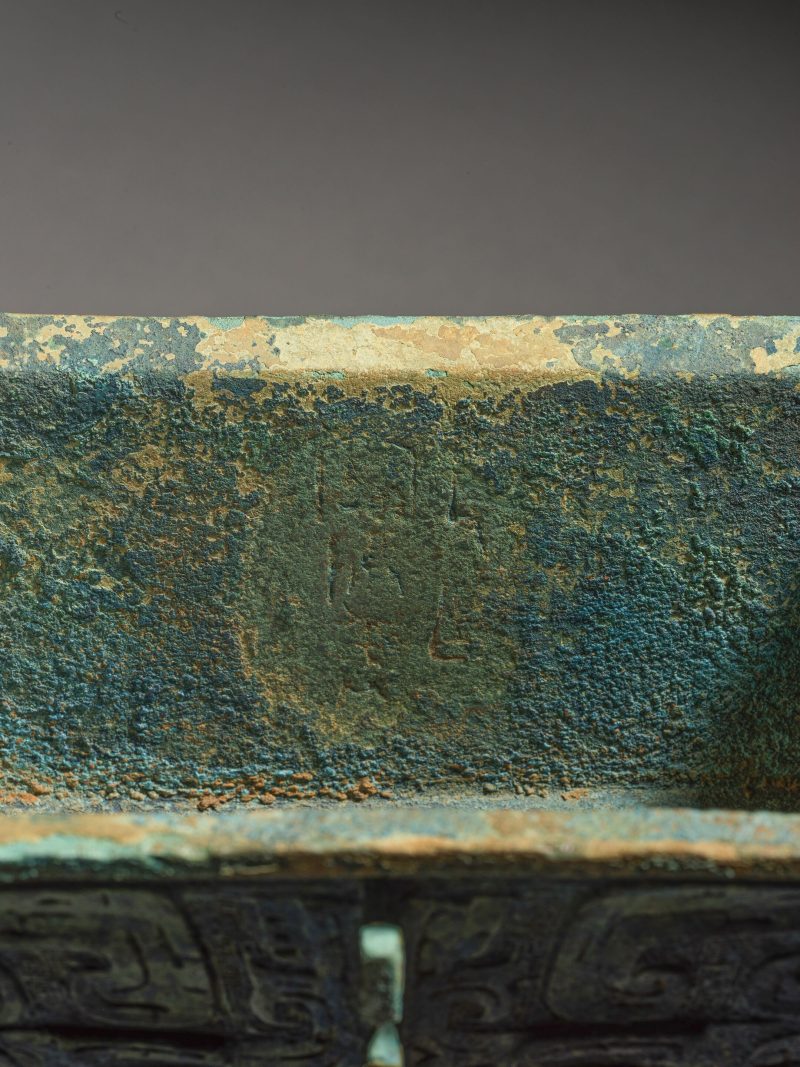
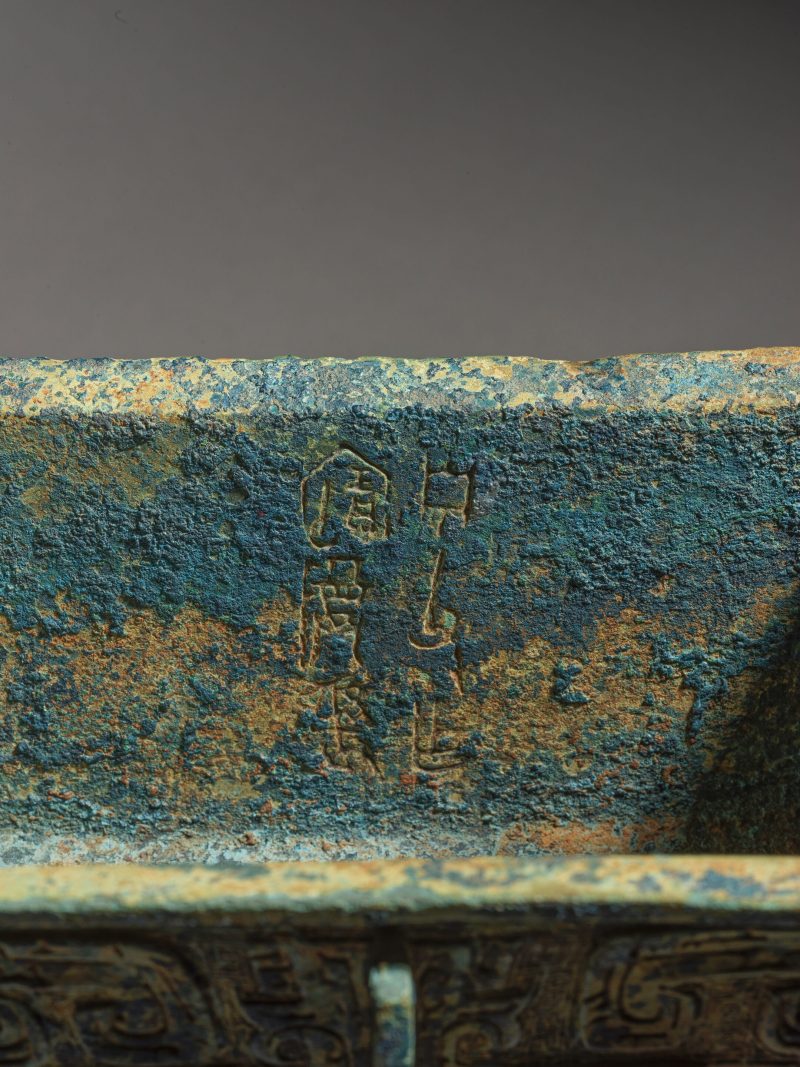
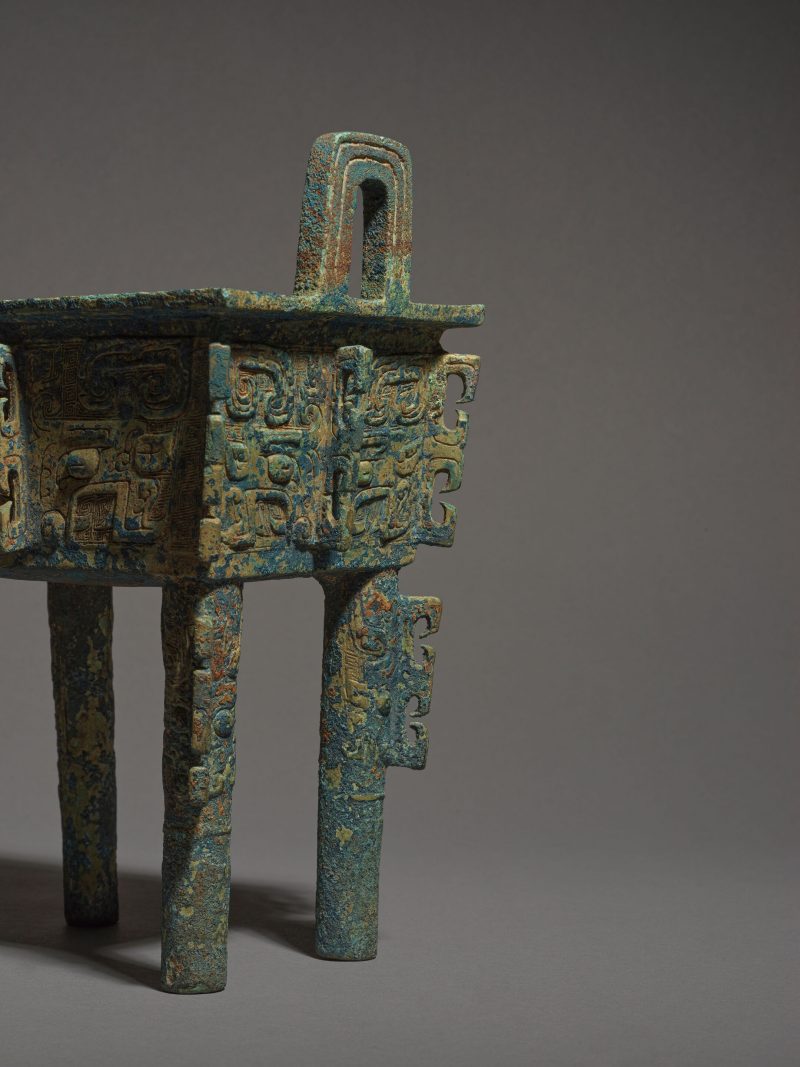
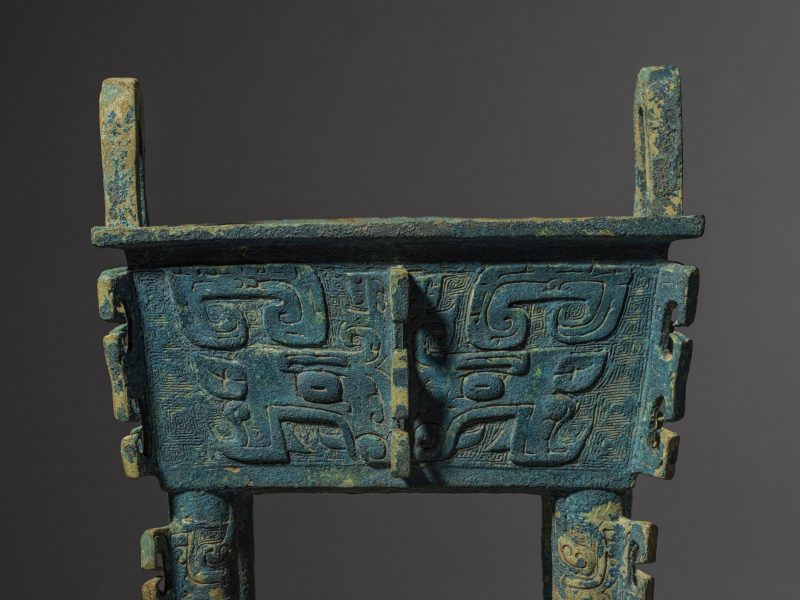
Each of rectangular form raised on four tall, tubular column legs, with straight, slightly tapering sides rising to an everted rim set with a pair of inverted U-shaped loop handles, each side with a taotie mask in layered relief with prominent oval eyes beneath wing-shaped horns on a leiwen ground, centered on and flanked by barbed flanges, the legs similarly decorated with shorter barbed flanges dividing taotie masks above two raised bowstrings, a six-character inscription cast on the side wall of the interior of both vessels reading 寧父作寶尊彝 Ning Fu Zuo Bao Zun Yi ('Ancestor Ning made this precious ritual vessel'), the bronze patinated to an overall light green colour with areas of azurite and malachite encrustation, later stands.
Each 25 cm (9 3/4 in.) high and 18 cm (7 in.) wide (4).
西周早期 約公元前十一世紀 青銅饕餮紋方鼎一對
銘文:寧父作寶尊彝
Provenance:
Hong Kong, 2002
Sotheby's New York, 23 March 2004, lot 584
Joyce Gallery, Hong Kong
Gisèle Croës Arts d'Extrême Orient, Brussels, 2012
Published, Illustrated and Exhibited:
Elite, Exhibition of Chinese Bronze, Gold & Silver, Taiwan, July 2002, pp. 18-21
Gisèle Croës Arts d'Extrême Orient, Matter and Memory, New York, March 2012, pp. 50-53 and cover
來源:
香港,2002年
紐約蘇富比,2004年3月23日,拍品編號584
御雅居,香港
Gisèle Croës Arts d'Extrême Orient,布魯塞爾,2012年
展覽著錄:
Elite,《Exhibition of Chinese Bronze, Gold & Silver》,台灣,2002年,第18-21頁
Gisèle Croës Arts d'Extrême Orient,《Matter and Memory》,紐約,2012年3月,第50-53頁及封面
Among ritual vessels cast in bronze during the Shang and Western Zhou Dynasty, made for the preparation and offering of food and wine in ceremonial banquets conducted to seek and repay divine ancestral goodwill, bronze ding occupied a central role and were most closely associated with kingship and high rank. Their ownership appears to have been strictly regulated: during the Western Zhou dynasty, the gentry were allowed to acquire three ding, high-ranking officers five, dukes seven, and the Emperor nine, see Li Xixing, The Shaanxi Bronzes, Xi'an, 1994, p. 35.
Ding were most commonly cast with round bodies and, in smaller numbers, with rectangular bodies, as exemplified in the present pair of fangding. The balanced proportions and crisply cast design on this rare pair of fangding conform with the basic design of 'standard' examples cast during the late Shang and early Western Zhou period. However, the slightly extravagant, hooked flanges cast on all four sides of the body and continuing on the upper parts of the legs, are a rare feature and can only be found on a small number of vessels of this type. A pair of fangding cast with very similar hooked flanges but lacking the taotie on the legs, from the collection of the Shanghai Museum, is illustrated by Chen Peifen, Xia Shang Zhou qingtongqi yanjiu: Xi Zhou pian, Shang, Shanghai, 2004, pp. 21–23, no. 201. A single fangding also cast with flamboyant hooked flanges along the legs, is illustrated in J.J. Lally & Co., Chinese Archaic Bronzes: The Collection of Daniel Shapiro and Ancient Chinese Sculpture: Recent Acquisitions, New York, 2014, cat.no. 4. Compare this pair of vessels with another vessel of this type and size, similarly cast with flanges on the legs, formerly in the collection of Willem van Heusden (1914-2009), illustrated in Willem van Heusden, Ancient Chinese Bronzes of the Shang and Chou Dynasties. An Illustrated Catalogue of the van Heusden Collection with a Historical Introduction by Willem van Heusden, Tokyo, 1952, pls. XVIII and XIX, pp. 106-108.
The six-character inscription found on the interior of both fangding records that these two precious vessels were made for an ancestor or clan by the name of Ning, a name that is documented by Gao Ming in Gu wenzi leipian, Beijing, 1980, p. 381.
以下内容由AI翻译:
【描述】
每件为长方形,立于四根高耸的管状柱足上,直壁略呈锥形上收至外翻的口沿,口沿设一对倒U形环耳,每侧饰以层叠浮雕饕餮纹,翼形角下为突出的椭圆形双目,背景为雷纹,中心及两侧饰有锯齿状棱脊,柱足也饰有较短的锯齿状扉棱,分隔位于两道凸弦纹上方的饕餮纹,两件鼎内壁各铸有六字铭文“寧父作寶尊彝 Ning Fu Zuo Bao Zun Yi”(祖先宁制作此珍贵礼器),青铜表面呈浅绿色,局部有蓝铜矿和孔雀石锈蚀,配有后配底座。
在商代和西周时期铸造的青铜礼器中,用于准备和供奉食物和酒类的仪式宴会以寻求和回报神灵祖先的好意,青铜鼎占据中心地位,最密切地与王权和高位相关。其拥有似乎受到严格规定:在西周时期,士人可以拥有三鼎,高级官员五鼎,诸侯七鼎,皇帝九鼎,见李希星,《陕西青铜器》,西安,1994年,第35页。
鼎通常铸成圆形,较少铸成长方形,如本对长方形鼎所示。这对罕见的长方形鼎的比例均衡,清晰铸造的设计符合晚商和早西周时期“标准”样式的基本设计。然而,铸在所有四个侧面和腿上部的略微夸张的钩状棱脊是一个罕见的特征,只能在少数此类器物上找到。上海博物馆收藏的一对长方形鼎,铸有非常相似的钩状棱脊但腿上没有饕餮纹,见陈佩芬,《夏商周青铜器研究:西周篇》,上海,2004年,第21-23页,编号201。另一件单个长方形鼎,腿上也铸有华丽的钩状棱脊,见J.J. Lally & Co., Chinese Archaic Bronzes: The Collection of Daniel Shapiro and Ancient Chinese Sculpture: Recent Acquisitions, New York, 2014, cat.no. 4。可将这对器物与另一件同类同尺寸的器物相比较,腿上同样铸有棱脊,曾属于Willem van Heusden (1914-2009)的收藏,见Willem van Heusden, Ancient Chinese Bronzes of the Shang and Chou Dynasties. An Illustrated Catalogue of the van Heusden Collection with a Historical Introduction by Willem van Heusden, Tokyo, 1952, pls. XVIII and XIX, pp. 106-108。
在两件方鼎的内壁各铸的六字铭文记录了这两件珍贵的器物是为名为宁的祖先或宗族制作的,这个名字见于高明《古文字类编》,北京,1980年,第381页。
常见问题
这件西周早期 約公元前十一世紀 青銅饕餮紋方鼎一對 | RARE PAIRE DE RÉCIPIENTS RITUELS EN BRONZE, FANGDING的成交价是多少?
落槌价为 预展中。 成交价为 预展中。
拍品的尺寸是多少?
Each 25 cm (9 3/4 in.) high and 18 cm (7 in.) wide