
Lot 97 A Chinese blue and white 'Cranes' cylindrical tripod censer
落槌价
****
成交价
****
拍品信息
拍品名称
A Chinese blue and white 'Cranes' cylindrical tripod censer
年代
Jiajing
起拍价
未知
估值区间
€ 12.000 – € 18.000
尺寸
OH: H. 18 cm, Diam. 21,2 cm
品相
未知
更多信息
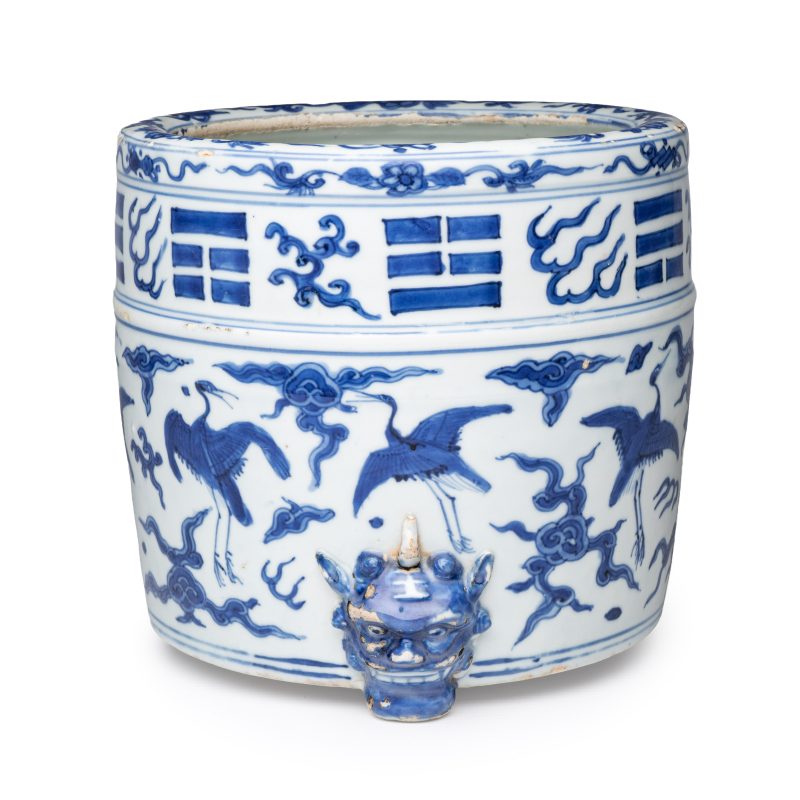
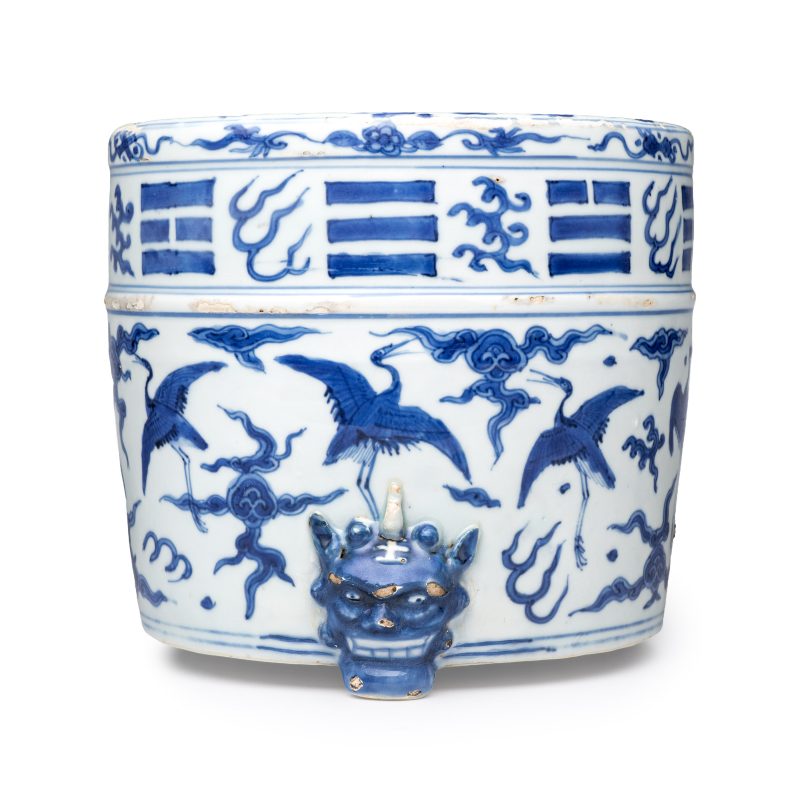
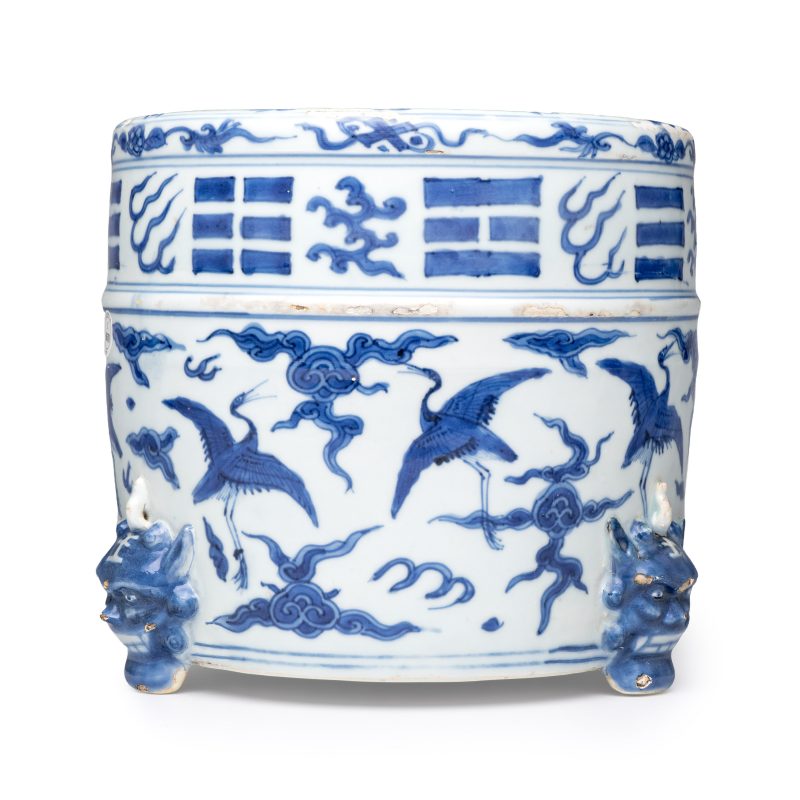
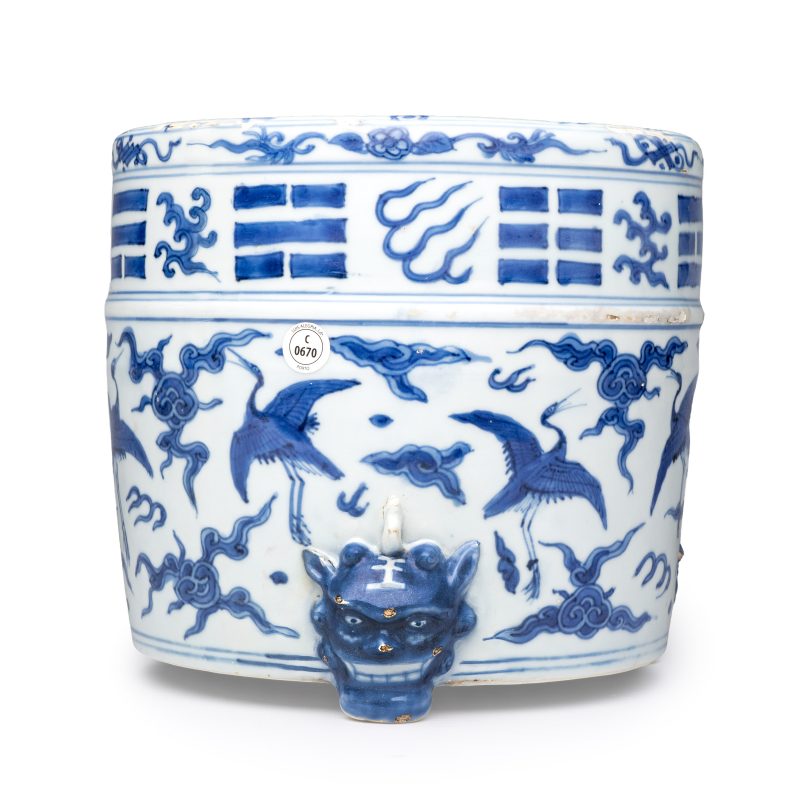
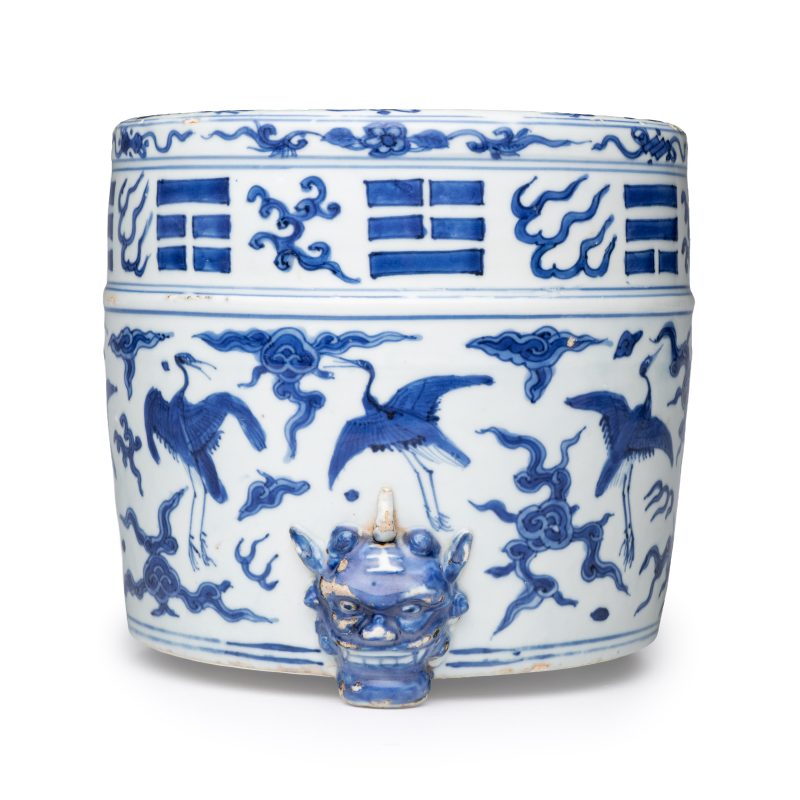
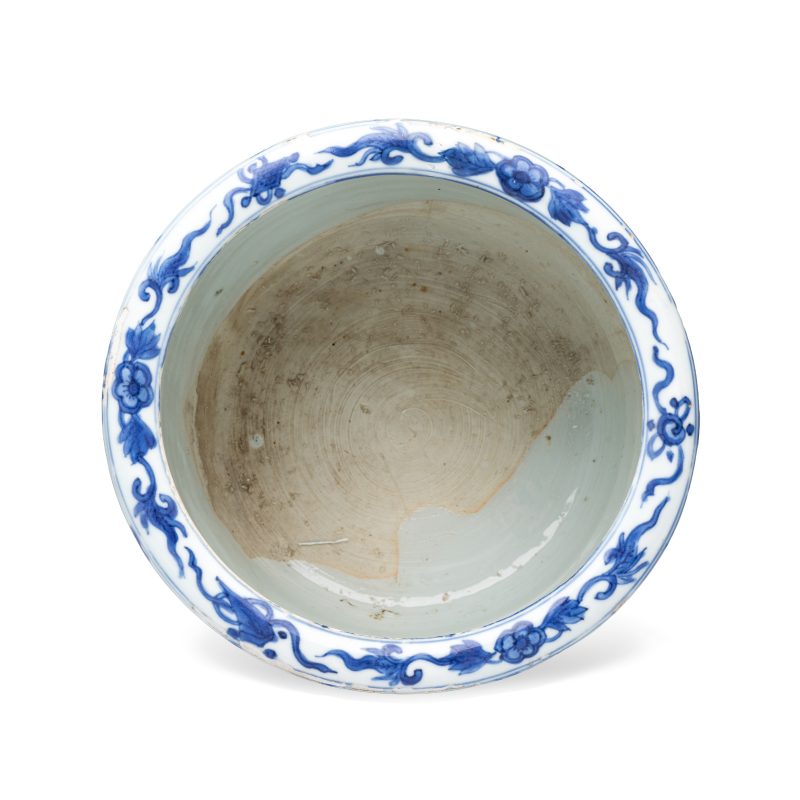
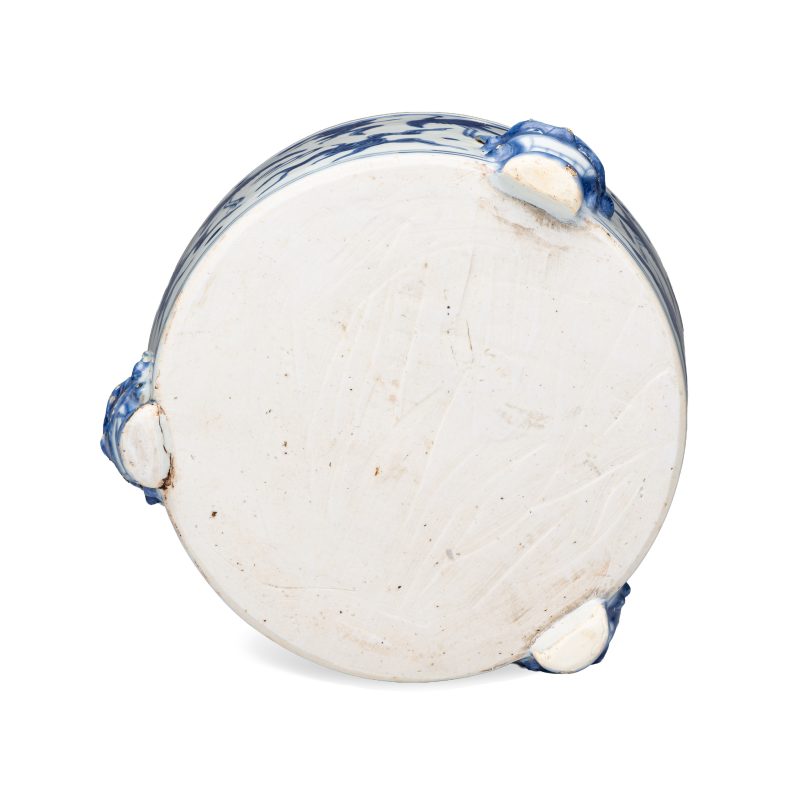
The censer is of cylindrical form, with a straight rim and deep sides supported on three moulded beast-mask feet painted in underglaze cobalt blue. The body is decorated with a continuous scene of cranes in flight among auspicious clouds, each rendered in a different pose. A raised horizontal band separates the principal decoration from an upper register of the Eight Trigrams, alternating with flame and cloud motifs. The rim is encircled by a floral scroll. The interior walls are glazed, while the inner well and underside are left unglazed.
The crane has long been regarded as an immortal bird in Chinese culture, symbolising longevity, purity and auspiciousness. Derived from the Yijing, or Book of Changes, the Eight Trigrams represent the workings of the cosmos and the transformations of yin and yang. The Jiajing emperor’s profound devotion to Daoism and pursuit of immortality encouraged the widespread use of Daoist imagery, including cranes, trigrams, flames and clouds, on both imperial and privately produced porcelain of the period.
爐呈圓筒形,直口,深腹,下承三隻模印青花獸面足。腹部以青花通景繪群鶴翱翔於祥雲之間,姿態各異。上腹凸起一道弦紋,其上環列八卦紋,間以火焰及雲紋, 口沿環飾纏枝花卉。內壁施釉,內底及器底露胎。
鶴自古被視為仙禽,象徵長壽、高潔與祥瑞, 八卦源自《易經》,代表天地萬物的運行與陰陽變化。嘉靖皇帝篤信道教,追求長生,促使雲鶴、八卦及火焰等道教題材廣泛見於當時的宮廷與民窯瓷器。
Provenance:
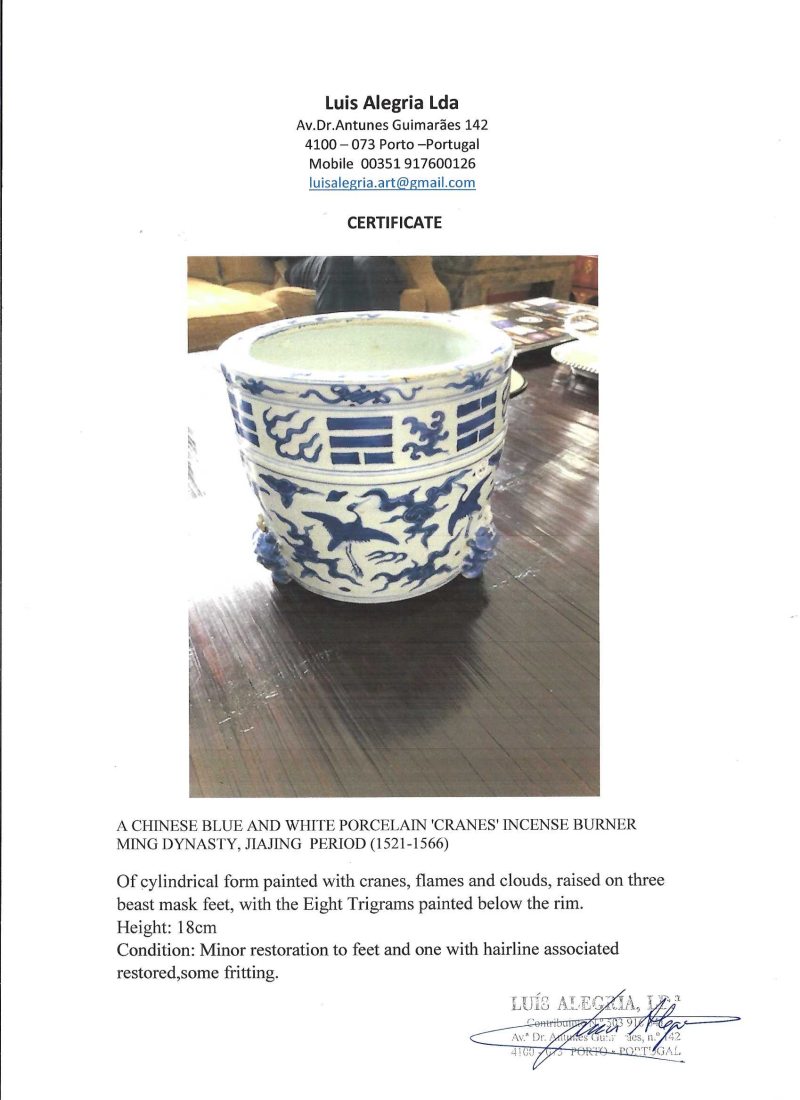
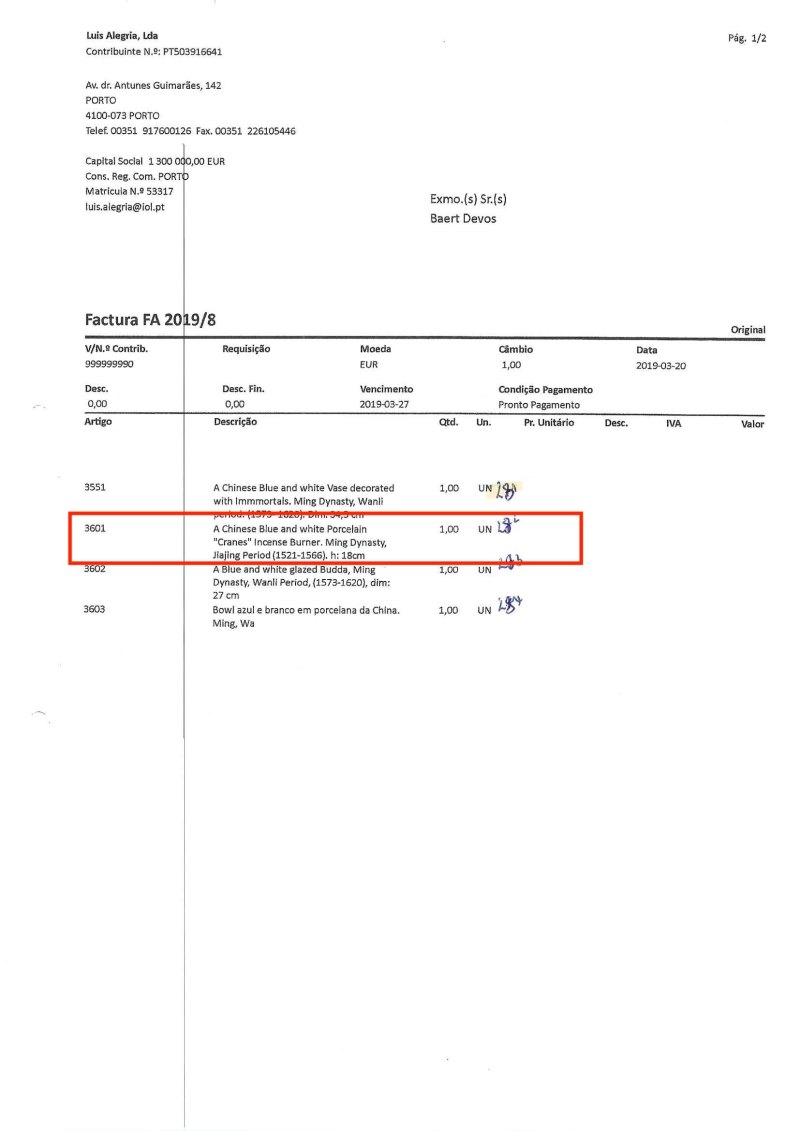
Luis Alegria, Porto, with their label to the base.
The Mr. and Mrs. Baert-Devos Collection, Belgium. Acquired from the above on 20 March 2019, accompanied by a scan of their original invoice and certificate of authenticity. (see added scans)
The crane has long been regarded as an immortal bird in Chinese culture, symbolising longevity, purity and auspiciousness. Derived from the Yijing, or Book of Changes, the Eight Trigrams represent the workings of the cosmos and the transformations of yin and yang. The Jiajing emperor’s profound devotion to Daoism and pursuit of immortality encouraged the widespread use of Daoist imagery, including cranes, trigrams, flames and clouds, on both imperial and privately produced porcelain of the period.
爐呈圓筒形,直口,深腹,下承三隻模印青花獸面足。腹部以青花通景繪群鶴翱翔於祥雲之間,姿態各異。上腹凸起一道弦紋,其上環列八卦紋,間以火焰及雲紋, 口沿環飾纏枝花卉。內壁施釉,內底及器底露胎。
鶴自古被視為仙禽,象徵長壽、高潔與祥瑞, 八卦源自《易經》,代表天地萬物的運行與陰陽變化。嘉靖皇帝篤信道教,追求長生,促使雲鶴、八卦及火焰等道教題材廣泛見於當時的宮廷與民窯瓷器。
Provenance:
Luis Alegria, Porto, with their label to the base.
The Mr. and Mrs. Baert-Devos Collection, Belgium. Acquired from the above on 20 March 2019, accompanied by a scan of their original invoice and certificate of authenticity. (see added scans)
常见问题
拍品的尺寸是多少?
OH: H. 18 cm, Diam. 21,2 cm