
Lot 2001 The Ge Jue, an inscribed archaic bronze ritual wine vessel, Late Shang dynasty | 商末 戈爵
落槌价
****
成交价
****
拍品信息
拍品名称
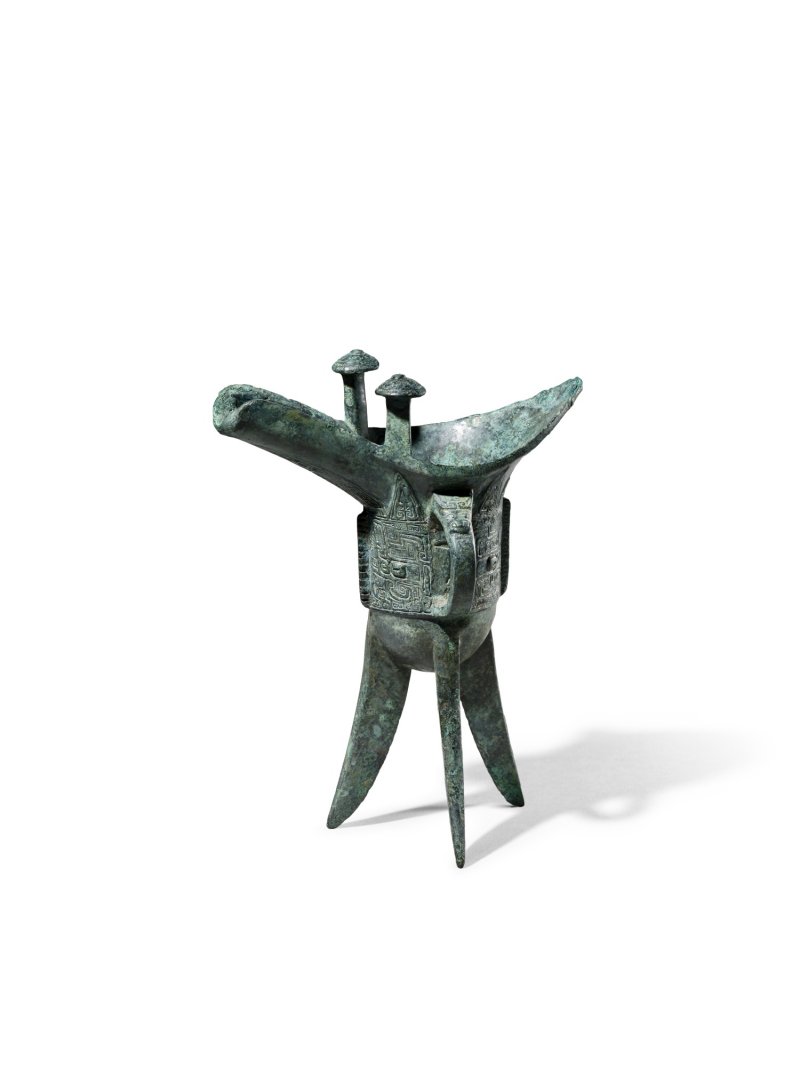
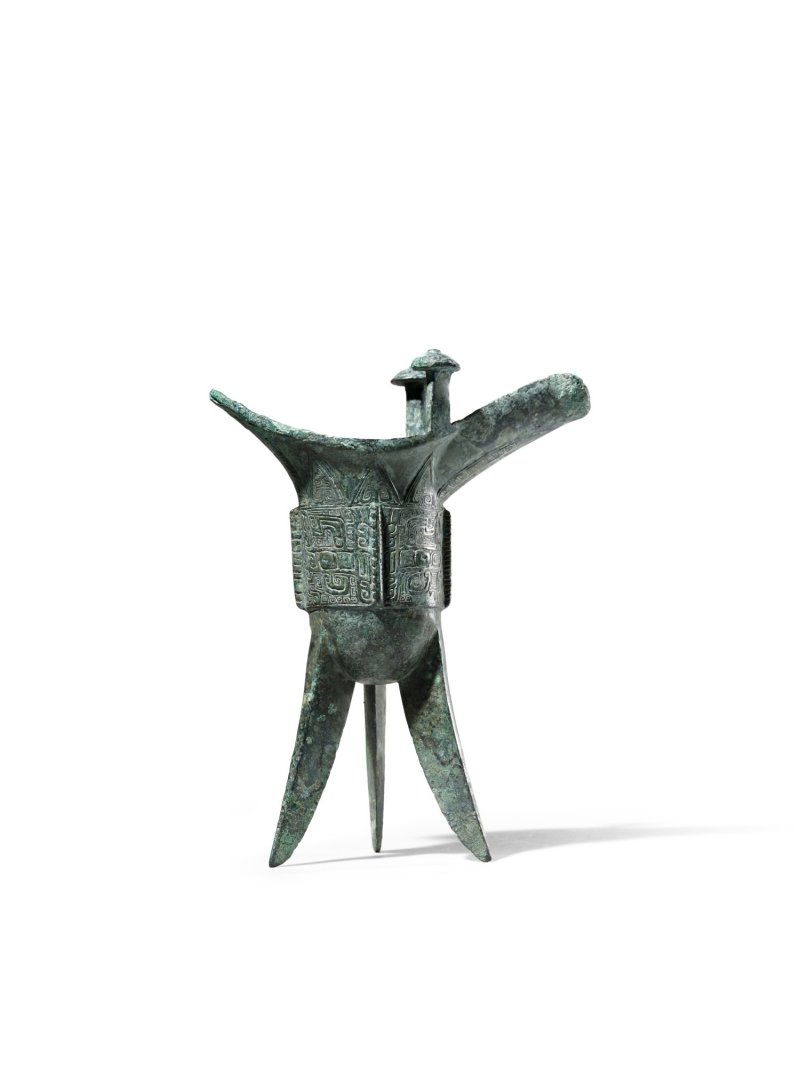
The Ge Jue, an inscribed archaic bronze ritual wine vessel, Late Shang dynasty | 商末 戈爵
起拍价
HKD 300,000
估值区间
300,000 - 600,000 HKD
尺寸
未知
品相
如欲了解本拍品狀況的更多資訊,請聯絡 Rubie.Fong@sothebys.com
更多信息
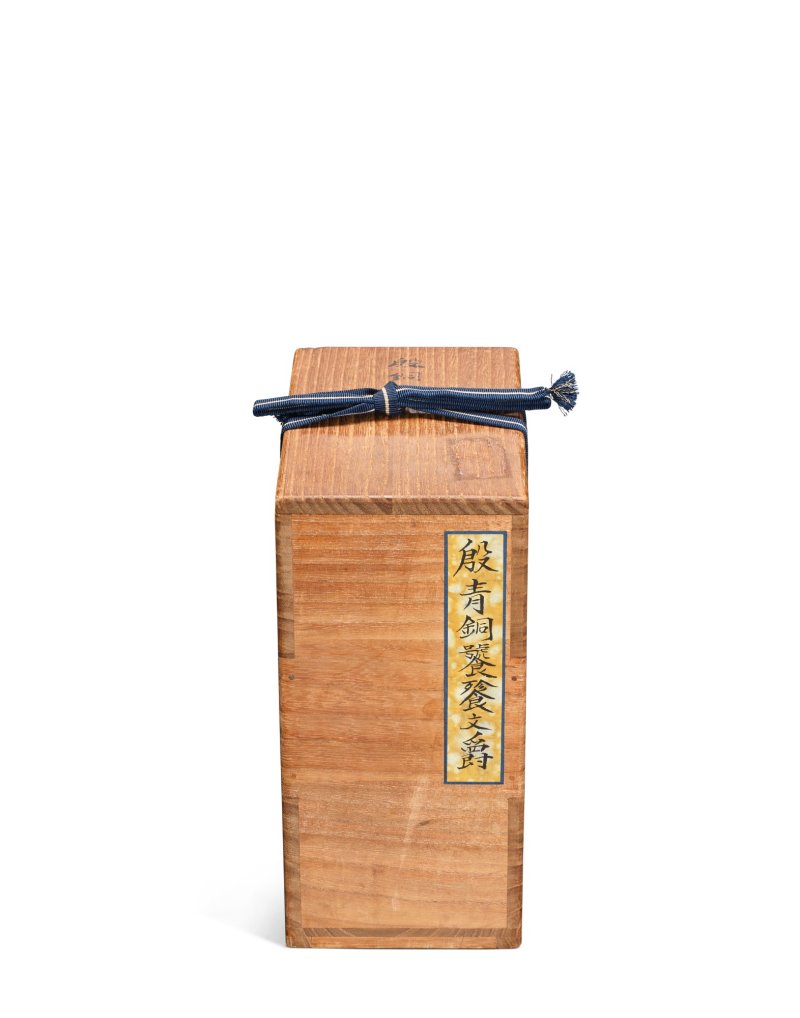
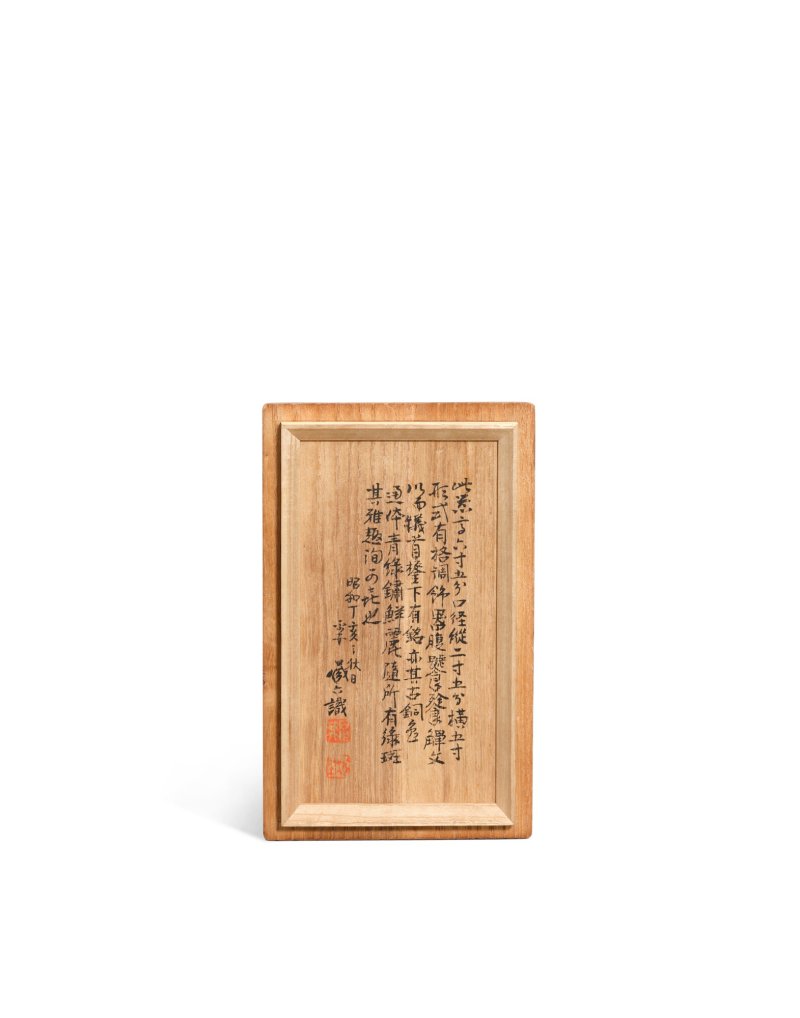
Japanese wood box with Hata Zoroku IV (1898–1984)′s inscription dated 1947
19.5 cm
木盒蓋內書四代秦蔵六(1898至1984年)昭和丁亥(1947年)題識
来源:Kochukyo Co., Ltd, Tokyo.
图录
说明:來源
壺中居,東京
「太史公曰:禹為姒姓,其後分封,用國為姓,
故有夏后氏、有扈氏、有男氏、斟尋氏、彤城氏、褒氏、
費氏、杞氏、繒氏、辛氏、冥氏、斟(氏)、戈氏。」
— 司馬遷,《史記.夏本紀》
“The Grand Historian says: Yu belonged to the Si surname.
His descendants were later enfeoffed, and
taking the names of their fiefs as surnames;
thus there arose the Xiahou clan, the Hu clan, the Nan clan, the Zhenxun clan,
the Tongcheng clan, the Bao clan, the Fei clan, the Qi clan, the Zeng clan,
the Xin clan, the Ming clan, the Zhen clan, and the Ge clan.”
— Sima Qian, Records of the Grand Historian: The Basic Annals of Xia
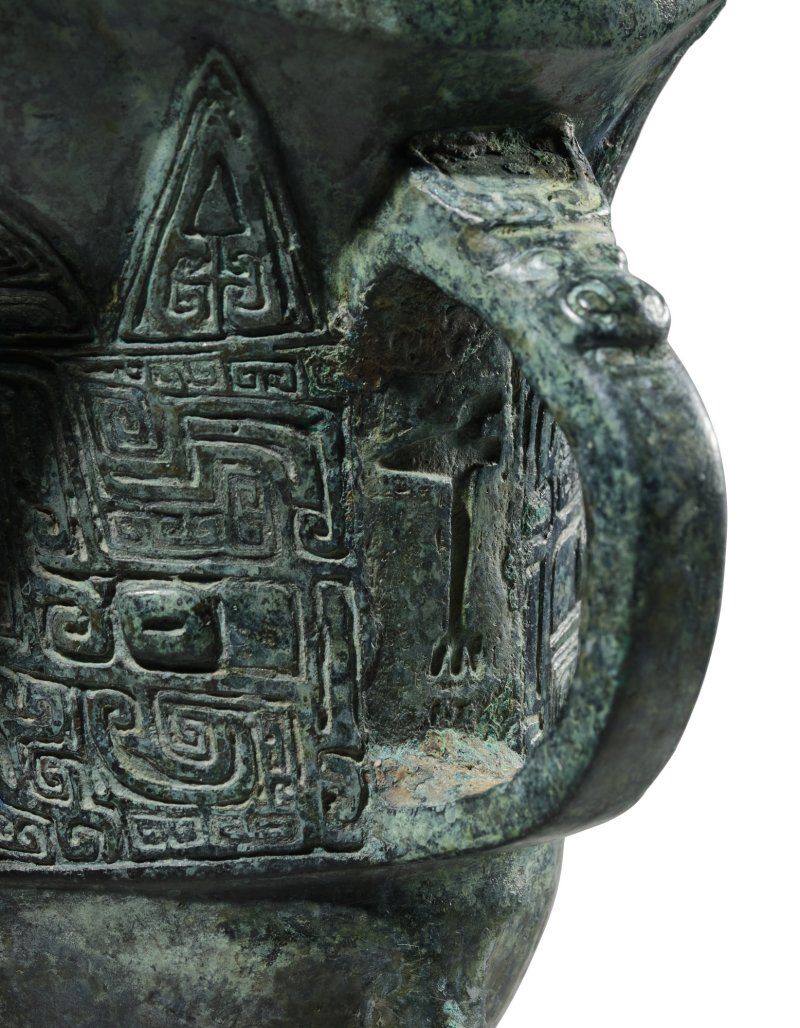
Cast for posterity, a single pictogram of Ge (戈, dagger-axe) beneath the handle marks this vessel for the great Ge clan, a lineage traced to Yu of the Xia, among a rare few to claim such descent. Like a noble banner or seal of rank, the emblem proclaims an elite war-house forged in military power and bronze production, one of the very few ancient clans to dominate across the Xia, Shang, and Zhou. A clan too formidable to fade, bronzes bearing this mark declare a lineage that endures, commands, and will be remembered.
The Ge clan ranks among the most extensively studied lineages of early China, its name appears in early historical texts and oracle-bone inscriptions. Cited in the Records of the Grand Historian and the Zuo Zhuan, it is counted among the rare clans claiming descent from Yu of the Xia, an origin that situates it at the very dawn of Chinese civilization.
Across the Shang and into the Zhou, the Ge clan remained an influential force. Active in the great capitals of Luoyang and later Anyang, it was deeply involved in military affairs, raising soldiers and casting bronzes for both war and ritual. The clan is also believed to have shifted allegiance to King Wu, aligning itself with the founding of the Zhou and continuing its bronze production in Shaanxi. Across the rise and fall of dynasties, the name of Ge has endured for more than three millennia in the bronzes that survive today.
The clan emblem takes the form of the ge dagger-axe, a weapon native to ancient China. The weapon typically had a long shaft with an angled blade mounted near the top, while the emblem often showed a tripod-like base and, at times, a trident-like element hanging at the rear. The ge dagger-axe first appeared in the Neolithic period as a functional stone blade or tool, later in jade medium for ceremonial and burial use, where it signified status and authority. By the Bronze Age, ge were widely cast in bronze as weapons.
Among the surviving bronzes bearing the Ge clan emblem, there are roughly 250 vessels, with two major excavation sites providing key evidence. The earlier discovery at the Gaojiabao site established much of the framework, while the 2016 excavation at the Xindian site renewed discussion of the clan’s history and significance. Most of these vessels date to the late Shang and early Western Zhou dynasties and include a wide range of forms, such as ding 鼎, yan 甗, gui 簋, zun 尊, you 卣, gu 觚, jue 爵, jia 斝, zhi 觶, he 盉, and lei 罍, as well as the ge weapon that gave the clan its name. Early textual references already suggest the Ge clan’s long history, and the scale and diversity of the surviving bronzes provide a parallel confirmation, with both lines of evidence reinforcing the clan’s considerable status and prominence.
Most of these bronzes are now preserved in prominent museums, including the Palace Museum in Beijing and Taipei. See also a widely published Ge gui from the Sackler Collection, sold in our New York rooms, 18th March 2021, lot 192. A small group of Ge jue is also preserved in the Palace Museum in Beijing. One of them, acc. no. xin-9360, which is closest to the present vessel, also features an animal-mask motif as its principal decoration, with cicada blades above.
As a character, ge is closely associated with warfare and state power. It appears as a radical in several related characters with military meanings, including wu (武, martial; military), often interpreted as “to stop the ge/weapon” (止戈為武), expressing the ideal of ending conflict or halting violence. In guo (國, state; country), the ge component suggests the defense of territory. Other characters such as rong (戎, warfare), fa (伐, attack), and zhan (戰, war; battle) also incorporate this element and carry military meanings.
From weapon to clan symbol to the character still used today, ge condenses warfare, authority, and the foundations of civilization into a single mark, laying bare the human instinct to conquer and to dominate.
19.5 cm
木盒蓋內書四代秦蔵六(1898至1984年)昭和丁亥(1947年)題識
来源:Kochukyo Co., Ltd, Tokyo.
图录
说明:來源
壺中居,東京
「太史公曰:禹為姒姓,其後分封,用國為姓,
故有夏后氏、有扈氏、有男氏、斟尋氏、彤城氏、褒氏、
費氏、杞氏、繒氏、辛氏、冥氏、斟(氏)、戈氏。」
— 司馬遷,《史記.夏本紀》
“The Grand Historian says: Yu belonged to the Si surname.
His descendants were later enfeoffed, and
taking the names of their fiefs as surnames;
thus there arose the Xiahou clan, the Hu clan, the Nan clan, the Zhenxun clan,
the Tongcheng clan, the Bao clan, the Fei clan, the Qi clan, the Zeng clan,
the Xin clan, the Ming clan, the Zhen clan, and the Ge clan.”
— Sima Qian, Records of the Grand Historian: The Basic Annals of Xia
Cast for posterity, a single pictogram of Ge (戈, dagger-axe) beneath the handle marks this vessel for the great Ge clan, a lineage traced to Yu of the Xia, among a rare few to claim such descent. Like a noble banner or seal of rank, the emblem proclaims an elite war-house forged in military power and bronze production, one of the very few ancient clans to dominate across the Xia, Shang, and Zhou. A clan too formidable to fade, bronzes bearing this mark declare a lineage that endures, commands, and will be remembered.
The Ge clan ranks among the most extensively studied lineages of early China, its name appears in early historical texts and oracle-bone inscriptions. Cited in the Records of the Grand Historian and the Zuo Zhuan, it is counted among the rare clans claiming descent from Yu of the Xia, an origin that situates it at the very dawn of Chinese civilization.
Across the Shang and into the Zhou, the Ge clan remained an influential force. Active in the great capitals of Luoyang and later Anyang, it was deeply involved in military affairs, raising soldiers and casting bronzes for both war and ritual. The clan is also believed to have shifted allegiance to King Wu, aligning itself with the founding of the Zhou and continuing its bronze production in Shaanxi. Across the rise and fall of dynasties, the name of Ge has endured for more than three millennia in the bronzes that survive today.
The clan emblem takes the form of the ge dagger-axe, a weapon native to ancient China. The weapon typically had a long shaft with an angled blade mounted near the top, while the emblem often showed a tripod-like base and, at times, a trident-like element hanging at the rear. The ge dagger-axe first appeared in the Neolithic period as a functional stone blade or tool, later in jade medium for ceremonial and burial use, where it signified status and authority. By the Bronze Age, ge were widely cast in bronze as weapons.
Among the surviving bronzes bearing the Ge clan emblem, there are roughly 250 vessels, with two major excavation sites providing key evidence. The earlier discovery at the Gaojiabao site established much of the framework, while the 2016 excavation at the Xindian site renewed discussion of the clan’s history and significance. Most of these vessels date to the late Shang and early Western Zhou dynasties and include a wide range of forms, such as ding 鼎, yan 甗, gui 簋, zun 尊, you 卣, gu 觚, jue 爵, jia 斝, zhi 觶, he 盉, and lei 罍, as well as the ge weapon that gave the clan its name. Early textual references already suggest the Ge clan’s long history, and the scale and diversity of the surviving bronzes provide a parallel confirmation, with both lines of evidence reinforcing the clan’s considerable status and prominence.
Most of these bronzes are now preserved in prominent museums, including the Palace Museum in Beijing and Taipei. See also a widely published Ge gui from the Sackler Collection, sold in our New York rooms, 18th March 2021, lot 192. A small group of Ge jue is also preserved in the Palace Museum in Beijing. One of them, acc. no. xin-9360, which is closest to the present vessel, also features an animal-mask motif as its principal decoration, with cicada blades above.
As a character, ge is closely associated with warfare and state power. It appears as a radical in several related characters with military meanings, including wu (武, martial; military), often interpreted as “to stop the ge/weapon” (止戈為武), expressing the ideal of ending conflict or halting violence. In guo (國, state; country), the ge component suggests the defense of territory. Other characters such as rong (戎, warfare), fa (伐, attack), and zhan (戰, war; battle) also incorporate this element and carry military meanings.
From weapon to clan symbol to the character still used today, ge condenses warfare, authority, and the foundations of civilization into a single mark, laying bare the human instinct to conquer and to dominate.
常见问题
拍品的品相状况如何?
如欲了解本拍品狀況的更多資訊,請聯絡 Rubie.Fong@sothebys.com
这件拍品的流传来源是什么?
Kochukyo Co., Ltd, Tokyo.
图录
图录