
拍品信息
拍品名称
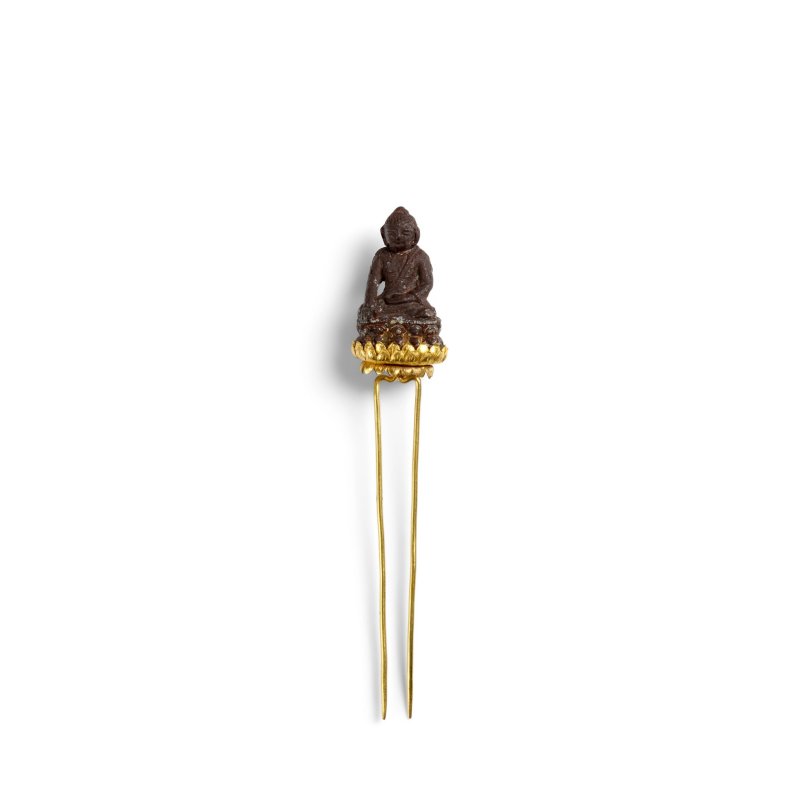
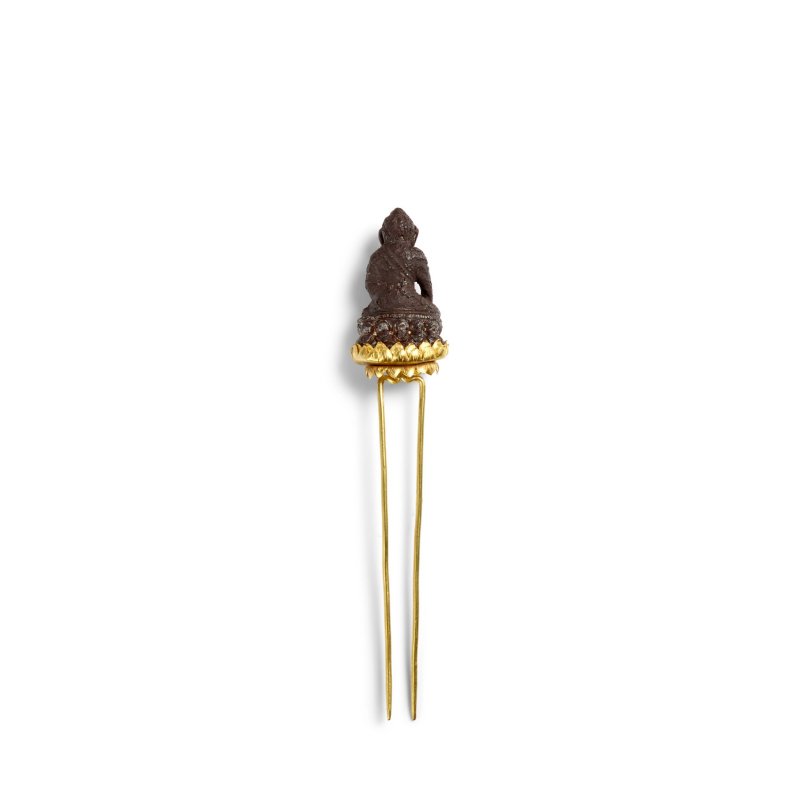
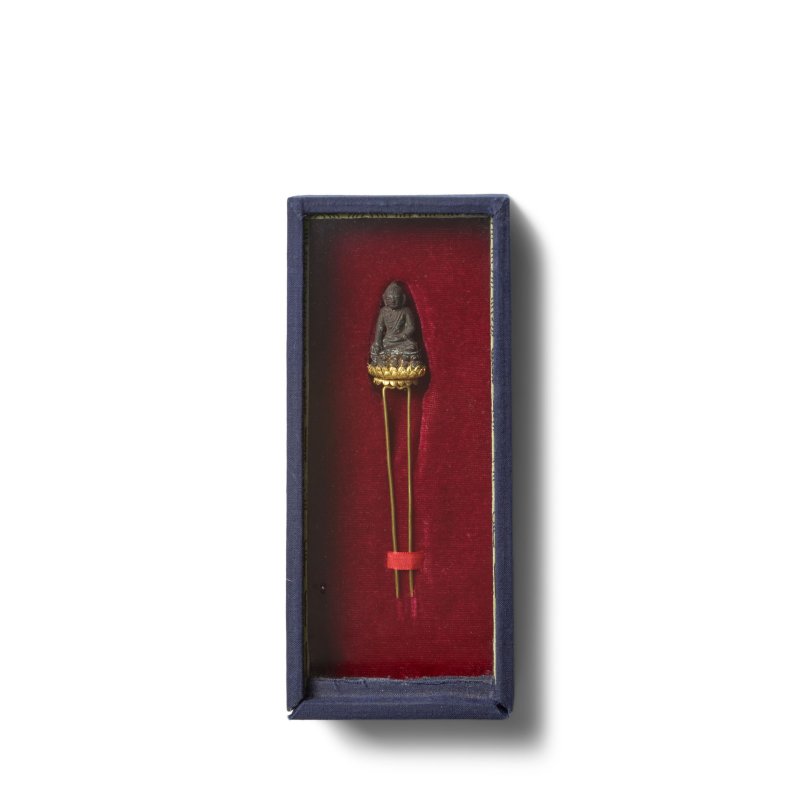
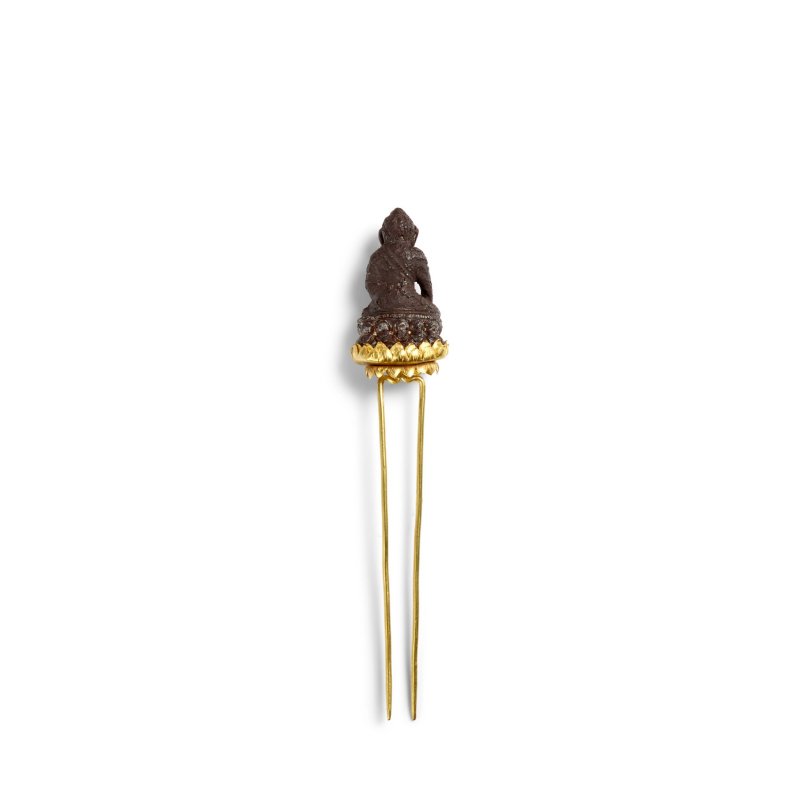
明 嵌銅佛金髮釵 | A BRONZE-BUDDHA-MOUNTED GOLD HAIRPIN
年代
Ming Dynasty
起拍价
USD 4,000
估值区间
未知
尺寸
未知
品相
未知
更多信息
Ming Dynasty
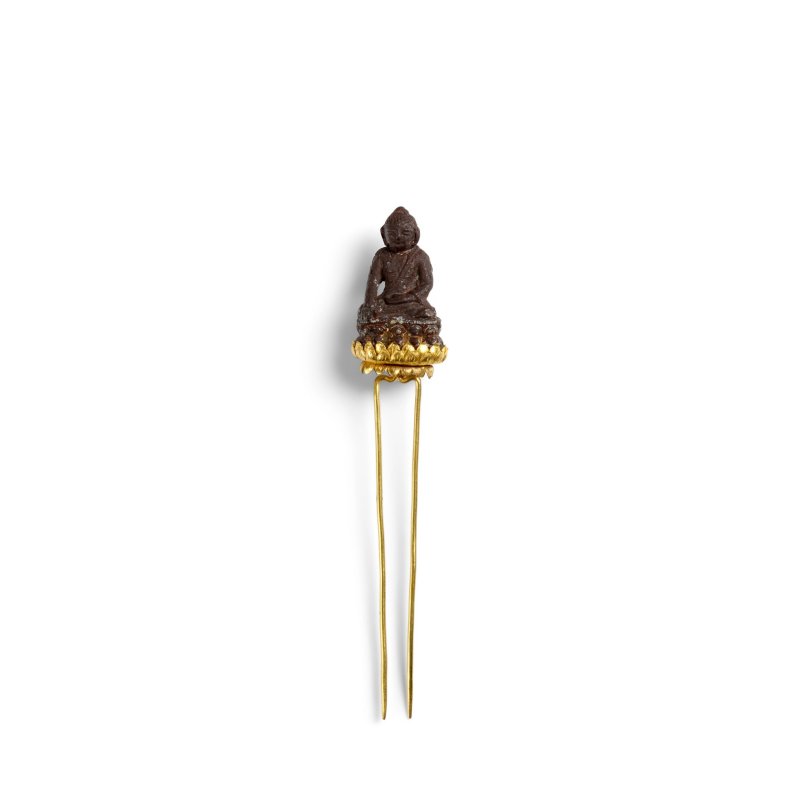
The hairpin surmounted by a small bronze figure of Buddha raised on a finely pleated double lotus pedestal, issuing from the base a pair of long tapering prongs.
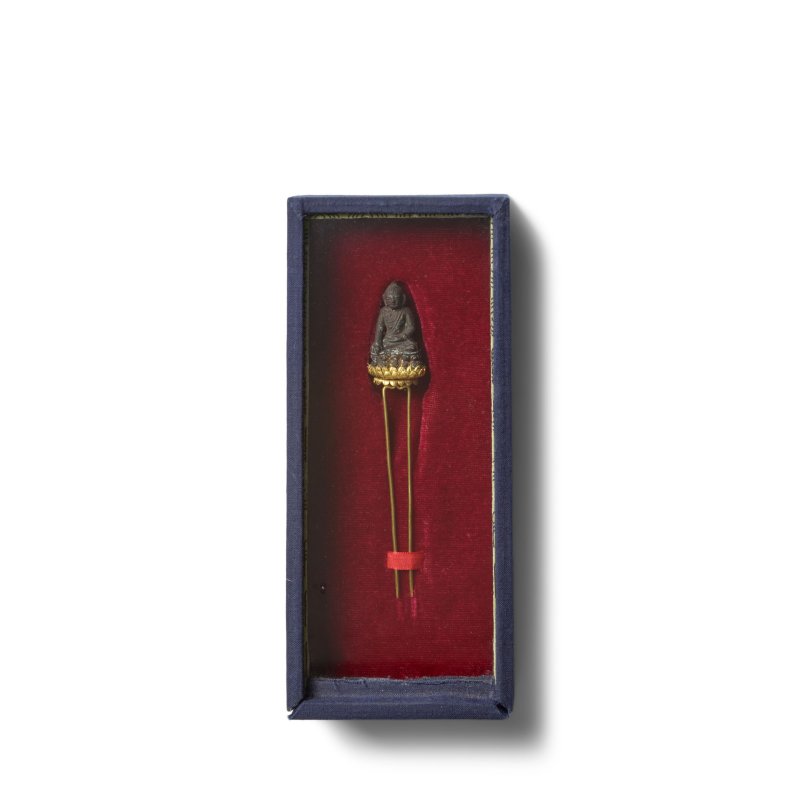
4 3/4in (12cm) long overall (fitted display box).
Footnotes
明 嵌銅佛金髮釵
Religious imagery held a prominent place in the personal ornament of the Ming dynasty. Figures of the Buddha, bodhisattvas and immortals, together with Sanskrit characters and emblems such as the shou (longevity) character, were considered especially appropriate for the tiaoxin (桃心), the central hairpin worn by elite women above the forehead at the front of the hair-bun cover, where such images were believed to confer blessing and protection upon the wearer.
A small white jade figure of Guanyin mounted on a lotus pedestal, unearthed from the Lu family tomb at Lujiazui, Pudong, is ilustrated in Jade Wares of the Tang, Song, Yuan, Ming Qing Unearthed from Shanghai, Shanghai, 2001, pp. 174-175, described as hair ornament from the mid-late Ming dynasty.
The hairpin surmounted by a small bronze figure of Buddha raised on a finely pleated double lotus pedestal, issuing from the base a pair of long tapering prongs.
4 3/4in (12cm) long overall (fitted display box).
Footnotes
明 嵌銅佛金髮釵
Religious imagery held a prominent place in the personal ornament of the Ming dynasty. Figures of the Buddha, bodhisattvas and immortals, together with Sanskrit characters and emblems such as the shou (longevity) character, were considered especially appropriate for the tiaoxin (桃心), the central hairpin worn by elite women above the forehead at the front of the hair-bun cover, where such images were believed to confer blessing and protection upon the wearer.
A small white jade figure of Guanyin mounted on a lotus pedestal, unearthed from the Lu family tomb at Lujiazui, Pudong, is ilustrated in Jade Wares of the Tang, Song, Yuan, Ming Qing Unearthed from Shanghai, Shanghai, 2001, pp. 174-175, described as hair ornament from the mid-late Ming dynasty.