
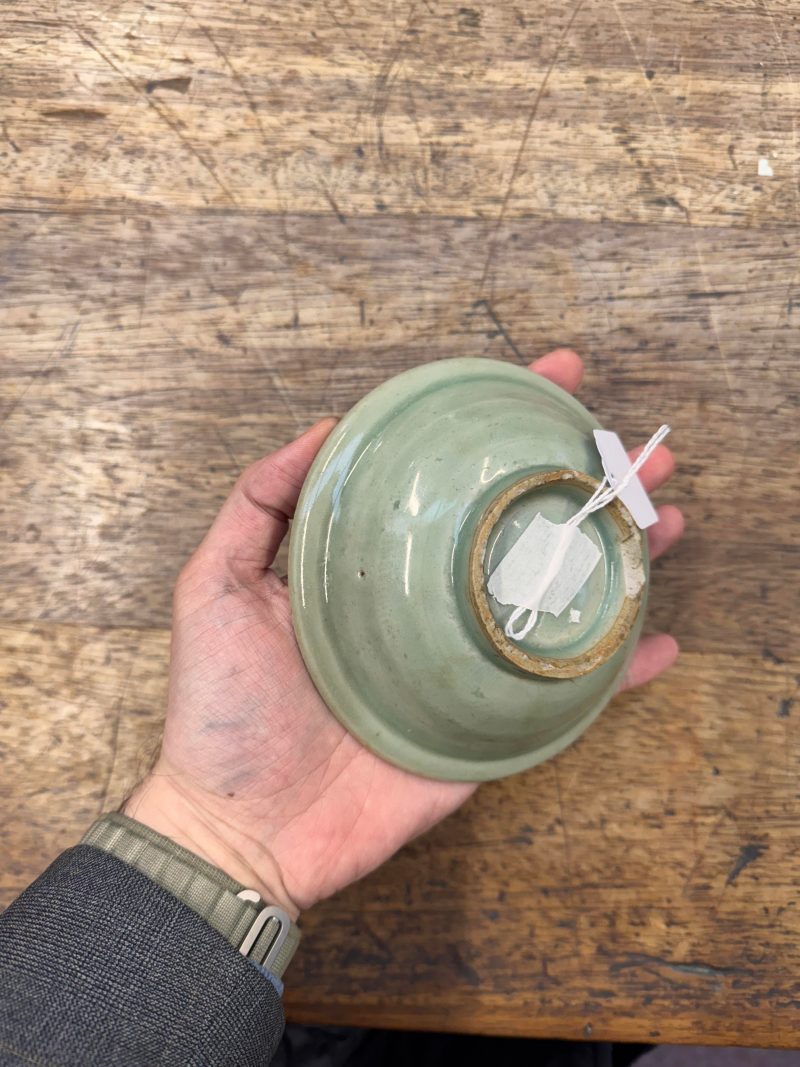
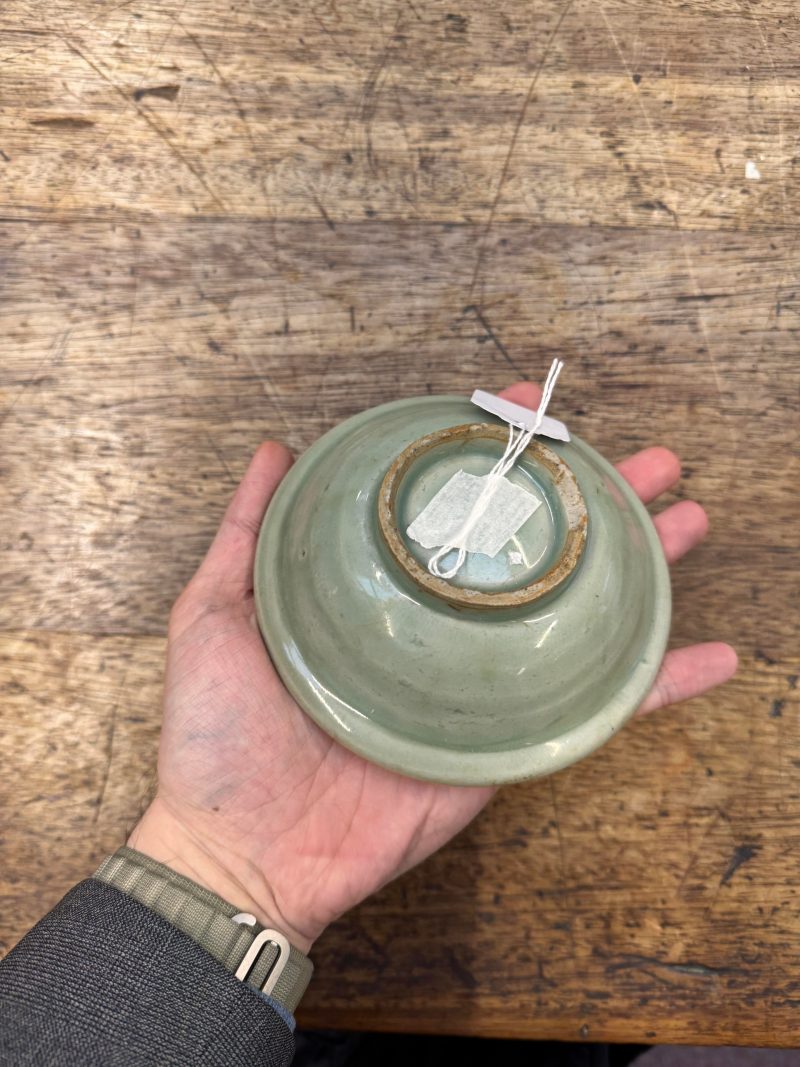
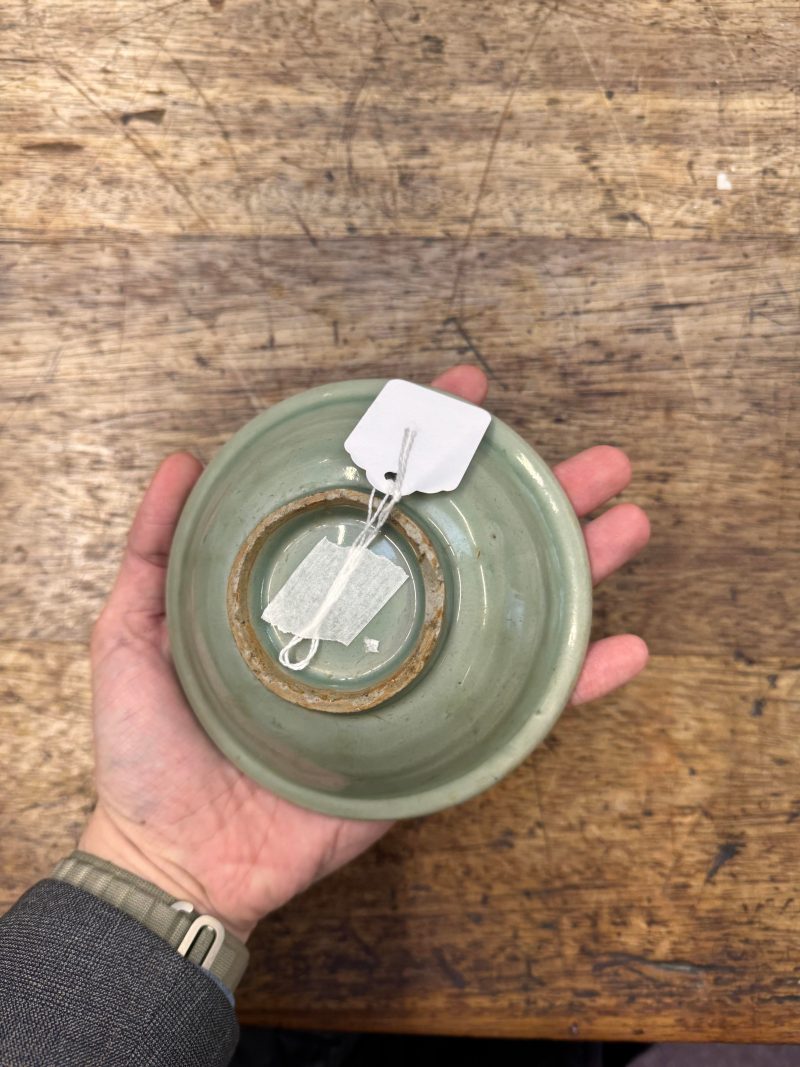

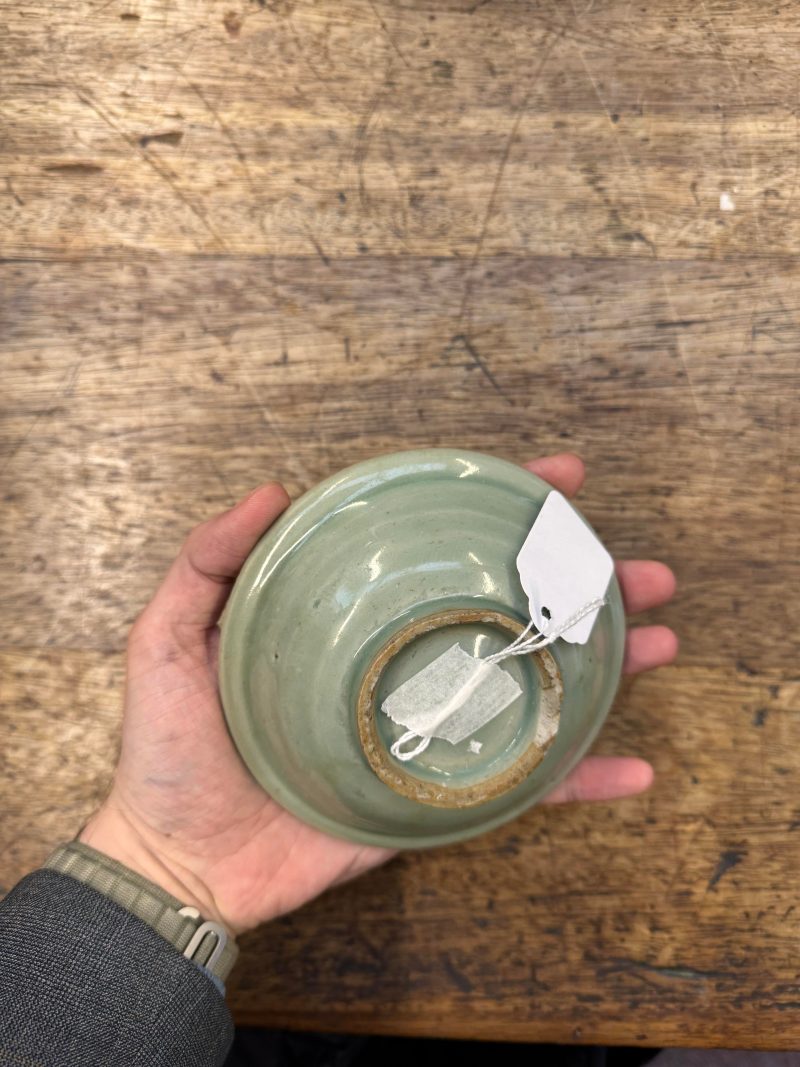
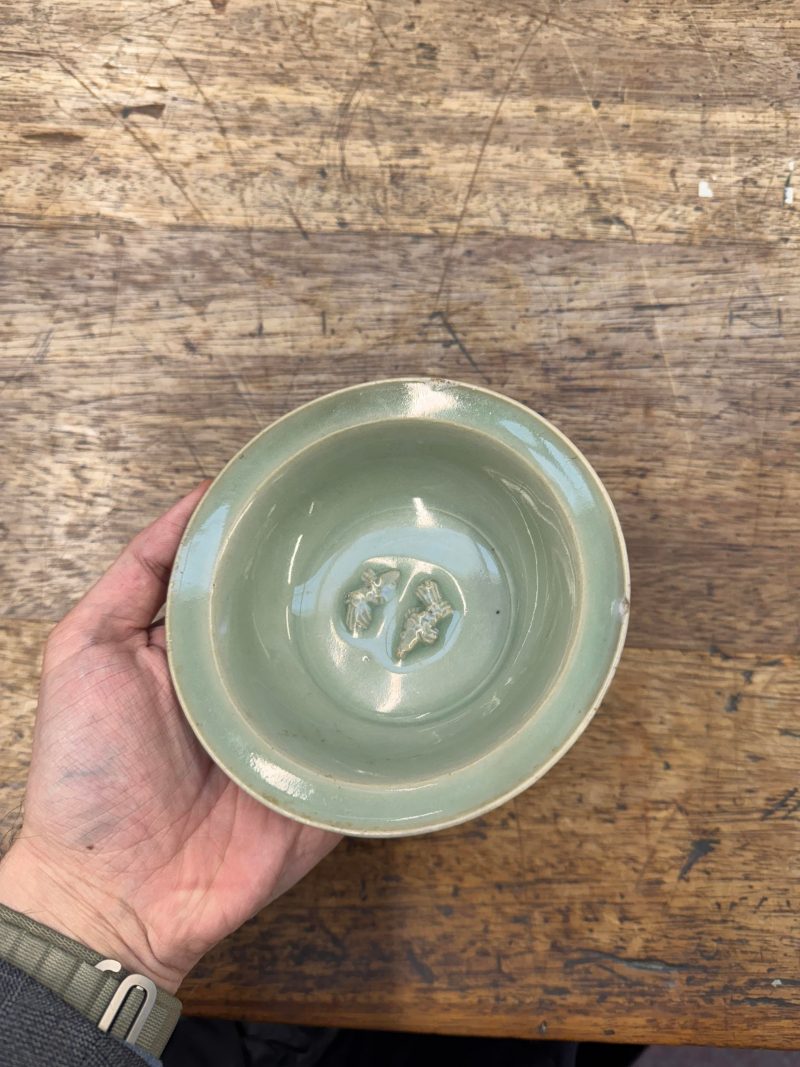
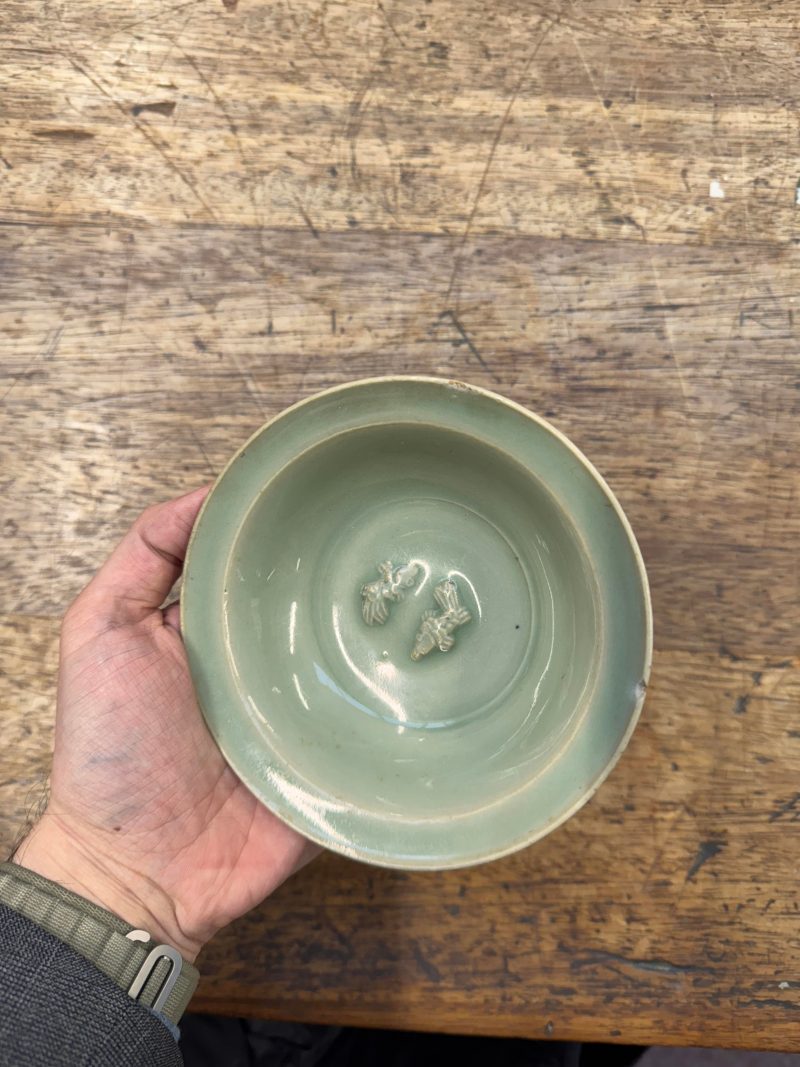
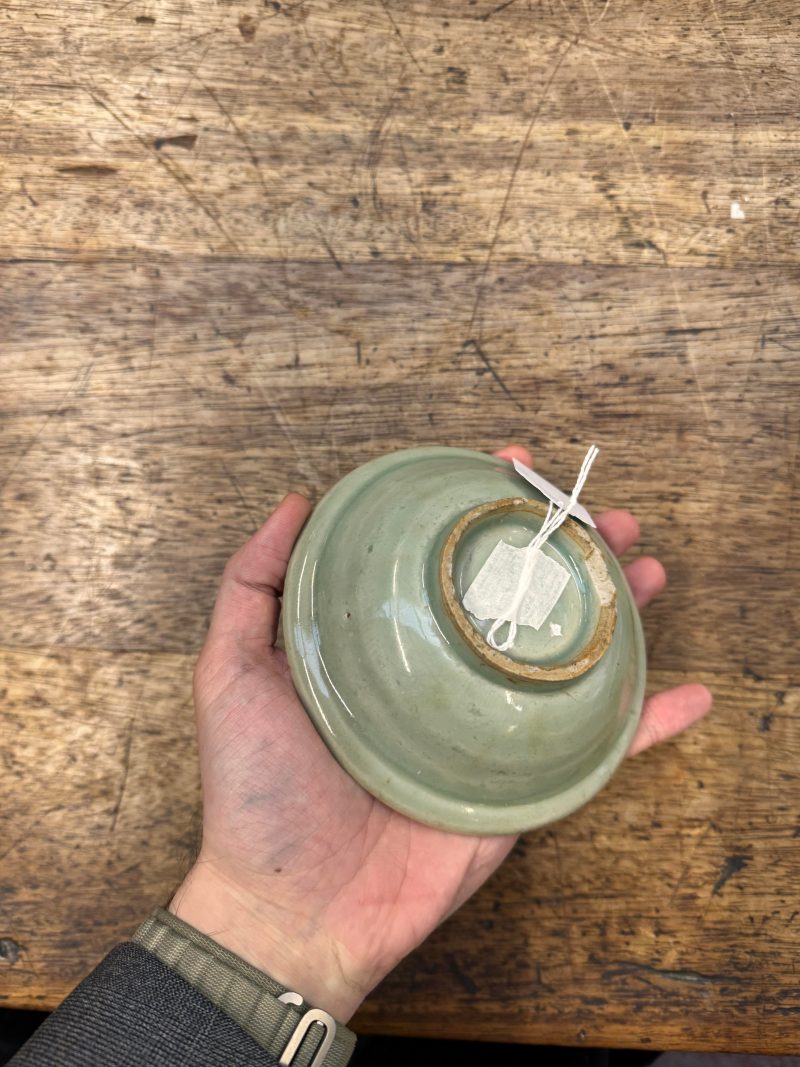
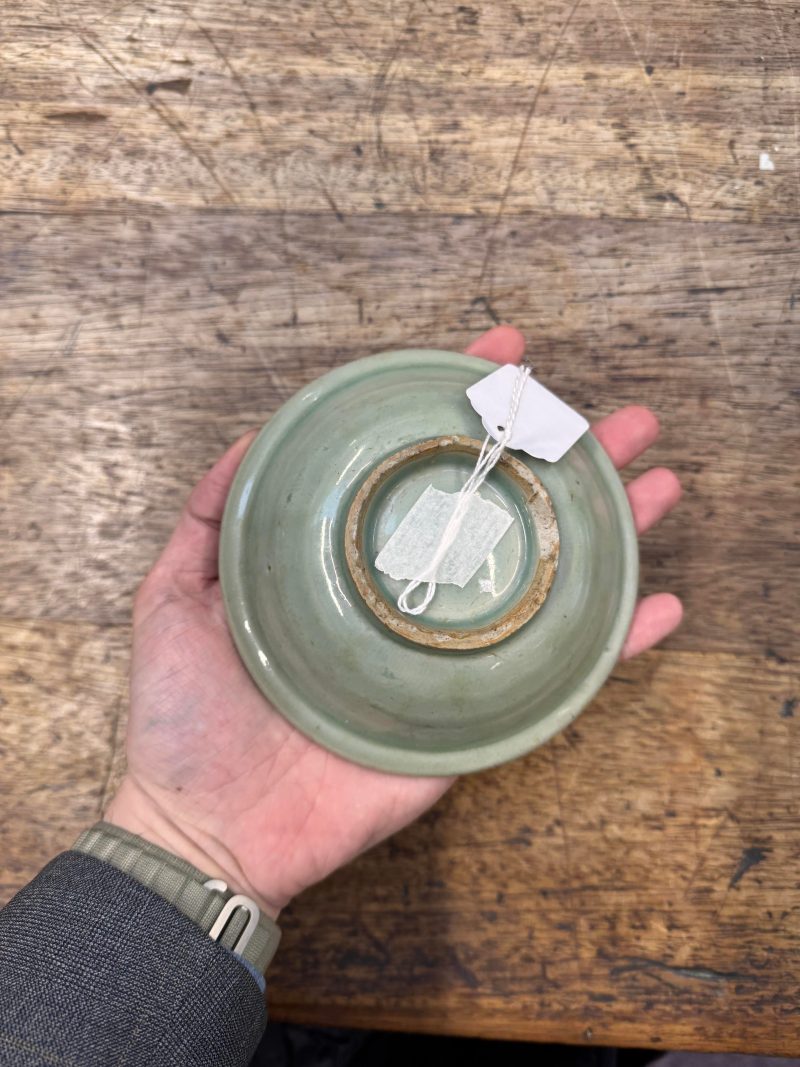
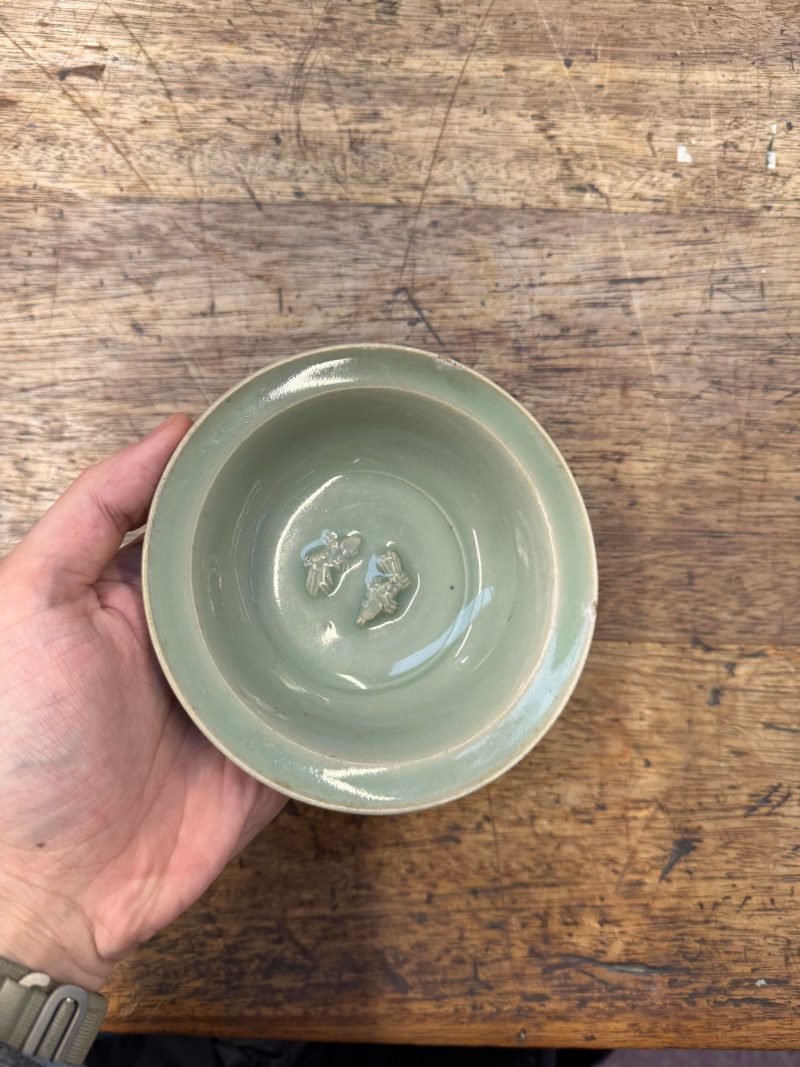
Lot 510 宋或元 龍泉青釉印雙魚折沿盤 | A rare Chinese Longquan celadon 'twin fish' dish, Song / Yuan dynasty
落槌价
预展中
成交价
预展中
| 拍卖公司 | Chiswick |
|---|---|
| 拍卖时间 | 2026年11月05日 |
拍品信息
拍品名称
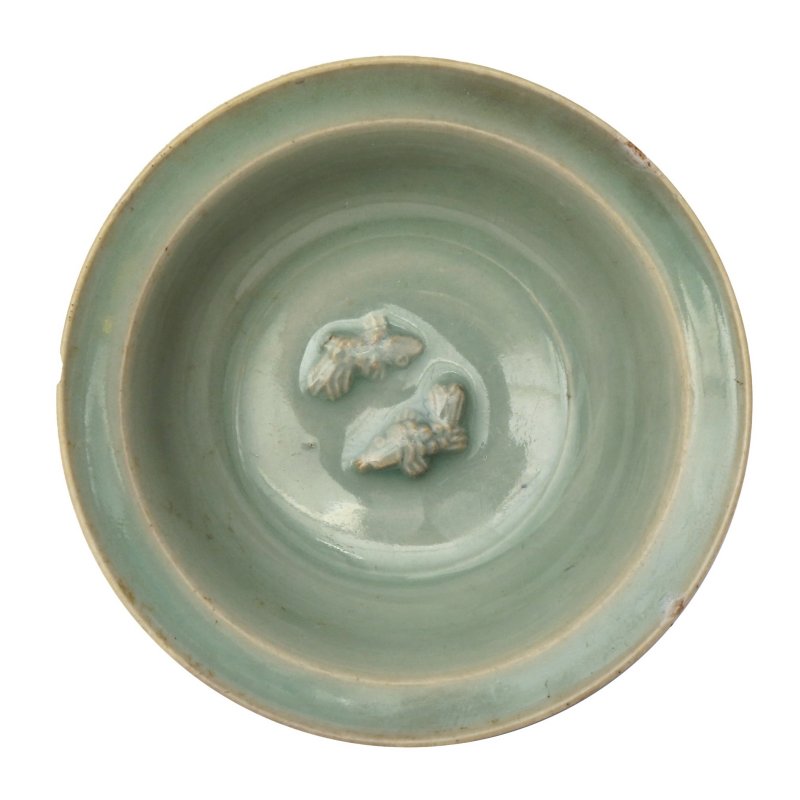
宋或元 龍泉青釉印雙魚折沿盤 | A rare Chinese Longquan celadon 'twin fish' dish, Song / Yuan dynasty
起拍价
未知
估值区间
Estimate £300 - £500
尺寸
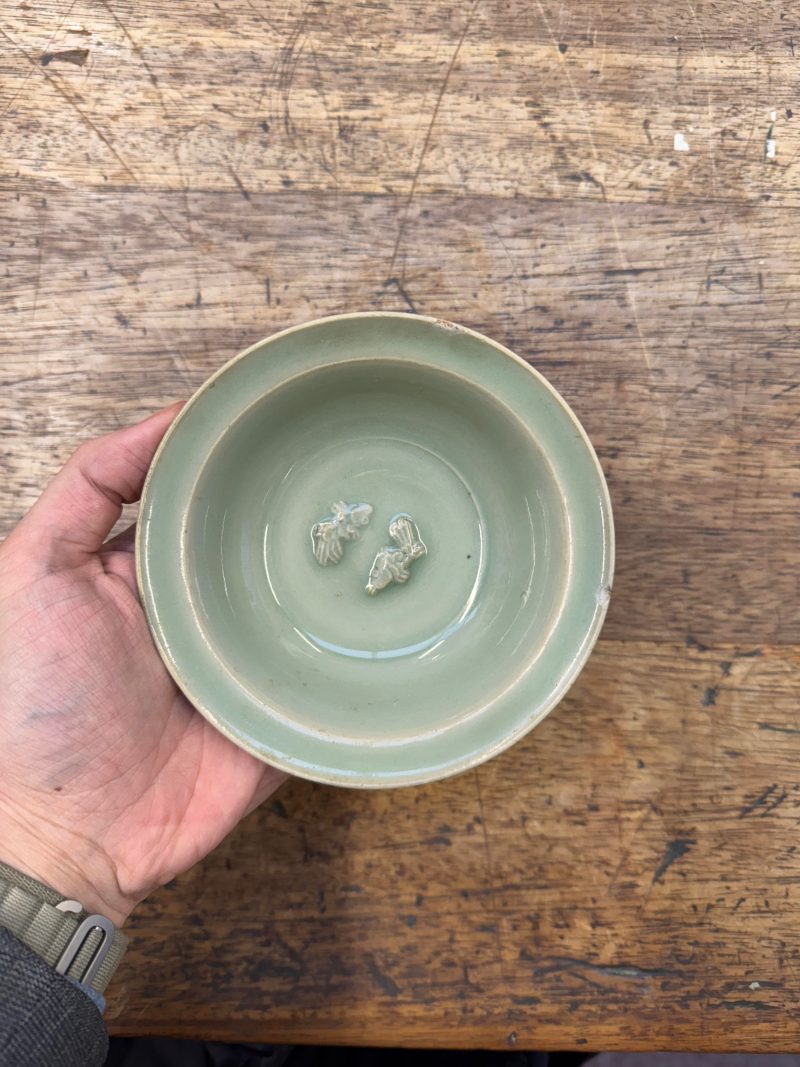
13cm diameter
品相
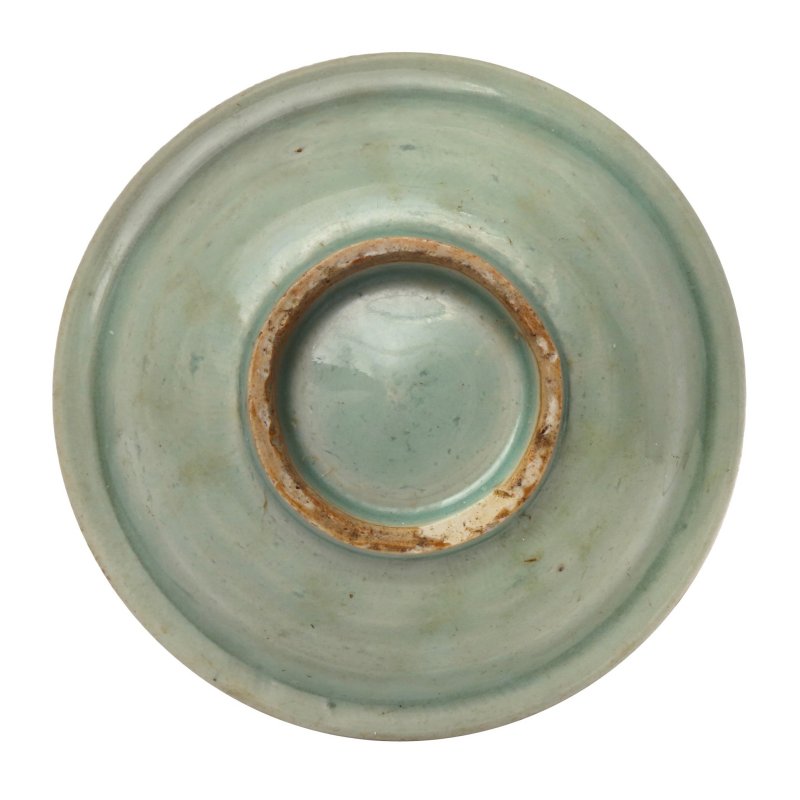
There are two small chips to the rim, chips and frits to the foot, general wear to the glaze and surface consistent with age.
更多信息
The dish with plain rounded sides rising from a gently-tapering foot to a wide flared rim, the well decorated with a pair of finely-moulded fish and covered overall in a thick pale-green glaze that thins to a mushroom tone at the extremities
(Quantity:1)
Provenance:
Property of a French Private Collection formed in Hong Kong during the 1960’s-1980’s
來源:
法國私人收藏,1960-1980年代在香港組成
Notes:
This lot is offered with no reserve
無底價
Dishes of this type typically bear an upright petal design around the exterior, as can be seen in many examples found in major museum collections and offered at auction. The present lot differs from these examples, eschewing the upright-petal design in favour of elegantly plain outer walls. A comparable dish with this same design, dated to the Southern Song Dynasty, was sold at Christie's Hong Kong, 28th May 2014, lot 3228.
Paired dishes are symbolic of fertility and marital bliss. The motif can be traced back to the Han Dynasty - for example, bronze vessels decorated with the 'twin fish' motif were popular from the Eastern Han Dynasty to the Jin Dynasty. A bronze basin with a twin-fish decoration to the interior is housed in the Lee Kong Chian Art Museum in Singapore, and illustrated in 'Lee Kong Chian Art Museum Catalogue: National University of Singapore', Singapore, 1990, p. 306, no. 336.
These bronze vessels were used as prototypes, inspiring future potters to craft wares with similar designs. Yue wares from the Western Jin Dynasty bearing the paired fish motif have since been unearthed, and a basin of this type with incised decoration is illustrated by S. Pierson, in 'Illustrated Catalogue of Celadon Wares in the Percival David Foundation of Chinese Art', 1997, p.39, no.250. Notably the design on this basin illustrates the pair of fish side-by-side, as is also found on earlier bronze wares, rather than the circular 'swimming' depiction found on later ceramics.
Later celadon-glazed ceramics bearing this design were popular, with the Longquan kilns being the centre of production during the late Southern Song Dynasty and up until the Ming Dynasty. Some examples of these wares, dated to the 1320s, have been recovered from the cargo of a trading vessel that sank near the coast of Sinan in South Korea, and are included in 'Special Exhibition of Cultural Relics Found off the Sinan Coast', National Museum of Korea, Seoul, 1977, pl. 28.
Similar dishes, dated to the Yuan Dynasty, can be found in the British Museum collection, donated by Sir Percival David, acc. nos. 1931,1118.1 and 1931,1118.2. A pair of similar dishes were offered at Bonhams Hong Kong, 26th May 2014, lot 87.
同類盤外壁多飾仰蓮紋,此見於各大博物館館藏及拍賣會所見之多數例中。本品則別具一格,去繁就簡,外壁光素無紋,更顯素雅流暢。香港佳士得曾售出一件相同樣式之南宋例,2014年5月28日,編號3228,可資比較。
雙魚紋飾寄寓多子多福、琴瑟和鳴之意。此紋樣可追溯至漢代,如飾有雙魚紋之青銅器自東漢至晉代極為盛行。新加坡李光前文物館珍藏一件器內飾雙魚紋之青銅洗,錄於《新加坡國立大學李光前文物館圖錄》,新加坡,1900年,頁306,圖版336。
此類青銅器實乃後世陶瓷創作之範本,深為歷代匠人所效法。西晉越窯瓷器中即有雙魚紋之考古出土例,英國大維德中國藝術基金會即藏有一件劃花雙魚紋洗,載於畢宗陶(S. Pierson)著《大維德中國藝術基金會青瓷圖錄》,1997年,頁39,編號250。值得留意的是,該洗上之雙魚呈並排樣式,延續早期的青銅器範式,而非後世陶瓷常見之巡迴游魚構圖。
至南宋晚期至明代,龍泉窯成為燒造此類青瓷之中心,盛極一時。韓國新安海底沈船出水文物中,亦發現有約1320年代之同類青瓷器,載於韓國國立中央博物館編《新安海底文物特別展》,首爾,1977年,圖版28。
元代同類盤例可參見大英博物館大維德爵士捐贈藏品,館藏編號1931,1118.1及1931,1118.2。另有一對同類盤,於香港邦瀚斯2014年5月26日拍賣,拍品編號87。
以下内容由AI翻译:
【名称】
宋或元 龍泉青釉印雙魚折沿盤
【描述】
盘壁圆润,自渐收的足部上升至宽大的外撇口沿,盘心饰一对精细模制的鱼纹,整体施厚淡绿色釉,边缘处釉色变浅呈蘑菇色调
(数量:1)
注:
此拍品无底价
【品相】
口沿有两处小磕碰,足部有磕碰和剥落,釉面和表面有与年代相符的一般磨损。
常见问题
这件宋或元 龍泉青釉印雙魚折沿盤 | A rare Chinese Longquan celadon 'twin fish' dish, Song / Yuan dynasty的成交价是多少?
落槌价为 预展中。 成交价为 预展中。
拍品的品相状况如何?
There are two small chips to the rim, chips and frits to the foot, general wear to the glaze and surface consistent with age.
拍品的尺寸是多少?
13cm diameter