Lot 8 西周 約公元前十世紀 青銅鳥紋卣 | IMPORTANT ET TRÈS RARE RÉCIPIENT COUVERT EN BRONZE, YOU
落槌价
预展中
成交价
预展中
| 拍卖公司 | 邦瀚斯 |
|---|---|
| 拍卖时间 | 2026年12月10日 |
拍品信息
拍品名称
西周 約公元前十世紀 青銅鳥紋卣 | IMPORTANT ET TRÈS RARE RÉCIPIENT COUVERT EN BRONZE, YOU
年代
西周 約公元前十世紀
起拍价
未知
估值区间
EUR 200,000–300,000
尺寸
23 cm (9 in.) high x 21 cm (8 1/4 in.) wide
品相
未知
更多信息
IMPORTANT ET TRÈS RARE RÉCIPIENT COUVERT EN BRONZE, YOU
Dynastie des Zhou Occidentaux, vers Xe siècle av. J.-C.
A MAGNIFICENT AND RARE ARCHAIC BRONZE RITUAL WINE VESSEL AND COVER, YOU
Western Zhou Dynasty, ca. 10th century BC
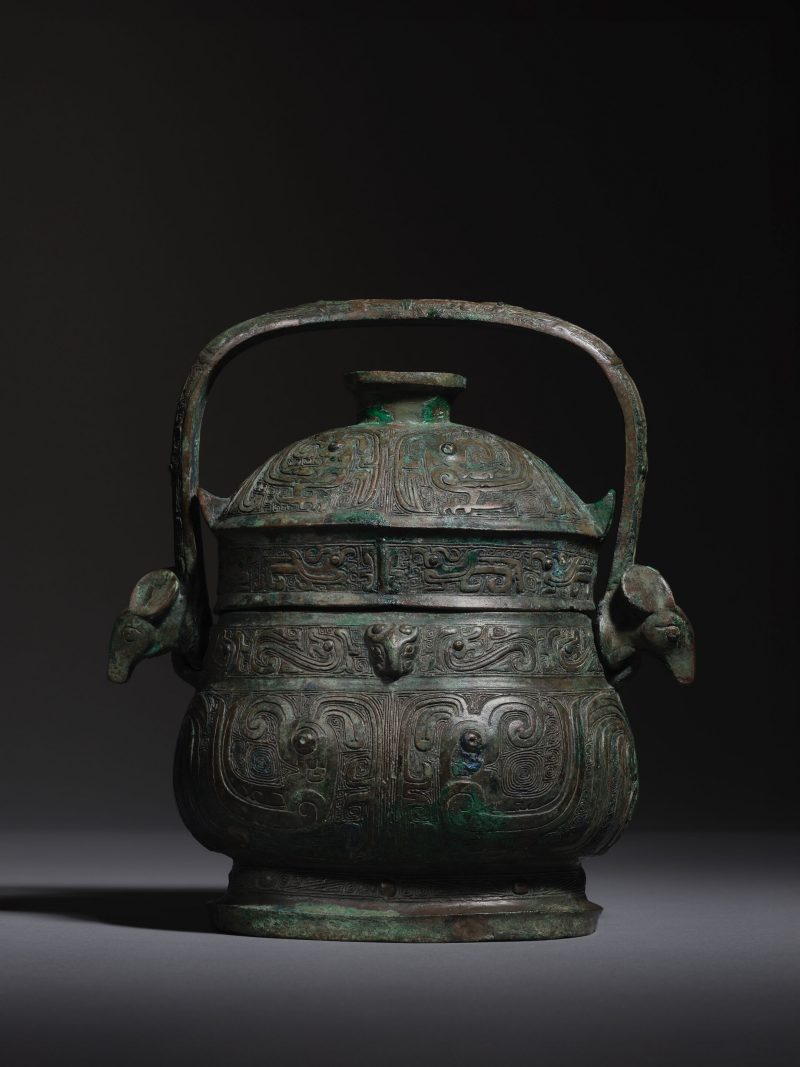
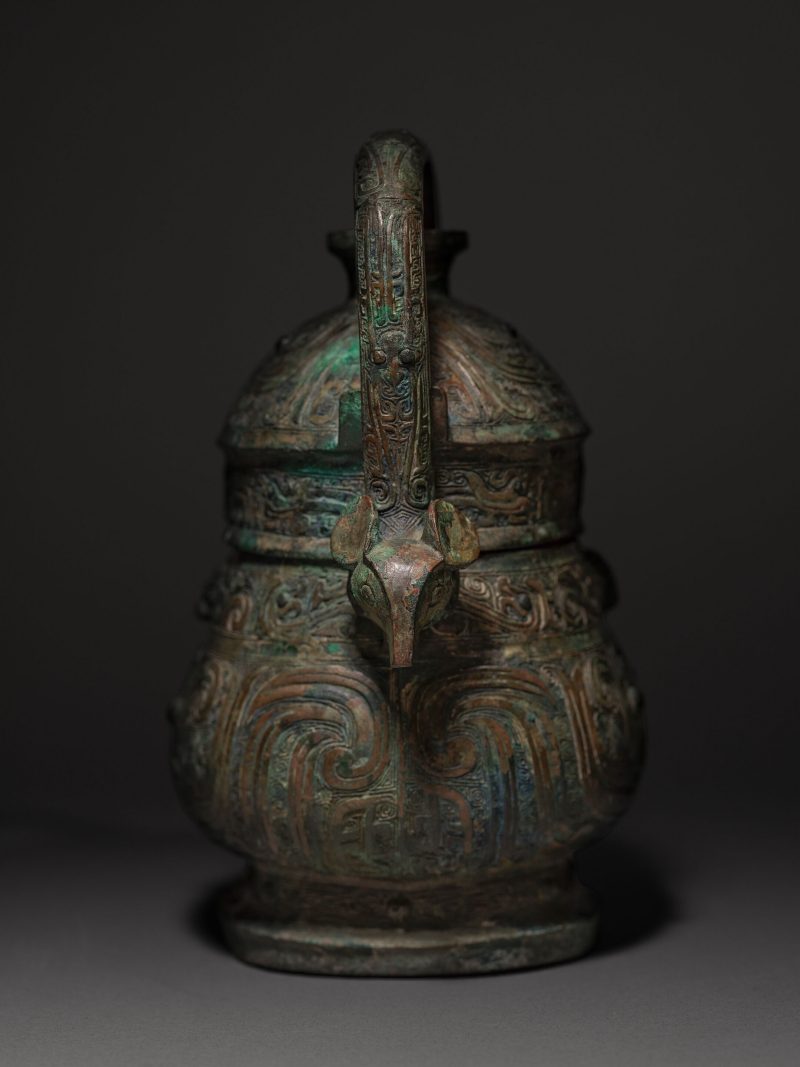
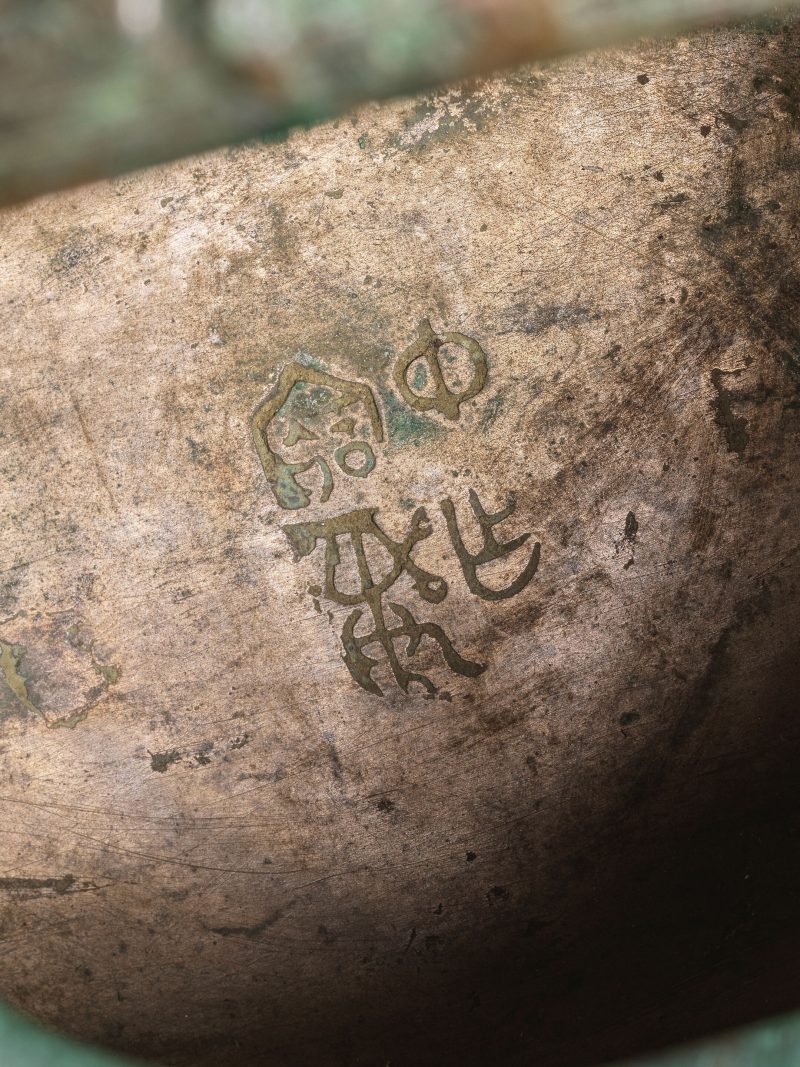
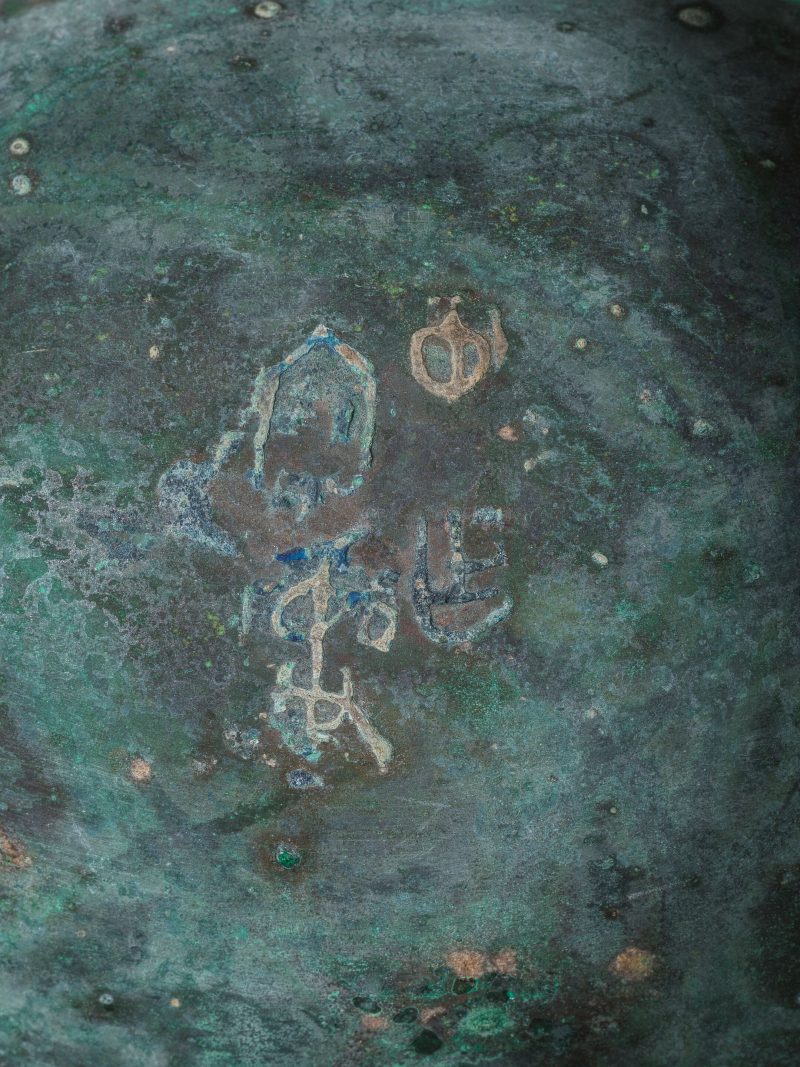
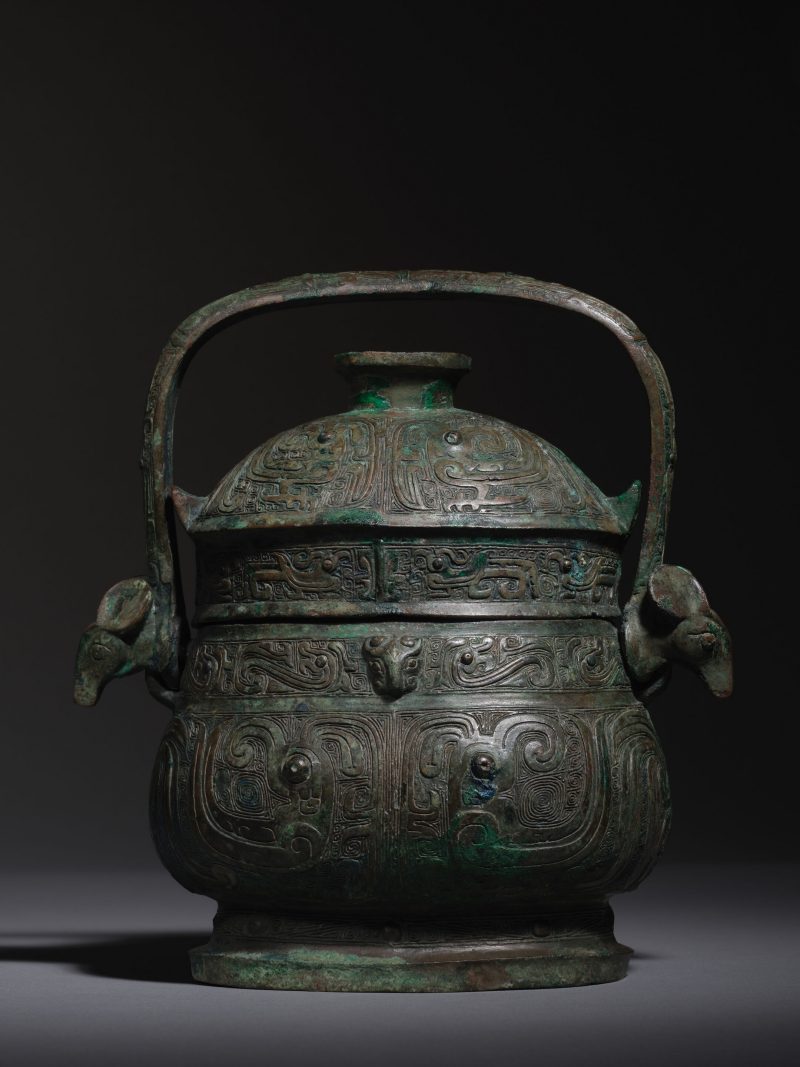
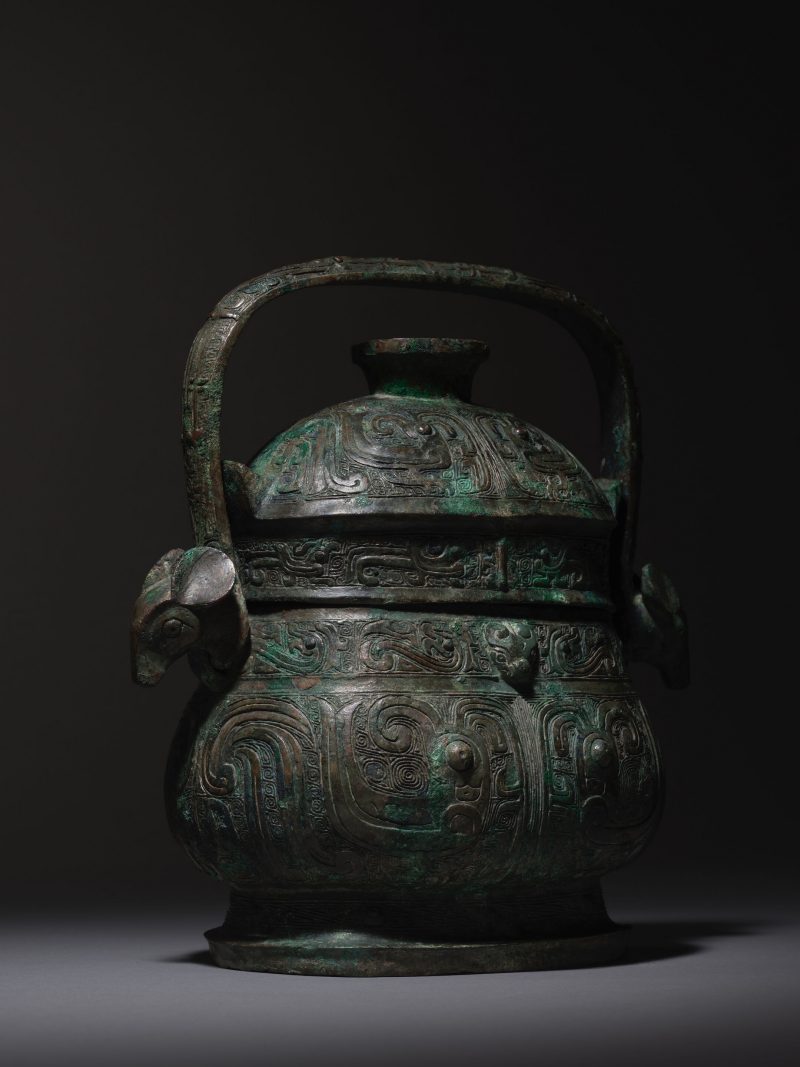
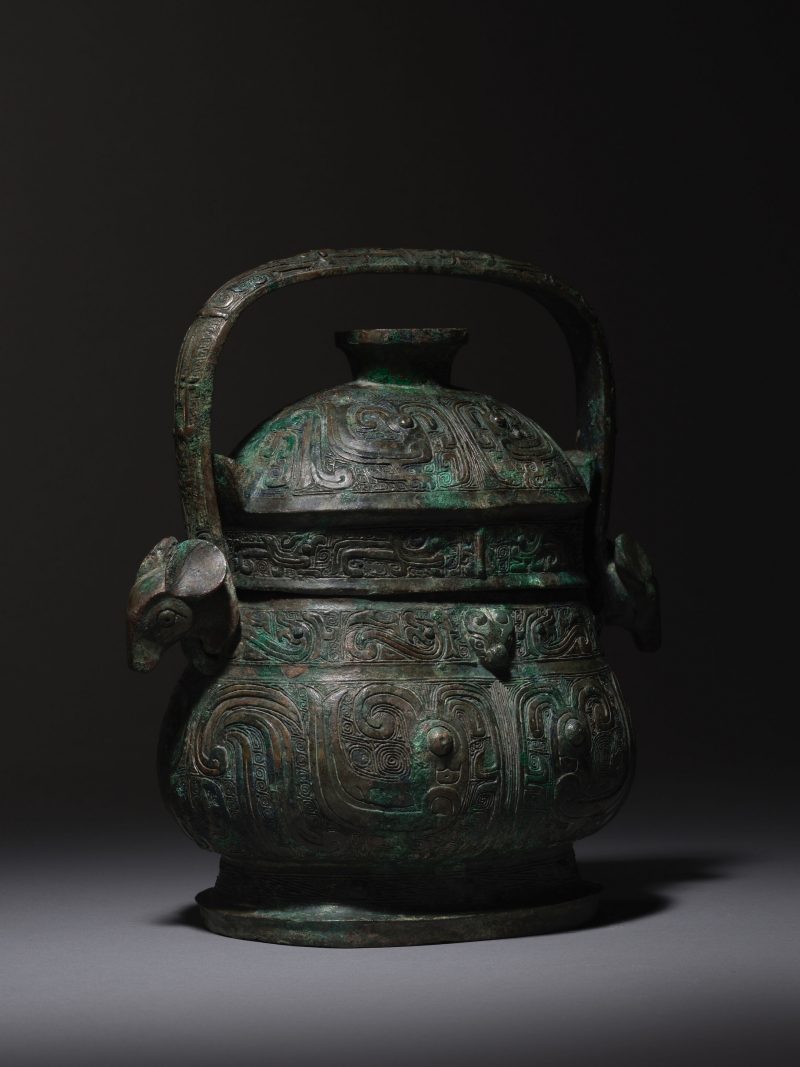
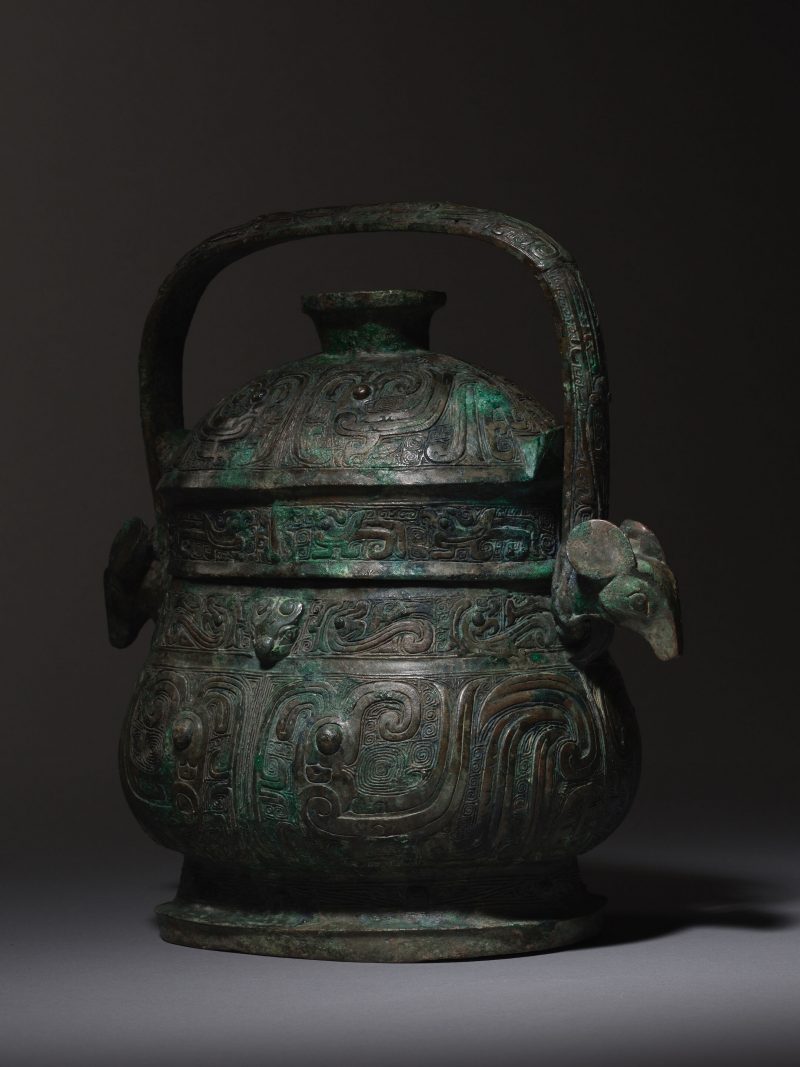
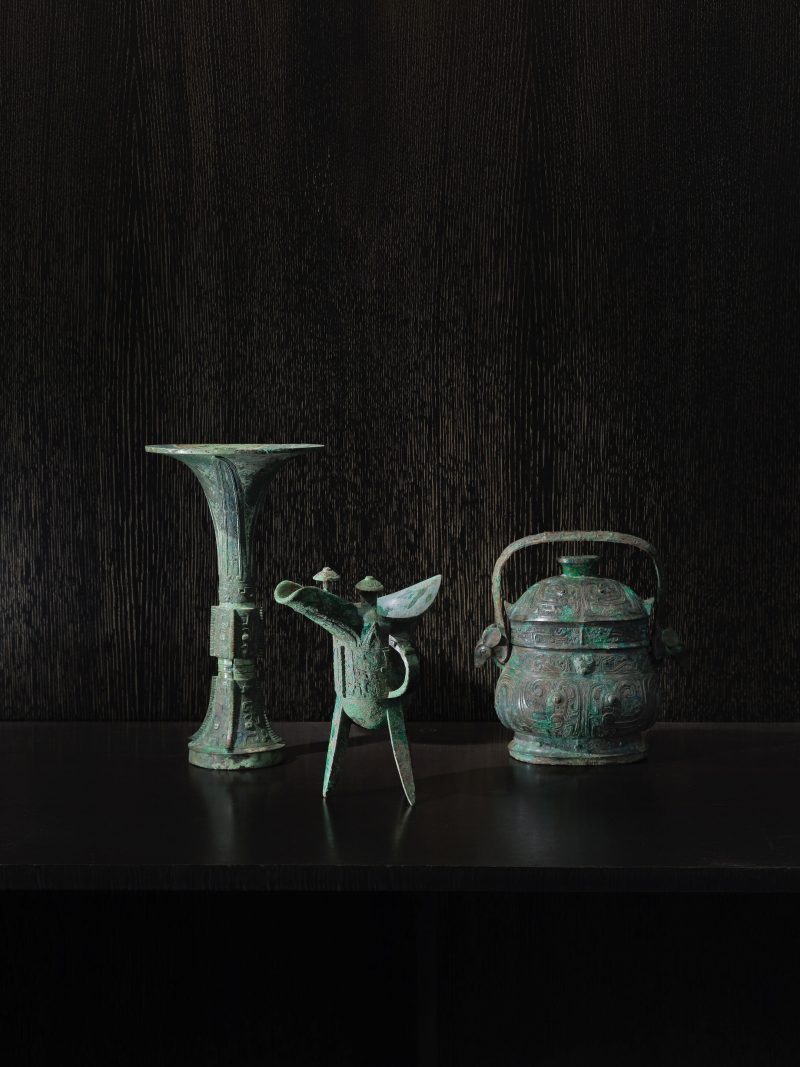
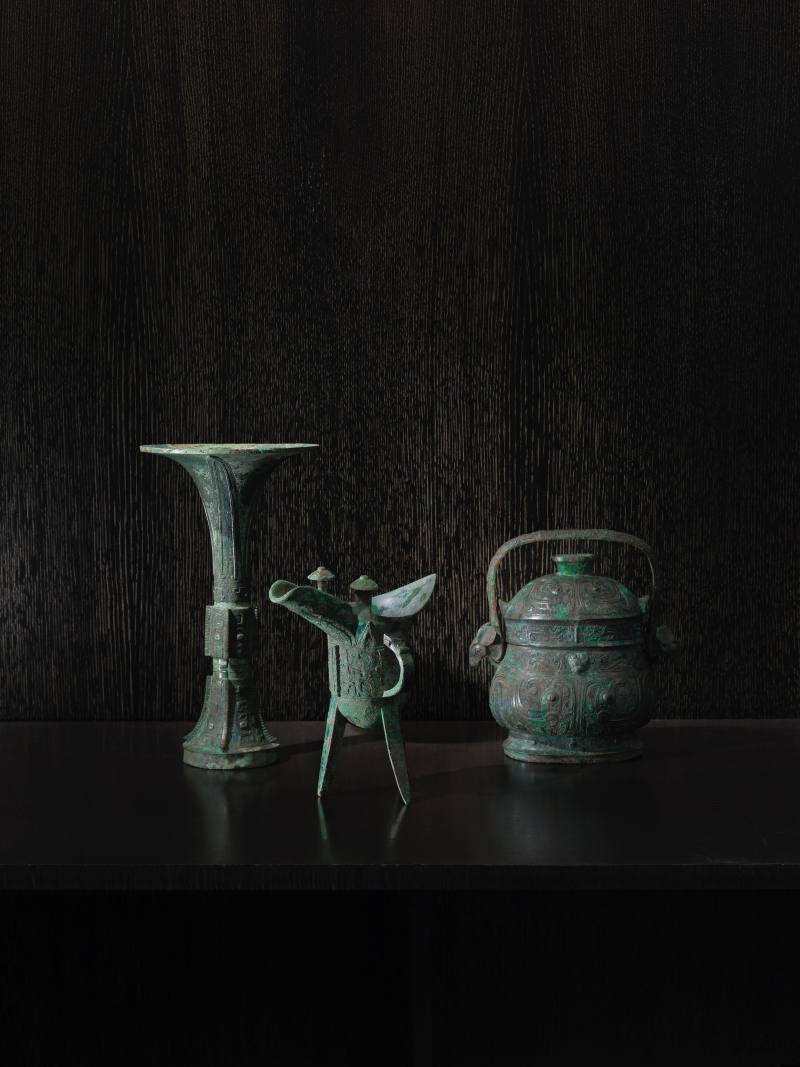
Exquisitely cast, the compressed pear-shaped body of oval section, supported on a splayed foot, crisply cast in relief on each side with a pair of prominent confronted birds, each with flamboyant plumed crests, with raised eyes and heads turned back towards a high plumed tail circling their bodies, all on a ground of leiwen, flanked by a pair of handles in the shape of tapir heads with long noses and prominent ears, supporting a U-shaped bail handle finely cast with further bird motifs, the fitted, domed cover with a matching bird frieze, surmounted by a hollow ring-shaped knop, the interior of the vessel and cover with a four-character inscription reading Zhong zuo bao yi ('precious sacrificial vessel made by Zhong'), the bronze patinated to a smooth grey-green patina with malachite encrustation.
23 cm (9 in.) high x 21 cm (8 1/4 in.) wide (2).
西周 約公元前十世紀 青銅鳥紋卣
銘文:仲作寶彝
Provenance:
Gisèle Croës Arts d'Extrême Orient, Brussels, 1998
Published, Illustrated and Exhibited:
Gisèle Croës Arts d'Extrême-Orient, Treasures from the Shang and a Selection of Ritual Objects, New York, March 2001, pp. 56-57
來源:
Gisèle Croës Arts d'Extrême Orient,布魯塞爾,1998年
展覽著錄:
Gisèle Croës Arts d'Extrême-Orient,《Treasures from the Shang and a Selection of Ritual Objects》,紐約,2001年3月,第56-57頁
This exquisite bronze vessel is a splendid example of Western Zhou bronze casting. Its compact, curvy shape and flamboyant decoration are in perfect harmony and illustrate the creativity and skills of the artisans working in bronze workshops in the middle Western Zhou period.
In its form, this you is a descendant of vessels of similar shape first made in the Shang dynasty with a slender neck and curved outline. In his discussion of the you vessel type, Robert Bagley suggests that these early you eventually led to the conception of the elongated hu which was sometimes made with a bail handle, see Robert W. Bagley, Shang Ritual Bronzes in the Arthur M. Sackler Collections, Washington, D.C., 1987, pp. 480-483. The term you already appears in oracle-bone and bronze inscription of the Shang and Western Zhou dynasties where it is used to designate a specific vessel used for storing aromatic wine. However, the association of the term you with the shape of the current example may date to a later time. By the Northern Song period, the Kaogutu ('Catalogue of Illustrated Antiques') employed the term you to define eight different bronze vessels of similar shape to the present example, see Wang Tao, Chinese Bronzes from the Meiyintang Collection, London, 2009, p. 62. Gradually, the elongated hu was transformed into a shorter, plumper and more bottom-heavy vessel of elliptical section as evidenced by the present lot. This shape, which Jessica Rawson calls 'beguiling', often has three-dimensional animal heads cast in the round covering the terminals of the bail handle. On this vessel they are naturalistically cast in the form of tapir heads, with sharply defined features.
While many you of the early and middle phase of the Western Zhou period are known for their austere designs, focusing entirely on the elegant curvature of the body and lid, a second group stands out for its flamboyant decoration. On this you, almost the entire body and cover are cast with pairs of large, elegant birds, with dramatically reversed heads and outsized crest and tail and feathers encircling their bodies. This distinctive bird motif appears at the height of the middle of the Western Zhou period and is popular for only a comparatively short time. In tracing the evolution of this motif, Jessica Rawson has noted that during the Anyang phase of the Shang dynasty, small birds occupied secondary positions in subordinate registers in the overall designs of ritual bronzes. It is only in the early part of the Western Zhou dynasty that birds begin to appear in more prominent positions on ritual vessels. Rawson argues that parallel to bird motifs gradually moving to central positions within the design scheme of bronzes such as on the present you, the sizes and forms of birds changed, an adaptation that may have been related to the introduction of new vessel shapes. It is quite evident that designs involving tall standing birds with arched plumes and curled tails appear mostly on vessels of more generous, rounded proportions such as the present you, creating a continuous, fluid movement, thereby enhancing the rounded forms of the vessel shapes, see Jessica Rawson, Western Zhou Ritual Bronzes from the Arthur M. Sackler Collections, Washington, D.C., 1990, pp. 75-83.
Bronze you decorated with this particular type of large, flamboyant bird design are rare. Among them is a very similar vessel of this type and design, in the collection of the British Museum, London (accession no. 1988,0422.1), and a you formerly in the Winthrop collection, illustrated in Jessica Rawson, Western Zhou Ritual Bronzes from the Arthur M. Sackler Collections, vol. IIB, p. 429, fig. 53.7. Another example in the collection of the Palace Museum, Taipei, is also illustrated by Jessica Rawson, ibid., p. 595, fig. 91.1. Other you with large pairs of confronted birds include an example in the collection of the Shanghai Museum, illustrated by Chen Peifen, Ancient Chinese Bronzes in the Shanghai Museum, London, 1995, p. 67, no. 40; and three examples included in Complete Collection of Bronze Ware in China, vol. 5: Western Zhou Dynasty, Beijing, 1997, pp. 166-167. Most of these examples are inscribed with a name of the ancestor for whom the vessel was made. On the present vessel the inscription notes that it was made for a certain 'Zhong'.
Related vessel types decorated with the same distinctive motif include two bronze gui dated to the middle of the Western Zhou period, similarly decorated with a broad band of flamboyant birds around the sides, illustrated in Complete Collection of Bronze Ware in China, vol. 5: Western Zhou Dynasty, Beijing, 1997, p. 51, no. 54, and p. 57, no. 60.
以下内容由AI翻译:
【描述】
精美铸造,椭圆形截面的压缩梨形器身,支撑在一个展开的底座上,两侧清晰地铸有两只相对的突出鸟纹,每只鸟都有华丽的羽冠,凸起的眼睛和头部向后转向高耸的羽毛尾巴环绕其身体,所有这些都在雷纹地上,两侧有一对长鼻大耳的貘头形状的把手,支撑着一个U形提梁,提梁上精细地铸有进一步的鸟纹,相配的圆顶盖上有类似的鸟纹带,顶部有一个空心环形钮,器内和盖内有四字铭文「仲作寶彝」(仲作此宝彝),青铜表面呈光滑的灰绿色锈色,并有孔雀石附着。
这件精美的青铜器是西周青铜铸造的一个辉煌范例。其紧凑、曲线优美的形状和华丽的装饰完美和谐,展示了西周中期青铜作坊工匠的创造力和技艺。
在形式上,这件卣继承了商代首次制作的类似形状的器物,具有细长的颈部和弯曲的轮廓。罗伯特·贝格利在讨论卣这种器型时指出,这些早期的卣最终导致了带有提梁的长颈壶的构思,见罗伯特·W·贝格利,《亚瑟·M·萨克勒收藏中的商代礼器》,华盛顿特区,1987年,第480-483页。卣这个词已经在商代和西周时期的甲骨文和青铜器铭文中出现,用来指代一种用于储存芳香酒的具体器物。然而,将卣这个词与当前例子的形状联系起来可能是在后来的时间。到了北宋时期,《考古图》使用卣这个词来定义八种与当前例子形状相似的青铜器,见王涛,《玫茵堂藏中国青铜器》,伦敦,2009年,第62页。逐渐地,长颈壶演变成更短、更丰满、底部更重的椭圆形截面器物,如本件所示。这种形状,杰西卡·罗森称之为“迷人”,通常在提梁的末端铸有三维动物头像。在这件器物上,它们自然地铸成貘头形状,特征分明。
虽然许多西周早期和中期的卣以其朴素的设计而闻名,完全集中在优雅的器身和盖子的曲线上,但另一组则以其华丽的装饰脱颖而出。在这件卣上,几乎整个器身和盖子都铸有成对的大而优雅的鸟,头部戏剧性地反向,巨大的羽冠和尾羽环绕其身体。这种独特的鸟纹出现在西周中期的高峰,并且流行时间相对较短。在追溯这一图案的演变过程中,杰西卡·罗森指出,在商代安阳阶段,小鸟在青铜器整体设计的次要位置占据次要地位。只有在西周早期,鸟类才开始在礼器上占据更显眼的位置。罗森认为,随着鸟类图案逐渐在青铜器设计方案中占据中心位置,如在当前的卣上,鸟类的大小和形态发生了变化,这可能是由于新器型的引入。很明显,涉及高立鸟、拱形羽冠和卷曲尾巴的设计大多出现在更加丰满、圆润的器物上,如当前的卣,创造出连续、流畅的运动,从而增强了器物形状的圆润感,见杰西卡·罗森,《亚瑟·M·萨克勒收藏中的西周礼器》,华盛顿特区,1990年,第75-83页。
装饰有这种大型华丽鸟纹的青铜卣非常罕见。其中一件与此类型和设计非常相似的器物收藏于伦敦大英博物馆(馆藏编号1988,0422.1),还有一件曾属于温斯洛普收藏的卣,见杰西卡·罗森,《亚瑟·M·萨克勒收藏中的西周礼器》,第IIB卷,第429页,图53.7。台北故宫博物院收藏的另一件也见于杰西卡·罗森,同上,第595页,图91.1。其他饰有成对相对大鸟的卣包括上海博物馆收藏的一件,见陈佩芬,《中国古代青铜器》,伦敦,1995年,第67页,编号40;以及收录于《中国青铜器全集》第五卷:西周时期的三件,北京,1997年,第166-167页。这些例子中的大多数都刻有为某位祖先制作的铭文。在当前的器物上,铭文注明它是为一位名为「仲」的人制作的。
装饰有相同独特图案的相关器型包括两件西周中期的青铜簋,侧面同样装饰有宽幅的华丽鸟纹带,见《中国青铜器全集》第五卷:西周时期,北京,1997年,第51页,编号54,第57页,编号60。
常见问题
这件西周 約公元前十世紀 青銅鳥紋卣 | IMPORTANT ET TRÈS RARE RÉCIPIENT COUVERT EN BRONZE, YOU的成交价是多少?
落槌价为 预展中。 成交价为 预展中。
拍品的尺寸是多少?
23 cm (9 in.) high x 21 cm (8 1/4 in.) wide