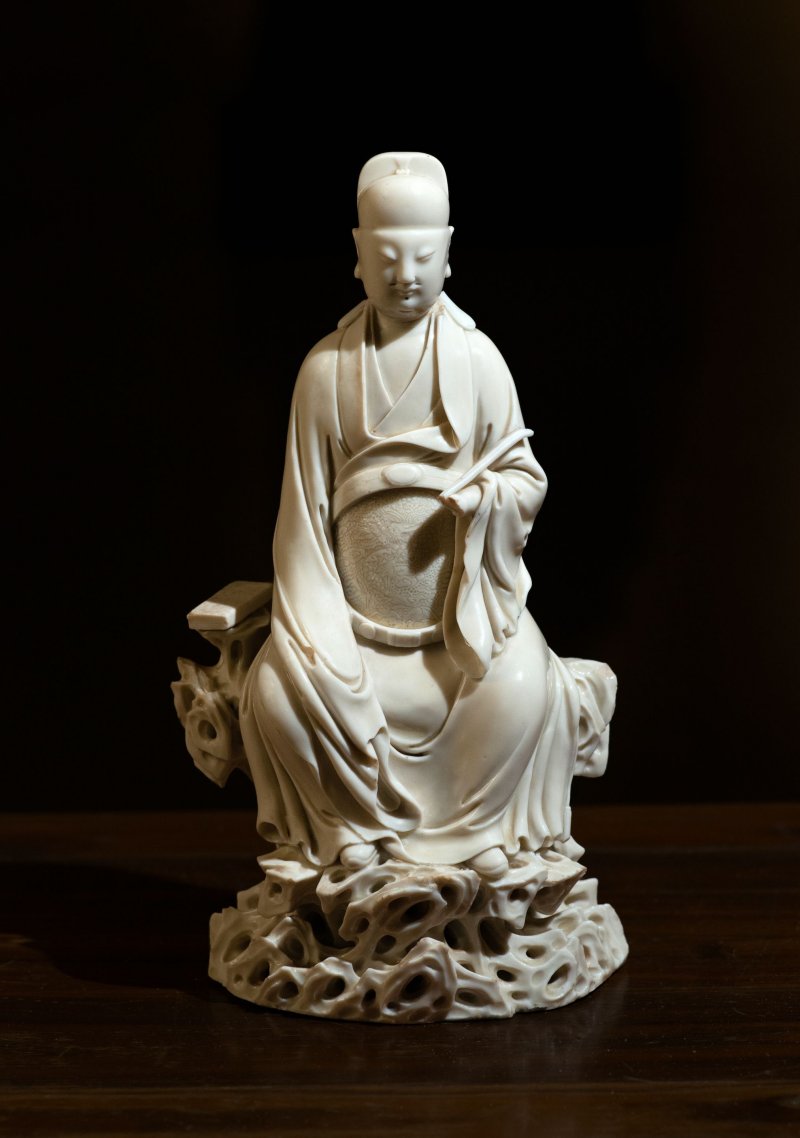

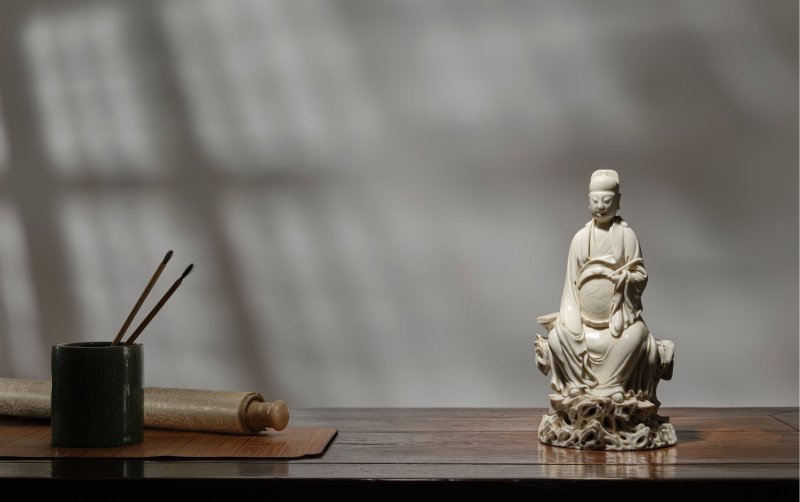
Lot 103 十七世紀 德化白釉文昌帝君坐像 | A SUPERB DEHUA FIGURE OF WENCHANG
落槌价
预展中
成交价
预展中
| 拍卖公司 | 邦瀚斯 |
|---|---|
| 拍卖时间 | 2026年10月28日 |
拍品信息
拍品名称
十七世紀 德化白釉文昌帝君坐像 | A SUPERB DEHUA FIGURE OF WENCHANG
年代
17th century
起拍价
HKD 100,000
估值区间
HKD 100000 - 150000
尺寸
未知
品相
未知
更多信息
17th century
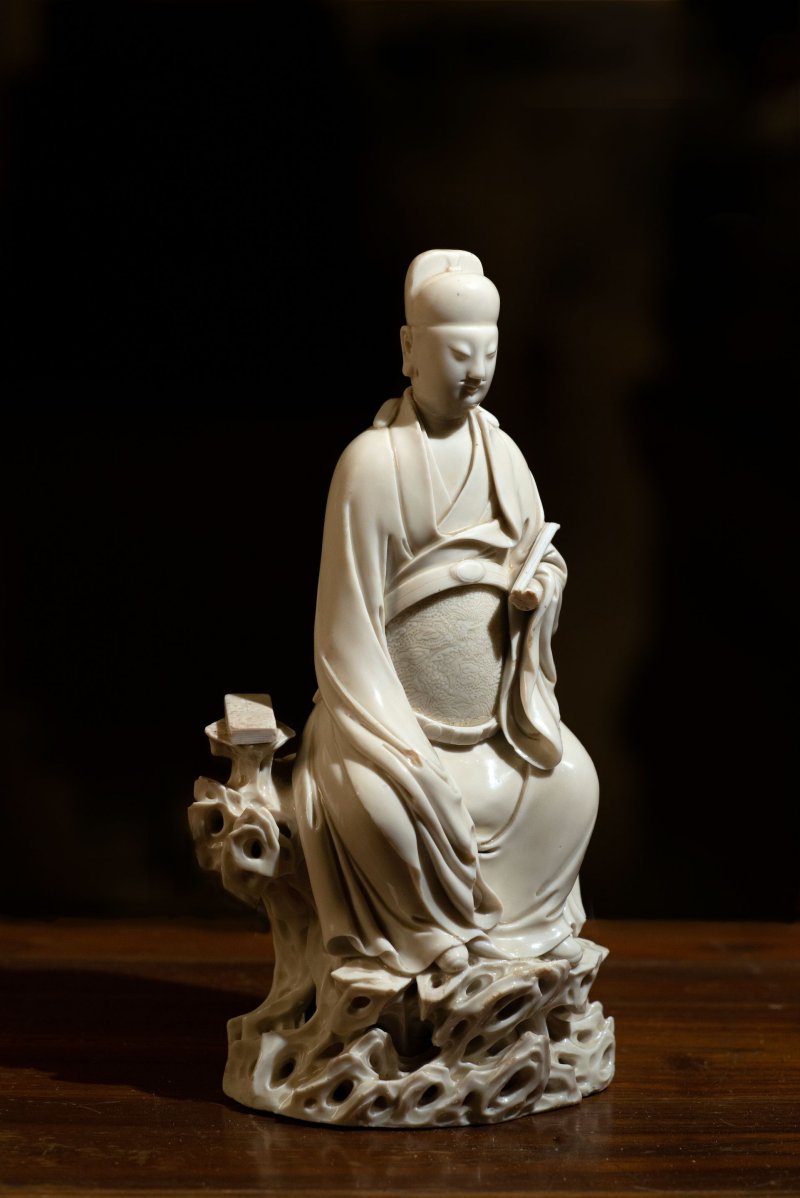
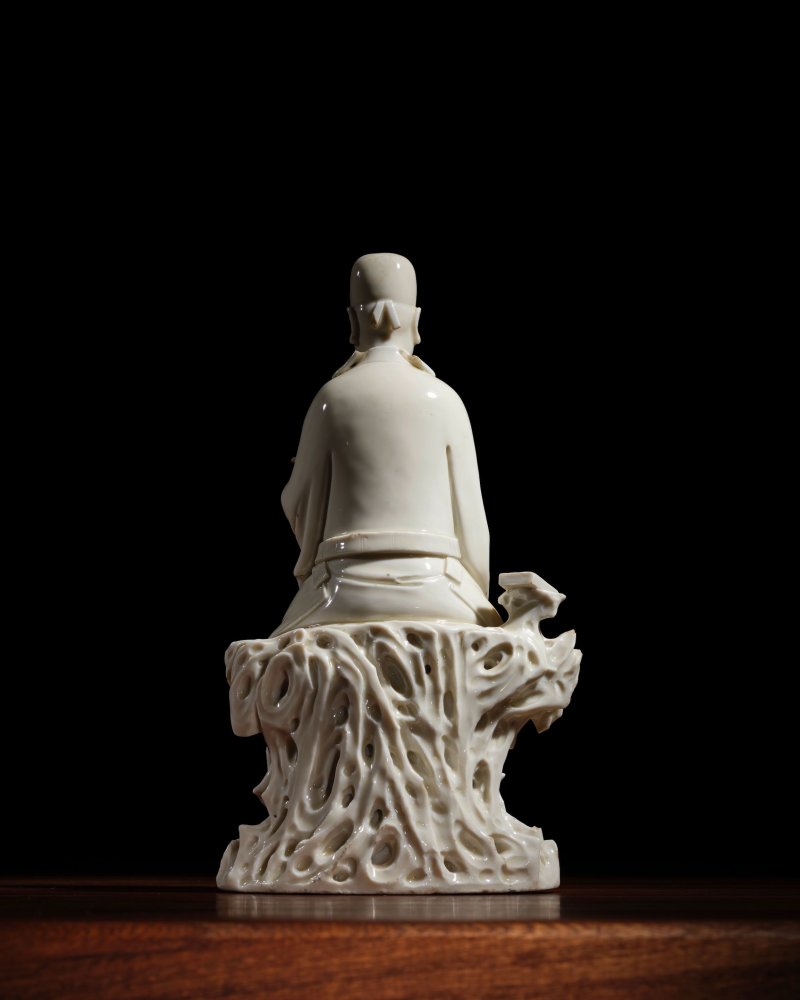
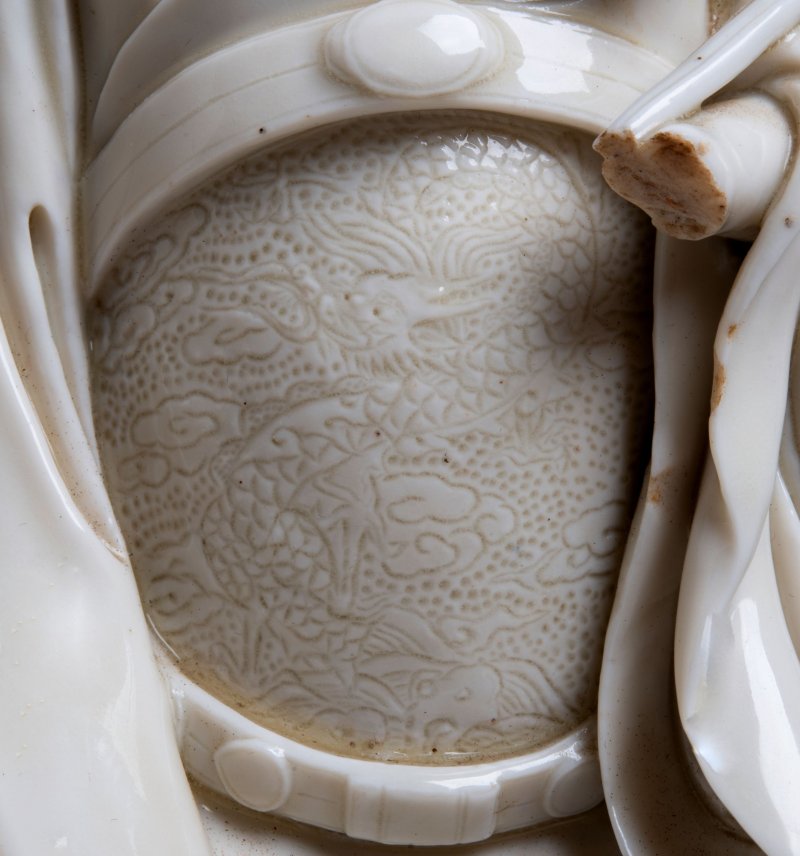
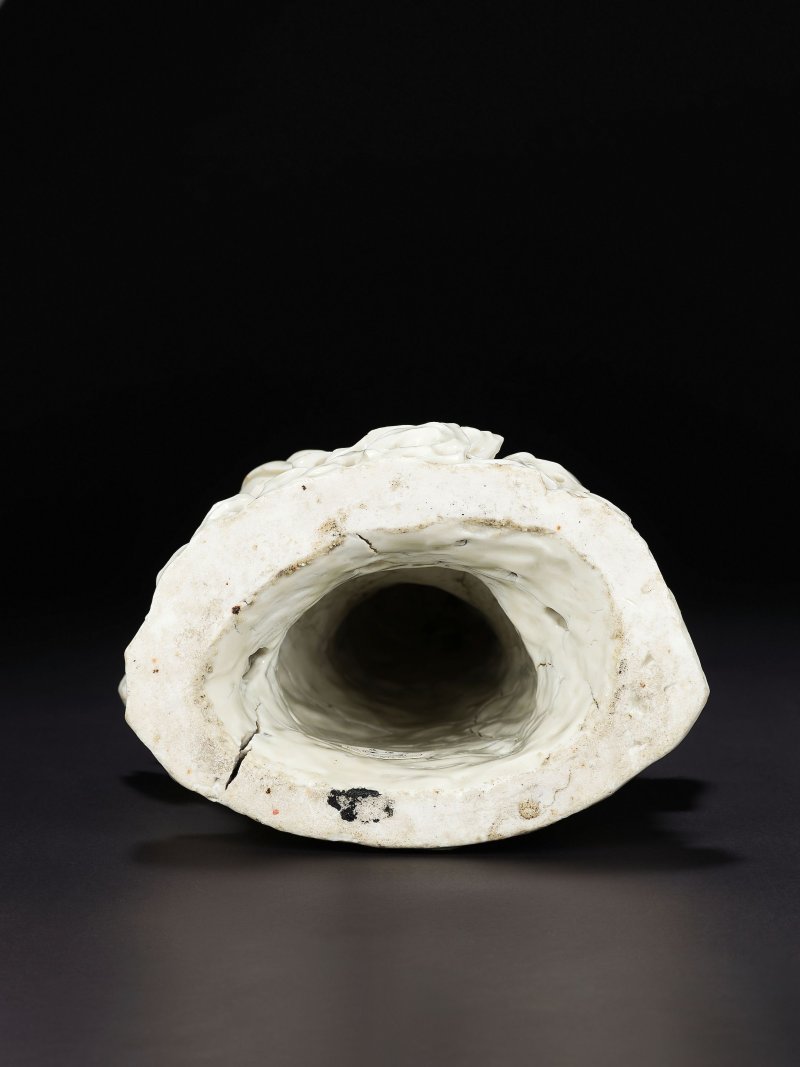
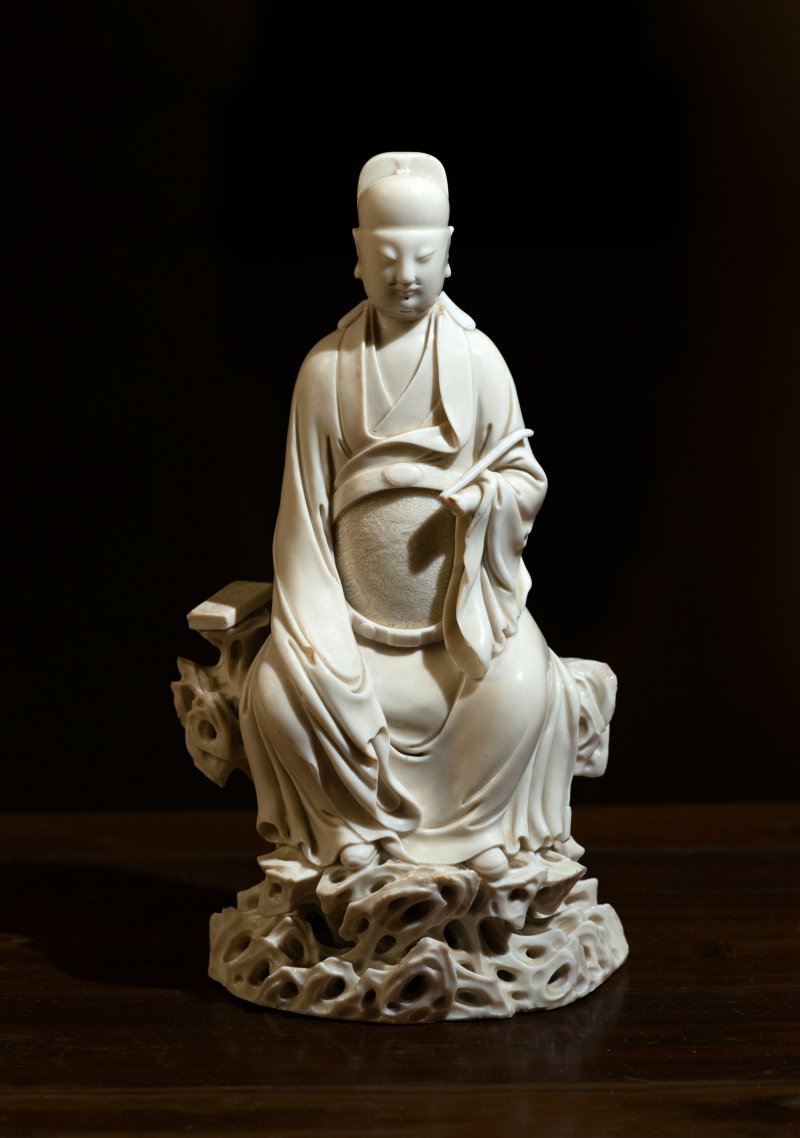
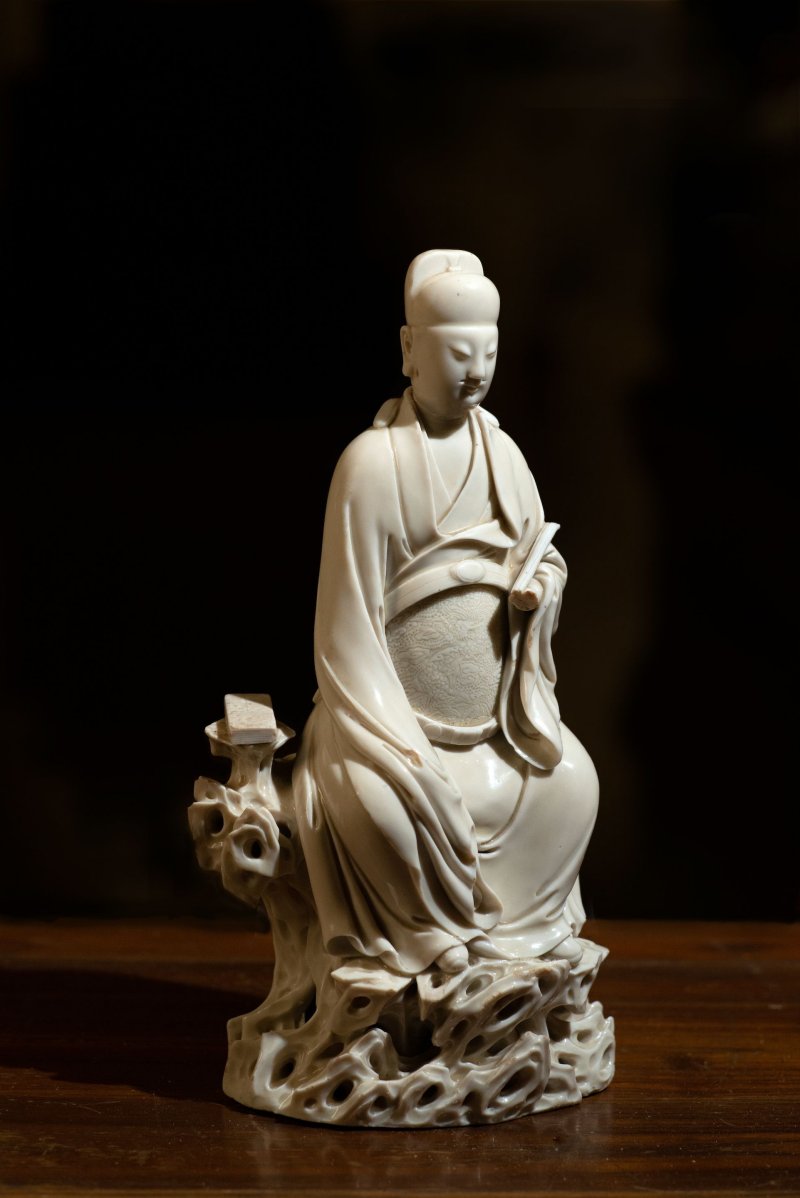
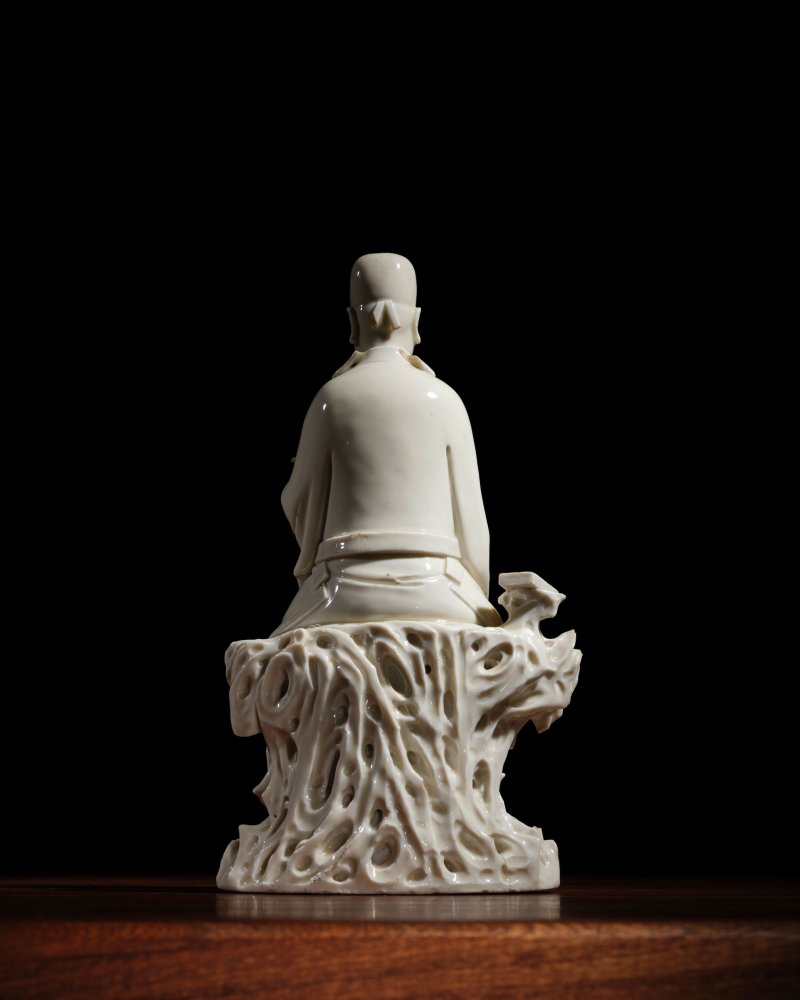
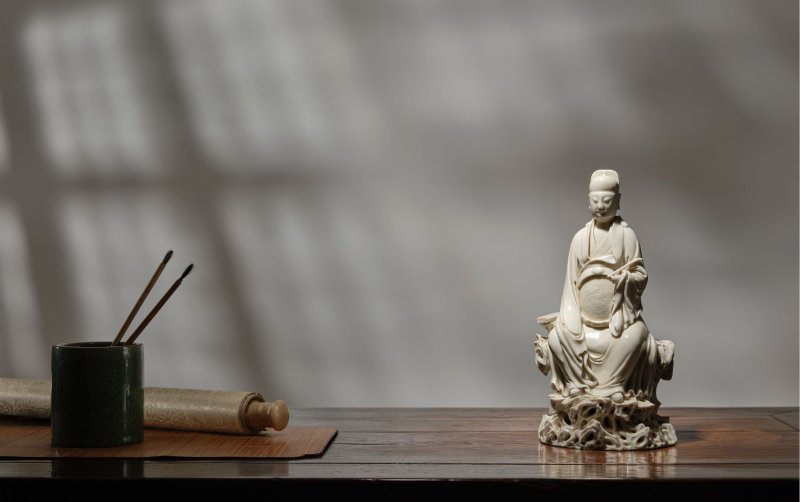
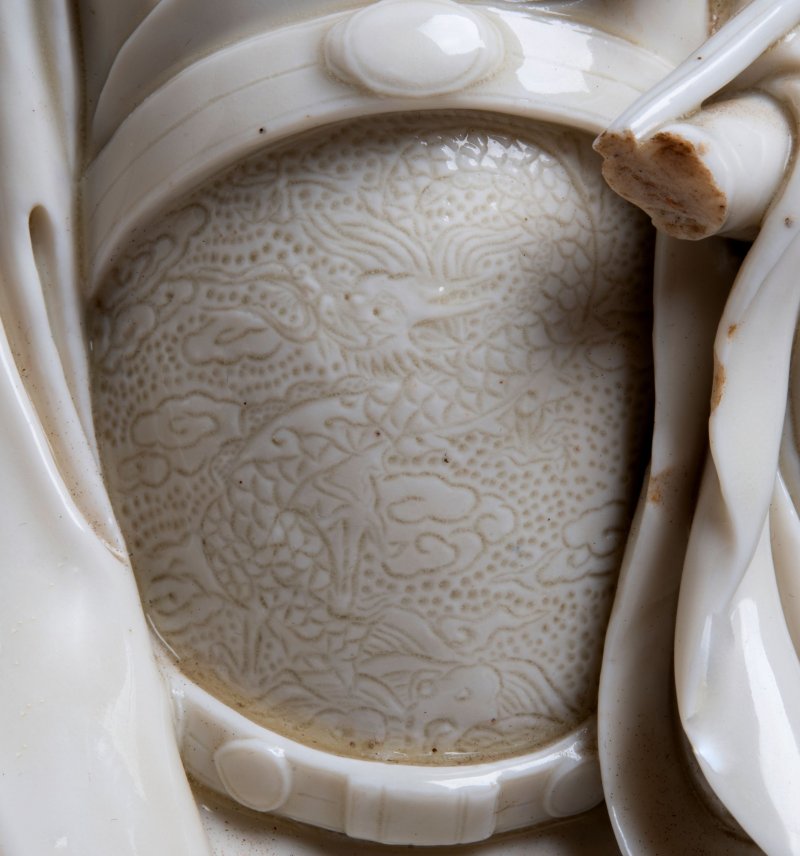
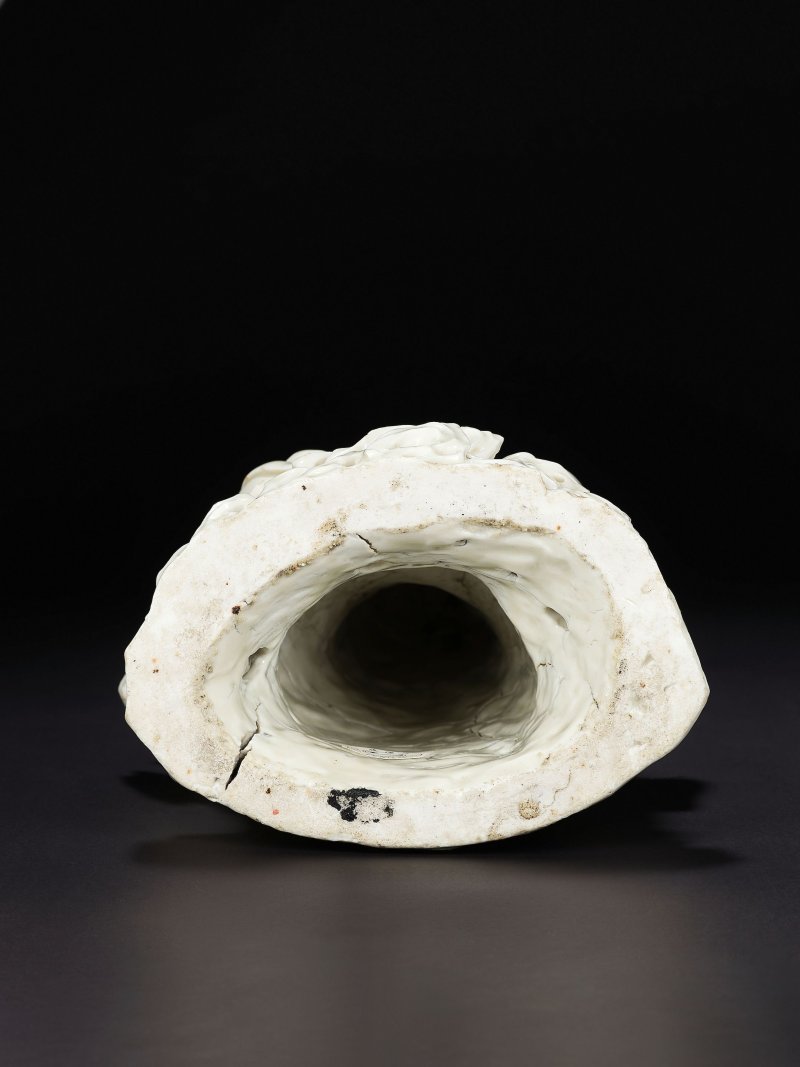
The God of Literature modelled seated on a tall rockwork plinth raised on one side, his face with fine features pierced for the insertion of moustache and beard, his head covered in a tall official's cap with raised back and two long streamers, a voluminous robe over an under-gown and elaborate belts with applied plaques, the centre of the abdomen finely incised with a ferocious dragon traversing amidst ruyi-shaped clouds, his left hand holding an attribute and his right hidden under long double sleeves, fitted box.
28.7cm (11 3/8in) high
Footnotes
十七世紀 德化白釉文昌帝君坐像
Provenance:
Acquired in Paris, before 1993
C.C. Teng & Co., Taipei, 1993
XianJu Shuzhai Collection, 1996
Acquired in 2005
來源:
1993年前購藏於巴黎
慎德堂,台北,1993年
閒居書齋收藏,1996年
2005年購藏
Compare a slightly larger Dehua figure of Wenchang with a closely related dragon design on the robe, formerly in the Frank and Pamela Hickley collection and now preserved at the Asian Civilisation Museum, Singapore, illustrated in R.Kerr and J.Ayers, , Surrey, 2002, pl.27; see also a figure of a Daoist immortal, possibly Guandi, with an inscription dated to the forty-seventh year of the Wanli reign, Ming dynasty, 1610, at the British Museum, London, which was included in the exhibition , China Institute, New York, 2002 p.27, fig.4 (acc.no.1930,1113.1). Compare also a Dehua figure of Wenchang, He Chaozong mark, late Ming dynasty, from the Ira and Nancy Koger collection, in the Ringling Museum, Sarasota, Florida (acc.no. SN11122.83).
Displaying a remarkable level of refinement, noted in the intricate dragon design decorating the front of the voluminous robes cascading in fluid, heavy folds, this figure may be identified as Wenchang Wang, the Daoist God of Culture and Literature. Believed to have assisted the devotees in achieving success in the civil service examinations, Wenchang facilitated the path toward social acceptance and material rewards. Represented as an earthly minister, the deity occupies a pre-eminent position within the Daoist pantheon, as suggested by his high crown, decorated with the cosmic diagram, the ruyi-toed slippers and the dragon design decorated at the front of his robe, all elements characterising the Court outfit worn by high-ranking Daoist deities from the Song through to the Ming dynasties.
The closed volume incised with the characters resting at the deity's side provides a rich layer of dual symbolism, seamlessly bridging Daoist cosmology and secular scholarly ambition. Within Daoist tradition, (Three Origins) refers to the triad of Heaven, Earth, and Water, governed by the Three Official Emperors () who oversee human destiny, register moral deeds, and grant blessings or forgiveness. As was fully integrated into the Daoist pantheon as the divine administrator of fate and official status, the inclusion of a book bearing this title aligns directly with his role in recording cosmic registers and moral retributions. Concurrently, in civil life, signified the ultimate academic triumph—achieving first place (, and ) across all three tiers of the imperial examinations. By placing the alongside Wenchang, the sculptor created a deliberate visual metaphor that promises both cosmic alignment and supreme literary advancement to those seeking the deity's favour.
See a Wenchang figure, which was sold at Christie's Hong Kong, 30 May 2018, lot 3109, and again at Sotheby's Hong Kong, 29 April 2022, lot 3650.
比較一尊體量稍大之德化文昌帝君像,衣袍正面飾有極為相近之龍紋,出自Frank and Pamela Hickley伉儷舊藏,現藏於新加坡亞洲文明博物館,著錄於柯玫瑰與J. Ayers著《Blanc De Chine: Porcelain from Dehua》,薩里,2002年,圖版27;亦可參考大英博物館藏一尊道教神仙像(或為關帝),背帶明萬曆四十七年(1610年)款,曾展於《Blanc de Chine: Divine Images in Porcelain》,華美協進社,紐約,2002年,頁27,圖4(館藏編號:1930,1113.1)。亦可比較一尊明末德化文昌帝君坐像,背蓋「何朝宗」印款,出自Ira and Nancy Koger伉儷舊藏,現藏於佛羅里達州薩拉索塔瑞格林藝術博物館(館藏編號:SN11122.83)。
此尊造像雕工精緻絕倫,尤見於寬大衣袍正面所飾之繁複龍紋,衣褶線條流暢重厚,層層垂墜,其身分可定為道教掌管文運科舉之文昌帝君。傳統信仰中,文昌帝君庇佑士子於科舉考試中金榜題名,為其指引通往仕途功名與富貴榮華之路。造像呈人間大臣之相,高戴飾有宇宙圖式之冠帽,足踏如意雲頭履,袍服正面雕飾龍紋,凡此種種,皆符合宋至明代道教高階神祗之宮廷服飾特徵,足見其於道教神譜中之尊崇地位。
造像身旁置有封閉書函,上刻「三元書」三字,寄託雙重象徵意涵,巧妙連結道教宇宙觀與世俗文人的科考抱負。於道教傳統中,「三元」指天、地、水三元,由掌管人間禍福、登記善惡功過之三官大帝(天官、地官、水官)所主宰。文昌帝君既已完全納入道教神譜,擔任主管功名祿位與命運之神,以此書函相伴,正切合其掌管天籍簿籙、施報善惡之職能。與此同時,於世俗科考之中,「三元」代表學業功名之極致——即於鄉試、會試、殿試三級考試中連中三元(解元、會元、狀元)。雕刻家將《三元書》置於文昌帝君身旁,意在以視覺隱喻表達對神明庇佑之祈求,既求天道順應,亦祈功名極頂、獨佔鰲頭。
另可參考一尊文昌帝君像,售於香港佳士得,2018年5月30日,拍品編號3109,後再售於香港蘇富比,2022年4月29日,拍品編號3650。
The God of Literature modelled seated on a tall rockwork plinth raised on one side, his face with fine features pierced for the insertion of moustache and beard, his head covered in a tall official's cap with raised back and two long streamers, a voluminous robe over an under-gown and elaborate belts with applied plaques, the centre of the abdomen finely incised with a ferocious dragon traversing amidst ruyi-shaped clouds, his left hand holding an attribute and his right hidden under long double sleeves, fitted box.
28.7cm (11 3/8in) high
Footnotes
十七世紀 德化白釉文昌帝君坐像
Provenance:
Acquired in Paris, before 1993
C.C. Teng & Co., Taipei, 1993
XianJu Shuzhai Collection, 1996
Acquired in 2005
來源:
1993年前購藏於巴黎
慎德堂,台北,1993年
閒居書齋收藏,1996年
2005年購藏
Compare a slightly larger Dehua figure of Wenchang with a closely related dragon design on the robe, formerly in the Frank and Pamela Hickley collection and now preserved at the Asian Civilisation Museum, Singapore, illustrated in R.Kerr and J.Ayers, , Surrey, 2002, pl.27; see also a figure of a Daoist immortal, possibly Guandi, with an inscription dated to the forty-seventh year of the Wanli reign, Ming dynasty, 1610, at the British Museum, London, which was included in the exhibition , China Institute, New York, 2002 p.27, fig.4 (acc.no.1930,1113.1). Compare also a Dehua figure of Wenchang, He Chaozong mark, late Ming dynasty, from the Ira and Nancy Koger collection, in the Ringling Museum, Sarasota, Florida (acc.no. SN11122.83).
Displaying a remarkable level of refinement, noted in the intricate dragon design decorating the front of the voluminous robes cascading in fluid, heavy folds, this figure may be identified as Wenchang Wang, the Daoist God of Culture and Literature. Believed to have assisted the devotees in achieving success in the civil service examinations, Wenchang facilitated the path toward social acceptance and material rewards. Represented as an earthly minister, the deity occupies a pre-eminent position within the Daoist pantheon, as suggested by his high crown, decorated with the cosmic diagram, the ruyi-toed slippers and the dragon design decorated at the front of his robe, all elements characterising the Court outfit worn by high-ranking Daoist deities from the Song through to the Ming dynasties.
The closed volume incised with the characters resting at the deity's side provides a rich layer of dual symbolism, seamlessly bridging Daoist cosmology and secular scholarly ambition. Within Daoist tradition, (Three Origins) refers to the triad of Heaven, Earth, and Water, governed by the Three Official Emperors () who oversee human destiny, register moral deeds, and grant blessings or forgiveness. As was fully integrated into the Daoist pantheon as the divine administrator of fate and official status, the inclusion of a book bearing this title aligns directly with his role in recording cosmic registers and moral retributions. Concurrently, in civil life, signified the ultimate academic triumph—achieving first place (, and ) across all three tiers of the imperial examinations. By placing the alongside Wenchang, the sculptor created a deliberate visual metaphor that promises both cosmic alignment and supreme literary advancement to those seeking the deity's favour.
See a Wenchang figure, which was sold at Christie's Hong Kong, 30 May 2018, lot 3109, and again at Sotheby's Hong Kong, 29 April 2022, lot 3650.
比較一尊體量稍大之德化文昌帝君像,衣袍正面飾有極為相近之龍紋,出自Frank and Pamela Hickley伉儷舊藏,現藏於新加坡亞洲文明博物館,著錄於柯玫瑰與J. Ayers著《Blanc De Chine: Porcelain from Dehua》,薩里,2002年,圖版27;亦可參考大英博物館藏一尊道教神仙像(或為關帝),背帶明萬曆四十七年(1610年)款,曾展於《Blanc de Chine: Divine Images in Porcelain》,華美協進社,紐約,2002年,頁27,圖4(館藏編號:1930,1113.1)。亦可比較一尊明末德化文昌帝君坐像,背蓋「何朝宗」印款,出自Ira and Nancy Koger伉儷舊藏,現藏於佛羅里達州薩拉索塔瑞格林藝術博物館(館藏編號:SN11122.83)。
此尊造像雕工精緻絕倫,尤見於寬大衣袍正面所飾之繁複龍紋,衣褶線條流暢重厚,層層垂墜,其身分可定為道教掌管文運科舉之文昌帝君。傳統信仰中,文昌帝君庇佑士子於科舉考試中金榜題名,為其指引通往仕途功名與富貴榮華之路。造像呈人間大臣之相,高戴飾有宇宙圖式之冠帽,足踏如意雲頭履,袍服正面雕飾龍紋,凡此種種,皆符合宋至明代道教高階神祗之宮廷服飾特徵,足見其於道教神譜中之尊崇地位。
造像身旁置有封閉書函,上刻「三元書」三字,寄託雙重象徵意涵,巧妙連結道教宇宙觀與世俗文人的科考抱負。於道教傳統中,「三元」指天、地、水三元,由掌管人間禍福、登記善惡功過之三官大帝(天官、地官、水官)所主宰。文昌帝君既已完全納入道教神譜,擔任主管功名祿位與命運之神,以此書函相伴,正切合其掌管天籍簿籙、施報善惡之職能。與此同時,於世俗科考之中,「三元」代表學業功名之極致——即於鄉試、會試、殿試三級考試中連中三元(解元、會元、狀元)。雕刻家將《三元書》置於文昌帝君身旁,意在以視覺隱喻表達對神明庇佑之祈求,既求天道順應,亦祈功名極頂、獨佔鰲頭。
另可參考一尊文昌帝君像,售於香港佳士得,2018年5月30日,拍品編號3109,後再售於香港蘇富比,2022年4月29日,拍品編號3650。
常见问题
这件十七世紀 德化白釉文昌帝君坐像 | A SUPERB DEHUA FIGURE OF WENCHANG的成交价是多少?
落槌价为 预展中。 成交价为 预展中。