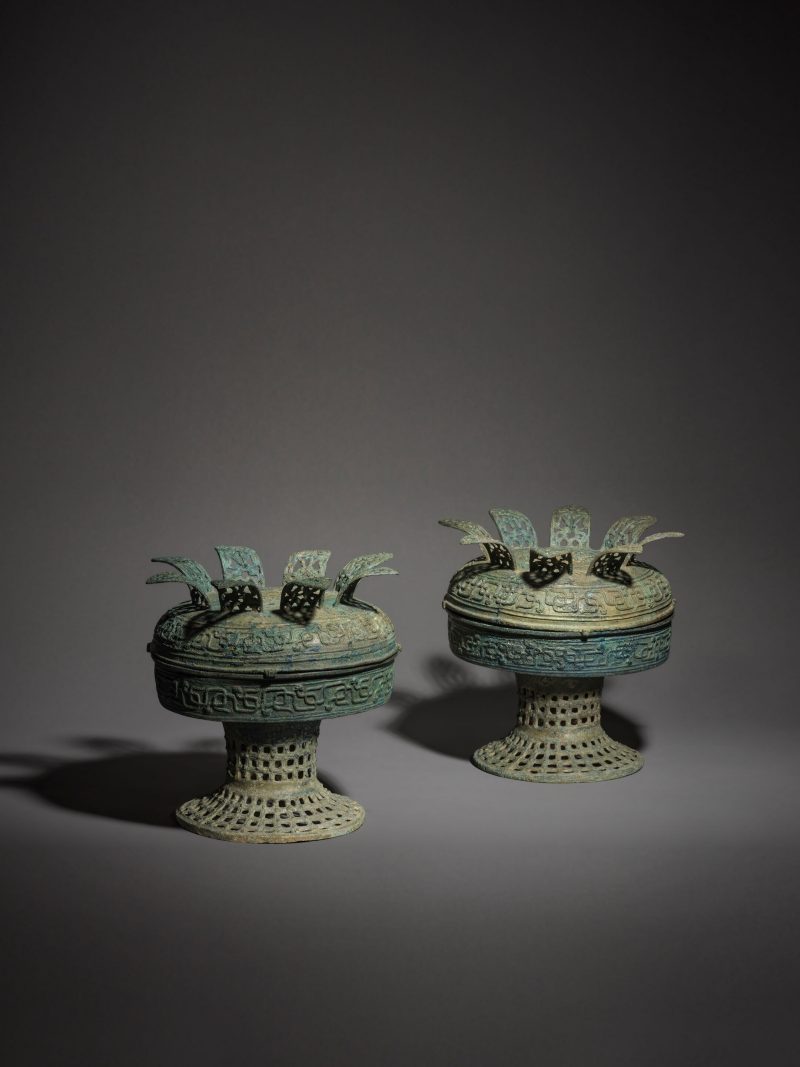

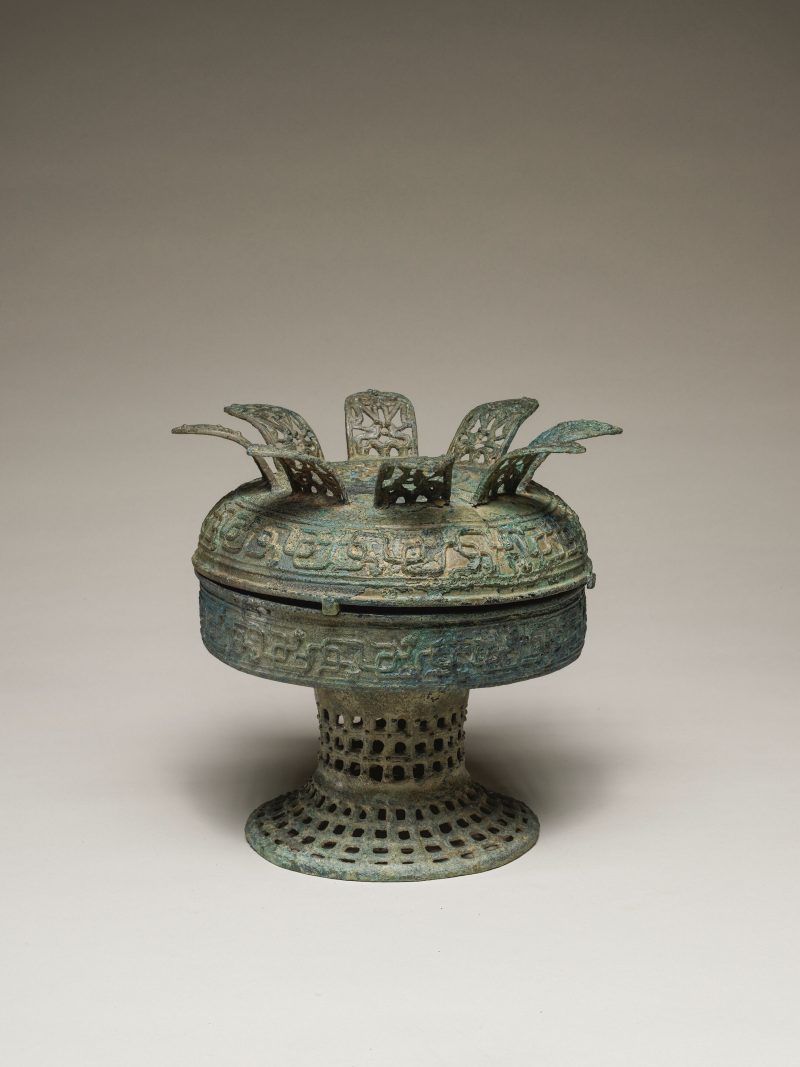
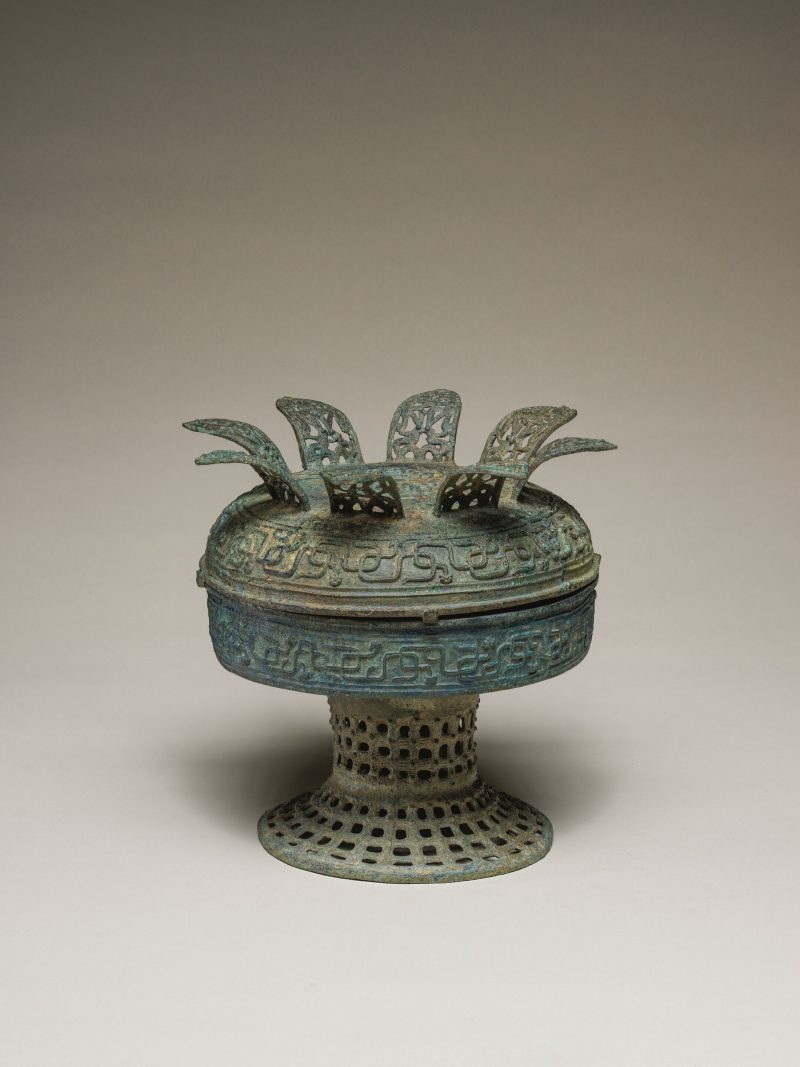
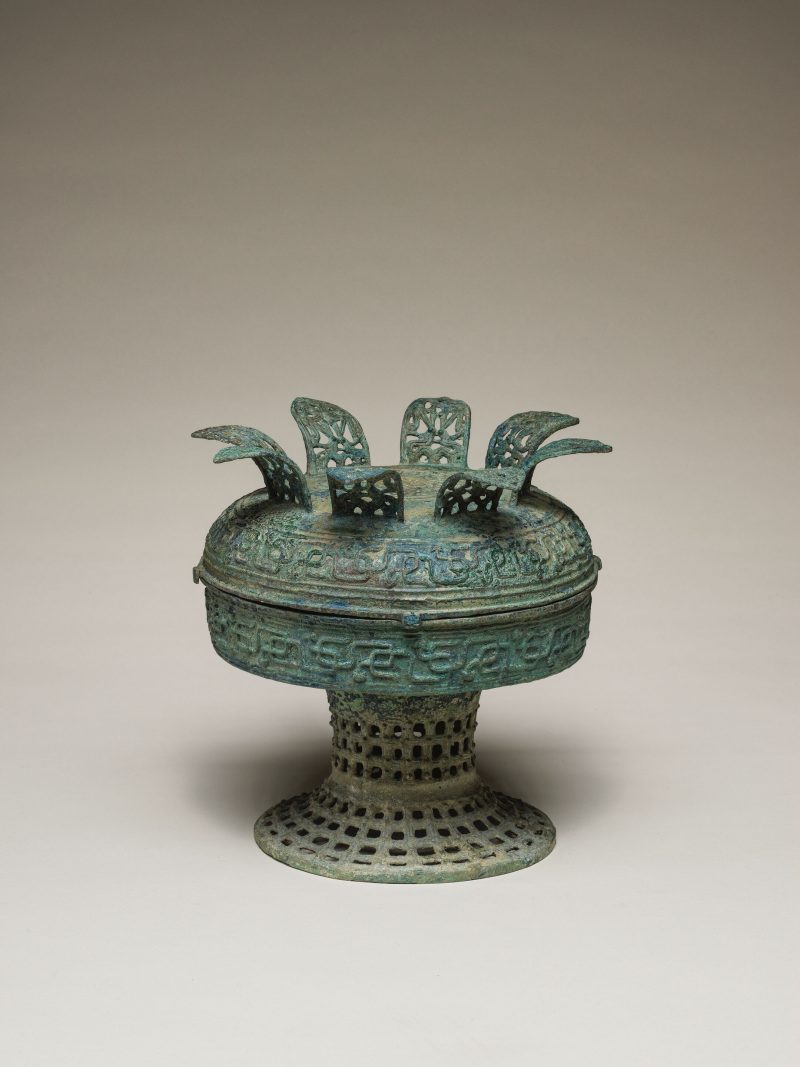
Lot 24 春秋早期 約公元前七世紀 青銅鏤空龍紋豆一對 | RARE PAIRE DE RÉCIPIENTS COUVERTS RITUELS EN BRONZE, DOU
落槌价
预展中
成交价
预展中
| 拍卖公司 | 邦瀚斯 |
|---|---|
| 拍卖时间 | 2026年12月10日 |
拍品信息
拍品名称
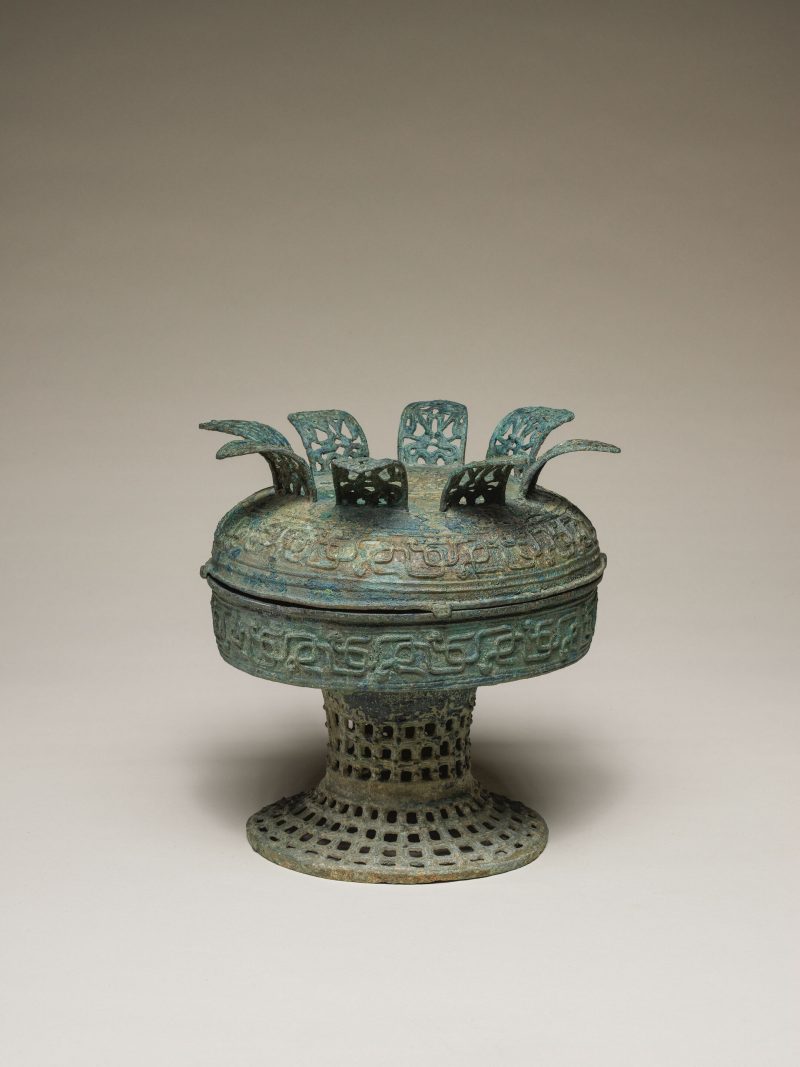
春秋早期 約公元前七世紀 青銅鏤空龍紋豆一對 | RARE PAIRE DE RÉCIPIENTS COUVERTS RITUELS EN BRONZE, DOU
年代
春秋早期 約公元前七世紀
起拍价
未知
估值区间
EUR 30,000–50,000
尺寸
Each 25 cm (9 7/8 in.) high x 26 cm (10 1/4 in.) wide
品相
未知
更多信息
RARE PAIRE DE RÉCIPIENTS COUVERTS RITUELS EN BRONZE, DOU
Début de la période des Printemps et Automnes, vers VIIe siècle av. J.-C.
A RARE PAIR OF ARCHAIC BRONZE RITUAL FOOD VESSELS AND COVERS, DOU
Early Spring and Autumn period, ca. 7th century BC
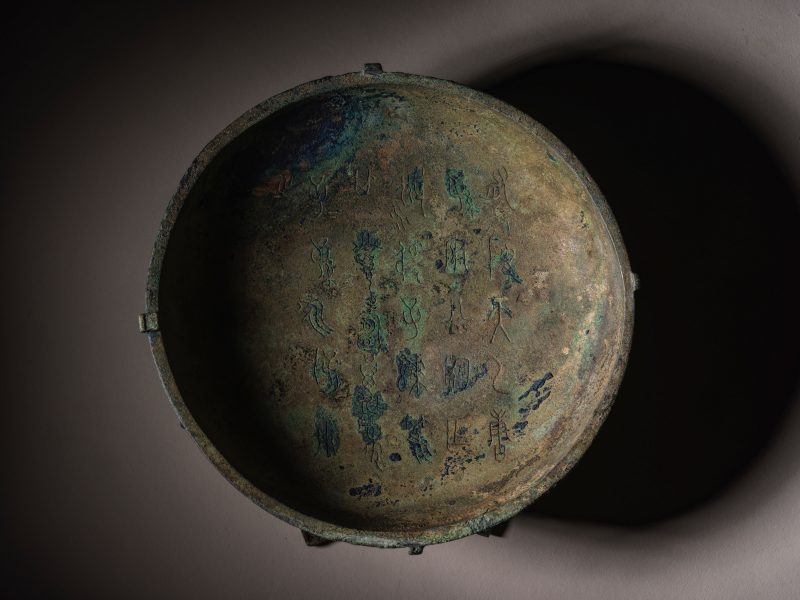
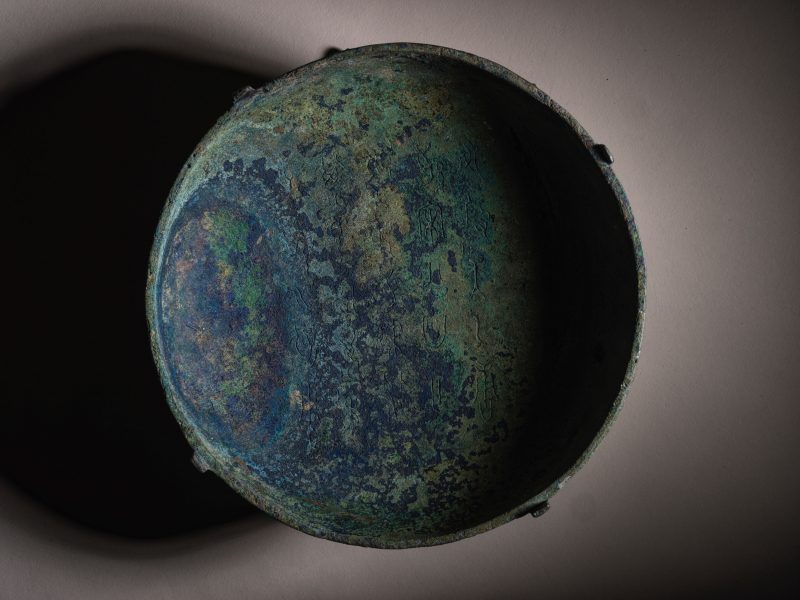
Each vessel of circular shape, raised on a short, sturdy pedestal foot flaring to a trumpet-shaped base, cast with an openwork design imitating a simple basketweave, the bodies with straight sides and flattened base, cast in shallow relief with a band of intricate rounded interlaced dragons very finely cast with horned heads and neatly coiled thin bodies, the domed covers similarly decorated, the flat tops applied with a ring of eight flared petals cast with openwork interlaced snakes, each vessel with an long inscription on the inside cover reading 有殷天乙唐(湯)孫宋公貈(固)乍(作)氵㦰(滥)叔子饣桒(饙)其眉壽萬年, 子子孫孫永寶用之 , the bronze with a smooth grey-green surface and lightly encrusted bright blue and green patination.
Each 25 cm (9 7/8 in.) high x 26 cm (10 1/4 in.) wide (4).
春秋早期 約公元前七世紀 青銅鏤空龍紋豆一對
銘文:有殷天乙唐(湯)孫宋公貈(固)乍(作)氵㦰(滥)叔子饣桒(饙)其眉壽萬年, 子子
孫孫永寶用之
Provenance:
Gisèle Croës Arts d'Extrême Orient, Brussels
來源:
Gisèle Croës Arts d'Extrême Orient,布魯塞爾
This pair of covered vessels is part of a group of vessels made in the Spring and Autumn period of the Eastern Zhou that share the same basic form, comprising a circular bowl with a flared foot and a similar shallow bowl as a lid. As indicated by their designation, dou, meaning bean or pod-bearing plant, were often made in pairs and used to serve grains and non-meat foods. Jenny So notes that pottery tazze without lids were made in pottery in the late Neolithic period and continued to be made in pottery and lacquered wood throughout the Shang and Zhou periods. So argues that bronze versions such as the present pair with their shallow bowls with straight sides and flat bottoms, pedestal feet cast in openwork may have developed alongside the lacquered wood dou and first appeared among eighth century BC bronzes associated with the Southern state of Zeng, discovered in Jingshan, Hubei, see Jenny So, Eastern Zhou Ritual Bronzes in the Arthur M. Sackler Collections, Washington, D.C., 1990, pp. 179-180.
The finely and crisply cast interlaced snake decoration and the woven-design openwork on the pedestal foot are similar to that of a dou unearthed in 1932 in Qufu, Shandong, illustrated in Bronzes in Palace Museum, Beijing, 1999, no. 233. Seven bronze dou with the distinctive openwork design foot and petalled crown on the cover were also excavated in Shandong province, in Yishui Lujiadianzi, and have been dated to the 2nd half of the 7th century, first published in Wenwu 1984.9, pl. 1:5, strongly suggesting a Shandong provenance for the present pair of vessels. The Qufu dou bears an inscription naming a minister of the state of Lu and is dated to the 7th century BC.
以下内容由AI翻译:
【描述】
每件器物呈圆形,立于一个短而坚固的喇叭形底座上,饰有简单的篮编镂空设计。器身直壁,底部平坦,浅浮雕饰有一圈精细的圆润交缠龙纹,龙头有角,身体纤细盘绕。拱起的盖面也饰交缠龙纹,平顶上另饰一圈八瓣展开的花瓣,镂空饰有交缠蛇纹。每件器物内盖上有一段长铭文,内容为“有殷天乙唐(湯)孫宋公貈(固)乍(作)氵㦰(滥)叔子饣桒(饙)其眉壽萬年, 子子孫孫永寶用之”。青铜表面光滑,呈灰绿色,带有明亮的蓝绿色锈迹。
这对带盖器物属于东周春秋时期制作的一组器物,其基本形式相同,均为带外撇足的圆碗,并以形似浅碗的构件为盖。其名「豆」可指豆粒或结荚的植物。这类器物通常成对出现,用于盛放谷物和其他非肉类食物。索珍妮指出,无盖陶制豆在新石器时代晚期就已经出现,并在商周时期继续以陶器和漆木器的形式存在。她认为,像本对器物这样的青铜版本,其浅碗直壁和平底,以及镂空底座可能是在漆木豆的基础上发展起来的,并首次出现在与湖北荆山曾国相关的公元前8世纪青铜器中,见索珍妮,《阿瑟·M·萨克勒收藏的东周礼器》,华盛顿特区,1990年,第179-180页。
精细且清晰的交缠蛇纹装饰和底座上的编织镂空设计与1932年在山东曲阜出土的一件豆相似,见《故宫博物院藏青铜器》,北京,1999年,编号233。七件带有独特镂空底座和盖顶花瓣的青铜豆也在山东省沂水 Lujiadianzi 出土,年代定为公元前7世纪下半叶,首次发表于《文物》1984年第9期,图版1:5,强烈表明本对器物可能来自山东。曲阜豆上刻有铭文,提到鲁国的一位大臣,年代定为公元前7世纪。
常见问题
这件春秋早期 約公元前七世紀 青銅鏤空龍紋豆一對 | RARE PAIRE DE RÉCIPIENTS COUVERTS RITUELS EN BRONZE, DOU的成交价是多少?
落槌价为 预展中。 成交价为 预展中。
拍品的尺寸是多少?
Each 25 cm (9 7/8 in.) high x 26 cm (10 1/4 in.) wide