






Lot 88 清 十九世紀末 鎏金銅嵌翡翠八吉祥如意 | GRAND SCEPTRE RUYI EN BRONZE DORÉ INCRUSTÉ DE JADEITE
落槌价
****
成交价
****
| 拍卖公司 | 邦瀚斯 |
|---|---|
| 拍卖时间 | 2026年06月09日 |
请安装多宝古瓷宝典APP,查看高清无损大图
拍品信息
拍品名称
清 十九世紀末 鎏金銅嵌翡翠八吉祥如意 | GRAND SCEPTRE RUYI EN BRONZE DORÉ INCRUSTÉ DE JADEITE
起拍价
EUR 3,000
估值区间
未知
尺寸
未知
品相
未知
更多信息
Dynastie Qing, fin du XIXe siècle
A JADEITE-EMBELLISHED GILT-BRONZE RUYI-SCEPTRE
Qing Dynasty, late 19th century
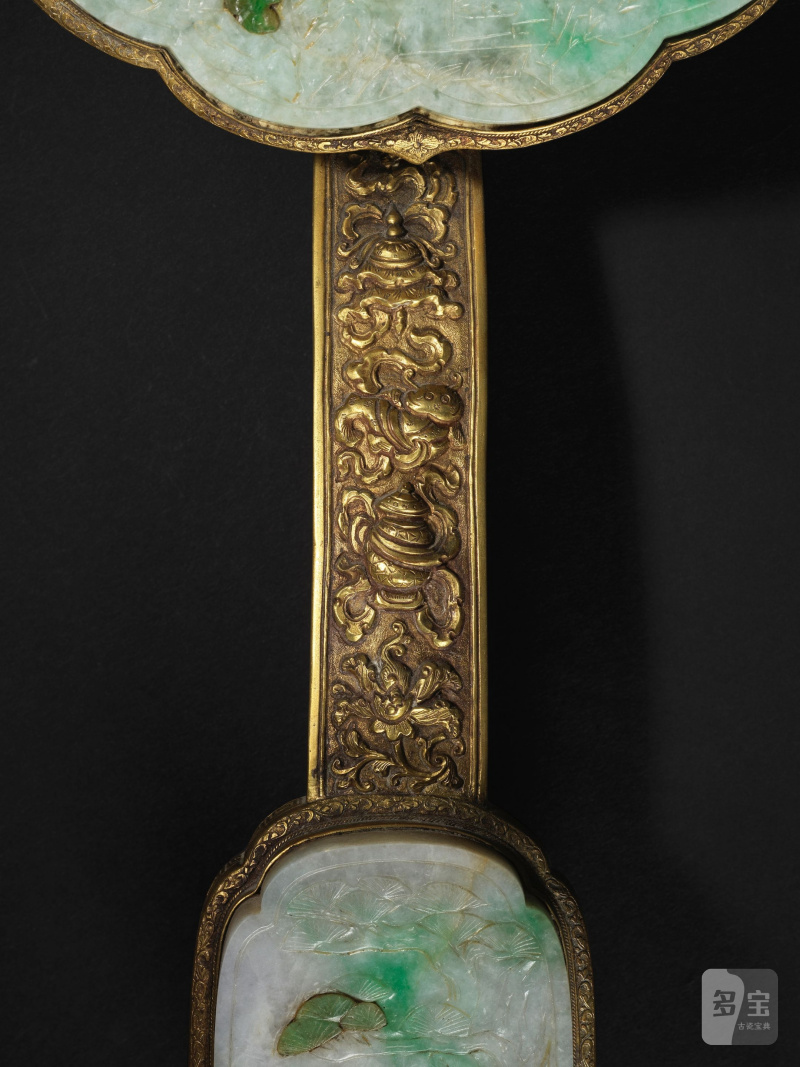
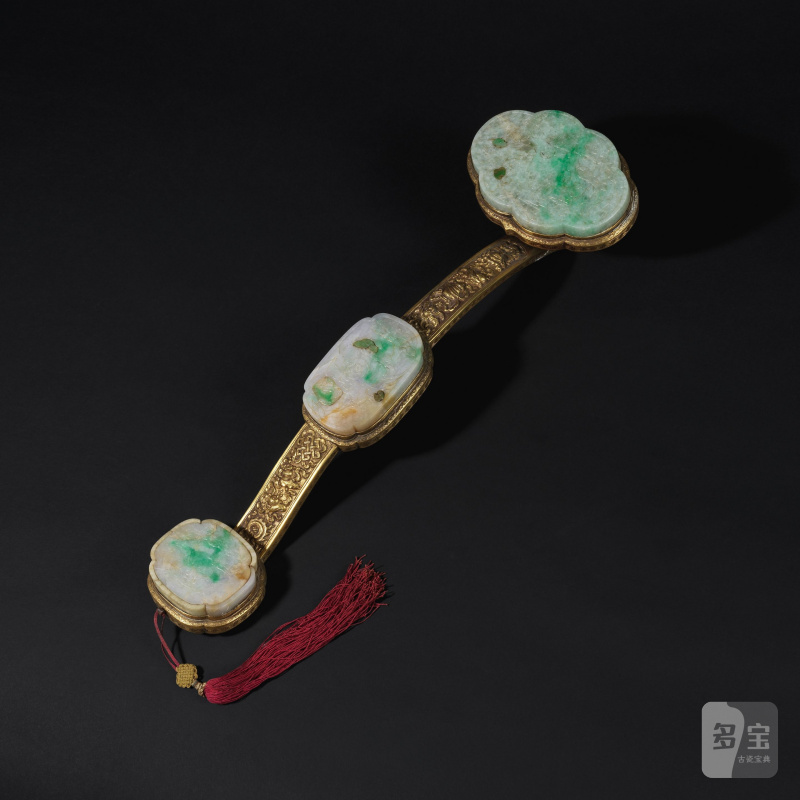
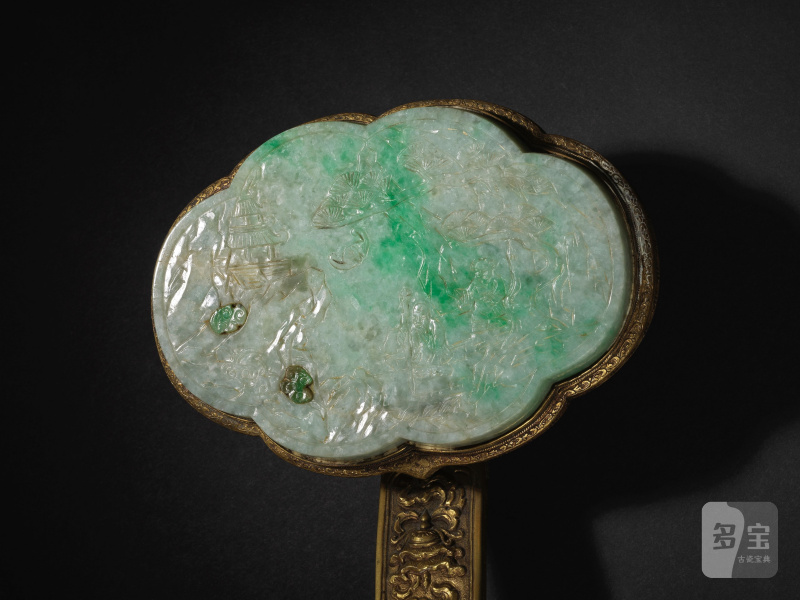
Comprising three jadeite plaques each carved with scholars and boys in landscape settings, all set in a gilt-bronze frame ornately worked in relief on one side of the shaft with beribboned auspicious emblems, the reverse finely chased with large lotus blooms on feathery scrolling leafy stems.
52 cm (20 1/2 in.) long
Footnotes
Provenance:
Acquired from George Horan, London, in 1982.
A German family collection.
清 十九世紀末 鎏金銅嵌翡翠八吉祥如意
來源
於1982年得自倫敦 George Horan
德國家族收藏
Often presented as auspicious gifts to bring good fortune, sceptres were decorated using highly auspicious motifs such as the Eight Auspicious Emblems () on the shaft of the present sceptre demonstrate. The Yongzheng and Qianlong emperors were particularly fond of such sceptres and commissioned examples in a variety of materials as numerous examples made of jade, wood and gilt-metal in the Imperial collection demonstrate, see Evelyn S. Rawski and Jessica Rawson (eds.), , London, 2005, pp. 366-369, cat.nos. 273-282. Compare this sceptre with a comparable example sold in Sotheby's Hong Kong, 9 October 2007, lot 1328, and another example similarly inlaid with jadeite plaques, decorated with bats and auspicious fruit including peaches and finger citroen, sold Sotheby's New York, 26 and 27 March 1996, lot 59.
A JADEITE-EMBELLISHED GILT-BRONZE RUYI-SCEPTRE
Qing Dynasty, late 19th century
Comprising three jadeite plaques each carved with scholars and boys in landscape settings, all set in a gilt-bronze frame ornately worked in relief on one side of the shaft with beribboned auspicious emblems, the reverse finely chased with large lotus blooms on feathery scrolling leafy stems.
52 cm (20 1/2 in.) long
Footnotes
Provenance:
Acquired from George Horan, London, in 1982.
A German family collection.
清 十九世紀末 鎏金銅嵌翡翠八吉祥如意
來源
於1982年得自倫敦 George Horan
德國家族收藏
Often presented as auspicious gifts to bring good fortune, sceptres were decorated using highly auspicious motifs such as the Eight Auspicious Emblems () on the shaft of the present sceptre demonstrate. The Yongzheng and Qianlong emperors were particularly fond of such sceptres and commissioned examples in a variety of materials as numerous examples made of jade, wood and gilt-metal in the Imperial collection demonstrate, see Evelyn S. Rawski and Jessica Rawson (eds.), , London, 2005, pp. 366-369, cat.nos. 273-282. Compare this sceptre with a comparable example sold in Sotheby's Hong Kong, 9 October 2007, lot 1328, and another example similarly inlaid with jadeite plaques, decorated with bats and auspicious fruit including peaches and finger citroen, sold Sotheby's New York, 26 and 27 March 1996, lot 59.