
拍品信息
拍品名称
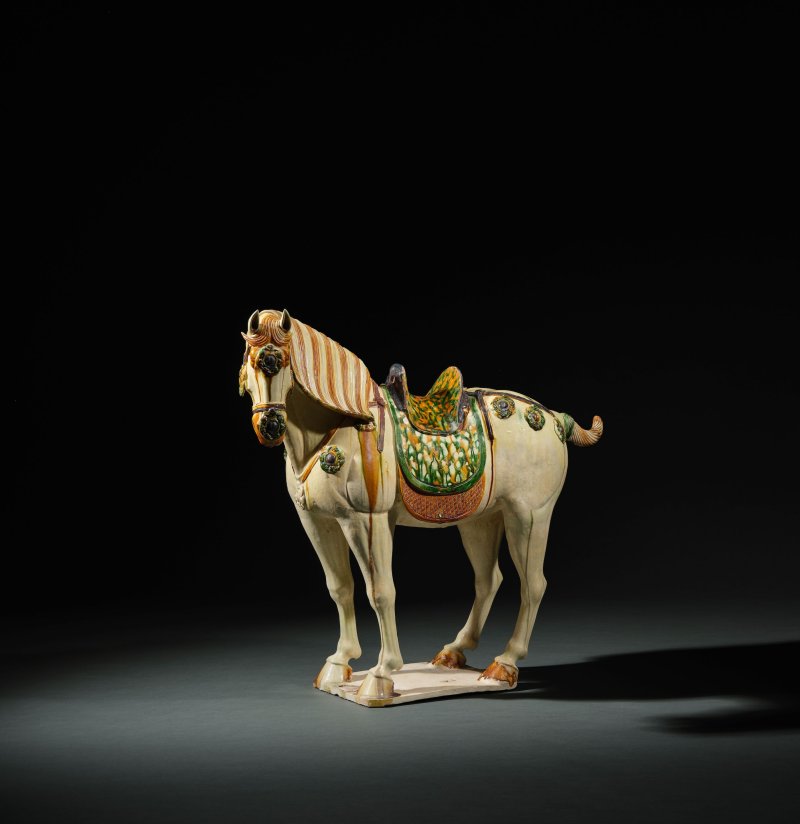
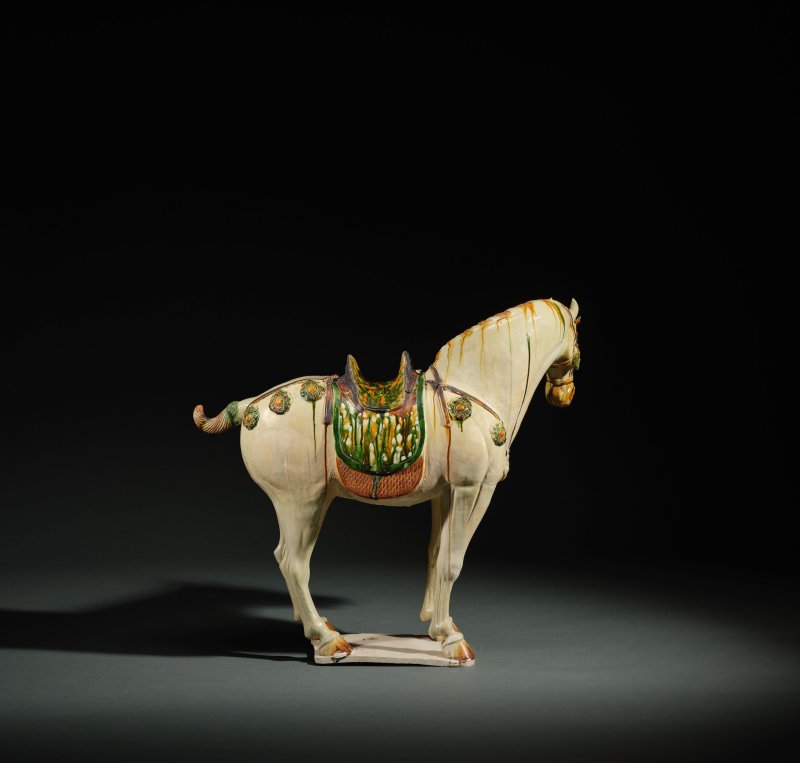
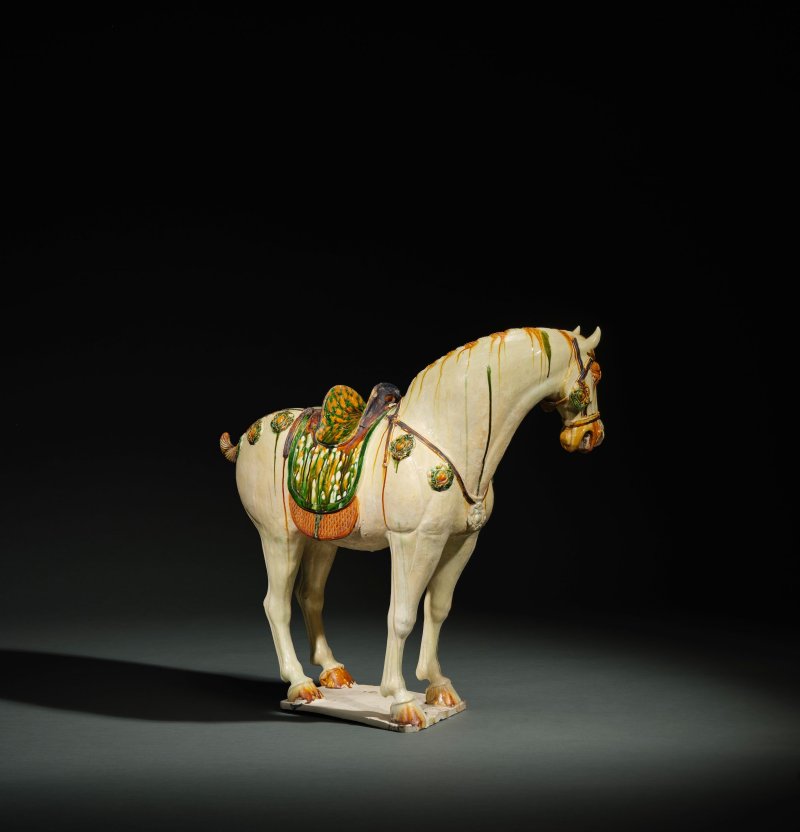
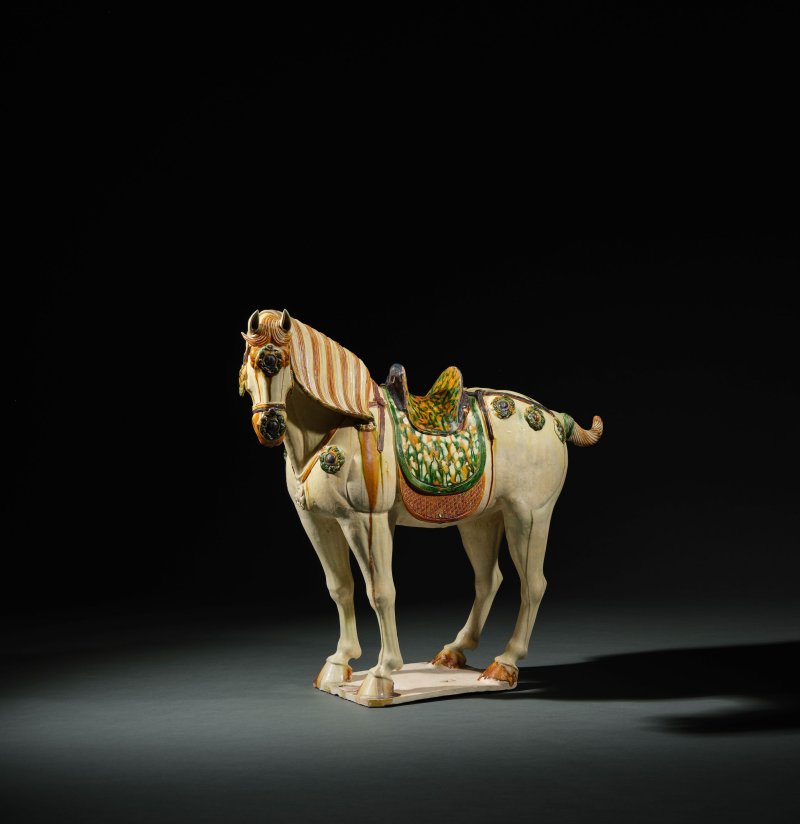
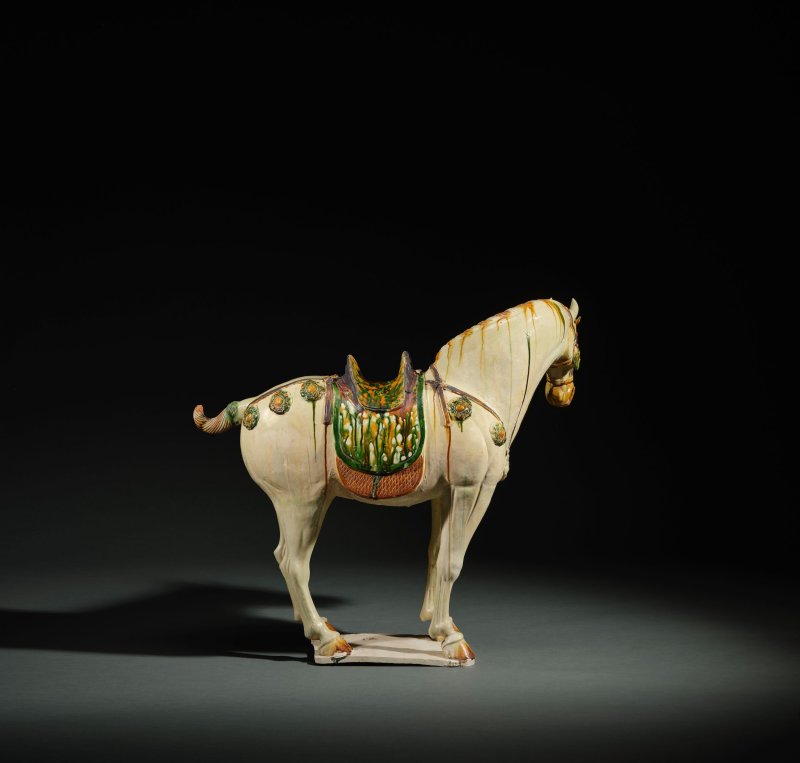
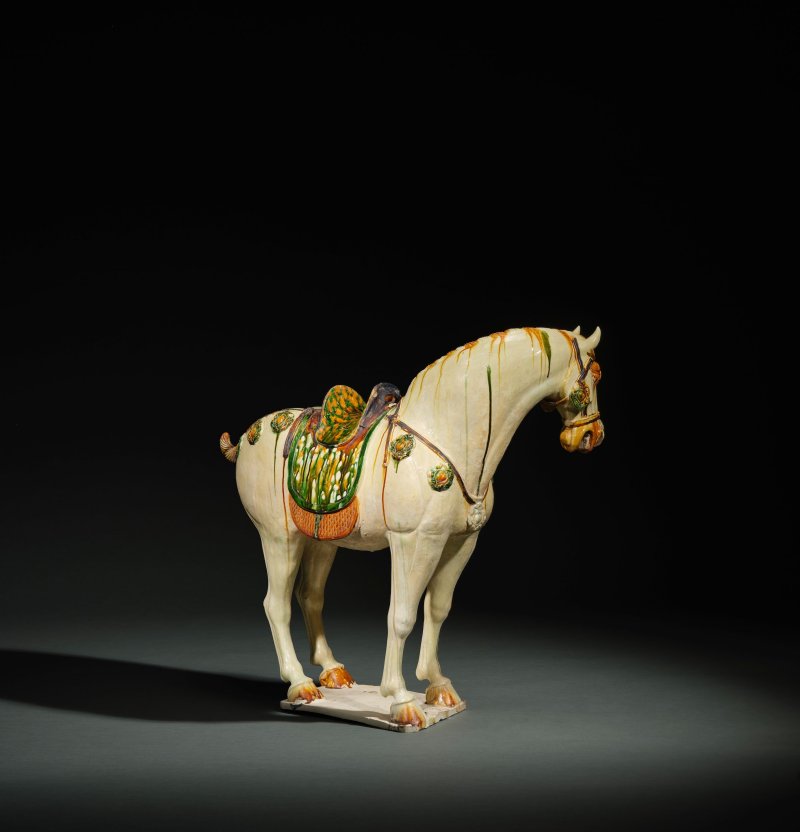
唐 三彩馬 | A MAGNIFICENT LARGE SANCAI-GLAZED CAPARISONED HORSE
年代
Tang Dynasty
起拍价
HKD 2,500,000
估值区间
HKD 2500000 - 3500000
尺寸
未知
品相
未知
更多信息
Tang Dynasty
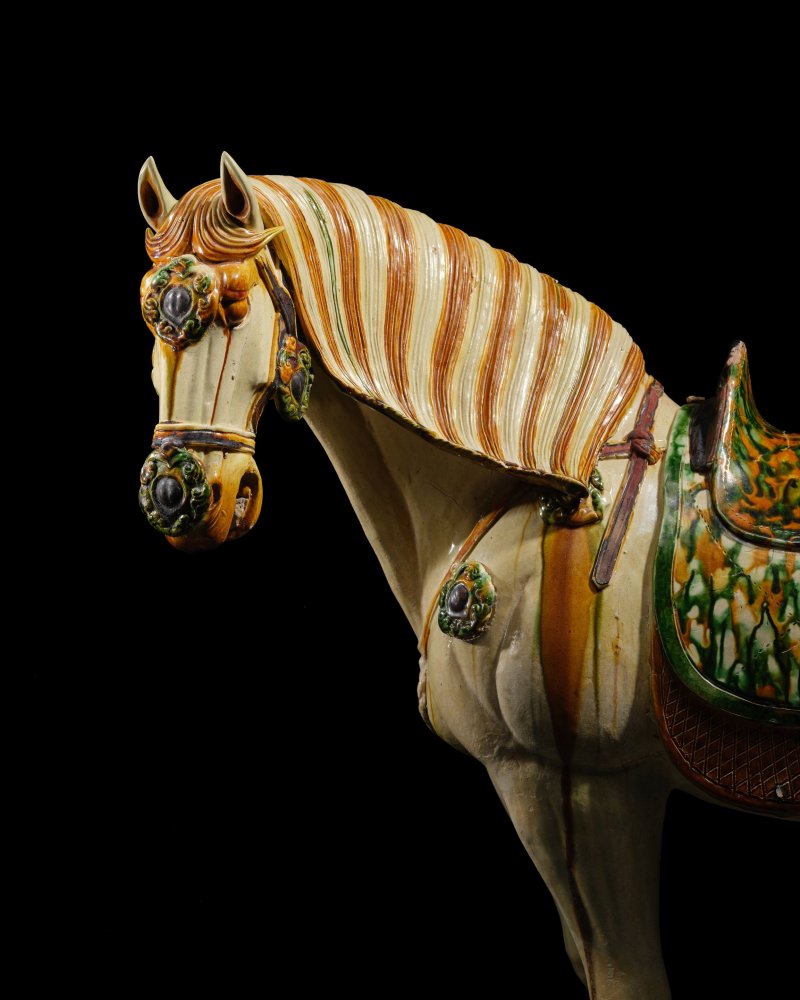
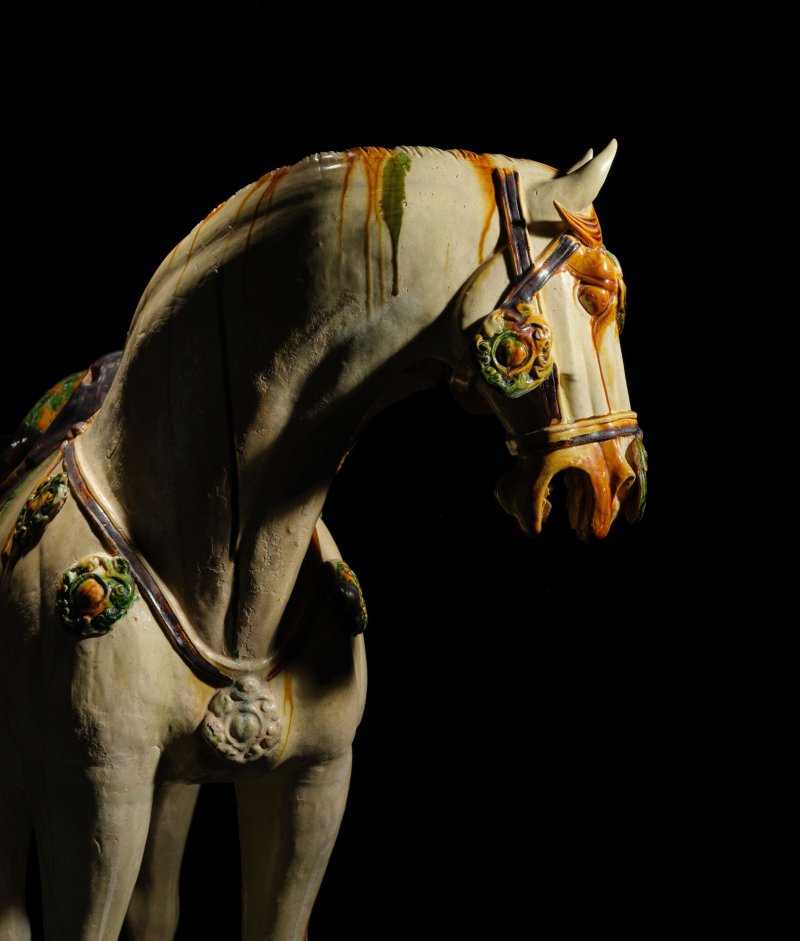
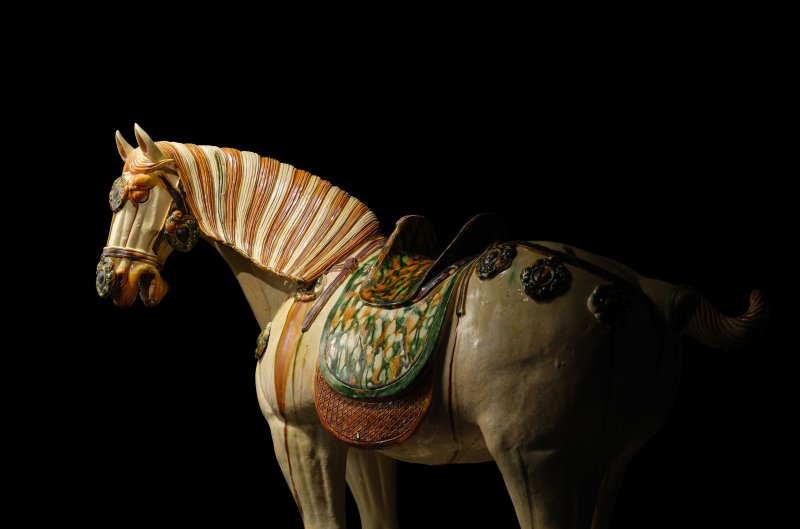
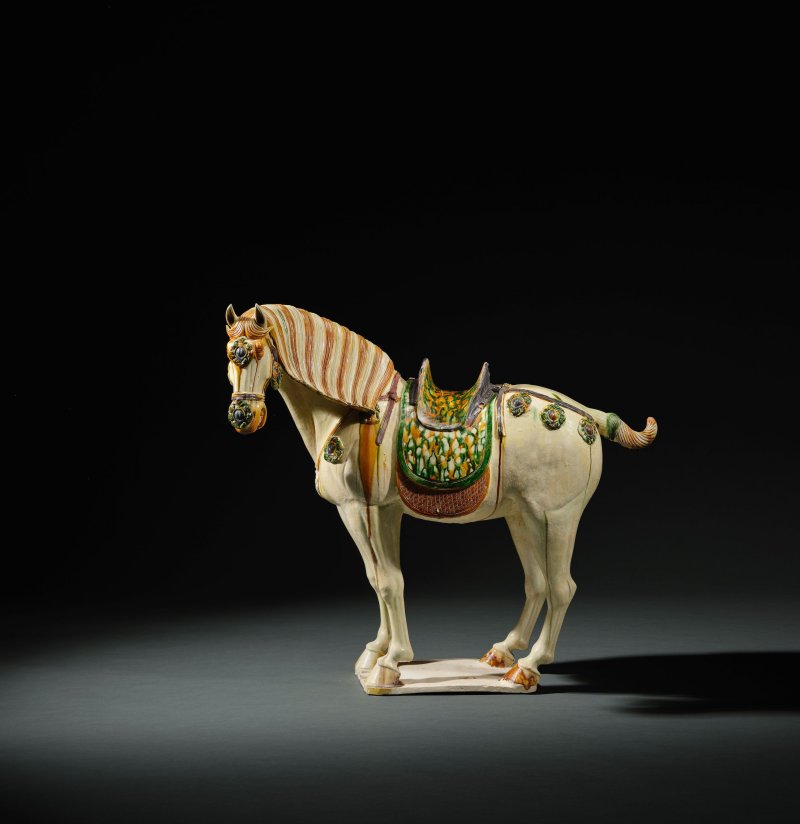
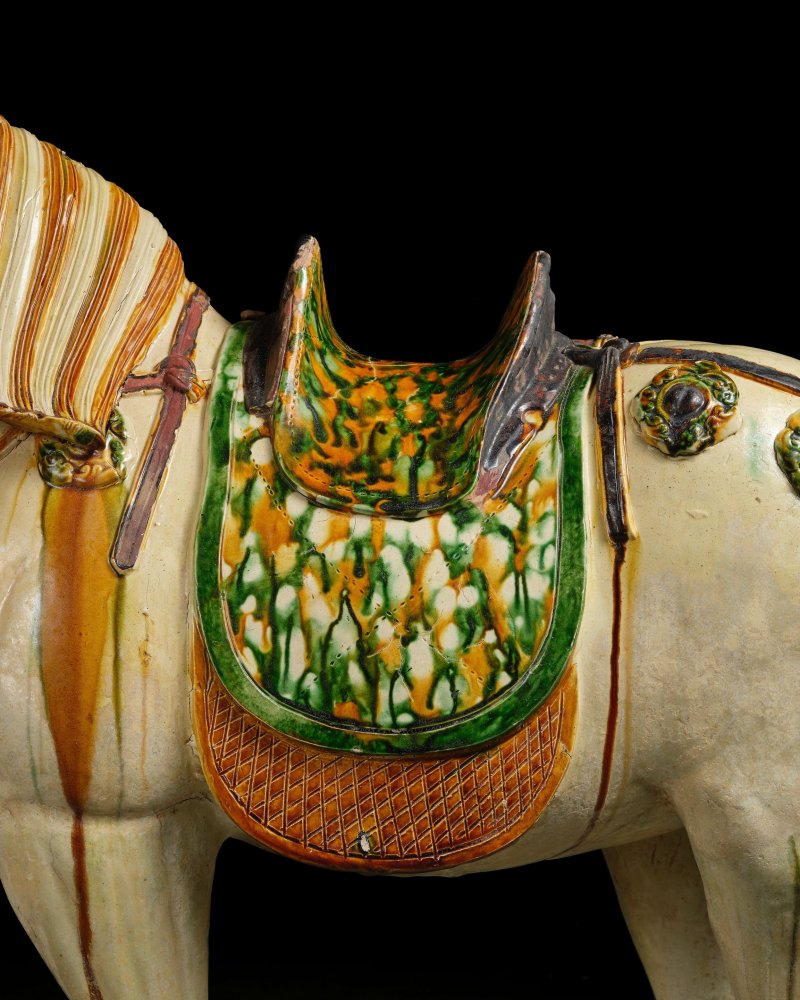
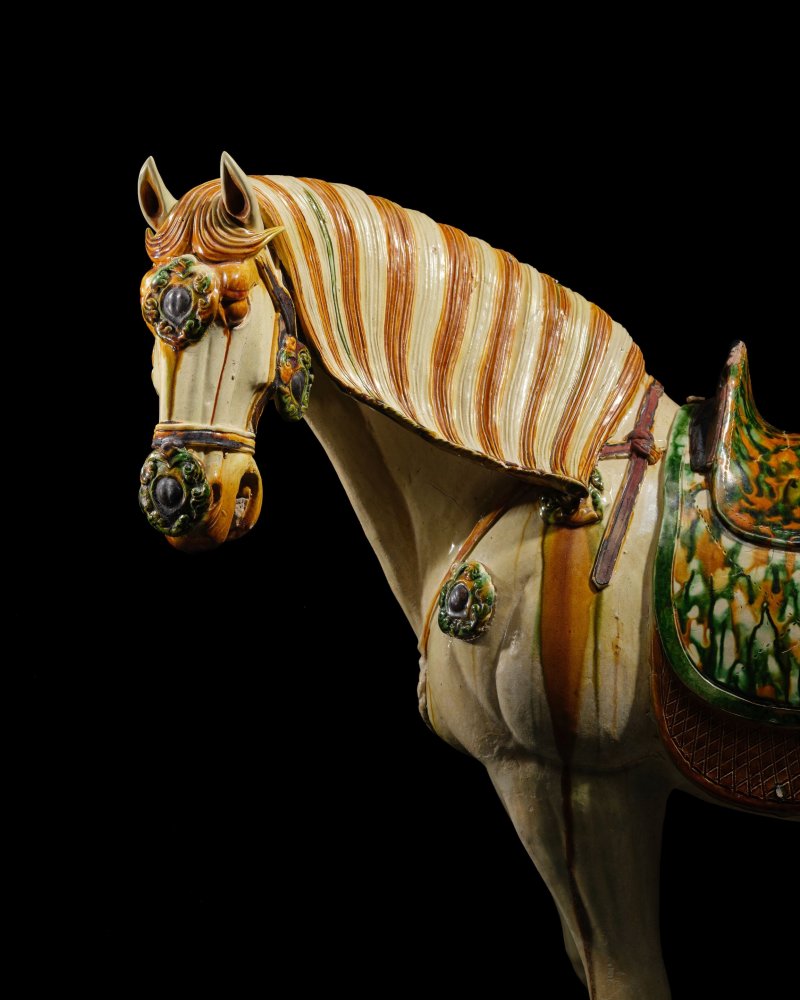
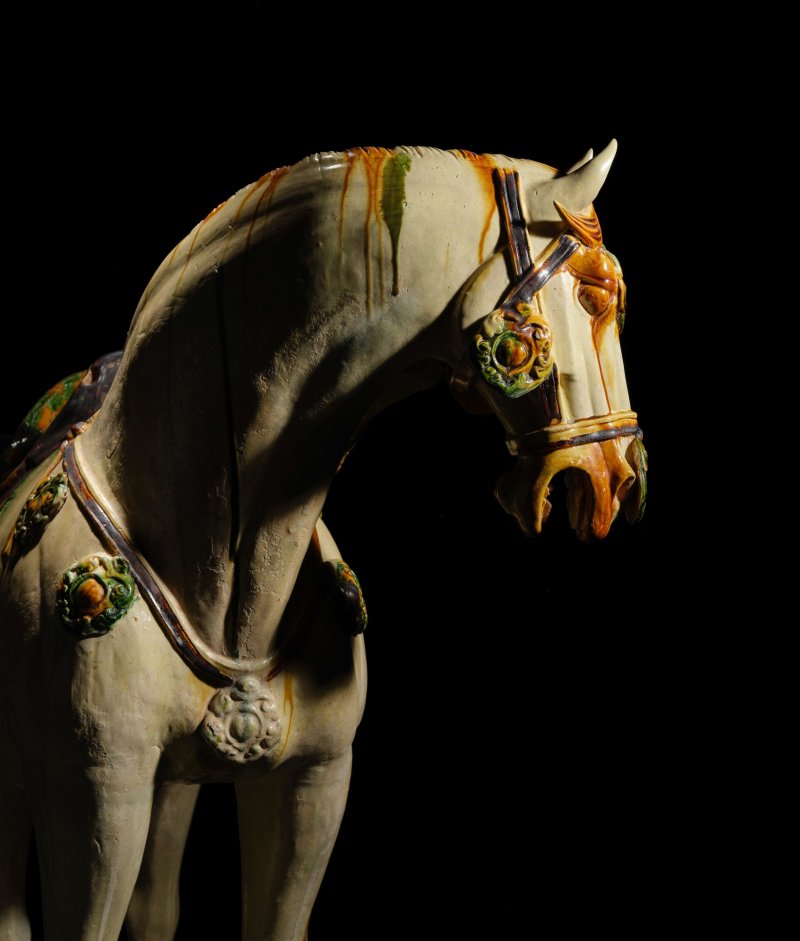
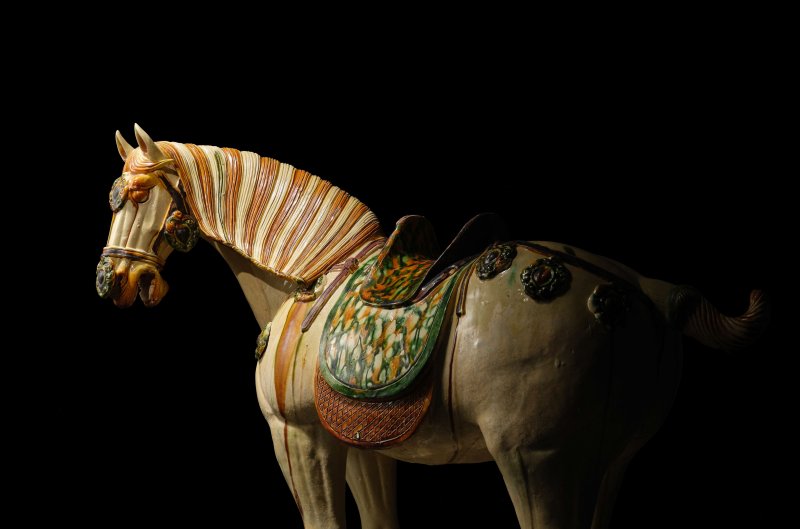
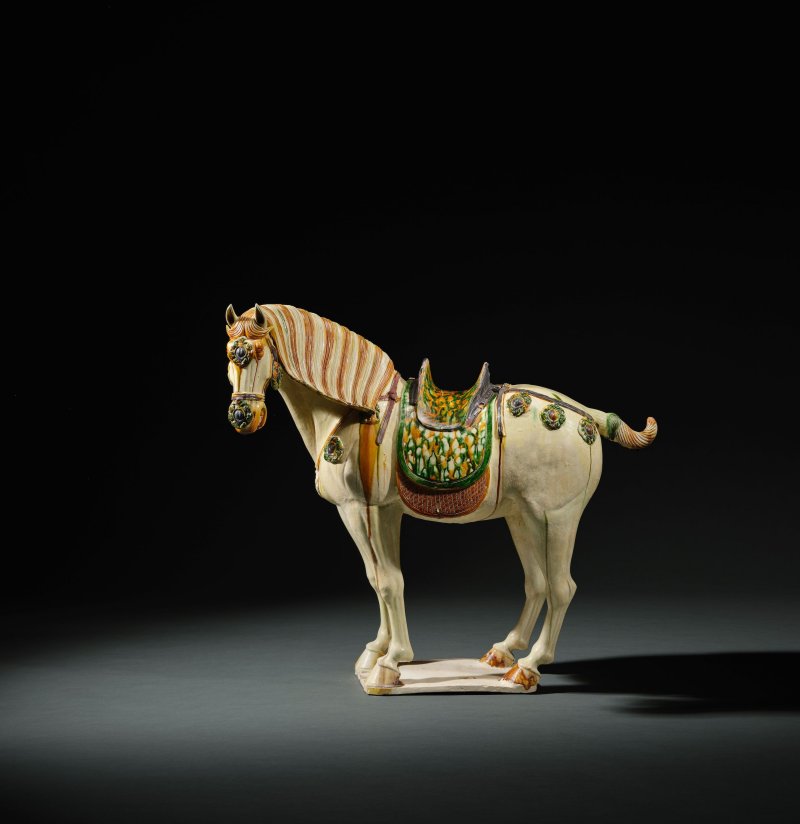
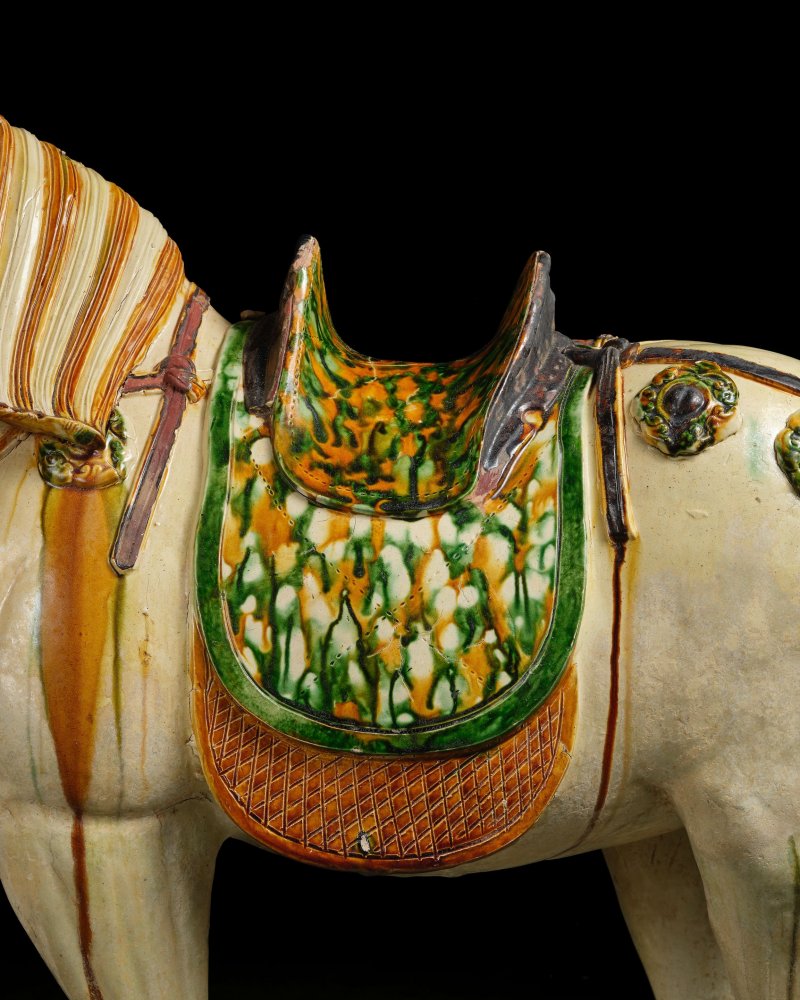
Standing four-square, its head subtly turned to the left with flared nostrils and alert ears, the muscular, barrel-shaped body, covered in a rich straw glaze, accentuated by a long, hogged mane picked out in fine amber stripes, caparisoned with a green, amber, and straw mottled saddle over a draped saddlecloth, secured by a strap laden with floral medallion plaques, fitted box.
71cm (28in) high. (2).
Footnotes
唐 三彩馬
Provenance:
An American private collection
Lam & Co. Antiquities, Hong Kong
Liyin Oriental Art, Taipei
Published, Illustrated and Exhibited:
The Ching Wan Society, Ching Wan Society Thirtieth Anniversary Catalogue: Works of art, Taipei, 2025, cat.no.7
美國私人收藏
松豐堂,香港
禮瀛東方藝術,台北
清翫雅集,《清翫雅集卅周年慶收藏圖錄:器物》,台北,2025年,編號7
As ultimate symbols of wealth and prestige, valuable Ferghana horses signaled the elite rank of their owners in both life and the afterlife. This exclusivity was formally codified in 667 AD, when Tang imperial decrees restricted horse ownership strictly to the aristocracy, forbidding artisans and merchants from holding them. Equine culture and breeding reached their zenith during the Tang period, fueled in part by Emperor Xuanzong's passionate devotion to his mounts. Xuanzong commissioned celebrated Court master Han Gan (c. 706-783) to immortalise his finest steeds; in his 847 treatise ('Record of Famous Painters of All Periods'), Zhang Yanyuan noted that the emperor ordered Han to paint the most noble of his 400,000-strong Imperial stables. Amongst these were six renowned Ferghana-bred stallions distinguished by their striking coats, including the celebrated Night-Shining White (), now housed at the Metropolitan Museum of Art, New York. Han Gan's signature visual language — characterised by a dynamic tension, muscular volume, and spirited naturalism — profoundly influenced Tang court art, inspiring the master sculptors who fashioned the present figure.
The craftsman who modelled this magnificent steed has deftly captured its powerful physicality and spirited nature. With its stout legs, luxurious mane, and barrel-shaped body, the figure exemplifies the iconic Ferghana horse — a legendary Central Asian breed introduced to China during the Han dynasty.
Compare a very similar -glazed horse, Tang dynasty, with a combed mane of alternating colour, illustrated in , Tokyo, 1976, vol.I, pl.202. See also a similar -glazed horse, in the Metropolitan Museum of Art, New York. acc.no.1991.253.12. See a closely related -glazed horse, Tang dynasty, of very similar size and features, including a nearly combed mane, from the collection of Mr and Mrs Brodie Lodge, which was sold at Sotheby's London, 11 July 1978, lot 45, and twice at Christie's New York, 4 June 1986, lot 180 and 11 March 2002, lot 103. Compare a similar -glazed horse, Tang dynasty, also lavishly modelled with a long mane and harnesses, sold at Sotheby's London, 12 May 2021, lot 6.
汗血寶馬為財富與尊榮之終極象徵,無論於生前或歿後,皆彰顯著主人之顯赫地位。唐室於667年頒布勅令,嚴格限制僅有貴族方可擁有馬匹,百工與商賈一律禁養。養馬文化於唐代達到鼎盛,部分原歸功於唐玄宗對愛駒之熱烈痴迷。玄宗曾詔命著名宮廷大師韓幹(約706–783年)為其御廄名駒寫照;張彥遠於其所著之《歷代名畫記》中即記載,玄宗曾命韓幹畫其四十萬匹御廄中之最英特者。其中包括六匹以毛色獨特著稱之汗血寶馬,即包括現藏於紐約大都會藝術博物館之名作《照夜白圖》。韓幹標誌性之視覺語言——以動態張力、肌肉體量感與生動寫實見長——深遠地影響了唐代宮廷藝術,並啟發了塑造本陶馬之雕塑名匠。
塑造此尊駿馬之匠人,極為巧妙地捕捉了其雄健之體魄與英爽之神韻。本品雙腿健碩、鬃毛華麗、軀幹豐滿呈桶狀,完美展現了汗血寶馬之經典造型——此乃漢代引進中國、極具傳奇色彩之西域良駒。
比較一件相似之唐三彩馬,梳有雙色鬃毛,著錄於《龍泉集芳》,卷1,東京,1976年,圖版202。另見紐約大都會藝術博物館藏一件相相似之三彩馬,編號:1991.253.12。另可比較一件唐代三彩馬,尺寸與造型特徵皆為相似,經 Brodie Lodge 伉儷收藏,售於倫敦蘇富比,1978年7月11日,拍品編號45,後兩度售於紐約佳士得,1986年6月4日,拍品編號180,及2002年3月11日,拍品編號103。亦可比較另一件相近之唐三彩馬,售於倫敦蘇富比,2021年5月12日,拍品編號6。
Standing four-square, its head subtly turned to the left with flared nostrils and alert ears, the muscular, barrel-shaped body, covered in a rich straw glaze, accentuated by a long, hogged mane picked out in fine amber stripes, caparisoned with a green, amber, and straw mottled saddle over a draped saddlecloth, secured by a strap laden with floral medallion plaques, fitted box.
71cm (28in) high. (2).
Footnotes
唐 三彩馬
Provenance:
An American private collection
Lam & Co. Antiquities, Hong Kong
Liyin Oriental Art, Taipei
Published, Illustrated and Exhibited:
The Ching Wan Society, Ching Wan Society Thirtieth Anniversary Catalogue: Works of art, Taipei, 2025, cat.no.7
美國私人收藏
松豐堂,香港
禮瀛東方藝術,台北
清翫雅集,《清翫雅集卅周年慶收藏圖錄:器物》,台北,2025年,編號7
As ultimate symbols of wealth and prestige, valuable Ferghana horses signaled the elite rank of their owners in both life and the afterlife. This exclusivity was formally codified in 667 AD, when Tang imperial decrees restricted horse ownership strictly to the aristocracy, forbidding artisans and merchants from holding them. Equine culture and breeding reached their zenith during the Tang period, fueled in part by Emperor Xuanzong's passionate devotion to his mounts. Xuanzong commissioned celebrated Court master Han Gan (c. 706-783) to immortalise his finest steeds; in his 847 treatise ('Record of Famous Painters of All Periods'), Zhang Yanyuan noted that the emperor ordered Han to paint the most noble of his 400,000-strong Imperial stables. Amongst these were six renowned Ferghana-bred stallions distinguished by their striking coats, including the celebrated Night-Shining White (), now housed at the Metropolitan Museum of Art, New York. Han Gan's signature visual language — characterised by a dynamic tension, muscular volume, and spirited naturalism — profoundly influenced Tang court art, inspiring the master sculptors who fashioned the present figure.
The craftsman who modelled this magnificent steed has deftly captured its powerful physicality and spirited nature. With its stout legs, luxurious mane, and barrel-shaped body, the figure exemplifies the iconic Ferghana horse — a legendary Central Asian breed introduced to China during the Han dynasty.
Compare a very similar -glazed horse, Tang dynasty, with a combed mane of alternating colour, illustrated in , Tokyo, 1976, vol.I, pl.202. See also a similar -glazed horse, in the Metropolitan Museum of Art, New York. acc.no.1991.253.12. See a closely related -glazed horse, Tang dynasty, of very similar size and features, including a nearly combed mane, from the collection of Mr and Mrs Brodie Lodge, which was sold at Sotheby's London, 11 July 1978, lot 45, and twice at Christie's New York, 4 June 1986, lot 180 and 11 March 2002, lot 103. Compare a similar -glazed horse, Tang dynasty, also lavishly modelled with a long mane and harnesses, sold at Sotheby's London, 12 May 2021, lot 6.
汗血寶馬為財富與尊榮之終極象徵,無論於生前或歿後,皆彰顯著主人之顯赫地位。唐室於667年頒布勅令,嚴格限制僅有貴族方可擁有馬匹,百工與商賈一律禁養。養馬文化於唐代達到鼎盛,部分原歸功於唐玄宗對愛駒之熱烈痴迷。玄宗曾詔命著名宮廷大師韓幹(約706–783年)為其御廄名駒寫照;張彥遠於其所著之《歷代名畫記》中即記載,玄宗曾命韓幹畫其四十萬匹御廄中之最英特者。其中包括六匹以毛色獨特著稱之汗血寶馬,即包括現藏於紐約大都會藝術博物館之名作《照夜白圖》。韓幹標誌性之視覺語言——以動態張力、肌肉體量感與生動寫實見長——深遠地影響了唐代宮廷藝術,並啟發了塑造本陶馬之雕塑名匠。
塑造此尊駿馬之匠人,極為巧妙地捕捉了其雄健之體魄與英爽之神韻。本品雙腿健碩、鬃毛華麗、軀幹豐滿呈桶狀,完美展現了汗血寶馬之經典造型——此乃漢代引進中國、極具傳奇色彩之西域良駒。
比較一件相似之唐三彩馬,梳有雙色鬃毛,著錄於《龍泉集芳》,卷1,東京,1976年,圖版202。另見紐約大都會藝術博物館藏一件相相似之三彩馬,編號:1991.253.12。另可比較一件唐代三彩馬,尺寸與造型特徵皆為相似,經 Brodie Lodge 伉儷收藏,售於倫敦蘇富比,1978年7月11日,拍品編號45,後兩度售於紐約佳士得,1986年6月4日,拍品編號180,及2002年3月11日,拍品編號103。亦可比較另一件相近之唐三彩馬,售於倫敦蘇富比,2021年5月12日,拍品編號6。
常见问题
这件唐 三彩馬 | A MAGNIFICENT LARGE SANCAI-GLAZED CAPARISONED HORSE的成交价是多少?
落槌价为 预展中。 成交价为 预展中。