
Lot 563 A RARE THANGKA DEPICTING THE 8TH TAI SITU (SITU PANCHEN) CHOKYI JUNGEN (A.D. 1700 - 1774)
落槌价
****
成交价
****
拍品信息
拍品名称
A RARE THANGKA DEPICTING THE 8TH TAI SITU (SITU PANCHEN) CHOKYI JUNGEN (A.D. 1700 - 1774)
起拍价
EUR 5,000
估值区间
5.000 - 8.000
尺寸
未知
品相
未知
更多信息
Description:
East-Tibet, 18th cent.
72,5 x 46 cm, R.
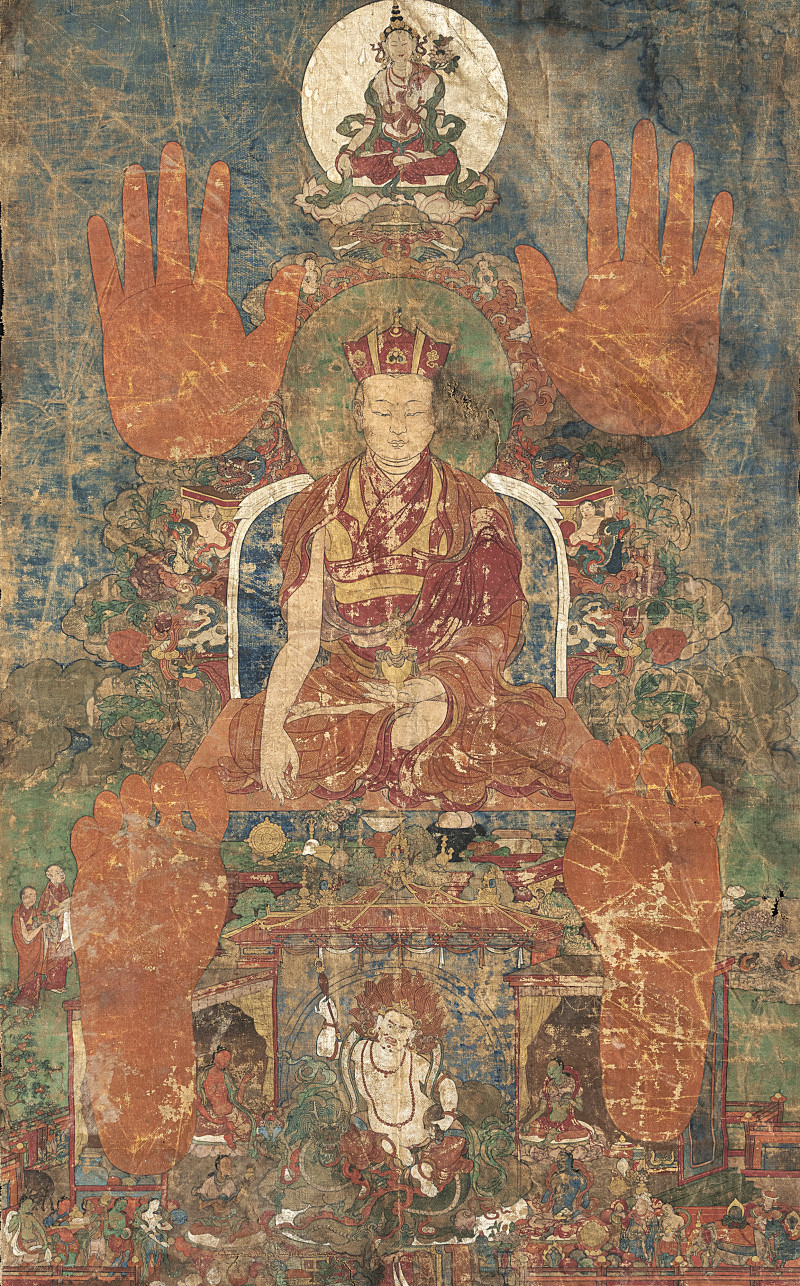
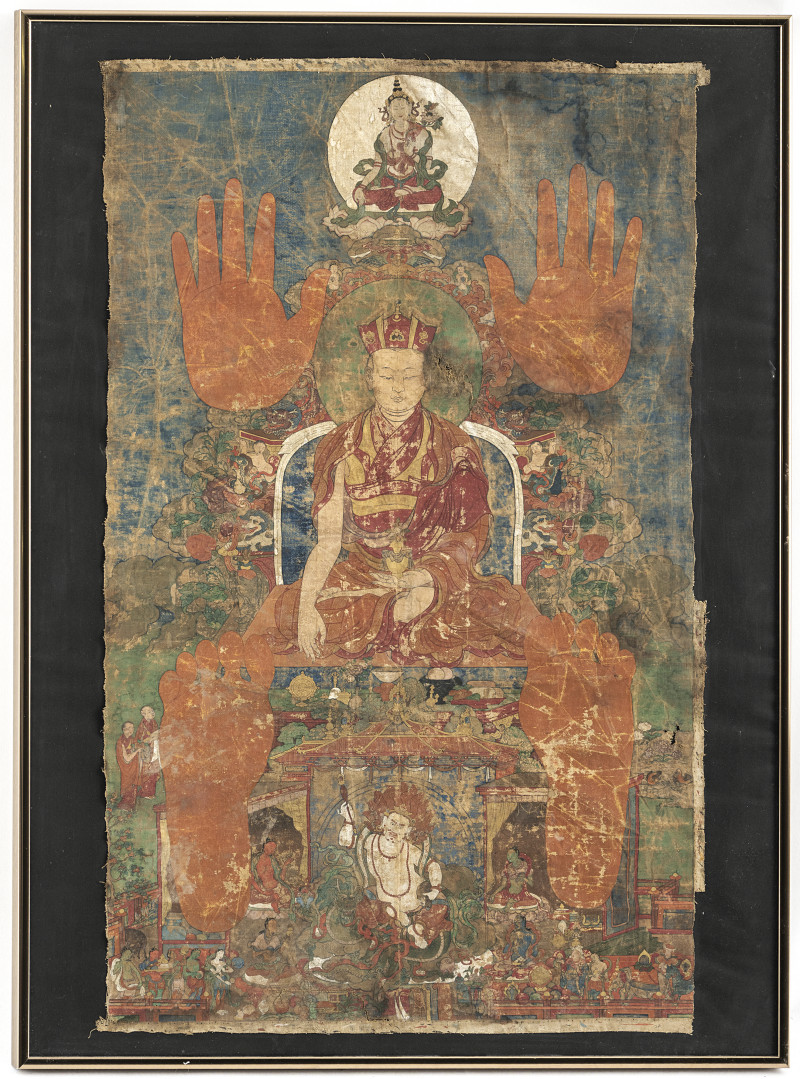
The youthful portrait of Situ Chos.kyi ‘buying.gnas shows him seated in vajrasana on an elaborate throne with various ritual attributes and offerings in front of him, his right hand is lowered in the bhumisparshamudra while the left is resting on his lap supporting the kalasha, wearing monastic garment including underskirt and a patchwork mantle covering both shoulders, his youthful face displaying a serene expression with downcast eyes below arched eyebrows, his head topped with the specific bonnet, head halo behind encompassed by flames issuing the khyung bird at the top flanked by a pair of gandharva's, above him is situated the white Sitatara seated in vajrasana on a lotus base, her right hand in the varadamudra while the left is holding the stem of a lotus flowering along her upper arm, large white aureole behind her, the lower register with a central placed pavilion of the white Vaishravana holding club and mongoose, flanked to each side by another pavilion with various divinities, the central Situ Panchen is surrounded by two large painted hands and feet symbolizing the request for a long life, framed
Old Southern German private collection, assembled prior to 2000
Situ Penchen Chökyi Chungne (b. 1700; d. 1774) was the 8th Tai Situpa of the Karma Kagyu school of Tibetan Buddhism. Chökyi Chungne was a disciple of the 12th Karmapa, Changchub Dorje. He was a grammarian and author, a leading master of the ‘Karma-Gadri’ style (Tib.: karma sgar bris) of thangka painting[1], and is regarded as the founder of Pelpung Chökhor Ling Monastery. He is particularly renowned for his comprehensive work on the grammar of the Tibetan language[2] and his work on the Derge edition of the Kangyur (Tib.: sde dge bka' 'gyur). - Damages due to age and wear
East-Tibet, 18th cent.
72,5 x 46 cm, R.
The youthful portrait of Situ Chos.kyi ‘buying.gnas shows him seated in vajrasana on an elaborate throne with various ritual attributes and offerings in front of him, his right hand is lowered in the bhumisparshamudra while the left is resting on his lap supporting the kalasha, wearing monastic garment including underskirt and a patchwork mantle covering both shoulders, his youthful face displaying a serene expression with downcast eyes below arched eyebrows, his head topped with the specific bonnet, head halo behind encompassed by flames issuing the khyung bird at the top flanked by a pair of gandharva's, above him is situated the white Sitatara seated in vajrasana on a lotus base, her right hand in the varadamudra while the left is holding the stem of a lotus flowering along her upper arm, large white aureole behind her, the lower register with a central placed pavilion of the white Vaishravana holding club and mongoose, flanked to each side by another pavilion with various divinities, the central Situ Panchen is surrounded by two large painted hands and feet symbolizing the request for a long life, framed
Old Southern German private collection, assembled prior to 2000
Situ Penchen Chökyi Chungne (b. 1700; d. 1774) was the 8th Tai Situpa of the Karma Kagyu school of Tibetan Buddhism. Chökyi Chungne was a disciple of the 12th Karmapa, Changchub Dorje. He was a grammarian and author, a leading master of the ‘Karma-Gadri’ style (Tib.: karma sgar bris) of thangka painting[1], and is regarded as the founder of Pelpung Chökhor Ling Monastery. He is particularly renowned for his comprehensive work on the grammar of the Tibetan language[2] and his work on the Derge edition of the Kangyur (Tib.: sde dge bka' 'gyur). - Damages due to age and wear