
拍品信息
拍品名称
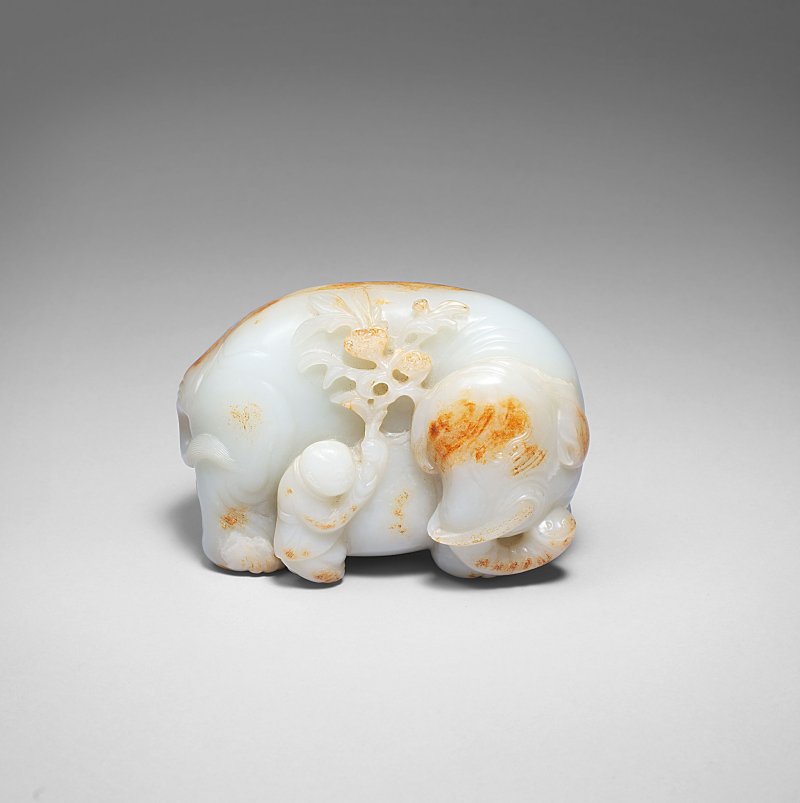
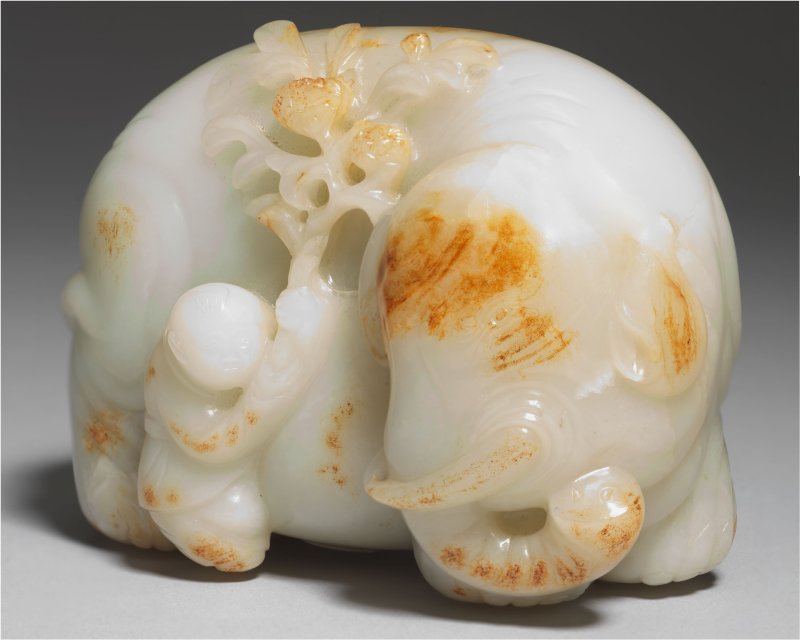
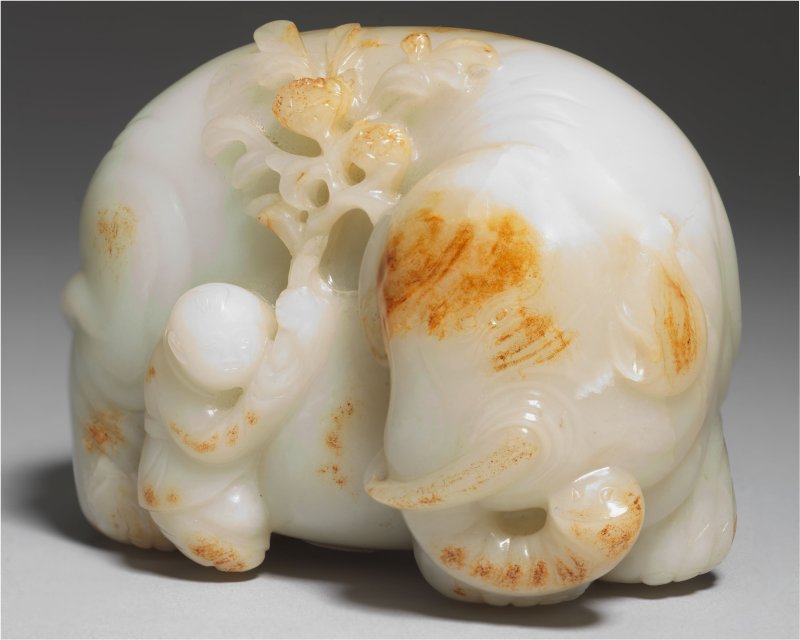
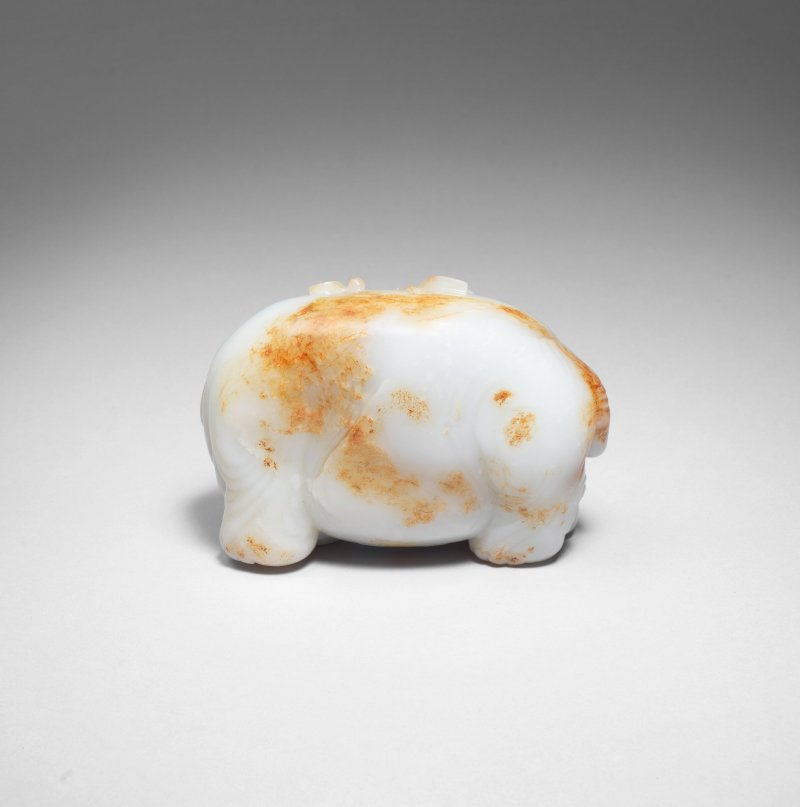
清乾隆 白玉雕童子洗象 | A SUPERB WHITE AND RUSSET JADE CARVING OF AN ELEPHANT AND BOY
年代
Qianlong
起拍价
GBP 20,000
估值区间
GBP 20000 - 30000
尺寸
未知
品相
未知
更多信息
Qianlong
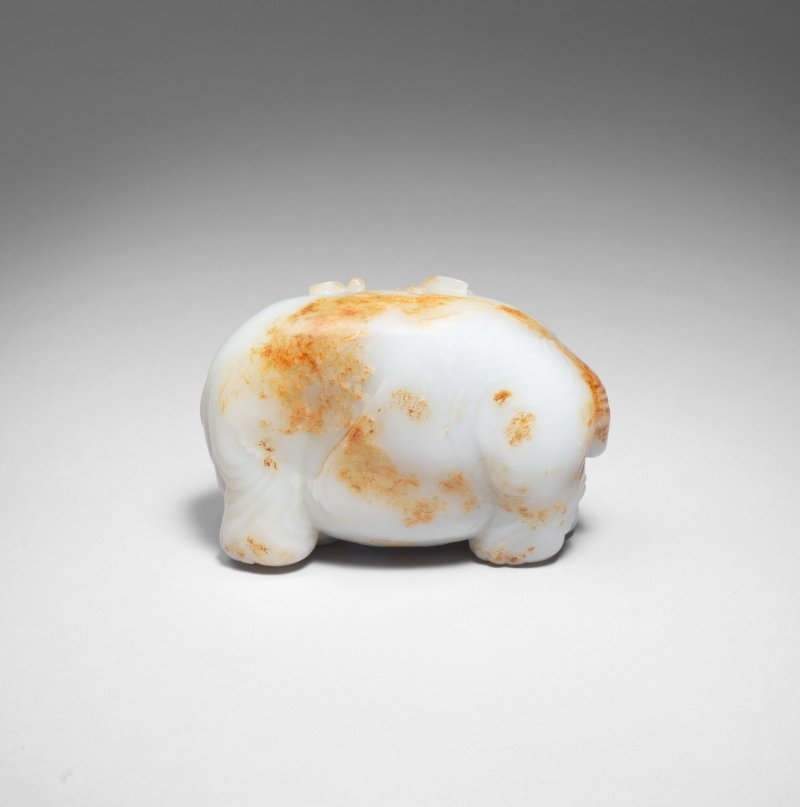
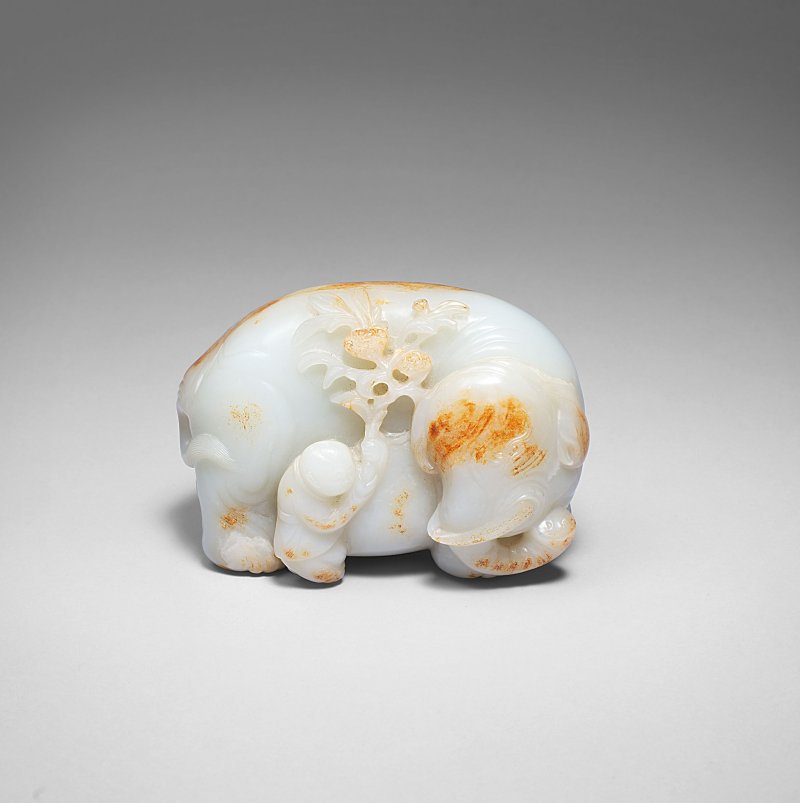
The stone finely carved as an elephant standing foursquare, its head turned sharply to the right and the trunk curling between prominent tusks, the almond-shaped eyes gazing towards a boy carrying a flowering spray by its side, the powerful body rendered with finely incised wrinkles and folds of skin, the long tail sweeping gracefully across the right haunch and detailed with individual strands of hair, the underside of the feet crisply carved with five rounded toes, the smoothly polished stone of pale white tone attractively suffused with russet-brown inclusions, hongmu stand. 13.5cm (5 1/4in) long. (2).
Footnotes
清乾隆 白玉雕童子洗象
Provenance: Sir George Mowlem Burt KBE (1884–1964), Surrey, and thence by descent
來源:大英帝國爵級司令勛章獲得者George Mowlem Burt爵士(1884-1964),英國薩裏,并由後人保存迄今
Born in Westminster on 10 January 1884, Sir George Mowlem Burt KBE joined the family firm, John Mowlem & Co., in 1902, following in the footsteps of his father and uncle. He subsequently became supervising director of the company and was involved in a number of major engineering and building projects. He was a prominent figure in the development of the civil engineering industry, serving as a founding member of the Federation of Civil Engineering Contractors and on various Government committees and missions. He was also Master of the Worshipful Company of Paviors. Outside his professional life, Burt was a distinguished fencer, winning the British épée championship in 1922 and representing Great Britain in épée at the 1920 Olympic Games. He was knighted in 1942 and died at Blindley Heath, Surrey, on 1 September 1964. An enthusiastic collector of art, his collection included paintings, ivory, netsuke and jade.
Elephants occupied a prominent place in the Chinese auspicious repertoire, where they were admired both for their imposing physical presence and for the favourable associations of their name. The character for elephant, (象), is a homophone for (祥), meaning 'auspicious' or 'propitious', making the animal a popular emblem of good fortune. In art of the Ming and Qing dynasties, elephants frequently appear in conjunction with boys (), whose presence alludes to wishes for numerous descendants and the continuation of the family line. The flowering spray carried by the boy in the present carving, likely representing peony, further enriches this auspicious programme. Celebrated as the 'King of Flowers', the peony symbolises wealth, honour and high rank, and its combination with the elephant may therefore be interpreted as a wish for prosperity, distinction and enduring good fortune.
Beyond their symbolic significance, elephants occupied an important place within the ceremonial life of the Qing Court. Live elephants were maintained by the Imperial Household and regularly appeared in state processions and ritual occasions, where their impressive size and exotic origins enhanced the grandeur of Imperial spectacle. Many were presented as tribute from the southern frontiers of the empire and from kingdoms of Southeast Asia, including Siam, Burma and other tributary states. Contemporary paintings show elephants participating in major Court ceremonies in Beijing, while the Imperial Elephant Stable () was situated near Xuanwumen, where the animals were housed and trained under official supervision. Their presence at Court served not only as a display of Imperial magnificence but also as a tangible demonstration of the far-reaching influence of the Qing empire, lending additional resonance to artistic representations such as the present lot. See , late 18th century, in the Qing Court Collection, illustrated by E.Rawski and J.Rawson, , London, 2005, p.101, no.24.
See a related white and russet jade carving of an elephant with a man standing by a boy, Qing dynasty, in the Qing Court Collection, , Hong Kong, 1995, p.117, no.97.
Compare with a related white and russet jade 'elephant and foreigner' group, 18th century, which was sold at Sotheby's Hong Kong, 9 April 2024, lot 3702. See also a smaller white jade carving of an elephant with boys, Qianlong, which was sold at Christie's London, 14 May 2013, lot 81, and a creamy white jade figure of an elephant and boy, Qing dynasty, which was sold at Christie's New York, 25 March 2022, lot 1260.
The stone finely carved as an elephant standing foursquare, its head turned sharply to the right and the trunk curling between prominent tusks, the almond-shaped eyes gazing towards a boy carrying a flowering spray by its side, the powerful body rendered with finely incised wrinkles and folds of skin, the long tail sweeping gracefully across the right haunch and detailed with individual strands of hair, the underside of the feet crisply carved with five rounded toes, the smoothly polished stone of pale white tone attractively suffused with russet-brown inclusions, hongmu stand. 13.5cm (5 1/4in) long. (2).
Footnotes
清乾隆 白玉雕童子洗象
Provenance: Sir George Mowlem Burt KBE (1884–1964), Surrey, and thence by descent
來源:大英帝國爵級司令勛章獲得者George Mowlem Burt爵士(1884-1964),英國薩裏,并由後人保存迄今
Born in Westminster on 10 January 1884, Sir George Mowlem Burt KBE joined the family firm, John Mowlem & Co., in 1902, following in the footsteps of his father and uncle. He subsequently became supervising director of the company and was involved in a number of major engineering and building projects. He was a prominent figure in the development of the civil engineering industry, serving as a founding member of the Federation of Civil Engineering Contractors and on various Government committees and missions. He was also Master of the Worshipful Company of Paviors. Outside his professional life, Burt was a distinguished fencer, winning the British épée championship in 1922 and representing Great Britain in épée at the 1920 Olympic Games. He was knighted in 1942 and died at Blindley Heath, Surrey, on 1 September 1964. An enthusiastic collector of art, his collection included paintings, ivory, netsuke and jade.
Elephants occupied a prominent place in the Chinese auspicious repertoire, where they were admired both for their imposing physical presence and for the favourable associations of their name. The character for elephant, (象), is a homophone for (祥), meaning 'auspicious' or 'propitious', making the animal a popular emblem of good fortune. In art of the Ming and Qing dynasties, elephants frequently appear in conjunction with boys (), whose presence alludes to wishes for numerous descendants and the continuation of the family line. The flowering spray carried by the boy in the present carving, likely representing peony, further enriches this auspicious programme. Celebrated as the 'King of Flowers', the peony symbolises wealth, honour and high rank, and its combination with the elephant may therefore be interpreted as a wish for prosperity, distinction and enduring good fortune.
Beyond their symbolic significance, elephants occupied an important place within the ceremonial life of the Qing Court. Live elephants were maintained by the Imperial Household and regularly appeared in state processions and ritual occasions, where their impressive size and exotic origins enhanced the grandeur of Imperial spectacle. Many were presented as tribute from the southern frontiers of the empire and from kingdoms of Southeast Asia, including Siam, Burma and other tributary states. Contemporary paintings show elephants participating in major Court ceremonies in Beijing, while the Imperial Elephant Stable () was situated near Xuanwumen, where the animals were housed and trained under official supervision. Their presence at Court served not only as a display of Imperial magnificence but also as a tangible demonstration of the far-reaching influence of the Qing empire, lending additional resonance to artistic representations such as the present lot. See , late 18th century, in the Qing Court Collection, illustrated by E.Rawski and J.Rawson, , London, 2005, p.101, no.24.
See a related white and russet jade carving of an elephant with a man standing by a boy, Qing dynasty, in the Qing Court Collection, , Hong Kong, 1995, p.117, no.97.
Compare with a related white and russet jade 'elephant and foreigner' group, 18th century, which was sold at Sotheby's Hong Kong, 9 April 2024, lot 3702. See also a smaller white jade carving of an elephant with boys, Qianlong, which was sold at Christie's London, 14 May 2013, lot 81, and a creamy white jade figure of an elephant and boy, Qing dynasty, which was sold at Christie's New York, 25 March 2022, lot 1260.
常见问题
这件清乾隆 白玉雕童子洗象 | A SUPERB WHITE AND RUSSET JADE CARVING OF AN ELEPHANT AND BOY的成交价是多少?
落槌价为 预展中。 成交价为 预展中。


