
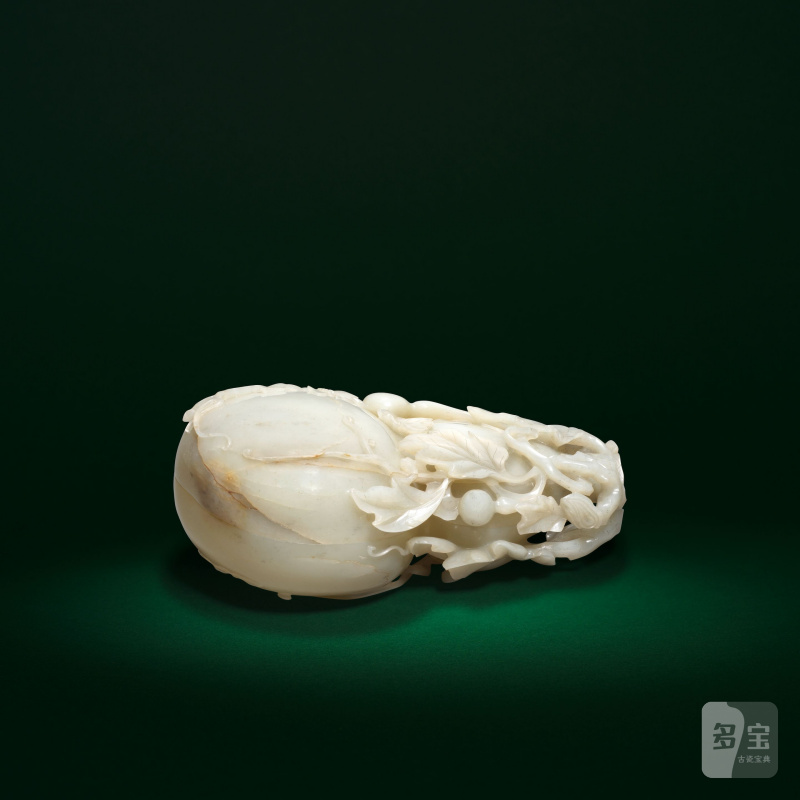

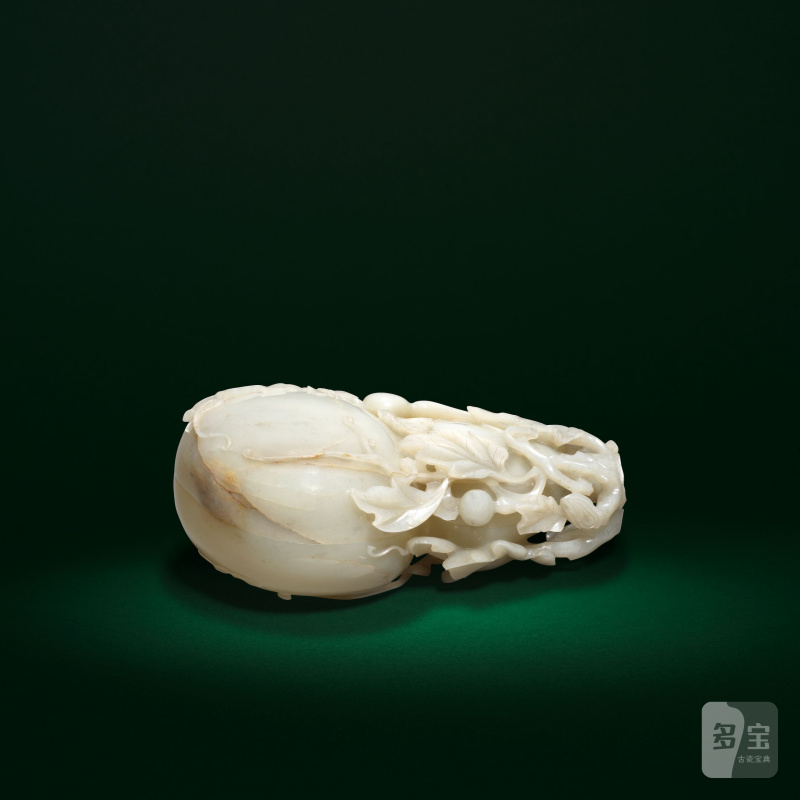
Lot 370Y 清乾隆/嘉慶 青玉葫蘆蓋盒 | A PALE GREEN JADE DOUBLE-GOURD BOX AND COVER
落槌价
****
成交价
****
| 拍卖公司 | 邦瀚斯 |
|---|---|
| 拍卖时间 | 2026年05月18日 |
请安装多宝古瓷宝典APP,查看高清无损大图
拍品信息
拍品名称
清乾隆/嘉慶 青玉葫蘆蓋盒 | A PALE GREEN JADE DOUBLE-GOURD BOX AND COVER
起拍价
GBP 3,000
估值区间
未知
尺寸
未知
品相
未知
更多信息
Qianlong/Jiaqing
Naturalistically carved on its side issuing from tangled vines with leaves, further smaller double gourds, and curling tendrils extending around the body, the cover with a fluttering butterfly, the stone of even pale greyish-green tone with some dark speckles, carved wood stand. 17.5cm (6 7/8in) long. (3).
Footnotes
清乾隆/嘉慶 青玉葫蘆蓋盒
Provenance: Bill Spiers
Trudy and John Cohen, collection no.H1
來源:Bill Spiers
Trudy及John Cohen伉儷,收藏編號H1
The double gourd (hulu 葫蘆) is a potent auspicious symbol in Chinese art, valued both for its form and its wordplay. As a natural container of seeds, it signifies fertility, abundance and the continuation of the family line, while its hollow interior associates it with containment of blessings, elixirs and protective powers, hence its frequent appearance as an attribute of Daoist Immortals. The term is also a homophone for (福祿), meaning 'good fortune and emolument', reinforcing its auspicious connotations. When paired with a butterfly ( 蝶), the rebus becomes particularly rich: is a homophone for (耋), denoting advanced age, so the combination conveys wishes for longevity, prosperity and the transmission of blessings across generations. The pairing thus encapsulates ideals of long life, fecundity and enduring good fortune.
See a related green jade double-gourd shaped brush washer with design of bats, Qing dynasty, illustrated in the , Beijing, 2011, p.245, no.194. For a slightly larger jade grouping of clustered gourds, 18th century, see R.Kleiner, , Hong Kong, 1996, p.255, no.204.
Naturalistically carved on its side issuing from tangled vines with leaves, further smaller double gourds, and curling tendrils extending around the body, the cover with a fluttering butterfly, the stone of even pale greyish-green tone with some dark speckles, carved wood stand. 17.5cm (6 7/8in) long. (3).
Footnotes
清乾隆/嘉慶 青玉葫蘆蓋盒
Provenance: Bill Spiers
Trudy and John Cohen, collection no.H1
來源:Bill Spiers
Trudy及John Cohen伉儷,收藏編號H1
The double gourd (hulu 葫蘆) is a potent auspicious symbol in Chinese art, valued both for its form and its wordplay. As a natural container of seeds, it signifies fertility, abundance and the continuation of the family line, while its hollow interior associates it with containment of blessings, elixirs and protective powers, hence its frequent appearance as an attribute of Daoist Immortals. The term is also a homophone for (福祿), meaning 'good fortune and emolument', reinforcing its auspicious connotations. When paired with a butterfly ( 蝶), the rebus becomes particularly rich: is a homophone for (耋), denoting advanced age, so the combination conveys wishes for longevity, prosperity and the transmission of blessings across generations. The pairing thus encapsulates ideals of long life, fecundity and enduring good fortune.
See a related green jade double-gourd shaped brush washer with design of bats, Qing dynasty, illustrated in the , Beijing, 2011, p.245, no.194. For a slightly larger jade grouping of clustered gourds, 18th century, see R.Kleiner, , Hong Kong, 1996, p.255, no.204.