
拍品信息
拍品名称
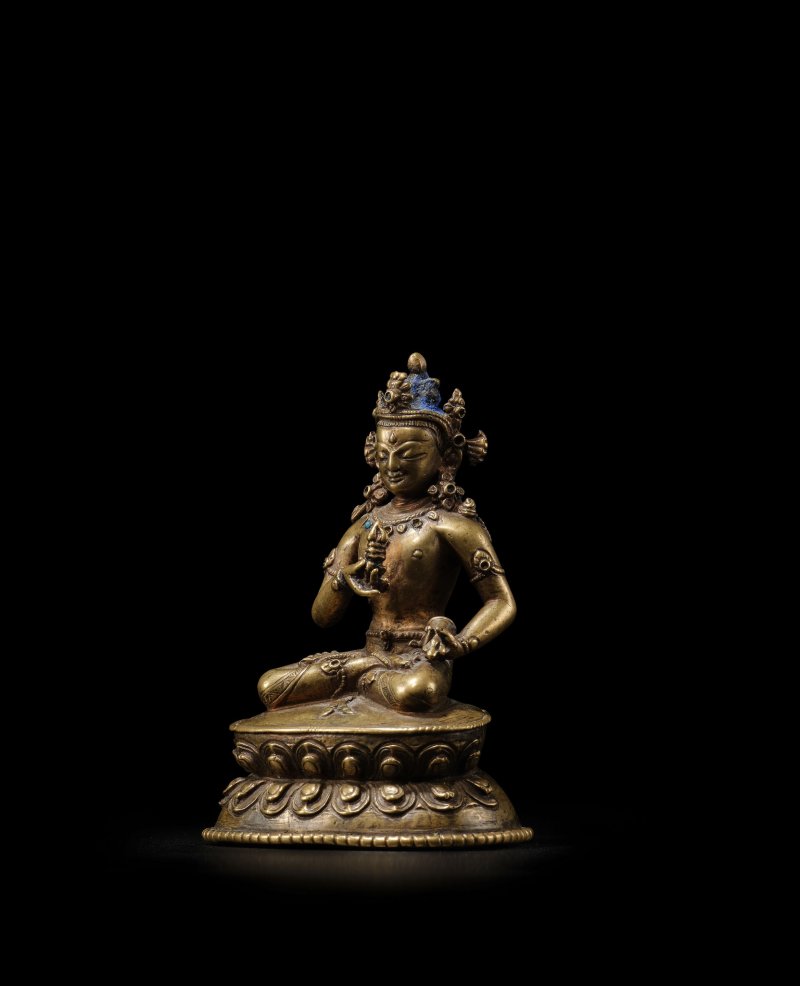
西藏 十三世紀 金剛薩埵銅像 | A COPPER ALLOY FIGURE OF VAJRASATTVA
年代
TIBET, 13TH CENTURY
起拍价
HKD 120,000
估值区间
HKD 120000 - 160000
尺寸
未知
品相
未知
更多信息
TIBET, 13TH CENTURY
Himalayan Art Resources item no. 61643
9 cm (3 1/2 in.) high
Footnotes
西藏 十三世紀 金剛薩埵銅像
Provenance
Cees van der Ploeg, 1995, by repute
The Presencer Collection of Buddhist Art
Bonhams, Hong Kong, 2 October 2018, lot 132
Vajrasattva, the "Vajra Being," is regarded in some Vajrayana traditions as the active manifestation of the Adi Buddha. He is invoked in purification rituals and revered both as a bodhisattva and, in the Nyingma school, as a yidam (meditational deity). In some contexts, he is also counted among the six presiding Buddhas, representing the ethereal unity of the enlightened lineage.
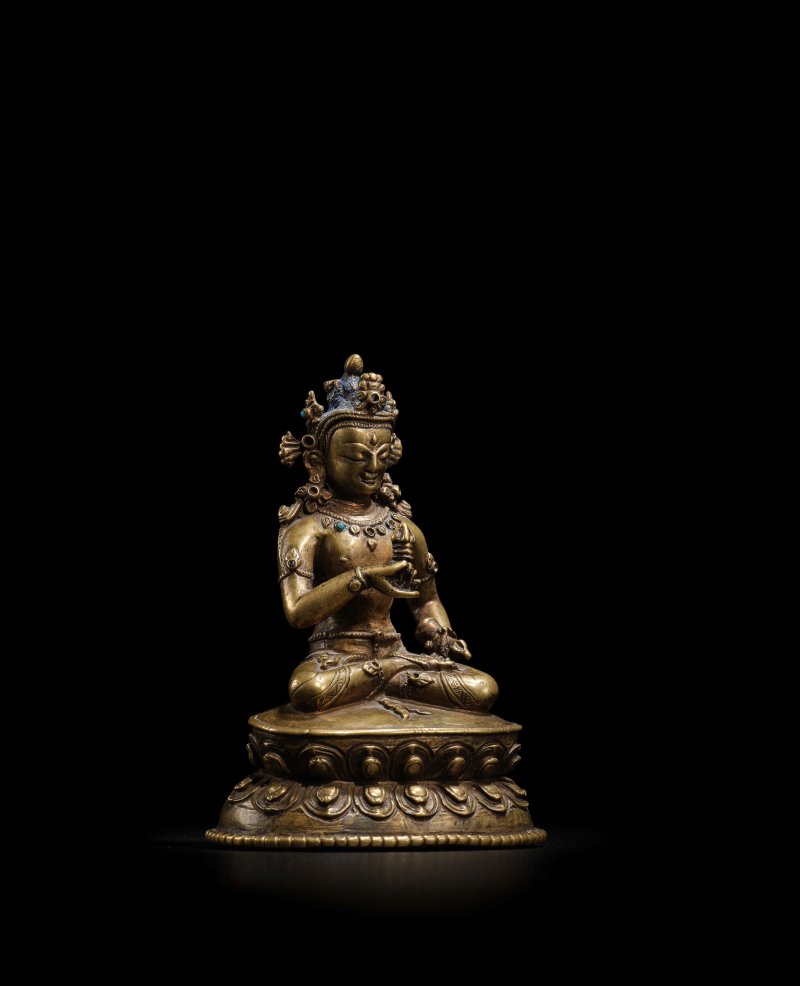
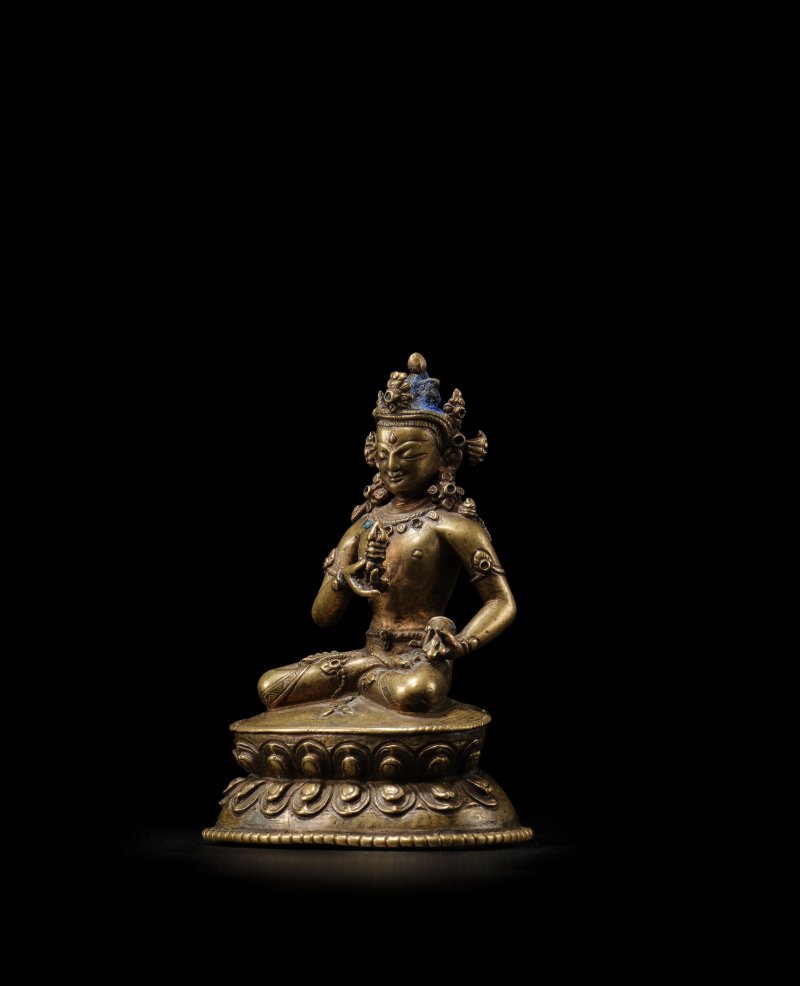
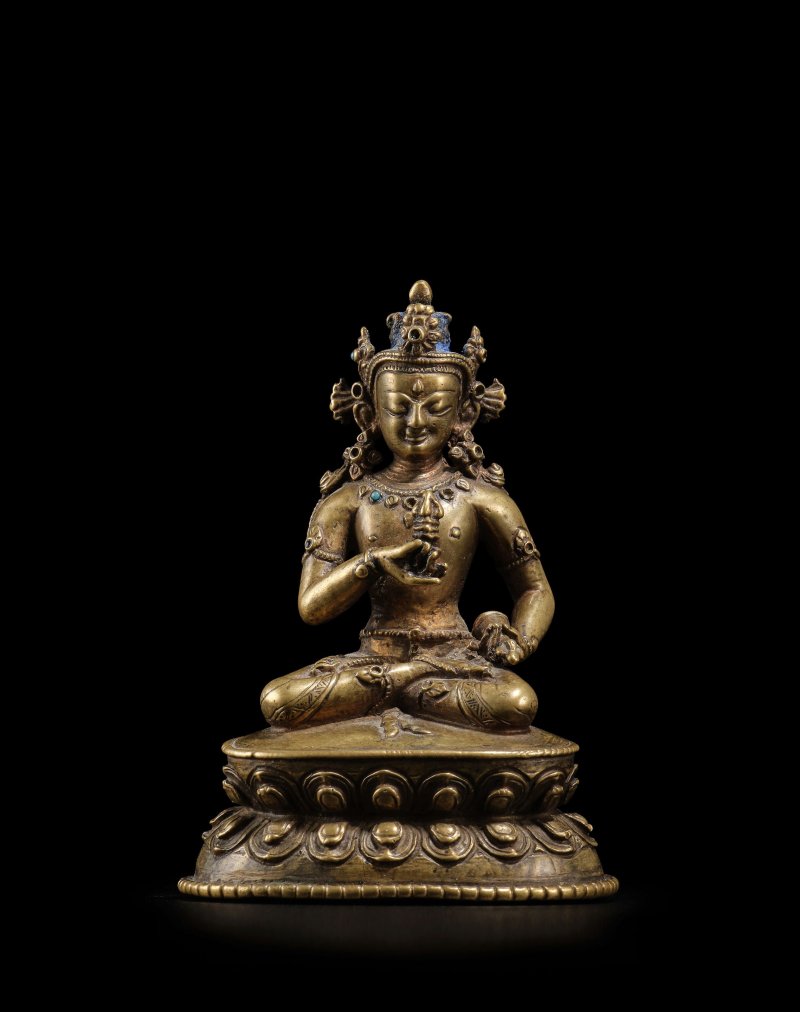
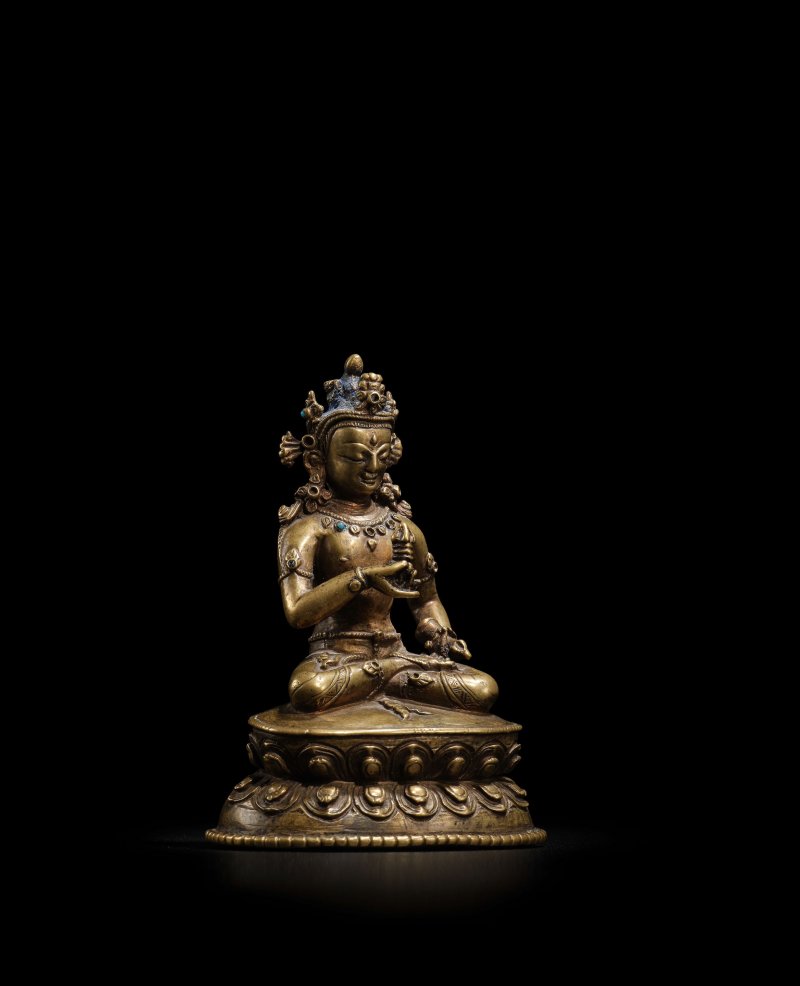
The figure is seated in vajrasana upon a double-lotus base with a single beaded rim at the lower edge. The outer petals are elongated and terminate in sharp, pointed tips, a feature that closely parallels the lotus conventions of early Tibetan workshops. In his hands, Vajrasattva holds the vajra upright before his chest and the (ritual bell) at his waist, the two implements symbolizing the indivisible union of compassion () and wisdom ().
Stylistically, this bronze reflects the earliest phase of Tibetan engagement with the Pala aesthetic tradition. The tall , the fan-shaped ribbons cascading from the crown, and the beaded lotus rim all derive from Pala prototypes, while the sweet, rounded face and the use of inlay techniques are distinctly Tibetan in execution. The result is a compelling synthesis of imported ideal and local sensibility. For comparison, see a brass figure of Manjushri sold at Bonhams, New York, 20 March 2018, lot 3210.
Himalayan Art Resources item no. 61643
9 cm (3 1/2 in.) high
Footnotes
西藏 十三世紀 金剛薩埵銅像
Provenance
Cees van der Ploeg, 1995, by repute
The Presencer Collection of Buddhist Art
Bonhams, Hong Kong, 2 October 2018, lot 132
Vajrasattva, the "Vajra Being," is regarded in some Vajrayana traditions as the active manifestation of the Adi Buddha. He is invoked in purification rituals and revered both as a bodhisattva and, in the Nyingma school, as a yidam (meditational deity). In some contexts, he is also counted among the six presiding Buddhas, representing the ethereal unity of the enlightened lineage.
The figure is seated in vajrasana upon a double-lotus base with a single beaded rim at the lower edge. The outer petals are elongated and terminate in sharp, pointed tips, a feature that closely parallels the lotus conventions of early Tibetan workshops. In his hands, Vajrasattva holds the vajra upright before his chest and the (ritual bell) at his waist, the two implements symbolizing the indivisible union of compassion () and wisdom ().
Stylistically, this bronze reflects the earliest phase of Tibetan engagement with the Pala aesthetic tradition. The tall , the fan-shaped ribbons cascading from the crown, and the beaded lotus rim all derive from Pala prototypes, while the sweet, rounded face and the use of inlay techniques are distinctly Tibetan in execution. The result is a compelling synthesis of imported ideal and local sensibility. For comparison, see a brass figure of Manjushri sold at Bonhams, New York, 20 March 2018, lot 3210.
常见问题
这件西藏 十三世紀 金剛薩埵銅像 | A COPPER ALLOY FIGURE OF VAJRASATTVA的成交价是多少?
落槌价为 预展中。 成交价为 预展中。