
拍品信息
拍品名称
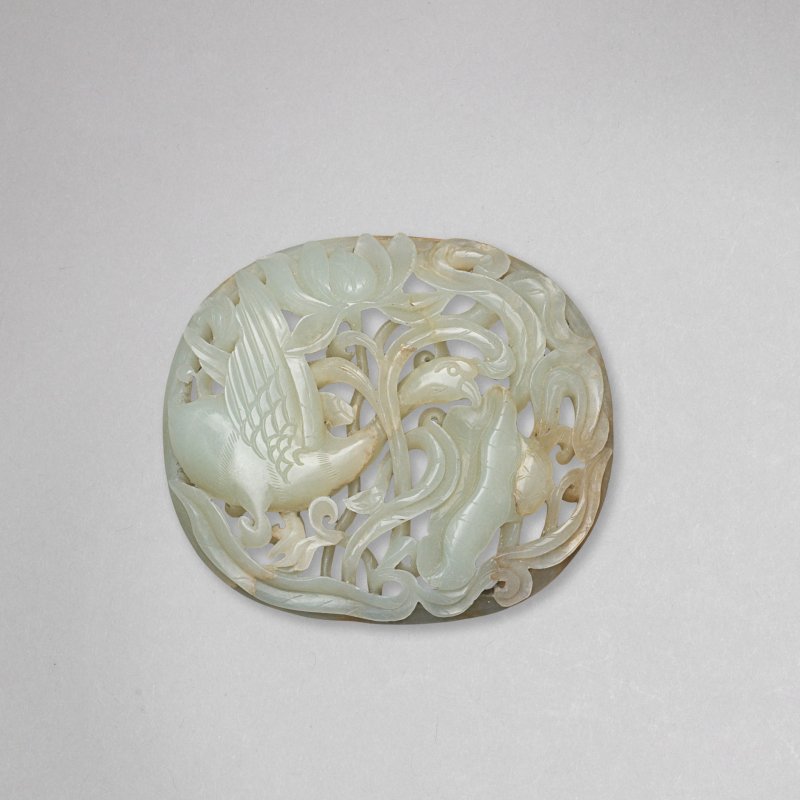
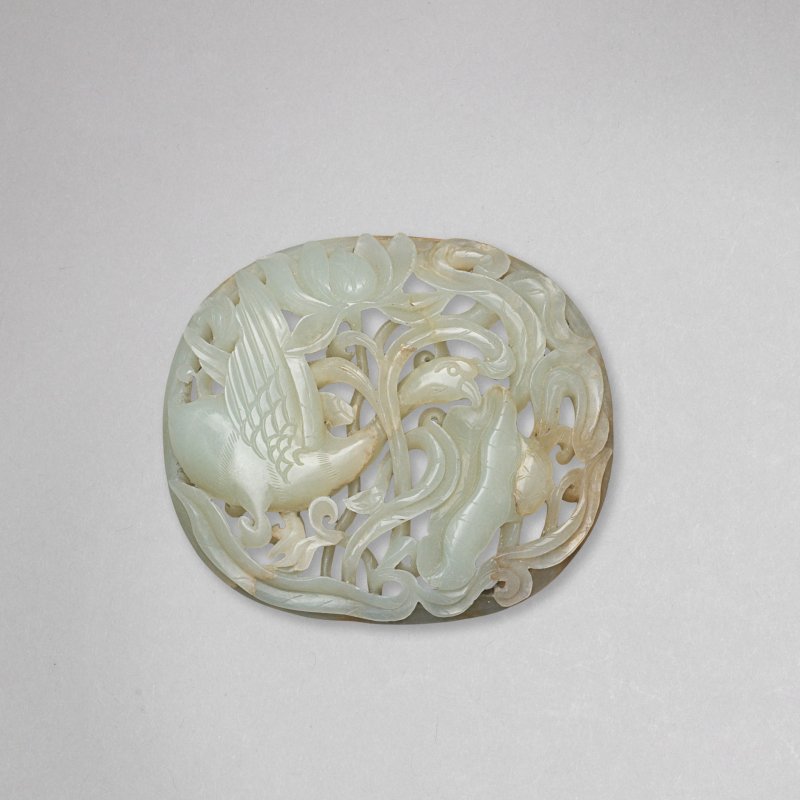
明 青玉鏤雕鵝穿蓮紋帶飾 | A PALE GREEN JADE RETICULATED 'GOOSE AND LOTUS' PLAQUE
年代
Ming Dynasty
起拍价
GBP 4,000
估值区间
GBP 4000 - 6000
尺寸
未知
品相
未知
更多信息
Ming Dynasty
The oval expertly pierced and carved with a goose in flight amidst dense lotus, issuing a large lotus blossom and undulating leaves, the plumage finely incised, the stone of pale white-green tone with slight grey patches. 8.8cm (3 1/2in) wide.
Footnotes
明 青玉鏤雕鵝穿蓮紋帶飾
Provenance: an American private collection
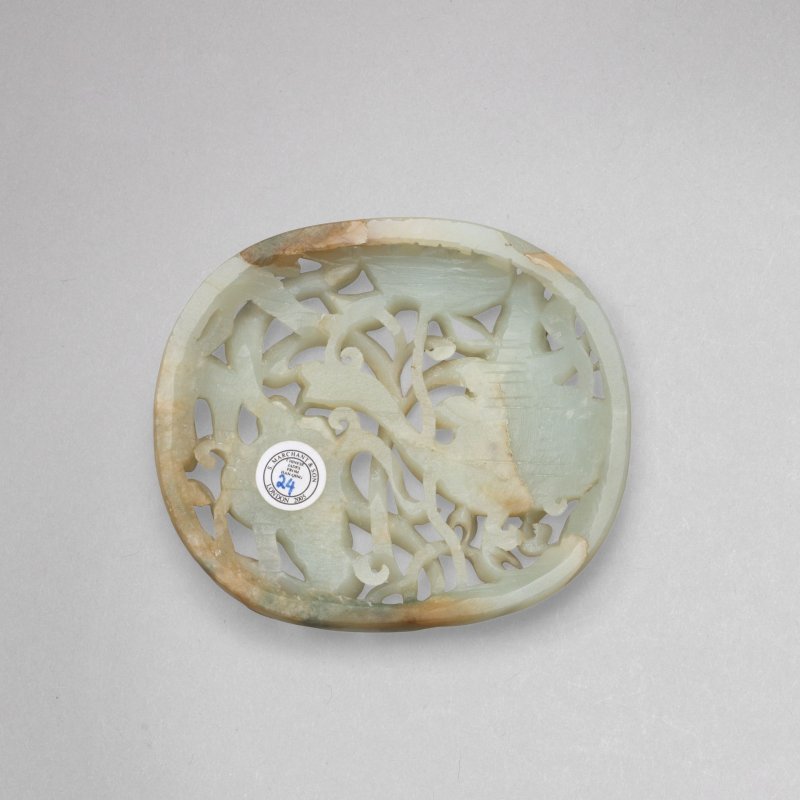
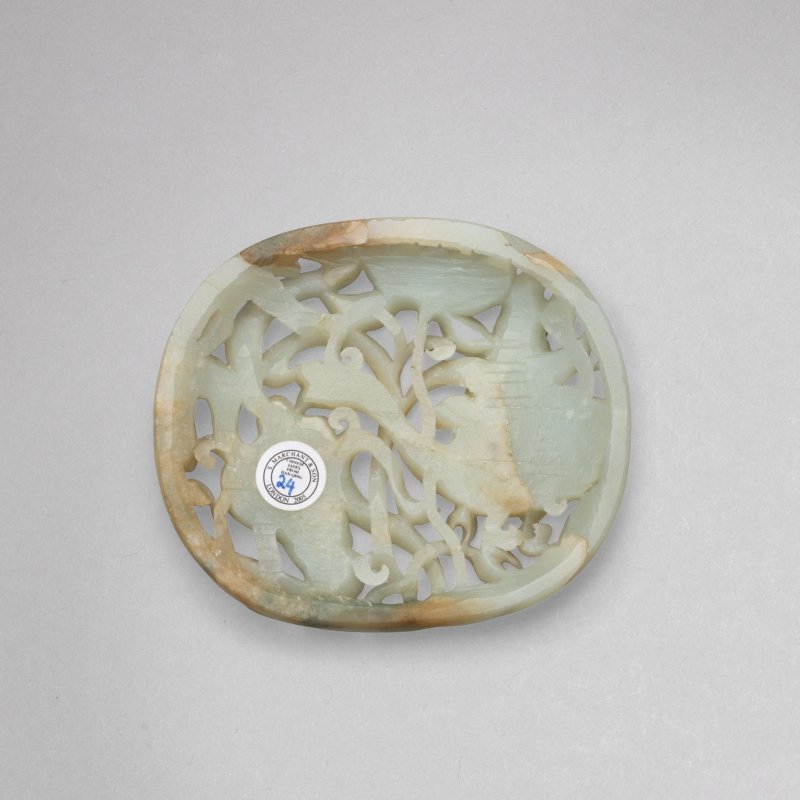
S. Marchant & Son Ltd., London, 2005 (label)
Dr Kenneth Lawley (1937-2023), Edinburgh and London
Published, Illustrated and Exhibited: S.Marchant & Son, 80th Anniversary Exhibition of Chinese Jades from Han to Qing, London, 2005, no.24
來源:美國私人收藏
倫敦古董商馬錢特,2005年(標簽)
Kenneth Lawley博士(1937-2023),愛丁堡和倫敦
馬錢特,《80th Anniversary Exhibition of Chinese Jades from Han to Qing》,倫敦,2005年,編號24
The goose motif is thought to derive from the annual spring goose hunts practised by the Khitan during the Liao dynasty and the Jurchens during the Jin dynasty. Liao and Jin jade plaques depicting the hunt typically include a falcon, carried or released by the hunter, whereas later examples of the Yuan and Ming periods, such as the present lot, generally omit the falcon. For a similar Yuan dynasty jade plaque, see J.C.Y.Watt, , Seattle, 1989, no.40; and another in the British Museum, London, illustrated by J.Rawson, , London, 1995, p.335, fig.1. A closely related jade plaque depicting a goose, Yuan/Ming dynasty, is illustrated in Spink & Son Ltd., , London, 1991, p.39, no.78.
See a related pale green jade openwork 'Spring Water' oval plaque, Ming dynasty, which was sold at Bonhams London, 2 November 2021, lot 230.
The oval expertly pierced and carved with a goose in flight amidst dense lotus, issuing a large lotus blossom and undulating leaves, the plumage finely incised, the stone of pale white-green tone with slight grey patches. 8.8cm (3 1/2in) wide.
Footnotes
明 青玉鏤雕鵝穿蓮紋帶飾
Provenance: an American private collection
S. Marchant & Son Ltd., London, 2005 (label)
Dr Kenneth Lawley (1937-2023), Edinburgh and London
Published, Illustrated and Exhibited: S.Marchant & Son, 80th Anniversary Exhibition of Chinese Jades from Han to Qing, London, 2005, no.24
來源:美國私人收藏
倫敦古董商馬錢特,2005年(標簽)
Kenneth Lawley博士(1937-2023),愛丁堡和倫敦
馬錢特,《80th Anniversary Exhibition of Chinese Jades from Han to Qing》,倫敦,2005年,編號24
The goose motif is thought to derive from the annual spring goose hunts practised by the Khitan during the Liao dynasty and the Jurchens during the Jin dynasty. Liao and Jin jade plaques depicting the hunt typically include a falcon, carried or released by the hunter, whereas later examples of the Yuan and Ming periods, such as the present lot, generally omit the falcon. For a similar Yuan dynasty jade plaque, see J.C.Y.Watt, , Seattle, 1989, no.40; and another in the British Museum, London, illustrated by J.Rawson, , London, 1995, p.335, fig.1. A closely related jade plaque depicting a goose, Yuan/Ming dynasty, is illustrated in Spink & Son Ltd., , London, 1991, p.39, no.78.
See a related pale green jade openwork 'Spring Water' oval plaque, Ming dynasty, which was sold at Bonhams London, 2 November 2021, lot 230.
常见问题
这件明 青玉鏤雕鵝穿蓮紋帶飾 | A PALE GREEN JADE RETICULATED 'GOOSE AND LOTUS' PLAQUE的成交价是多少?
落槌价为 预展中。 成交价为 预展中。


