
Lot 282 清雍正 粉彩仕女搖鈴尊 | A Chinese famille rose bell-shaped zun, Yongzheng period, Qing dynasty
落槌价
****
成交价
****
拍品信息
拍品名称
清雍正 粉彩仕女搖鈴尊 | A Chinese famille rose bell-shaped zun, Yongzheng period, Qing dynasty
年代
Yongzheng period, Qing dynasty
起拍价
USD 1,500
估值区间
$3,000 - $5,000
尺寸
H: 7 1/2, Dia: 4 1/8 in. (H: 19.1, Dia: 10.5 cm.)
品相
Overall good condition.
總體品相良好
總體品相良好
更多信息
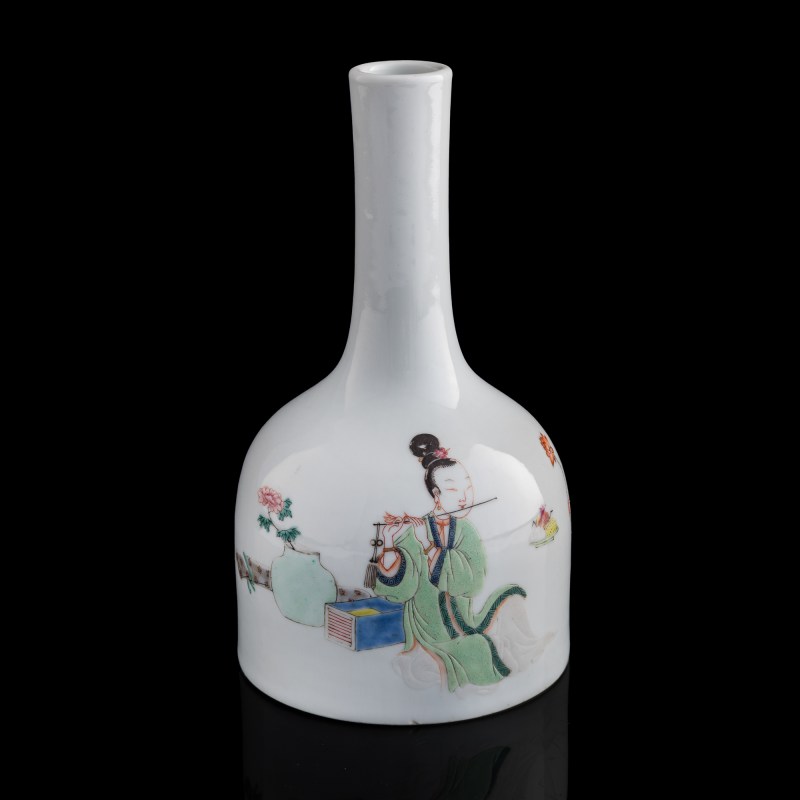
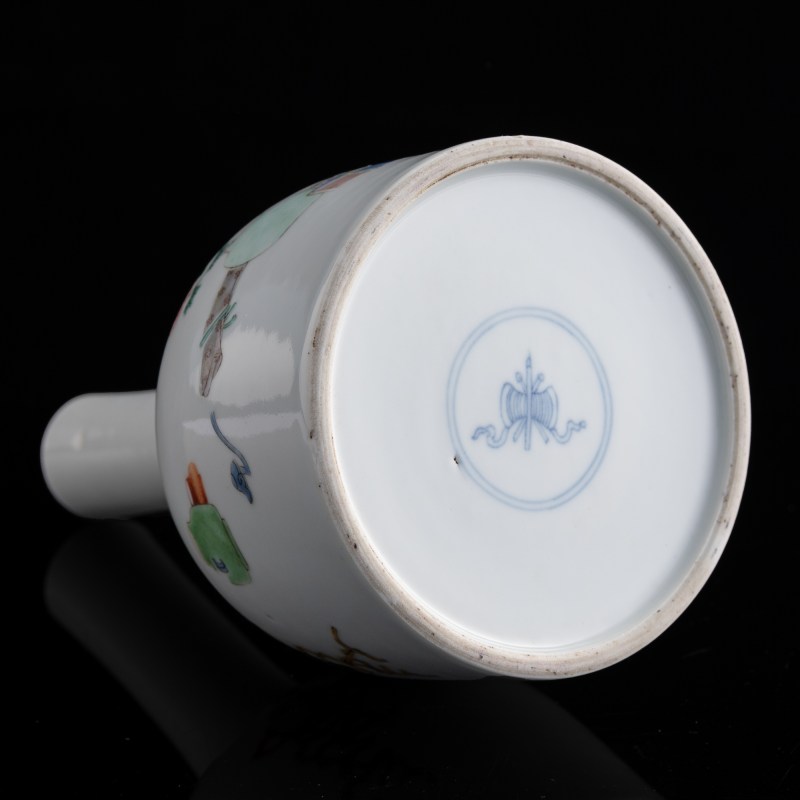
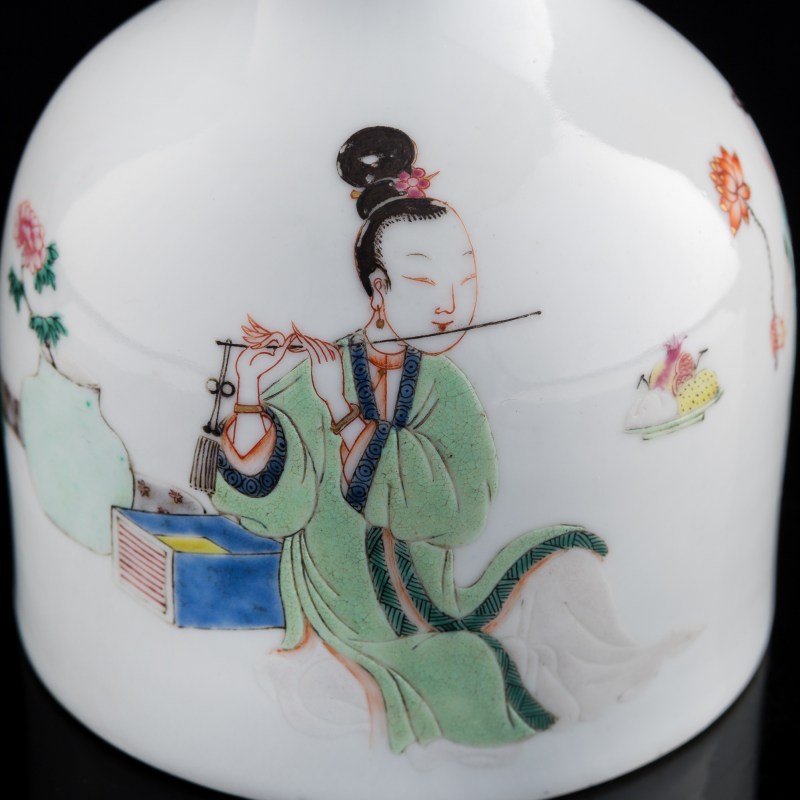
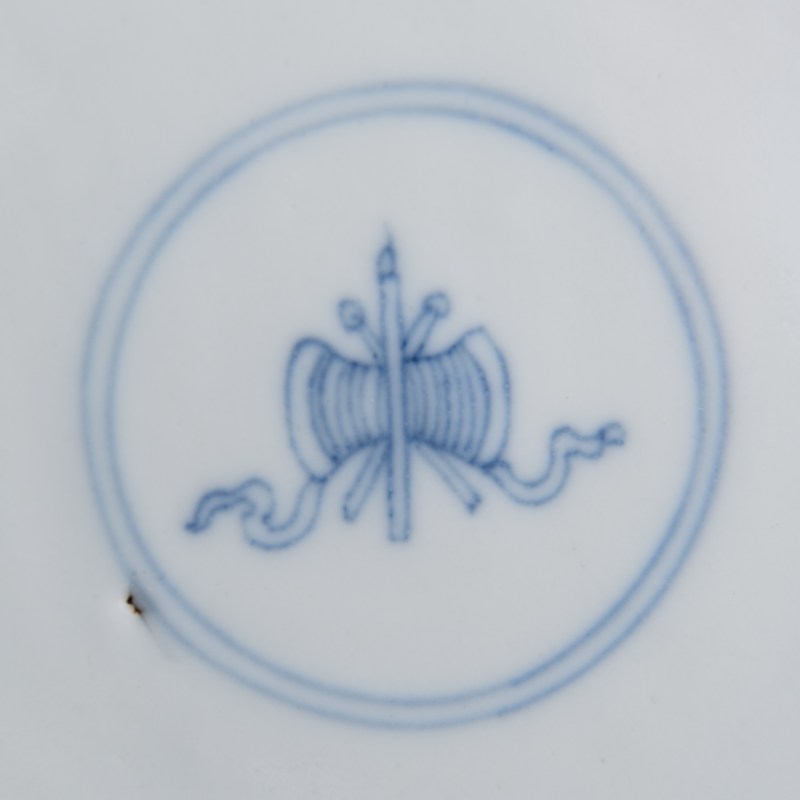
With a stylized emblem mark to the underside. Displays motifs of ladies at scholarly pursuits, a representation of the Hehe Erxian twin immortals of harmony and unity, and antiques that symbolize learning and culture.
The bell-shaped vase, or "yao ling zun," is a porcelain form innovated by the Jingdezhen imperial kilns during the Kangxi period of the Qing Dynasty. Named for its resemblance to a hand-held bell, it represents a distinctive creation of the era, known for its challenging production and low yield. Such official kiln pieces, held in collections like those of the Palace Museum and the National Museum of China, served dual purposes as floral display vessels and religious offerings. Likely inspired by Tibetan Buddhist ritual objects, the form, though named after the ancient Shang and Zhou bronze "zun," is notably more delicate. While production continued into the Yongzheng and Qianlong periods, the craftsmanship of these later examples often fell short of their Kangxi predecessors.
The shape of the “yao ling zun” porcelain basically maintained the basic shape of the in the Kangxi, Yongzheng and Qianlong period, but changed in the late Kangxi period. In the Qing Dynasty, Yongzheng and Qianlong until the Republic of China period, the rattle bell porcelain body was shorter and smaller, such as the shape of the horseshoe, which may have a certain relationship with the aesthetics of different periods, and the shape of the vessel is changing with the times.
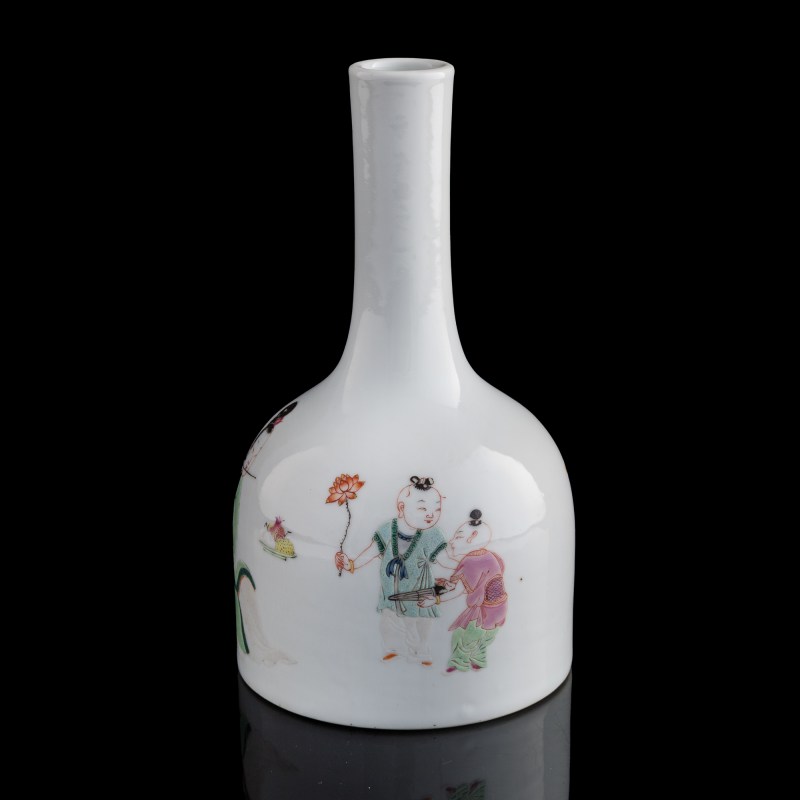
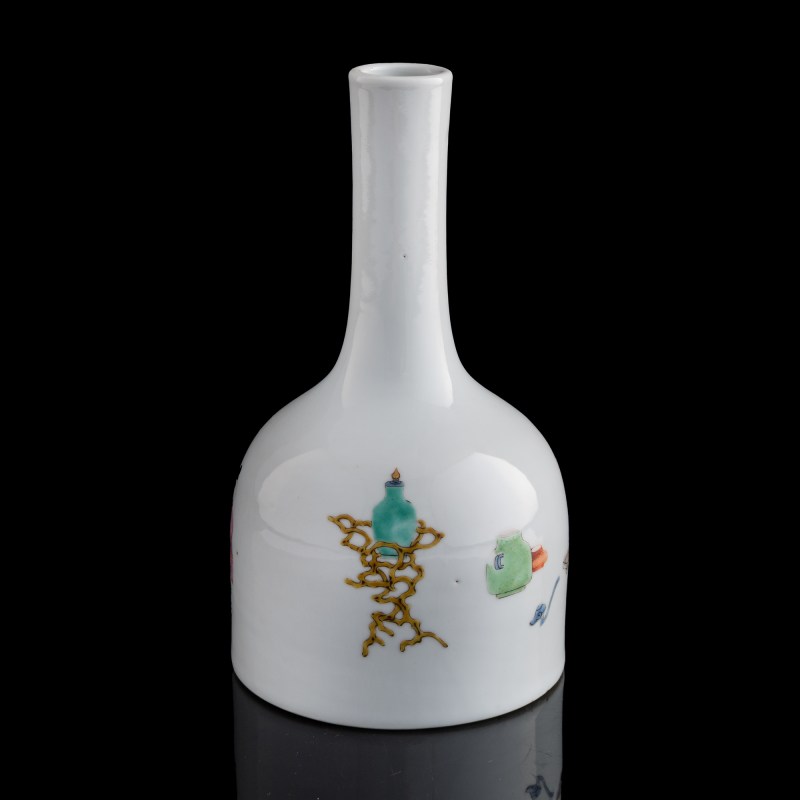
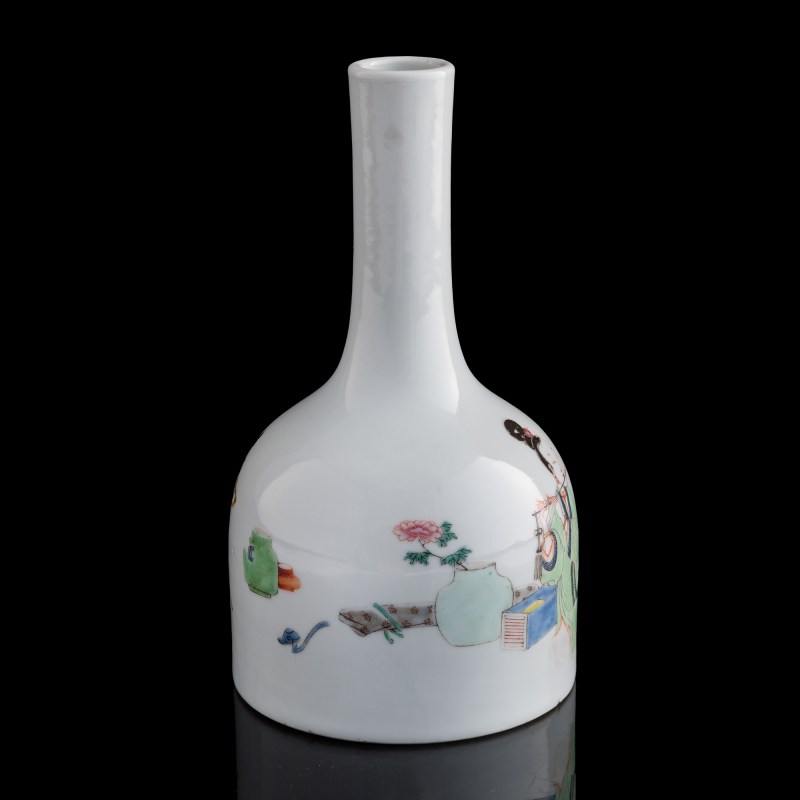
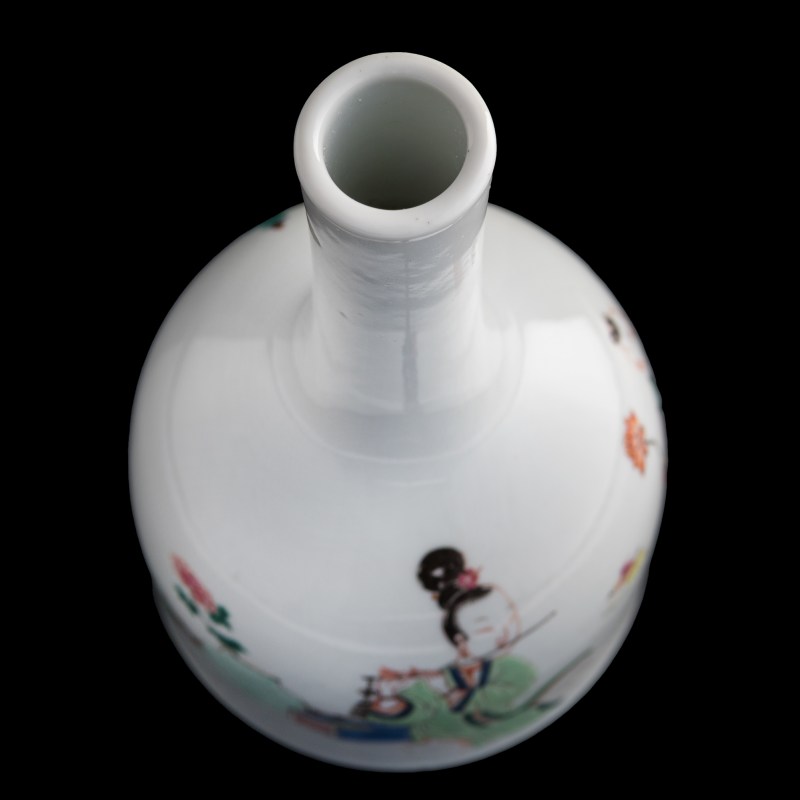
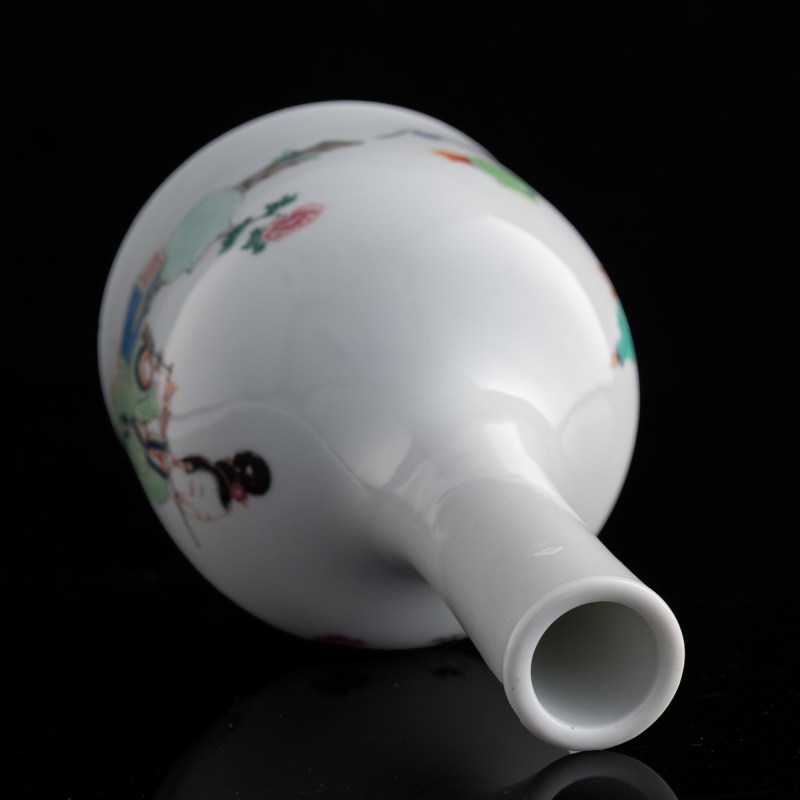
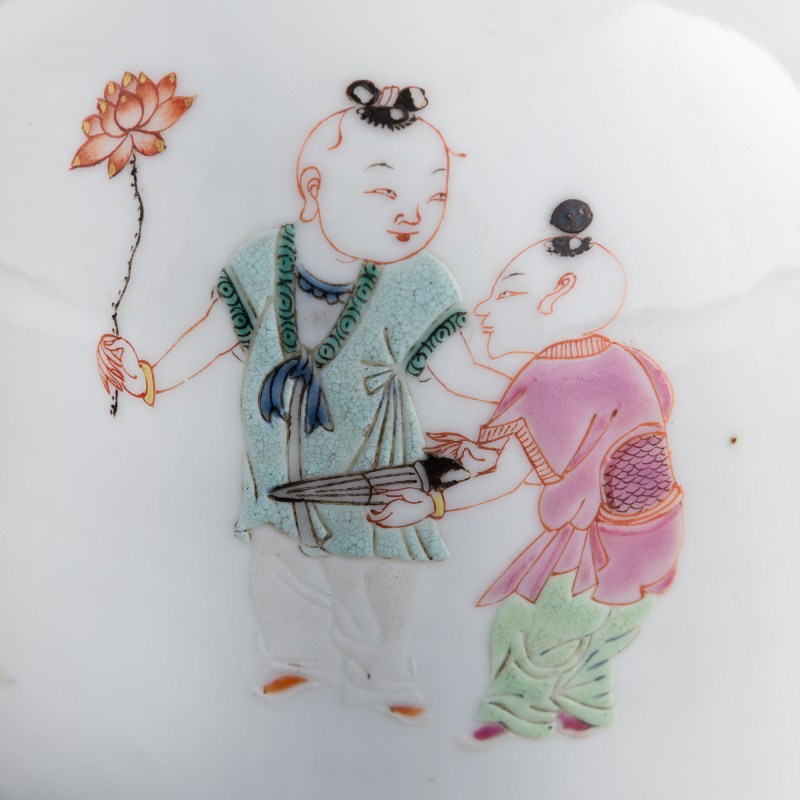
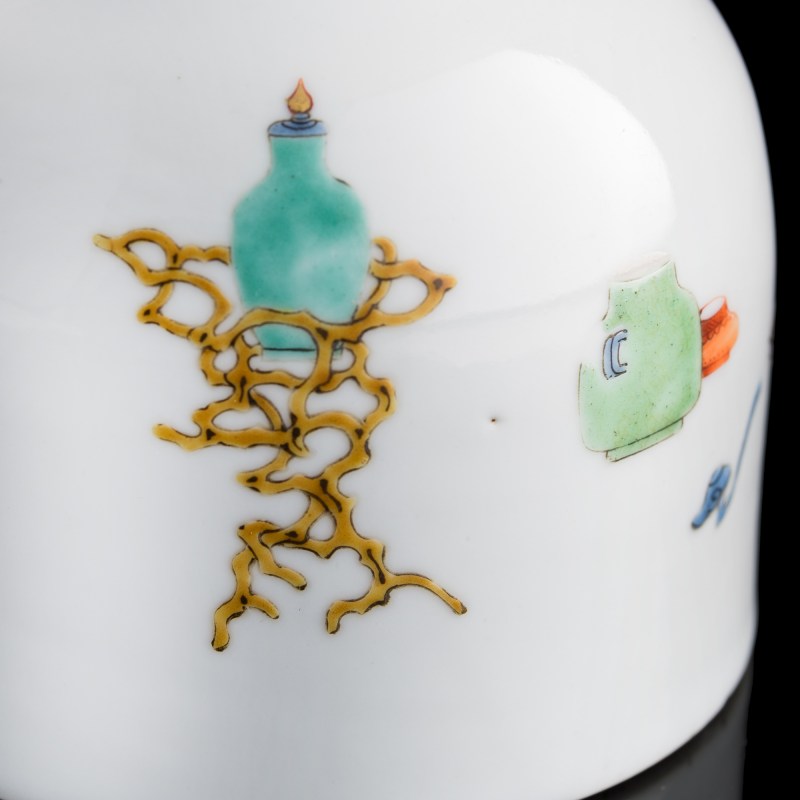
This vase features a flared rim, long straight neck, sloping shoulders, straight body, and a low circular foot. It is cloaked in a white glaze, with a blue-and-white double-circle cipher mark on the base. The body is adorned with a famille rose depiction of a refined lady, her hair adorned with a cloud-like chignon, her figure elegant, and her delicate hands playing a flute while seated. To the left, the scene includes scholarly objects: ancient books, a flower vase, a qin (zither), a ruyi scepter, a vase, an incense burner, and an oil lamp. To the right, two child attendants stand facing each other, one holding a lotus and the other an umbrella, beside a dish of pomegranates and lychees symbolizing fertility and good fortune. The blue and white flower stamp at the bottom of this product is extremely distinctive.
See below reference for similar items:
Palace Museum, Beijing, No. 新00115646
Christie’s Hong Kong, November 2024, Lot 1202
Sungari, December 2023, Lot 1048.
搖鈴尊是清代康熙年間景德鎮官窑創燒的瓷器器型,因輪廓近似手搖鈴鐺而得名,屬康熙時期典型創新器型,燒制難度較高,成品率低。故宮博物院、國家博物館等機構藏有此類官窑器,器物兼具插花陳設與宗教賞賜功能。搖鈴尊器型可能受藏傳佛教法器啓發,其名雖承商周青銅酒器“尊”,但形制轉爲小巧瓷質。康熙朝後,雍正、乾隆年間仍有製作,但工藝水平不及前代。
搖鈴尊瓷器器形在康雍乾三代基本保持搖鈴的基本器形,但是在康熙晚期發生了變化。到了清代雍正和乾隆一直到民國時期搖鈴尊瓷器器身更短小敦實,如馬蹄尊造型,這也許跟不同時期的審美有一定的關係,隨著時代器形在改變。
此尊形似馬蹄,口外撇,長直頸,溜肩,直腹,臥圈足。通體施白釉,尊底書青花雙圈花押款。腹以五彩繪一仕女著長衣長裙,頭頂雲鬢,身段優雅,玉手芊芊,席地奏笛。仕女眉目傳神,寥寥幾筆就表現出美女安靜祥和的神態,可見所繪之人筆力之深厚。畫面左側依次繪古籍、瓶花及古琴、如意、花瓶、香爐,油燈等文房清供,右側繪一持蓮童子及一持傘童子相視而立,旁邊繪一盤石榴荔枝果盤,有多子多福之意。本品底部青花花押款,極爲特色。
相似藏品可參閱:
故宮博物院館藏,編號新00115646
佳士得拍賣2024年11月香港拍賣,編號1202
中貿聖佳2023年12月秋拍,編號1048。
**Provenance**
From Mrs. Lee, Davis, California. Lot 57 from our May 17, 2024 auction, and Lots 467 and 468 from our September 15, 2024 auction, were from the same collection.
加州戴維斯利夫人收藏,利夫人爲香港利氏家族成員,著名香港收藏家利國偉爵士是其堂侄。本公司2024年5月17日57號拍品,和2024年9月15日第467, 468號拍品,均出自同一藏家。
以下内容由AI翻译:
【名称】
清雍正 粉彩仕女搖鈴尊
【年代】
清雍正时期
【描述】
底部有图案化的款识。展示仕女从事文人雅事的图案,代表和谐统一的和合二仙,以及象征学识与文化的古董。
【品相】
总体品相良好
The bell-shaped vase, or "yao ling zun," is a porcelain form innovated by the Jingdezhen imperial kilns during the Kangxi period of the Qing Dynasty. Named for its resemblance to a hand-held bell, it represents a distinctive creation of the era, known for its challenging production and low yield. Such official kiln pieces, held in collections like those of the Palace Museum and the National Museum of China, served dual purposes as floral display vessels and religious offerings. Likely inspired by Tibetan Buddhist ritual objects, the form, though named after the ancient Shang and Zhou bronze "zun," is notably more delicate. While production continued into the Yongzheng and Qianlong periods, the craftsmanship of these later examples often fell short of their Kangxi predecessors.
The shape of the “yao ling zun” porcelain basically maintained the basic shape of the in the Kangxi, Yongzheng and Qianlong period, but changed in the late Kangxi period. In the Qing Dynasty, Yongzheng and Qianlong until the Republic of China period, the rattle bell porcelain body was shorter and smaller, such as the shape of the horseshoe, which may have a certain relationship with the aesthetics of different periods, and the shape of the vessel is changing with the times.
This vase features a flared rim, long straight neck, sloping shoulders, straight body, and a low circular foot. It is cloaked in a white glaze, with a blue-and-white double-circle cipher mark on the base. The body is adorned with a famille rose depiction of a refined lady, her hair adorned with a cloud-like chignon, her figure elegant, and her delicate hands playing a flute while seated. To the left, the scene includes scholarly objects: ancient books, a flower vase, a qin (zither), a ruyi scepter, a vase, an incense burner, and an oil lamp. To the right, two child attendants stand facing each other, one holding a lotus and the other an umbrella, beside a dish of pomegranates and lychees symbolizing fertility and good fortune. The blue and white flower stamp at the bottom of this product is extremely distinctive.
See below reference for similar items:
Palace Museum, Beijing, No. 新00115646
Christie’s Hong Kong, November 2024, Lot 1202
Sungari, December 2023, Lot 1048.
搖鈴尊是清代康熙年間景德鎮官窑創燒的瓷器器型,因輪廓近似手搖鈴鐺而得名,屬康熙時期典型創新器型,燒制難度較高,成品率低。故宮博物院、國家博物館等機構藏有此類官窑器,器物兼具插花陳設與宗教賞賜功能。搖鈴尊器型可能受藏傳佛教法器啓發,其名雖承商周青銅酒器“尊”,但形制轉爲小巧瓷質。康熙朝後,雍正、乾隆年間仍有製作,但工藝水平不及前代。
搖鈴尊瓷器器形在康雍乾三代基本保持搖鈴的基本器形,但是在康熙晚期發生了變化。到了清代雍正和乾隆一直到民國時期搖鈴尊瓷器器身更短小敦實,如馬蹄尊造型,這也許跟不同時期的審美有一定的關係,隨著時代器形在改變。
此尊形似馬蹄,口外撇,長直頸,溜肩,直腹,臥圈足。通體施白釉,尊底書青花雙圈花押款。腹以五彩繪一仕女著長衣長裙,頭頂雲鬢,身段優雅,玉手芊芊,席地奏笛。仕女眉目傳神,寥寥幾筆就表現出美女安靜祥和的神態,可見所繪之人筆力之深厚。畫面左側依次繪古籍、瓶花及古琴、如意、花瓶、香爐,油燈等文房清供,右側繪一持蓮童子及一持傘童子相視而立,旁邊繪一盤石榴荔枝果盤,有多子多福之意。本品底部青花花押款,極爲特色。
相似藏品可參閱:
故宮博物院館藏,編號新00115646
佳士得拍賣2024年11月香港拍賣,編號1202
中貿聖佳2023年12月秋拍,編號1048。
**Provenance**
From Mrs. Lee, Davis, California. Lot 57 from our May 17, 2024 auction, and Lots 467 and 468 from our September 15, 2024 auction, were from the same collection.
加州戴維斯利夫人收藏,利夫人爲香港利氏家族成員,著名香港收藏家利國偉爵士是其堂侄。本公司2024年5月17日57號拍品,和2024年9月15日第467, 468號拍品,均出自同一藏家。
以下内容由AI翻译:
【名称】
清雍正 粉彩仕女搖鈴尊
【年代】
清雍正时期
【描述】
底部有图案化的款识。展示仕女从事文人雅事的图案,代表和谐统一的和合二仙,以及象征学识与文化的古董。
【品相】
总体品相良好
常见问题
拍品的品相状况如何?
Overall good condition.
總體品相良好
總體品相良好
拍品的尺寸是多少?
H: 7 1/2, Dia: 4 1/8 in. (H: 19.1, Dia: 10.5 cm.)