
拍品信息
拍品名称
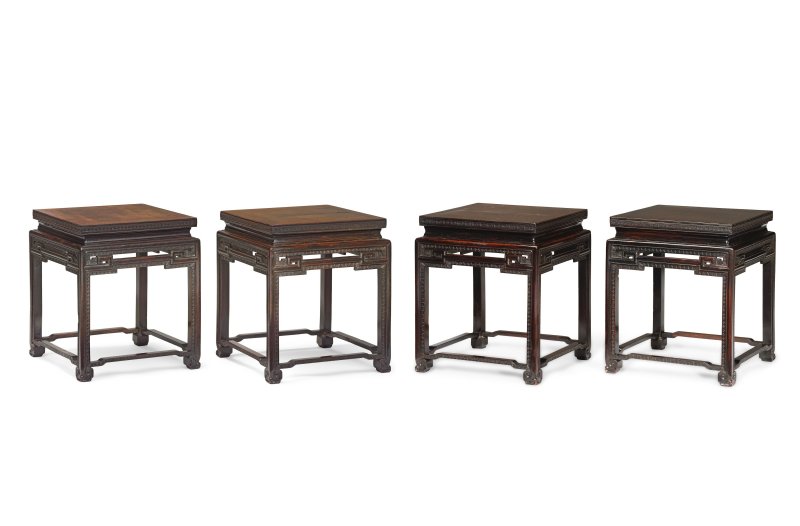
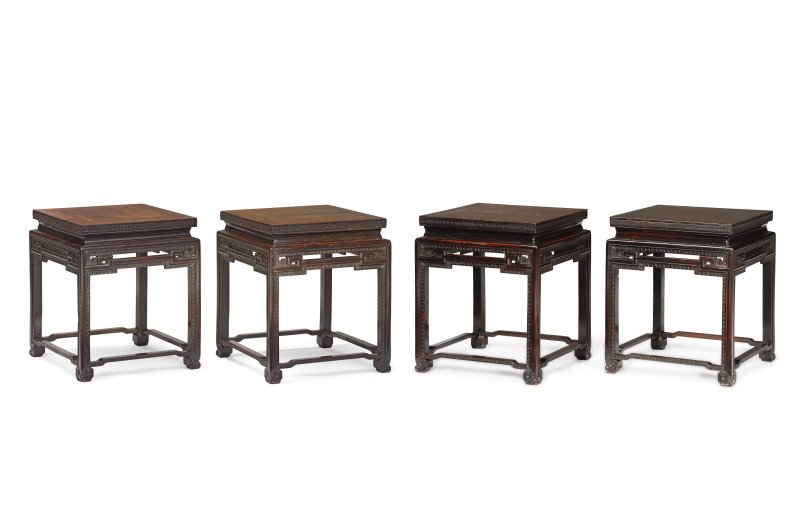
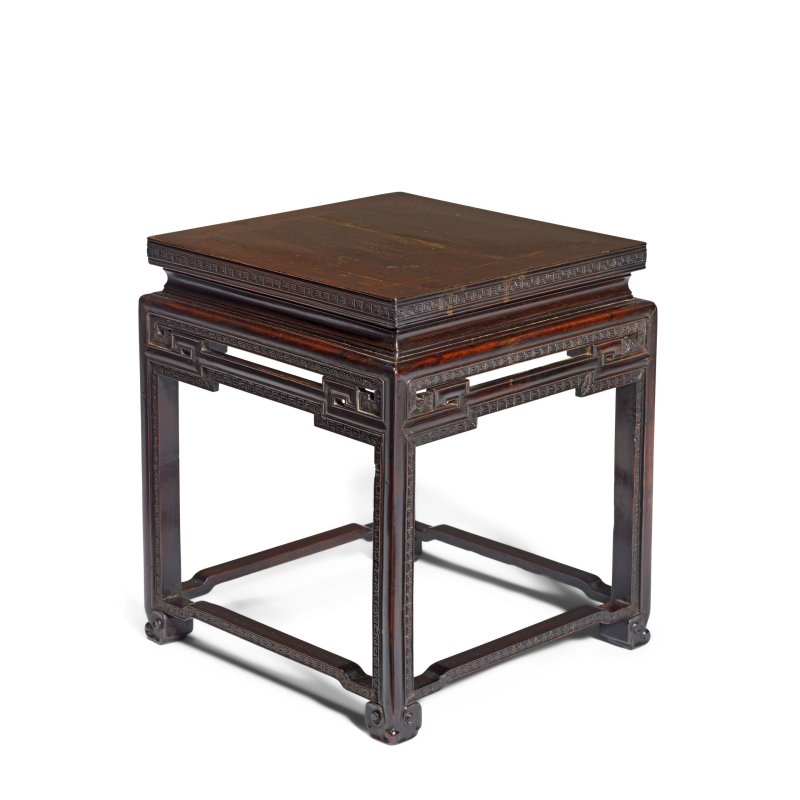
清 紫檀飾面有束腰羅鍋棖方凳 一組四件 | A RARE SET OF FOUR ZITAN-VENEERED SQUARE STOOLS
年代
Qing Dynasty
起拍价
GBP 15,000
估值区间
GBP 15000 - 20000
尺寸
未知
品相
未知
更多信息
Qing Dynasty
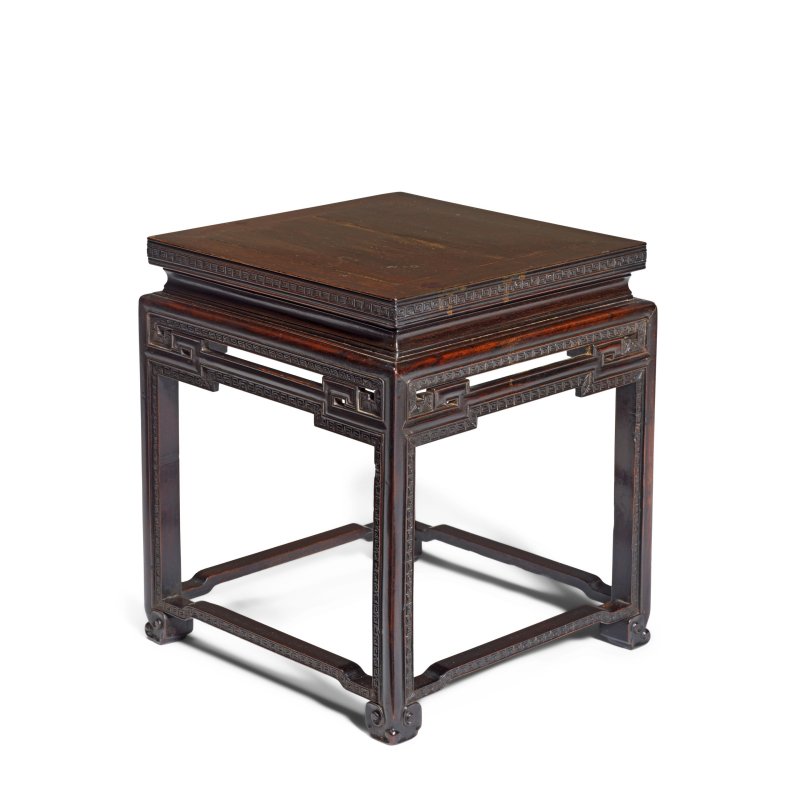
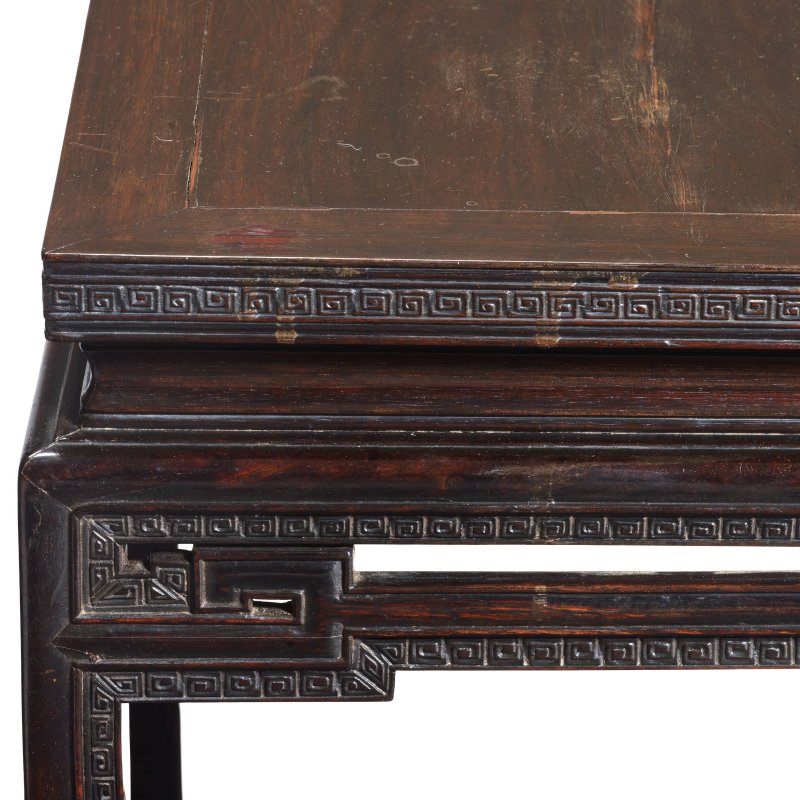
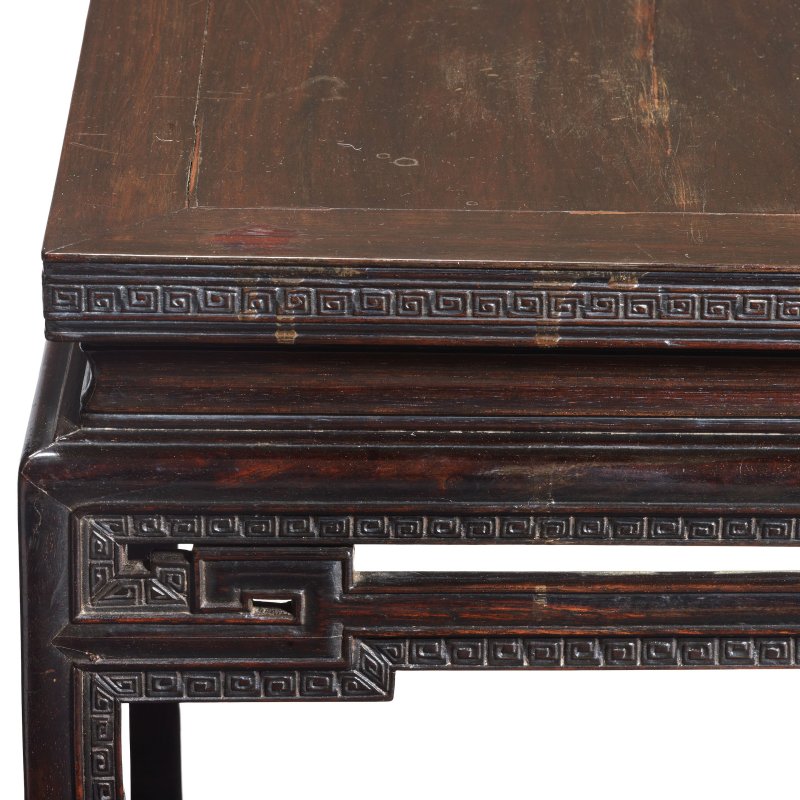
Each square top set within a wider frame with a leiwen band carved around the side, separated from the apron by an elegantly curved recessed waist, all supported on four straight legs terminating with ruyi-shaped feet and connected by humpback stretchers, the pierced apron carved as wide geometric scrolls with leiwen bands, extending around the legs and stretchers, the wood of a rich treacle brown tone. 43.2cm (17in) high x 35cm (13 3/4in) square. (4).
Footnotes
清 紫檀飾面有束腰羅鍋棖方凳 一組四件
Provenance: Evaristo Caretti (1879-1955), China and Italy, and thence by descent
Noted in a valuation conducted by Robert Kleiner in 1988, stating they were acquired in Beijing in 1921
來源: Evaristo Caretti (1879-1955),中國及意大利,並由後人保存迄今
Robert Kleiner于1988年所作的評估中曾提及,此件拍品于1921年獲得于北京
Compare with a related zitan square-top stand, mid-Qing dynasty, with similar key-fret border, illustrated by Tian Jiaqing, , Hong Kong, 1996, pp.166-167, no.69.
By the Qing dynasty, had become an exceptionally scarce and valuable timber. The slow growth of the tree, together with the depletion of mature timber, resulted in dwindling supplies, while much of the material available to the Qing Court was imported from Southeast Asia and its use carefully regulated. Its dense grain, hardness and natural lustre nevertheless made it particularly prized for furniture, especially where elaborate carving was required. The scarcity of large sections increasingly encouraged the use of veneer, conserving the precious timber while retaining its characteristic colour, grain and lustrous surface.
See a related pair of square corner-leg stools, Qianlong/Jiaqing, which was sold at Christie's Hong Kong, 29 May 2013, lot 1954.
Each square top set within a wider frame with a leiwen band carved around the side, separated from the apron by an elegantly curved recessed waist, all supported on four straight legs terminating with ruyi-shaped feet and connected by humpback stretchers, the pierced apron carved as wide geometric scrolls with leiwen bands, extending around the legs and stretchers, the wood of a rich treacle brown tone. 43.2cm (17in) high x 35cm (13 3/4in) square. (4).
Footnotes
清 紫檀飾面有束腰羅鍋棖方凳 一組四件
Provenance: Evaristo Caretti (1879-1955), China and Italy, and thence by descent
Noted in a valuation conducted by Robert Kleiner in 1988, stating they were acquired in Beijing in 1921
來源: Evaristo Caretti (1879-1955),中國及意大利,並由後人保存迄今
Robert Kleiner于1988年所作的評估中曾提及,此件拍品于1921年獲得于北京
Compare with a related zitan square-top stand, mid-Qing dynasty, with similar key-fret border, illustrated by Tian Jiaqing, , Hong Kong, 1996, pp.166-167, no.69.
By the Qing dynasty, had become an exceptionally scarce and valuable timber. The slow growth of the tree, together with the depletion of mature timber, resulted in dwindling supplies, while much of the material available to the Qing Court was imported from Southeast Asia and its use carefully regulated. Its dense grain, hardness and natural lustre nevertheless made it particularly prized for furniture, especially where elaborate carving was required. The scarcity of large sections increasingly encouraged the use of veneer, conserving the precious timber while retaining its characteristic colour, grain and lustrous surface.
See a related pair of square corner-leg stools, Qianlong/Jiaqing, which was sold at Christie's Hong Kong, 29 May 2013, lot 1954.
常见问题
这件清 紫檀飾面有束腰羅鍋棖方凳 一組四件 | A RARE SET OF FOUR ZITAN-VENEERED SQUARE STOOLS的成交价是多少?
落槌价为 预展中。 成交价为 预展中。


