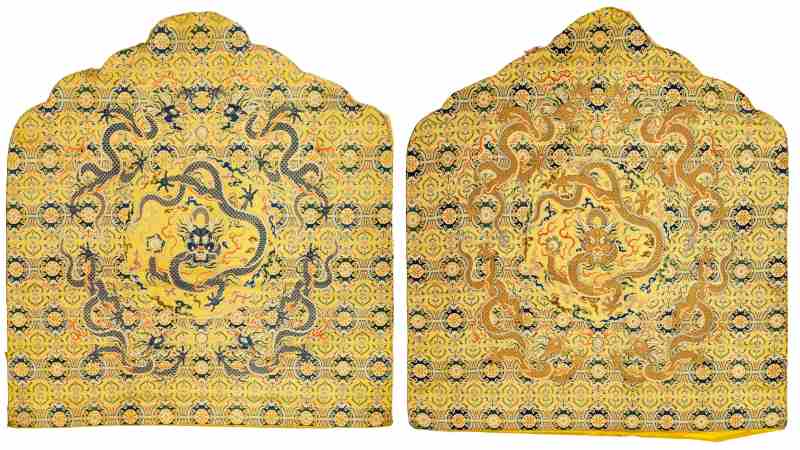

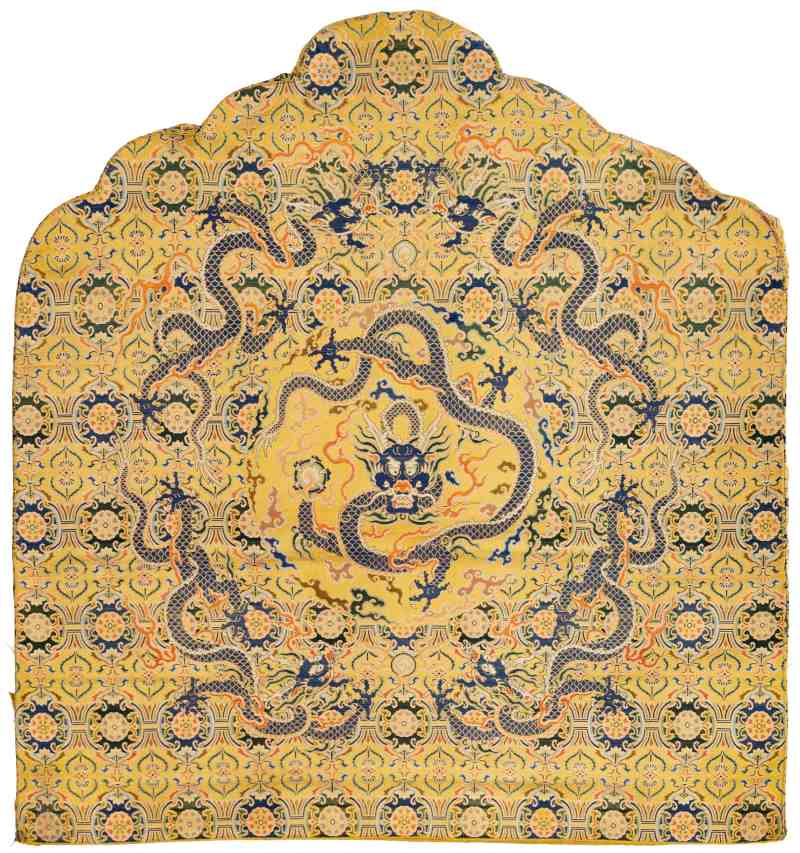
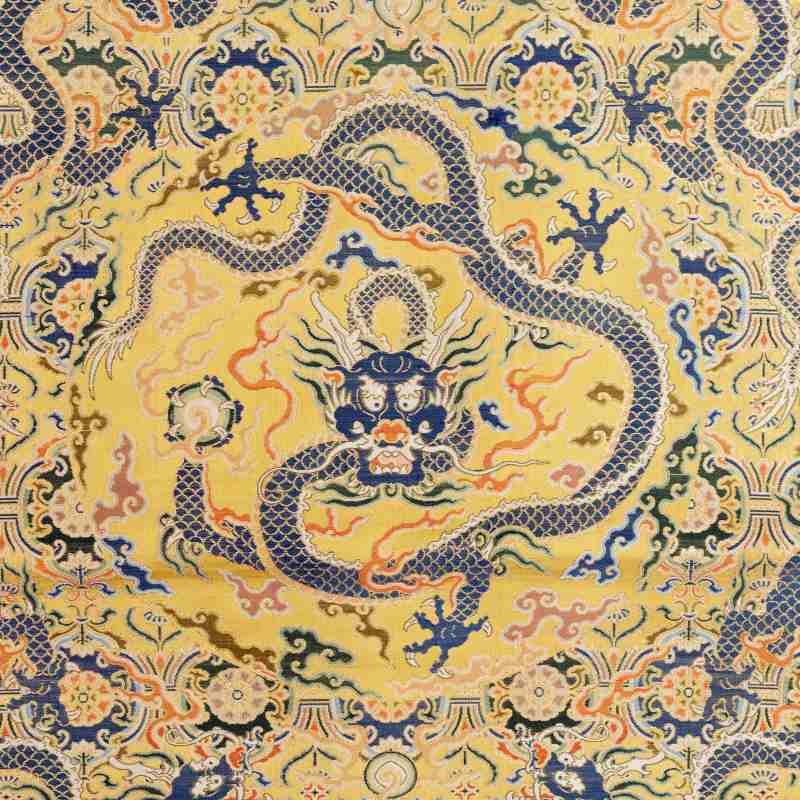
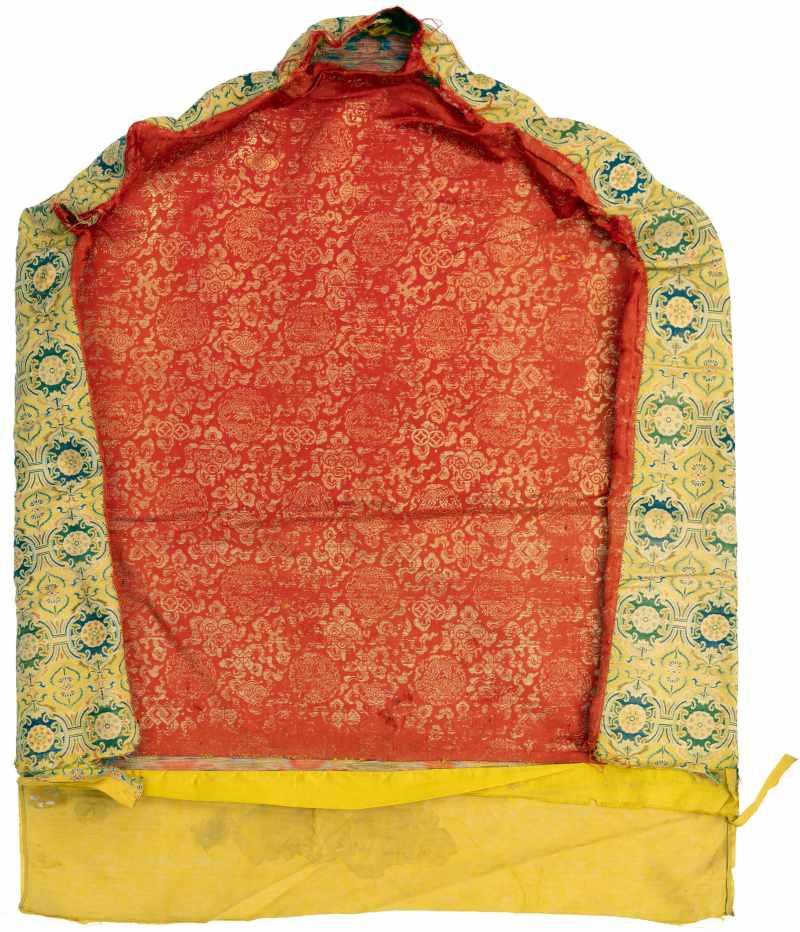
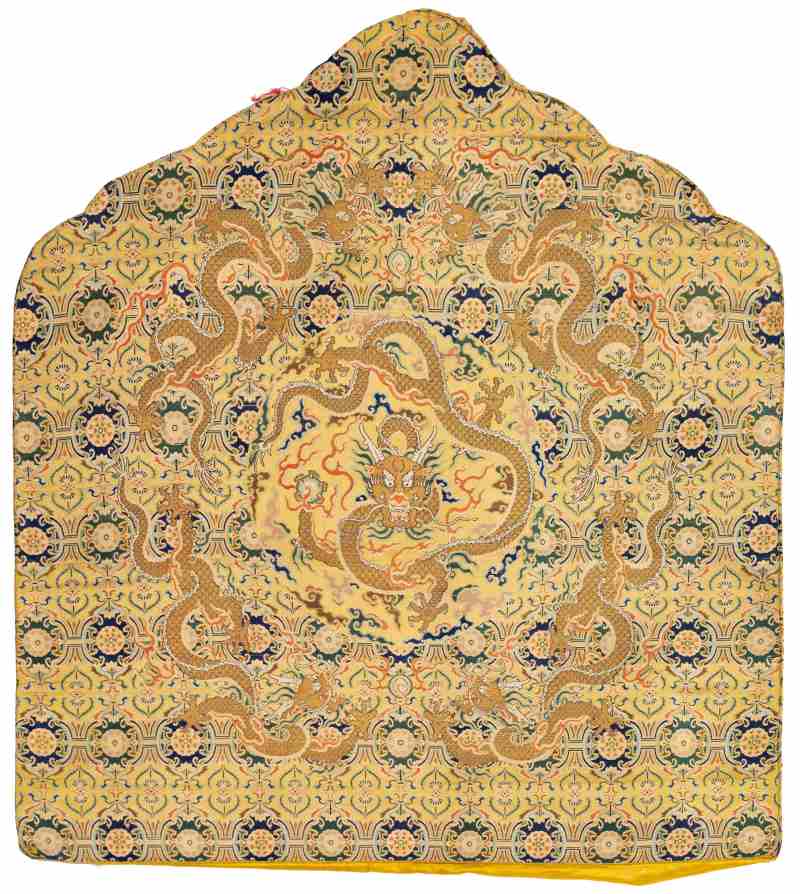
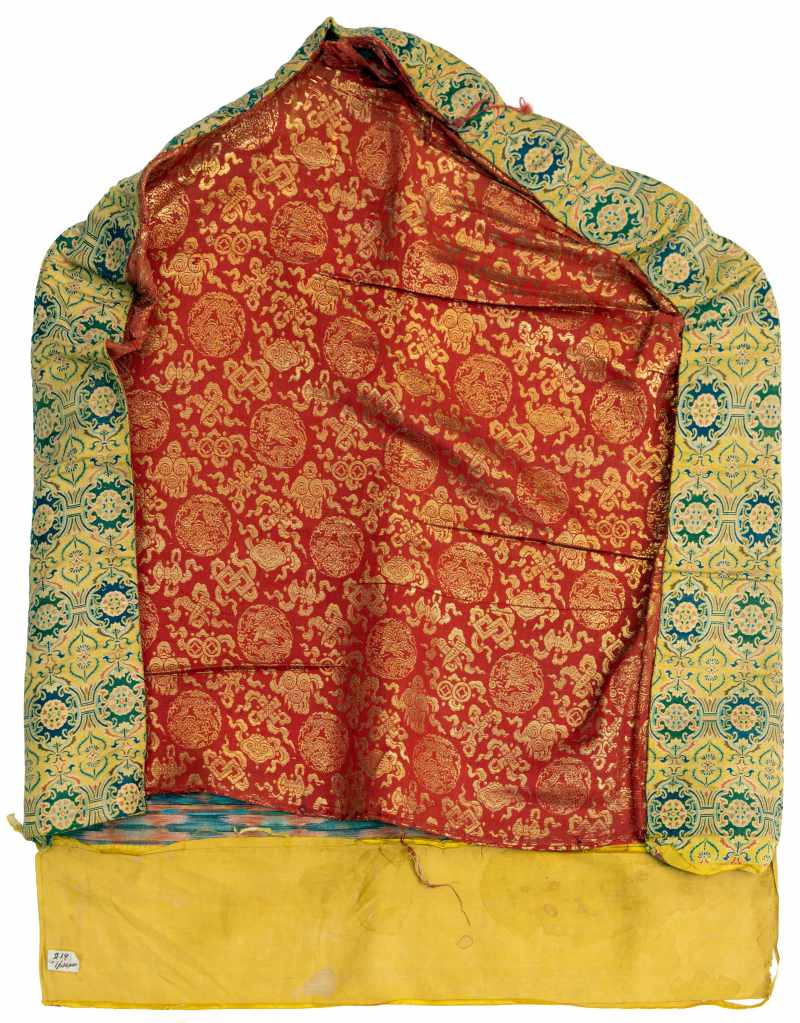
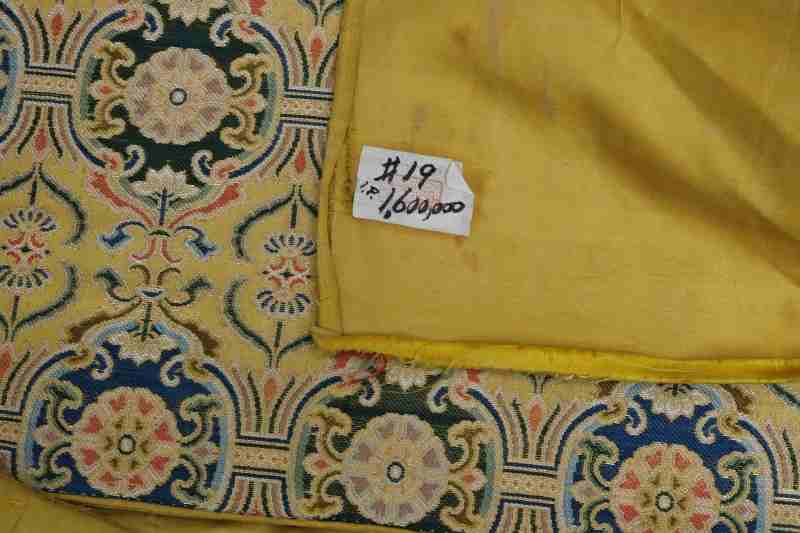
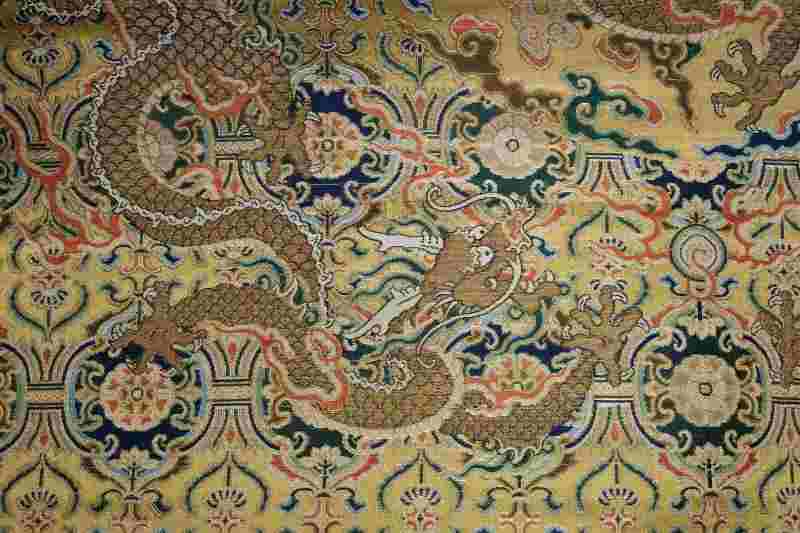
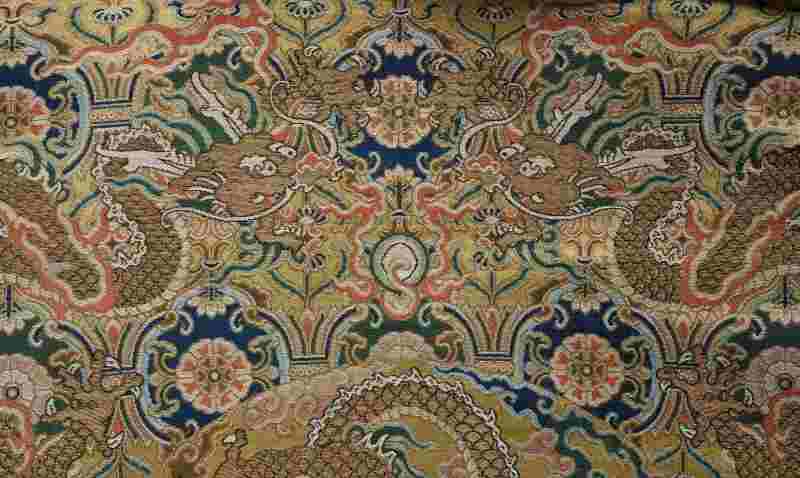
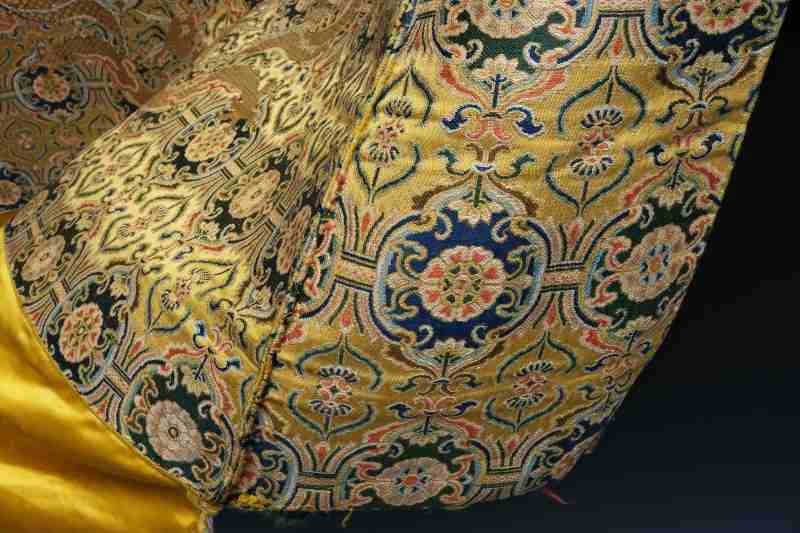
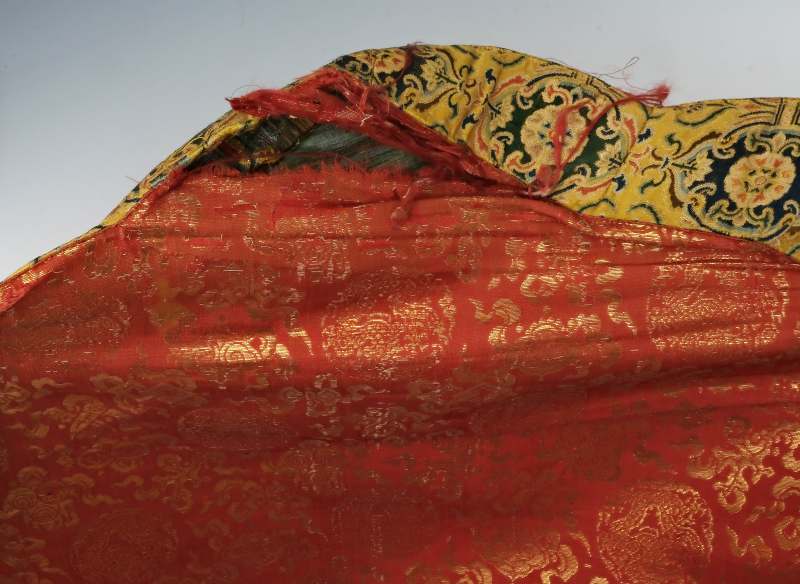
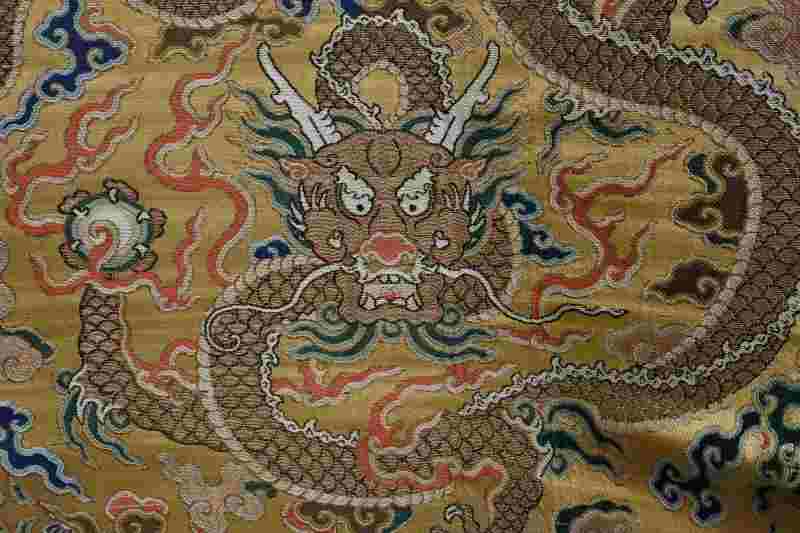
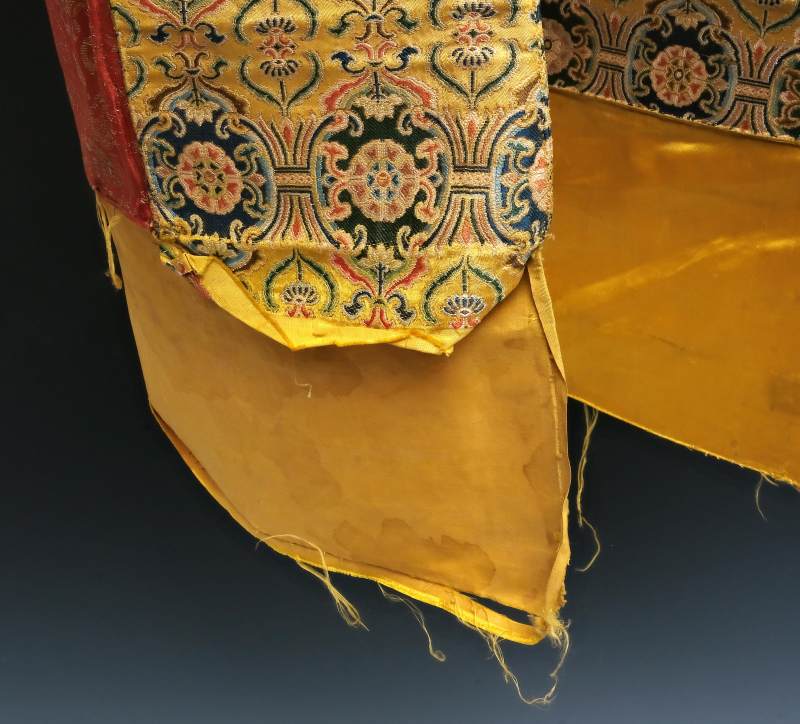
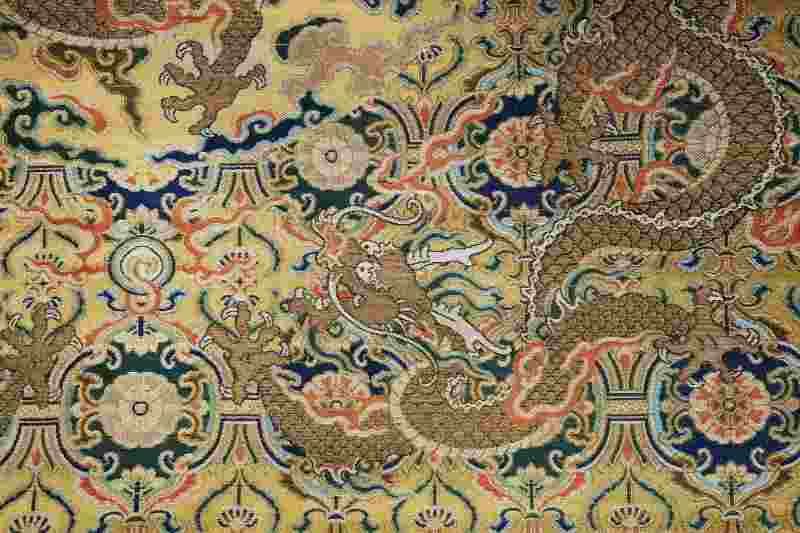
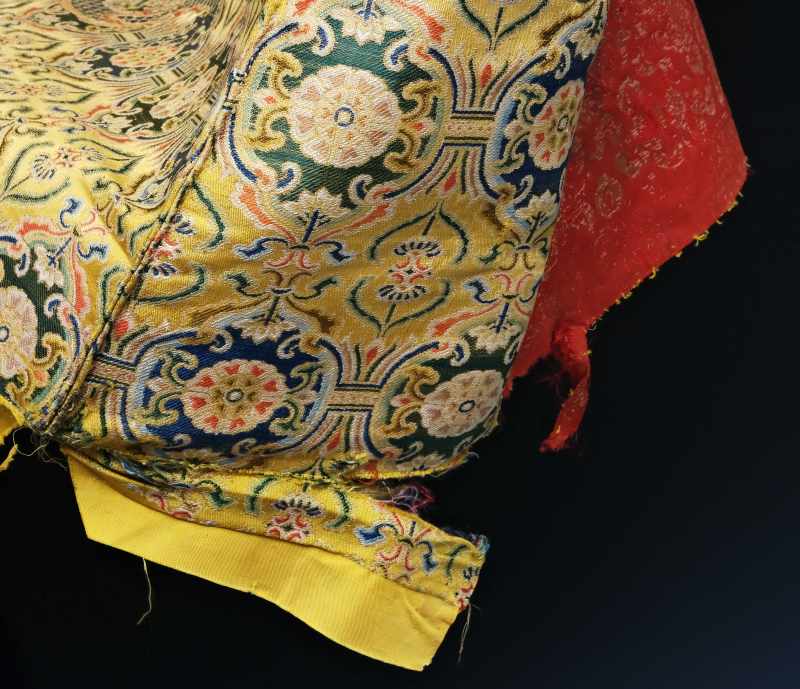
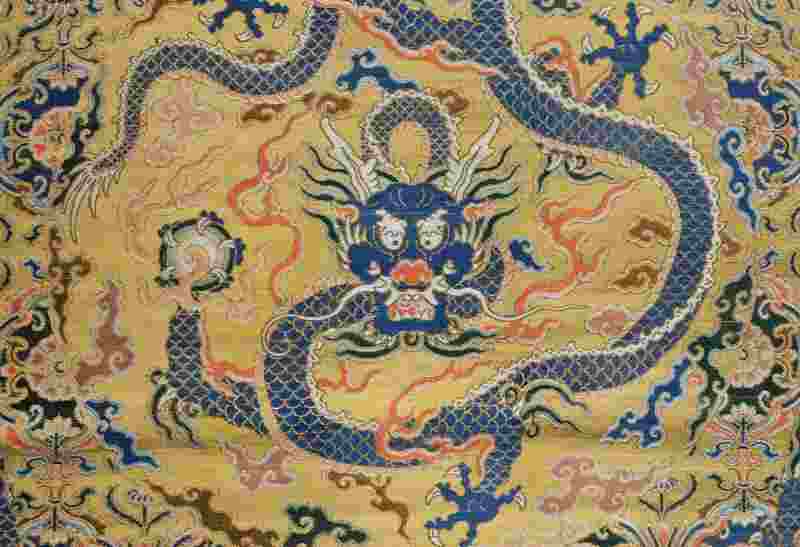
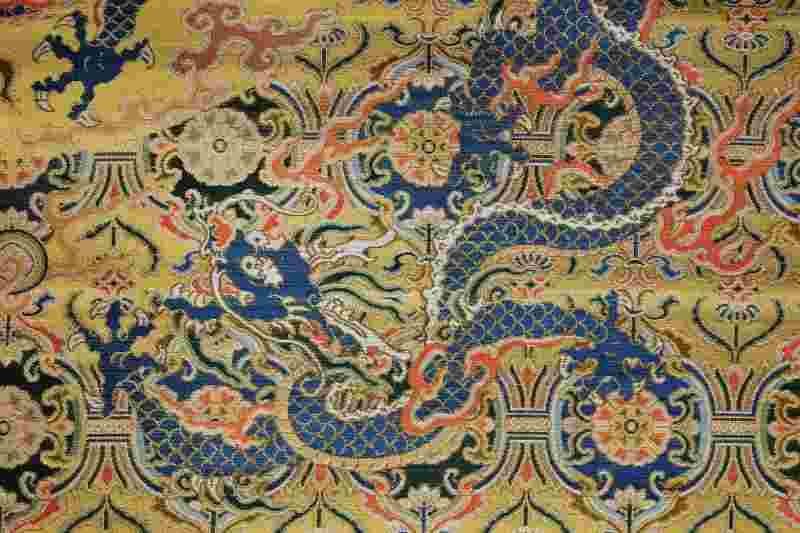
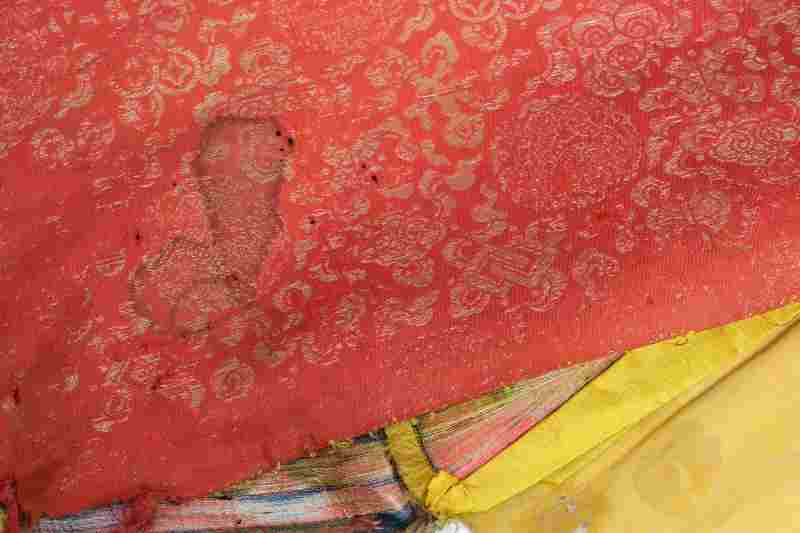
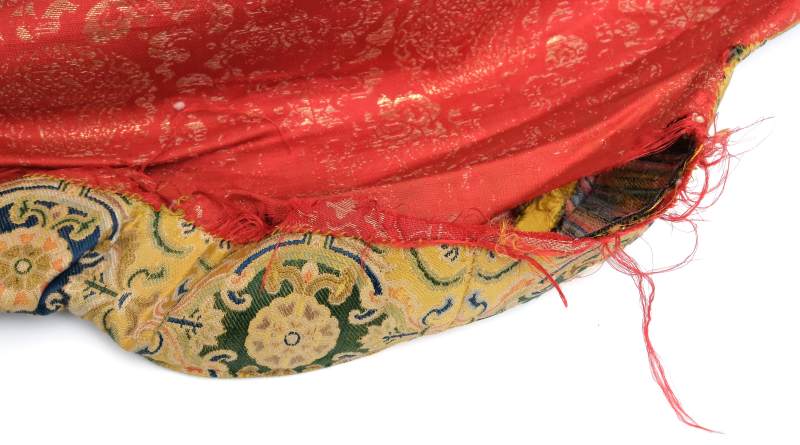
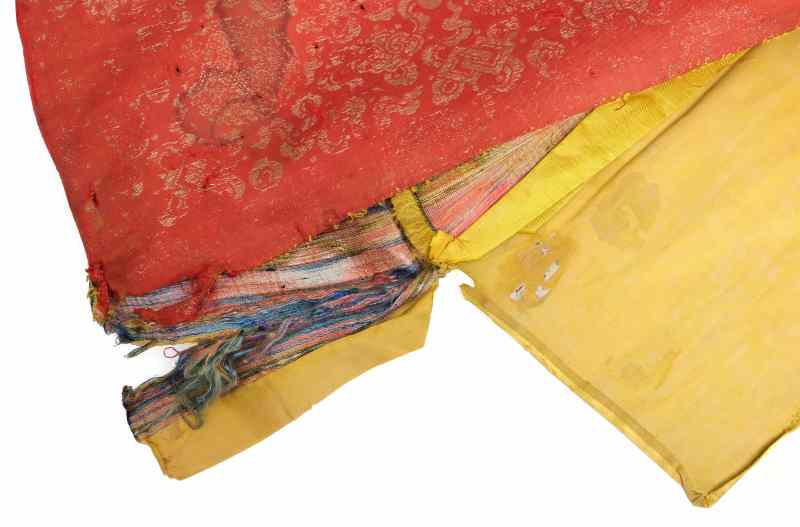
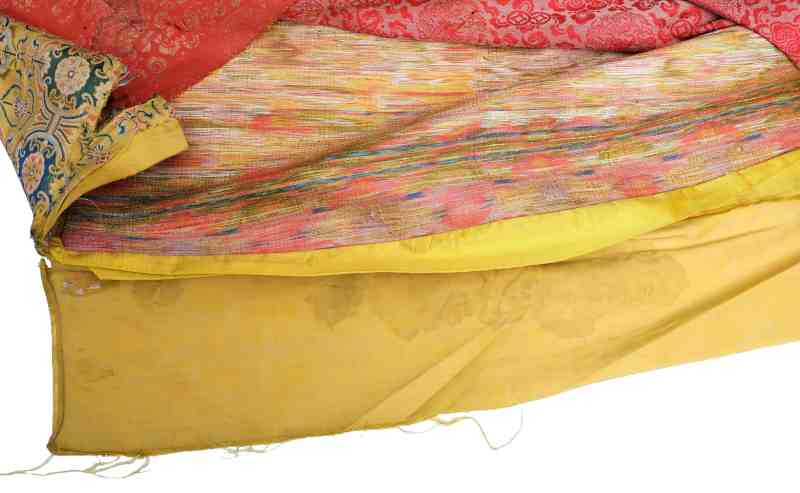
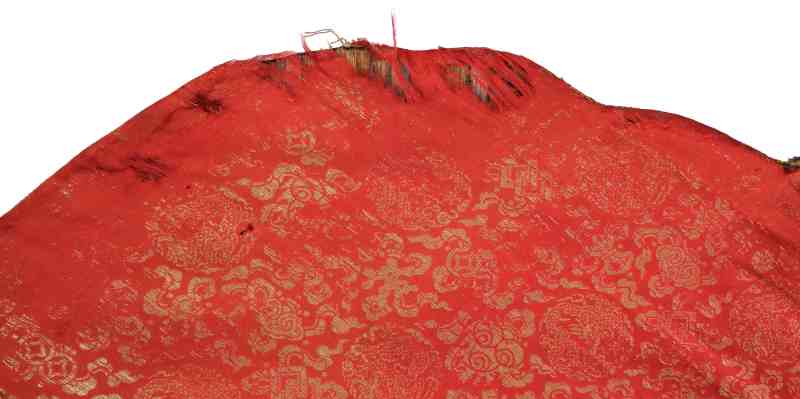
Lot 43 A pair of silk brocade ‘Dragon’ throne back cushion covers
落槌价
****
成交价
****
拍品信息
拍品名称
A pair of silk brocade ‘Dragon’ throne back cushion covers
年代
Late 18th century, Qing Dynasty
起拍价
EUR 10,000
估值区间
€10,000 - €20,000
尺寸
Length from seam to seam 71 cm, width from seam to seam 75 cm.
品相
未知
更多信息
“It can be assumed that throne cushions employing dragon imagery against a yellow ground served an official role within the more formal or ceremonial spaces of the court.”
Imperial Silks: Ch'ing Dynasty Textiles in The Minneapolis Institute of Arts (Robert D. Jacobsen, 2000)
**Literature**
Lit: An identical throne back cushion cover is in the Minneapolis Institute of Arts (Acc. no. 42.8.143), illustrated in Imperial Silks: Ch'ing Dynasty Textiles in The Minneapolis Institute of Arts (Robert D. Jacobsen, 2000), p. 866-867, no. 418.
Another identical example can be found in the Fitzwilliam Museum, Cambridge University (Acc. no. T.93-1977), illustrated in Chinese Art III (Soame Jenyns, 1982), p. 69, no. 31.
Ref: Compare to a throne back cushion cover sold at Christie’s London, 4 Nov 2014.
Also see a related cushion cover sold at Leland Little, 2 Dec 2016, lot 26.
以下内容由AI翻译:
【名称】
清十八世纪晚期龙纹黄地宝座靠垫一对
【年代】
十八世纪晚期,清代
【描述】
“可以假设,在宫廷中更为正式或仪式性的空间里,使用黄色底龙纹的宝座靠垫具有官方作用。”
《皇家丝绸:明尼阿波利斯艺术学院藏清代纺织品》(Robert D. Jacobsen, 2000)
**著录**
文献:一件相同的宝座靠垫在明尼阿波利斯艺术学院(馆藏编号42.8.143),见于《皇家丝绸:明尼阿波利斯艺术学院藏清代纺织品》(Robert D. Jacobsen, 2000),第866-867页,编号418。
另一件相同例子在剑桥大学菲茨威廉博物馆(馆藏编号T.93-1977),见于《中国艺术III》(Soame Jenyns, 1982),第69页,编号31。
参考:比较一件在佳士得伦敦拍卖行2014年11月4日售出的宝座靠垫。
另见一件相关靠垫在Leland Little拍卖行2016年12月2日售出,拍品编号26。
Imperial Silks: Ch'ing Dynasty Textiles in The Minneapolis Institute of Arts (Robert D. Jacobsen, 2000)
**Literature**
Lit: An identical throne back cushion cover is in the Minneapolis Institute of Arts (Acc. no. 42.8.143), illustrated in Imperial Silks: Ch'ing Dynasty Textiles in The Minneapolis Institute of Arts (Robert D. Jacobsen, 2000), p. 866-867, no. 418.
Another identical example can be found in the Fitzwilliam Museum, Cambridge University (Acc. no. T.93-1977), illustrated in Chinese Art III (Soame Jenyns, 1982), p. 69, no. 31.
Ref: Compare to a throne back cushion cover sold at Christie’s London, 4 Nov 2014.
Also see a related cushion cover sold at Leland Little, 2 Dec 2016, lot 26.
以下内容由AI翻译:
【名称】
清十八世纪晚期龙纹黄地宝座靠垫一对
【年代】
十八世纪晚期,清代
【描述】
“可以假设,在宫廷中更为正式或仪式性的空间里,使用黄色底龙纹的宝座靠垫具有官方作用。”
《皇家丝绸:明尼阿波利斯艺术学院藏清代纺织品》(Robert D. Jacobsen, 2000)
**著录**
文献:一件相同的宝座靠垫在明尼阿波利斯艺术学院(馆藏编号42.8.143),见于《皇家丝绸:明尼阿波利斯艺术学院藏清代纺织品》(Robert D. Jacobsen, 2000),第866-867页,编号418。
另一件相同例子在剑桥大学菲茨威廉博物馆(馆藏编号T.93-1977),见于《中国艺术III》(Soame Jenyns, 1982),第69页,编号31。
参考:比较一件在佳士得伦敦拍卖行2014年11月4日售出的宝座靠垫。
另见一件相关靠垫在Leland Little拍卖行2016年12月2日售出,拍品编号26。
常见问题
拍品的尺寸是多少?
Length from seam to seam 71 cm, width from seam to seam 75 cm.